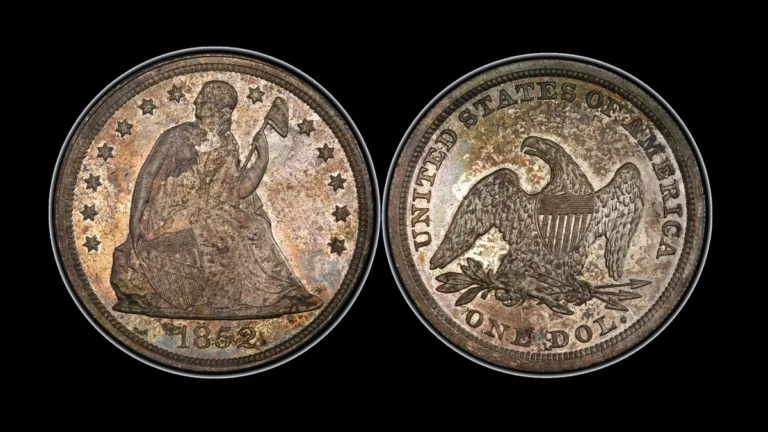
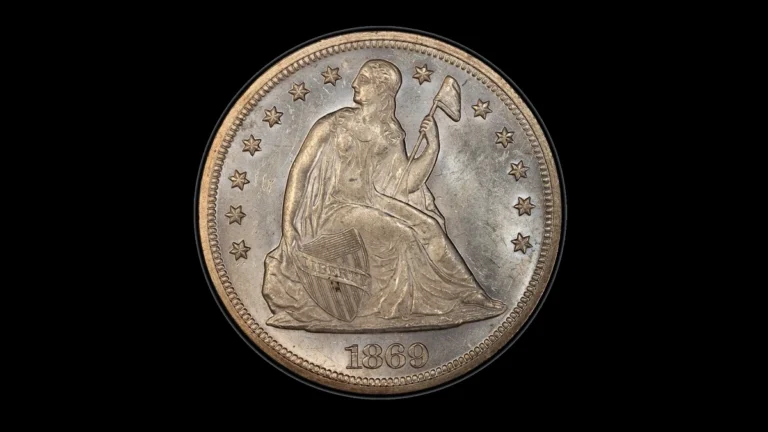
Rare 1871 Dollar Errors (List & Pictures)
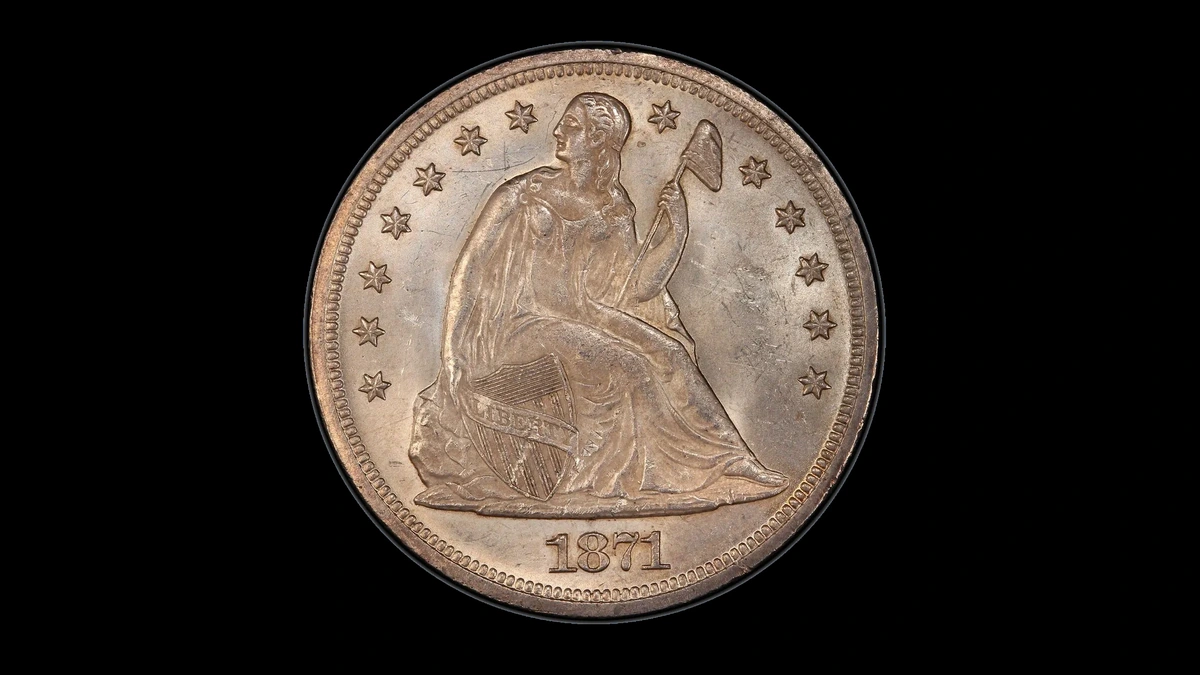
A Philadelphia misplaced-date dollar graded MS65 sold for $49,350 in April 2015. This 1871 Liberty Seated dollar errors guide covers estimated whole-coin values of $400–$150,000.
Check the mint and striking format before deciding whether extra metal belongs beside the normal date or among the border teeth below it.
1871 Dollar Faint extra outlines beside both 1s: repunched Proof date Error
Heritage described light repunching at the first and final 1 on an NGC PR66 OC-P2 Proof. The added strokes sit close to the normal digits.
A Proof is a specially prepared collector coin. In this case the date punch entered the die more than once in slightly different positions, leaving traces that later strikes copied.
The feature is subtle and may be difficult to read in a broad photograph. It differs from a misplaced numeral separated from the date down in the border.
How to Identify
Keep the whole date in view while magnifying each 1. Compare with an identified OC-P2 photograph without assuming an unsupported direction for the earlier strokes.
Move the light and check whether the added contour stays in place. A reflected edge can change, while a physical remnant continues to follow the numeral.
Fine scratches may cross the digit without matching its shape. Compare both 1s rather than relying on one uncertain line.
Confirm Proof manufacture from the complete coin and a reliable grading description. Polishing an ordinary dollar does not turn it into a Proof.
What It’s Worth
Matching Proofs have an estimated whole-coin range of $1,500–$30,000.
The March 2024 auction listing records $8,500 for the NGC PR66 OC-P2. PR66 describes a very well-preserved collector strike.
The full Proof’s reflective fields, toning, and marks account for much of its appeal. Counting two repeated digits does not establish two separate premiums.
1871 Dollar A numeral appears among the border teeth: misplaced date Error
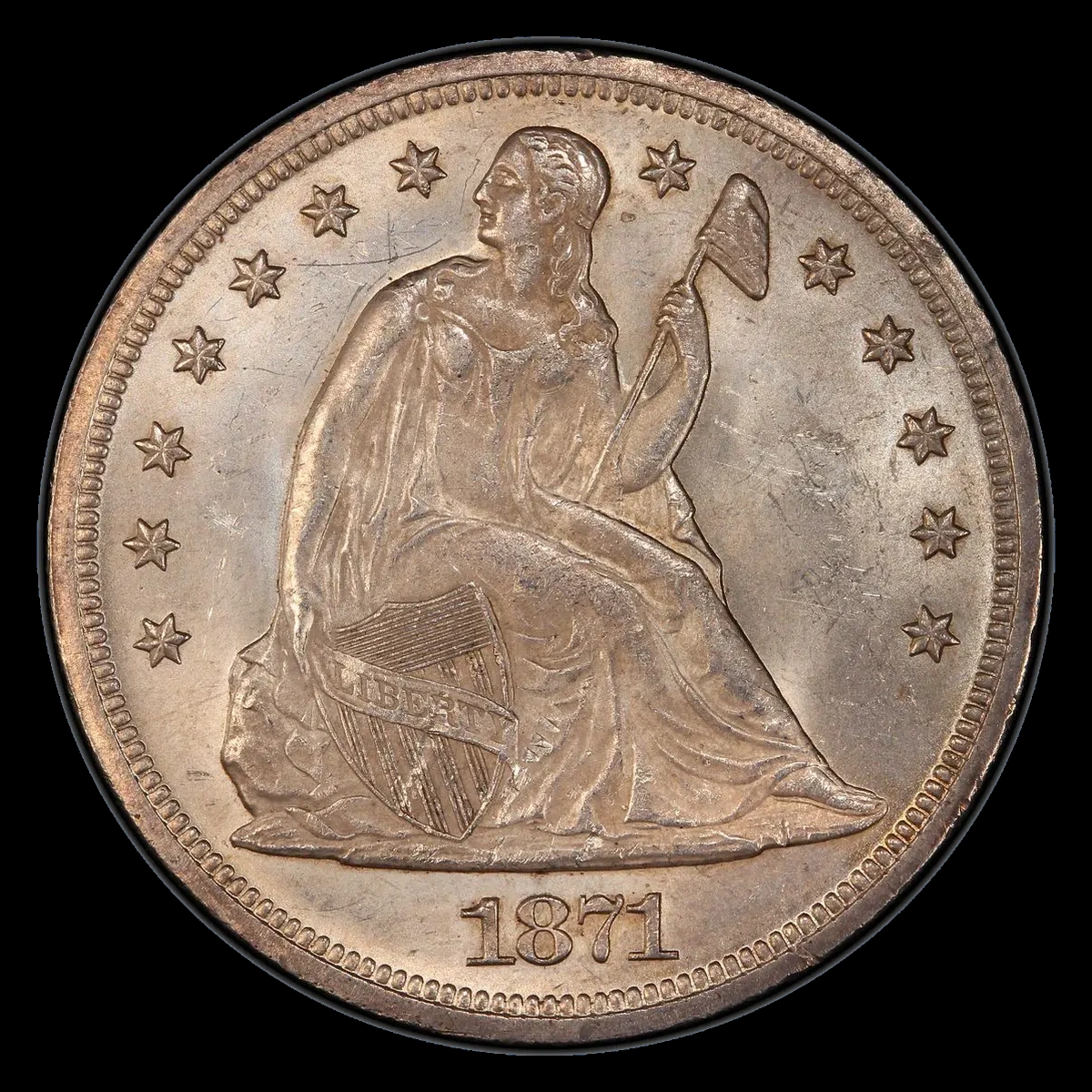
Philadelphia FS-301 shows the curved top of an 8 below the date. The fragment lies among the small border teeth rather than immediately against a normal digit.
Carson City’s misplaced number is different: the sloping top of a 1 appears below the lower end of 7. The punch touched the die in an unintended location before coin production.
Philadelphia examples occur with the cataloged combinations OC-12 and OC-14. The CC fragment belongs to its own die pair and needs a Carson City reference.
How to Identify
Read the reverse mint area first. CC identifies Carson City, while the Philadelphia examples discussed here have no mint mark.
For FS-301, look for the top of an 8 among the teeth beneath the date. The regular teeth themselves should not be combined into an imaginary numeral.
On a CC coin, concentrate beneath the lower end of 7 for the slanted top of 1. Do not seek the Philadelphia curve in that different position.
Use side lighting to separate raised original metal from later cutting. Match the full date placement, mint mark, and complete design before accepting an expensive CC attribution.
What It’s Worth
The combined estimate is $400–$150,000: identifiable Philadelphia examples are around $400–$60,000, while circulated Carson City examples are around $5,000–$150,000.
A Philadelphia FS-301 graded PCGS MS65 with CAC approval brought $49,350 in April 2015. That unworn example had relatively few marks and quality approval within its grade.
PCGS describes FS-301 as carrying only a modest premium over comparable ordinary Philadelphia dollars. Much of the larger CC range instead reflects the rarity of that issue.
Conclusion
Location separates the two date features: repunching leaves small strokes beside the intended digits, while misplaced fragments sit down among the border teeth. The Proof’s repeated 1s, Philadelphia’s extra 8, and Carson City’s extra 1 need their own references.
Keep mint, manufacture, and condition attached to every price comparison. A visible fragment aids identification, but it cannot replace authentication or the assessment of the complete dollar.