Rare 1851 Dollar Errors (List & Pictures)
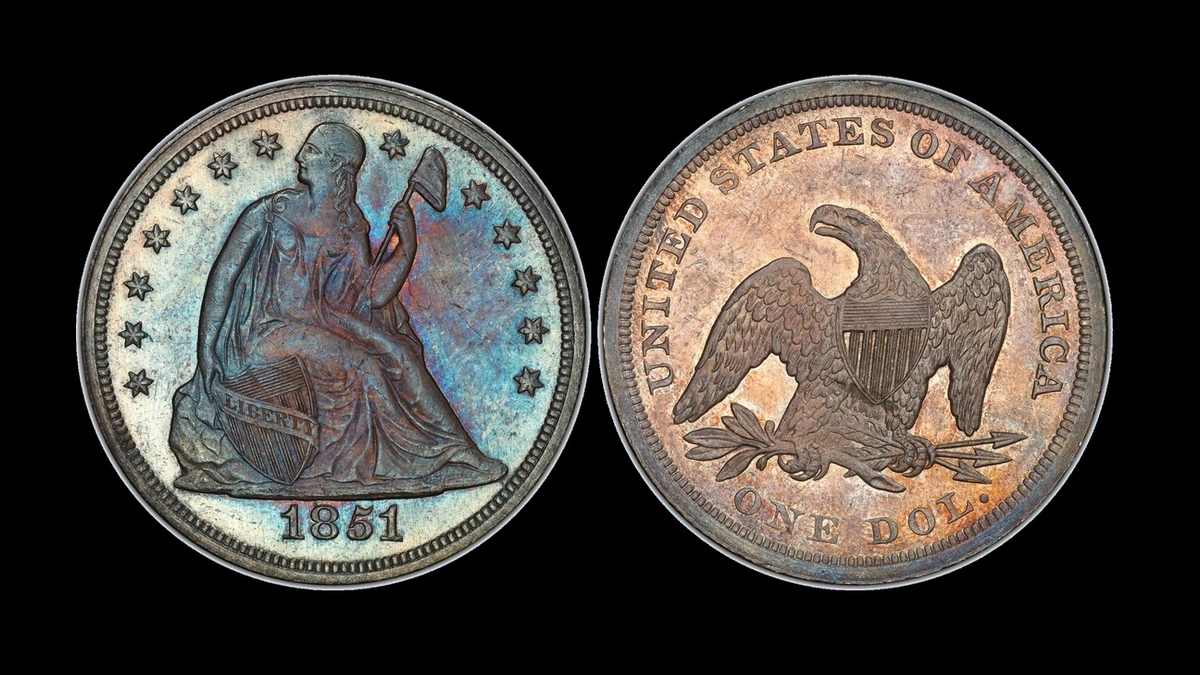
A later O-bearing collector dollar dated 1851 appears in a recorded June 2008 sale at $373,750. Estimated whole-coin values in this 1851 Liberty Seated dollar errors guide span $10,000–$500,000.
Separate original High Date dollars from the later restrike before examining reverse cracks, clash traces, or the puzzling flattened mint letter.
| Coin and clue | Feature | Estimated whole-coin range |
|---|---|---|
| Original dollar, lines near ONE and UNITED | Reverse die cracks | $10,000–$100,000 |
| Original dollar, transferred design traces | Die clash | $10,000–$100,000 |
| Later collector piece, flattened O | Disputed restrike origin | $200,000–$500,000 |
1. 1851 Dollar Fine raised paths beside ONE and UNITED: reverse die cracks Error
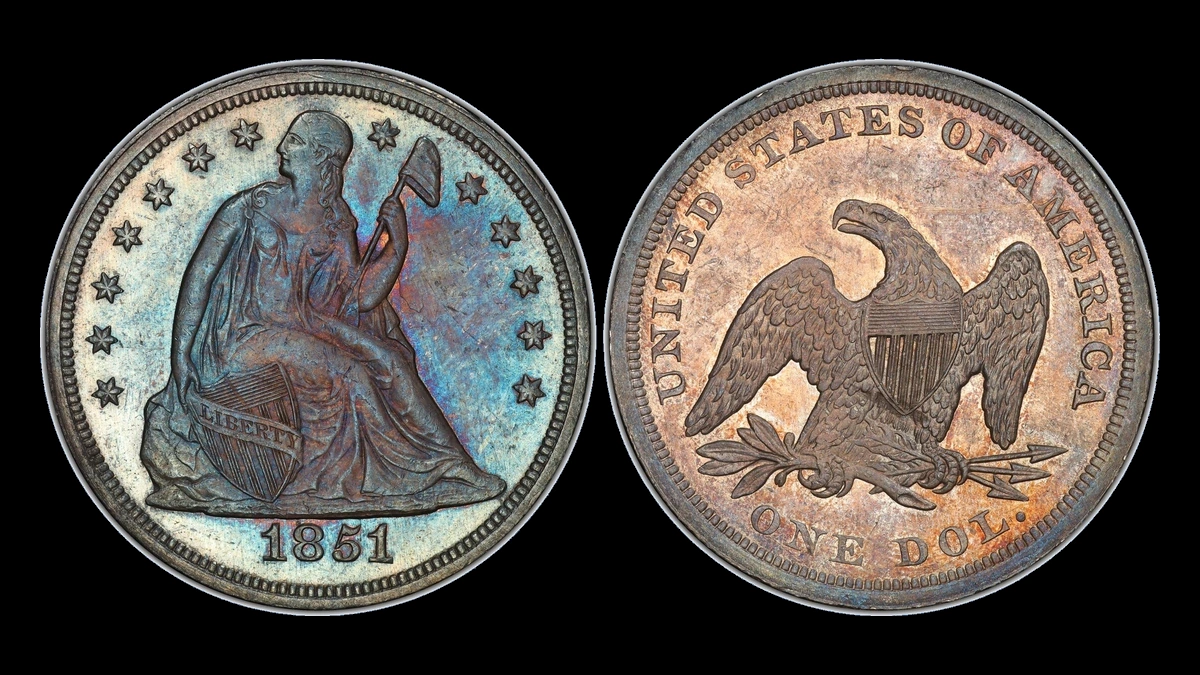
The American Numismatic Society’s original 1851 dollar has two described reverse cracks. One starts at the border below the N in ONE and runs toward the bottom of the O.
The other begins around eight o’clock and reaches the upper-left tip of the U in UNITED. Silver entering these openings in the die produced raised lines on the dollar.
Original 1851 dollars are called High Date because the date sits close to Liberty’s rock. That normal placement is separate from the reverse cracks.
How to Identify
Hold the reverse upright and locate ONE before following the lower crack’s route. Then examine the lower-left border and trace the second line toward UNITED’s U.
Compare the starting points and full paths, not simply the presence of a line beside a letter. Under low light, an original crack should rise above the surrounding silver rather than cut into it.
The reverse die had earlier use, and polishing later reduced some crack detail. A weak line can therefore reflect the die’s condition rather than a different coin type.
What It’s Worth
Original 1851 dollars have an estimated whole-coin range of $10,000–$100,000 across worn and desirable unworn examples.
An original graded MS63 brought $76,375 in July 2022. That is a condition comparison from the same year, not a sale of the museum specimen or a price assigned to its cracks alone.
2. 1851 Dollar An unfamiliar outline around Liberty: clashed dies Error
Clash marks preserve fragments of the opposing design in unexpected places. They begin when the dies meet without a blank, marking each other before returning to coin production.
Some original 1851 dollars show these traces, while later examples came from polished dies that had lost earlier clash marks. Reflective surfaces can therefore occur on ordinary originals.
How to Identify
Inspect the open areas around Liberty with light close to the surface. Keep the surrounding design visible in photographs so each faint outline has a clear location.
Compare the unexpected shape with the reverse and with an identified original struck before die polishing. An isolated straight line should not be named as a feather without a matching shape.
Polishing lines and scratches are separate possibilities. Shine alone neither proves a clash nor identifies a collector Proof.
What It’s Worth
Original dollars with identifiable clash traces have an estimated whole-coin range of $10,000–$100,000.
The $76,375 MS63 original-dollar sale supplies a preservation comparison. It does not establish a fixed amount paid for clash marks.
The scarce date and overall surface quality account for much of the value. Cracks and clashes appearing together still belong to one dollar.
3. 1851 Dollar A flattened O beneath the eagle: disputed restrike origin Error
New Orleans made no silver dollars dated 1851, yet a recognized later collector piece carries a flattened O. The coin was made at Philadelphia after the year shown on it.
This later production is called a restrike. One explanation proposes an older New Orleans dollar struck with 1851 designs; another proposes use of an O-bearing reverse die.
The mechanism remains debated. The surviving O does not establish a particular older date beneath the visible design.
How to Identify
Compare both faces and the date placement with photographs of the recognized restrike. Sharing the date 1851 does not make an original High Date dollar the same product.
Magnify the flattened O and the adjacent silver without touching the area. Engraving or an added mark may leave fresh cuts or disturbed surfaces.
If an underlying coin is proposed, look for actual surviving design evidence. Do not choose a hidden year solely because that year was struck at New Orleans.
This identification depends on the complete coin and its history. A specialist comparison is essential before treating an unexplained O as the recognized rarity.
What It’s Worth
The recognized O-bearing collector piece has an estimated whole-coin range of $200,000–$500,000.
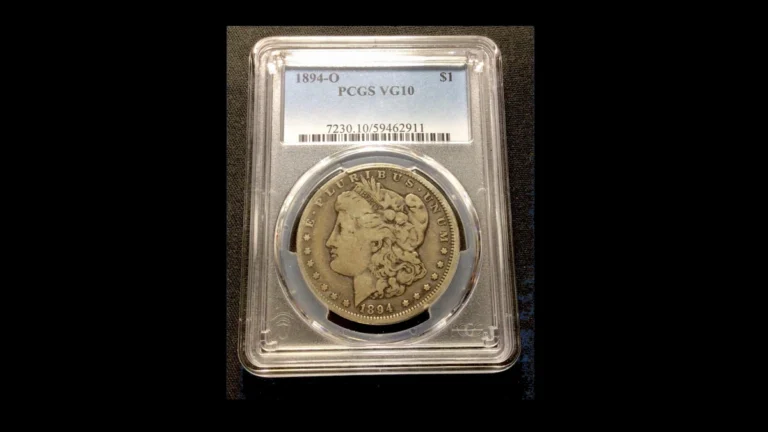
PCGS’s ownership history records $373,750 in June 2008 for the PR62 example. That grade describes a Proof with noticeable imperfections.
An altered ordinary dollar cannot be valued from that transaction simply because someone placed an O beneath its eagle. The unusual identity must be established first.
Conclusion
Original 1851 dollars can show identifiable reverse cracks and traces from clashed dies, with polishing affecting their visibility. Those features help describe an original without turning it into the later O-bearing rarity.
The flattened O requires a separate whole-coin comparison, and its origin remains debated. Use the recorded prices with their correct specimens and conditions rather than assigning a large value to a small unexplained mark.