Rare 1797 Dollar Errors (List & Pictures)
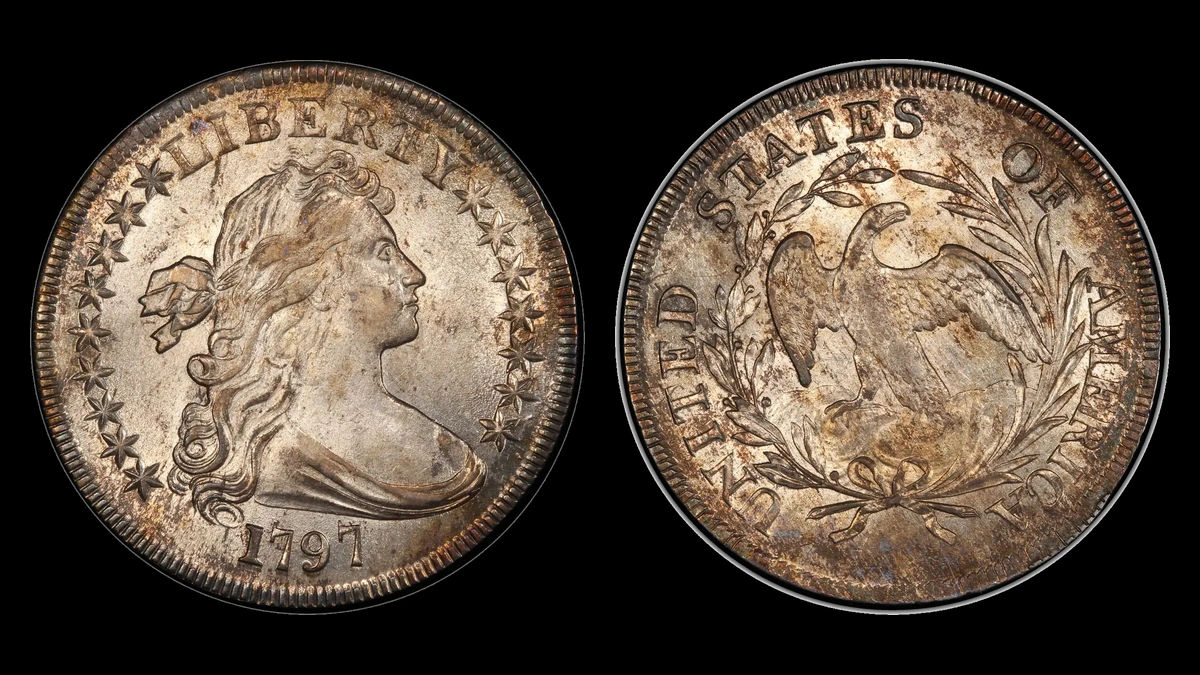
Fine die lines and a second complete strike leave very different evidence on an early dollar. The 1797 dollar errors here span estimated whole-coin values of $1,500–$50,000 for circulated examples.
A BB-73 in VF20 sold for $4,921.20 in July 2022 as a same-variety condition comparison. A separately documented double-struck dollar brought $1,870 in August 1995, an older result rather than a current price.
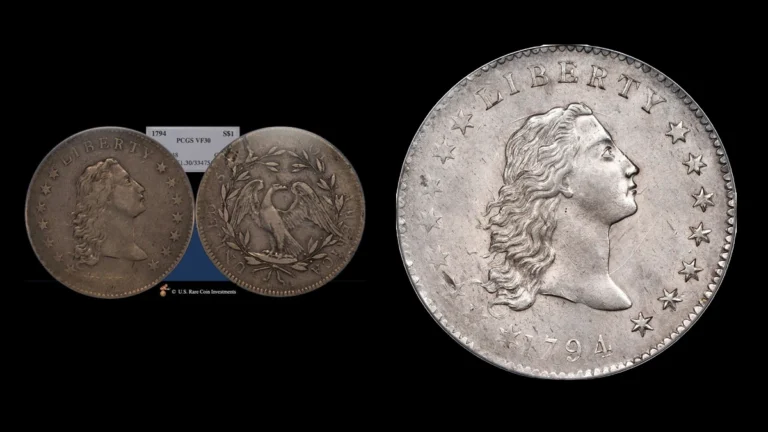
1. 1797 Dollar A Tiny Dot, Fine Lines, or Later Cracks: Die Marks Error
Early BB-73 dollars can show a raised dot below star nine and fine raised lines before Liberty’s neck. The lines copy filing marks in the die.
Later cracks run through stars four and five toward the ribbon and curls, or from the final date digits into drapery and right-hand stars. Much of the dot was polished away before these stages, so every feature need not appear together.
How to Identify
Confirm nine stars on Liberty’s left, seven on her right, and large reverse lettering. Then compare the early dot or later crack route with the appropriate BB-73 stage.
The illustrated variety description separates those stages. Side lighting helps distinguish raised die marks from later scratches cut into the coin.
What It’s Worth
$1,500–$30,000 is the estimate for worn through lightly worn matching dollars. Original surfaces usually matter more than the number of crack branches.
The ANACS VF20 BB-73 sold for $4,921.20 in July 2022. That is a general same-variety comparison, not proof that the sold coin carried every early and late feature discussed here.
2. 1797 Dollar A Curved Leaf Trace before the Face: Die Clash Error
A shallow arc in front of Liberty can copy part of the reverse palm leaves. The dies collided without a blank and then transferred the unwanted trace to later coins.
The BB-73 description records this clash feature. Wear or polishing of the die can make the light arc difficult to see.
How to Identify
Light the open area before Liberty’s face evenly and compare the curve with the reverse palm leaves. The trace should relate to a recognizable design shape.
Check the BB-73 star arrangement and lettering before selecting photographs. A faint or absent arc on a worn coin does not by itself establish another variety.
What It’s Worth
$2,000–$35,000 is the estimate for circulated clash-marked examples. The faint transferred arc should not be valued like a large second image from double striking.
The $4,921.20 BB-73 result provides condition context without proving that coin showed the arc. A naturally preserved dollar may be preferable to a cleaned one with a brighter-looking line.
3. 1797 Dollar Shifted Stars, Letters, and Portrait: Double Strike Error
An ANACS XF40 dollar described by Heritage has repeated front stars, lettering, date, and bust, with stronger repetition on the reverse. The coin moved between blows.
A separate AU50 example appeared in the 1997 Pennsylvania Cabinet sale with both faces doubled. Extra right-star outlines suggested another blow but did not establish a definite third strike.
How to Identify
Start with the reverse when front repetition is faint, then trace corresponding extra detail around the portrait and date. Several features should agree with one shifted impression.
A narrow flat ledge beside one letter can form during a single strike. Do not count each visible edge as another blow, especially where worn star outlines crowd together.
What It’s Worth
$5,000–$50,000 is the modern comparison range for clearly identified circulated double strikes. The ANACS XF40 specimen sold for $1,870 on August 22, 1995.
That historical price is not a current quote. The separate AU50 coin needs its own assessment, and a possible extra outline does not automatically earn a triple-strike premium.
Conclusion
BB-73 identification begins with stars and lettering before moving to its dot, die lines, cracks, or palm-leaf trace. Double striking needs broader repetition across the coin.
Compare the actual stage and condition rather than expecting all recorded marks on one dollar. Keep old sale records and general variety comparisons distinct from a price for a particular visible error.