Rare 2000 Dollar Errors (List & Pictures)

Some 2000 Sacagawea dollar errors change the whole coin’s identity, while others add only a faint mark or small edge step. A Washington-front dollar mule sold for $194,062.50 in January 2024, including the buyer’s fee.
The supplied whole-coin estimates span $10–$225,000. Start by identifying both faces and the metal, then examine the outline, extra impressions, and smaller surface features.
| What looks unusual? | Possible group | Estimated value |
|---|---|---|
| Quarter and dollar faces paired | Mule | $50,000–$225,000 |
| Quarter details beneath dollar designs | Double denomination | $3,000–$15,000 |
| Different blank or irregular scrap | Wrong blank; scrap strike | $1,500–$25,000 across the groups |
| Gap, expansion, step, or displaced design | Blank and strike errors | $50–$5,000 |
| Repeated portraits or turned reverse | Multiple strike; rotated die | $50–$7,500 |
| Missing metal or blocked detail | Layer loss; strike-through | $20–$5,000 |
| Faint transferred shapes or eagle ridge | Clash; Wounded Eagle | $10–$2,000 |
1. 2000 Dollar A Quarter Face Paired with a Dollar Face: Mule Error
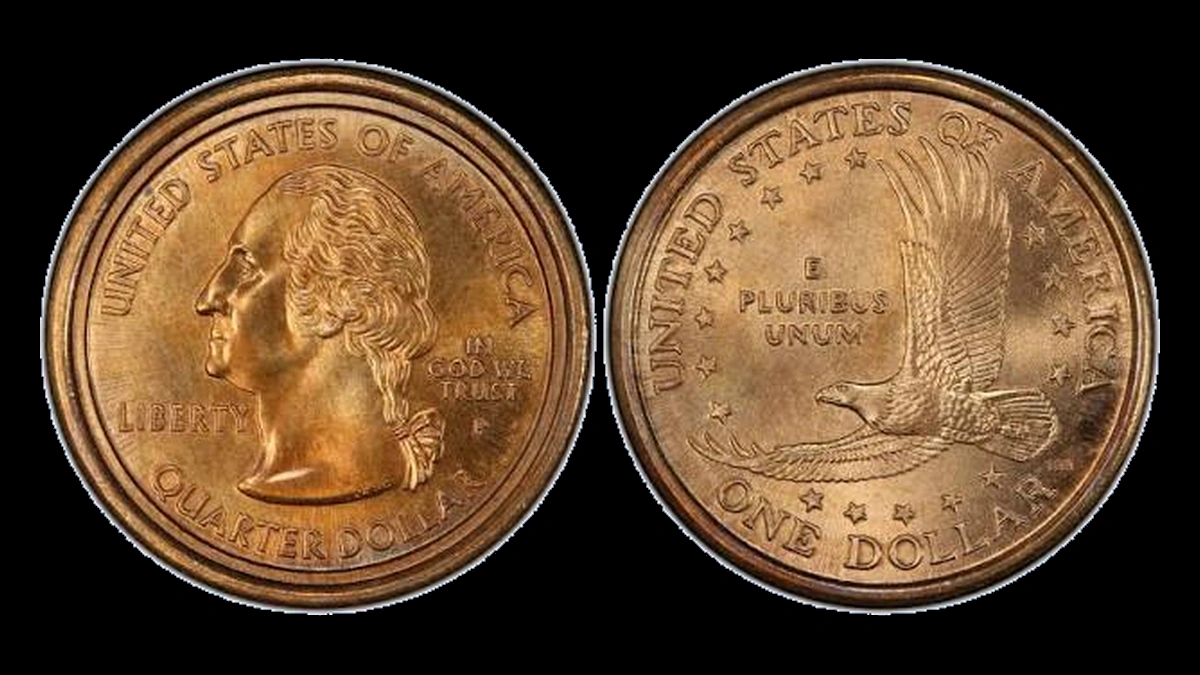
Identify each complete face before searching for overlapping lines. A mule results when dies intended for different coins are paired, producing two incompatible designs on one blank.
The Philadelphia combination has Washington’s quarter portrait opposite the Sacagawea dollar’s flying eagle. Neither face provides a date, so its attributed identity is written (2000-P).
The Denver combination instead has the dated 2000-D Sacagawea front and South Carolina’s quarter reverse. Both combinations were struck on golden dollar blanks.
How to Identify
Confirm that the two whole designs were naturally struck into one piece of metal. A seam, adhesive, or edge channel may indicate joined coin halves rather than a Mint-made pairing.
Normal dollar dimensions of about 8.1 grams and 26.5 millimeters support examination but do not prove authenticity. A specialist must compare both faces and the edge with the particular certified combination.
Washington-front mules come from different die pairs. One has a crack near the F in OF, another has lower-wing cracks, and a third differs again, so no one pair’s crack is required on every example.
What It’s Worth
$50,000–$225,000 is the supplied estimate for these authenticated mule combinations. The exact pairing and preservation account for major differences within the range.
The Washington-front PCGS MS66 mule sold for $194,062.50 in January 2024, including the buyer’s fee. The 2000-D South Carolina mule in PCGS MS64 brought $84,000 in August 2024.
These prices concern complete genuine rarities. A coin assembled from ordinary halves does not belong in the same comparison.
2. 2000 Dollar State Quarter Details Under the Dollar: Double Denomination Error
A finished quarter can enter the dollar press and receive a new design over its original one. Traces of the earlier coin remain beneath the later impression, unlike a mule’s two separately complete faces.
Documented examples involve Massachusetts and Maryland quarters. A Maryland specimen in PCGS MS65 also has a certified flip-over double strike, although those additional features are less obvious than its surviving MARYLAND and 1788.
How to Identify
Search for a readable state name or artwork that does not belong to a Sacagawea dollar. A Massachusetts example in PCGS MS63 retains the quarter’s 2000 on Sacagawea’s back, the minuteman’s legs near the baby, and Washington near E PLURIBUS UNUM.
Maryland examples require their own state lettering or building evidence. Do not transfer the Massachusetts locations to a different underlying quarter.
Use both faces and several lighting directions to separate the earlier and later designs. A small silver-colored dollar alone does not prove that its blank was already a finished quarter.
What It’s Worth
$3,000–$15,000 is the supplied estimate for authenticated dollars struck over finished state quarters. Readable earlier lettering and clear later designs make the combination easier to appreciate.
The PCGS MS63 Massachusetts example sold for $8,812.50 in April 2017. Its quarter details are part of that single coin’s value, rather than separately priced objects.
A certified flip-over feature on a Maryland overstrike is also part of the complete specimen. Its price should not be assembled by adding independent premiums for every production event.
3. 2000 Dollar Dollar Designs on Another Coin’s Blank: Wrong Planchet Error
A wrong planchet is an unstruck blank intended for another coin, rather than a finished quarter struck again. Recorded combinations include Anthony-dollar, quarter, cent, unidentified foreign, and Ghana outer-ring blanks.
The Anthony-dollar and quarter blanks produce silver-white examples of different sizes. The recorded cent-blank piece weighs 2.5 grams and has copper-colored surfaces with cropped outer design.
The roughly quarter-sized foreign solid blank has no identified country. The Ghana piece is a copper-nickel outer ring with the center absent from the start.

How to Identify
Both normal Sacagawea and Anthony-dollar blanks weigh about 8.1 grams, so weight alone cannot separate their metals. A quarter blank starts near 5.67 grams and 24.26 millimeters, while a modern cent blank starts near 2.5 grams and 19.05 millimeters.
Striking may change the width, making original edge structure and alloy identification essential. Plating, grinding, or trimming can create deceptive color and size combinations.
The foreign blank needs its own metal assessment without guessing a country from its diameter. The Ghana ring should show design formed on an already open ring, rather than a hole drilled through completed artwork.
What It’s Worth
$1,500–$25,000 is the supplied estimate across these authenticated wrong-blank combinations. Each blank’s identity and the remaining dollar design determine which records are relevant.
The unidentified foreign-blank coin in PCGS MS65 sold for $4,920 in April 2021. A specialist auction report records $3,737.50 for the PCGS MS64 Ghana outer-ring example in January 2008.
An open ring and a small cent blank create quite different displays. Neither price should be applied to an ordinary dollar whose only unusual feature is a changed surface color.
4. 2000 Dollar An Irregular Metal Piece Carrying the Design: Scrap Strikes Error
Sometimes the material receiving the dollar design is scrap rather than a coin blank. One 2000-P feeder fragment in NGC MS65 weighs 2.5 grams and retains a clear date and P.
A separate PCGS MS65 aluminum piece was struck twice and has thick unstruck portions with three splits. Its possible origin as a feeder tip is less certain than its aluminum composition and double strike.
How to Identify
Study the whole object’s outline, thickness, and unused metal. Here the scrap itself received the design, rather than remaining as a small attachment on a normal dollar.
The 2.5-gram feeder fragment has extra outlines above Sacagawea’s forehead and LIBERTY. The other aluminum piece has repeated letters around UNITED STATES from its two strikes.
Keep those measurements and features tied to their own specimens. Material examination without scraping is needed because plating a normal dollar does not make its underlying metal aluminum.
What It’s Worth
$3,000–$15,000 is the supplied estimate for authenticated scrap strikes of this kind. Recognizable dollar detail and a clear manufacturing explanation contribute to their appeal.
The 2.5-gram feeder fragment sold for $10,925 in January 2009. The separate double-struck aluminum piece brought $5,760 in January 2020.
5. 2000 Dollar Missing Edge Sections with Possible Extra Strikes: Clipped Blanks Error
Documented 2000-P clips range from a 38% curved gap to a 21% unspecified clip and a separate ragged edge. Other incomplete blanks received more than one strike, creating combined errors.
Those combinations include a 20% straight clip, a double-clipped triple strike, a five-strike broadstruck piece with an indent, and a roughly 11% straight-end clip with closely overlapping strikes. They are separate specimens with separate production evidence.
How to Identify
Inspect where each gap meets the rim for design and metal flow formed around an already incomplete blank. Opposite-rim weakness may support a curved clip, while saw lines or fresh burrs suggest later cutting.
The 20% straight-clipped example was first struck about 10% off-center, then turned slightly clockwise before another strike. Its narrow overlapping outlines belong to that particular sequence.
The triple-struck example has gaps near twelve and five o’clock, plus unrelated later reverse scratches. The five-strike piece has a right-side gap, broadstrike expansion, and a lower-left indent made by another blank.
For each combination, compare the gap junctions and the complete surviving designs with its own documented photograph. Do not count later scratches as extra strikes or assign one coin’s clip percentage to another.
What It’s Worth
$50–$4,000 is the supplied combined estimate: $50–$600 for simpler clips and $400–$4,000 for major combinations. A missing-metal percentage alone cannot price a repeatedly struck coin.
The 38% curved clip in PCGS MS64 sold for $360 in September 2024. The 20% straight-clipped, repeatedly struck example in NGC MS65 brought $1,840 in October 2006.
6. 2000 Dollar A Wide Outline Around a Complete Design: Broadstrike Error
With no effective collar restraint, a dollar blank can spread beyond normal width while keeping both complete designs. The result is a broadstrike, even when the expanded margin is uneven.
A 2000-P example in PCGS MS65 has appeared at auction as the simple expanded type. It should be separated from broadstrikes that also have clips, indents, or repeated impressions.
How to Identify
Compare a loose coin’s width in several directions with the normal 26.5 millimeters. Follow the outer letters and artwork to confirm that the full intended design remains on the metal.
A wider blank margin on one side does not disqualify a broadstrike. Missing design beyond the metal instead calls for an off-center comparison.
Check raised lettering and portrait details for crushing or pressure marks from later hammering. The normal 2000 dollar edge is plain, so absent lettering or grooves cannot identify collar failure.
What It’s Worth
$100–$1,500 is the supplied estimate for a simple authenticated broadstrike. Broad original expansion and attractive complete designs support a stronger comparison.
The supplied PCGS MS65 listing provides no completed price here. Complex repeatedly struck or clipped pieces belong in their own comparisons instead of setting a price for a one-strike broadstrike.
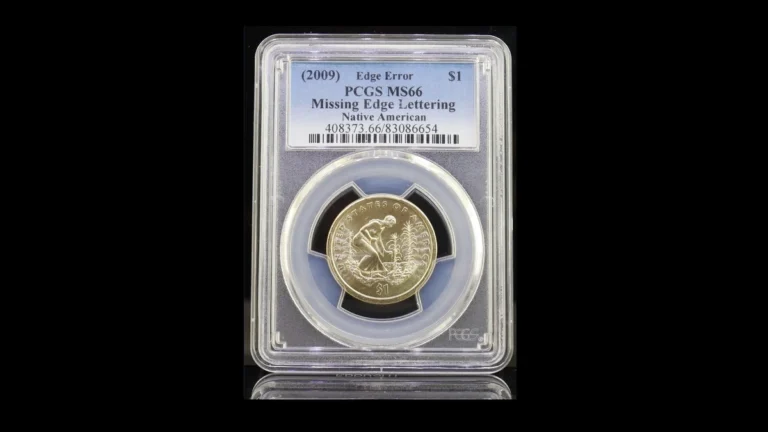
7. 2000 Dollar Two Levels Along the Plain Edge: Partial Collar Error
A blank only partly enclosed by the collar can retain a narrow confined section beside metal that spread farther outward. The resulting step can be much clearer from the side than from either face.
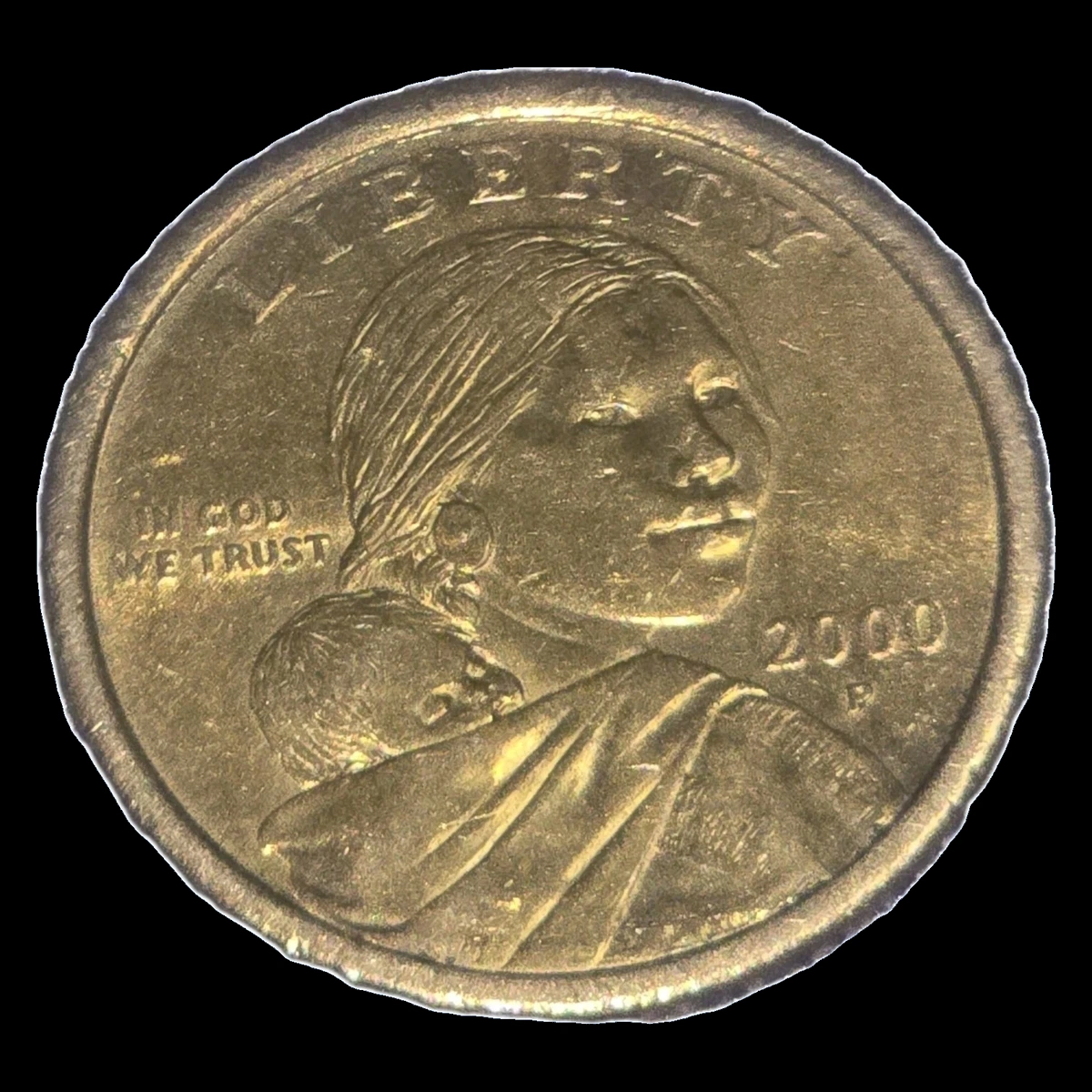
A recorded 2000-P dollar in PCGS MS61 illustrates this partial-collar type. Its plain edge should be compared with the normal plain edge of this year, not with lettered later dollars.
How to Identify
Rotate the dollar slowly to follow the boundary between the narrow and expanded levels. A single flattened contact spot does not establish the collar relationship.
Inspect the transition for dents or rolled metal that may have changed the edge after striking. On a loose coin, gentle width comparisons at different heights can support the side view without squeezing the metal.
What It’s Worth
$75–$500 is the supplied estimate for comparable partial-collar errors. A distinct step extending around a meaningful part of the edge is easier to demonstrate than a tiny irregularity.
The PCGS MS61 example sold for $126.50 in August 2009. MS61 describes an unworn coin with many noticeable marks, rather than a heavily circulated specimen.
8. 2000 Dollar An Unstruck Crescent Beside Incomplete Designs: Off-Center Strike Error
A misplaced blank can leave much of its surface untouched while the intended picture runs past the opposite boundary. A documented 2000-P example in NGC MS66 is about 50% off-center and retains its date and mintmark.
A separate NGC MS65 coin attributed as (2000-P) is about 60% off-center and has a front indent. An indent is a depression that can be made when another blank obstructs the strike.
How to Identify
Record which date and mint characters actually remain visible. The parentheses in the second specimen’s identity indicate an attribution and should not become a claim that its complete date and mintmark can be read.
Follow the struck design from the blank crescent to the opposite edge and compare both faces. Original unstruck metal should lack filing or faint remnants of a design removed later.
On an indented example, examine the depression separately from the unstruck crescent. The two boundaries explain different parts of the same striking event.
What It’s Worth
$300–$5,000 is the supplied estimate from lesser shifts through major authenticated examples, including an additional indent. Readable identity and surface quality matter alongside displacement.
The approximately 50% off-center NGC MS66 dollar sold for $3,120 in April 2021. Its grade and visible date should not be assigned to the separate 60% example.
9. 2000 Dollar Multiple Portraits or Designs from Both Faces: Repeated and Flip-Over Strikes Error
Extra strikes can follow a coin shifting, turning, or flipping while it remains in the striking process. Recorded 2000-P dollars include two, three, six, and fifteen strikes, as well as different four-strike sequences.
One four-strike coin has its last two impressions about 50% off-center. Another has three later impressions displaced roughly 75%–80%, and a separate in-collar flip-over coin mixes front and reverse details on both faces.
How to Identify
Trace a repeated letter into the larger impression to which it belongs. Tiny doubled contours from a die and unrelated scratches cannot establish a full extra strike.
The fifteen-strike example has crowded outlines above LIBERTY and around the upper-left reverse rim. Its count should be checked against the certified description rather than derived by counting every visible line.
Separate the early close impressions from the later displaced ones on each four-strike specimen. A flip-over attribution additionally requires opposite-face designs on each side, not merely two portraits.
What It’s Worth
$500–$7,500 is the supplied estimate for these repeated-strike dollars. Clear separation and an understandable arrangement can matter more than the sheer number of blows.
The fifteen-strike ANACS MS63 example sold for $3,360 in April 2018. A PCGS MS64 double strike with its second impression 20% off-center brought $2,280 in September 2024.
10. 2000 Dollar An Eagle That Turns to the Wrong Angle: Rotated Die Error
A dollar may show one ordinary portrait and one ordinary eagle, yet their orientation can be wrong. A die turned away from its intended position changes the relationship between the faces without creating another impression.
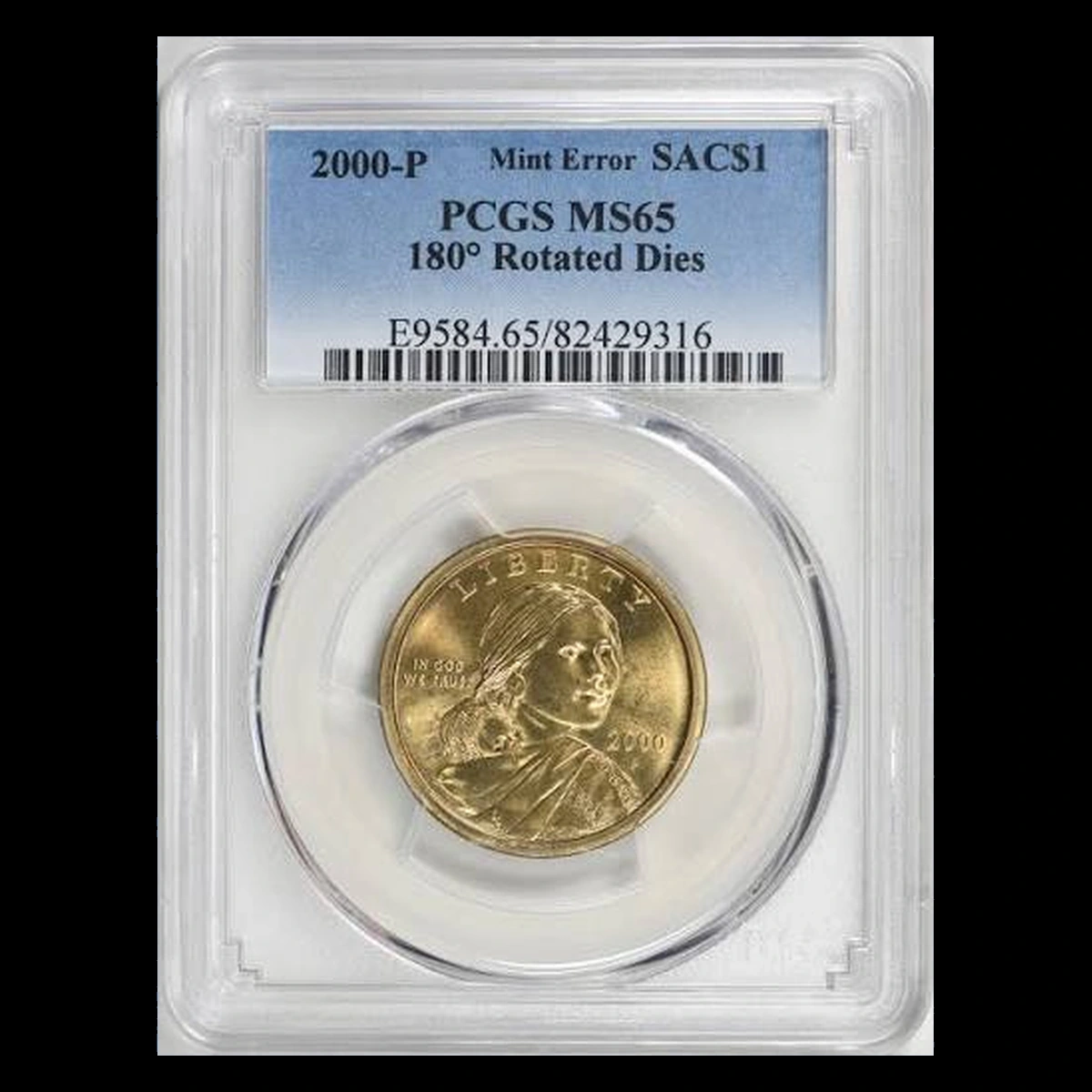
A recorded PCGS MS66 example has a 140-degree rotation. Other 2000-P specimens have different angles that must be measured independently.
How to Identify
Practice on a normal dollar by holding Sacagawea upright and flipping top to bottom without a sideways twist. The eagle should finish upright.
Repeat with the candidate while keeping your fingers at the same rim points. Record the resulting eagle angle against a fixed reference without rotating the photograph afterward.
A clear holder can help only if the coin cannot move inside it. The same controlled flip should reproduce the same unusual angle each time.
What It’s Worth
$50–$600 is the supplied estimate for clear authenticated rotations. A substantial turn is generally easier to show than a slight deviation, though condition remains important.
The PCGS MS66 coin with 140-degree rotation sold for $322 in March 2010. That angle and high unworn grade describe a specific example rather than all rotated 2000-P dollars.
11. 2000 Dollar Copper Exposed on the Eagle Side: Missing Reverse Clad Layer Error
A copper-red reverse opposite a golden front can indicate loss of the back outer layer. Sacagawea dollars use bonded layers, with a copper center and an outer alloy containing manganese and brass-forming metals.
The outer metal is not a sheet of pure manganese. A specialist dealer list records a PCGS MS63 2000 dollar missing its reverse layer, without specifying its mintmark.
How to Identify
A loose coin should weigh less than the normal approximately 8.1 grams if an entire layer is absent. Inspect the edge where golden outer metal and exposed copper meet.
Grinding can also reduce weight, so examine the eagle and background for scraping or flattened detail. Copper plating, chemical color changes, and stains can alter appearance without removing the original layer.
Keep the surface uncleaned for a metal-and-edge assessment. Do not infer a P or D for the listed specimen when the supplied description leaves its mint unspecified.
What It’s Worth
$300–$3,000 is the supplied estimate for authenticated reverse-layer loss. An undisturbed complete loss offers a clearer comparison than patchy discoloration.
A 2007 Washington dollar missing its front layer was historically offered for $1,150. That different-year dealer asking price is not a completed sale or a price for the 2000 reverse-layer example.
12. 2000 Dollar Blocked Detail with Material Still Attached: Struck Through Error
An obstruction between a blank and die can leave a depressed or weak area, sometimes retaining the material itself. A reported 2000-P example has no specifically identified blocking material.
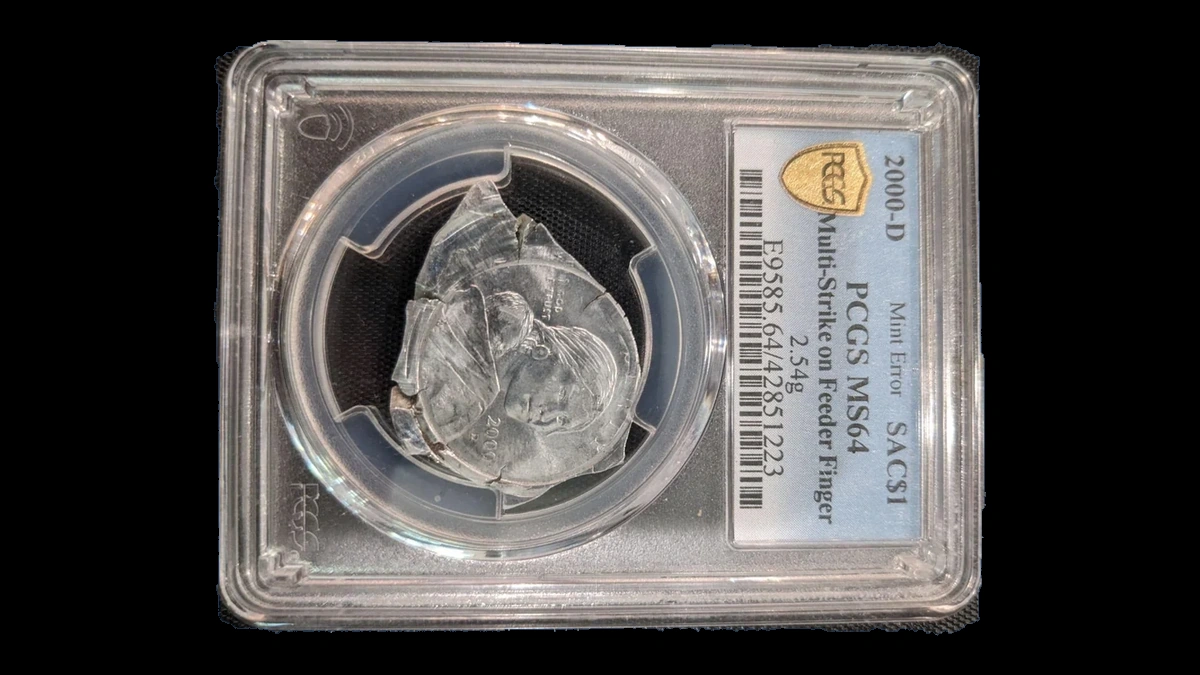
A separate NGC MS64 dollar was struck four times and retains feeder-finger aluminum scrap on its reverse. The dollar carries that fragment, unlike the scrap strikes where an irregular object itself received the full designs.
How to Identify
Leave attached material in place and inspect where the normal design stops or changes at its boundary. Low-angle photographs can show the struck relationship without lifting the fragment.
For an empty interruption, compare the area with a normal dollar and assess surrounding wear. A fragment glued onto a finished coin or general flattening of high points does not establish a strike-through.
On the four-strike example, trace repeated designs separately from the aluminum’s outline. Both contribute evidence but should not be confused with one another.
What It’s Worth
$20–$5,000 is the supplied group range, divided into $20–$300 for minor blocked designs and $1,500–$5,000 for impressive retained-material combinations. An unspecified weak patch is not comparable to a major attached fragment by appearance alone.
The four-strike NGC MS64 dollar retaining aluminum on the back sold for $3,120 in September 2024. That price includes the repeated strikes and the retained material on the same coin.
13. 2000 Dollar Faint Shapes from the Opposite Face: Clashed Dies Error
A die clash occurs when the stamping tools meet without a blank between them. Small transferred marks on the dies can then appear alongside the intended designs on later coins.
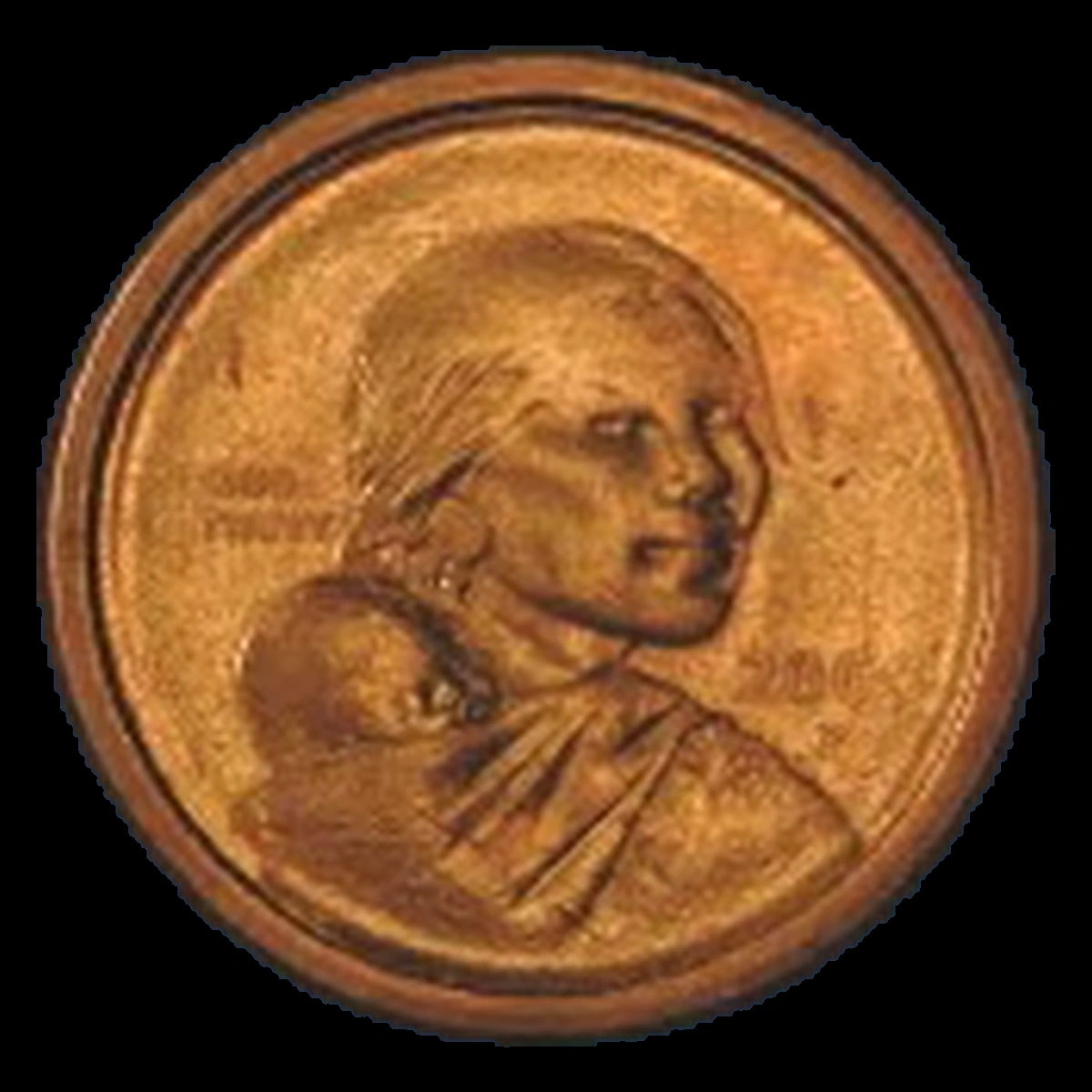
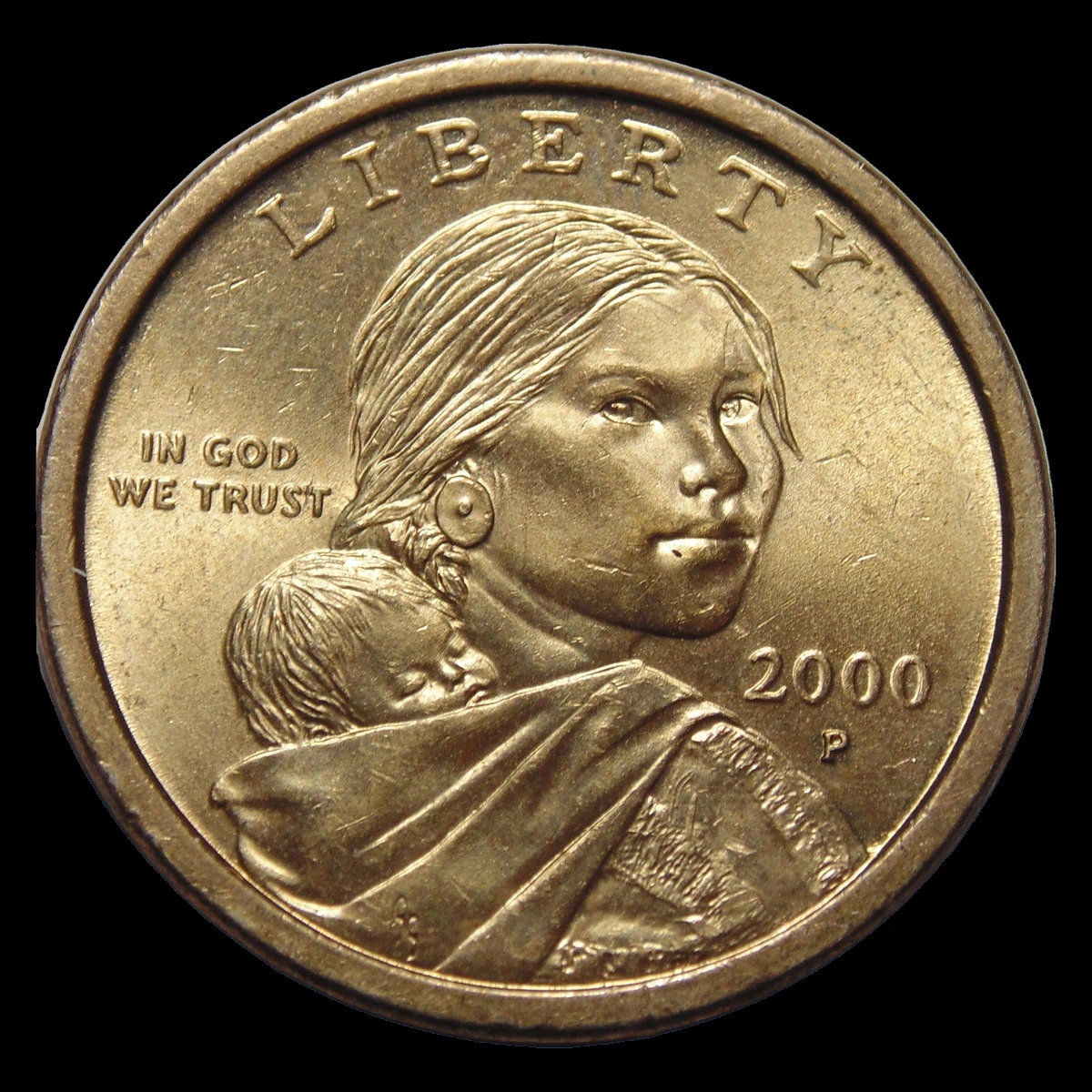
Recorded 2000-P examples include one in ANACS MS64 and a separate ICG MS67 coin described as having marks on both faces. Their faint opposite-design traces are distinct from the Wounded Eagle ridge.
How to Identify
Compare the unfamiliar outline with documented clash photographs and with the opposite design. It should explain a recognizable transferred shape, rather than simply another edge beside the same letter.
Inspect each face independently under low lighting. A clear clash on one face does not prove equally strong marks on the other.
Do not press another coin against it to test the idea. Later squeezing can leave depressed, distorted impressions that are not the same as marks inherited from clashed dies.
What It’s Worth
$10–$150 is the supplied estimate for minor through clearly visible clashes on ordinary 2000-P dollars. The strength of the transferred design can matter more than a high numerical grade alone.
No completed sale is supplied for the two noted certified examples. Cleaning, wear, and heavy spotting may make their already faint features harder to appreciate.
14. 2000 Dollar A Raised Line Across the Belly: Wounded Eagle Error
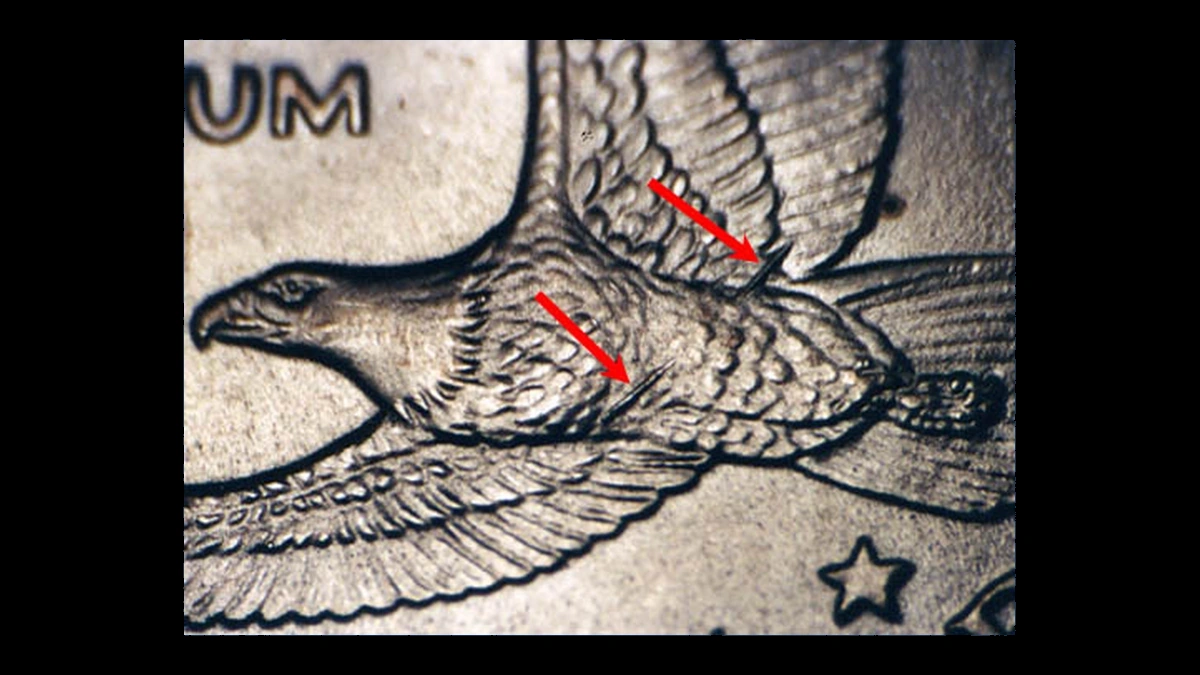
The Wounded Eagle nickname describes a raised mark crossing the eagle’s belly. PCGS calls it a raised die flaw, and the recognized 2000-P variety is cataloged as FS-901.
The mark originated in the tool and stands above the coin’s surface. An incuse scratch, ordinary feather line, or unrelated bump does not establish the variety.
How to Identify
Confirm the date and P before comparing the reverse with an FS-901 reference. Include adjacent feathers so the line’s length, direction, and exact position remain visible.
Tilt the coin under a lamp to see whether the feature casts a ridge-like shadow rather than forming a cut. Follow the whole raised mark without rubbing or probing it.
What It’s Worth
$50–$2,000 is the supplied estimate for identifiable Wounded Eagle dollars. Clear worn examples and exceptionally clean unworn specimens belong at different points in that range.
PCGS records an MS67 example at $1,800 in November 2020. That high-grade whole-coin result should not be applied automatically to a circulated discovery.
Conclusion
A strange-looking 2000 dollar may involve its blank, its dies, an obstruction, or more than one strike. Identify the complete object before deciding which comparison belongs with it.
Keep individual specimens’ grades, weights, percentages, and sale records separate, especially when several errors occur together. Preserve original layers and attached fragments, and use both faces and the edge to distinguish genuine manufacturing evidence from later alteration or an attractive but misleading surface mark.