Rare 1985 Dime Errors (List & Pictures)
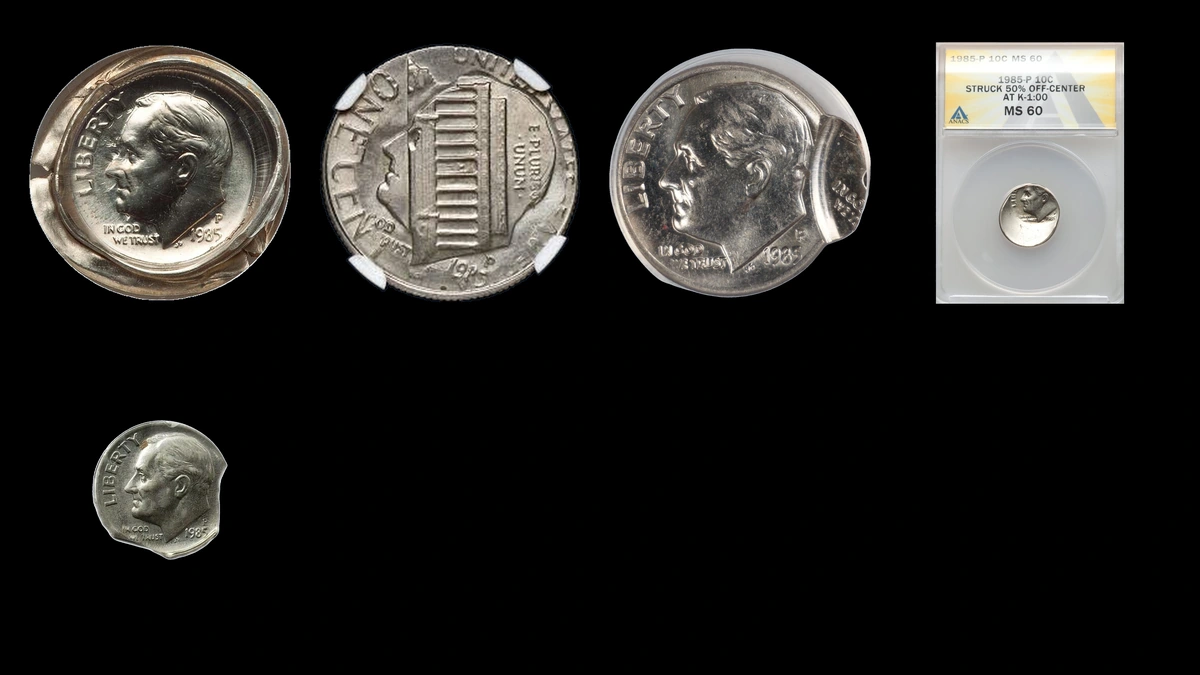
The edge can reveal as much as Roosevelt’s portrait when examining 1985 dime errors. A joined pair of blanks brought $1,080 in July 2021, while less dramatic mistakes may cost only a few dollars.
Estimates below span $5–$2,500, with paired pieces valued together. Work from the coin’s shape to overlapping designs, missing metal, and small raised details to find the closest comparison.
1. 1985 Dime Two Pieces Joined at the Edge: Bonded Blanks Error
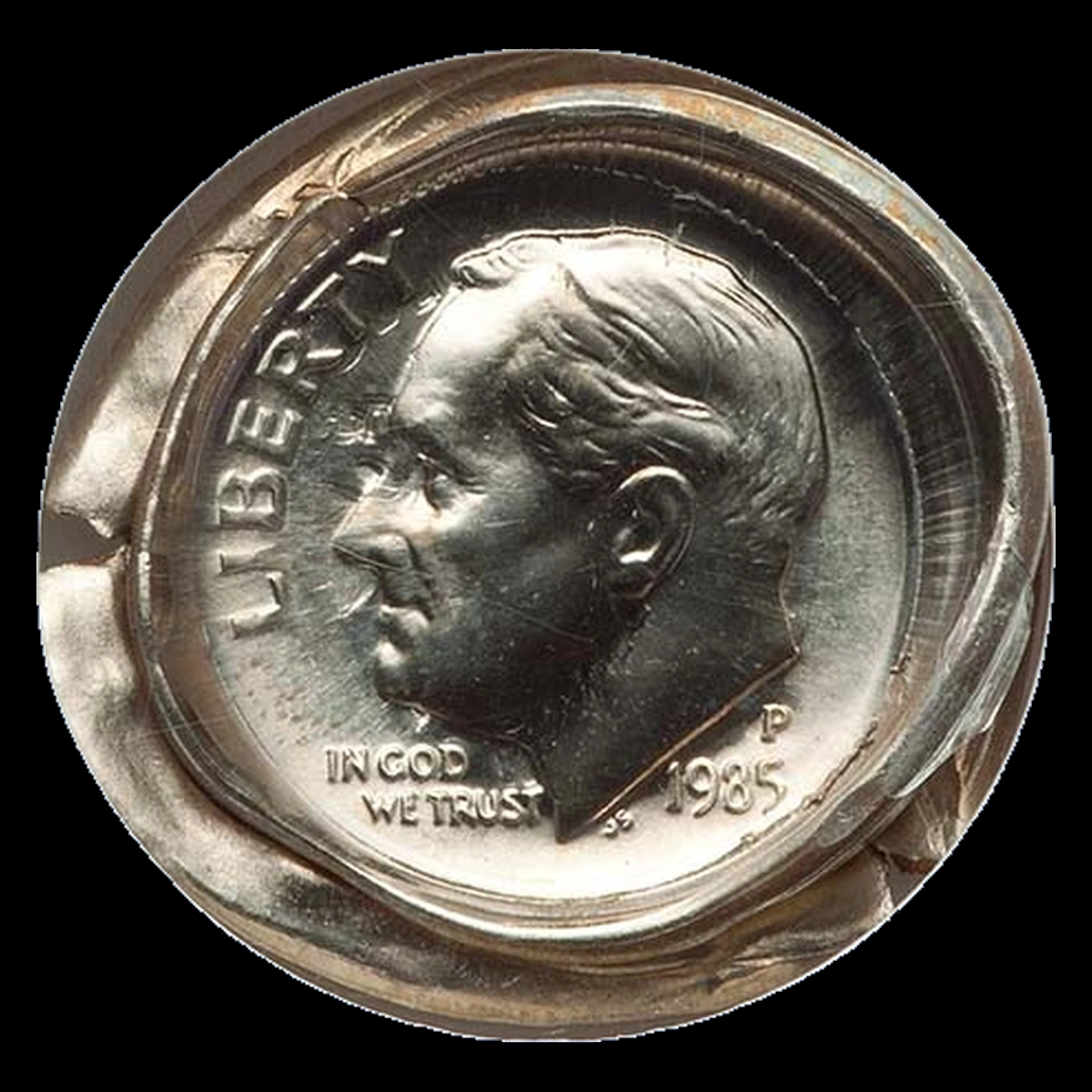
A thick object with a visible joining line may contain two blanks that stayed together after striking. The recorded Philadelphia example also became a front die cap, with an irregular expanded border and surviving reverse design.
How to Identify
Study the seam from the side without trying to pull the pieces apart. Metal forced together in the press should tell a different story from glue or solder joining two ordinary finished dimes.
For reference, an ordinary 1985 clad dime weighs 2.268 grams, measures 17.91 mm across, and has a grooved edge. Two complete blanks would begin near twice that weight, but the supplied record gives no measured weight for this bonded pair.
Its reflective areas do not establish a Proof issue. NGC graded the complete object MS67, an exceptionally well-preserved unworn grade.
What It’s Worth
Allow $800–$2,500 for a comparable bonded object. The July 2021 result of $1,080 bought the entire joined pair, including its cap shape.
A buyer values the relationship between the pieces as well as their condition. Adding a separate cap price would count the same feature twice.
2. 1985 Dime Metal Rising Like a Cup: Deep Die Caps and Matching Pieces Error
A dime that sticks to a stamping tool can wrap around it as striking continues. The resulting raised walls form a die cap, rather than an ordinary coin with a bent rim.
One individual 1985-P front cap weighs 2.26 grams and carries an NGC MS66 grade. A separate matching pair consists of two unjoined pieces that record related strikes.
How to Identify
Side views should show how the walls rise from the struck surface. Preserve that shape: pressing the coin flat destroys evidence, and its original dime dimensions are only a starting comparison.
In the matching pair, the first piece has a deep front cap and flattened reverse. The second has a clear reverse, faint front, and raised border.
The pieces received PCGS MS66 and MS64 grades. Because the second has no readable date, its connection to 1985 relies on the physical match.
What It’s Worth
An individual deep cap is estimated at $500–$1,500; a convincing matching pair at $1,000–$2,000 together. The individual 2.26-gram example sold for $977.50 in January 2010.
The separate pair did not sell in its January 2008 auction appearance. That listing documents the pair, but supplies no completed sale price.
3. 1985 Dime A Soft Front with Extra Traces: Struck Through a Die Cap and Clashed Dies Error
Compare the clarity of the two faces before examining individual letters. A coin covering the front stamping tool can soften the image transferred to the next blank while the reverse remains stronger.
The reported 1985-P receiver also shows die clash marks. Those originate when the two uncovered tools hit each other without a blank between them.
How to Identify
This receiving dime is a different object from the cup-shaped cap attached to the tool. Look for broadly distorted front detail rather than assuming any worn portrait was struck through a cap.
Clash identification requires recognizable traces of the opposite design. The report gives no fixed location, so an isolated scratch cannot be assigned to this combination automatically.
What It’s Worth
The estimated range is $75–$400. A reported June 2026 sale of $124 covers the Philadelphia coin with both effects present.
Clear evidence of the covered tool and the clash helps explain the piece to a buyer. These are features of one coin, not two prices to add together.
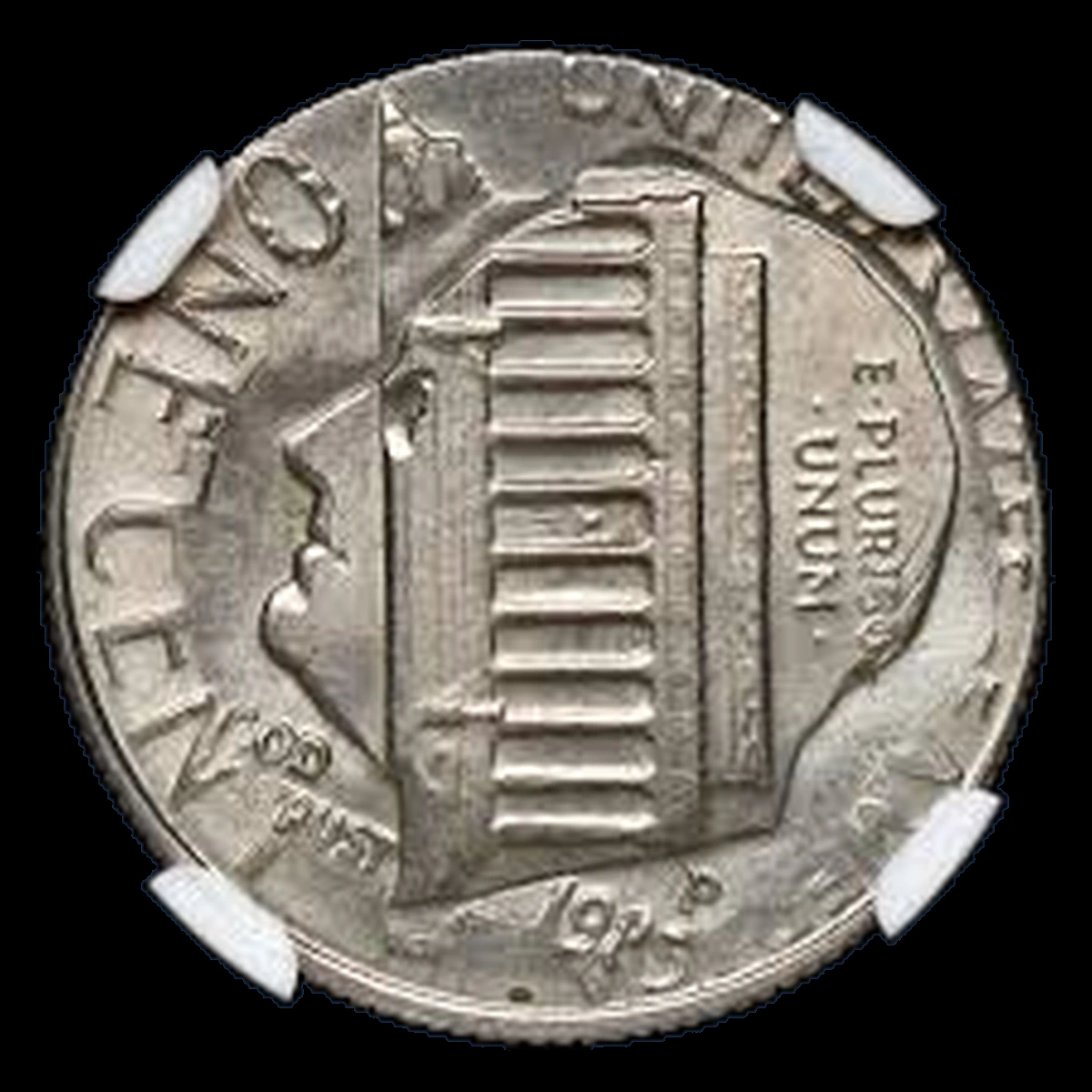
4. 1985 Dime Lincoln over Roosevelt: A Cent Struck on a Finished Dime Error
A cent portrait on dime metal calls for a search beneath the newer design. This example began as a finished 1985-P dime, then received a 1985 Lincoln cent strike.
How to Identify
On the NGC MS67 example, the earlier dime date survives among the folds at the left side of Lincoln’s jacket. Both 1985 dates can be established.
Find additional Roosevelt or reverse design fragments to demonstrate that the host was already struck. A cent made on an unused dime blank would lack those earlier images.
The metal began with the dime’s weight, not the normal cent’s 2.50 grams. The later strike can change the outline, so diameter alone does not establish the sequence.
What It’s Worth
Comparable pieces with both dates established are estimated at $700–$2,500. Heritage’s MS67 example brought $747.50 in April 2011.
Readable remnants of the dime make the unusual sequence easier to verify. The older result is a comparison for one coin bearing two denominations.
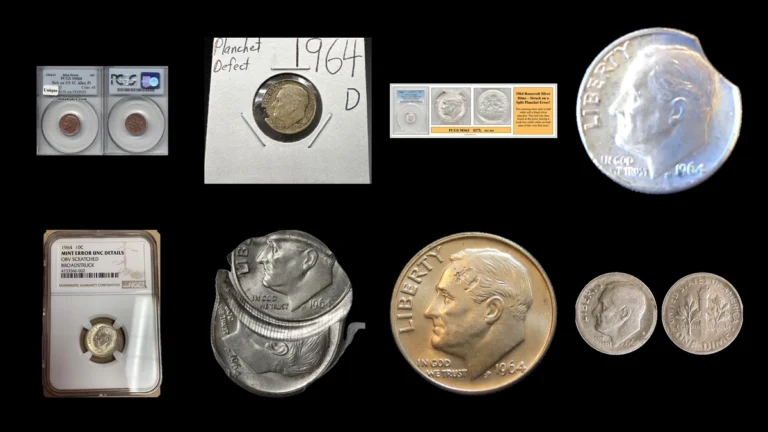
5. 1985 Dime Front and Back Designs Sharing a Face: Flip-Over Double Strike Error
Roosevelt and reverse details on the same face can record a dime turning over between blows. On the Philadelphia example, the second strike landed 75% off center.
How to Identify
Separate the surviving portrait from the torch and branches, then follow where the later impression crosses the earlier one. The supplied description establishes no clock direction for the second strike.
An inward mirror image points instead toward a brockage, where another struck coin transfers its image. Opposite designs alone need this raised-versus-recessed check before the sequence is assigned.
NGC’s Uncirculated Details label indicates no circulation wear but a condition problem. The available description does not identify that problem.
What It’s Worth
Estimate $150–$900 for this kind of flip-over strike. The 1985 example was one of three double-struck coins sold together for $176.25 in January 2015.
That total cannot be assigned to this dime individually. Readable mixed designs and sound surfaces are useful distinctions when choosing a closer price comparison.
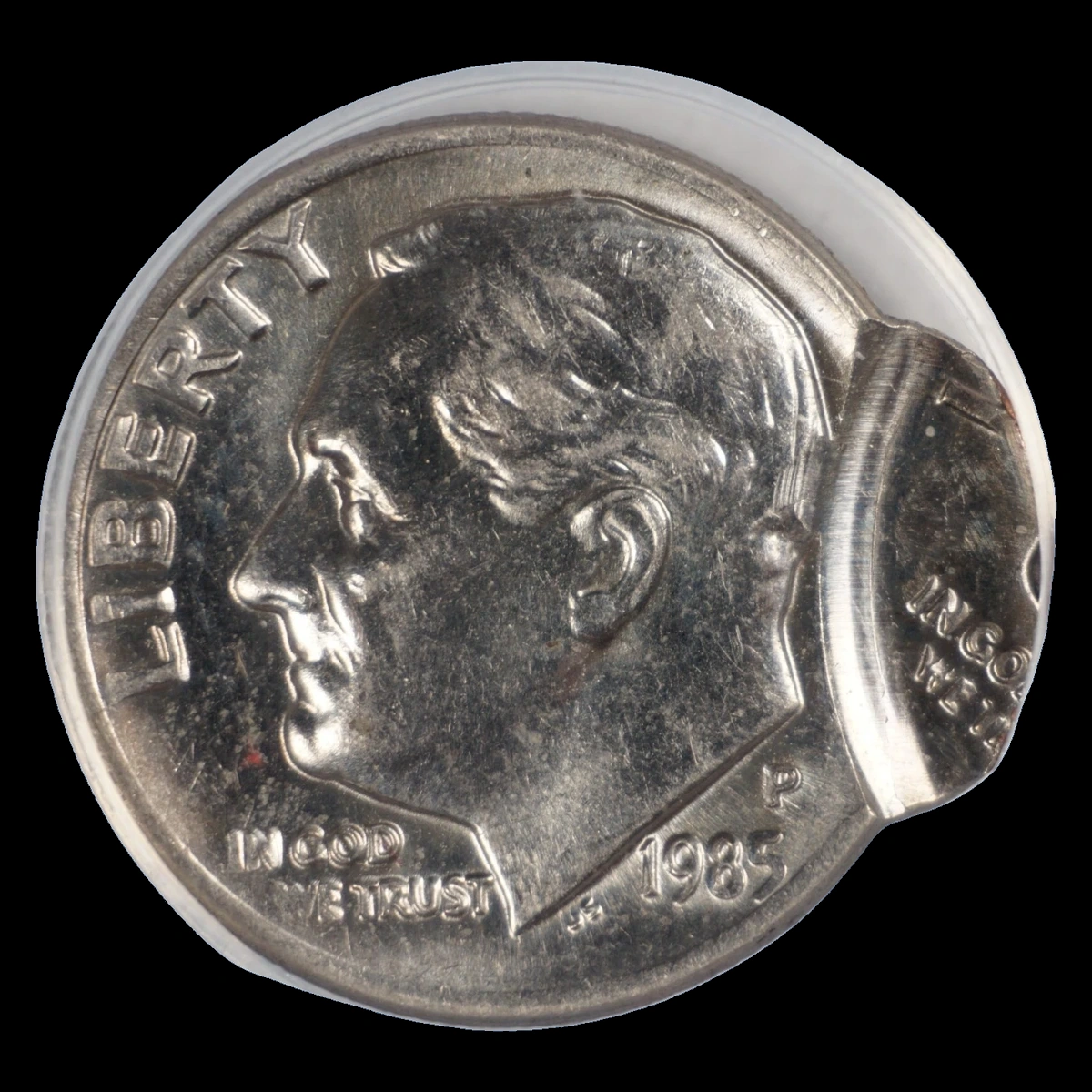
6. 1985 Dime Widely Separated Impressions: Double Strikes Error
A second date, portrait, or border far from the first can reveal another trip under the tools. Recorded Philadelphia examples have second strikes 75% or 60% off center.
Some later strikes also had one face blocked by another blank. The records include a Philadelphia piece at 75% and a Denver piece at 85%, with later scratches on the Denver coin.
How to Identify
Trace a recognizable design feature through both impressions. This displacement involves whole sections of a coin, rather than a tiny shelf beside one letter.
For a blocked-face example, compare the later struck area with the corresponding area on the other face. A missing design there should fit the obstruction during the second blow.
Keep the separate coins and percentages distinct when using photographs. The Denver scratches describe its later condition, not the cause of its double strike.
What It’s Worth
Individual examples fall around $50–$700. The blocked-face Philadelphia and Denver coins sold as a two-coin lot for $139 in March 2023.
Readable separated impressions can support more than a confusing overlap. Surface damage and loss of the date can limit the appeal of a dramatic second strike.
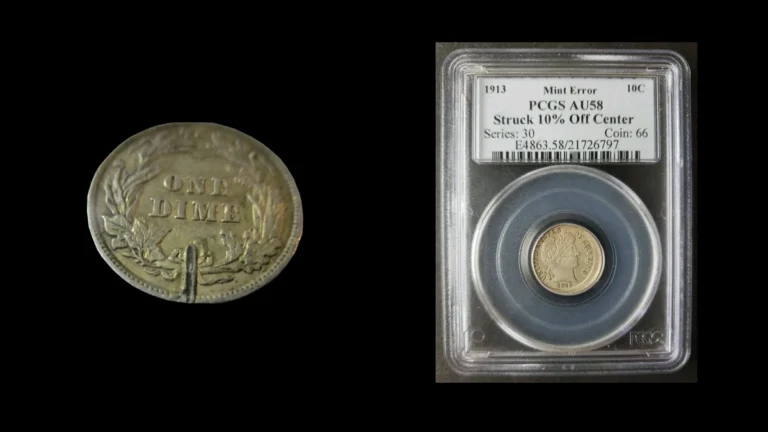
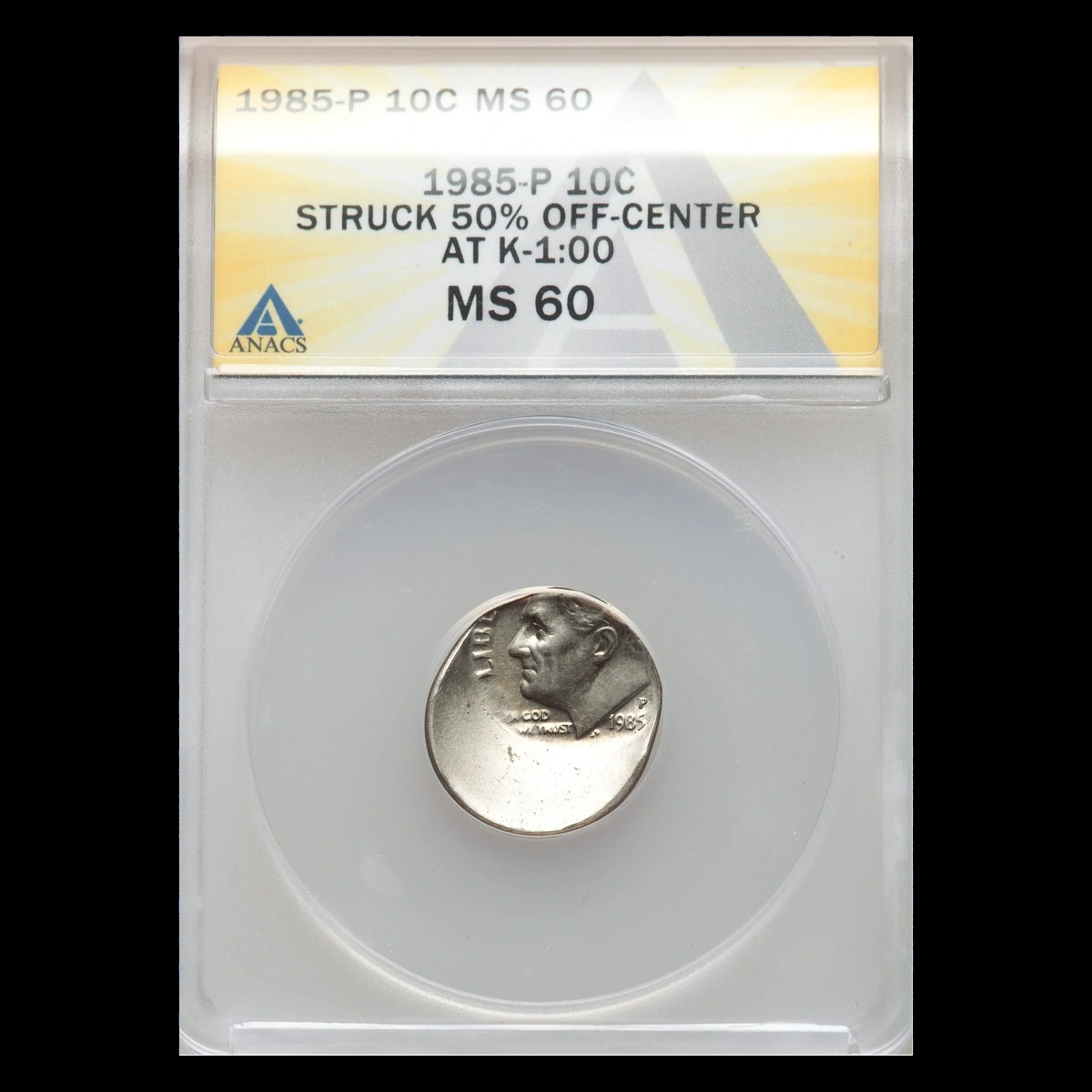
7. 1985 Dime A Blank Crescent Beside the Design: Off-Center Strikes Error
An off-center dime leaves some blank metal untouched while part of the design misses the coin. Check both faces for the same displaced boundary.
How to Identify
The recorded Denver example is 65% off center toward 10 o’clock and graded ANACS MS63. Separate Philadelphia examples include one at 25% and another at 40% toward 1 o’clock.
Hold the portrait upright before comparing directions. Dark spots on the 40% Philadelphia piece are stains, not another striking error.
The blank crescent should join naturally with metal shaped by the strike. Grinding or cutting away a design leaves a different surface and does not create an untouched blank.
What It’s Worth
Expect roughly $30–$300. The 25% Philadelphia example has a reported $139 result from January 2023.
The Denver piece appeared in a three-coin lot with two other dates, so no individual price follows from the group total. A readable date and clean crescent can matter more than the percentage alone.
8. 1985 Dime A Complete Design on a Wider Coin: Broadstrike Error
Extra metal surrounding a complete design suggests the blank spread without proper restraint. The surrounding collar normally controls the dime’s width during striking.
How to Identify
Follow the outside lettering on both faces: a broadstrike retains the complete design. An off-center strike loses part of that design beyond the blank.
Compare the widened border with the central detail. Hammering can spread a coin while flattening its design, and grinding can remove the edge grooves without causing a broadstrike.
The 1985 reports do not establish a single mint letter or border shape. A smooth edge by itself is insufficient.
What It’s Worth
Reported examples have an estimated range of $30–$200, without a supplied individual auction result. Obvious expansion and an undamaged, readable design make a stronger example than slight spread on a worn coin.
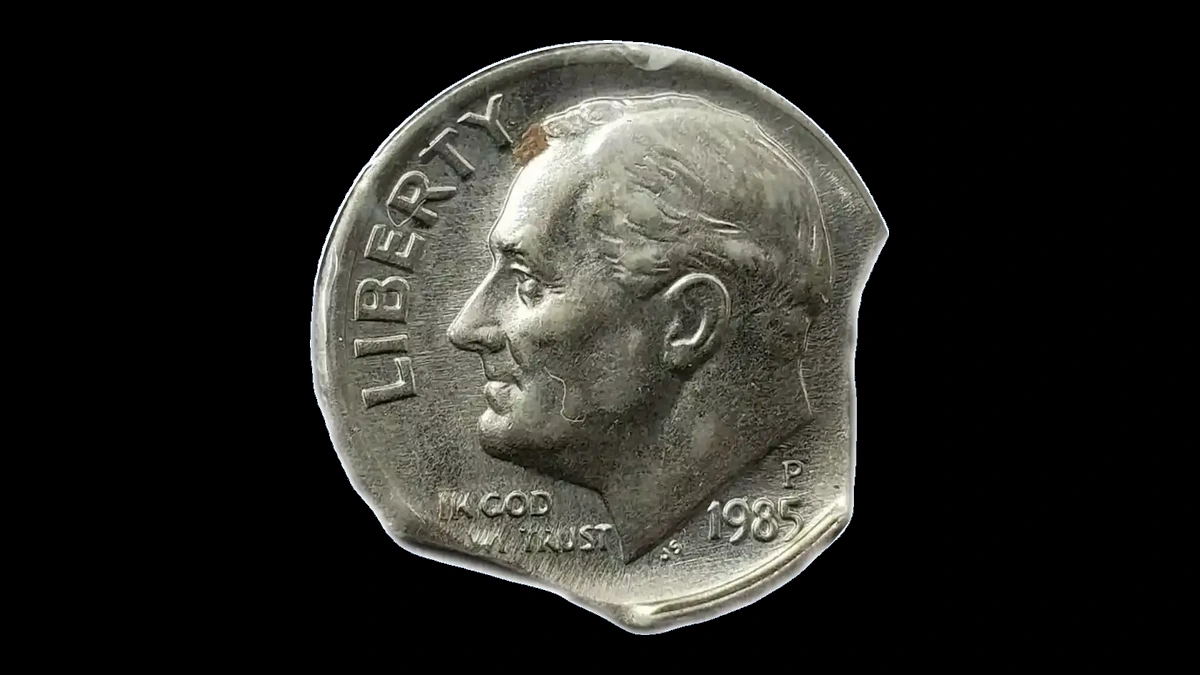
9. 1985 Dime One or Two Gaps in the Outline: Clipped Blanks Error
Missing metal can originate while blanks are being cut from a strip. Overlapping an earlier hole produces a curved gap; reaching the strip’s edge can produce a straight one.
Both forms are reported for Philadelphia and Denver. A separate Philadelphia dime has two curved clips.
How to Identify
Inspect the ends of each gap for metal shaped during striking. A fresh cut may leave a sharp burr or tool marks instead.
Weakness opposite a clip supports the identification when present, but its absence does not decide the case. On a double clip, each opening needs its own examination.
Two missing sections do not imply two strikes. Reduced weight supports missing original metal, but also occurs when someone cuts a finished coin.
What It’s Worth
Genuine clips are estimated at $15–$150. The Philadelphia double-curved example, graded NGC MS64, has a reported $38 sale from January 2023.
Size, clean surfaces, and remaining design affect the price. Two small clips do not automatically double the value of a single clip.
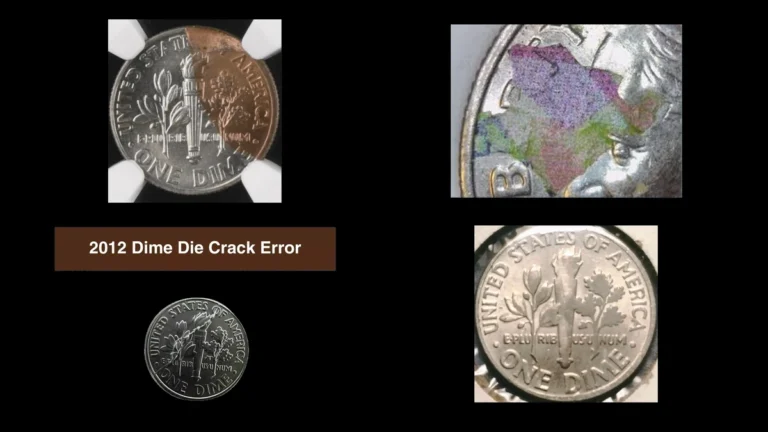
10. 1985 Dime Copper across One Face: Missing Outer Clad Layer Error
A normal dime sandwiches a copper core between silver-colored outer layers. Losing one layer before striking allows the design to be stamped into the exposed copper.
How to Identify
Compare both faces and the edge rather than relying on a brown patch. A surviving outer layer on one side, exposed core on the other, and reduced weight form a more useful combination.
Staining, copper plating, and artificial stripping can imitate the color. Check whether the design was struck into the copper and whether the surface instead shows pits or removal marks.
The 1985 report does not specify which face lost its layer. It does not establish an example missing both outer layers.
What It’s Worth
A genuine single-layer loss is estimated at $40–$250. A 1989-P dime missing its front layer sold for $92 in August 2004; that is a different-year comparison.
Clear layer boundaries and an intact design help distinguish collectible loss from later surface damage.
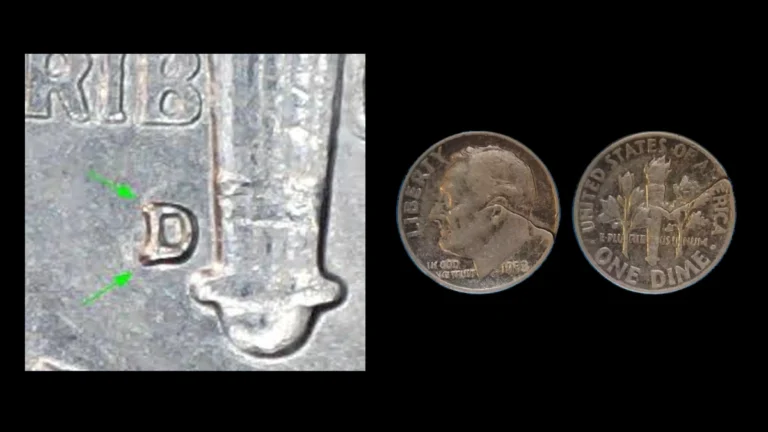
11. 1985 Dime A Fine Ridge across the Surface: Die Cracks Error
Small raised lines need a different examination from missing metal. A crack in a stamping tool accepts coin metal and leaves a ridge on the struck dime.
How to Identify
Move the light across the suspected ridge and follow its full path. A scratch usually has a central cut, even when displaced metal stands along its sides.
No one location defines the reported 1985 cracks. Photograph both ends with surrounding design so glare or an isolated damage mark does not become a false match.
What It’s Worth
Typical estimates are $5–$75, with no individual sale supplied. A strong, easily followed ridge on a clean coin is more attractive than a faint line on a heavily worn dime.
12. 1985 Dime Rounded Extra Letter Outlines: Doubled Dies Error
Minor 1985-P doubling is reported around IN GOD WE TRUST, the date, and facial detail. A doubled die carries the extra image in the tool itself, allowing the same pattern to repeat on different coins.
How to Identify
Inspect individual corners and outlines under magnification. Rounded secondary details deserve closer study; a flat shelf that narrows the main letter suggests movement during striking.
The reports establish no single major front variety or fixed direction. Reverse doubling also needs its own matching evidence and cannot be confirmed by a photograph of the front.
What It’s Worth
Minor genuine doubled dies are estimated at $10–$100. Clear separation and good preservation support more than vague thickening, while ordinary shelf-like doubling does not qualify for the same premium.
Conclusion
Start a 1985 dime examination with its outline and both faces, then move to the edge and small details. A seam, blank crescent, or surviving earlier design can explain far more than unusual color alone.
Keep joined objects and matching pairs intact, and compare prices at the same level: one coin, two separate coins, or a complete bonded pair. Clear identification should come before a value estimate.