Rare 1995 Dime Errors (List & Pictures)
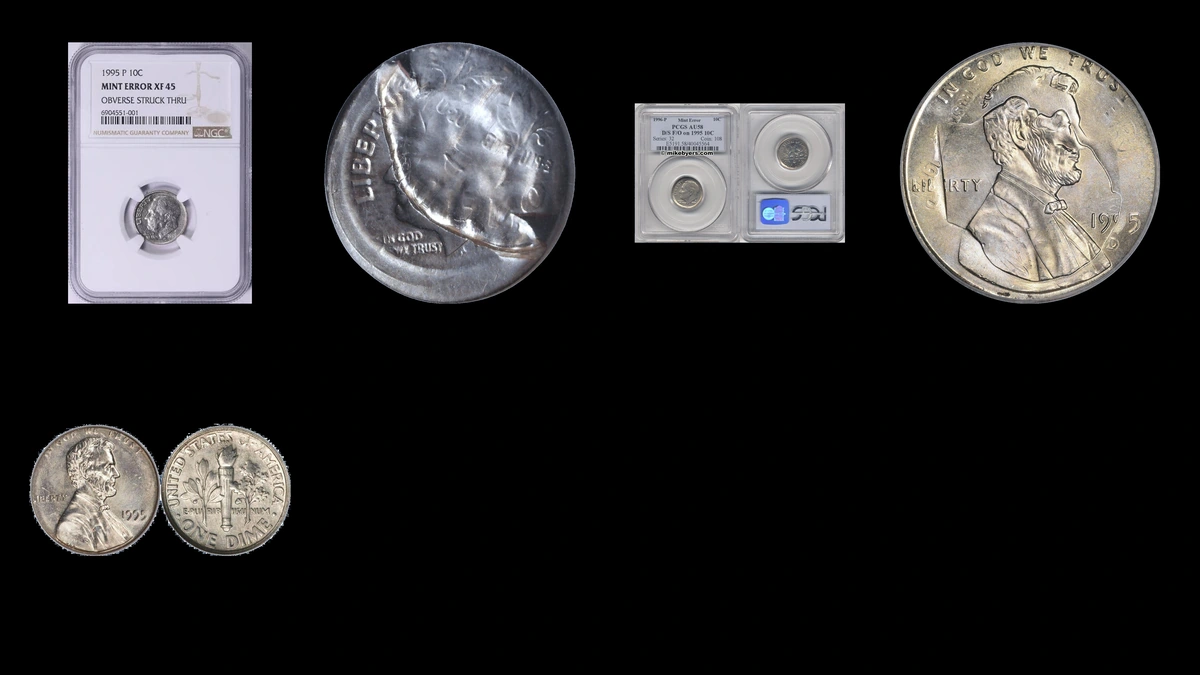
Lincoln can appear on a 1995 dime in two very different ways: mismatched dies or a cent strike over an earlier dime. The rare mule sold for $57,500 on January 7, 2010, while the broader estimated range for 1995 dime errors is $15–$75,000.
Start with surface details and color, examine the outline, and then compare repeated or unexpected designs.
| Visible clue | Possible error | Estimated value |
|---|---|---|
| Fine repeated design contours | Doubled die | $15–$100 |
| Wire remains in the front | Retained struck-through wire | $200–$600 |
| Unusual color with intact layers | Improper annealing | $30–$300 |
| Copper exposed across part or all of the front | Missing clad layer | $60–$450 |
| Expanded border around complete design | Broadstrike | $20–$150 |
| Untouched crescent and missing design | Off-center strike | $30–$200 |
| Missing blank metal plus a displaced strike | Clip with off-center strike | $60–$350 |
| Separate overlapping impressions | Multiple strike | $100–$750 |
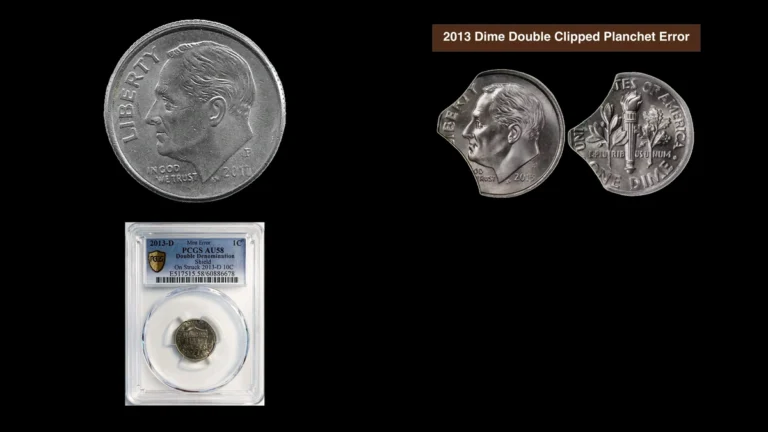
| Cent design over surviving dime details | Double denomination | $1,000–$3,000 |
| Cent front paired with dime reverse | Mule | $40,000–$75,000 |
1. 1995 Dime A Small Feature Appears Repeated: Doubled Die Error
An extra outline around the eye, ear, or lettering can prompt a doubled-die check. In a genuine variety, the repetition existed in the striking tool before it struck the coin.
The supplied year guide does not establish a major named 1995 dime variety. The well-known 1995 doubled Lincoln cent is a different coin.
How to Identify
Look for rounded repeated contours across a coherent pattern and compare them with an identified dime example. A flat shelf can result from movement during the strike rather than die doubling.
Move the light to exclude reflections that change with viewing angle. A normal P or D clad dime weighs about 2.268 grams and measures 17.91 mm; a silver S Proof weighs about 2.50 grams at the same diameter.
What It’s Worth
$15–$100 is the conditional estimate for confirmed minor doubled dies. No completed sale or major named dime attribution was supplied for this report.
Clearly separated original detail supports a stronger comparison than thickness alone. Enlarging a flat striking shelf does not move it into the genuine doubled-die range.
2. 1995 Dime A Thin Wire Remains Embedded in the Front: Retained Struck-Through Wire Error
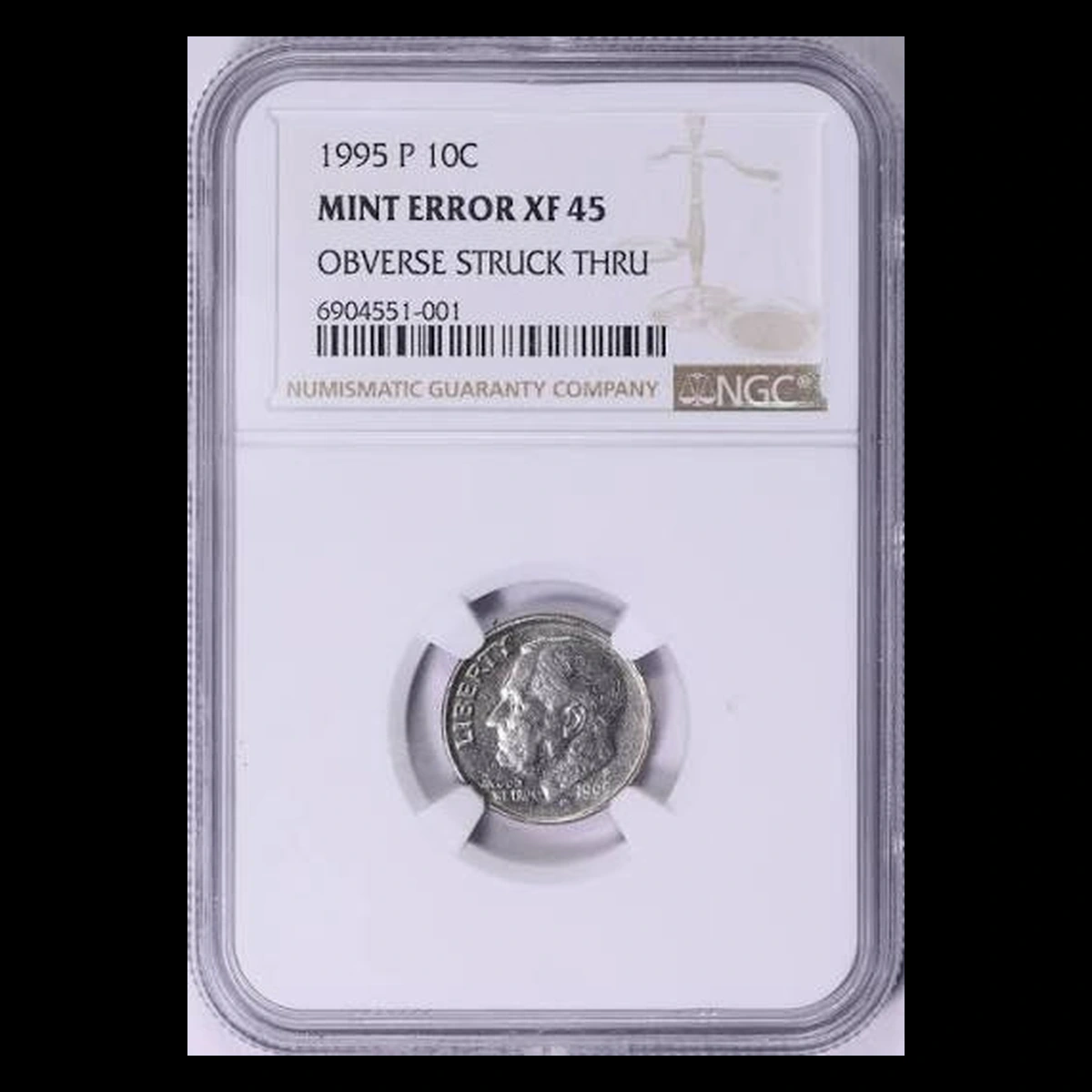
A Philadelphia PCGS AU58 dime was cataloged with wire struck into the portrait side. The wire remained after pressure forced it into the coin during striking.
The retained object makes this different from an empty groove left after an obstruction falls away. AU58 indicates only slight wear.
How to Identify
Examine the embedded ends and the way nearby design meets the wire. Original struck metal holding it in place is more persuasive than an object resting over complete detail.
Glue, freshly scraped channels, and raised cutting burrs suggest later work. Do not pull, probe, or clean around the wire, and keep a certified example sealed.
What It’s Worth
$200–$600 is the estimate for comparable original retained-wire pieces. The AU58 example realized $432 in July 2022.
A clear attachment and readable surrounding strike preserve the evidence. A faint empty line or a glued addition is not an equivalent comparison.
3. 1995 Dime The Metal Has an Unexpected Surface Color: Improper Annealing Error
A collector registry lists a 1995-P dime as improperly annealed. Annealing is the heating step that prepares blanks to accept a strike.
Problems during that treatment can affect the surface, but brown or dark color alone cannot identify the cause. Soil, chemicals, later heat, and coatings can change a dime’s appearance too.
How to Identify
Photograph both faces in neutral light and inspect for pits, crust, paint, or cleaning scratches. Compare the metal structure with missing-layer examples rather than diagnosing from shade alone.
Ordinary weight and diameter can exclude some missing-metal problems but do not prove a mint heating error. A professionally identified example with an annealing attribution provides a more useful reference than generic toning.
What It’s Worth
$30–$300 is the estimated range for professionally confirmed examples. No sale price was supplied for the registry coin.
The comparison depends on an original mint-made surface change and its preservation. An unexplained brown pocket-change dime does not automatically qualify.
4. 1995 Dime Copper Replaces Part or All of the Front Layer: Missing Clad Layer Error
A fully missing front layer exposes the copper center beneath a dime’s pale outer metal. A partial loss instead leaves a boundary between covered and exposed areas.
The Philadelphia records include an NGC MS64 full front-layer loss weighing 1.9 grams and a separate MS63 with partial front-layer loss. Their measurements and appearances must stay attached to the correct coins.
How to Identify
Follow the design across the exposed copper and inspect the edge and opposite face for remaining layers. A partial-loss candidate needs a real metal boundary, not merely two colors.
Grinding and chemical stripping can reduce weight while damaging letters and surface texture. The documented 1.9 grams belongs to the full-loss specimen rather than to every partial-loss coin.
What It’s Worth
$60–$450 is the estimate for the different missing-layer appearances. Greysheet’s auction records report $75 for the full-loss example and $384 for the partial-loss coin, both in July 2022.
The partial loss brought more despite affecting less surface. A clear two-color pattern, original boundary, and condition can matter more than the amount of missing metal.
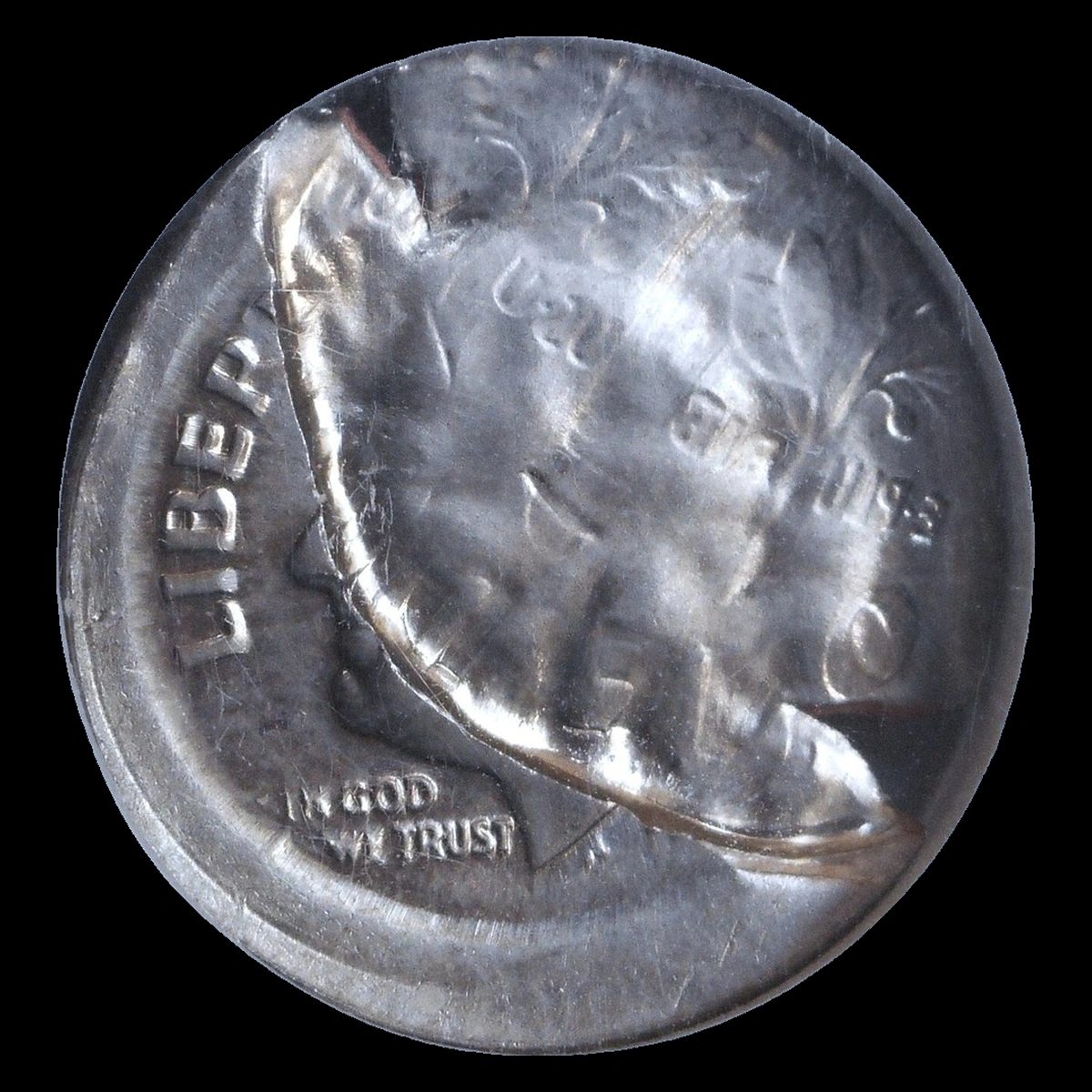
5. 1995 Dime The Whole Design Fits inside a Wider Border: Broadstrike Error
A broadstrike forms when the collar does not restrain the blank normally. The metal spreads, and the border may be even or wider on one side.
A Philadelphia example is described as NGC MS66 with Full Bands. Full Bands refers to separated horizontal torch bands, not an additional error.
How to Identify
Trace the outer lettering on both faces and check that the complete design remains within the metal. An uneven border alone does not make the strike off center.
Measure the expanded outline and inspect for natural flow rather than crushed portrait detail or scraped metal. Hammering or grinding a finished coin can also change its width.
What It’s Worth
$20–$150 is the estimated range for genuine broadstrikes. PCGS records a $45 result for a high-grade Philadelphia example.
The amount of spread, surface condition, and sharpness all affect the comparison. A slight increase in diameter does not by itself imply a rare or expensive coin.
6. 1995 Dime An Unstruck Crescent Sits beside Lost Design: Off-Center Strike Error
A Philadelphia NGC MS64 dime was struck 20% off center. The blank lay partly outside the striking position, so both designs missed some of the metal.
Denver examples are also reported, but the Philadelphia percentage does not describe all of them. Each needs its own assessment of displacement and readable identity.
How to Identify
Compare the smooth untouched area with the cropped design on both faces. A narrow border on only one face may reflect a shifted die instead.
Read the date and surviving mintmark within the original struck area. Check that the crescent is untouched blank metal rather than a finished surface that was ground smooth.
What It’s Worth
$30–$200 is a working range for many clear dated examples. The 20% Philadelphia MS64 sold for $52 in August 2015.
Larger attractive errors retaining the date can exceed that common range. Small shifts, wear, and later damage make weaker comparisons.
7. 1995 Dime A Missing Gap Accompanies a Blank Crescent: Clip with Off-Center Strike Error
A clipped blank can also enter the press off center, combining missing metal with metal that remains unstruck. These features record separate stages of production.
A Philadelphia NGC MS64 Full Bands example has both errors. A separate MS62 was struck 30% off center on a curved-clipped blank.
How to Identify
Trace the actual gap separately from the solid unstruck crescent. The gap’s boundary should show natural formation around an incomplete blank rather than fresh filing or saw marks.
Opposite-rim weakness can support a clip when present, but complicated strikes do not always preserve it clearly. Keep the 30% figure on the separate MS62 coin.
What It’s Worth
$60–$350 is the estimated range for comparable combinations. The MS64 Full Bands coin brought $79 in December 2020.
The separate 30% off-center MS62 example sold for $139 in July 2022. Each price covers the whole coin with both features.
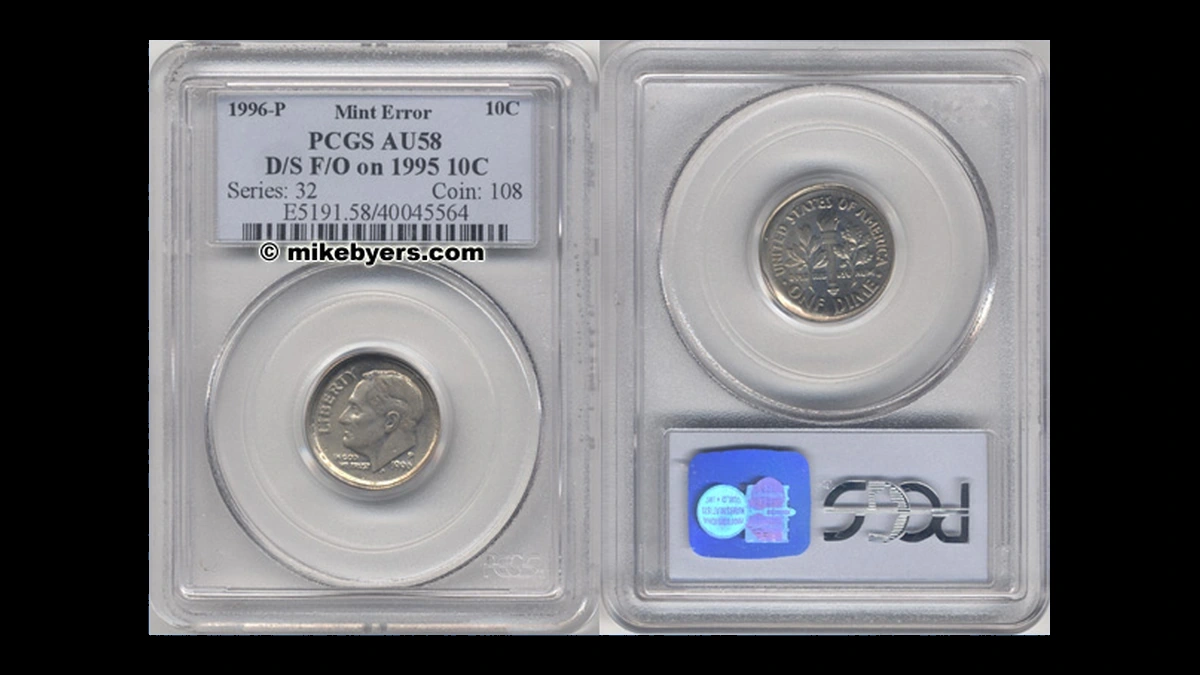
8. 1995 Dime Additional Impressions Overlap the First: Double and Multiple Strikes Error
One Philadelphia dime received a second strike 75% off center and also has a front indent. The depression records an obstruction or overlap during striking but is not automatically a mirror-image brockage.
A separate Philadelphia MS65 combines multiple strikes with broadstriking. The general term multiple does not establish how many blows it received.
How to Identify
Map repeated letters, portrait edges, or torch details into separate coherent positions on both faces. Stretched lettering alone is insufficient to count another strike.
For the double-struck coin, examine the front depression without assuming it contains reversed design. A brockage identification requires actual mirror-image detail.
What It’s Worth
$100–$750 is the estimate for comparable multiple-strike 1995 dimes. The double-struck coin with the front indent sold for $124 in July 2022.
The broadstruck MS65 appeared with a 1997-P MS66 dime in a two-coin lot that brought $132 in December 2020. That total is not a standalone result for the 1995 coin.
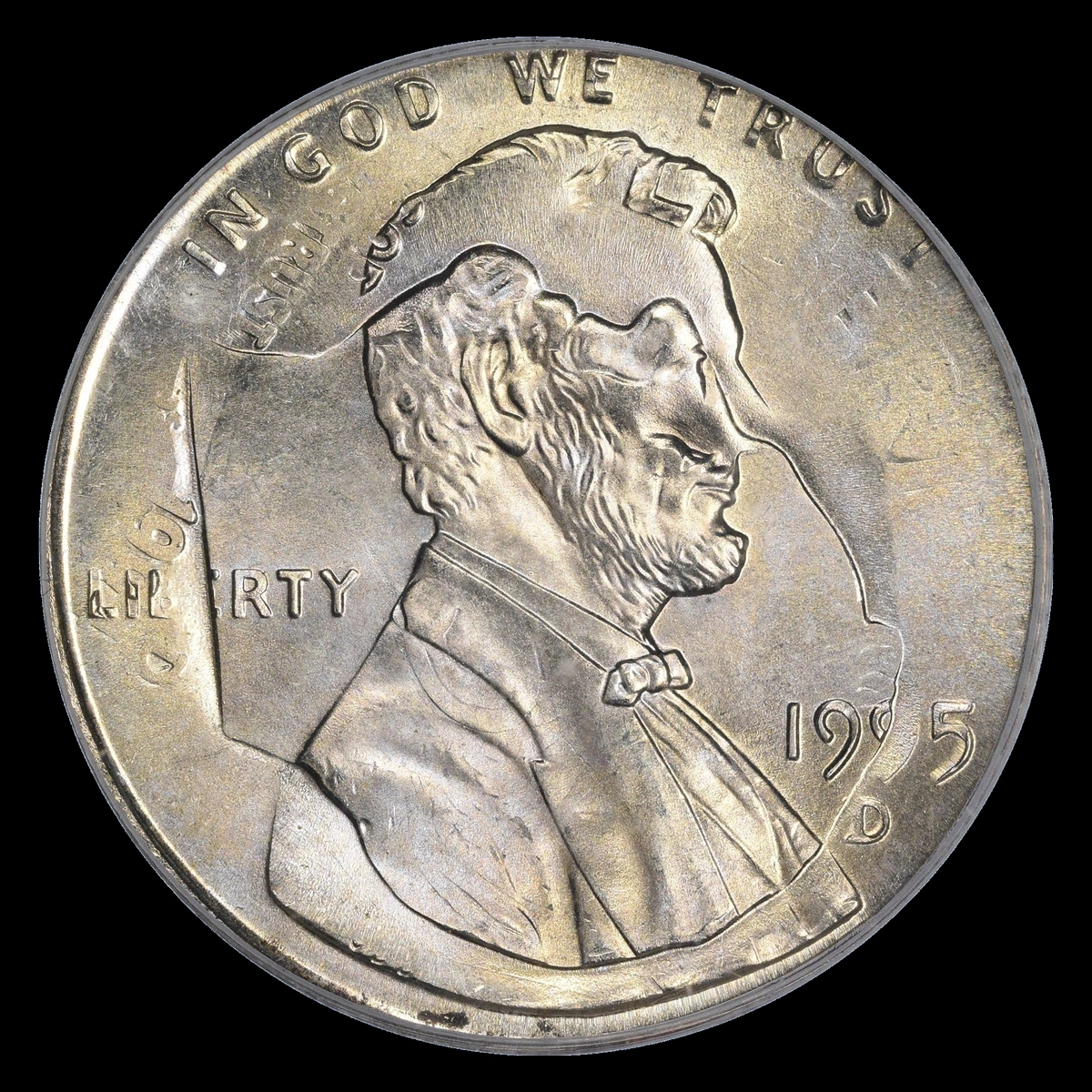
9. 1995 Dime Lincoln Overlies Traces of an Earlier Dime: Double-Denomination Overstrike Error
An already struck 1995-P dime entered a cent press and received a 1995 Lincoln design. The newer impression flattened some older details while leaving other dime features visible.
On the reported example, part of the old dime reverse survives on the newer cent front. This sequence differs from using two mismatched dies together.
How to Identify
Find recognizable dime lettering or a torch fragment beneath the cent design and follow where the impressions cross. An isolated ridge does not establish an earlier completed dime.
Look for the dates and original P wherever they survive, and compare the mass with a dime’s original standard. The later cent strike can alter diameter without changing the host into a normal 2.50-gram cent blank.
What It’s Worth
$1,000–$3,000 is the estimate for similarly clear cent-over-dime examples. An NGC MS67 sold for $1,440 in December 2023.
Visible remnants of the earlier dime help explain what happened. The result values one coin with two successive designs.
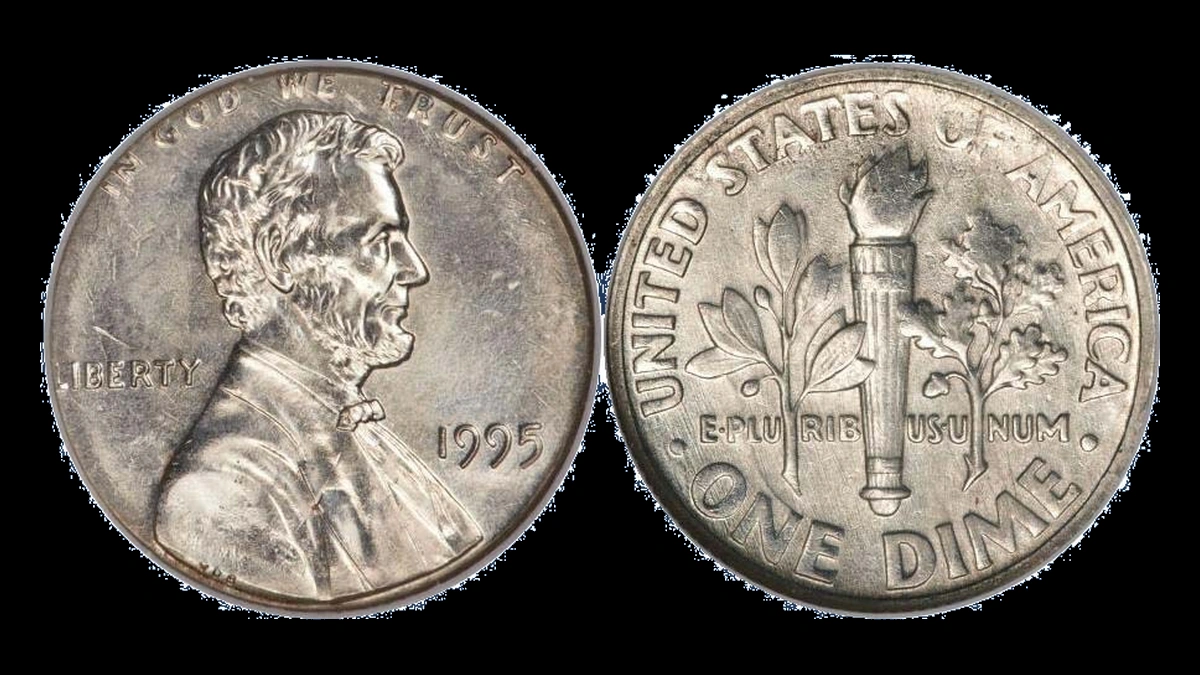
10. 1995 Dime Lincoln Faces a Dime Torch on the Reverse: Mule Error
The 1995 mule pairs a Lincoln cent front die with a dime reverse die. It was struck on a dime blank within a dime collar.
The larger cent design crowds the small front border, while the back displays the torch and ONE DIME. No earlier Roosevelt portrait is required beneath Lincoln.
How to Identify
Compare both faces with the documented mule, especially the crowded LIBERTY and IN GOD WE TRUST on the front. The 1995 date belongs to the cent design.
The mass and diameter should agree with dime standards, and the edge should lack a seam or signs of joined halves. Keep the known certified specimen sealed and seek professional authentication for any candidate.
What It’s Worth
$40,000–$75,000 is the broad estimate for this rare authenticated design pairing. The NGC MS64 mule sold for $57,500 at Heritage on January 7, 2010.
A fabricated two-face coin can imitate the basic appearance without sharing the mint origin. The exceptional result has no direct bearing on the value of ordinary 1995 dimes.
Conclusion
A 1995 dime’s unusual feature should explain how the coin was made, whether that means a missing layer, a displaced blank, or another strike. Preserve retained wire and inspect the relationship between design and metal before choosing a price comparison.
Keep the two Lincoln combinations distinct: an overstrike preserves older dime detail beneath the cent, while a mule pairs mismatched dies in one striking operation. Auction groups also retain their whole-lot prices.