Rare 1805 Penny Errors (List & Pictures)
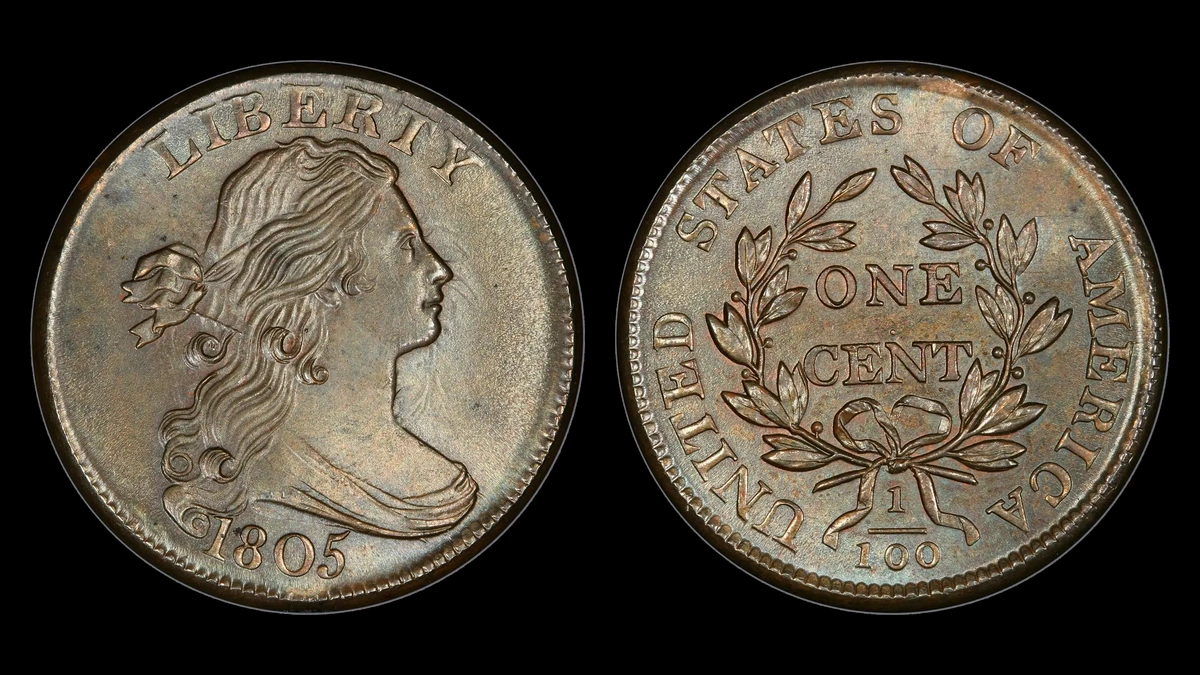
A different-year 1808 off-center cent sold for $6,462.50 in February 2018. For the reported 1805 penny errors, estimated whole-coin values range from $30–$5,000.
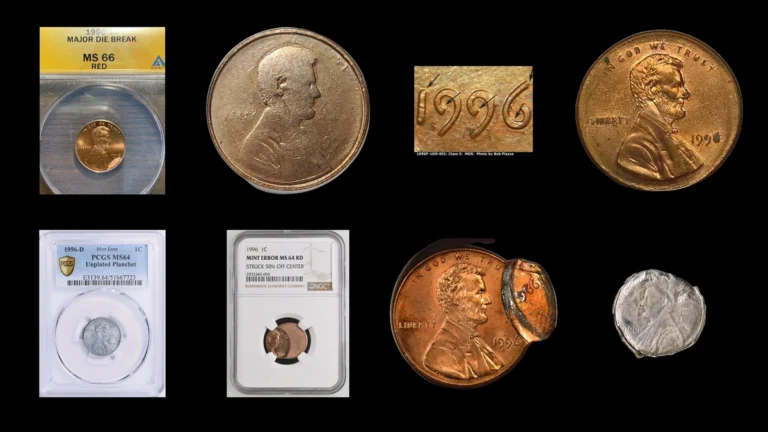
Confirm ONE CENT on the reverse before comparing a defect, since the same year’s half cent belongs to another denomination. Then inspect the edge, copper layers, raised die marks, and displaced impressions.
| Clue | Category | Estimated value |
|---|---|---|
| Missing edge segment | Clip | $30–$800 |
| Thin layer separates | Lamination | $40–$1,000 |
| Raised AME line or rim patch | Die crack or cud | $40–$1,500 |
| Faint opposite-side fragments | Clash | $75–$2,500 |
| Bare crescent beside the design | Off-center strike | $200–$4,000 |
| Small extra design at the edge | Double strike | $400–$5,000 |
The original copper large cent weighs 10.89 g and measures roughly 28–29 mm, with a plain edge. Measurements help describe a loose coin but cannot establish the cause of an unusual mark on their own.
1. 1805 Penny A Gap Interrupts the Round Outline: Clipped Blank Error
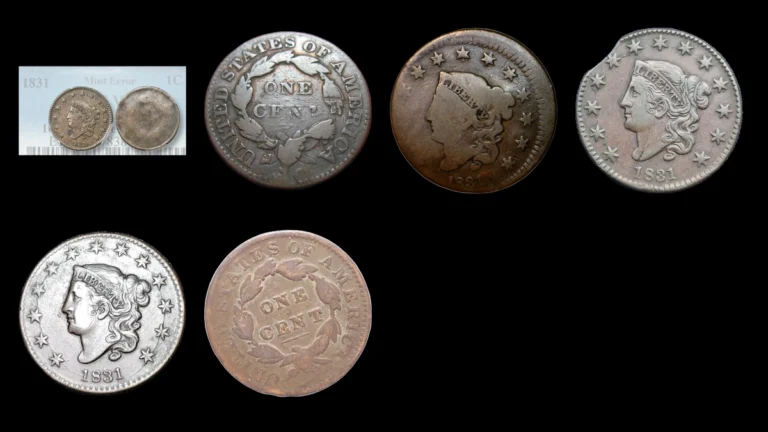
The 1805 year list includes clips without identifying a specimen’s shape, size, or direction. A genuine clip means the copper shortage existed before the design was struck.
How to Identify
Photograph the full outline and date before examining the gap’s wall. Saw grooves or file marks crossing completed details suggest later removal.
Inspect both ends of the opening and the opposite rim for evidence consistent with striking an incomplete blank. Low weight also fits a later cut, and wear can obscure supporting rim weakness.
What It’s Worth
Estimated values are $30–$800, with worn examples around $30–$200. Clearer original gaps on attractive coins can support more.
An unworn 1852 clipped large cent sold for $384 in June 2024. That later-date result is a comparison, not a sale assigned to an unidentified 1805 specimen.
2. 1805 Penny A Flap or Shallow Sheet of Copper: Lamination Error
A weak layer inside the copper can lift or fall away, leaving a thin opening. The supplied 1805 report gives no particular location on an identified coin.
How to Identify
Use side lighting to follow the boundary into the coin’s metal. A peeling coating above intact design, scattered corrosion, or a scraped trench needs another explanation.
Leave a flap attached and avoid pressure from measuring tools. A local opening does not establish that the entire disc split into two complete sheets.
What It’s Worth
Estimated whole-coin values are $40–$1,000, including approximately $40–$250 for worn clear separations. The upper range requires a stronger example.
An 1841 large cent with a front lamination brought $564 in December 2021. Its different date and preservation must remain separate from an 1805 comparison.
3. 1805 Penny A Ridge across AME or a Rim Patch: Die Crack and Cud Error
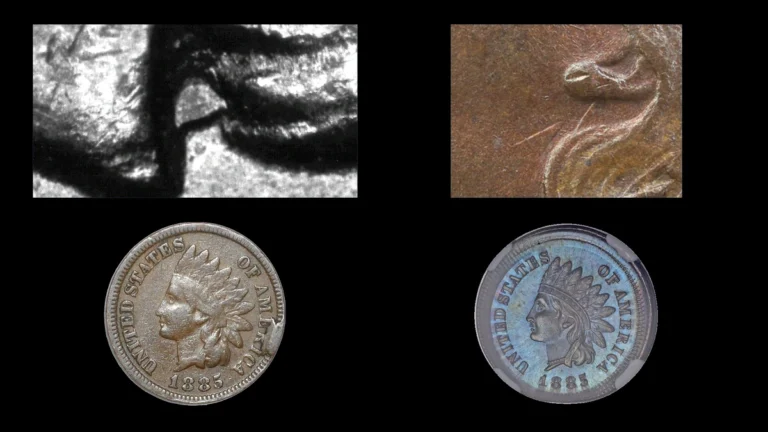
A recorded 1805 cent has a raised line across the tops of AME in AMERICA. Copper entered a crack in the reverse die and reproduced it as a ridge.
A larger edge piece breaking away could form a rim-connected cud. The AME crack does not establish that larger feature on the same coin.
How to Identify
Follow the AME line under side lighting to check its raised center. A scratch cuts into the copper rather than standing above it.
A suspected cud needs its own rim connection and edge examination. Added solder, an attachment seam, or metal pushed inward by a dent can imitate a raised patch.
What It’s Worth
Estimated values are $40–$1,500, with worn cracks around $40–$300 and sharper coins or prominent authenticated cuds around $300–$1,500. Small cracks often add little beyond the underlying coin.
The lightly worn AME-crack coin also has clashes, and its owner gives an estimate starting at $2,000. That individual condition estimate is not a sale or a fixed premium for the line.
4. 1805 Penny Faint Unwanted Design Fragments: Die Clash Error
An owner’s registry entry describes faint clashes on both faces of an 1805 cent. The dies had contacted each other without a blank, exchanging pieces of their designs.
How to Identify
Compare full photographs of Liberty and the wreath before enlarging a trace. A correct match should explain a recognizable part of the opposite design.
The entry does not locate every mark. A raised polishing line or isolated scratch is insufficient without a design relationship.
What It’s Worth
Estimated whole-coin values are $75–$2,500, with worn examples around $75–$350. Attractive coins with stronger surviving detail need higher-condition comparisons.
The owner’s registry entry describes a PCGS AU53 coin and an estimate of $2,000 upward. It is the same AME-crack coin, so the two features must not receive separate full prices.
5. 1805 Penny A Bare Crescent beside the Struck Area: Off-Center Strike Error
A blank outside its intended position can receive only part of both designs. Metal remains in the unstruck area, while other intended details fall beyond the edge.
How to Identify
Compare both faces against the same physical outline. A narrow border on only one face can instead result from a shifted die or later rim damage.
No particular direction or percentage is established for the supplied 1805 report. Inspect the bare metal for original surface rather than grinding that removed a finished design.
What It’s Worth
Estimated values are $200–$4,000, with readable worn examples around $200–$900. Dramatic displacement and better surfaces can support more.
An undated cent attributed to 1808 sold for $6,462.50 in February 2018. It was 30% off-center with very light wear, making it a higher different-date comparison rather than a typical worn 1805 result.
6. 1805 Penny Only Fragments of a Second Blow Remain: Double Strike Error
A Mervis catalog example received a later strike at least 80% off-center. The extra front impression preserves a lower hair curl and the first date digit, while the back retains the tops of TAT.
NGC graded the coin VG8, and the description notes faint green corrosion on both faces. Those condition issues remain distinct from the repeated strike.
How to Identify
Start with the extra TAT tops, then locate the hair curl and digit 1 on the front. Their relationships should fit one second blow despite the small surviving struck area.
Do not clean corrosion to expose the outline. A narrow doubled edge or a random deposit is not equivalent to recognizable parts of another design position.
What It’s Worth
Estimated values are $400–$5,000, including approximately $400–$1,500 for worn readable examples. Better surfaces and stronger design evidence support the upper range.
No sale amount is supplied for the Mervis VG8. A scratched double-struck 1856 large cent brought $2,640 in January 2023, offering a different-date and different-layout comparison.
Conclusion
The denomination comes first, followed by the physical evidence: missing copper, a separating layer, raised steel-derived marks, or another design position. These features require different checks even when they occupy nearby areas.
Keep owner estimates separate from auctions and retain corrosion in the condition assessment. A coin with both the AME crack and clashes remains one specimen, just as the small second-strike fragments belong to one repeated-strike event.