Rare 2005 Nickel Errors (List & Pictures)
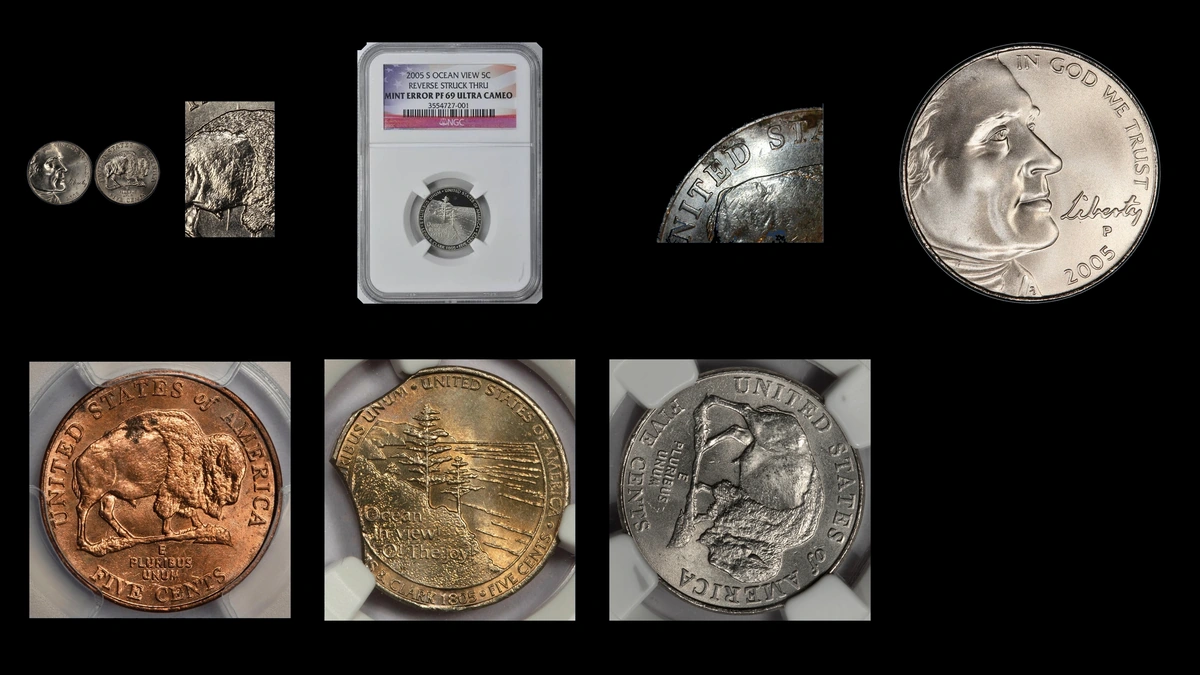
Two back designs make 2005 nickels especially interesting to search: Bison and Ocean in View. The largest supplied sale is $26,400 in September 2025 for a Bison nickel struck over a Lincoln cent.
More accessible 2005 nickel errors include tiny raised chips and missing design details, with an overall range of about $5–$30,000. Identify the back design first, then follow the visible clues below.
1. 2005 Nickel A Straight Raised Line: Speared Bison Error
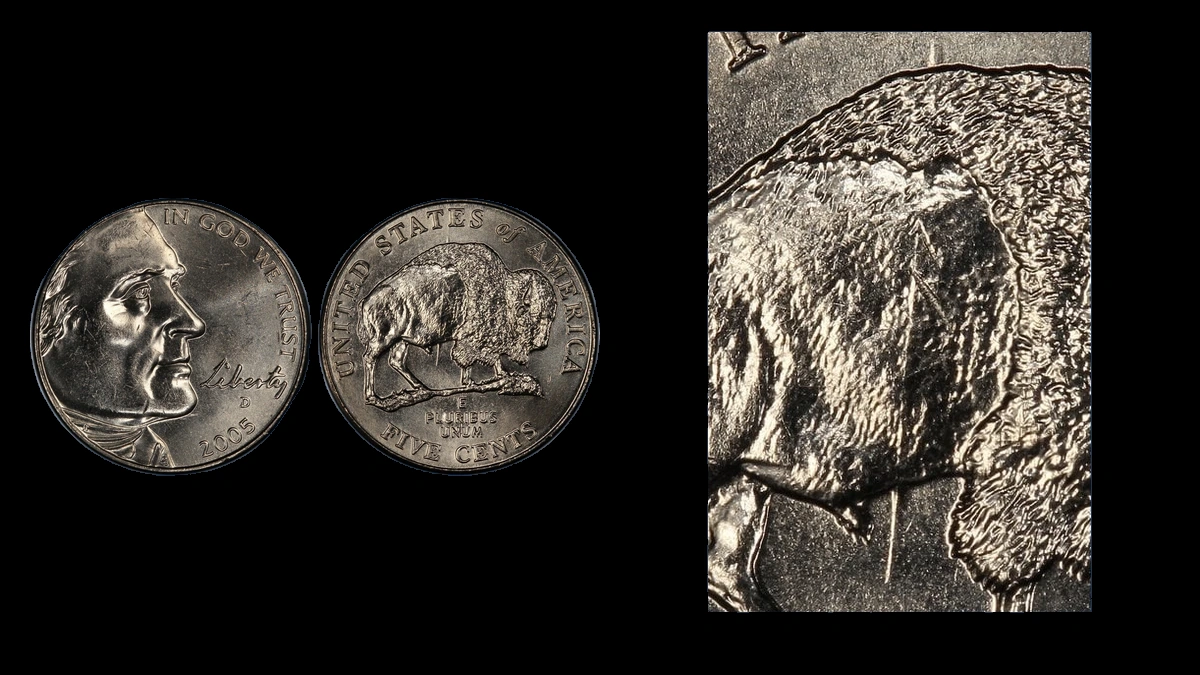
A line crossing the bison’s body gives the Denver FS-901 variety its Speared Bison name. A gouge in the die, the tool that stamps the design, left a raised ridge on each affected coin.
How to Identify
Check for the D mintmark and the Bison back. Follow the raised line from the animal’s back through its body toward the belly, comparing its path with a known FS-901 image.
Side lighting helps distinguish a ridge from a scratch cut into the surface. An irregular crack or a line on another design is not the named variety.
What It’s Worth
$100–$3,000 covers worn or marked examples through especially clean, high-grade coins. A PCGS-listed MS66 example brought $2,650 on eBay in October 2021.
MS66 describes an unworn coin with relatively few marks. The spear identifies the variety; the surrounding surface helps determine its place within the range.
2. 2005 Nickel Missing Connections: Detached Leg and Belly Error
On a known Philadelphia Bison example, a front leg appears separated from the body and part of the belly outline is missing. Polishing the die removed shallow details before it struck the coin.
This feature is not a leg cut away from a finished nickel. Similar-looking Denver pieces need their own evidence before receiving the same explanation.
How to Identify
Place a normal Bison coin beside it and examine the leg’s connection and belly line. Smooth gaps with sharp nearby details are more useful than a generally worn animal.
Look for scratches, a trench, or pushed metal that would suggest later removal. Matching the missing connections is stronger evidence than a seller’s nickname.
What It’s Worth
$10–$50 is a practical range for a clear unworn example. Fred Weinberg offered a Philadelphia piece for $20, an asking price rather than a recorded sale.
Readable gaps and clean surfaces make that comparison meaningful. Ordinary wear that erases the same area does not create this variety.
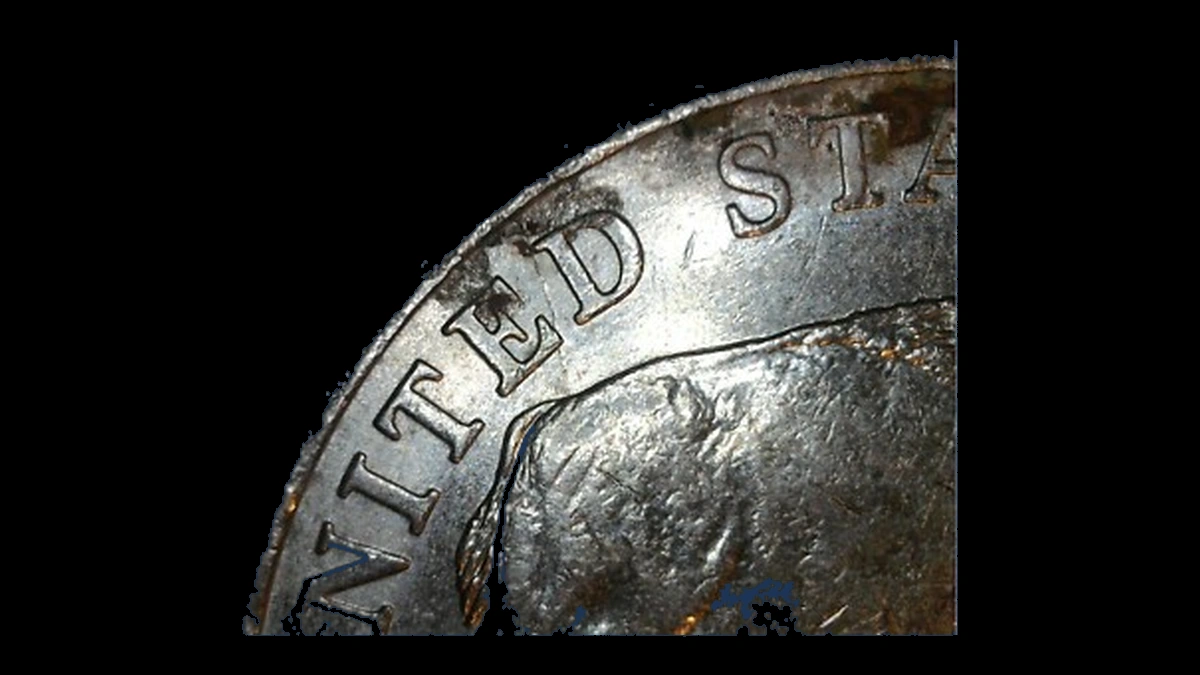
3. 2005 Nickel An Extra Horn or Raised Line: Die Chips and Cracks Error
Small breaks in a die can leave blobs or lines above the coin’s surface. Bison examples include the extra patch called Two Horned Bison and separate irregular cracks.
A San Francisco Ocean in View Proof has a front crack running inward from the right rim through LIBERTY. Proofs are specially made collector coins, and this example is separate from the Bison breaks.
How to Identify
For a horn chip, compare the raised patch with a normal animal and check that it is metal rather than dirt. For a crack, follow the whole raised path in side light.
The Ocean Proof’s line begins near the right rim, slightly below center. A cut with torn edges points to damage, while the straight Speared Bison ridge belongs to the separate variety above.
What It’s Worth
$5–$200 places small chips near the lower end and larger, clearer breaks higher. A Philadelphia Bison graded NGC MS66 sold for $45 in April 2022.
The Ocean Proof crack appeared in an eleven-coin Proof set offered for $135. That amount covered the set and is not an individual nickel price.
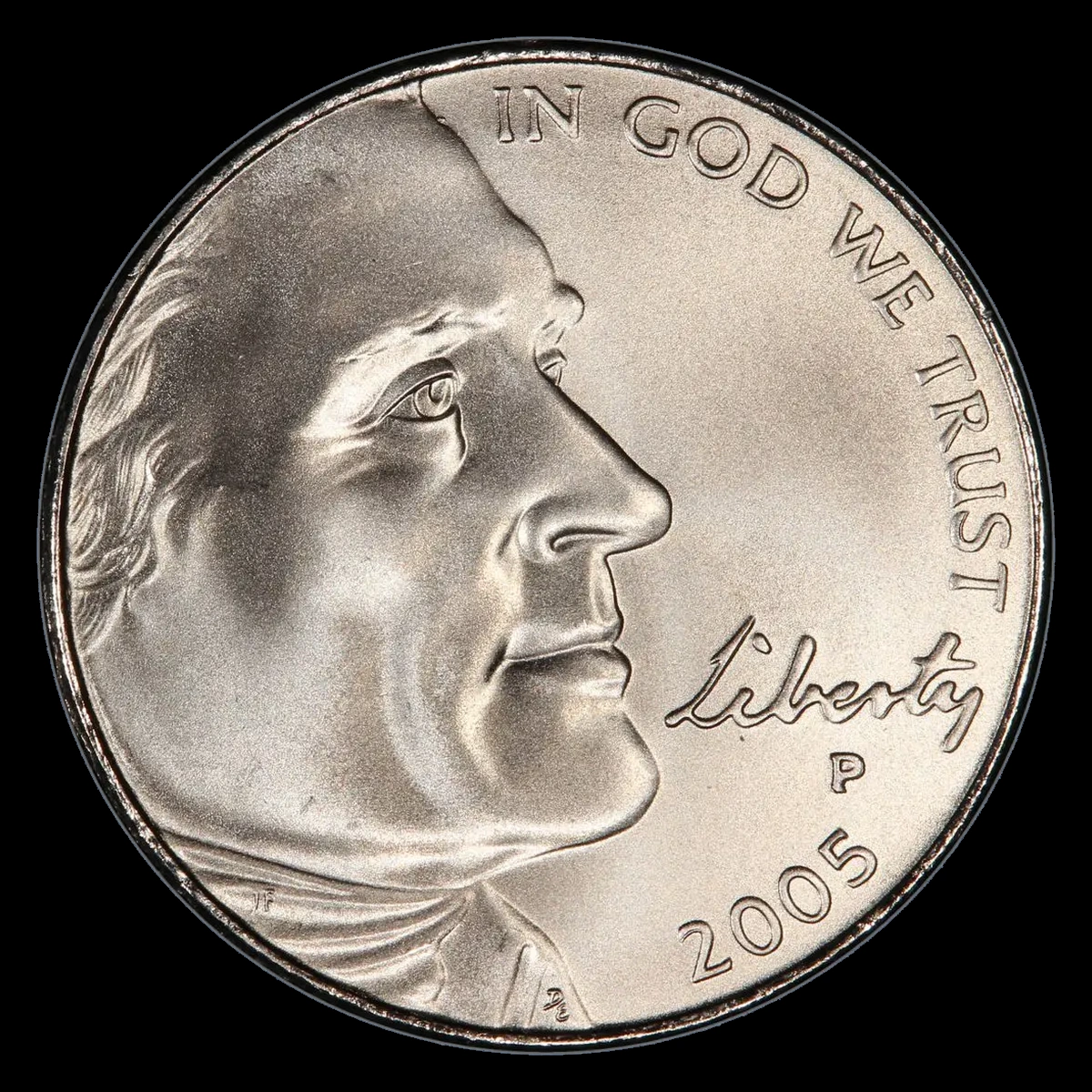
4. 2005 Nickel Small Extra Outlines: Doubled Dies Error
A doubled die carries repeated design detail before it touches a blank. One recorded example is a Philadelphia Ocean in View nickel with Satin Finish and front doubling.
Satin Finish is the softly textured finish used for collector sets. Other reports concern back details, but those are not automatically the same variety.
How to Identify
Compare the correct design and finish, using close-up photographs of the actual doubled area. The Ocean auction title does not identify its exact location, so a specific letter should not be guessed.
A flat shelf beside a letter can come from movement during the strike. On the Bison design, check ordinary grass details before treating an apparent second blade as doubling.
What It’s Worth
$8–$150 is the working range for identified minor doubling. The Philadelphia Ocean Satin example, graded ANACS 68, brought $8 at GreatCollections in May 2011.
That result shows how even a very high numerical grade can accompany a modest price. Clear attribution and visible doubling matter as well as condition.
5. 2005 Nickel Parallel Lines Reported as Feeder Marks Error
The feeder moves blanks into the press, and year guides report feeder-related marks on Philadelphia and Denver nickels. Parallel lines alone do not show which machine part caused them.
Damage to a die can produce repeated raised lines on later coins. Direct contact during striking leaves different evidence, so the surface needs to support the description.
How to Identify
Follow a line to where it meets a letter or portrait detail. A fresh groove crossing the whole design may simply be a scratch.
Compare its depth and position with another documented example. Repeated raised lines in the same places can support a damaged die, rather than random contact with a finished nickel.
What It’s Worth
$20–$150 is a working estimate for genuine Mint-made feeder-related marks. The range assumes the cause has been identified, not merely that several lines run in parallel.
The supplied guide’s higher figure lacks enough detail for a close comparison. Ordinary scratches fall outside this error range.
6. 2005 Nickel Broad Weakness from a Low-Pressure Strike Error
Too little striking pressure can leave shallow designs on both faces. A reported Denver example is described as a die adjustment strike, although appearance alone does not prove an operator was setting up the press.
How to Identify
Compare weak details with the surface around them. Wear rubs exposed high points first; low pressure can leave shallow shapes without that rubbing.
Check the back and rim as well as Jefferson. One missing word among sharp details fits a local obstruction better than broad low pressure.
A normal loose nickel weighs about 5 grams and measures 21.21 mm across. Acid damage can reduce both, so measurements help investigate a suspiciously thin coin.
What It’s Worth
$50–$400 applies to a genuine substantial low-pressure strike. Broad weakness, intact original surfaces, and a clear identification support the upper part.
A higher-priced Denver report does not supply enough detail for a matched comparison. A faint word or a worn portrait should not inherit that price.
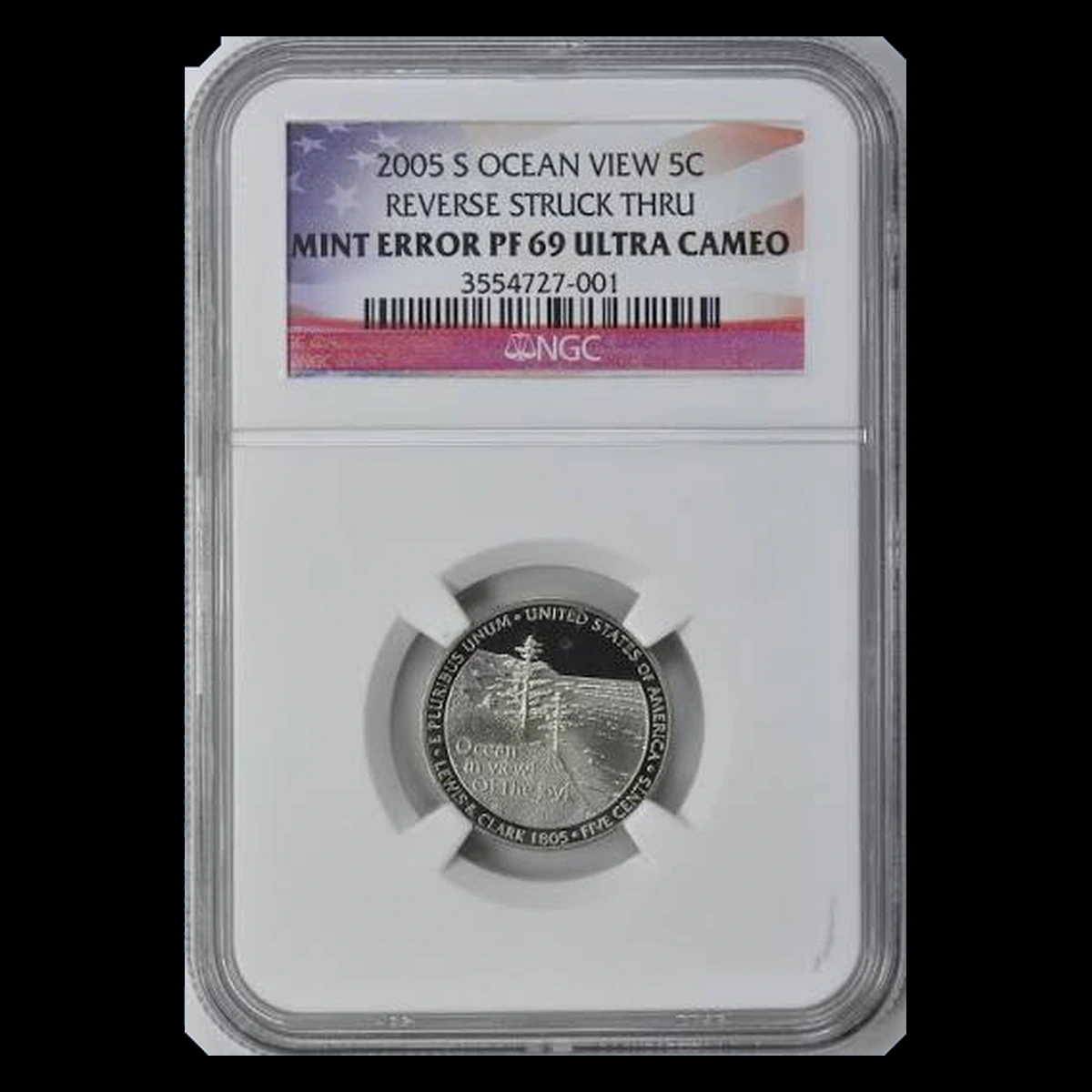
7. 2005 Nickel A Large Interrupted Area on a Proof: Strike-Through Error
Material caught between a die and the blank can block a large part of the design. A specialist account illustrates a 2005-S Proof with a broad affected area on the front.
The account does not identify whether its back is Bison or Ocean in View. The obstruction also should not be named from its shape alone.
How to Identify
Move a lamp across the boundary without touching the reflective surface. Look for design interrupted by the strike, rather than sharp grooves and torn metal left by a later tool.
Read the S mintmark and inspect the back directly. Leave any retained material attached, and keep a certified coin in its holder.
What It’s Worth
$100–$600 is a comparison-based estimate for a broad Proof strike-through. The area affected and the clarity of the remaining portrait influence the price.
The illustrated 2005-S coin has no matched sale amount in the supplied account. A small cloudy spot is not equivalent to the large striking error described here.
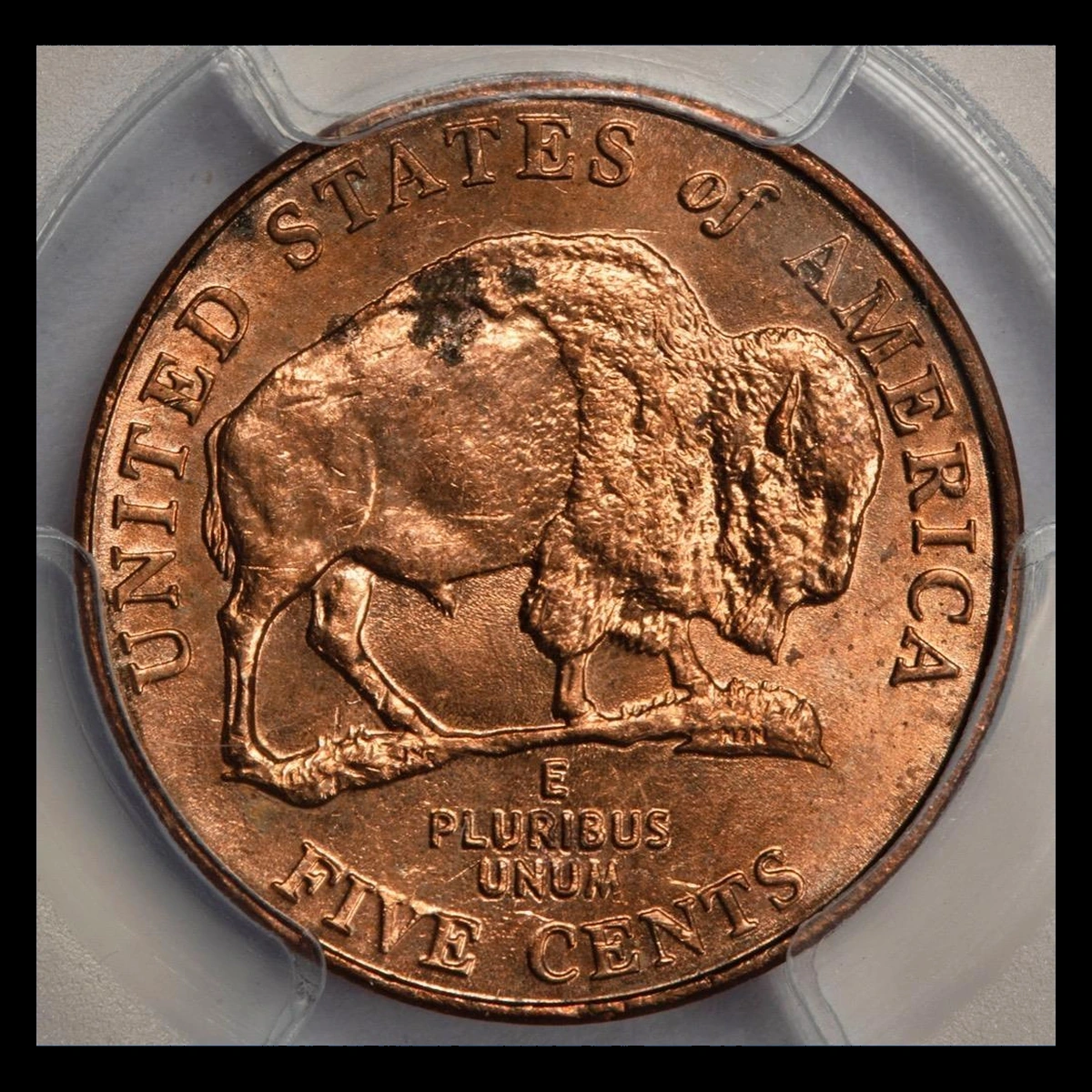
8. 2005 Nickel Coppery Color from Improper Annealing Error
Annealing is the heating step used to prepare the blank for striking. Problems during that step can leave a dark or copper-colored surface on otherwise normal nickel alloy.
Philadelphia Bison examples have received NGC and PCGS error labels. Their color does not mean they began as pennies.
How to Identify
Compare both faces and the edge with an identified annealing example under neutral light. Later chemical treatment, heating, or added plating can also change color.
A weight near the normal 5 grams helps separate ordinary nickel metal from a cent-based error. Do not polish or dip the coin, since the original surface texture helps explain the cause.
What It’s Worth
$25–$250 covers a useful span of identified examples. Heritage recorded $28 for a PCGS MS64 coin in August 2009 and $126.50 for an NGC MS65 in September 2010.
A separate dealer asked $185 for a coppery Bison nickel. These different records give context, rather than making every brown nickel a three-figure error.
9. 2005 Nickel Missing Metal from a Clipped Blank Error
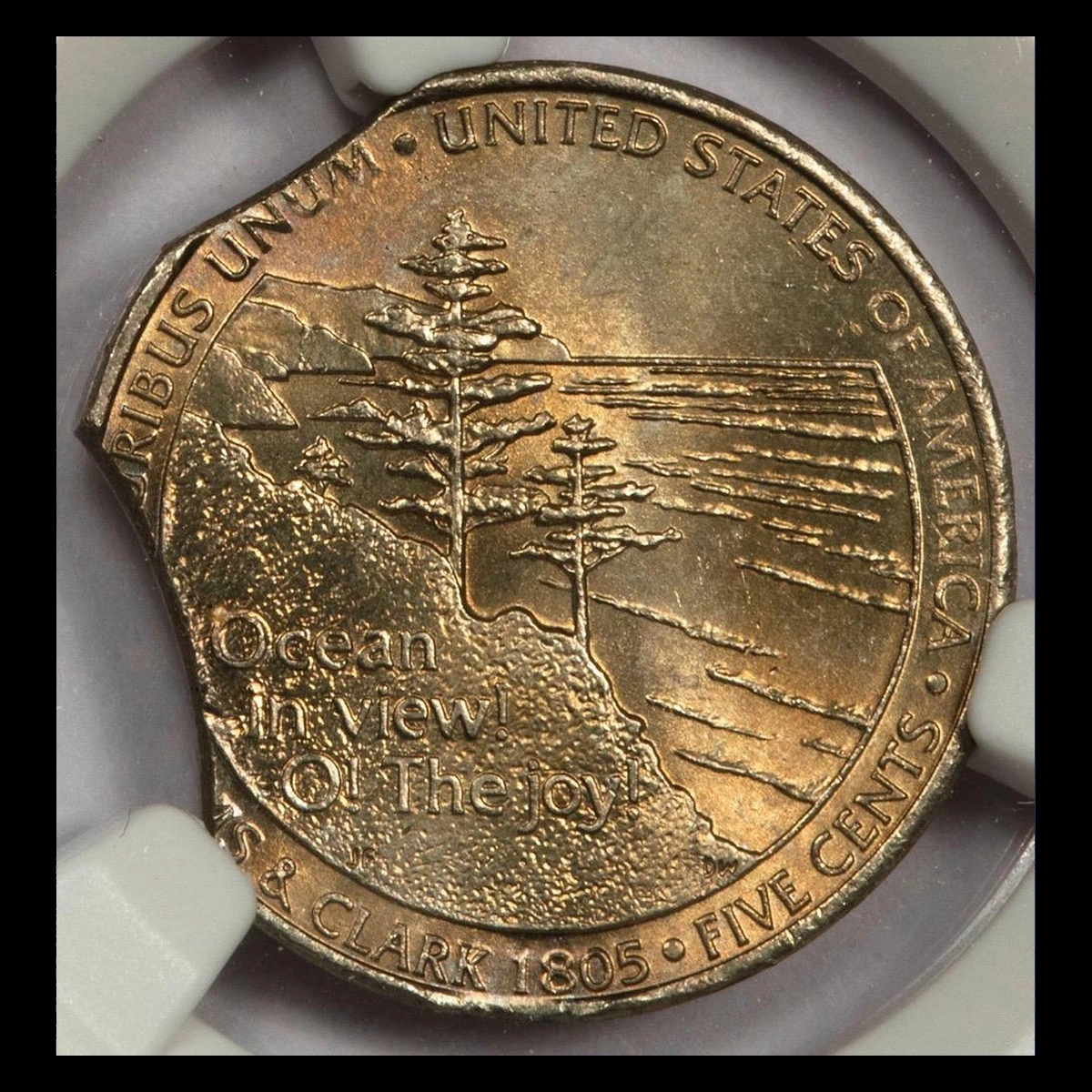
Both Bison and Ocean in View nickels are known with clips. The missing section was absent before striking, and some coins have more than one gap.
How to Identify
Examine how the rim and lettering end beside each opening. Metal flow toward the gap can support a clip, while file strokes through finished detail suggest later cutting.
Opposite-rim weakness is useful supporting evidence when visible. On a double or triple clip, check every opening rather than assuming all gaps share the same cause.
What It’s Worth
$40–$300 reflects differences in size, condition, and the number of clips. A Philadelphia Bison with a 10% curved clip sold for $99 in June 2026.
An 18% triple-clipped Bison brought $94 in January 2012. Separately, an Ocean coin with a 7% clip carried a $225 dealer asking price.
10. 2005 Nickel A Blank Crescent from an Off-Center Strike Error
A misplaced blank can leave bare metal beside a design running off the opposite edge. A documented Bison example was graded PCGS MS63, while Ocean examples appear in year guides.
How to Identify
Photograph the entire coin on both sides so the corresponding unstruck areas remain visible. A shifted blank affects both faces; a misplaced die can affect just one.
Read the date and mintmark from surviving detail. The blank crescent still contains metal, unlike the gap on a clipped coin.
What It’s Worth
$50–$500 is the estimated range for genuine 2005 off-center nickels with readable dates. More obvious displacement and attractive surfaces generally improve collector interest.
The Bison collector’s account documents the MS63 example without supplying its sale price. The range therefore uses comparable modern nickel errors.
11. 2005 Nickel A Stepped Edge with a Clip and Strike-Through Error
One Philadelphia Bison nickel combines a partial collar, a 20% straight clip, and a front strike-through. PCGS graded the complete coin MS63.
A partial collar means the ring around the blank confined only part of its edge. The unconfined portion spread farther, creating a step.
How to Identify
Look along the side of the coin to compare the two edge levels. A struck step differs from an edge squeezed or folded by later damage.
Examine the straight clip’s boundary and the front interruption separately. The description does not identify the trapped material, so retain the broader strike-through name.
What It’s Worth
$250–$500 is a working range for a comparable complete example. Fred Weinberg’s major mint error price list offered this coin for $350.
The asking price includes all three features. Adding a separate full value for the clip and strike-through would count the same coin more than once.
12. 2005 Nickel A Bison That Tilts after a Flip: Rotated Dies Error
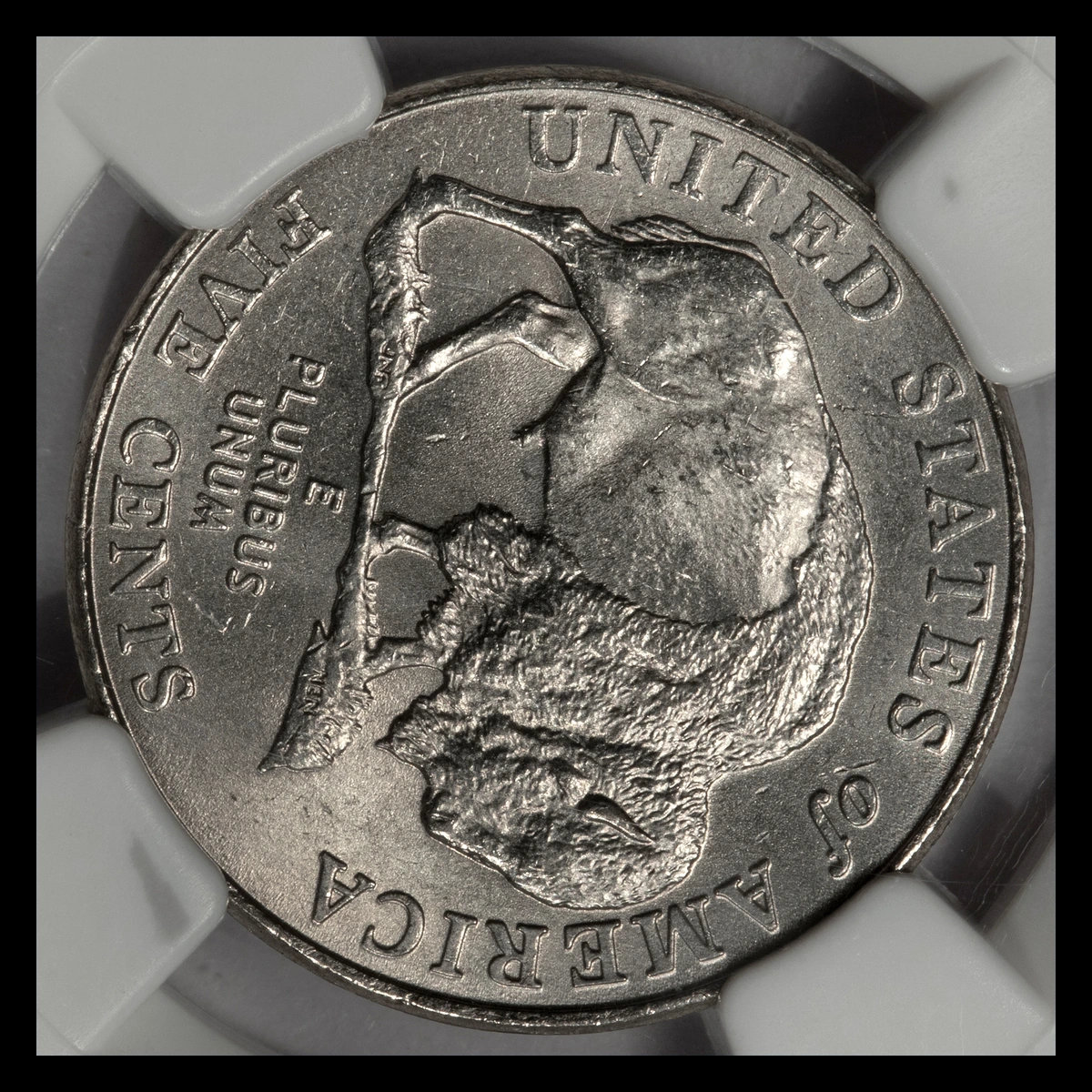
A reported Philadelphia Bison graded NGC MS65 has rotated dies. One stamping tool sat at an unusual angle, changing the relationship between the two faces.
How to Identify
Hold Jefferson upright and flip the nickel from top to bottom without twisting sideways. The bison should finish upright on a normally aligned example.
Use one continuous video or turn the entire grading holder. Separate photographs can be rotated independently and cannot prove the relationship.
The report does not give this coin’s angle. Measure the actual turn and check a loose coin’s edge for signs of joined faces.
What It’s Worth
$20–$200 is a practical estimate for a genuine visible rotation. A pronounced turn usually attracts more interest than a slight lean.
The reported MS65 coin supplies an example, but no matched sale amount. Its grade alone does not establish where it belongs in the range.
13. 2005 Nickel A Lincoln Memorial beneath the Bison: Struck over a Cent Error
A finished 2005 Lincoln cent entered the nickel press and received Jefferson and Bison designs. The surviving Memorial under the bison reveals that it was already a coin before the second strike.
This is called a double denomination because two different coin values share the metal. An unused cent blank would have no earlier Lincoln design.
How to Identify
Follow several surviving cent details through the newer nickel image. Their overlap provides better evidence than copper color alone.
A normal 2005 cent starts at about 2.5 grams and 19.05 mm across, although the nickel strike can spread it wider. Later squeezing against another coin often leaves sunken or reversed impressions instead.
What It’s Worth
$15,000–$30,000 is a practical range for a similarly impressive authenticated example. The NGC MS68 Red Philadelphia coin sold for $26,400 in September 2025.
Its very clean unworn surfaces and readable remains of both designs support that strong result. The same object may also appear in a penny error list, but that does not create a second sale.
Conclusion
Match the back design and finish before comparing any 2005 nickel with an error photograph. A missing Bison leg, an Ocean Proof crack, and a Satin doubled die need different checks.
Raised versus sunken detail is often the most useful first distinction. For unusual color or overlapping designs, add the weight and full views of both faces before deciding which error best explains the coin.