Rare 1809 Half Dollar Errors (List & Pictures)
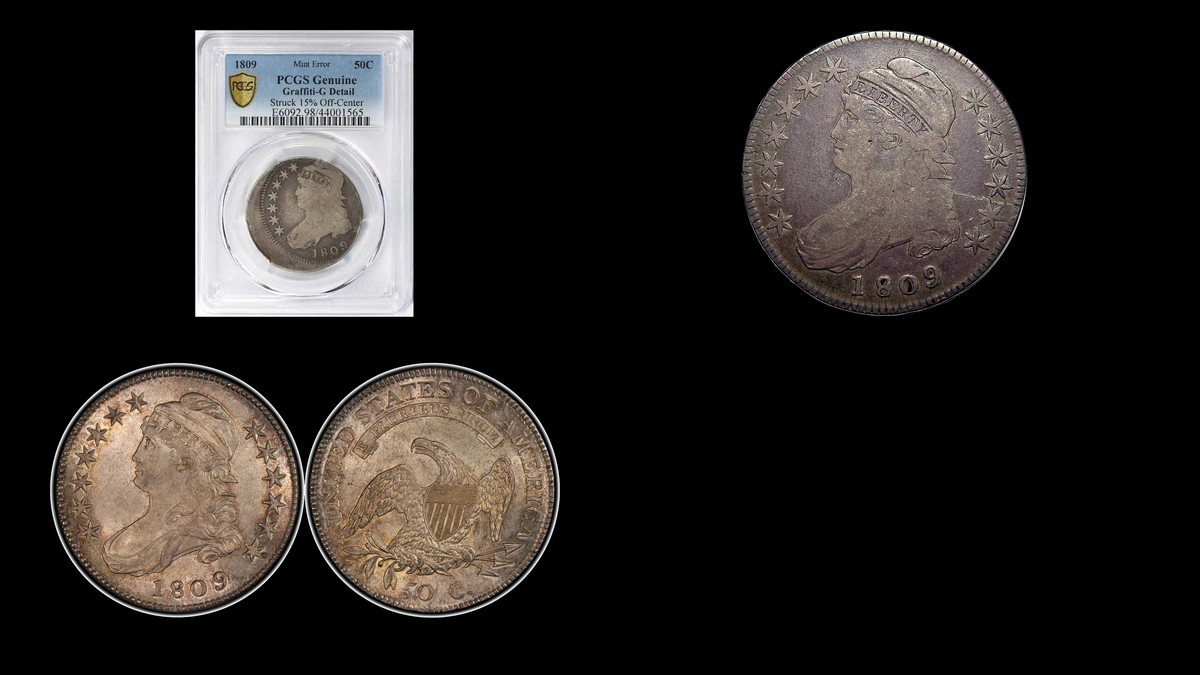
An 1809 half dollar can show impressions above the cap, a line through stars, or unusual segments on the back. Their shapes help separate the five categories of 1809 half dollar errors below.
Estimated values of $1,500–$5,500 apply to the particular conditions discussed; an unworn star-crack example brought $4,675 in Mail Bid Sale 45. Inspect the outline, then front impressions and ridges, before examining the reverse and edge.
| Clue | Area | Category | Estimated value |
|---|---|---|---|
| Blank crescent opposite missing design | Whole outline | Off-center strike | $2,500–$3,800 |
| Organized extra impressions | Above cap or below chin, on separate coins | Double or flip-over strike | $1,500–$3,500 |
| A raised connection through seven stars | Left side of portrait | Die crack | $4,000–$5,500 |
| A short metal irregularity | Behind eagle’s head | Mint-made drift mark | $2,800–$4,000 |
| Sunken segments | Reverse of O.102 with XXX edge | Reported loose-die clash | $3,500–$5,000 |
A normal unworn half of this date weighs about 13.48 grams and measures roughly 32.5 mm. Its edge carries lettering and decorations, which need their own inspection when matching the examples.
1. 1809 Half Dollar Unstamped Silver Beside an Incomplete Design: Off-Center Strike Error
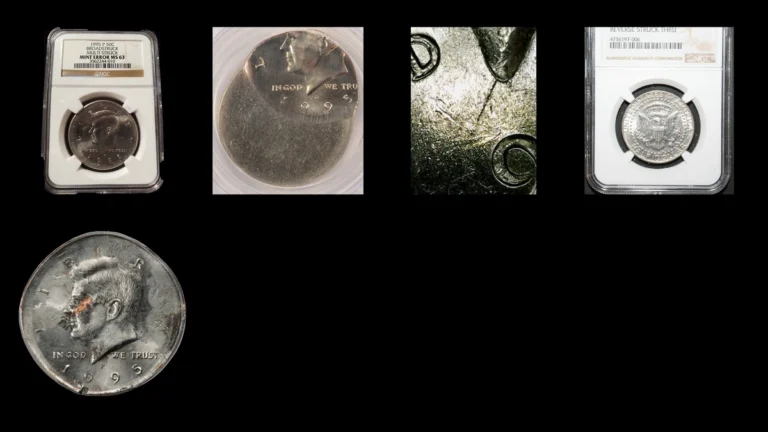
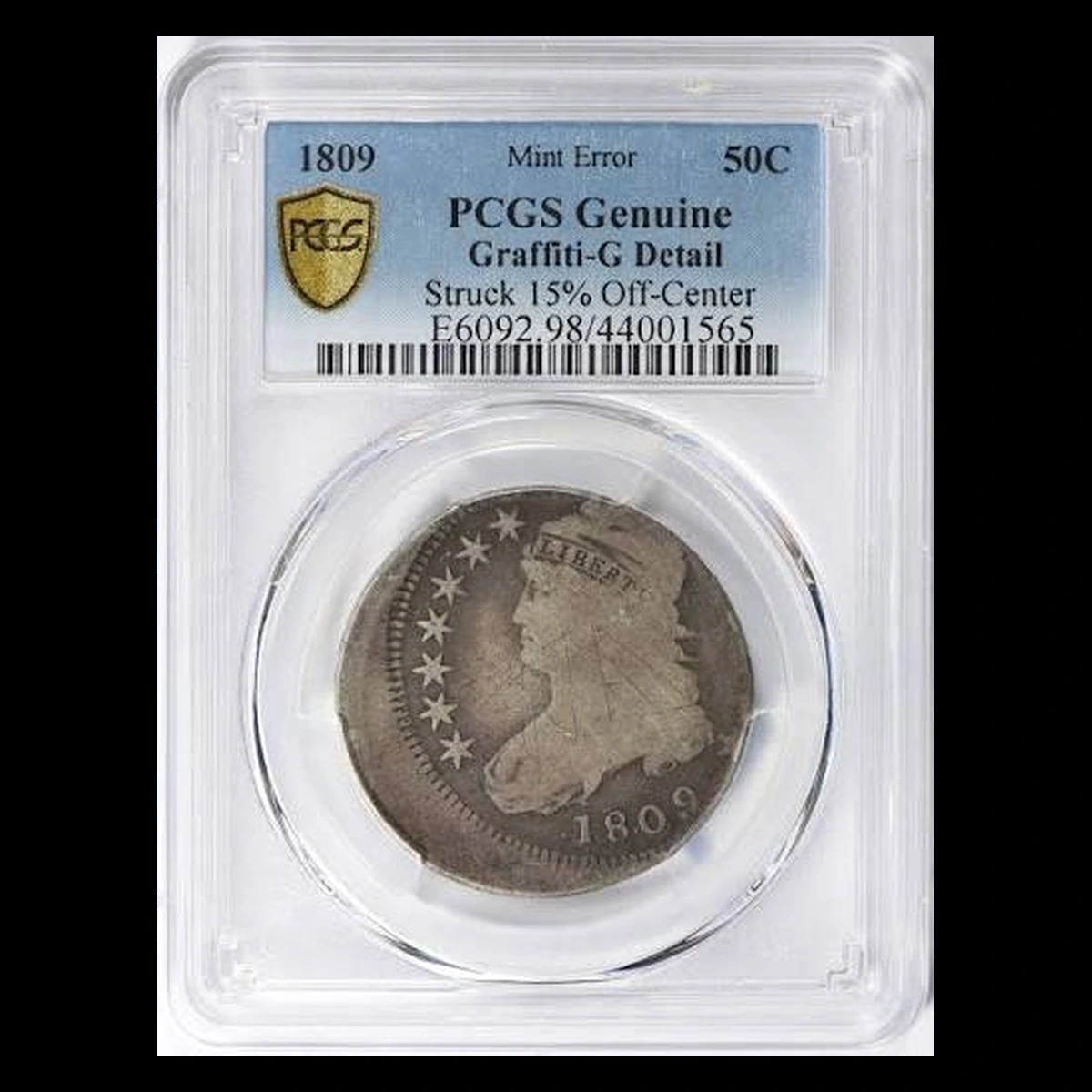
The fifteen-percent off-center coin in Downey’s Mail Bid Sale 57 has a blank crescent opposite lost design. Its position under the dies explains both parts of that outline.
PCGS designated it Genuine with Good Details, and the description identifies scratches. Heavy wear and later damage coexist with the original misplaced strike.
How to Identify
Check the entire outline of each face rather than concentrating on the narrower rim. The blank area and missing design must agree with a single displacement of the coin.
Read the surviving date and examine the unstamped margin for cutting or grinding. Removed metal cannot serve as an intact blank crescent.
The catalog mentions another fifteen-percent specimen associated with Hilgard and Link. Keep its identity and condition separate from the scratched Good Details coin even though the percentages match.
What It’s Worth
Estimated range: $2,500–$3,800 for a comparable heavily worn, scratched example. An undamaged off-center coin would require a different condition comparison.
Mail Bid Sale 57 records a $3,300 total, comprising a $3,000 bid plus the buyer’s fee. The same coin had brought $2,644 at GreatCollections in April 2022.
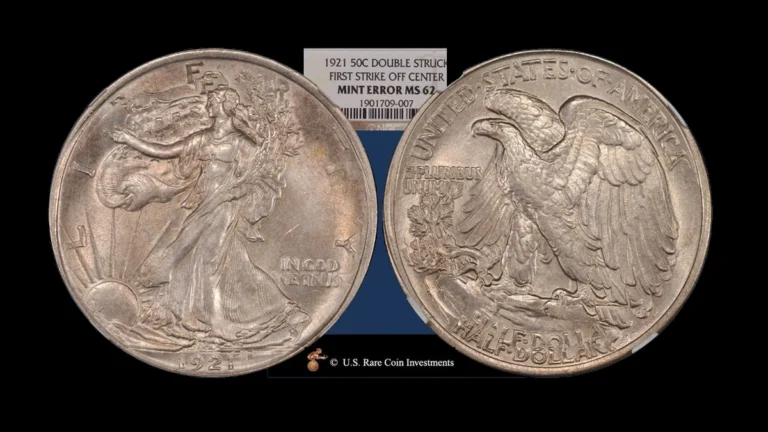
2. 1809 Half Dollar Extra Impressions Above the Cap or Below the Chin: Repeated Strikes Error
Two separate reports belong in this category. Downey’s Sale 52 describes small depressed triangles forming an arc above Liberty’s cap, with Henry Hilgard’s explanation that a second strike created them.
A different O.105 has parallel shield-like lines beneath the chin and was reported as a flip-over double strike. In that interpretation, the coin turned over between impressions, bringing part of the reverse design into the front area.
How to Identify
For the cap example, follow the organized arc from above star seven toward star eight. Test whether the group represents earlier design impressions rather than a series of unrelated dents.
For the O.105, compare the chin-area lines with the reverse shield. The discoverer’s January 2006 update reports expert agreement after an in-person examination, without supplying a grading-service certificate.
Keep the two groups of marks tied to their respective coins. The III ornament on the first coin’s lettered edge is a separate design feature and cannot establish a second strike by itself.
What It’s Worth
Estimated range: $1,500–$3,500 for authenticated circulated examples with understandable evidence of repeated striking. Neither supplied report gives a sale amount for its particular specimen.
The $3,300 off-center result above supplies context for a substantial mint error on the same date. It does not become a double-strike sale simply because both involve an abnormal striking event.
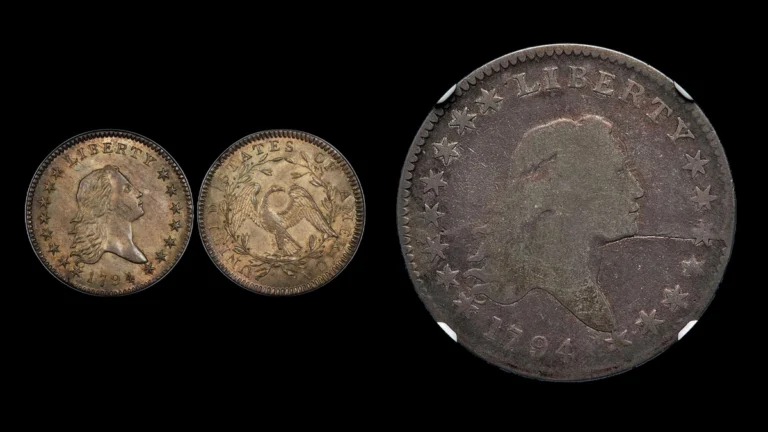
3. 1809 Half Dollar A Ridge Joining the First Seven Stars: Die Crack Error
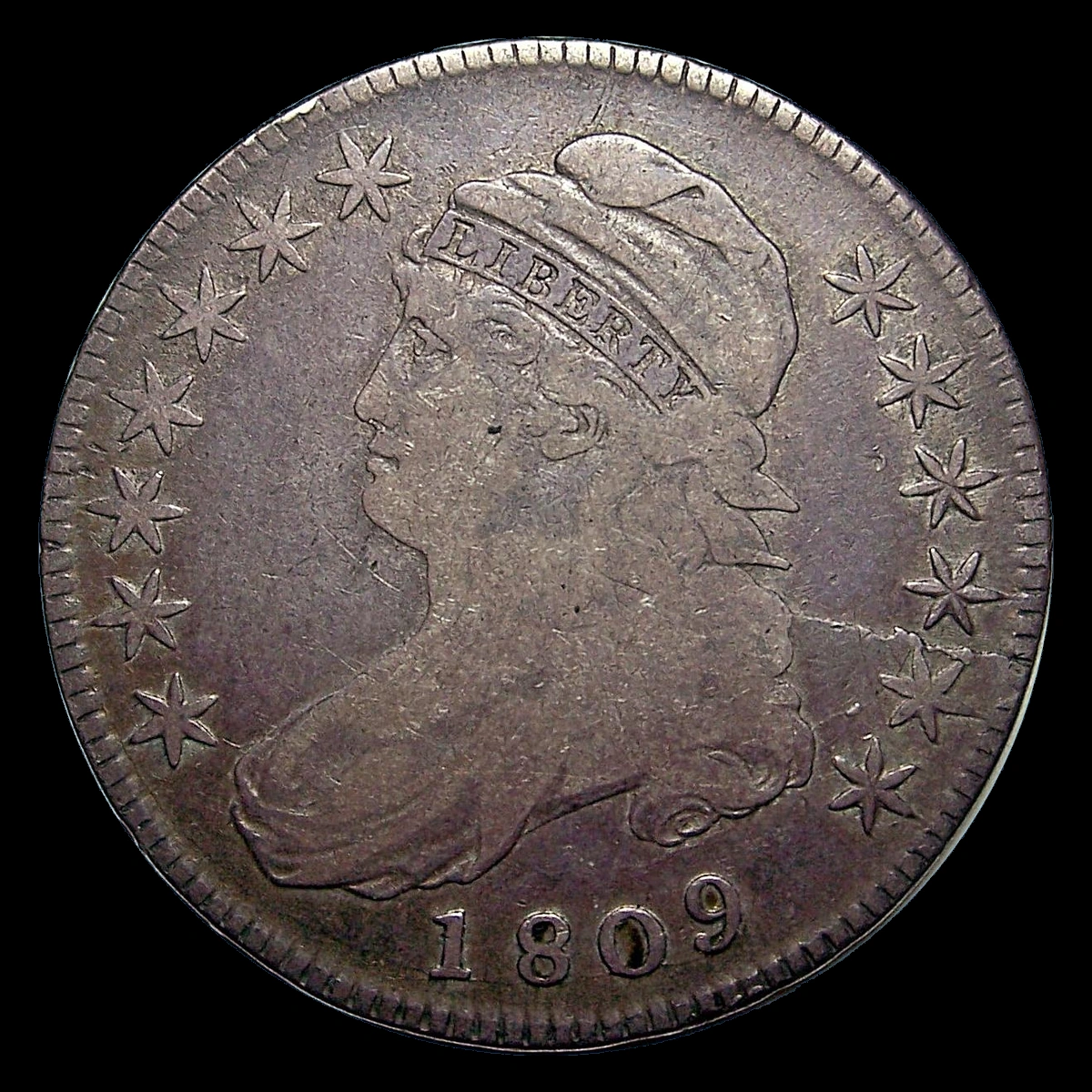
Count upward from the lower-left star on the front of the O.106 example. Its raised line joins stars one through seven beside Liberty’s portrait.
That connection came from a split in the stamping die. Metal filled the narrow opening during the strike, producing a ridge along the tool’s fracture.
How to Identify
Keep all seven stars in the frame and trace the route through them in sequence. A bright line between only two stars does not establish the complete O.106 pattern.
Change the light direction to check that the route sits above the surrounding field. A later scratch has a cut center, even if displaced metal creates bright raised margins.
The auction also noted weak reverse detail. That observation describes the complete coin but neither proves nor disproves the separate raised line on the front.
What It’s Worth
Estimated range: $4,000–$5,500 for examples comparable to the PCGS MS62 reference. MS62 indicates no circulation wear, though noticeable marks can remain.
Downey’s Mail Bid Sale 45 recorded a $4,250 winning bid and a $4,675 total with the fee for the O.106. A heavily worn coin with the same ridge does not share the preservation behind that result.
4. 1809 Half Dollar A Short Irregularity Behind the Eagle: Mint-Made Drift Mark Error
Immediately behind the eagle’s head on the Sale 45 O.103 is a short feature cataloged as a mint-made drift mark. The catalog links it with limitations in early metal refining.
The description concerns an irregularity in the original coin metal. Its location and surrounding surface are necessary parts of the match, since a dark streak could also be toning or later damage.
How to Identify
Include the head and adjacent design in a close-up so the mark can be located on the full reverse. Then inspect its boundary and texture under magnification.
A color change may have no physical depth, while a scrape can leave a sharp groove or exposed silver. Neither can be assigned the catalog’s mint-made explanation solely because it looks dark.
Use the documented O.103 AU58 as the specific reference. A different flaw elsewhere on an 1809 half dollar would need its own evidence and should not inherit this description.
What It’s Worth
Estimated range: $2,800–$4,000 for comparable preservation and appearance. The PCGS AU58 with CAC approval brought $3,300 total in Sale 45 on a $3,000 bid.
AU58 indicates only slight circulation wear. The result values that attractive coin as a whole and does not isolate a premium for the short drift mark.
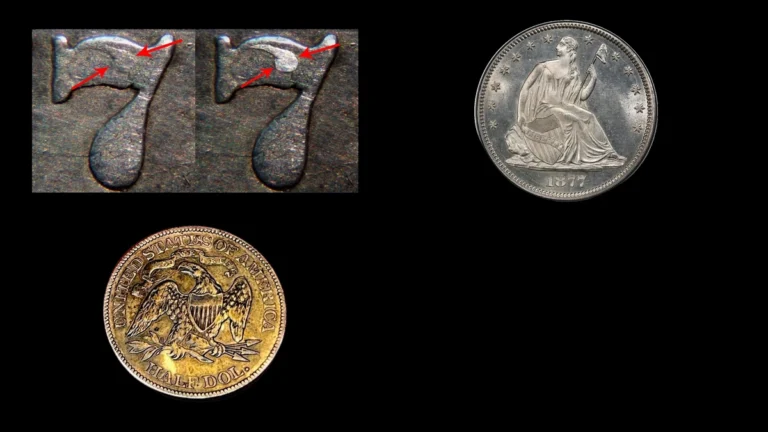
5. 1809 Half Dollar Depressed Segments on the Reverse: Reported Loose-Die Clash Error
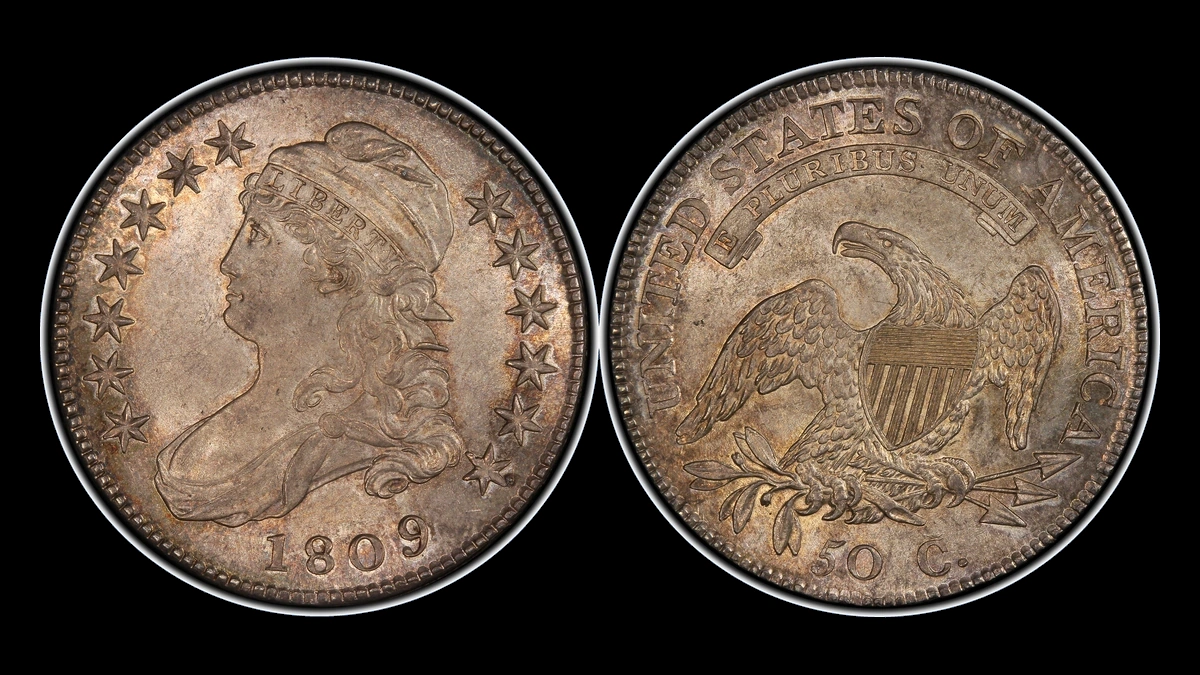
Early O.102 in Downey’s catalog has sunken reverse segments attributed to a clash involving a loose die. Their depressed form is part of the report and should not be replaced with the raised lines expected from another example.
The reference coin also carries XXX decoration on its lettered edge. That edge variety helps identify the sold coin but is a separate feature from the unusual reverse marks.
How to Identify
Photograph the full edge inscription and locate the XXX decoration before narrowing the view to the reverse segments. This preserves the combination used in the auction comparison.
Low side lighting should reveal the segments as depressions. Match their arrangement against the documented O.102 instead of searching for generic raised clash outlines.
Scraping and impressions from coins pressed together can also produce hollow marks. Their existence makes the specific segment pattern, dated front, and edge identification more useful than one unexplained depression.
What It’s Worth
Estimated range: $3,500–$5,000 for a comparable lightly worn O.102 with the XXX edge. The PCGS AU55 example sold for $4,419 total in Sale 45, following a $4,017 bid.
That sale includes the edge variety and the coin’s overall condition. It cannot establish the same value for an ordinary-edge coin bearing an unidentified hollow mark.
Conclusion
These 1809 examples reward keeping identities straight: two repeated-strike reports, two mentioned off-center coins, and several different die and edge varieties. The outline, mark depth, and full design relationship each help select the right reference.
The $1,500–$5,500 estimates concern the stated conditions and complete coins. Reported totals include the supplied buyer’s fees, while unpriced repeated-strike reports remain estimates.