Rare 1811 Dime Errors (List & Pictures)
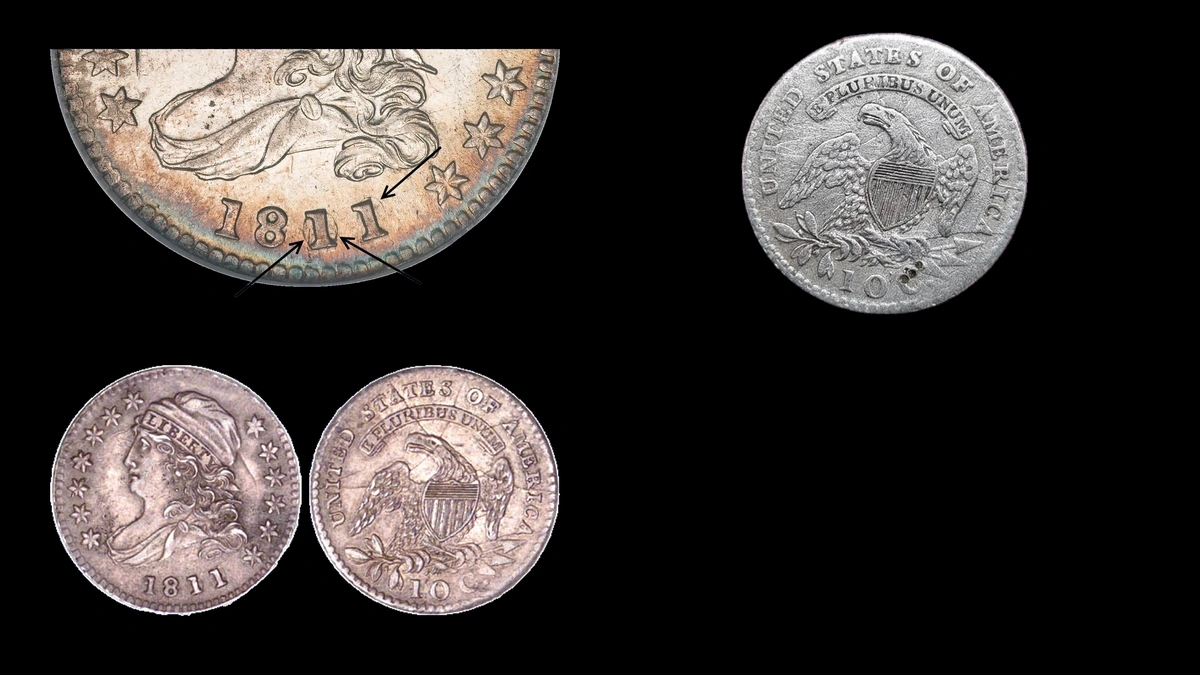
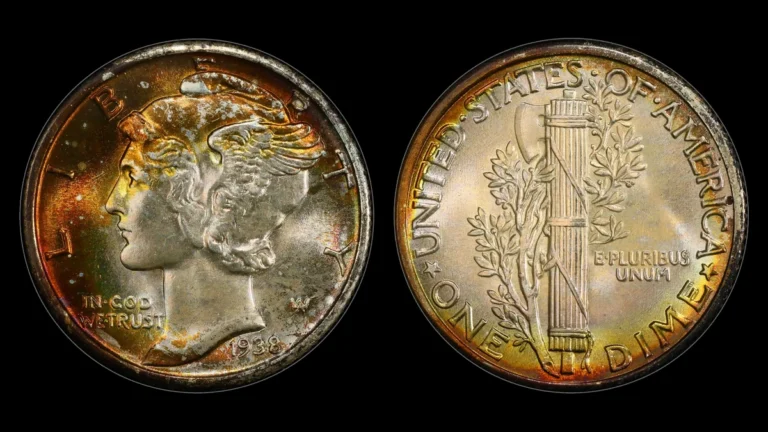
Every regular 1811 dime is an overdate, so remnants of 1809 identify the issue rather than a rare exception within it. The 1811 Capped Bust Dime errors below also include cracks, clash traces, and a broad rise from a worn die.
Estimated whole-coin values run from $400–$30,000, with a well-preserved unworn example selling for $24,200 in October 1995. Read the old digits first, then separate the different signs of tool damage.
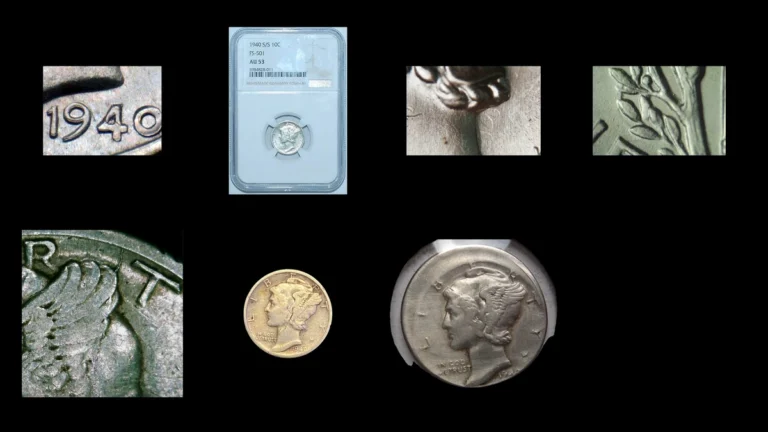
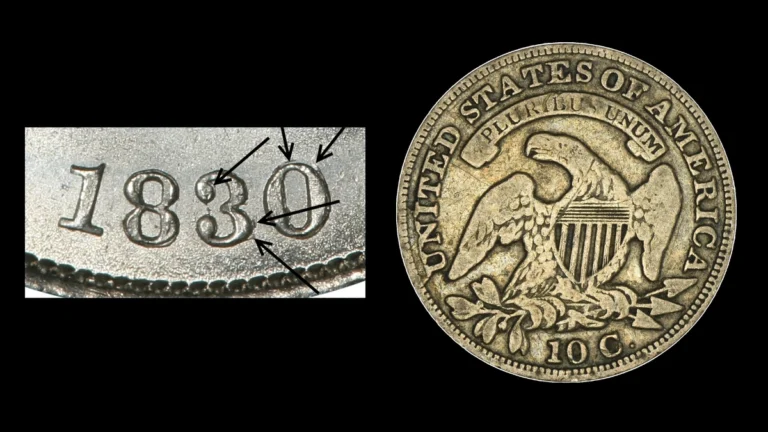
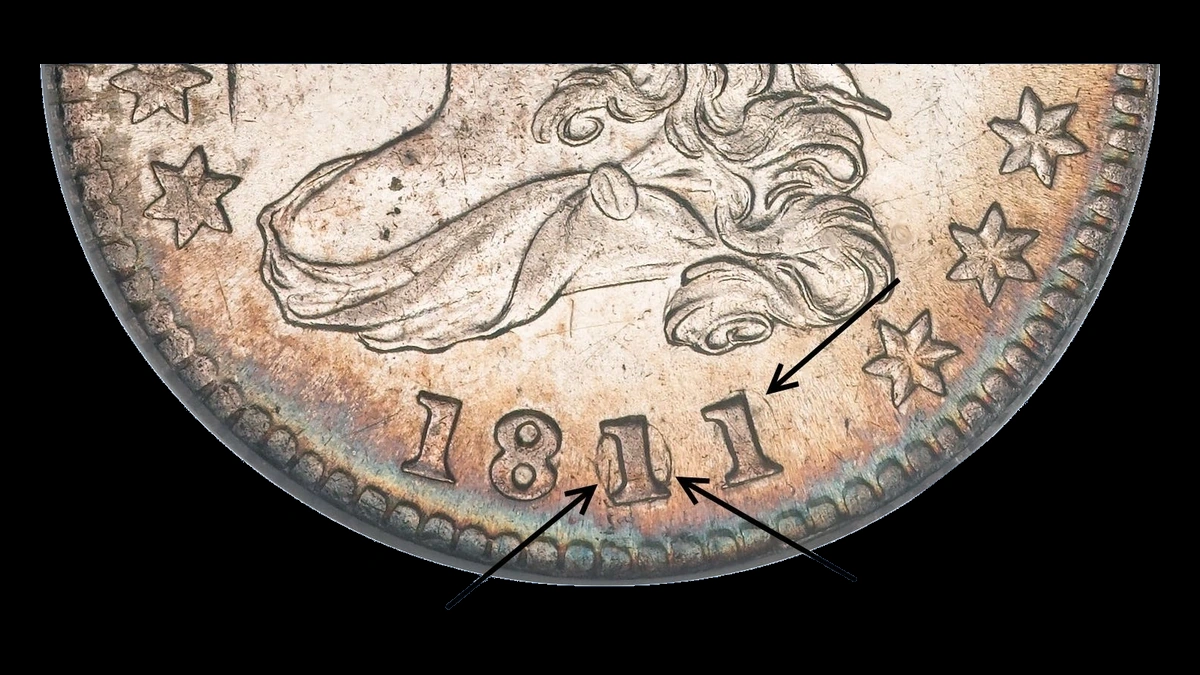
1. 1811 Dime Old 09 Remains beneath the New Digits: 1811/09 Overdate Error
Workers punched two new 1s over the final digits of an 1809 date on the die. Parts of the old 0 and 9 remained to appear on later coins.
The rounded 0 is often easier to recognize than the 9. Only one regular-issue die pairing is known for 1811, and all of those dimes share this overdate.
How to Identify
Study the final two digits together under magnification and compare their raised remnants with a straight-on 1811/09 reference. On a worn coin, use the surviving 0 curve without forcing faint lines into a complete 9.
Fresh cuts interrupt the surface rather than matching the original raised number shapes. Keep the whole date and portrait visible in supporting photographs.
A normal coin began near 2.70 grams and 19 mm, with grooves around the edge. Measurements can help reveal filing or repairs, but wear must be allowed for.
What It’s Worth
$400–$30,000 is the estimated whole-coin range from worn examples through exceptionally preserved pieces. Normal pricing for the 1811 issue already includes the overdate.
PCGS records a VG10 at $528 in May 2025, while a fine unworn example brought $24,200 in October 1995. Preservation explains much of the difference rather than the mere presence of old numbers.
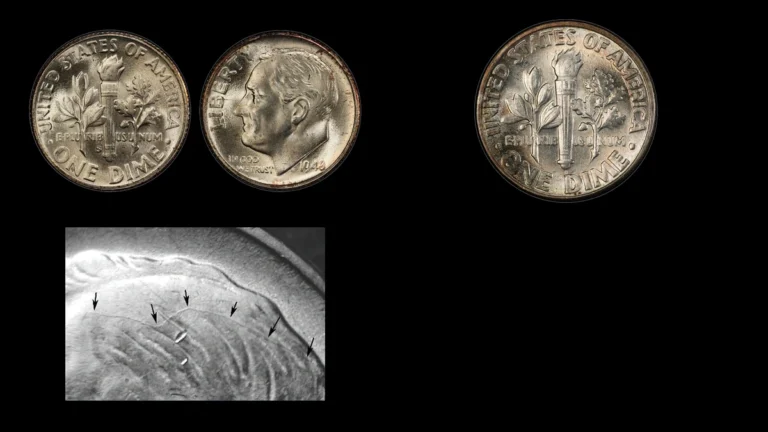
2. 1811 Dime A Ridge Joins the Rim to the Bottom of 8: Die Cracks Error
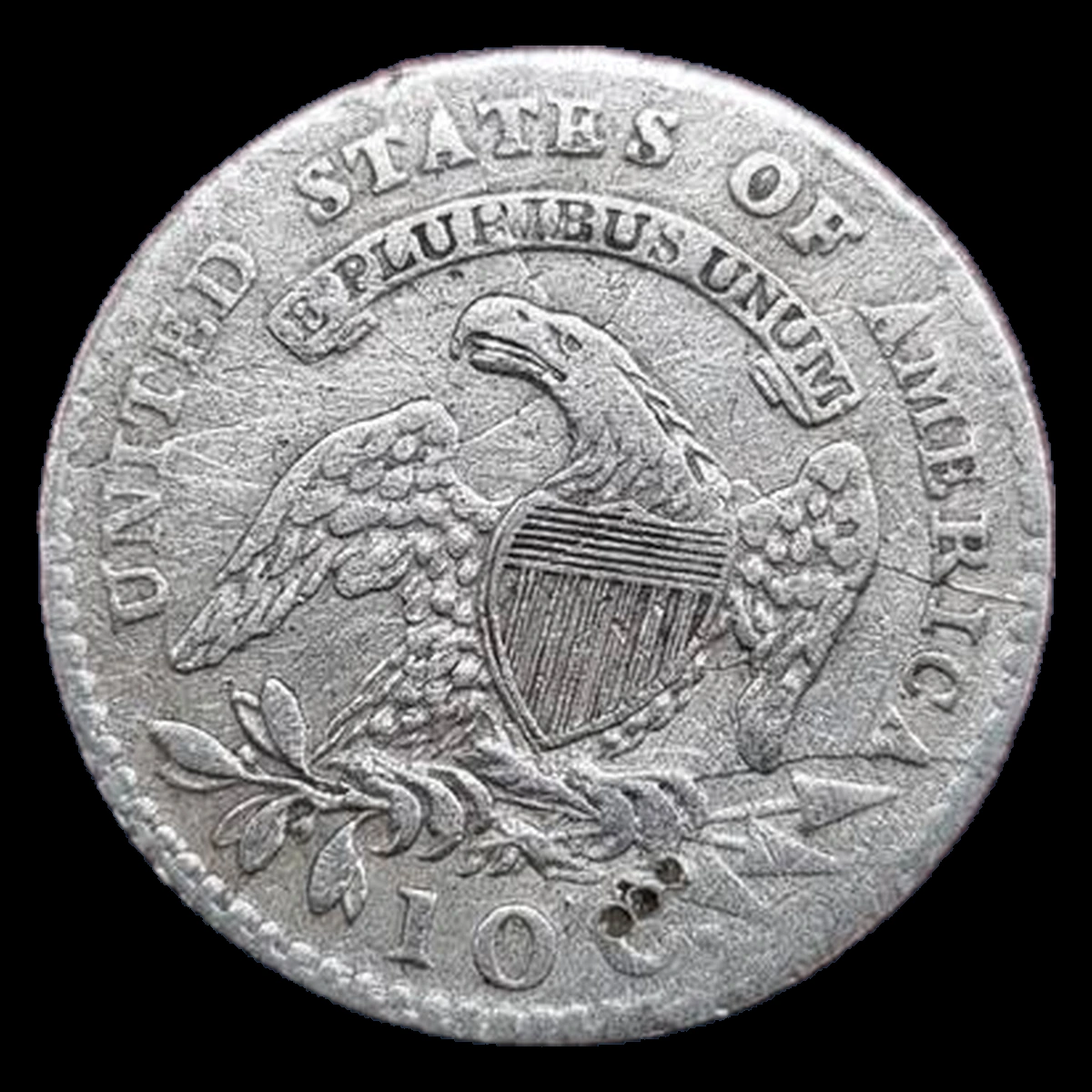
The reported front crack forms a short raised connection below the 8. Additional cracks appear across the reverse.
Silver entered narrow splits in the die and reproduced them as ridges. As the tools continued working, cracks could grow or branch, so earlier coins need not show every later line.
How to Identify
Begin below the 8 and use side lighting to inspect the center of the line. A scratch can have bright raised edges while still cutting into the coin along its middle.
Compare the complete reverse network separately. Do not connect unrelated scratches into an imagined pattern or count each branch as another broad error.
What It’s Worth
$400–$20,000 is an estimated whole-coin range for worn through lower-grade unworn examples with identifiable cracks. The date, surface quality, and wear remain major influences.
The VG10 result of $528 is a condition comparison, not a measured crack premium. Cleaning or scratches still matter even if the die-crack pattern is clear.
3. 1811 Dime Pieces of the Opposite Design Appear as Extra Shapes: Die Clash Error
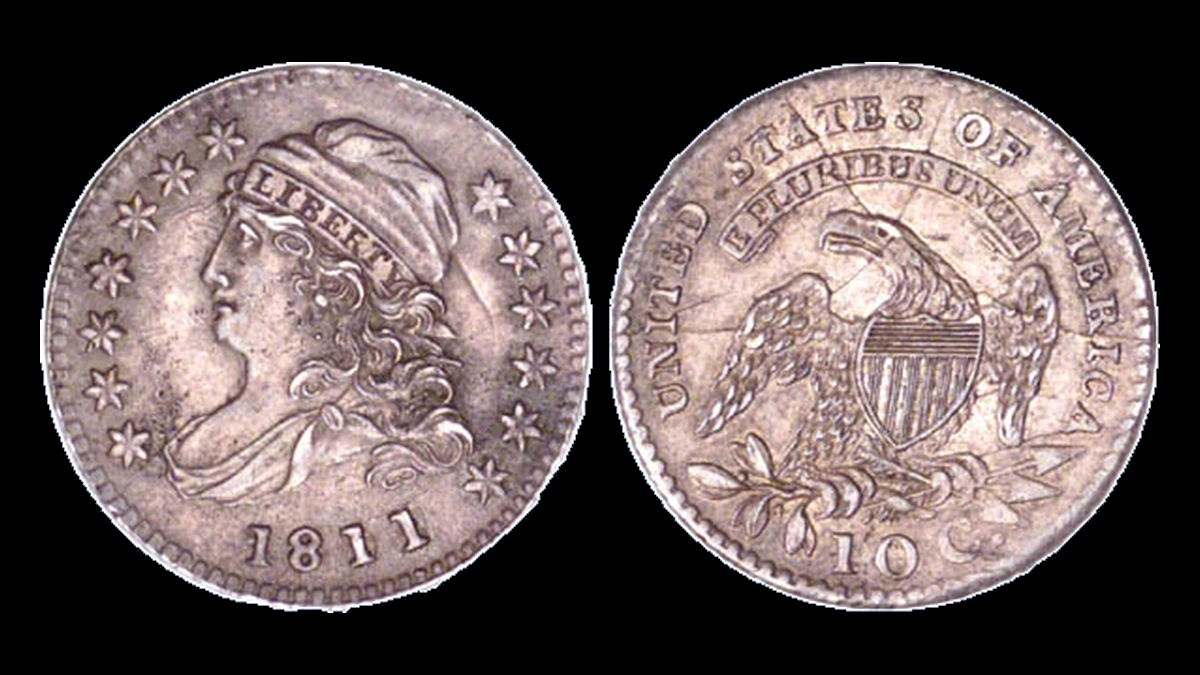
The reported 1811/09 example also has prominent clash traces. They formed after the two dies collided without a blank and picked up parts of each other’s designs.
A later coin could then receive those unwanted shapes. Unlike a crack, a clash mark should relate to a recognizable design fragment from the opposite face.
How to Identify
Compare both full designs before choosing what an unexpected curve represents. Check the shape and position against the documented clashed example under changing light.
Normal hair lines, scratches, and cracks can all make the surface look busy. Follow each proposed transferred fragment rather than treating every extra line as a clash.
What It’s Worth
$400–$20,000 is the estimated range for complete worn through lower-grade unworn coins with matching traces. It is not a separate price for each transferred shape.
A PCGS MS62 brought $5,225 in August 1995 as an ordinary condition comparison. That older unworn-coin result and the more recent $528 VG10 result show very different preservation levels.
4. 1811 Dime A Broad Rise Appears at the Top: Sunken Die Error
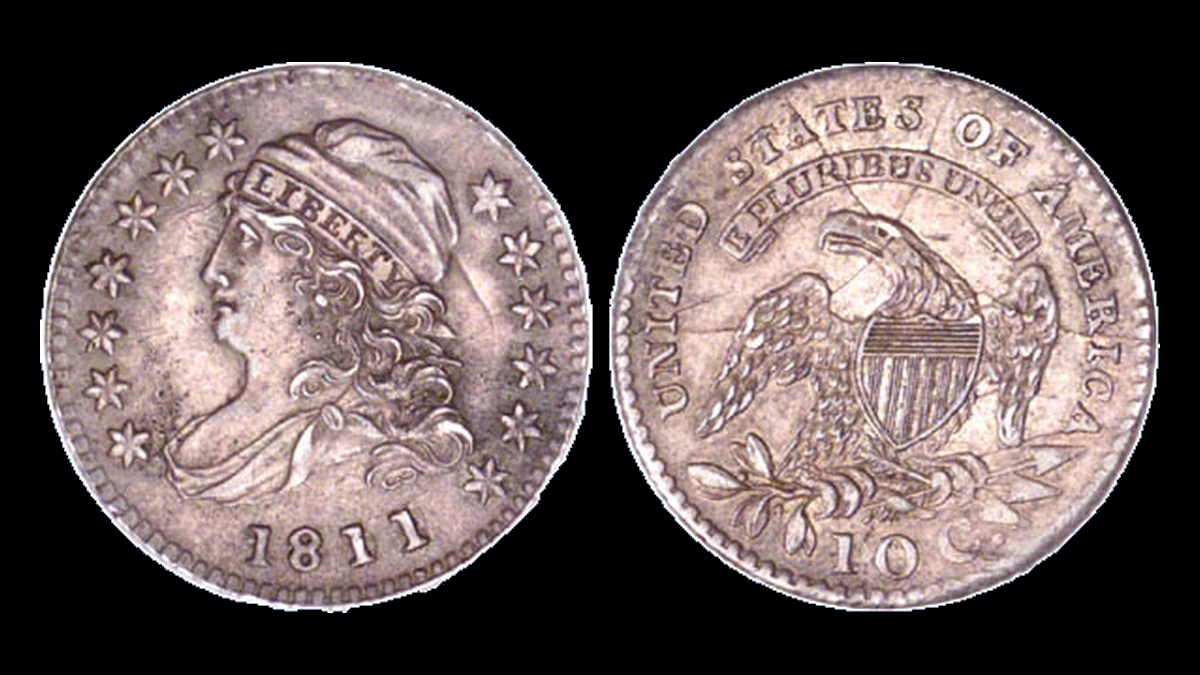
Near twelve o’clock, the described coin has a raised area broader than a fine crack. The collection record links it to a worn die whose surface had sunk.
A sunken part of the tool leaves more room for metal during striking. The tool sinks, while the matching area on the coin rises.
How to Identify
Tilt the front to watch the broad continuous rise near the top and compare its outline with the reference. Original design should cross the raised area in a way that fits the strike.
Inspect the reverse and edge for later bending, pressure, or repair. Unevenness elsewhere on the coin is not enough to identify this particular die-sinking feature.
What It’s Worth
$400–$20,000 is an estimated whole-coin range for comparable worn through lower-grade unworn examples. The collection description does not give a sale price for its bulged specimen.
The VG10 and MS62 results provide condition context rather than a fixed bulge premium. Later bending can reduce value instead of adding collector interest.
Conclusion
The overdate identifies the regular 1811 issue, while the cracks, clashes, and broad rise show different changes to its tools. Examine each feature on its own terms even when several share one coin.
Keep the price attached to the complete dime and its preservation. There is no separate ordinary-date 1811 issue to compare against, and adding four full ranges would count the same coin repeatedly.