Rare 1798 Dime Errors (List & Pictures)
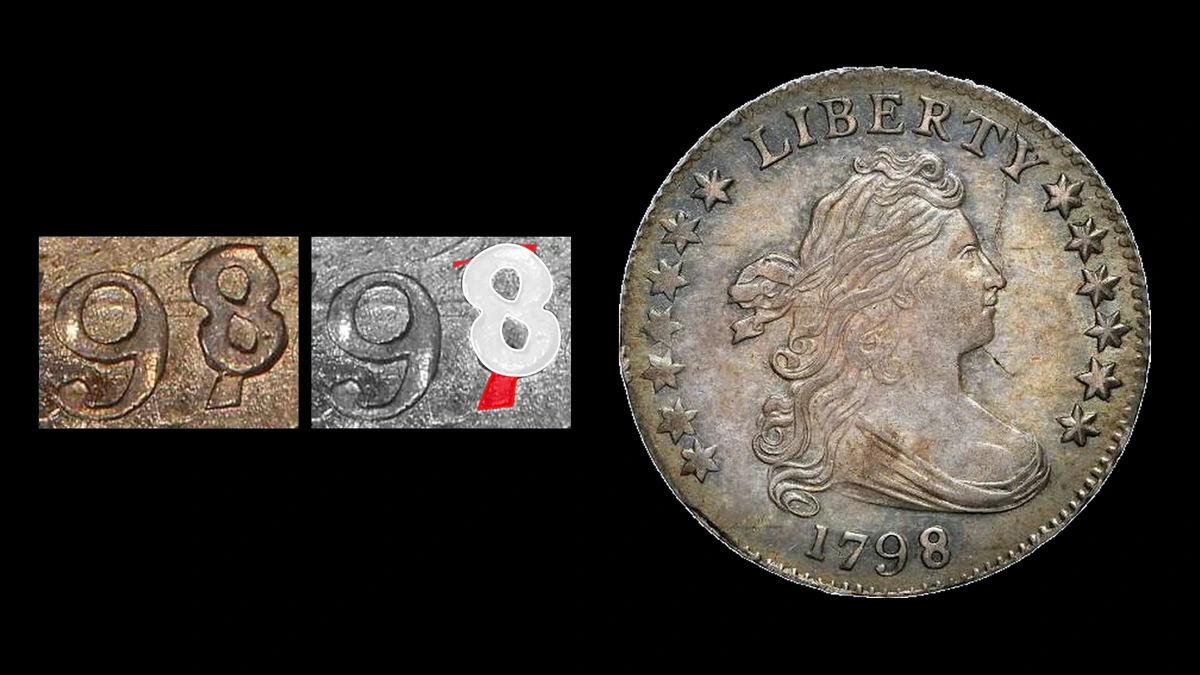
Date style and reverse star count help organize the wide price span of 1798 dime errors. Estimated whole-coin values range from $1,000–$125,000, and a 16-star 1798/7 graded MS65+ sold for $99,000 in January 2023.
Identify the date and stars before matching smaller cracks, rim breaks, or clash marks to the appropriate variety.
| First clue | Feature | Estimated whole-coin range |
|---|---|---|
| Old numeral at the upper right of the final 8 | 1798/7 overdate | $2,500–$125,000 |
| Raised lines and small rim patches | Die cracks and rim breaks | $1,000–$70,000 |
| Unfamiliar design traces near the portrait | Clashed dies | $1,000–$100,000 |
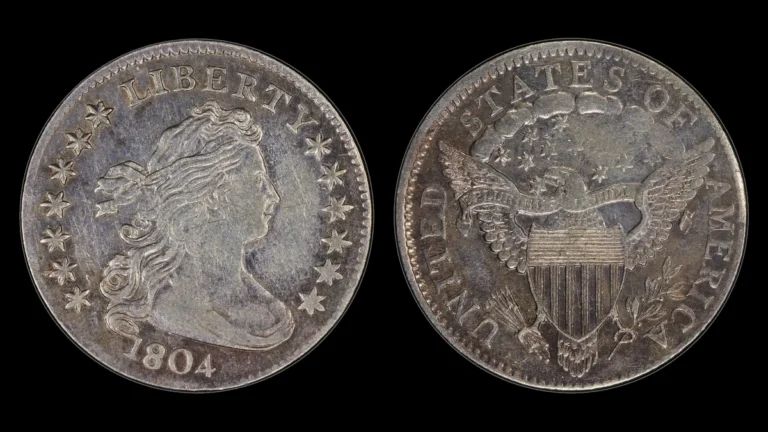
1. 1798 Dime A corner of 7 projects beside the final 8: 1798/7 Overdate Error
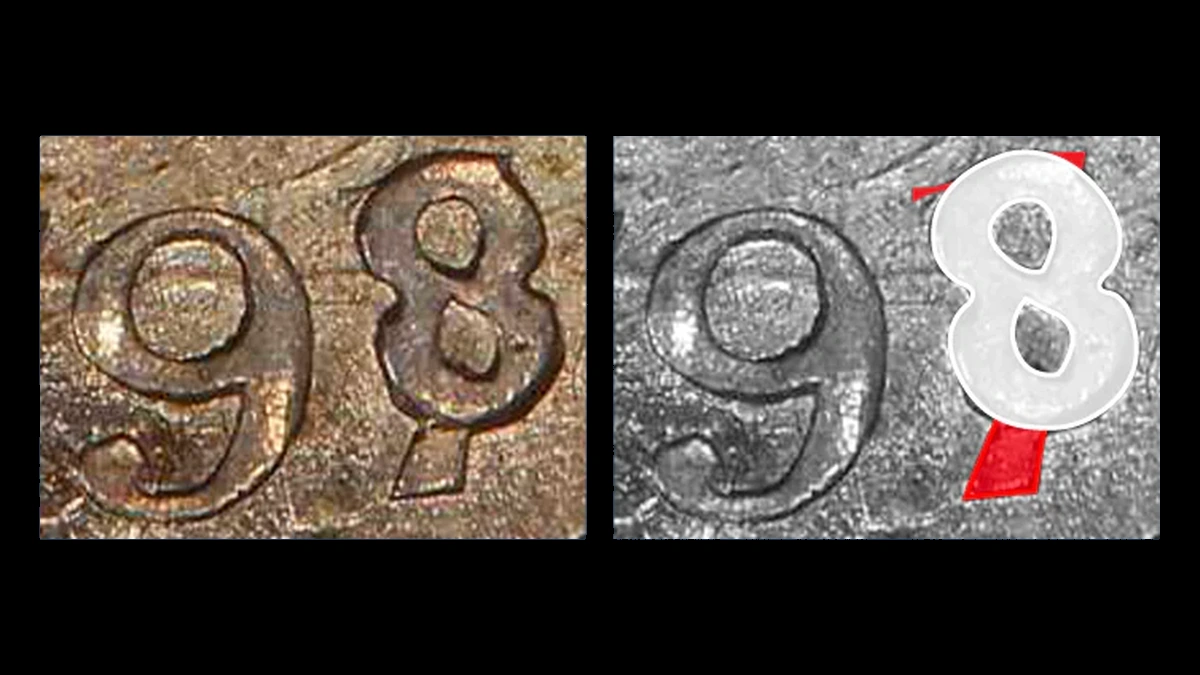
The last date digit on an overdate contains evidence of a numeral it replaced. Portions of a 7 remained when the die’s date was changed to end in a small 8.
That altered die, the steel tool that stamped the obverse, passed the retained strokes to later coins. On the documented 16-star example, a corner of the earlier 7 projects at the upper right of 8.
The overdate occurs with either 13 or 16 stars above the reverse eagle. Star count distinguishes these varieties, but it does not establish the underlying date change by itself.
How to Identify
Under a 10× magnifier, examine the upper right of the final 8 while keeping the full date visible. Match the raised projection to a clear attributed overdate instead of treating any thick or damaged loop as an old 7.
Inspect for cuts or disturbed metal that could produce a misleading outline. An ordinary Small 8 or Large 8 date is not automatically a 1798/7.
Once the date is established, count the stars above the large eagle and shield. The absence of a written denomination is normal for this Philadelphia dime.
Original specifications are about 2.70 grams and 19.80 millimeters, with a grooved edge. Measurements of an accessible coin support the broader examination, allowing for wear, but do not prove an overdate.
What It’s Worth
The estimate is $2,500–$125,000 for the complete overdate, spanning worn examples through exceptional unworn coins. Star count, preservation, and appearance help determine which comparison is relevant.
The PCGS 16-star record lists $99,000 for an MS65+ sale in January 2023. That grade describes an unworn coin with relatively few marks.
The result belongs to the 16-star variety and should not be assigned automatically to a 13-star example. A legible old numeral establishes an important feature, but the surrounding coin still contributes most of the valuation context.
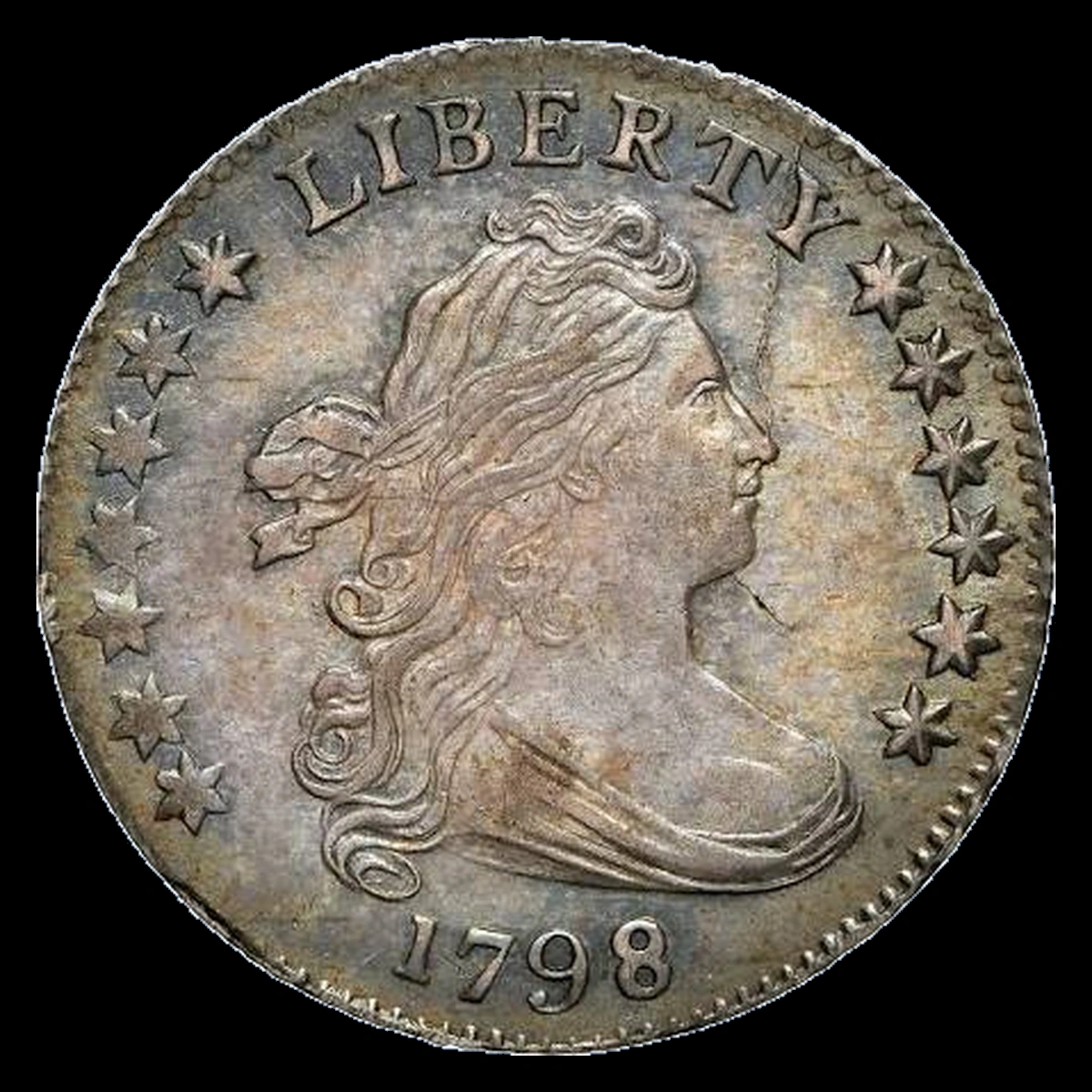
2. 1798 Dime Ridges cross the portrait and small patches touch the rim: Die Cracks and Rim Breaks Error
Reported Large 8 JR-4 coins have an obverse line running from Y toward Liberty’s nose and then her chin. A reverse line connects the second feather tip of the left wing to the border.
These raised routes formed when metal entered narrow openings in cracked dies. Small pieces also crumbled from the reverse tool above S OF, leaving modest rim-connected patches on later strikes.
The reported rim damage is limited in scale. It should not be described as a large mass replacing the entire upper border.
How to Identify
Confirm the Large 8 date and select a JR-4 comparison before tracing the cracks. Start with the portrait route from Y, then examine the separate wing-to-border line on the reverse.
Low-angle light helps distinguish a raised ridge from a scratch that cuts into the surface. Matching several landmarks along each path is more persuasive than finding a random line near the portrait.
Check above S OF for the small raised patches and their connection to the rim. A later rim blow may dent or push metal without reproducing the same bounded shapes.
Do not require every later break to appear on an earlier die stage. Record the features that are actually present rather than extending a thin line into an assumed larger break.
What It’s Worth
Estimated whole-coin values range from $1,000–$70,000 across worn Large 8 coins and attractive unworn examples. The small cracks and breaks contribute interest within that much wider condition range.
A PCGS-recorded JR-4 graded MS64 sold for $61,000 in May 2026. A cleaned Large 8 graded Fine Details brought $1,680 in August 2025.
The first was unworn with some marks; the second had wear and altered surfaces. Neither result isolates a dollar premium for the exact crack routes or rim patches discussed here.
3. 1798 Dime Extra design traces sit near Liberty: Clashed Dies Error
A Large 8 dime graded PCGS MS64 was described by Stack’s Bowers in 2012 with clash evidence in front of Liberty’s throat. The location belongs to that particular example.
A separate 16-star 1798/7 also shows clashes, with a recorded sequence of clashing, smoothing of the die, and another clash. That sequence can leave some transferred traces weaker than others.
The process starts when the two dies meet without a blank between them. Later strikes can receive traces borrowed from the opposite design, but the two examples should not be assumed to share identical marks.
How to Identify
Choose the correct variety reference before looking for faint extra shapes. Examine the throat area on the Large 8 example, while using the documented overdate’s own photographs for the 16-star coin.
Change the light direction and compare the suspected trace with a recognizable part of the opposite design. A bright streak, polishing line, or scratch need not have any such relationship.
Keep both faces in the photographic record so the design connection can be assessed. Smoothing of a die can weaken earlier traces, but it is not a reason to invent a mark that cannot be seen.
What It’s Worth
The supplied estimate is $1,000–$100,000 for whole coins with visible clashes, covering different varieties and levels of preservation. Those differences explain much of the spread.
The 16-star overdate graded NGC MS66 sold for $43,125 in April 2009. MS66 denotes an unworn coin with few marks.
The later $99,000 overdate result supplies high-grade context, not proof that stronger clashes caused a price increase. Overdate and clash features on one coin should receive one combined appraisal, not added full-coin estimates.
Conclusion
Begin with the date, then count the reverse stars where an overdate is involved. That identity tells you which crack routes, small rim breaks, or transferred shapes make a meaningful comparison.
The estimated $1,000–$125,000 span crosses very different varieties and condition levels. A confirmed small feature adds information about the coin, but it cannot replace an assessment of the entire specimen.