Rare 1891 Dime Errors (List & Pictures)
A second strike does not always leave a second portrait. On one 1891 dime, small extra arcs of border teeth record another blow; the coin sold for $1,292.50 in November 2016.
These 1891 dime errors have estimated whole-coin values of $20–$2,500. Check the date and mint letter before comparing fine design details, then use both faces for the larger striking errors.
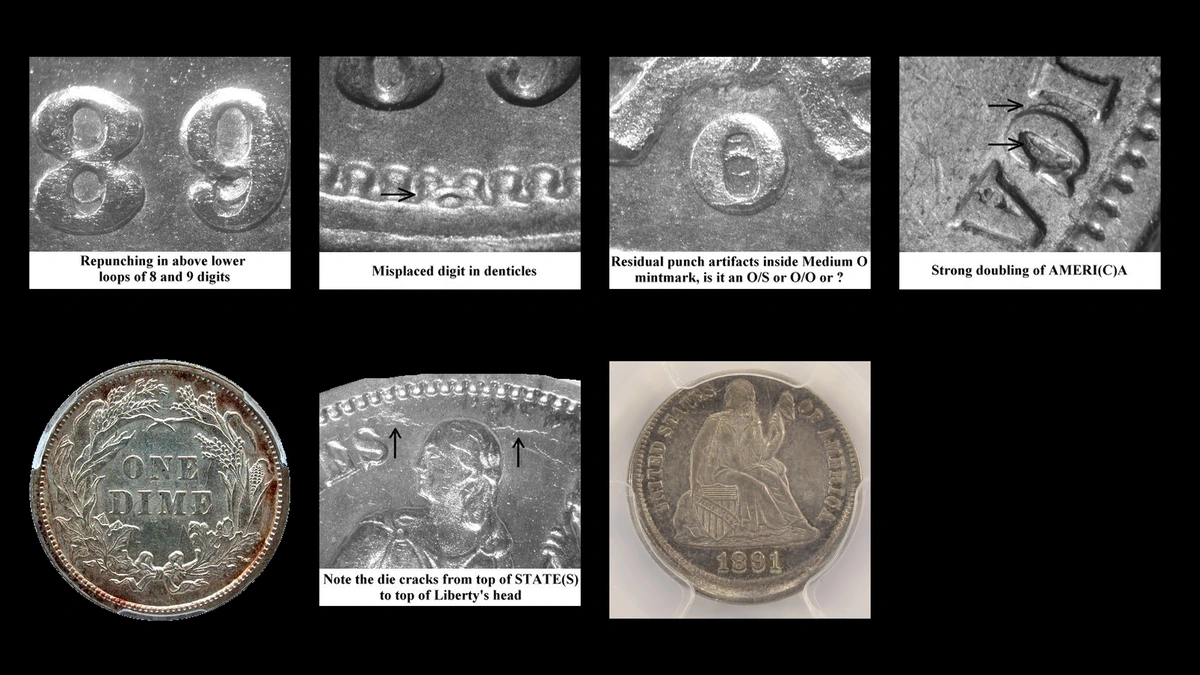
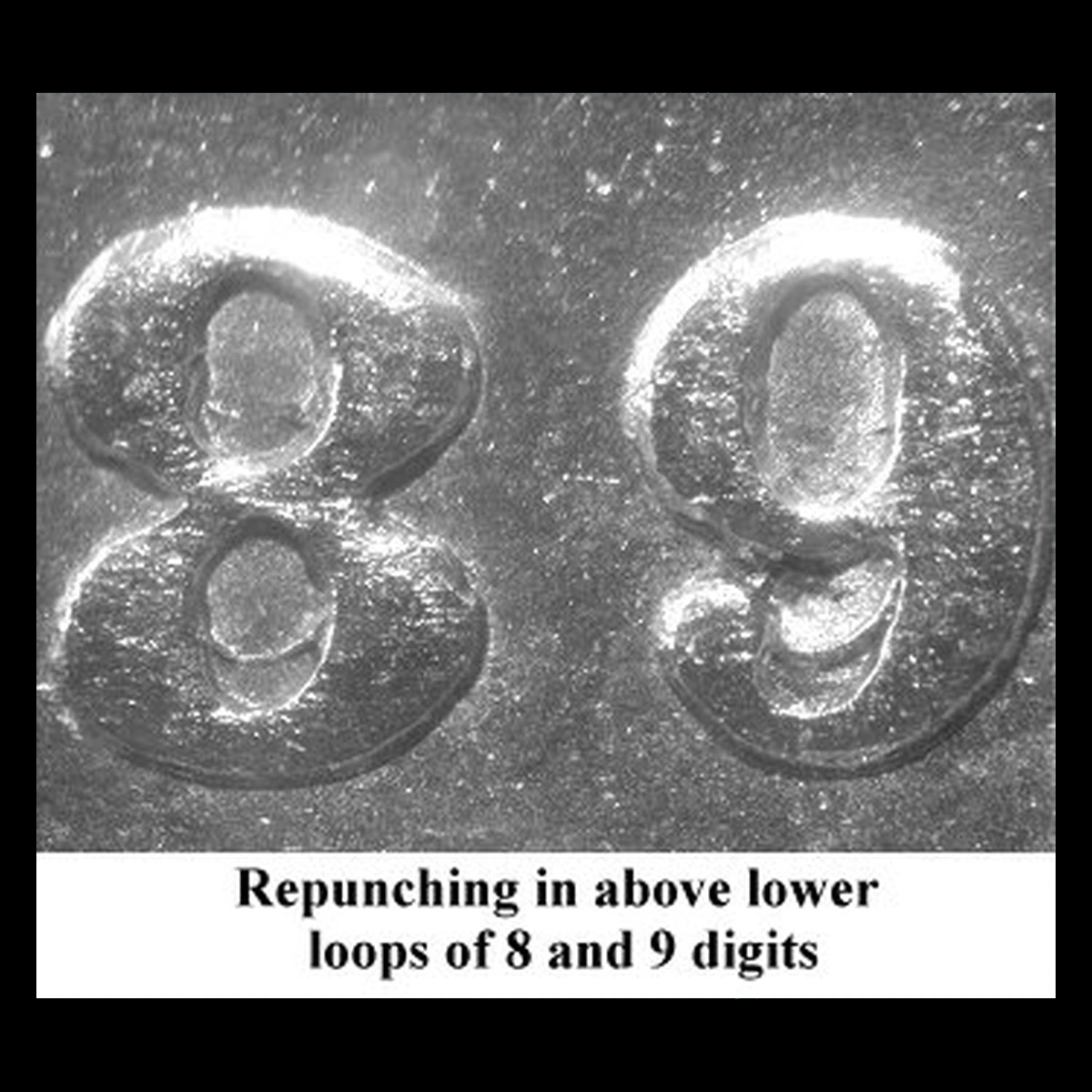
1. 1891 Dime Earlier Curves Beside the Date: Repunched Digits Error
A date punch applied more than once could leave parts of its earlier position in the die. The die is the steel tool that transfers the design to a coin.
Philadelphia patterns include repunching at the first 1 and an extra tail on the 9. New Orleans examples include earlier parts of the 8 and 9.
How to Identify
Read the mint below the wreath bow first: O is New Orleans, S is San Francisco, and no letter is Philadelphia. Choose the date reference for that mint.
Follow each extra stroke until it fits a recognizable part of an earlier number. An ordinary open or closed 9 does not establish a repunch.
Flat ledges, scratches, and worn thickening can mislead. A complete matching pattern is more useful than one unexplained bump.
What It’s Worth
$30–$700 spans estimated values for modest through clearer examples. Many modest varieties fit around $30–$250, with stronger patterns on better-preserved coins around $250–$700.
PCGS lists a rounded $564 Heritage result from July 2016 for an 1891-O F-106a in MS63. That coin combines date and mintmark repunching, so the price cannot be divided into separate premiums.
2. 1891 Dime Number Fragments Away From the Date: Misplaced Digits Error
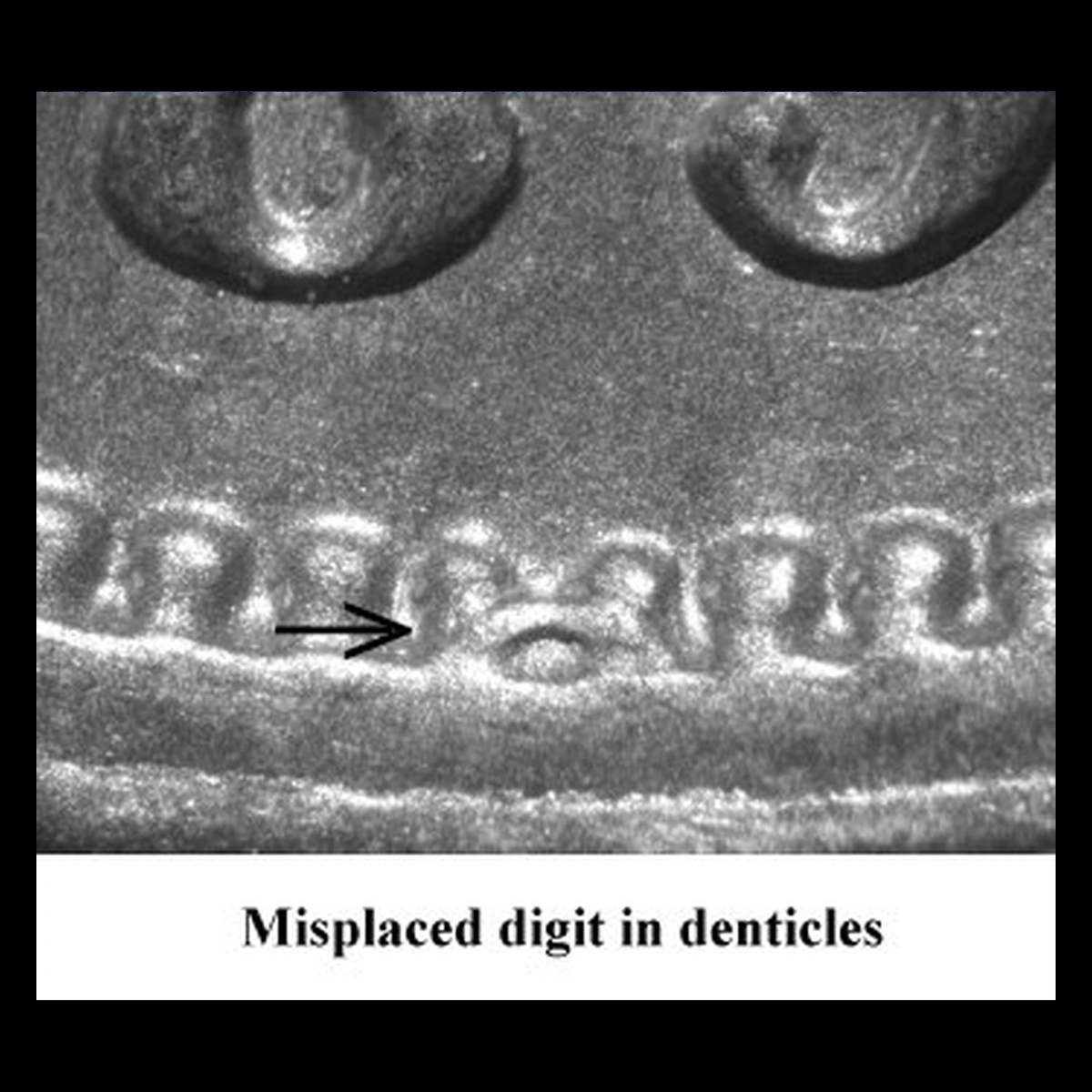
A date punch sometimes landed outside its intended location. Small numeral pieces can survive in the border teeth or another part of the design.
Philadelphia examples include tops of 8 or 9 below the date and a 9 in the shield. New Orleans patterns include lower-border 8 and 9 remnants and a 1 in the seated figure’s base.
How to Identify
Begin with a wider photograph showing the normal date and the nearby border. Look for a number-shaped fragment that interrupts the regular teeth.
Move to the shield or figure’s base only when comparing the relevant variety. These positions belong to different dies, not one coin with every misplaced digit.
Match the fragment’s curves and strokes to the correct number. An arrow pointing at extra metal is not enough to establish a numeral.
What It’s Worth
$50–$900 is an estimated span for identifiable misplaced dates. Less obvious circulated examples fit around $50–$300, while clearer cataloged patterns on attractive coins can reach about $300–$900.
The coin’s condition is included in those figures. Wear that hides the small remnant can reduce the variety’s appeal.
3. 1891 Dime Overlapping O or S Shapes: Repunched Mintmark Error
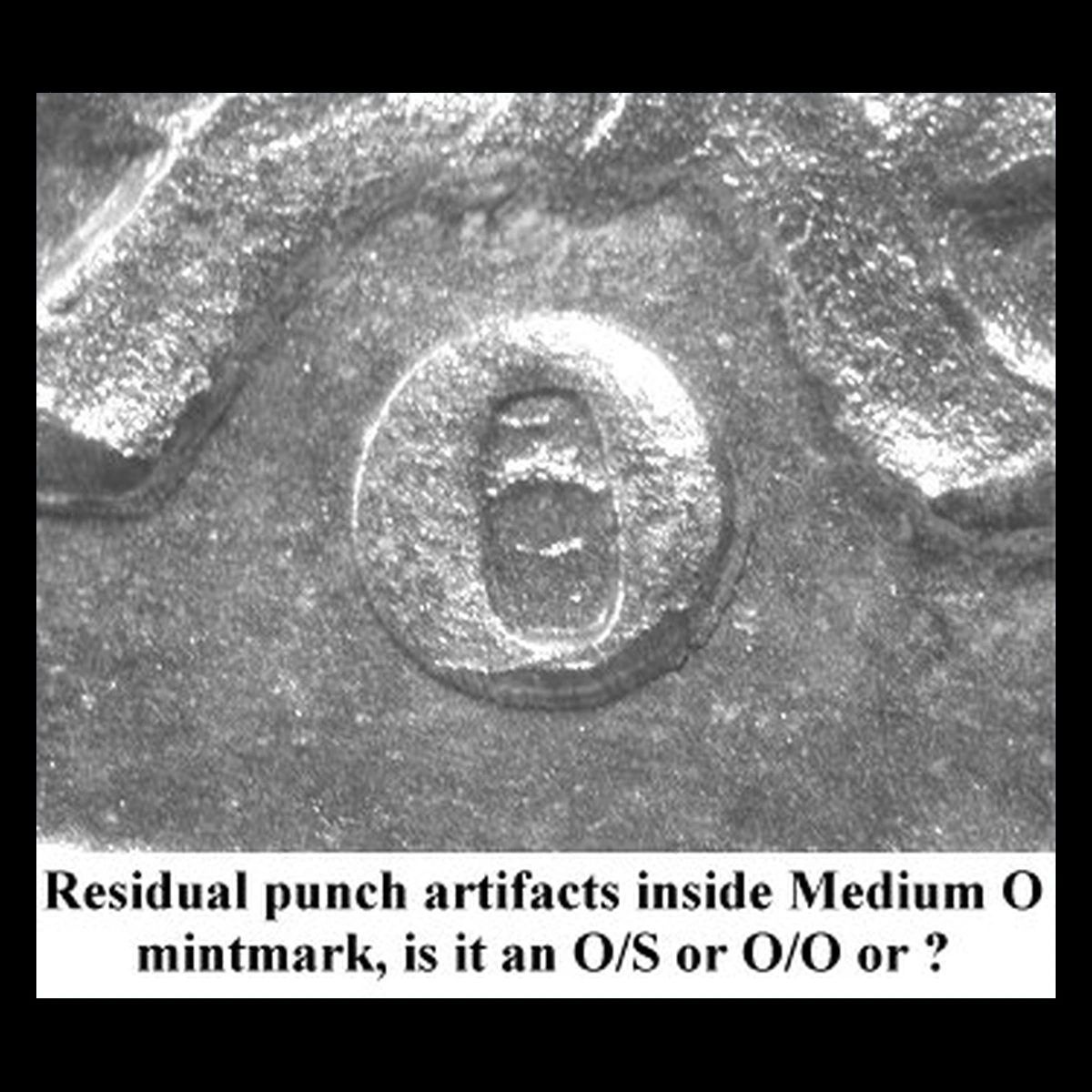
An earlier mint-letter punch can remain visible beside the final impression. New Orleans examples include an upright O over a sideways O.
San Francisco has a medium-sized S over a smaller S. Different angles or sizes of the same letter still represent same-letter repunching.
How to Identify
Hold the back upright and inspect the letter beneath the wreath bow. For the sideways-O pattern, compare with F-109, also called FS-501.
A San Francisco candidate needs an S-over-S photograph instead. A thick mintmark or one stray curve cannot substitute for the earlier letter’s shape.
Inspect the area for cutting or added metal. The complete arrangement should match the intended variety.
What It’s Worth
$50–$1,200 is an estimated range for clearer recognized repunches. Circulated examples are estimated around $50–$400, with better-preserved varieties around $400–$1,200.
PCGS lists a rounded $764 result for the sideways-O variety in XF45 at Heritage in January 2016. That is a comparison for one specific O-over-O, not every mintmark pattern.
4. 1891 Dime A Smaller Inverted S Beneath O: Over-Mintmark Error
The specialist catalog interprets one smaller remnant beneath the O as an upside-down S. That would mean an upright O was punched over an earlier S in the die.
Collectors call one mint’s letter over another an over-mintmark. The finished coin still bears the O for New Orleans.
How to Identify
Compare with a normal O and the O-over-sideways-O variety before deciding. Either can explain an unexpected curve without a different underlying letter.
The lower traces must fit the catalog’s smaller inverted S. Match the entire arrangement rather than one isolated bend.
Examine the surrounding surface for alteration. A misshapen O is not enough to establish the O-over-S interpretation.
What It’s Worth
$100–$1,500 is an estimated range for a correctly identified example of the cataloged interpretation. Circulated pieces are estimated around $100–$500, with stronger better-preserved examples around $500–$1,500.
The rounded $764 sideways-O result above is only a same-year comparison with another pattern. It does not establish an O-over-S sale price.
5. 1891 Dime Repeated Shield, Drapery, or Wreath Detail: Doubled Die Error
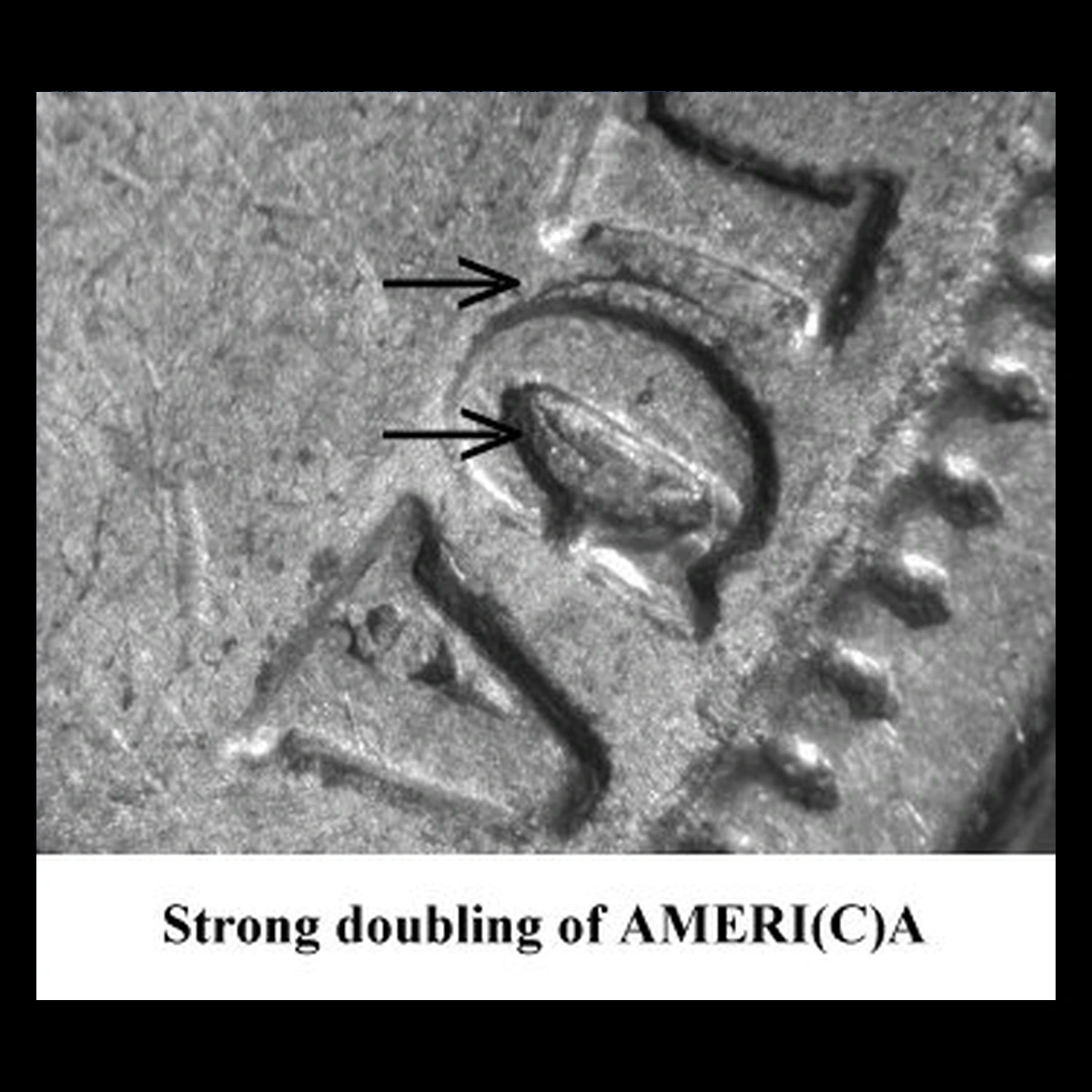
A doubled die already has repeated design contours before it touches a blank. It can transfer those contours without striking the coin twice.
Philadelphia front varieties involve the shield and drapery. A medium-S San Francisco back variety has doubling at the lower-left wreath, while a small-S example is a separate pattern.
How to Identify
Choose the mint and affected face before enlarging the suspected area. A shield photograph cannot identify a wreath variety.
For the medium-S pattern, compare connected leaf details in the lower-left wreath. Do not assume the small-S variety has the same location.
Look for rounded repeated contours instead of flat mechanical shelves. One thick leaf is weaker evidence than several matching details.
What It’s Worth
$40–$800 is an estimated range across identifiable minor and stronger varieties. The normal value of a well-preserved Seated dime is part of that price.
Match the actual pattern and surface quality before choosing a comparison. A small doubled line may contribute only a modest amount beyond the underlying coin.
6. 1891 Dime Unwanted Opposite-Side Shapes: Die Clash Error
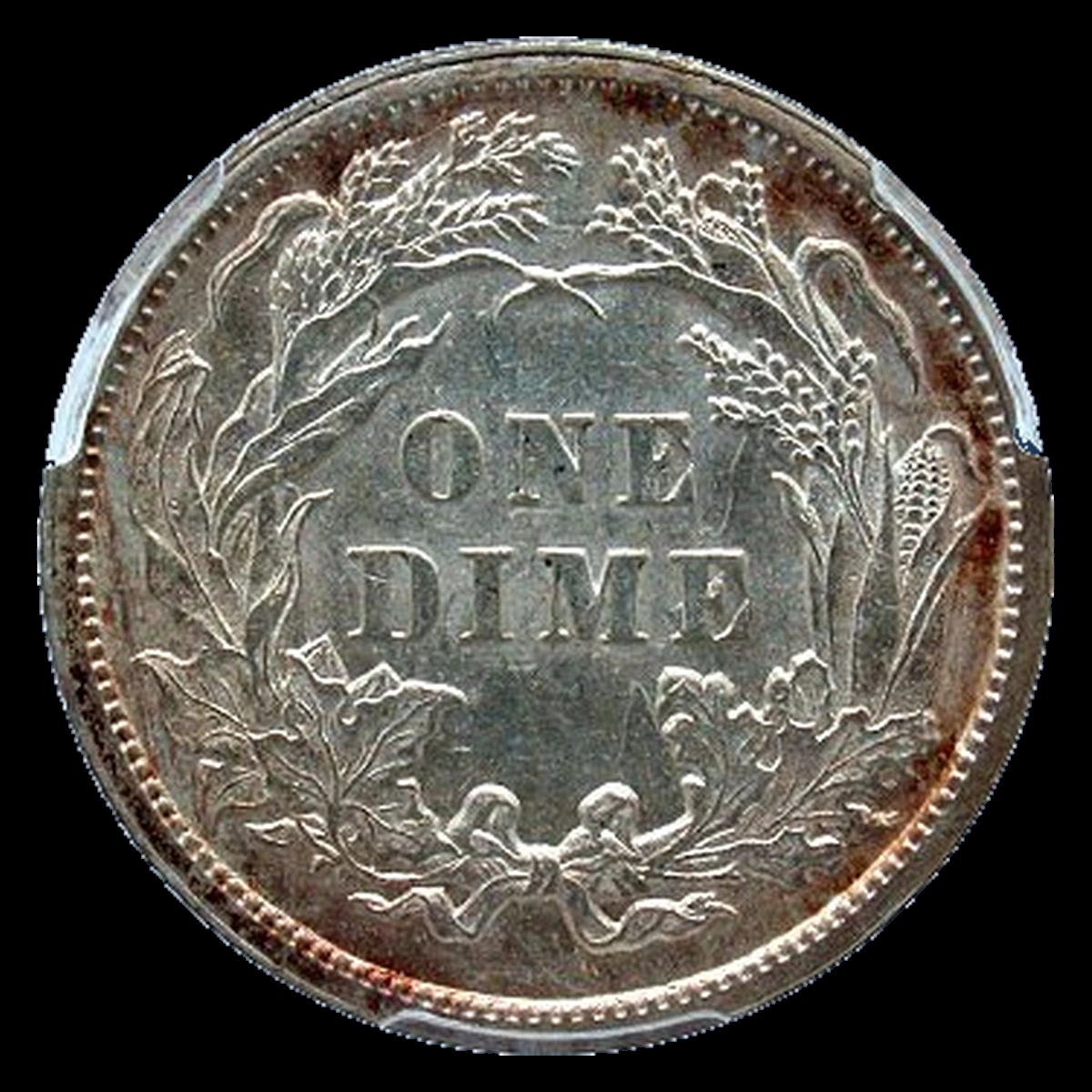
When dies meet without a blank between them, one can pick up traces of the other’s design. Coins struck afterward may carry those extra shapes.
Philadelphia and New Orleans examples are listed, including stronger New Orleans clashing. Several die contacts do not mean that a finished coin received several strikes.
How to Identify
Compare the open areas with a normal coin, then find the opposite design that could explain each unwanted mark. Connected recognizable shapes provide stronger evidence than random lines.
Separate intended leaves, folds, and letters from the extra traces. Wear or polishing of the die can make parts of a clash difficult to see.
What It’s Worth
$20–$300 is an estimated range for clashes of differing strength. Modest circulated examples fit around $20–$100, with clearer marks on attractive coins around $100–$300.
The ordinary date, mint, and condition value remains included. Several faint traces do not create separate premiums to add together.
7. 1891 Dime Raised Lines or Broad Rim Patches: Die Cracks and Cuds Error
A cracked tool can leave a ridge through the design. A larger missing edge piece can leave a raised rim-connected patch called a cud.
Philadelphia back examples include rim breaks around 9–10 o’clock and retained breaks around 9–11. A retained break means the cracked die piece remained partly in place.
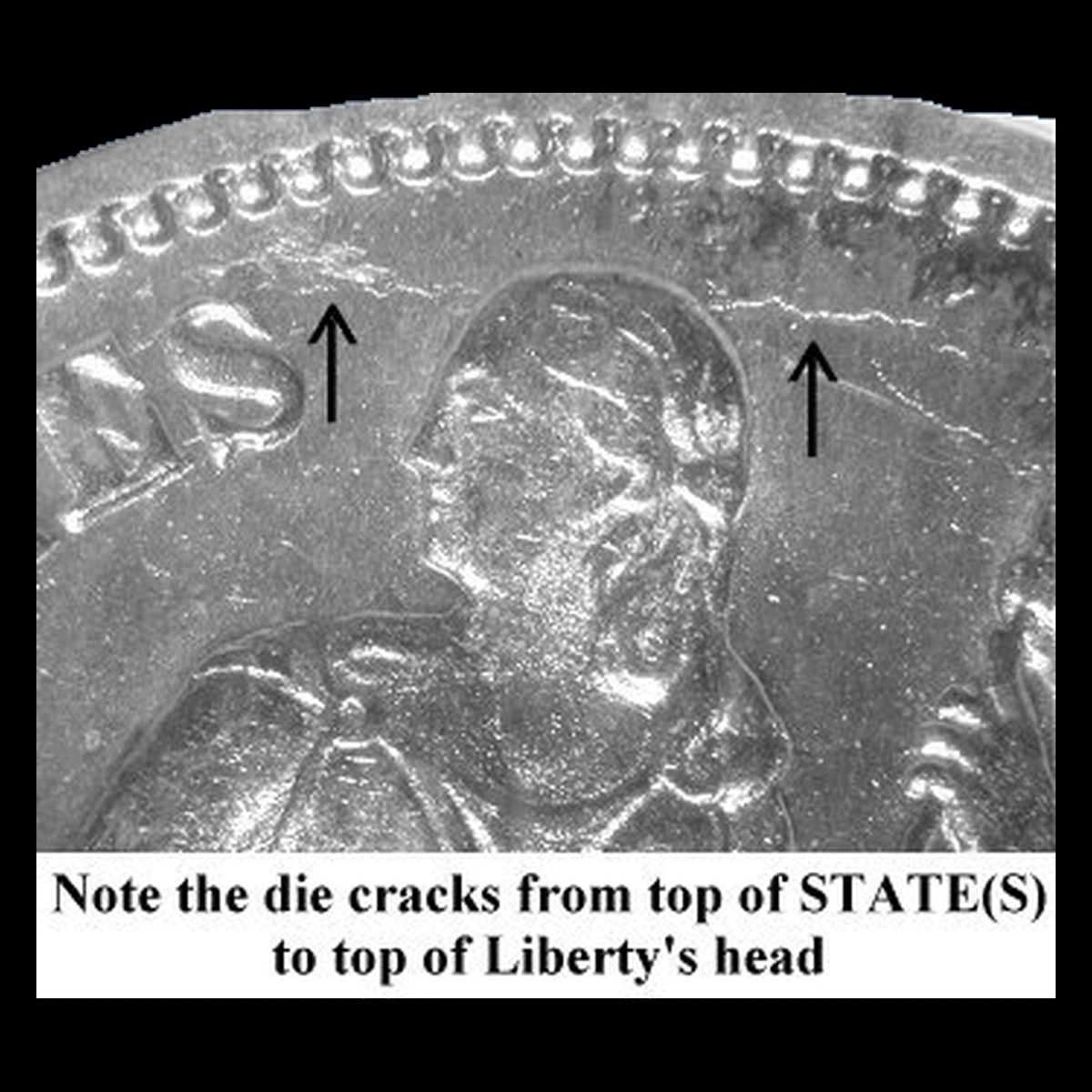
How to Identify
Use low side lighting to separate a raised line from a scratch. For a broad patch, trace its connection to the rim and compare the lost or shifted design.
New Orleans examples include a break around 8–9 o’clock. Other Philadelphia, New Orleans, and San Francisco crack paths belong to separate dies.
Check the edge for bending or crushing that pushed finished metal onto the face. Do not combine all listed locations into one expected specimen.
What It’s Worth
$20–$1,000 spans estimated values from small cracks to stronger broken-die patterns. Fine lines are estimated around $20–$150, and clearer cuds or major patterns around $150–$1,000.
A 1970-D nickel with two cuds sold for $63 in October 2022. That different denomination offers perspective on modest break prices, not an exact Seated dime comparison.
8. 1891 Dime A Thin Layer Lifting From Silver Alloy: Lamination Error
A weak area within the silver-copper alloy can let a thin layer lift or fall away. The result is called lamination.
This category is included as a type to check for in 1891. The supplied material does not establish a specific certified specimen or location for the year.
How to Identify
Leave attached metal untouched and inspect the separation beneath it. A natural thin layer differs from a deep cut with metal pushed up alongside it.
A normal Seated dime is about 2.5 grams and 17.9 millimeters across. Actual missing metal may lower weight, while an attached flap may remain part of the total.
Photograph how the separation meets the design and edge. A rough patch alone cannot establish an original alloy flaw.
What It’s Worth
$25–$350 is an estimated range for a genuine 1891 lamination. Worn examples are estimated around $25–$150, with clearer attractive pieces around $150–$350.
These are comparisons for an identified original flaw, not a claimed 1891 auction result. Scraping or forcing up a flap can reduce both condition and useful evidence.
9. 1891 Dime A Depression Interrupts the Design: Struck Through an Object Error
An object between a die and blank can stop local details from forming. It may leave an impression even if it does not remain with the coin.
This is a struck-through error. The supplied 1891 material lists the possible type without establishing a particular object, location, or specimen.
How to Identify
Follow the depression into nearby undisturbed design. An original pressed boundary can look different from scraping or a later impact.
Check the opposite face and edge for bulging or bending. A blow after minting may disturb those areas too.
The obstruction can displace metal without removing it, so normal weight does not rule out the type. Do not name a specific material from an indistinct patch.
What It’s Worth
$30–$400 is an estimated range for a genuine 1891 struck-through dime. Larger clear impressions on attractive coins can make stronger comparisons than vague weak patches.
The estimate applies to an original minting interruption. A dent or a design scraped away later is condition damage instead.
10. 1891 Dime A Bare Crescent Beside Cropped Letters: Off-Center Strike Error
A blank out of position receives an incomplete design, with untouched metal on the other side. Both faces should fit that same misplaced disk.
Separate reports describe 5% and 15% examples in AU58, plus a 20% coin shifted toward 12 o’clock. They are not three measurements of one piece.
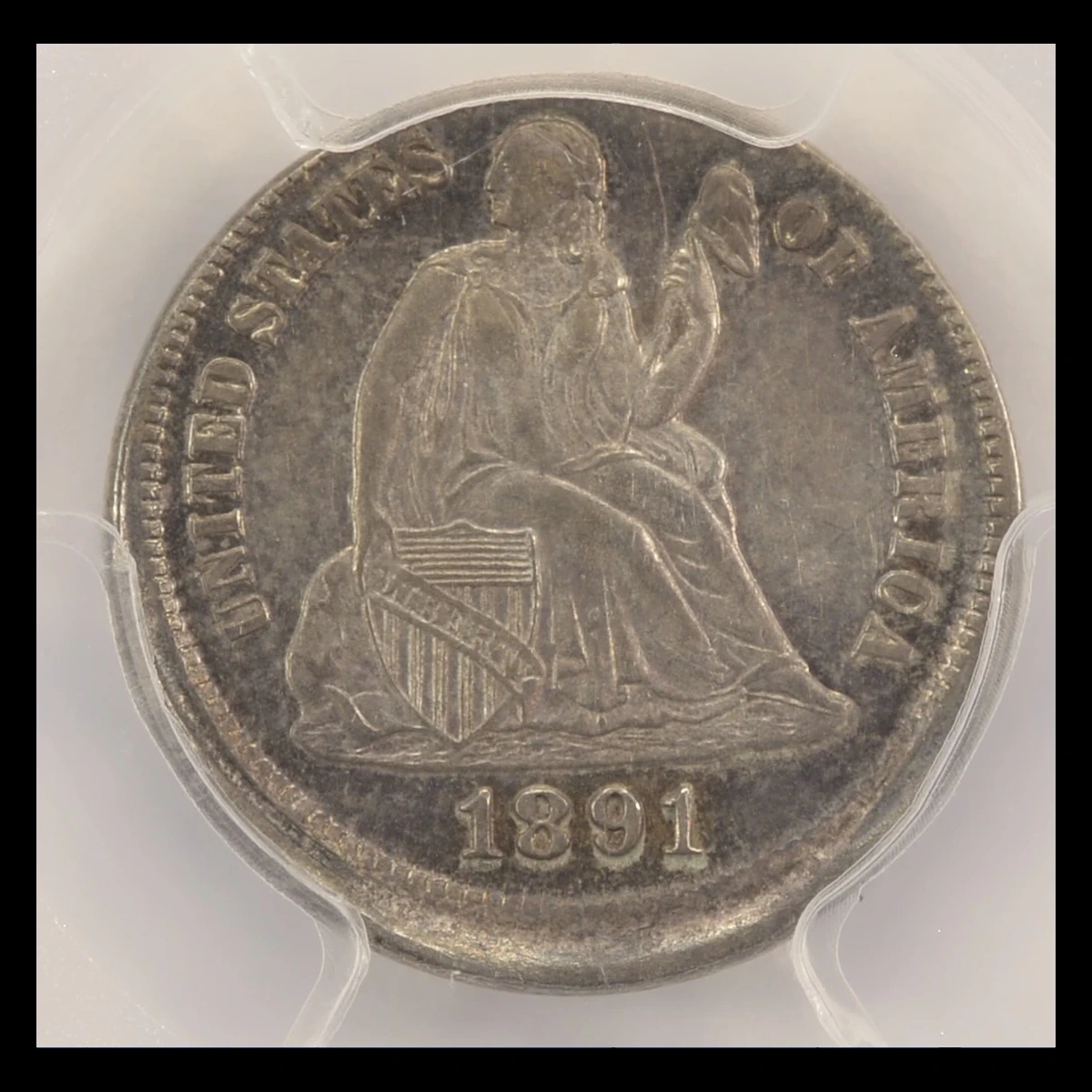
How to Identify
Keep the date visible in a full-face photograph. Compare the blank-to-struck boundary on the back with the front.
Only the 20% report supplies the 12-o’clock direction here. AU58 means slight wear, not a measure of how far the design moved.
Inspect adjoining surfaces and edge grooves for grinding or hammering. One uneven border alone does not prove that the entire blank was off center.
What It’s Worth
$400–$1,800 is an estimated range for genuine dated examples. Original surfaces, readable identification, and displacement all affect the comparison.
Sullivan Numismatics lists the 5% PCGS AU58 coin at $1,300. That is an asking price, not a sale or a price assigned to the separate 15% and 20% coins.
11. 1891 Dime Extra Border Teeth Near 4:30: Double Strike Error
The documented coin first received a normal strike, then moved before another blow. Its second strike was about 90% off center at 4:30 relative to the original design.
Only small arcs of border teeth from that blow reached the coin. A second full portrait was never required to show what happened.
How to Identify
Turn the main design upright and inspect the lower-right area near 4:30. Compare the extra border arc with the normal teeth and find its counterpart on the other face.
Matching arcs on both sides are the key to this example. Local spreading can support the second blow, while a random rim dent cannot supply the same struck pattern.
The recorded PCGS AU50 grade indicates light circulation wear. Keep that grade and position with the documented specimen.
What It’s Worth
$800–$2,500 is an estimated range for comparable genuine repeated strikes. Clarity, condition, and surviving second-strike detail shape the comparison.
The PCGS AU50 example sold for $1,292.50 at Heritage on November 1, 2016. That result values one coin with both impressions.
Conclusion
For an 1891 Seated dime, mint identity guides the date, wreath, and mintmark comparisons. A sideways O, an inverted S claim, and a second date stroke require different shapes to support them.
Estimated values span $20–$2,500, including the ordinary value of the complete coin. For larger striking errors, photographs of both faces can show evidence that a single close-up misses.