Rare 1811 Half Dollar Errors (List & Pictures)
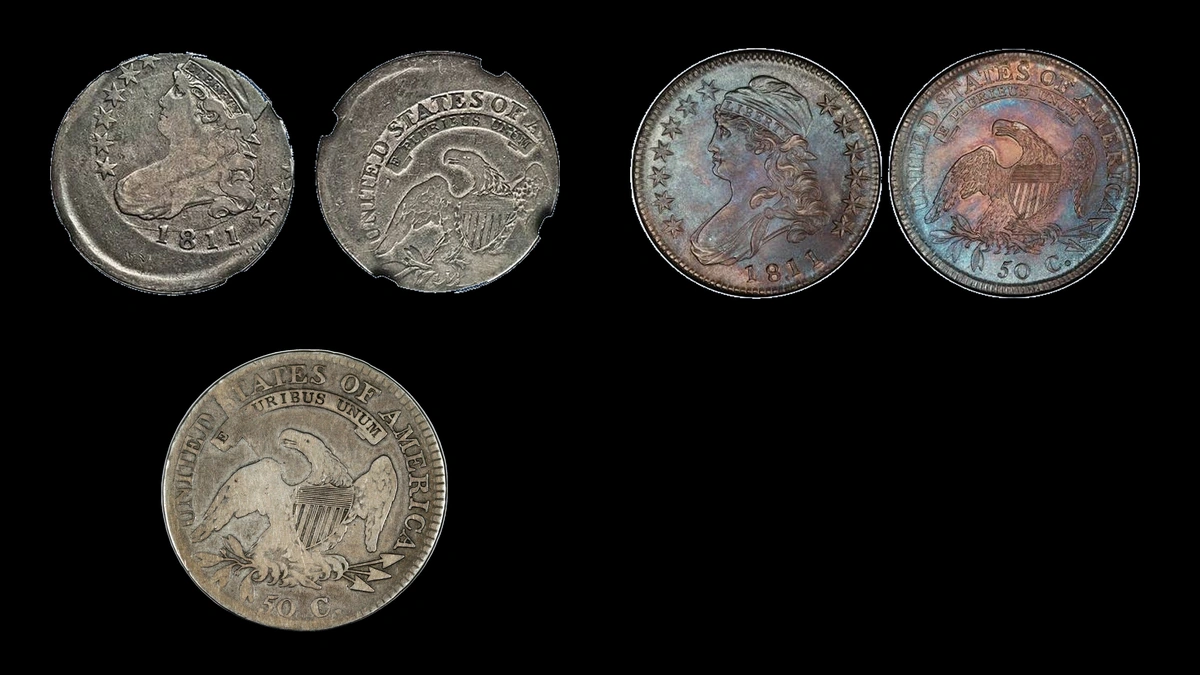
A wide outline is only the beginning of an investigation into 1811 half dollar errors. A genuine twenty-five-percent off-center example sold for $11,162.50 in September 2016, while ordinary size variation needs a different explanation.
The examples below span estimated values of $200–$12,000. Start with the outline, move to the date and raised lines, then examine any separating metal.
| Clue | Where to inspect | Category | Estimated value |
|---|---|---|---|
| Large blank crescent | Whole coin | Off-center strike | $9,000–$12,000 |
| Unusually wide diameter | Outline and lettered edge | Reported broadstrike | $200–$600 before an error premium |
| Dot and faint curved digit traces | Between 18 and 11, and final 1 | 1811/0 with period | $200–$2,200 |
| Thin raised routes | Front arc or reverse letter-to-eagle line | Die cracks | $200–$500 |
| Flap or shallow layered break | Affected silver surface | Lamination | $350–$650 |
These early halves have lettered edges and were made at about 13.48 grams and 32.5 mm before wear. Their open collar, the surrounding ring used during striking, allowed more ordinary outline variation than a later close-fitting collar.
1. 1811 Half Dollar A Quarter of the Design Displaced: Off-Center Strike Error
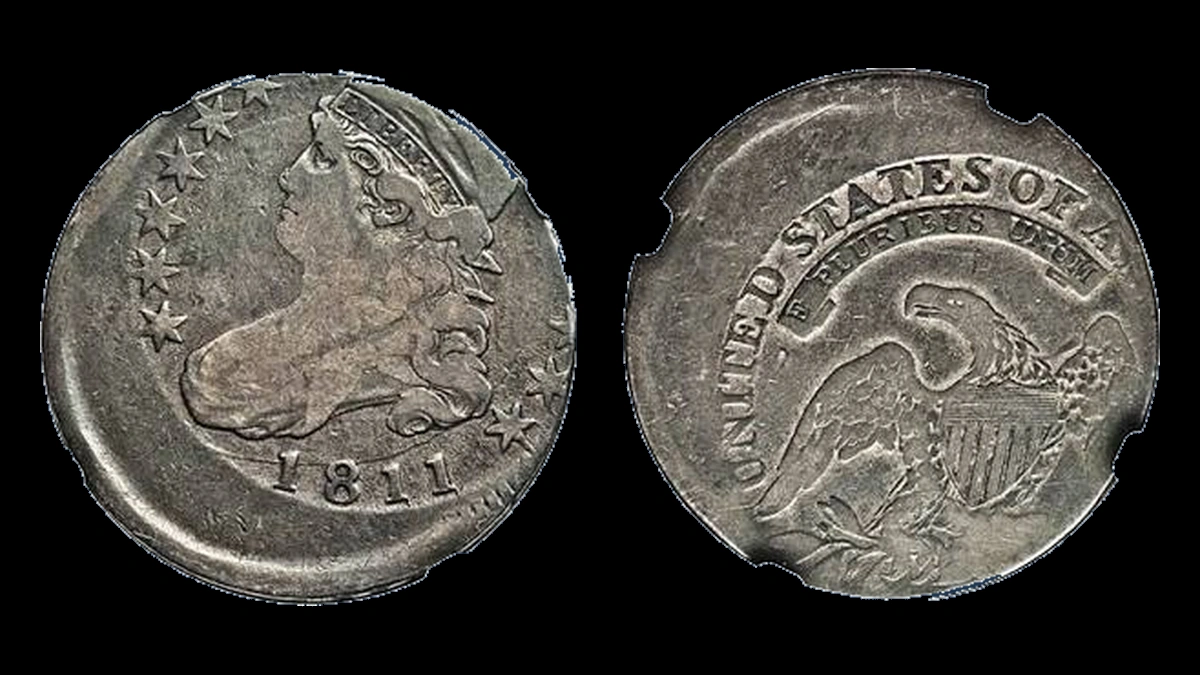
The documented O.104a has a broad area of unstamped silver beside its surviving design. About twenty-five percent of the intended impression fell beyond the blank because it was out of position.
The remaining date identifies 1811, and an upper-left front arc helps match the die variety. Even substantial circulation wear leaves the large blank crescent easy to recognize.
How to Identify
Compare the blank margin with the missing design at the opposite side. Both faces should reflect the same displaced blank, rather than one face alone sitting unevenly within the rim.
Inspect the date and the upper-left arc as separate landmarks. They connect the striking error with the known O.104a example.
Look closely for cutting or grinding in the supposedly blank area and inspect the surviving edge lettering. Take photographs of the complete coin so its unusual shape stays connected to its date.
What It’s Worth
Estimated range: $9,000–$12,000 for a similarly displaced example with readable date and comparable surfaces. The reference coin was graded NGC Fine 12, indicating substantial wear.
Heritage’s September 7, 2016 result was $11,162.50, reported by Coin World. That price reflects the major off-center strike together with the scarce early coin.
The curved crack helps identify the specimen, but a centered half with the same arc does not acquire its off-center value. A missing date or serious later damage also weakens the comparison.
2. 1811 Half Dollar A Coin That Seems Too Wide: Broadstrike Report Error
A slightly enlarged or uneven 1811 half dollar may simply reflect its original open-collar manufacture. Applying a later coin’s broadstrike test without this context can produce a mistaken error label.
A year guide reports broadstrikes but supplies no traceable 1811 specimen demonstrating abnormal expansion. The description therefore remains a claim to test against an individual coin.
How to Identify
Measure across several directions and compare the results with normal coins of the same variety. One dimension above the approximate 32.5 mm standard does not explain how the difference arose.
Examine the lettering on the edge and the sharpness of both designs. Later flattening may widen a coin while crushing detail, squeezing the edge, or leaving tool marks.
Record the weight and full outline alongside the photographs. A specialist comparison with normal open-collar examples is needed before ordinary variation can be separated from abnormal striking.
What It’s Worth
Estimated range: $200–$600 for a circulated coin with moderate to light wear presented as an oversized example. This is a basic coin estimate before any broadstrike premium is established.
A PCGS VF20 O.113 brought $384 in November 2019. It provides a known same-year comparison, not proof of a broadstrike transaction.
3. 1811 Half Dollar A Dot Between the Digits: 1811/0 With Period Error
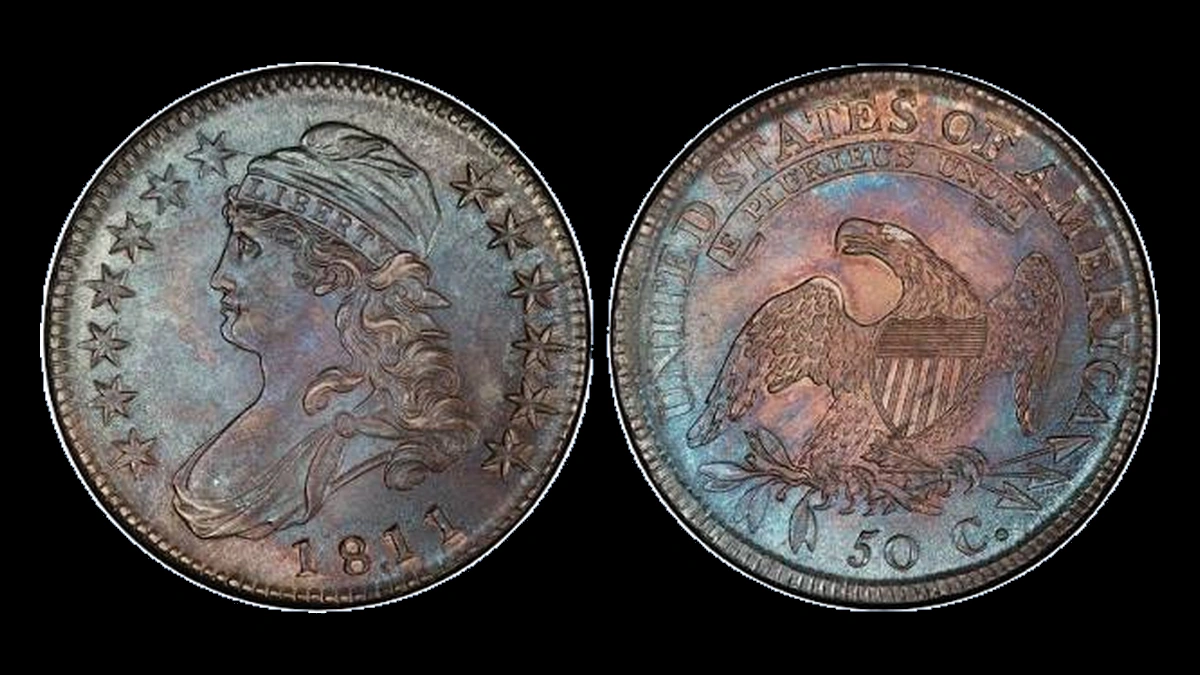
The raised dot between 18 and 11 can be easier to find than the curved remnants beneath the final 1. Together they form the familiar date arrangement associated with O.101.
The traditional names 1811/0 and 1811/10 suggest a final 1 punched over an earlier 0. Specialist Greg Reynolds emphasizes how faint the remaining traces can be.
How to Identify
Photograph all four digits and the space between the two pairs. Locate the dot first, then magnify the final 1 to search for the faint arcs.
Use the illustrated with-period reference to compare the complete arrangement. The traditional variety name does not promise a full zero on every specimen.
The dot’s strength can vary with striking and the condition of the die. Check the remaining O.101 design details rather than relying on a single small bump or a contact nick near the date.
What It’s Worth
Estimated range: $200–$2,200 runs from Fine to attractive About Uncirculated coins. Legible date features help establish which variety is being compared.
Reynolds records $216 for a PCGS F15 in September 2019 and $1,980 for a PCGS AU55 sold through Sheridan Downey in January 2020. The latter retained much more detail and especially clear date features.
4. 1811 Half Dollar An Arc or Letter-to-Eagle Ridge: Die Cracks Error
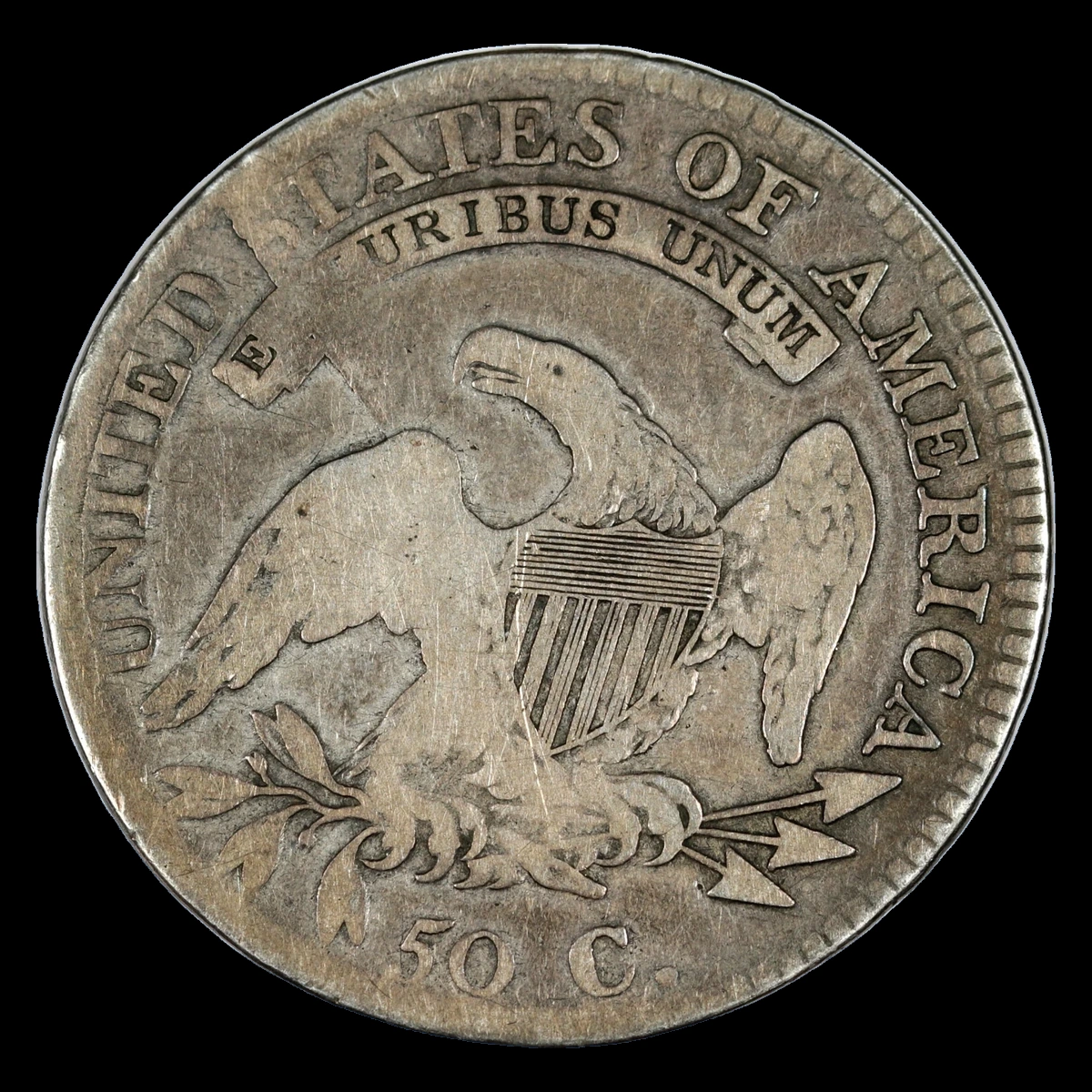
Two locations appear in the supplied reports: an arc in the upper-left front of O.104a, and a reverse line from an S toward the eagle on O.109. These belong to different dies and require different photographs.
A fracture in a steel die leaves room for silver to enter during striking. The narrow strip of metal becomes a raised line on the coin.
How to Identify
Choose the appropriate face and variety before tracing the line. The O.104a front arc cannot identify the O.109 reverse feature.
Under moving side light, check that the route stands above the surface. Scratches may occur on the same coin, as discussed in the O.109 examination.
Keep the full date and both faces in the comparison. A genuine ridge should follow the documented route, while a scratched groove or rough displaced edge needs a separate explanation.
What It’s Worth
Estimated range: $200–$500 for ordinary circulated examples around Very Fine with identifiable cracks. The $384 VF20 O.113 sale above supplies general same-year condition context.
O.113 is a different variety, so that result does not isolate a crack premium. The five-figure off-center O.104a is an even less suitable comparison for the value of a small ridge alone.
5. 1811 Half Dollar Silver Lifting in a Thin Layer: Lamination Error
A lamination involves separation within the coin’s metal, sometimes leaving a flap or shallow peeling patch. The weakness belongs to the original blank rather than the steel die.
The reported 1811 example was offered as NGC VF25 Mint Error Lamination. The supplied guide gives neither a certificate number nor a precise location for the separation.
How to Identify
Inspect the edge of the patch for a thin layer boundary. Roughness or color in its center is less useful than evidence showing how the metal separated.
Leave any flap untouched and use light from the side. Lifting it would alter the defect and could detach original metal.
Compare the surface with a gouge, which may have cutting lines or pushed-up margins. Match the actual 1811 coin and readable holder label before relying on the reported grade and attribution.
What It’s Worth
Estimated range: $350–$650 for a comparable moderately worn example. The year guide reports a $499 asking price, rather than a completed sale.
The estimate includes the underlying early half dollar as well as visible separation. A corroded area or a later scrape cannot use the same error comparison simply because the surface is uneven.
Conclusion
Whole-coin shape distinguishes the major off-center example, but diameter alone is less decisive on an open-collar 1811 half. The dot-and-date arrangement, documented crack routes, and genuine layered separation each require closer inspection.
The $200–$12,000 estimates cover different varieties and conditions. Keep the broadstrike claim provisional, and treat the lamination’s asking price separately from the completed auction results.