Rare 1820 Half Dollar Errors (List & Pictures)
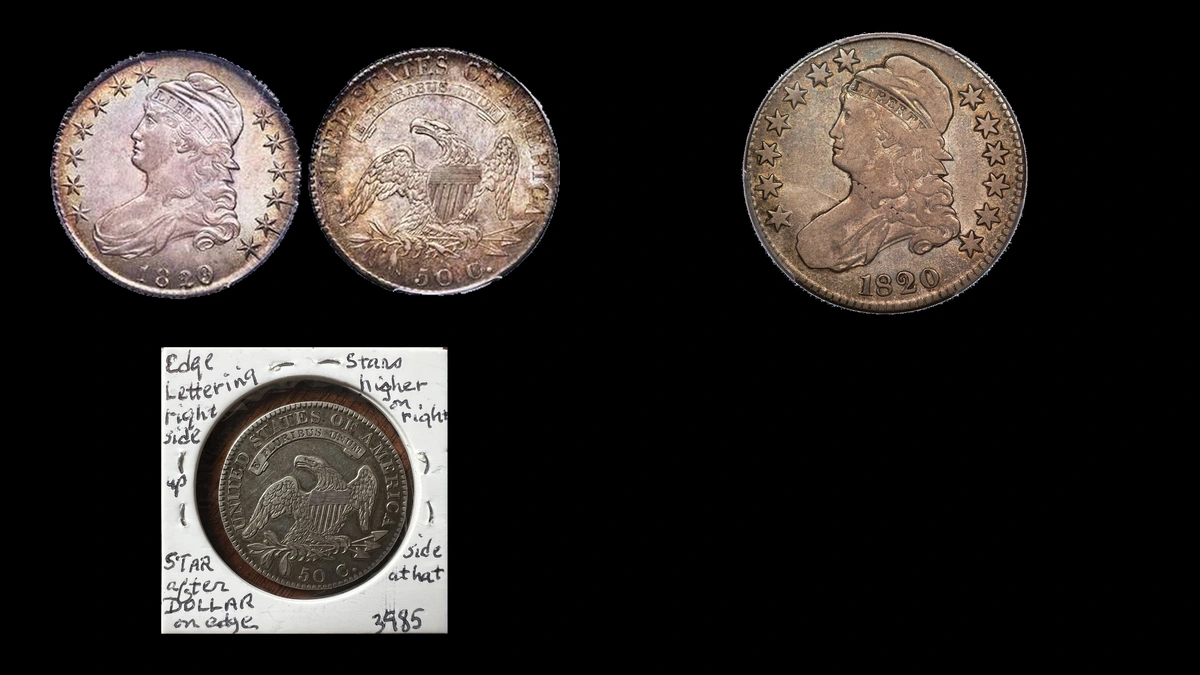
The date provides a useful starting point for 1820 half dollar errors, but the search also reaches the portrait, surface layers, and olive branch. Worn or damaged examples discussed here have estimated values of $250–$3,000.
An exceptional overdate reached a documented $47,000 in September 2015, in a much higher condition tier. Use the inspection route below to separate old digits, raised lines, peeling metal, and repeated designs.
| Inspection area | Clue | Category | Estimated value |
|---|---|---|---|
| Final 20 in the date | Older 19 underneath | 1820/19 overdate | $250–$2,000 worn |
| Hair curl, star eleven, and first digit | Connected raised line | Die crack | $250–$900 worn |
| Front surface | Separating layer | Lamination | $500–$2,500 |
| Related details across the coin | Two design positions | Reported double strike | $1,500–$3,000 |
| Olive leaves, berries, and stems | Matching extra outlines | Doubled die reverse | $400–$2,000 |
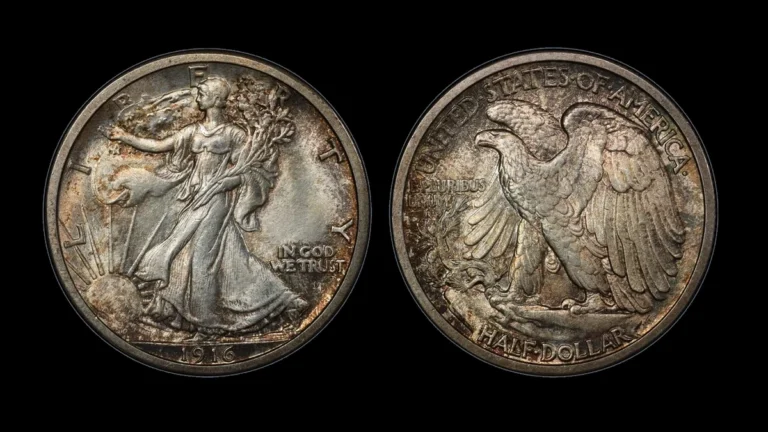
The normal early Capped Bust half dollar has a lettered edge, weighs about 13.48 grams before wear, and measures approximately 32.5 mm across. These basic checks establish the coin type; specific details establish the varieties.
1. 1820 Half Dollar Remains of 19 Beneath 20: Overdate Error
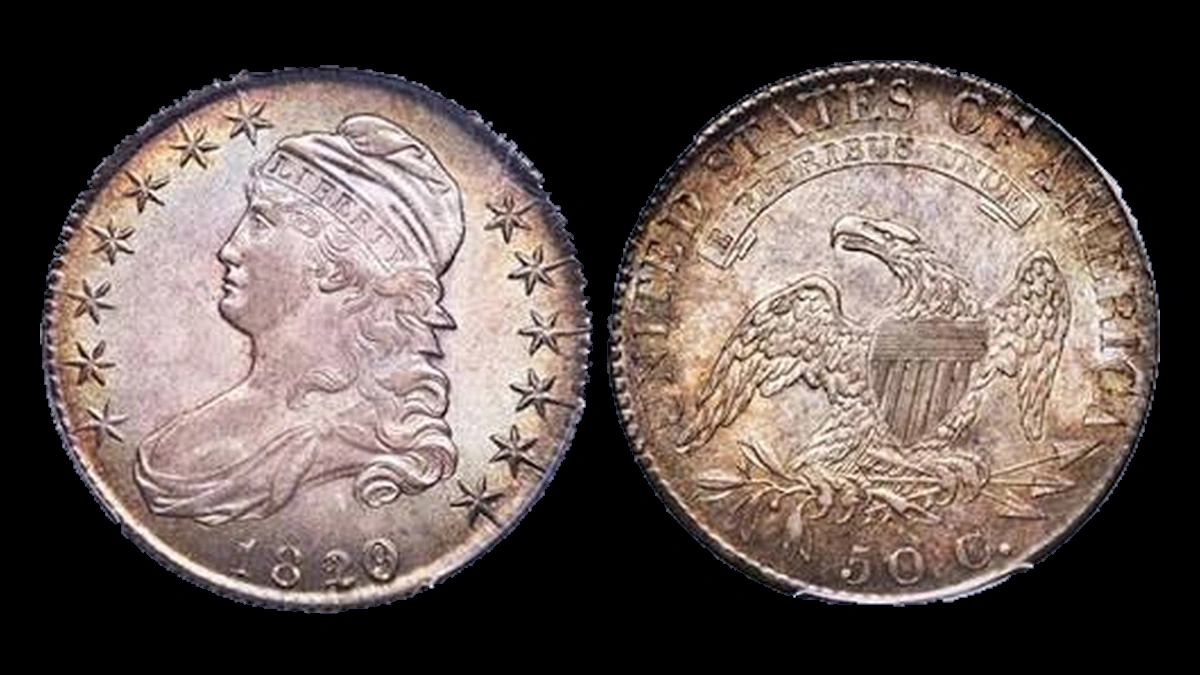
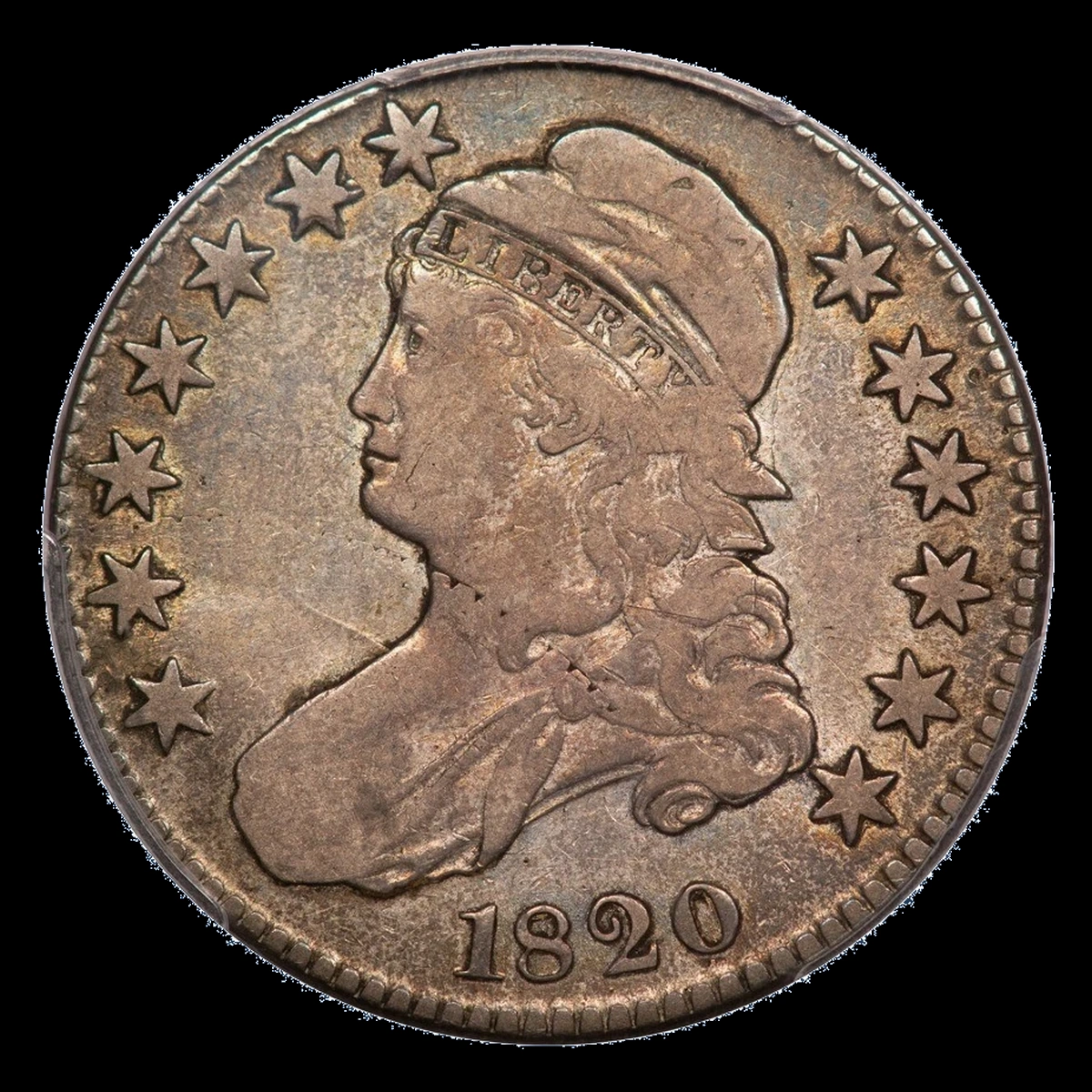
Examine the final two numbers together. Changing the die’s date from 1819 to 1820 left parts of the old 19 under the new 20.
The steel stamping tool is called a die, and this change occurred in that tool before the coin was struck. Collectors call the resulting date 1820/19.
Square-base and curled-base versions of the 2 help divide the familiar forms. The base shape is a sorting clue, while the older numeral remains supply the overdate evidence.
How to Identify
Choose a reference with the same square or curled base before comparing the fine detail. Then inspect the inside of the final 0, particularly the lower-left area, for a trace of the former 9.
Look for other matching remnants beneath the 20 as well. A scratch through the 0 or the base style of the 2 alone cannot establish an underlying date.
Shift the lighting to check that the suspected old strokes are raised. Keep the full date in the photograph because wear can make isolated fragments misleading.
What It’s Worth
Estimated range: $250–$2,000 for ordinary worn overdates. Curled-base examples brought $360 in VF30 in October 2025 and $946 in XF45 in July 2026.
The exceptional square-base MS65+ recorded $47,000 in September 2015. MS65+ indicates unusually fine unworn preservation.
That record concerns the quality of an outstanding complete coin. A worn example with a visible old 9 remains in a different condition group.
2. 1820 Half Dollar A Ridge Beside the Hair Curl: Die Crack Error
From the date, move upward beside Liberty’s curl toward star eleven. The illustrated small-date, curved-base-2 example has a line passing from that star area to the top of the first date digit and onward toward the rim.
The collector picture discussion provides the specific comparison. Its raised route records silver entering a split in the die during striking.
How to Identify
Include the surrounding stars and complete date in the view, then follow the line past the curl. The location and connected path are more useful than a short segment in isolation.
Under low light, check that the mark stands above the silver. A scratch may push up narrow edges, but its center remains cut into the coin.
Compare the date style as part of the match. A different 1820 variety with a line near the portrait is not automatically the illustrated cracked die.
What It’s Worth
Estimated range: $250–$900 for worn examples with a visible crack and substantial detail remaining. Undamaged original surfaces matter more than the presence of a fine line alone.
Other 1820 varieties sold for $382 in VF30 and $824 in XF40 during July 2026. Those moderately to lightly worn coins supply same-year context, not sales of this particular crack pattern.
3. 1820 Half Dollar A Peeling Boundary on the Front: Lamination Error
The front of a listed 1820 large-date coin shows a flaw within the metal itself. Its square-base 2 has a small knob, useful for recognizing the specific example.
A lamination occurs when metal separates in a thin layer, sometimes leaving an attached flap or a shallow missing area. This is a problem in the coin blank rather than a repeated feature of the die.
The listed PCGS label says Genuine Unc Details. That records authenticity and unworn design detail while noting a problem that prevents a normal numerical grade.
How to Identify
Compare the surface boundary with the GreatCollections obverse-lamination example. Another genuine 1820 lamination can occur elsewhere and needs its own photographs.
Look for the thin edge of a separating layer under side lighting. A gouge displaces solid metal, while corrosion often leaves a rougher surface without a distinct layer boundary.
Leave an attached flap in place. Weight can help document missing metal, but a normal reading does not resolve a small surface separation.
What It’s Worth
Estimated range: $500–$2,500 for confirmed examples retaining substantial design. A minor flake and extensive surface loss should not be treated as equivalent conditions.
No price from the listed lamination sale is used here. An ordinary Knob 2 graded AU58 brought $2,440 in July 2026, supplying near-unworn condition context.
The problem noted on a Details label can reduce value even when the coin retains sharper design than a circulated comparison.
4. 1820 Half Dollar Two Related Design Positions: Reported Double Strike Error
A second impression can leave repeated portrait, date, or lettering details in a different position. The supplied 1820 report does not identify a certified specimen or describe a specific direction of movement.
For this category, the coin itself would have received another strike. That is a different stage of manufacture from extra outlines already present in a die.
How to Identify
Start with one possible repeated detail and trace nearby features. Several pieces of the design should support a common movement rather than unrelated extra marks.
Check both faces, although their visible duplication need not be equally strong. The documented 1819/8 comparison illustrates a case where movement of a tool left clear separation chiefly on one side.
That other-year example does not establish a direction for 1820. Keep the complete date visible and distinguish surviving raised impressions from a later sunken image pressed into a finished coin.
What It’s Worth
Estimated range: $1,500–$3,000 for a worn, authenticated coin with a clear second impression. It is a comparison range rather than a series of documented 1820 sales.
The 1819/8 PCGS XF45 double strike sold for $2,280 in July 2025. The size and clarity of the duplicated design, plus surfaces and wear, determine how useful that different-year result is.
5. 1820 Half Dollar Repeated Outlines on the Olive Branch: Doubled Die Reverse Error
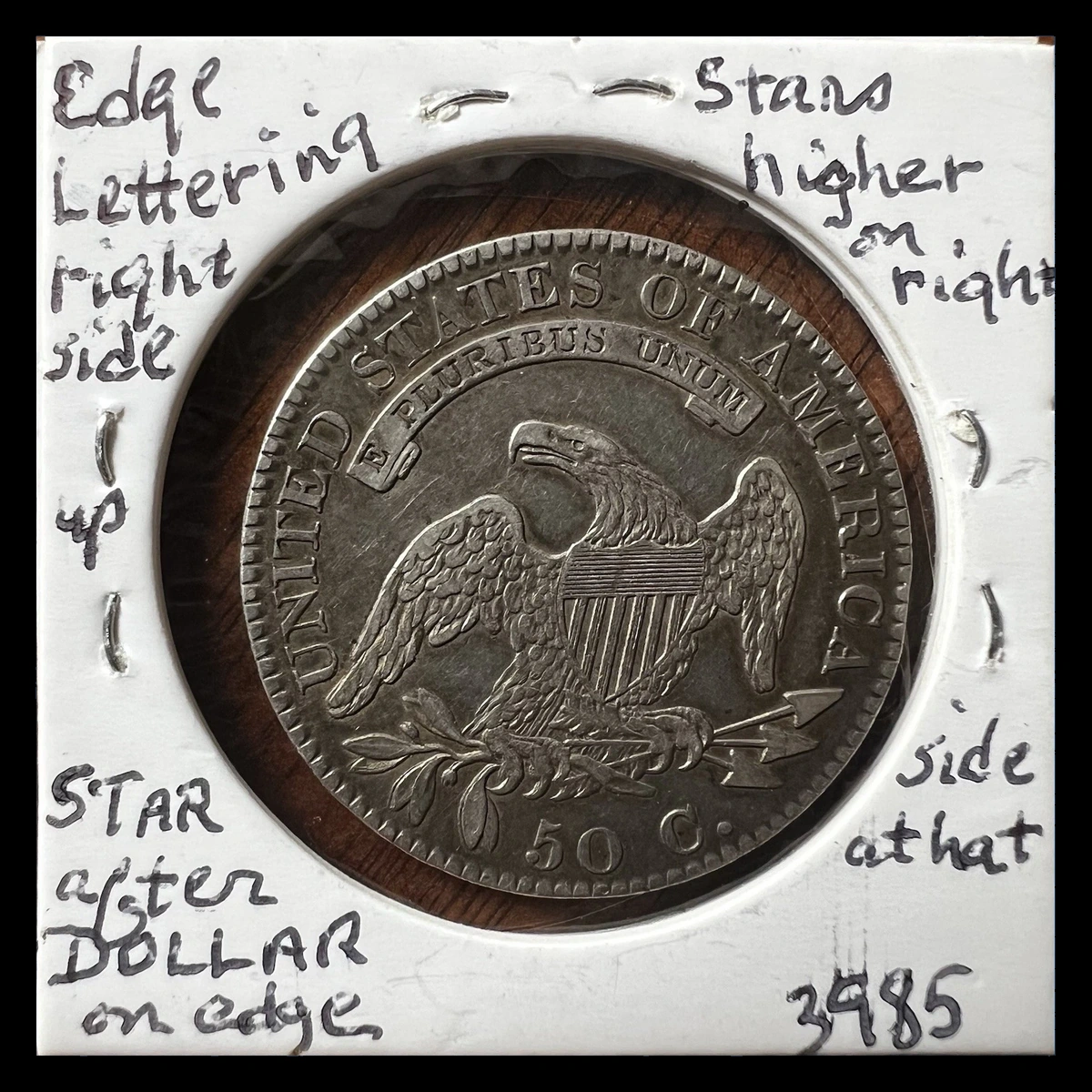
Finish on the back with the lower olive leaves, berries, and stems. The documented pattern also includes smaller repeated details at the wingtip, claws, and arrowheads.
Those shapes were duplicated while the reverse die was made. A single strike could therefore transfer both outlines to the half dollar.
How to Identify
The specialist 1820 photographs show the branch details to compare first. Follow the lower leaves into the stems and berries, then check the smaller eagle and arrow details.
The same group of extra shapes should agree with a reference. One flat shelf beside a leaf can arise from movement during striking and does not establish the full variety.
Record the date alongside the reverse to keep the die attribution tied to the correct coin. Scratches or bright reflections must not be counted as extra raised outlines.
What It’s Worth
Estimated range: $400–$2,000 for confirmed examples from moderate wear through nearly unworn condition. Clear doubled features and pleasing surfaces strengthen the comparison.
Other 1820 records show $824 for XF40 and $2,440 for AU58 in July 2026. Those comparison coins have the small knob on the 2, unlike the doubled-branch variety discussed here.
The figures provide general condition context. They should not be reported as transactions for this reverse pattern.
Conclusion
Use the date to orient the search, then follow each feature to its proper location and cause. Old digits, cracks, layered metal, and repeated designs require different evidence even when all appear as small extra lines.
The $250–$3,000 estimates cover the worn or damaged examples discussed. The exceptional $47,000 overdate belongs to a separate preservation tier and cannot be applied solely because an earlier numeral is visible.