Rare 1814 Penny Errors (List & Pictures)
Two pennies can be involved in the same mint accident and come away looking very different. That is especially useful to remember with 1814 cents, where one recorded coin stamped its design into another blank.
These seven groups of 1814 penny errors have estimated whole-coin values of $100–$15,000. A slightly off-center example sold for $1,800 including fees in January 2026, while more dramatic-looking pieces need their own condition checks.
1. 1814 Penny Off-Center Strike Error
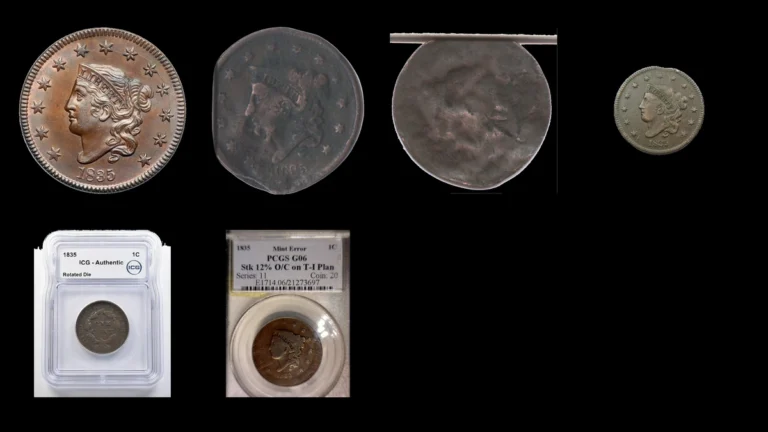
An empty area beside an incomplete design is the first clue to an off-center strike. The copper disc was misplaced when the press came down, so part of the design missed the metal.
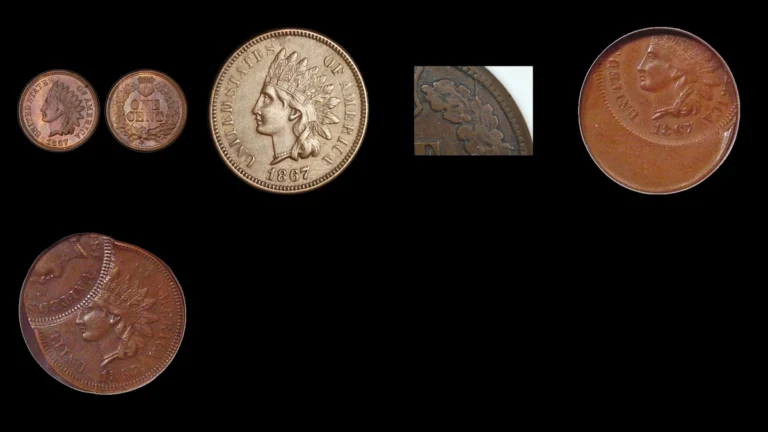
A recorded 1814 example is about 50% off center toward two o’clock. Its blank area on the back also has graffiti, which was added later and is not part of the mint error.
How to Identify
Find the date and check both faces for the same overall displacement. Missing design on only one face may instead involve a shifted stamping tool.
Inspect where the struck design ends and the blank copper begins. Filing marks, joins, or later scratches should be evaluated separately from the original strike.
What It’s Worth
$300–$8,000 is the estimated range for identifiable 1814 off-center cents. Visible displacement, readable dates, and attractive copper surfaces matter more than the error name alone.
A slightly off-center Crosslet 4 cent described as VF30 brought a $1,500 winning bid in January 2026. Adding the 20% buyer’s fee gives $1,800; this was not the half-off example with graffiti.
2. 1814 Penny Misaligned Back Die Error
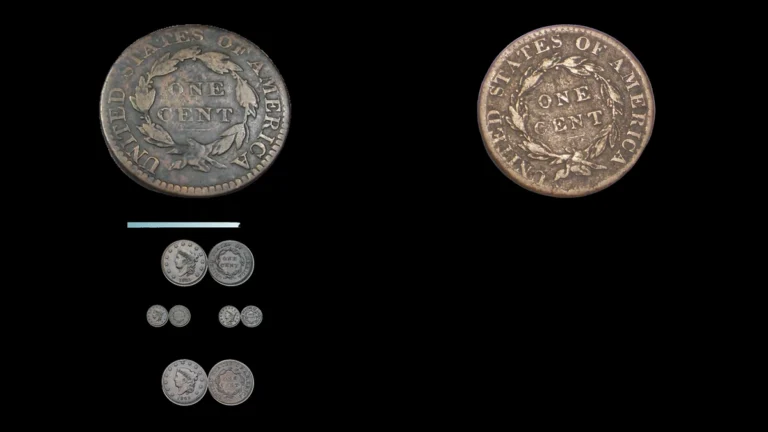
A wide border on one side can draw attention without showing the whole coin struck off center. In a misalignment, one die—the tool that stamps a design—sits out of line with the other.
The recorded 1814 example has its back design shifted about 10% toward one o’clock. The front does not show the same displacement.
How to Identify
Compare the design’s position on both faces, using the coin’s outline as the reference. Follow the back lettering toward one o’clock on the reported example and see how its border changes.
An uneven border does not establish a clipped blank. Check whether metal is actually missing before adding that separate description.
What It’s Worth
$150–$4,000 is the estimated range for a genuine 1814 cent with a clear back-die misalignment. The underlying early copper coin may account for much of the value.
The $1,800 slight off-center sale described above offers a same-year comparison for a displaced design. It does not supply a transaction price for the reported 10% misalignment, which has a different cause.
3. 1814 Penny Double Strikes, Indents, and a Brockage Maker Error
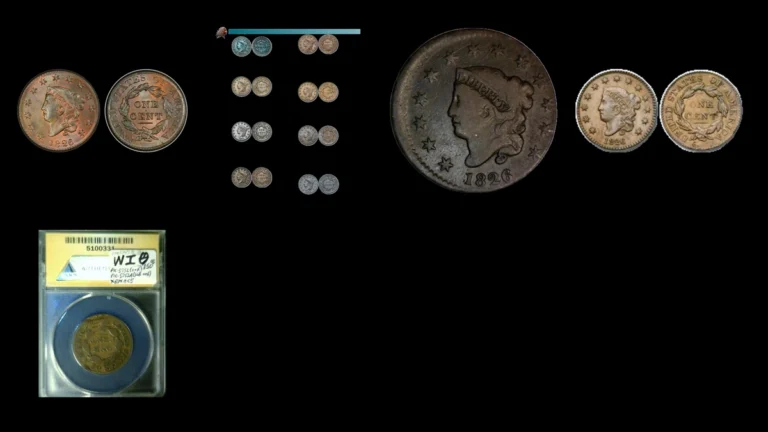
Two overlapping front designs can mean that the coin received a second strike. One Plain 4 example turned about five degrees between blows, leaving two front impressions but a single raised back design.
That coin’s back bulges slightly because it pressed its design into another disc. It is called a brockage maker; a separate double-struck 1814 cent has an indent, or shallow mark from an overlapping disc.
How to Identify
Look for repeated parts of the portrait or lettering that belong to two distinct strikes. On the Plain 4 maker, the small turn separates the front impressions while the back remains raised.
For an indent, trace the smooth boundary where another disc overlapped the coin. Do not expect the indented example and the brockage maker to share every feature.
What It’s Worth
$300–$12,000 is the estimated range for this group of double and combined strikes. More obvious separation and better surfaces can make a large difference.
A Crosslet 4 double strike graded NGC Good 4 sold for $432 in January 2023. The Plain 4 brockage maker received a $400 winning bid in January 2015, before the buyer’s fee.
An 1811 cent with a second strike 50% off center sold for $16,200 in September 2025. That stronger, different-year example is additional context, not a result for either 1814 coin.
4. 1814 Penny Full Brockage Error
Backward letters pressed into the copper point to the receiving side of a brockage accident. A struck coin became trapped against a new blank and impressed its raised design into that blank.
Early-cent references record both front-design and back-design brockages for 1814. A full brockage carries the transferred image across the face rather than in a small patch.
How to Identify
Check that the transferred letters are both backward and sunken. A mirror helps with their direction, while light from the side reveals whether they sit below the surrounding surface.
The opposite face should have a normal raised design. This separates the receiving coin from the brockage maker above, whose back still has a raised image.
Inspect the edge for a seam or heavy squeezing. A reversed photograph alone cannot establish that the actual coin has a sunken transfer.
What It’s Worth
$1,500–$15,000 is the estimated range for genuine full 1814 brockages. Clear transfer details and sound copper surfaces are especially helpful.
A different 1819 cent with a partial back brockage and a 20% off-center strike brought $5,175 in November 2010. That combined error provides context without becoming a sale record for a full 1814 brockage.
5. 1814 Penny Clipped Planchet Error
A missing segment can have started before the cent received any design. A planchet is the prepared blank, and a clipped one enters the press with an incomplete edge.
The surrounding design may weaken as copper moves toward the gap. This makes the way the border ends more useful than simply calling the opening a bite.
How to Identify
Look closely at the gap for saw marks, filing, or bent metal. Then check for natural weakening near the opening and possible rim weakness across from it.
A normal 1814 cent weighs about 10.89 grams and measures roughly 29 mm, with a plain edge. Compare intact portions of the outline and remember that both a clip and later cutting can reduce weight.
What It’s Worth
$150–$3,000 is the estimated range for authenticated 1814 clips. This is a whole-coin estimate, not a documented sale of a specific clip.
Ordinary Plain 4 cents sold for $264 in VG10 and $780 in VF20 in October 2025. Those non-error coins help show the underlying value before considering the missing segment and its appeal.
6. 1814 Penny Lamination Error
A flap on the surface suggests a different kind of missing-metal problem. Weak bonds or impurities in the copper can allow a thin layer to lift or fall away.
Reported 1814 laminations do not share one stated location. The shape and boundary of the actual separation need to guide the examination.
How to Identify
Follow the thin edge of an attached flap without lifting it. If the layer is gone, look for a shallow step where the original surface ends.
Roughness alone is not enough, since corrosion also removes copper. Deep pits, fresh cuts, and scraped surfaces require a different explanation.
What It’s Worth
$100–$2,500 is the estimated whole-coin range for an 1814 lamination. A minor flaw may contribute less to value than the preservation of the early cent itself.
An unworn 1842 large cent with a small layer flaw sold for $750 in September 2021. That later coin belongs to a different series, so its result is a general comparison for the defect.
7. 1814 Penny Die Cracks and Rim Cuds Error
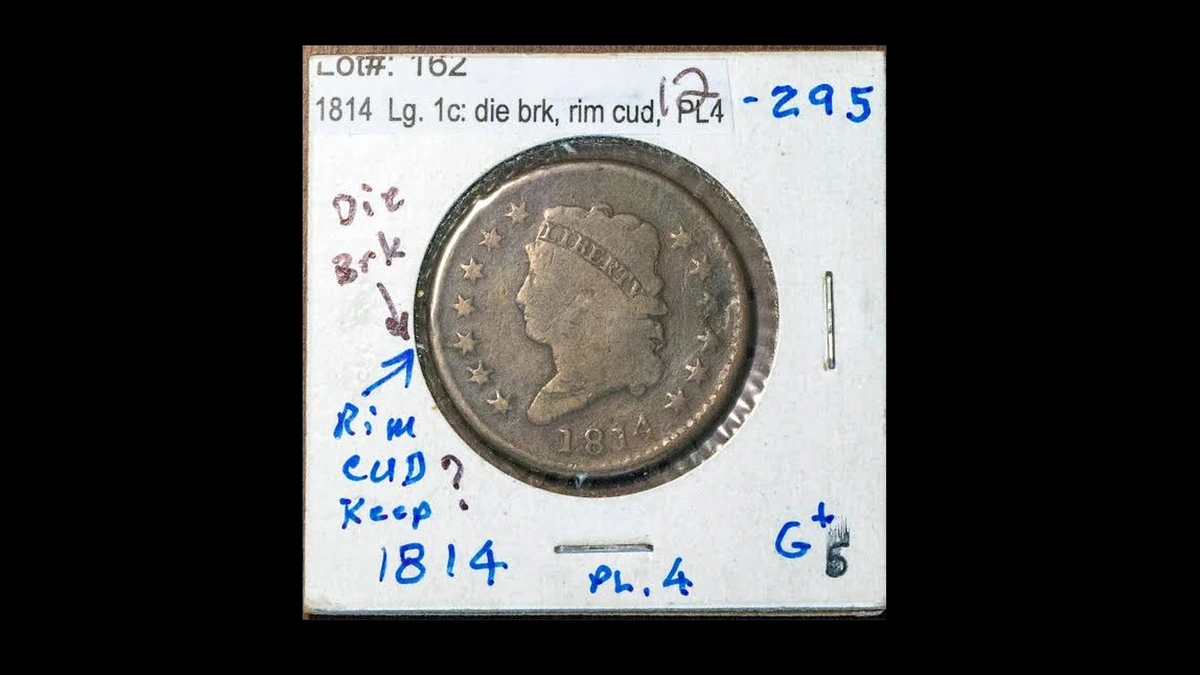
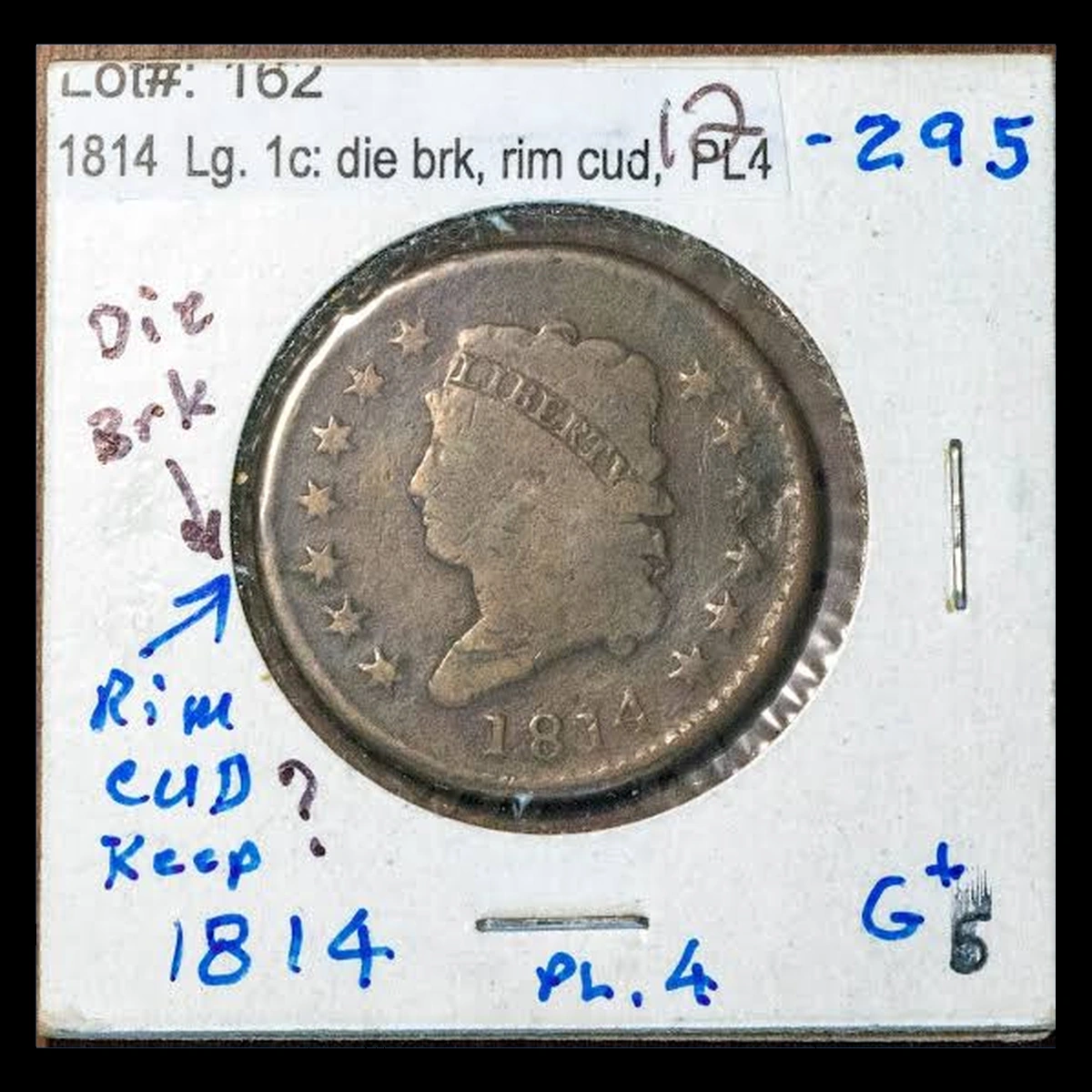
A narrow raised line can come from a crack in the stamping tool. Copper entered that opening during the strike and left a ridge on the coin.
If a larger piece broke from the tool’s edge, the coin may show a raised patch attached to its rim. This is a cud, and the 1814 reports do not establish one location for every example.
How to Identify
Tilt the coin until you can tell whether the line rises or cuts inward. Examine both edges, because a scratch can push up a thin ridge of displaced metal beside its cut.
For a suspected cud, trace an original connection between the patch and the rim. A separate lump within the portrait does not meet that description.
What It’s Worth
$100–$2,500 spans worn cracked-die examples and larger authenticated rim breaks. The working estimates are $100–$800 for clear cracks and $250–$2,500 for substantial cuds.
An 1827 cent with a retained rim break brought $264 including fees in May 2025. That later example is a broad reference, not an exact price for an 1814 break of unknown size or condition.
Conclusion
On an 1814 cent, first decide whether the unusual feature moves the design, repeats it, reverses it, or changes the copper itself. This keeps a shifted back from becoming an off-center strike and a brockage maker from becoming a brockage.
Plain 4 and Crosslet 4 are normal date styles on their own. Preserve the surfaces and record the actual feature before using the $100–$15,000 estimated range to compare prices.