Rare 1839 Braided Hair Penny Errors (List & Pictures)
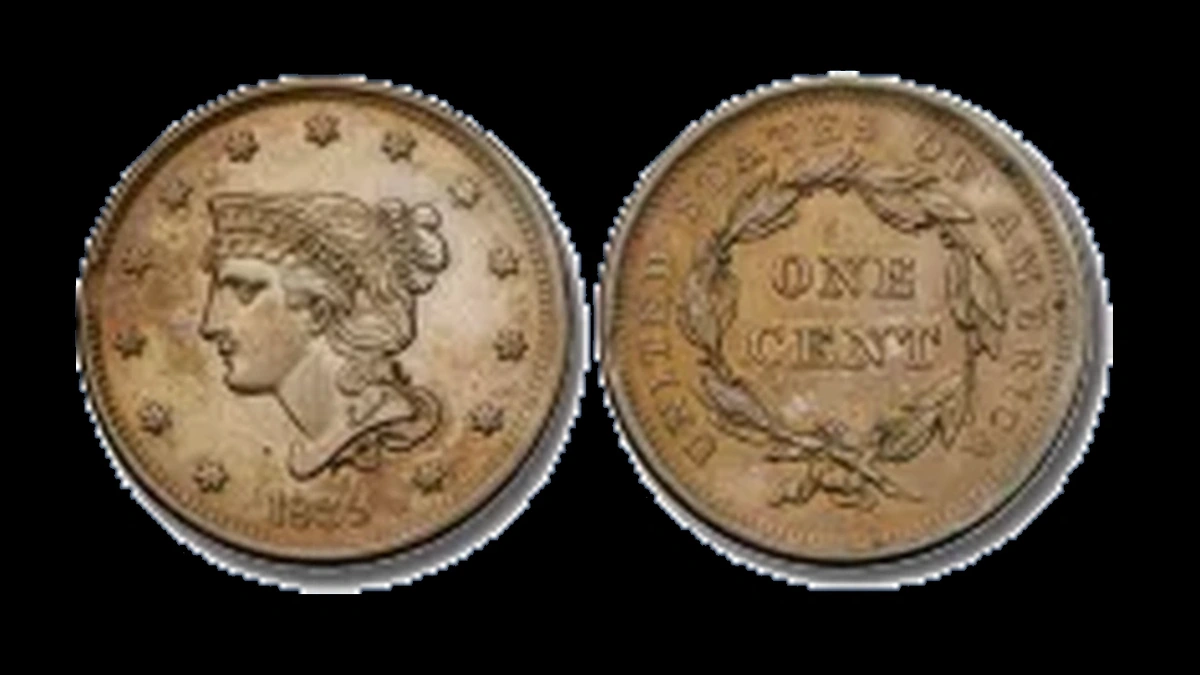
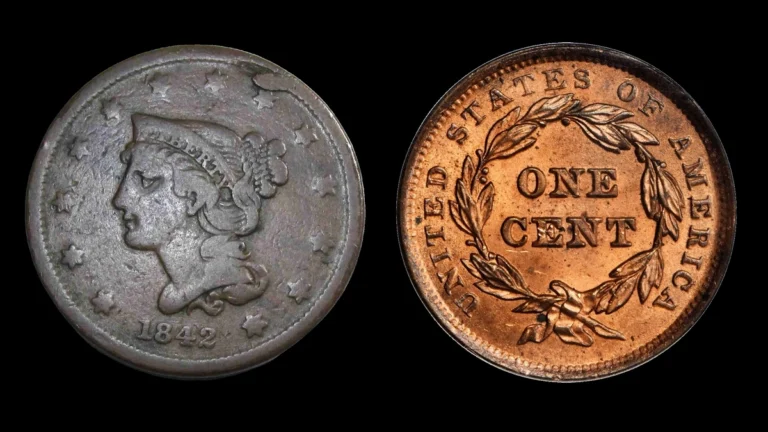
First confirm the portrait: this guide covers the 1839 Petite Head, also called the Head of 1840, rather than every large cent dated 1839. That distinction matters before comparing either small surface marks or a dramatic displaced strike.
Estimated values for 1839 Braided Hair penny errors span $50–$6,000. An unworn coin described with possible rim cuds sold for $1,703.75 in February 2017; follow the metal and rim evidence below before checking the alignment of the two faces.
| Where to inspect | Possible feature | Estimated range |
|---|---|---|
| Star ten through portrait; separate star-four area | Lamination | $75–$2,000 |
| Star-four edge and reverse above T | Tiny clip | $75–$2,500 |
| Below the date or along raised lines | Possible cuds or die cracks | $50–$4,000 |
| Full outline and cut-off design | Off-center strike | $500–$6,000 |
| Reverse position after a controlled flip | Rotated dies | $50–$1,500 |
1. 1839 Penny An Opening Runs Through the Hair and Face: Lamination Error
The recorded N-8 Head of 1840 cent has a layer break beginning at star ten and passing through the hair, ear, and eye toward the hair above the forehead. A separate peeling area lies at star four.
These are separations within the copper itself. They are neither raised ridges copied from a cracked die nor evidence that the coin split into two complete halves.
How to Identify
Follow the existing opening under side light without lifting a flap. A thin layer or stepped surface boundary supports lamination, while a scratch cuts through finished metal.
Inspect the star-four area separately from the longer portrait-crossing break. The two sites belong to this one coin, but the tiny clip at star four discussed next belongs to another specimen.
What It’s Worth
$75–$2,000 is the estimated range for comparable laminations across worn and better-preserved coins. Stability of the layer and the quality of the remaining surface affect appeal.
The Early Cents example brought $600 before the buyer’s fee in January 2026. AU50 was the auctioneer’s grade, and the price includes both peeling areas on that lightly worn coin.
2. 1839 Penny A Tiny Gap Lies Beside Star Four: Clipped Planchet Error
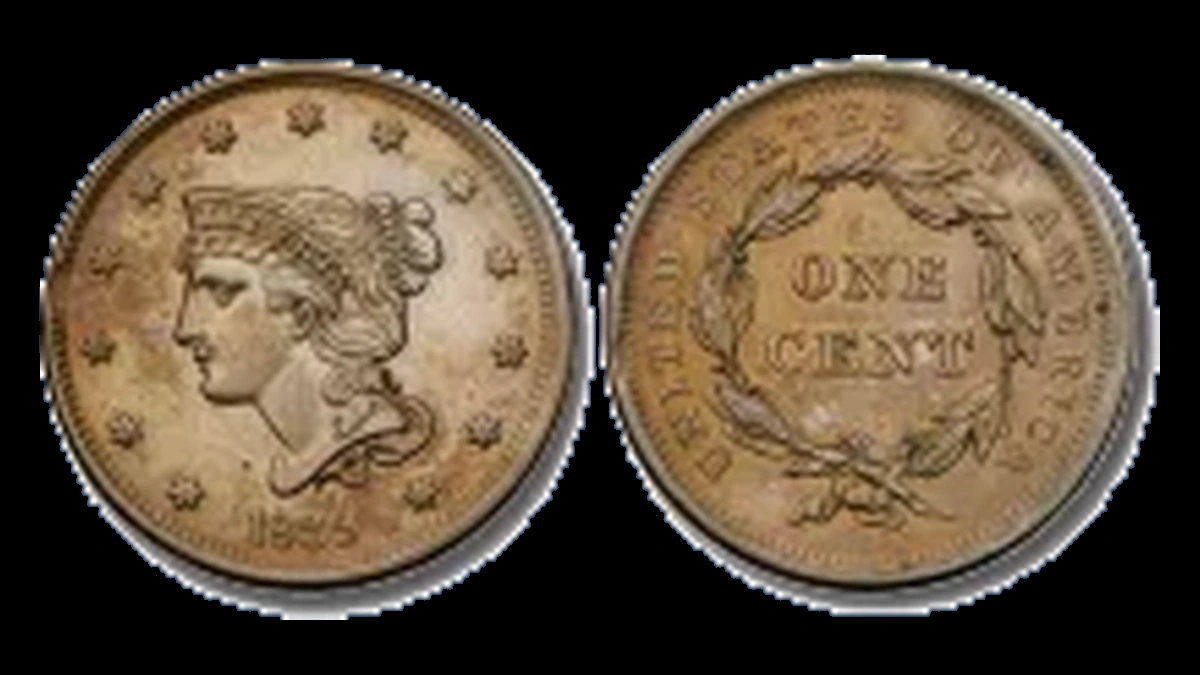
A May 2026 catalog describes a small clip beside the fourth star, with weak neighboring border teeth on both faces. The corresponding reverse weakness is above T in UNITED.
How to Identify
Compare the front gap and the reverse border as two views of the same missing section. A genuine clip was absent before striking, while an edge dent can push existing metal inward.
For a safely handled loose cent, use 10.89 g and 27.5 mm as normal references and measure across intact spans. A tiny gap may remove too little copper for a pocket scale to resolve, so rim formation and freedom from filing matter more; keep certified pieces sealed.
What It’s Worth
$75–$2,500 is the estimated range for genuine Petite Head clips. The small cataloged feature should be compared with modest clips rather than dramatic missing crescents.
The May 2026 description grades its specimen EF45+, without a realized amount used here. An unworn 1852 clip graded NGC MS63 Brown sold for $384 in June 2024, a different-year and different-condition comparison.
3. 1839 Penny Raised Bumps Appear Below the Date: Possible Cuds and Die Cracks Error
The auction wording for an unworn Petite Head cent describes possible rim cuds beneath the date. That tentative description does not establish a large missing die piece or a particular crack elsewhere.
A genuine cud forms where metal rises into a missing die-edge section. A narrower crack in the die instead leaves a thin raised line.
How to Identify
Compare the lower border with a normal Petite Head example and inspect it from the side. Enlarged border teeth, dents, or a folded edge can resemble small breaks in an overhead photograph.
Any separate line across the face needs its own raised-ridge evidence. An open copper layer through the portrait belongs to lamination rather than proving the possible rim-cud description.
What It’s Worth
$50–$4,000 is the estimated whole-coin range across worn cents with minor cracks and better-preserved examples with recognizable breaks. It is not a stated premium for uncertain bumps.
The PCGS MS63 Brown specimen sold for $1,703.75 in February 2017, according to NGC’s auction record. Its unworn grade and overall condition contribute to that result.
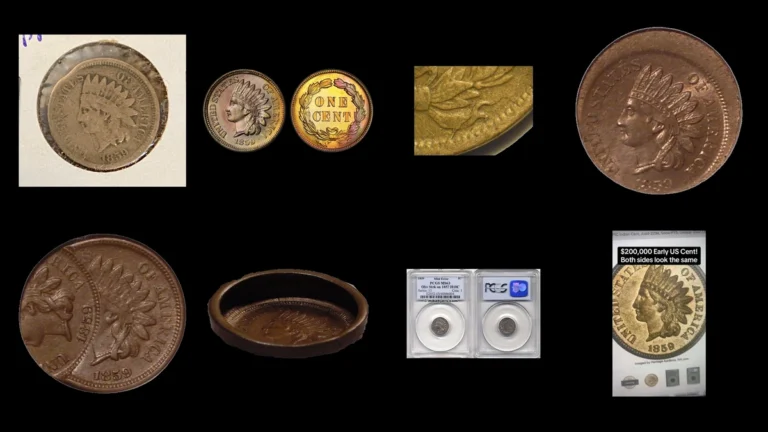
4. 1839 Penny A Bare Crescent Borders Missing Design: Off-Center Strike Error
A displaced blank can leave unused copper on one side while the intended design misses the opposite edge. Reports covering 1839 include more than one portrait, so the date and Petite Head identity both need confirmation.
How to Identify
Compare the surviving portrait with a normal Petite Head and keep every readable date digit in the photograph. A holder or listing saying only 1839–1857 identifies a series range, not a visible 1839 date.
Both faces should fit the same off-center strike, with original unused metal rather than grinding. A shifted front with a centered reverse may point to one misaligned die instead.
What It’s Worth
$500–$6,000 is the estimate for an authenticated dated Petite Head off-center cent. Displacement, date survival, and condition determine which comparisons are useful.
An 1855 large cent struck 70% off-center and graded PCGS Fine 15 sold for $1,092.50 in January 2009. That worn different-year result does not establish the identity or value of a reported 1839 piece.
5. 1839 Penny The Reverse Tilts After a Top-to-Bottom Flip: Rotated Dies Error
A rotation changes the relationship between the two designs while allowing both to remain complete. Although rotations are reported for 1839 cents, the supplied evidence establishes no specific angle for this Petite Head issue.
How to Identify
Set the front upright and flip top to bottom without a sideways twist. A normally aligned U.S. cent will show an upright reverse, while a genuine rotation repeats the same deviation on controlled flips.
Preserve the relationship between the faces in photographs rather than rotating each image independently. Confirm the Petite Head portrait and inspect the edge for a join between altered halves.
What It’s Worth
$50–$1,500 is the estimated whole-coin range for an authenticated Petite Head rotation. A slight tilt and a dramatic turn should receive different comparisons.
A sold-out dealer page displayed $39.99 for an 1851 large cent described as rotated 60 degrees. That is an asking price for another date, not proof of the amount paid or an angle to assign to an 1839 example.
Conclusion
The same landmark can identify different problems: star four borders a tiny clip on one 1839 Petite Head cent and a peeling area on another. Follow the actual metal rather than using location alone to name the feature.
The $50–$6,000 estimates apply after confirming the portrait and date. Keep possible cuds tentative, report measured rotation rather than borrowing an angle, and treat each documented sale as the price of its complete specimen.