Rare 1835 Penny Errors (List & Pictures)
An 1811 double-struck large cent sold for $16,200 in September 2025. That different-year sale provides context for the more dramatic 1835 Coronet Head cent errors, not an 1835 auction record.
Estimated whole-coin values span $30–$20,000. Begin with the date and star style, then distinguish raised tool damage from openings in the copper before studying alignment and repeated designs.
| Visible clue | Possible error | Estimated value |
|---|---|---|
| Raised line or stepped star area | Die crack or retained break | $30–$1,500 |
| Narrow cheek opening | Reported pre-strike fissure | $30–$2,500 |
| Only a thin front portion survives | Split planchet | $150–$3,000 |
| Curved missing edge | Clip | $80–$1,500 |
| Small reverse tilt | Rotated dies | $30–$250 |
| Blank crescent beside incomplete design | Off-center strike | $500–$6,000 |
| Repeated designs or mirror stars | Multiple strikes with possible brockage | $500–$20,000 |
An ordinary 1835 large cent weighs 10.89 grams and is approximately 28 millimeters across, with a plain edge. Head of 1836 is a portrait-style name used for some dated 1835 coins, not a different year to substitute for the visible date.
1. 1835 Penny A Raised Section Touches the Stars: Die Cracks and Retained Breaks Error
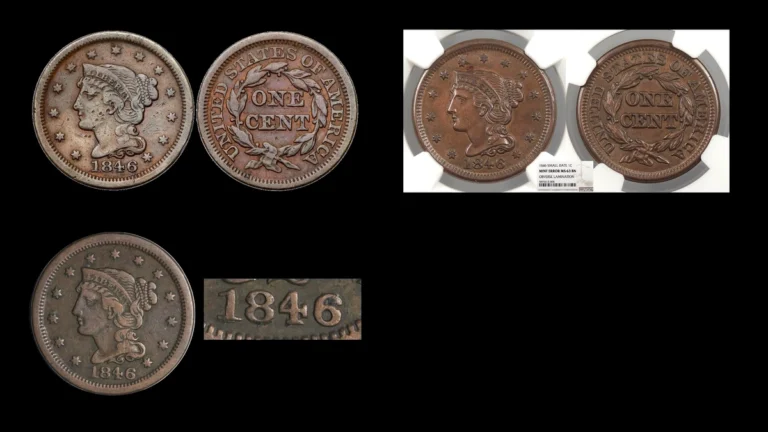
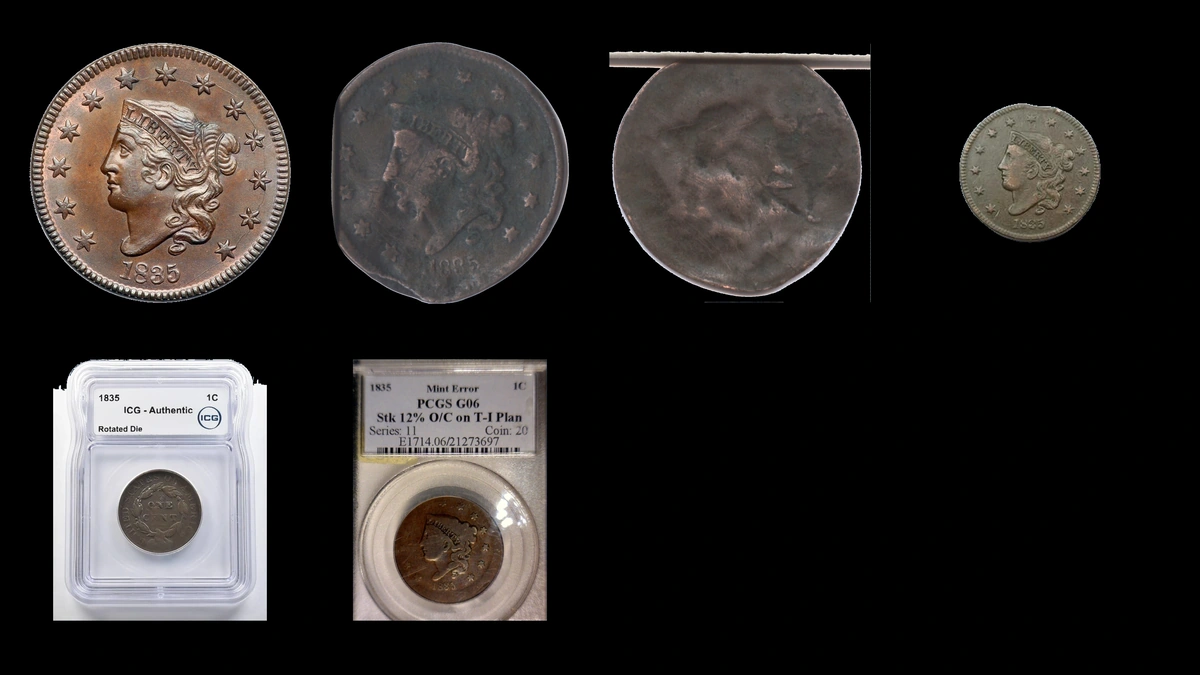
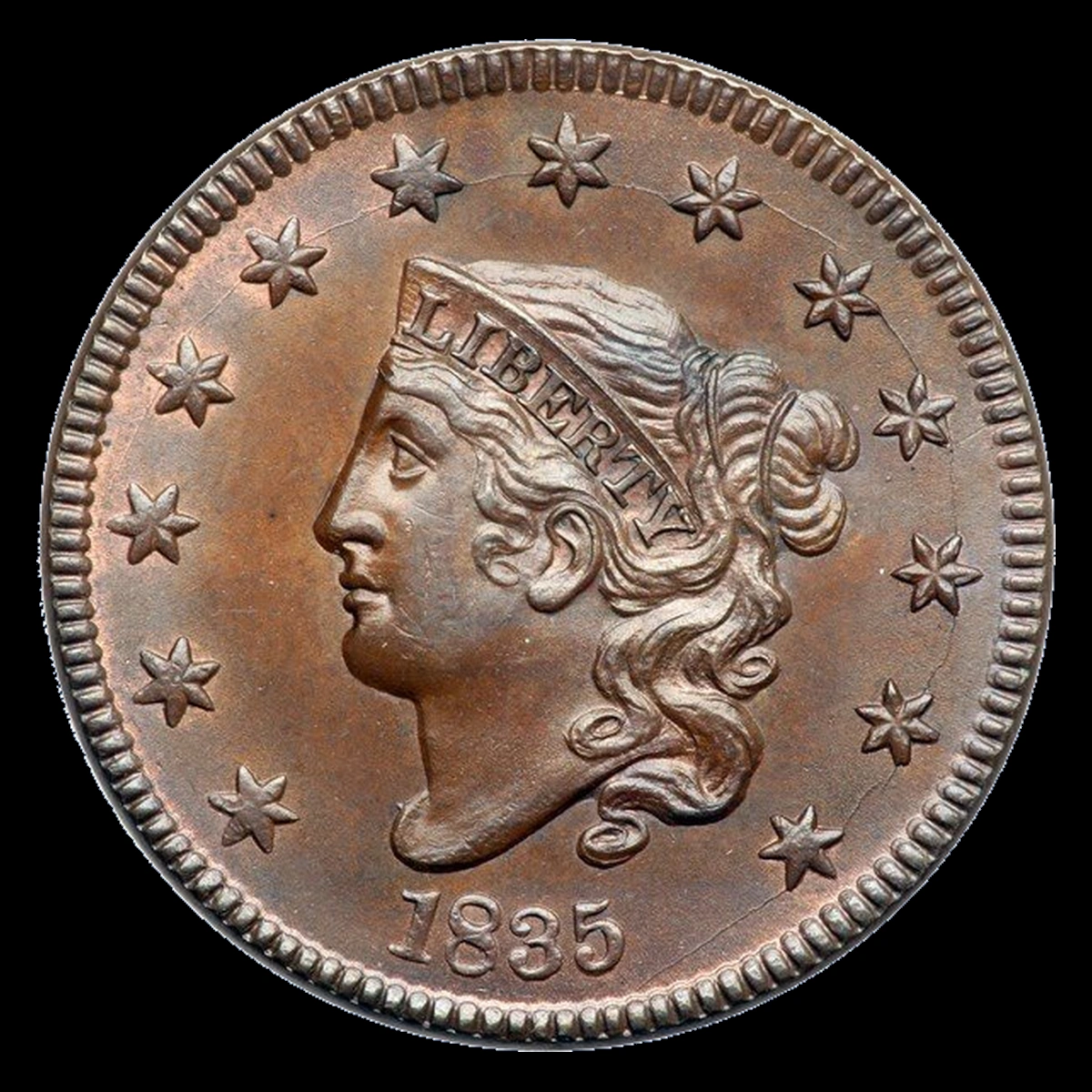
The Small 8, Small Stars N-13 has a retained break between stars four and six, meeting star five. Its die fragment shifted but stayed in place, leaving a higher surface near star four and a lower one near star six.
How to Identify
Match the date and star sizes before comparing the stepped section. Trace the raised boundary and inspect the adjacent edge for a later blow or folding.
The Large 8, Large Stars N-1 instead has a thin raised crack joining stars eleven and twelve. That right-side line is not another view of N-13’s retained break.
What It’s Worth
Estimated whole-coin values span $30–$1,500: fine circulated cracks about $30–$500 and clearly defined retained breaks about $100–$1,500. Preservation and the actual failure matter.
An 1864 copper-nickel broadstrike with a retained break brought $646.25 in 2016. Its later date, different metal, and combination provide general context rather than a direct N-1 or N-13 price.
2. 1835 Penny A Narrow Opening Runs along the Cheek: Pre-Strike Fissure Error
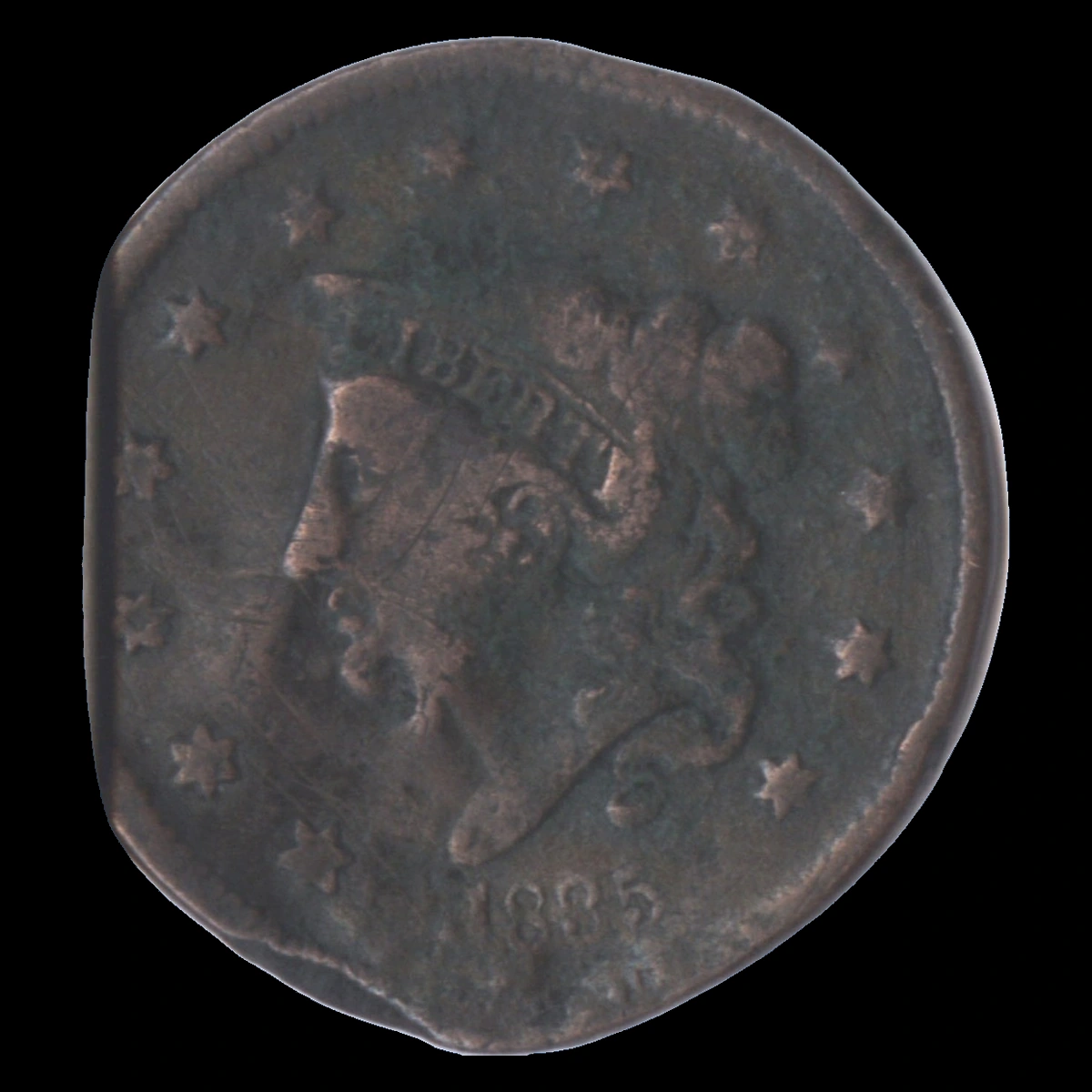
A Goldberg description of an N-1 cent suggests that its vertical cheek opening began as a metal defect before striking. The blow did not fully close that gap.
How to Identify
Inspect the opening’s sides for original struck detail meeting the flaw naturally. Sharp scraped copper or a pushed-up lip can point toward a later cut instead.
This Large 8, Large Stars N-1 also has the separate raised crack between stars eleven and twelve. An opening in the cheek and a ridge copied from the die are different features, and neither implies a full split into halves.
What It’s Worth
An authenticated early metal flaw is estimated at $30–$2,500 as part of the whole coin. Grade and surface quality strongly affect old copper, and the fissure itself may add no premium.
An 1842 large cent with a rim-layer flaw sold for $750 in September 2021. That different defect shows how valuable preserved detail can coexist with an original metal problem, without pricing this cheek opening directly.
3. 1835 Penny A Front Portion Survives with Exposed Interior: Split Planchet Error
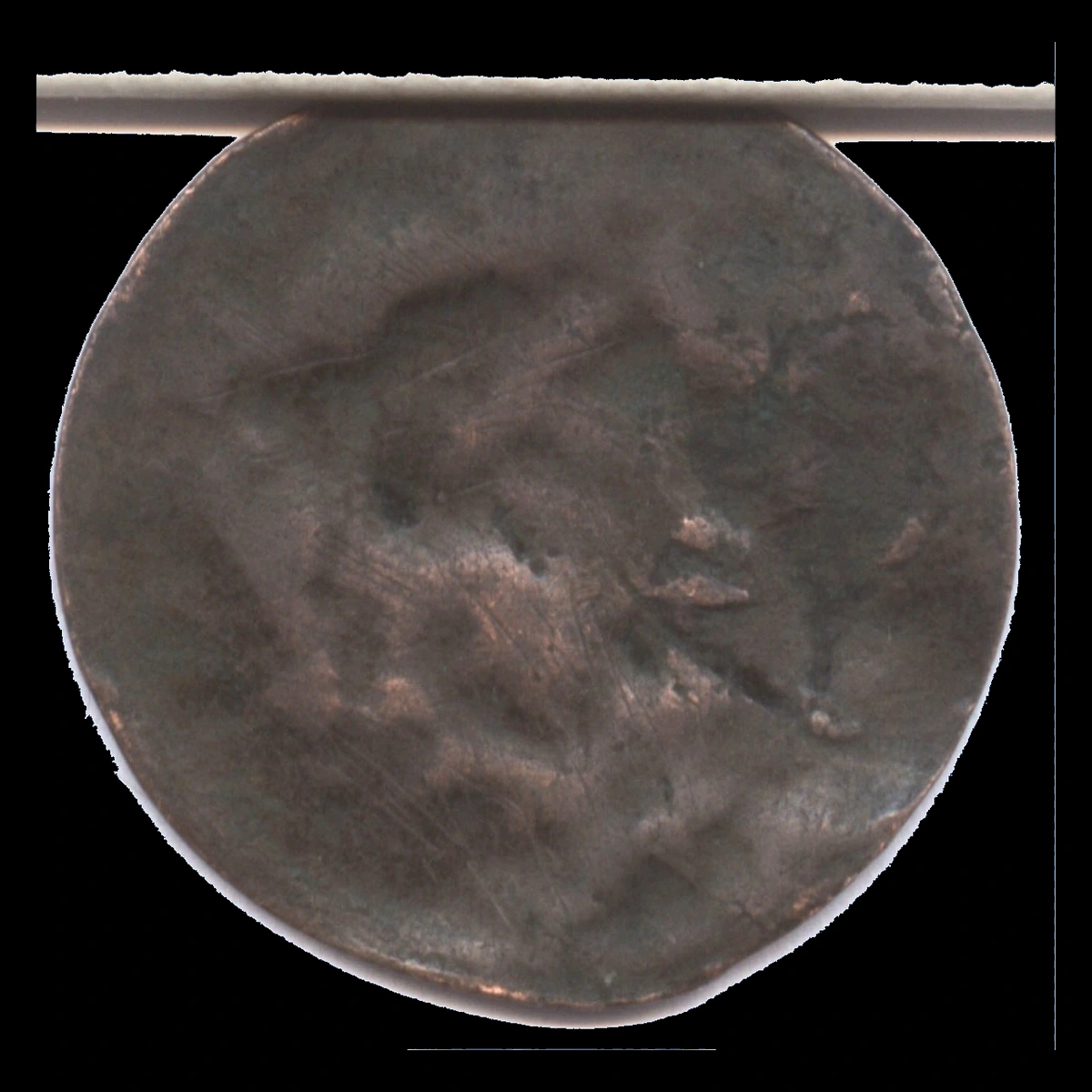
The reported split-cent piece retains the front design and exposes internal copper on its other side. This is a broad internal separation rather than a small local surface flake.
How to Identify
Record its actual weight and thickness without expecting exactly half the normal 10.89 grams. Inspect the exposed face for a natural rough, layered surface rather than parallel machining marks.
Confirm the date on the intact struck face and examine the remaining edge. The surviving front portion does not establish that a matching reverse half exists or settle the precise timing of separation.
What It’s Worth
An authenticated dated front portion is estimated at $150–$3,000. Readable design and convincing natural separation are central to its appeal.
An undated Lincoln Memorial reverse half graded NGC MS66 Red and Brown sold for $89 in September 2025. Its common small-cent design and missing date make it a limited mechanism comparison for the much earlier large cent.
4. 1835 Penny A Curved Gap Meets the Ninth Star: Clipped Blank Error
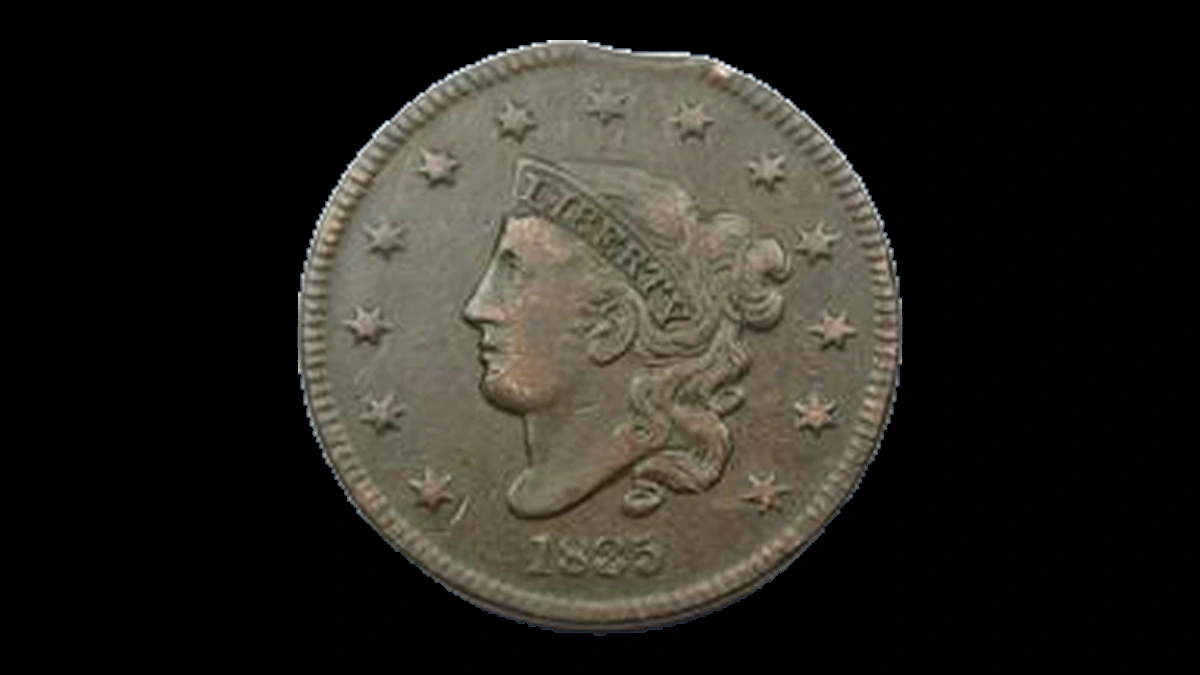
The N-16 Head of 1836 example has a curved clip near the ninth star and IC in AMERICA on the reverse. A blanking punch overlapping an earlier hole can create that incomplete starting disc.
How to Identify
Locate both the ninth-star and IC positions to confirm the gap’s relationship to the design. The documented piece also has weak border teeth opposite it near stars one and two.
Inspect the gap’s ends for natural rim transitions rather than a sawed edge. Opposite weakness supports the diagnosis only alongside the actual missing boundary, since wear can also soften border teeth.
What It’s Worth
Genuine curved clips are estimated at $80–$1,500. The visible original edge and whole coin’s condition matter more than an unsupported percentage.
An 1842 straight clip was recorded at 10.63 grams without a sale amount used here. A 1939 MS64 Brown small-cent clip sold for $180 in 2023, a much later comparison with a different size and preservation.
5. 1835 Penny The Reverse Returns Slightly Clockwise: Rotated Dies Error
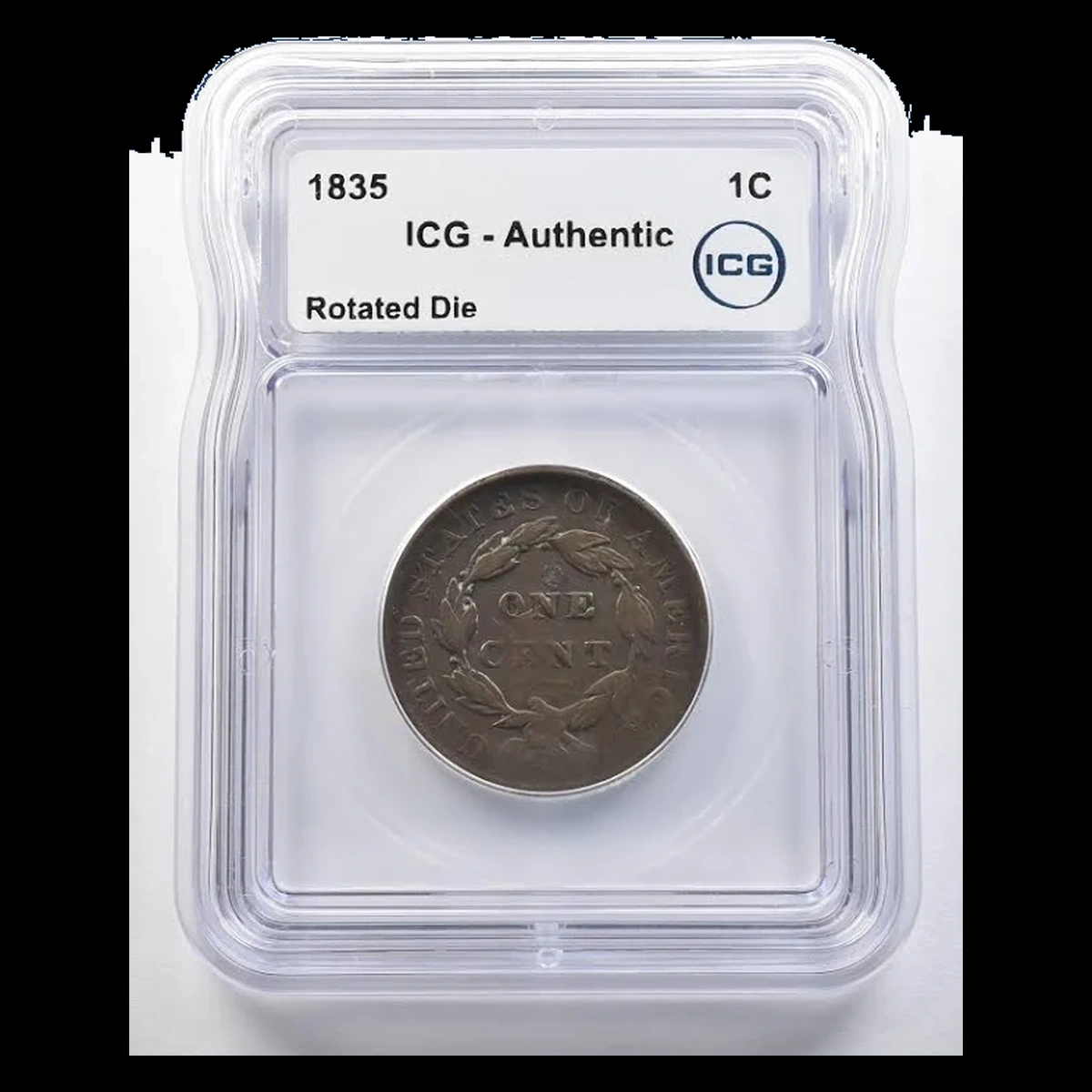
The reported Very Fine example has about fifteen degrees of clockwise rotation. Both designs can remain complete because the issue is the angle between the dies rather than sideways displacement.
How to Identify
Set the front upright using the lettering, then flip top to bottom against a fixed vertical reference. Repeat without twisting so the reverse consistently reaches the same small tilt.
Do not rotate the photographs independently before comparing them. A small hand movement can imitate this modest angle, unlike a clear quarter-turn or half-turn error.
What It’s Worth
Comparable genuine mild rotations are estimated at $30–$250 as whole coins. Much of a circulated example’s price may come from the ordinary 1835 cent.
A rotated 1858 Flying Eagle cent graded ANACS F12 sold for $154 in June 2026. Its later design, copper-nickel metal, and actual angle require separate consideration.
6. 1835 Penny The Image Runs off the Copper Disc: Off-Center Strike Error
One reported PCGS G6 coin is about 12% off center toward 10:30 on a Type I blank. Here Type I means a disc without its previously raised rim, not the portrait design.
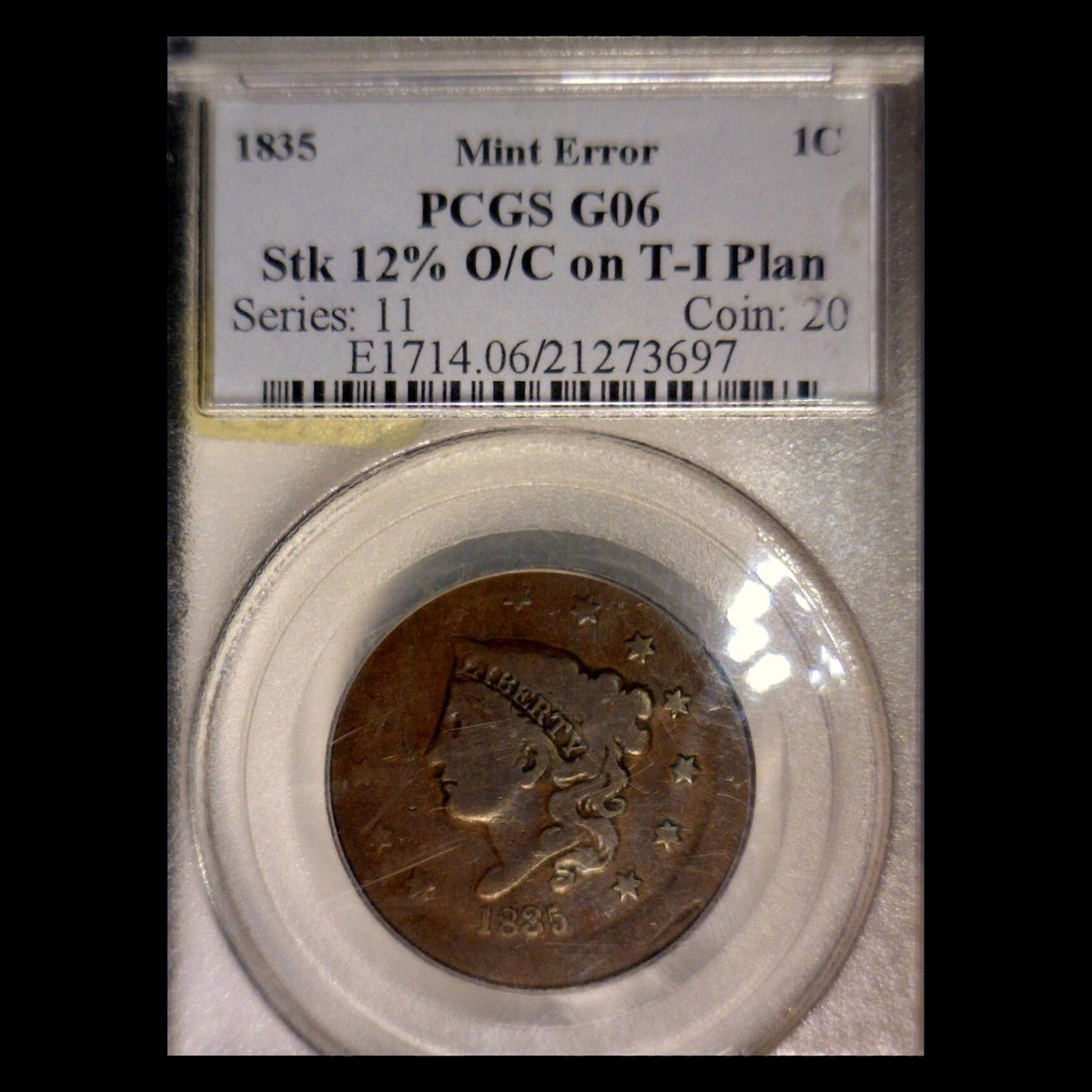
How to Identify
Read 1835 on the coin, then inspect where missing design faces untouched copper on both sides. Check the original edge and blank area for grinding or later flattening.
A separate Head of 1836 example graded PCGS AU58 has about 30% displacement. It does not inherit the G6 coin’s direction or unprepared-blank description.
What It’s Worth
Genuine readable-date off-center examples are estimated at $500–$6,000. The worn G6 and lightly worn AU58 reports represent substantially different comparisons.
An 1854 large cent shifted about 50% and graded ANACS VF20 sold for $1,527.50 in September 2016. That actual transaction does not establish either 1835 specimen’s realized price or current value.
7. 1835 Penny Extra Stars and Overlapping Profiles: Repeated Strikes with Brockage Traces Error
The PCGS MS66 Brown Pogue coin has earlier raised stars at the front rim and recessed mirror stars on the back. Its catalog explains that another struck coin blocked the reverse die during the first blow, before a later strike covered much of that impression.
How to Identify
Pair the raised front stars with the sunken reversed reverse stars when examining the Pogue sequence. A normal raised ghost outline is not equivalent to an incuse mirror impression.
A separate N-5 cent has doubled and tripled outlines from crown to chin and around stars seven through twelve. Those remnants require their own explanation rather than the Pogue coin’s exact sequence.
What It’s Worth
The estimated range is $500–$20,000 across varied genuine repeated strikes. The actual overlap, grade, surfaces, and any brockage must be assessed as one combination.
The Pogue catalog estimated its coin at $5,000–$7,500, which is not a realized price. An 1811 PCGS VF30 double strike with a 50% off-center second impression sold for $16,200 in September 2025, providing a different-year large-cent comparison.
Conclusion
Identify the portrait, date, and star style before comparing a small 1835 defect. A raised line copied from a broken die differs from a cheek opening, a separated layer, or a second impression.
The $30–$20,000 estimates include very different combinations and levels of preservation. Keep catalog estimates separate from completed sales, and use both faces to test any proposed repeat-strike or brockage sequence.