Rare 1862 Penny Errors (List & Pictures)
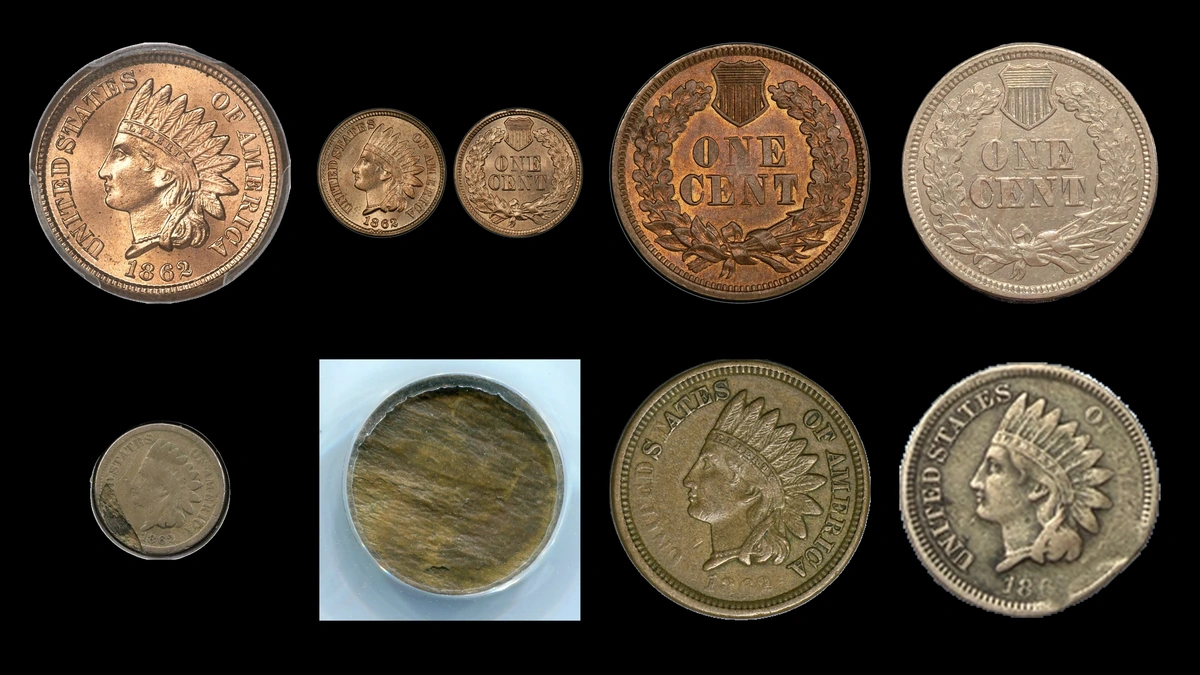
Eight petal-like tabs surround the portrait on an extraordinary 1862 die cap. A reported earlier auction result reached $51,750, followed by a $40,800 sale in September 2020.
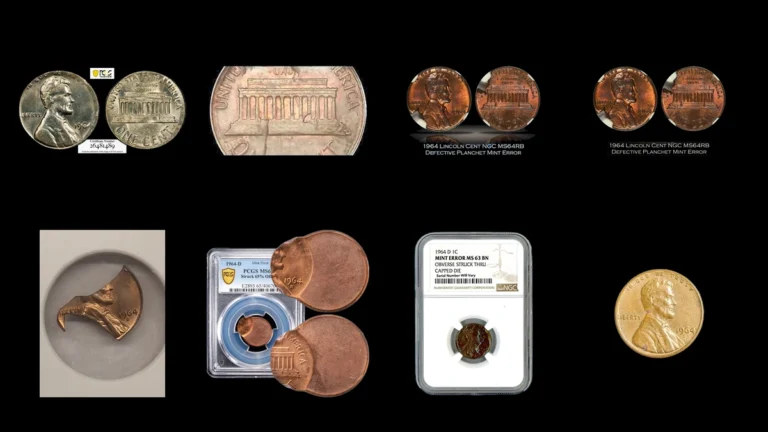
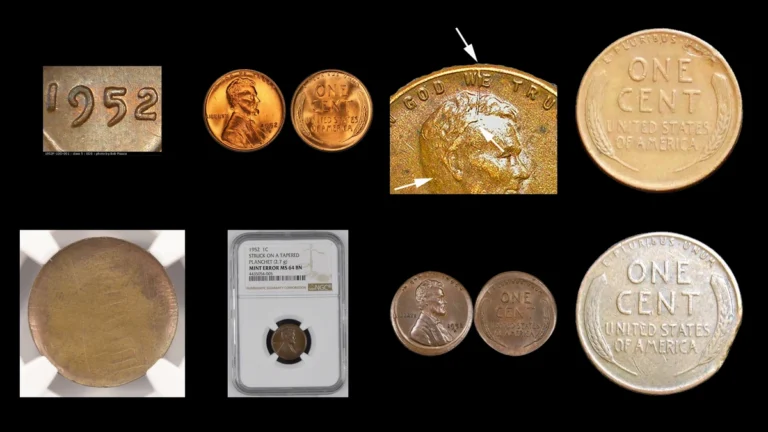
Most 1862 penny errors look much less dramatic: an extra date curve, peeling metal, or a small edge step may be the first clue. Estimated whole-coin values below span $15–$55,000, with the exceptional caps at the top.
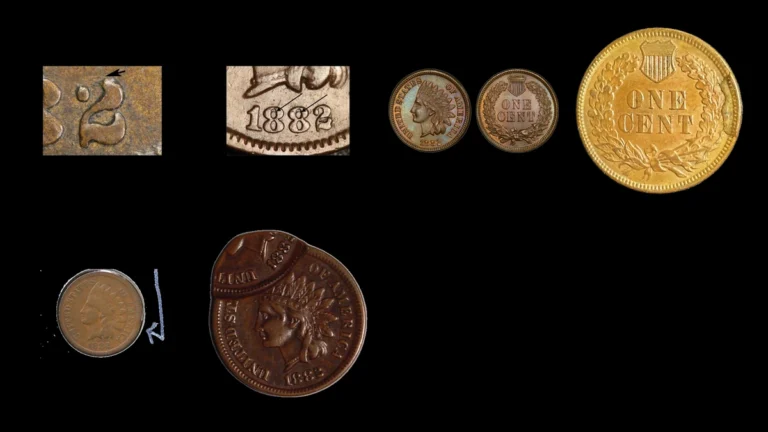
1. 1862 Penny Another Curve Sits below the 8: Repunched Date Error
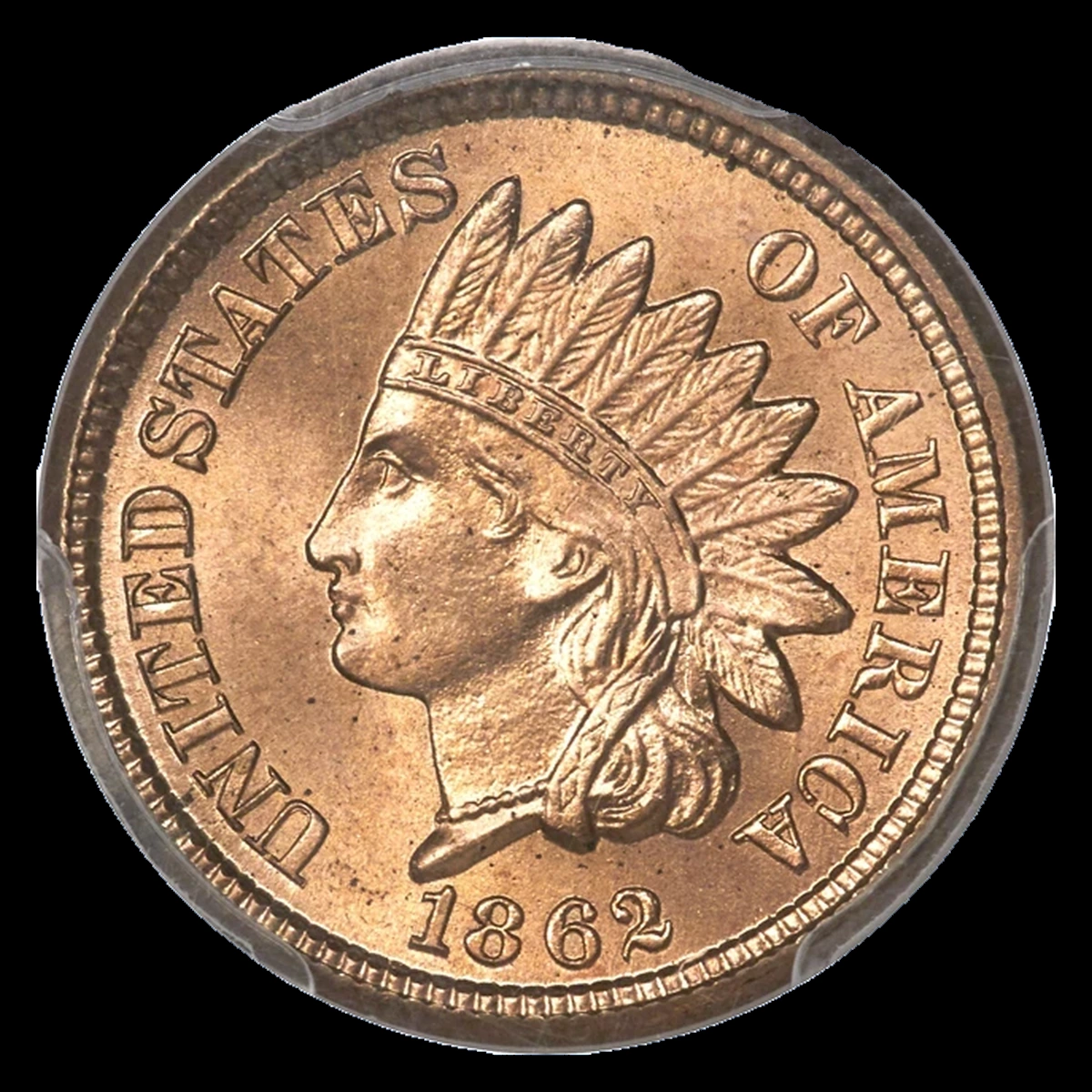
The Snow-7 variety shows an earlier impression of 8 displaced downward. The date punch entered the die more than once, leaving a small piece of its previous position.
How to Identify
Keep the normal lower loop and the space beneath it visible together. Compare the added curve with a Snow-7 reference rather than mistaking the normal loop for the extra stroke.
Change the light to check that the remnant is raised metal. Engraved grooves or a thick worn digit have different appearances.
What It’s Worth
$25–$200 is an estimate for circulated examples with a visible remnant, with clearer better-preserved coins around $200–$750. These are whole-coin estimates.
No specific realization is supplied for the illustrated variety. The actual matching curve matters more than the generic description of a doubled-looking 8.
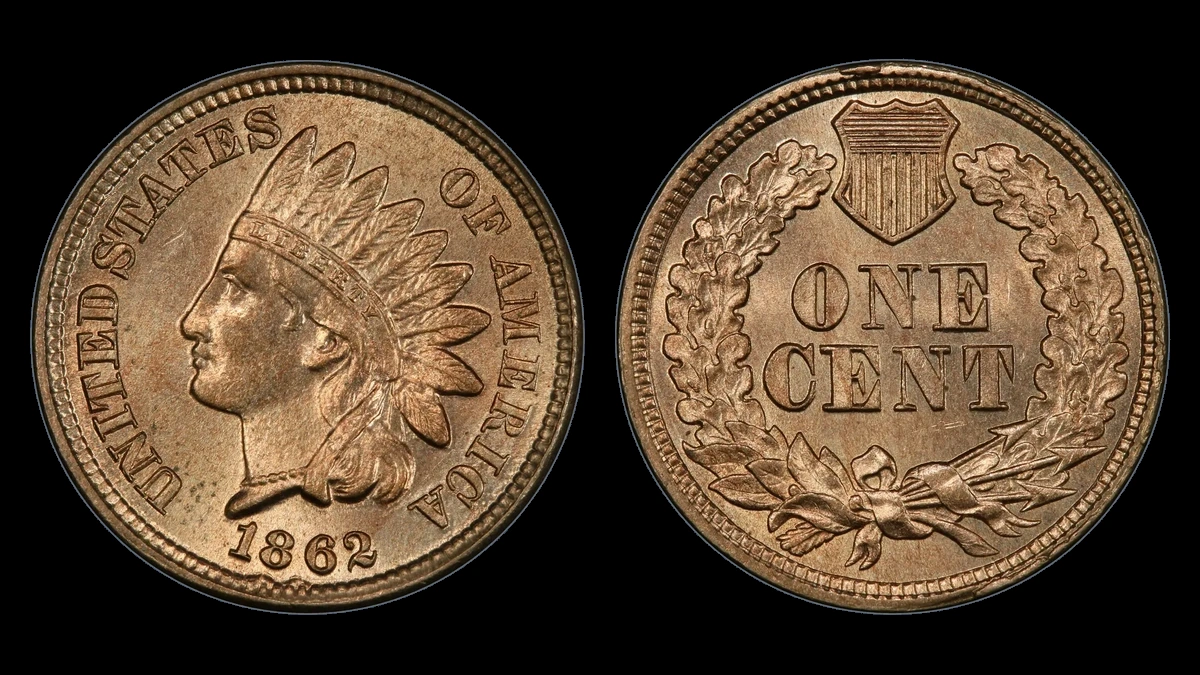
2. 1862 Penny Numeral Pieces Appear outside the Date: Misplaced Date Error
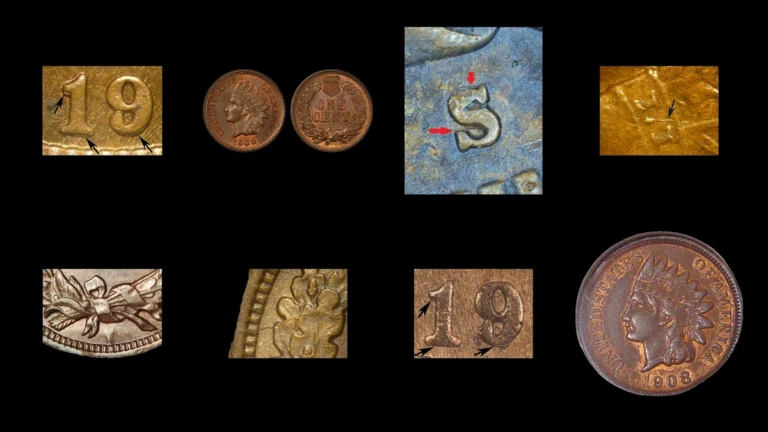
One pattern has two fragments below and right of the 8. Other examples show extra 1s in the border or the lower-right part of a 6 between the ribbon and hair curl.
How to Identify
Select the reference for the actual location. The tiny 6 needs a view of the ribbon and curl, while the border patterns need the main date and nearby teeth.
Each fragment must fit a numeral shape in the correct position. An ordinary hair line, border tooth, or lump should not be renamed simply because it looks similar in isolation.
What It’s Worth
$35–$350 is an estimate for circulated identified examples, with clearer lightly worn or unworn coins around $350–$2,500. Variety and preservation both affect the comparison.
No separate auction result is assigned to each illustration. A high grade does not make an indistinct fragment a more certain match.
3. 1862 Penny The Ribbon or Lettering Has Repeated Edges: Doubled Die Error
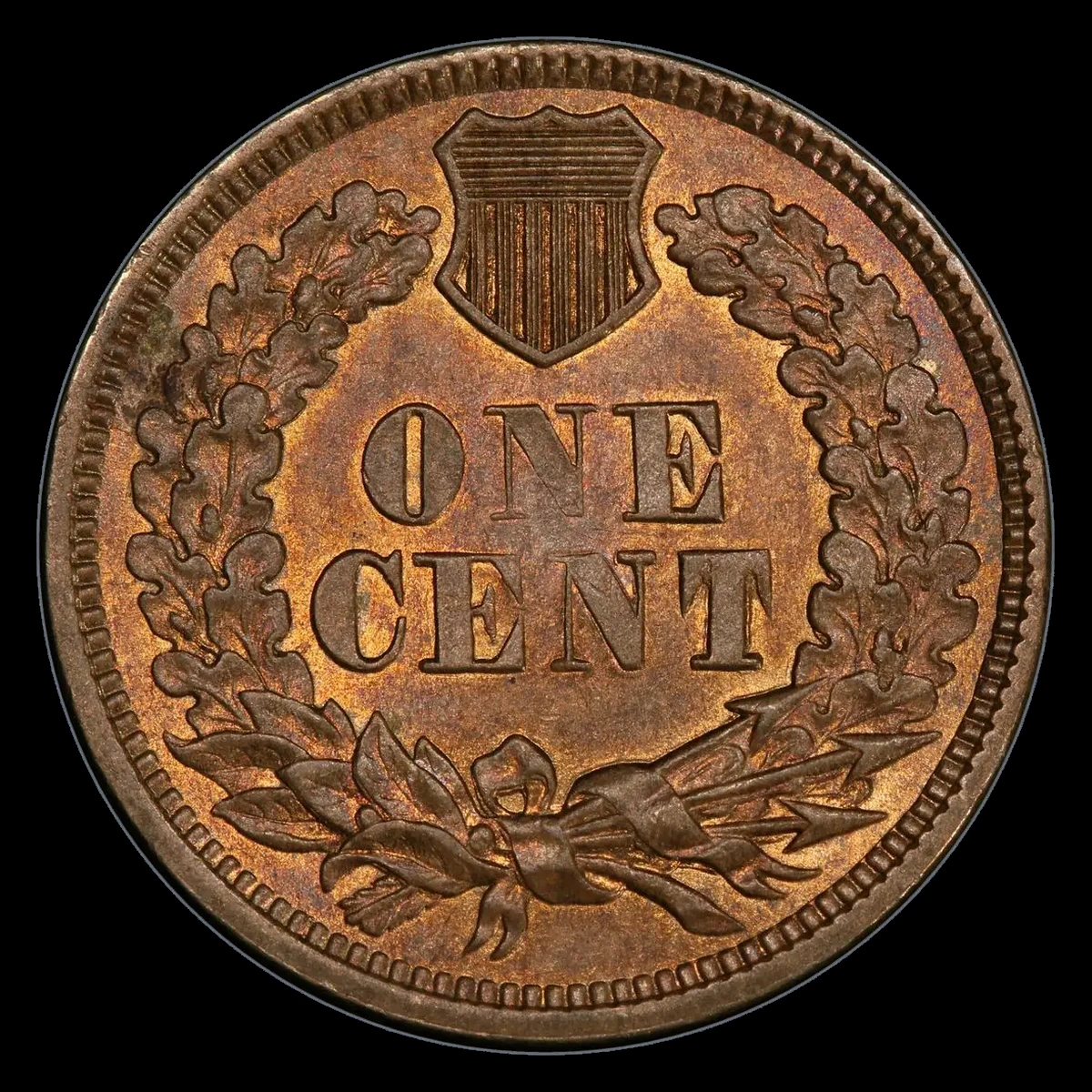
Snow-5 has an extra upper edge on the ribbon holding the arrows and smaller repeats on the arrow shafts. The die already carried that pattern before striking the coin.
How to Identify
The Snow-5 reference provides the specific ribbon-and-arrow match. Snow-6 is a different doubled back, not another name for the same pattern.
A separate front variety repeats parts of UNITED STATES OF AMERICA. Match adjacent letters on that face rather than transferring a back-ribbon description to it.
Flat shelves from movement during striking and broad normal letter outlines are lookalikes. A match needs the shape and position of the recorded repeated detail.
What It’s Worth
$50–$4,000 is a working estimate across identified varieties and grades. A Snow-5 MS63 example brought $1,116 in November 2014.
A separate Snow-6 XF40 sold for $156 in August 2019. Its different pattern and circulation wear make it a different comparison from the unworn Snow-5.
4. 1862 Penny A Raised Patch Replaces Part of the Wreath: Die Breaks Error
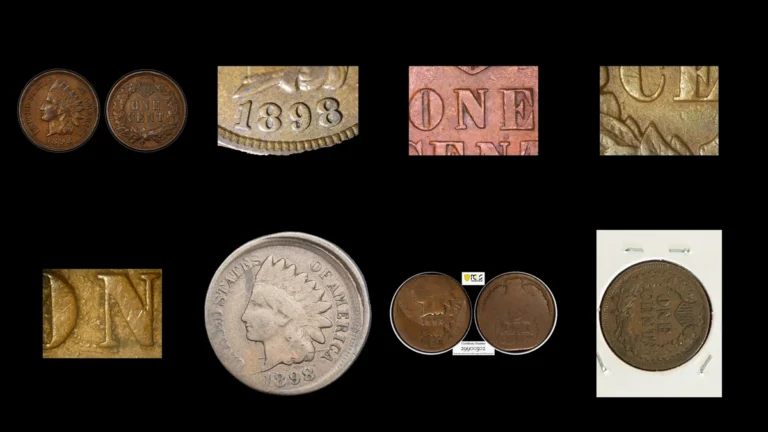
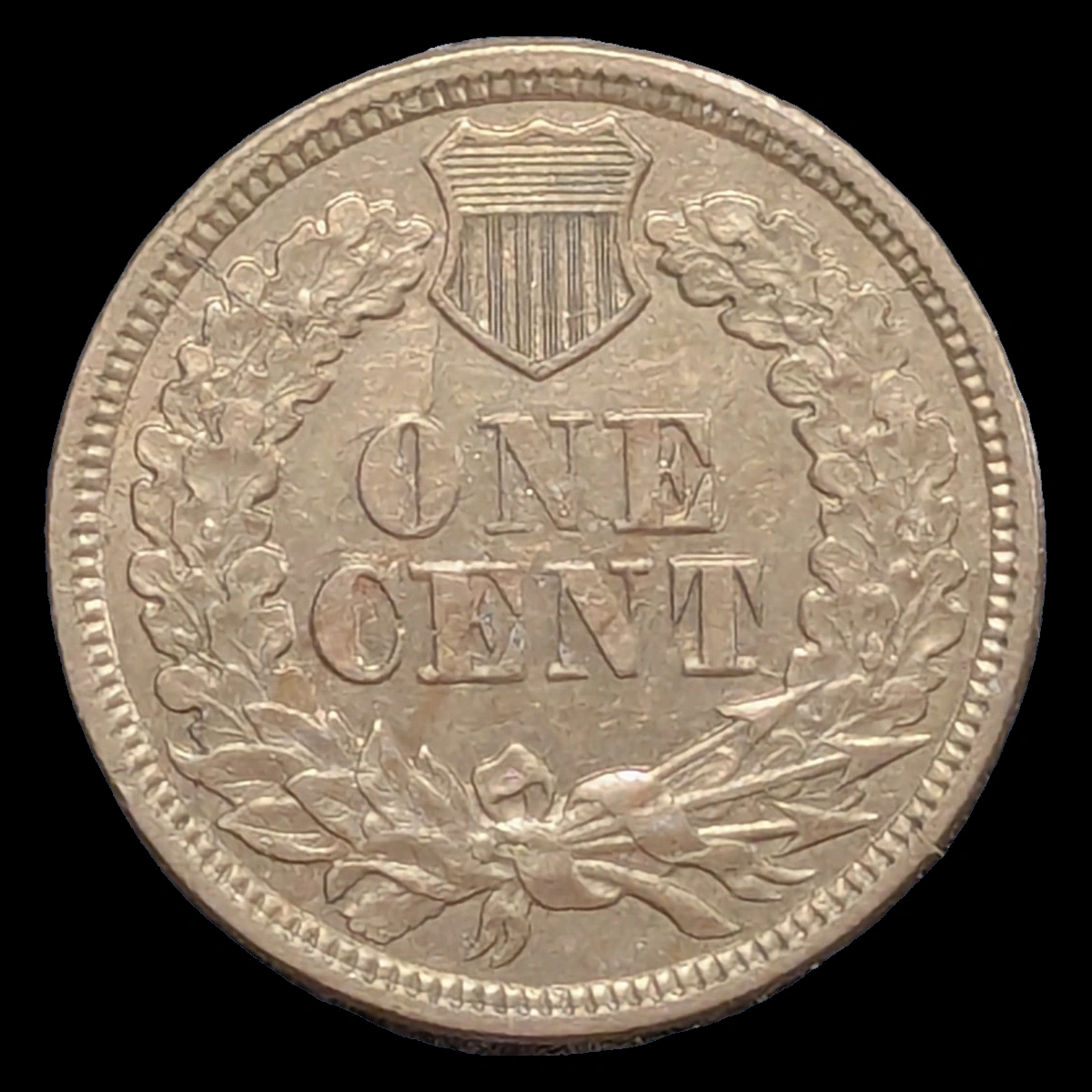
A missing die edge can leave a large raised patch called a cud. One cataloged back example spans about eight-fifteen to nine-forty-five.
How to Identify
Choose the matching face and position in the 1862 variety photographs. A front break near eleven to twelve and strong back cracks around two to four belong to separate examples.
Look inside a raised boundary for surviving leaves or lettering. A retained die piece may still stamp detail, unlike a section that fell out completely.
A thin original crack makes a raised ridge on the coin. A scratch cuts a groove, while folded or added edge metal can imitate a larger lump.
What It’s Worth
$15–$100 is an estimate for modest worn cracks, with more substantial cuds or retained breaks around $75–$1,500. A PCGS VF25 1862 cud sold for $99 in May 2021.
That sale does not price every cataloged clock position. The size, surviving design, and preservation need to match the actual coin.
5. 1862 Penny A Thin Surface Layer Peels: Lamination Error
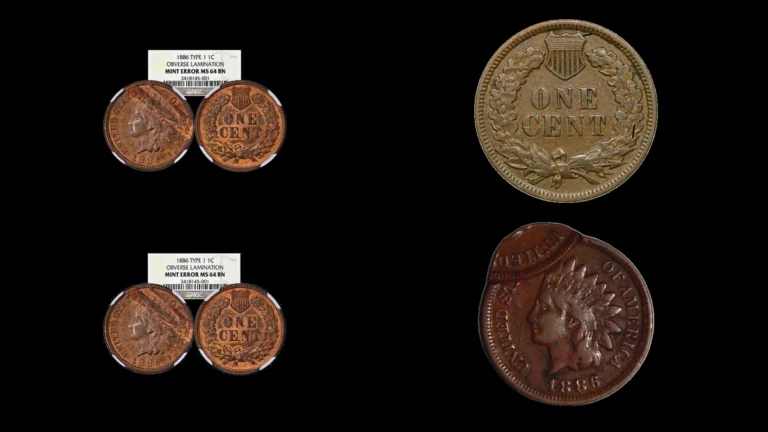
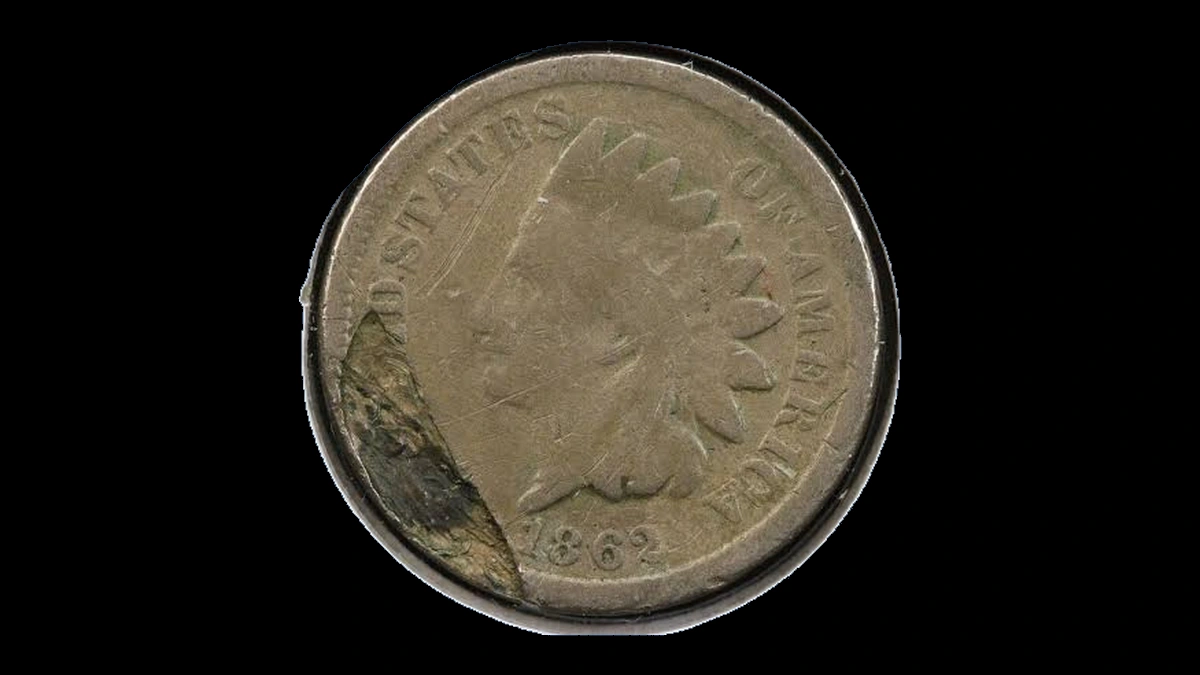
A weak layer near the surface can lift as a flap or leave a shallow missing patch. The listed NGC VG8 example has substantial wear, but its description does not locate the lamination.
How to Identify
The VG8 listing requires examination of both faces before assigning an affected area. Follow the layer boundary in side light and leave any flap attached.
A normal copper-nickel cent of this date weighs about 4.67 grams and measures 19.05 millimeters across. A small surface flake may make little measurable difference to the weight.
Check whether a separating layer explains the patch better than corrosion, scraping, or an impact. This localized defect differs from losing nearly a whole thickness layer.
What It’s Worth
$20–$150 is an estimate for a worn example with modest clear lamination. Larger separations on better-preserved coins can compare around $100–$350.
The graded listing supplies no completed sale used here. Additional cleaning, corrosion, or deliberate removal of the flap changes the comparison.
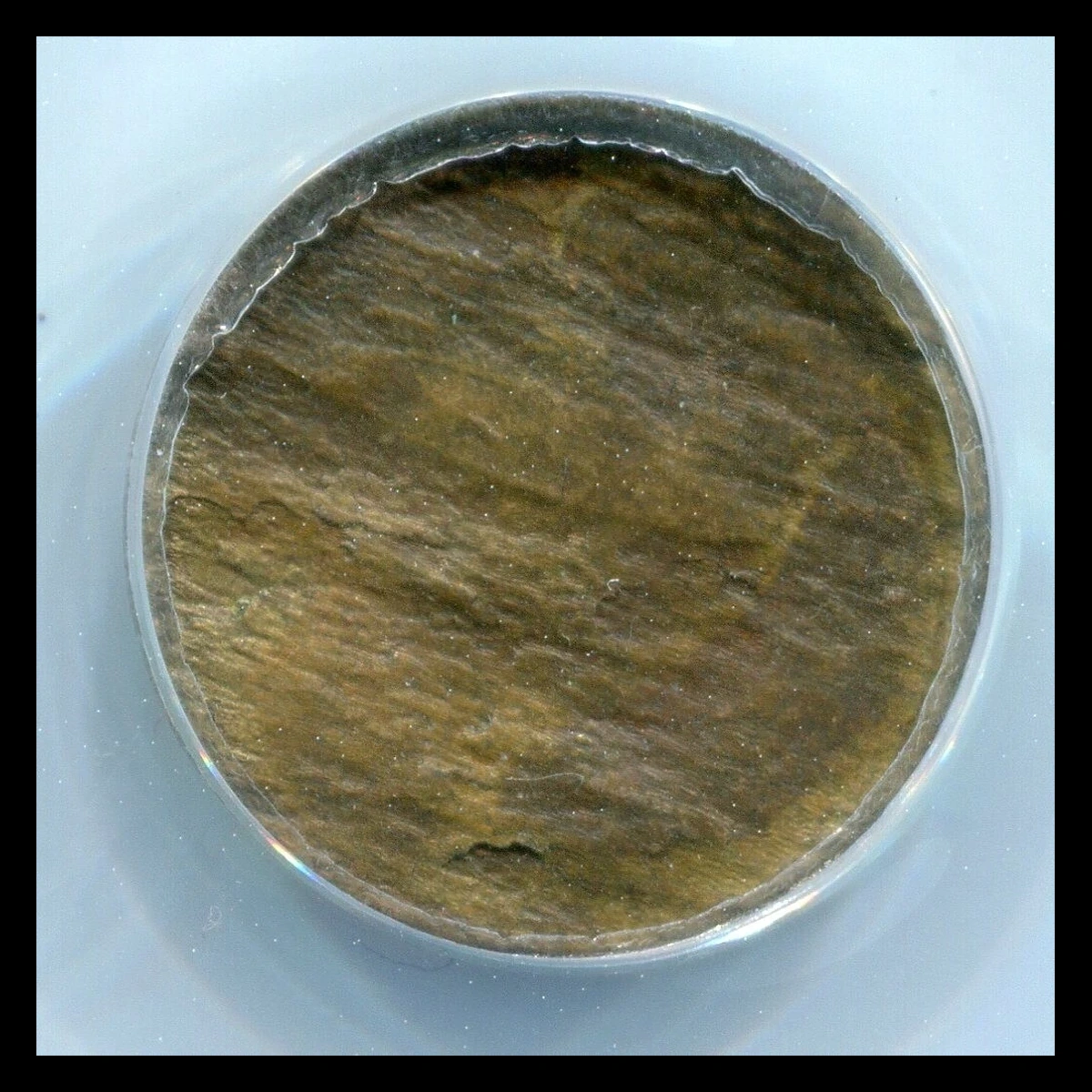
6. 1862 Penny The Dated Front Remains above a Rough Back: Split after Striking Error
The documented ANACS Fine 12 piece retains normal front detail while a broad back layer has separated. Its exposed back is rough and streaked because that inside surface was not originally struck with the back design.
How to Identify
Compare the thin edge, struck front, and naturally exposed back together. Grinding or sawing can also make a thin coin, often leaving tool grooves or an artificially smooth surface.
A substantial missing layer should affect the weight, but no single weight identifies every natural split. Do not bend the remaining piece or remove a certified example from its holder.
What It’s Worth
$50–$450 is an estimate for pieces with a clear original split and readable date. A Fine 12 example sold for $74 in February 2010, and another listing of that description records $74 in October 2010.
Those appearances do not necessarily represent two different coins. Wear, surface damage, and clarity of the split matter to the complete piece’s value.
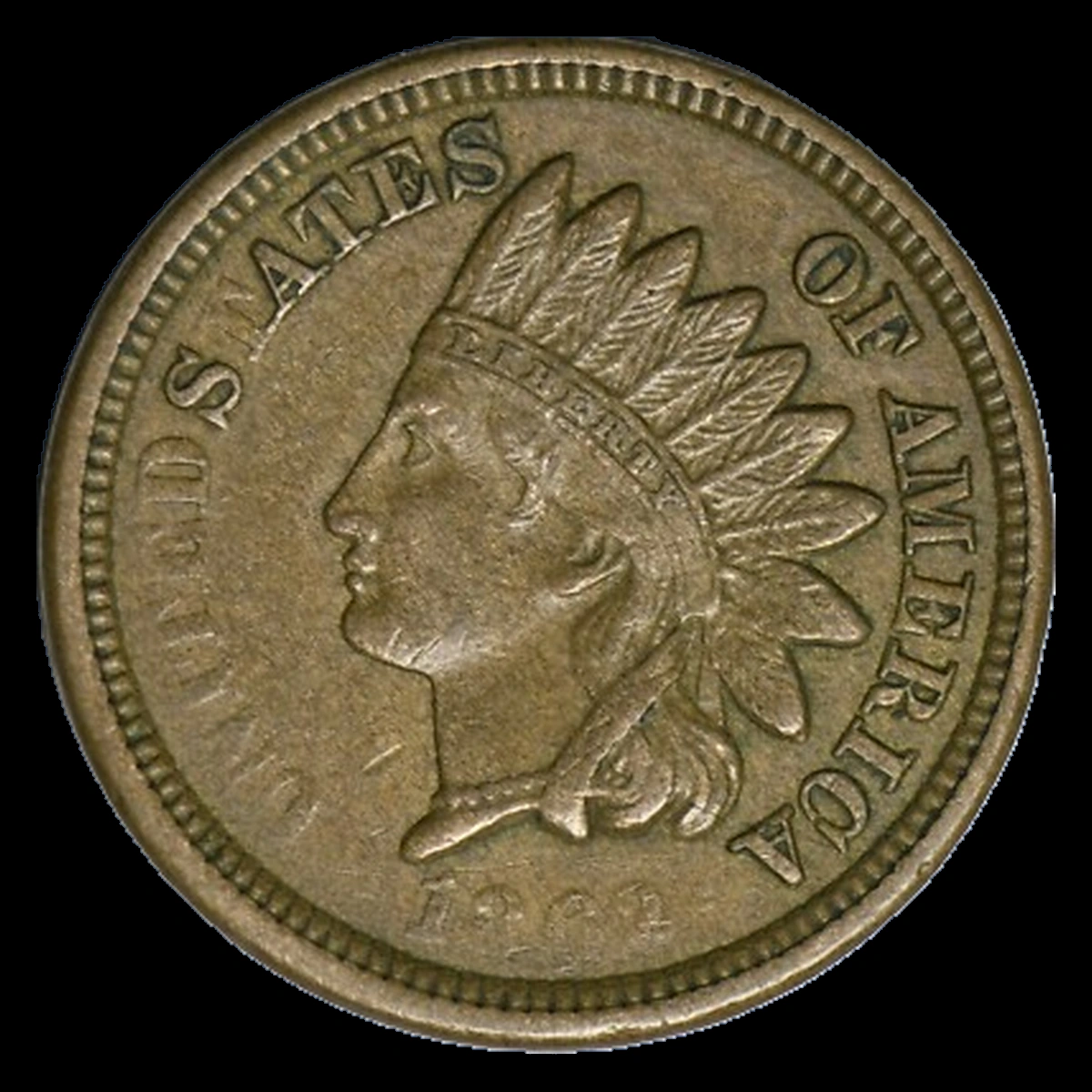
7. 1862 Penny Hollows Interrupt the Shield and Wreath: Struck Through a Fragment Error
The recorded back impression extends through the shield, nearby lettering, and right and lower wreath. A fragment between the die and blank blocked parts of the design.
How to Identify
Follow the connected hollows and their boundaries beside ordinary design. The description does not say the fragment remains attached.
This specimen also has partial collar contact and cleaning. Keep fine cleaning lines separate from the larger original impression, and do not attribute every scratch to the striking obstruction.
What It’s Worth
$50–$600 is an estimate for comparable fragment impressions with differing condition. A two-coin lot containing this cleaned piece and a Fine 12 split-after-strike cent brought $115 in December 2005.
The $115 total is not an individual price for either coin. The fragment impression and edge error also belong to one specimen, without separate complete-coin prices to add.
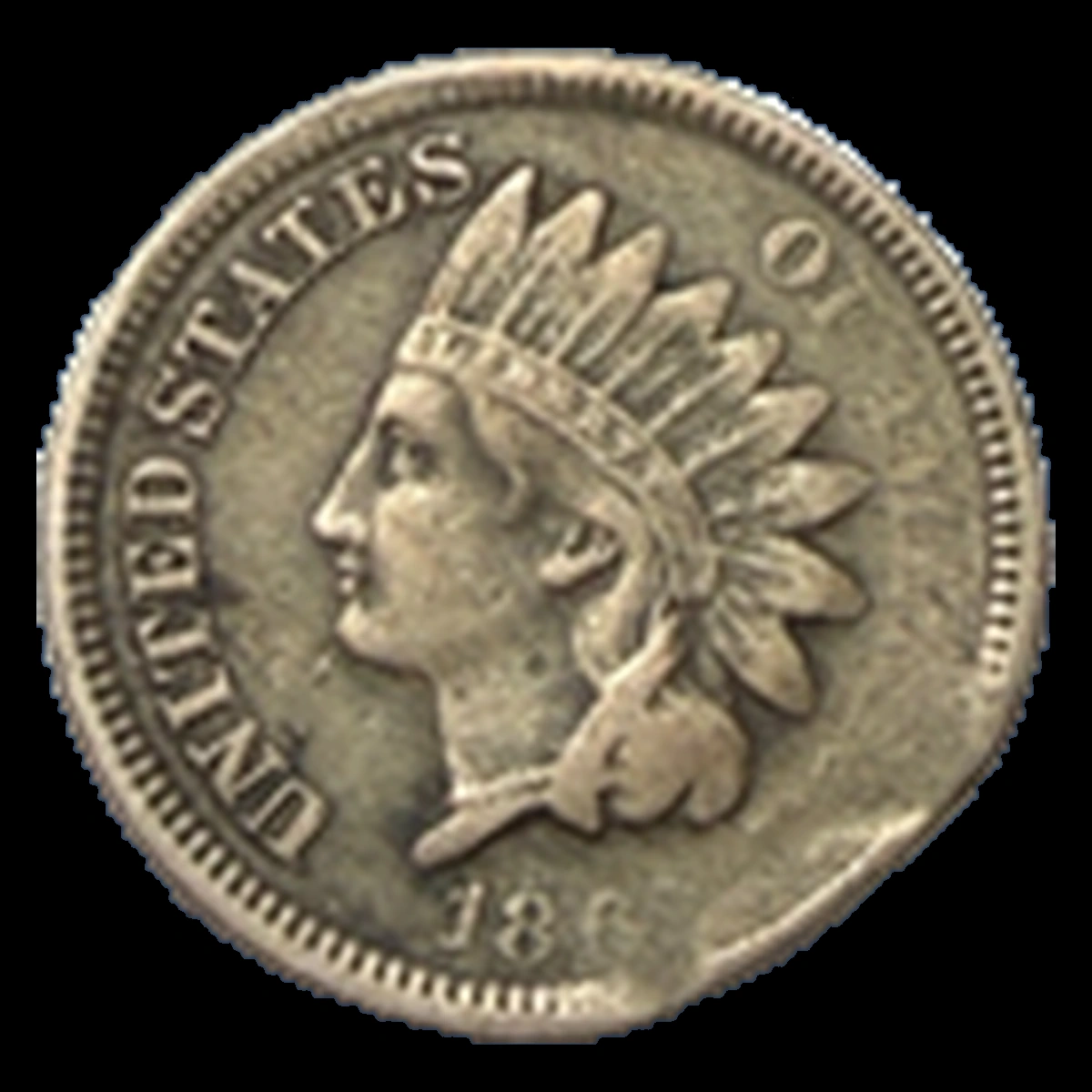
8. 1862 Penny A Curved Bite Is Missing: Clipped Blank Error
The blank-cutting punch can overlap a hole already present in the metal strip. The resulting curved gap exists before the penny receives its design.
How to Identify
The public listing describes an NGC MS62 example without a fixed clip percentage or clock position. Use the coin’s actual curve and surviving date rather than inventing those details.
Inspect the rim at both ends of the gap for design formed beside missing metal. Saw grooves or cuts through completed letters point toward later removal.
Opposite-rim weakness can support an original clip but may be faint or absent. Low weight alone cannot distinguish it from a later cut.
What It’s Worth
$75–$600 is an estimate for circulated curved clips, with clearly original unworn examples around $400–$4,500. Size, remaining date, and surfaces guide the comparison.
The MS62 listing has no completed sale adopted here. A dramatic outline does not guarantee a high value if it removes the date or shows additional damage.
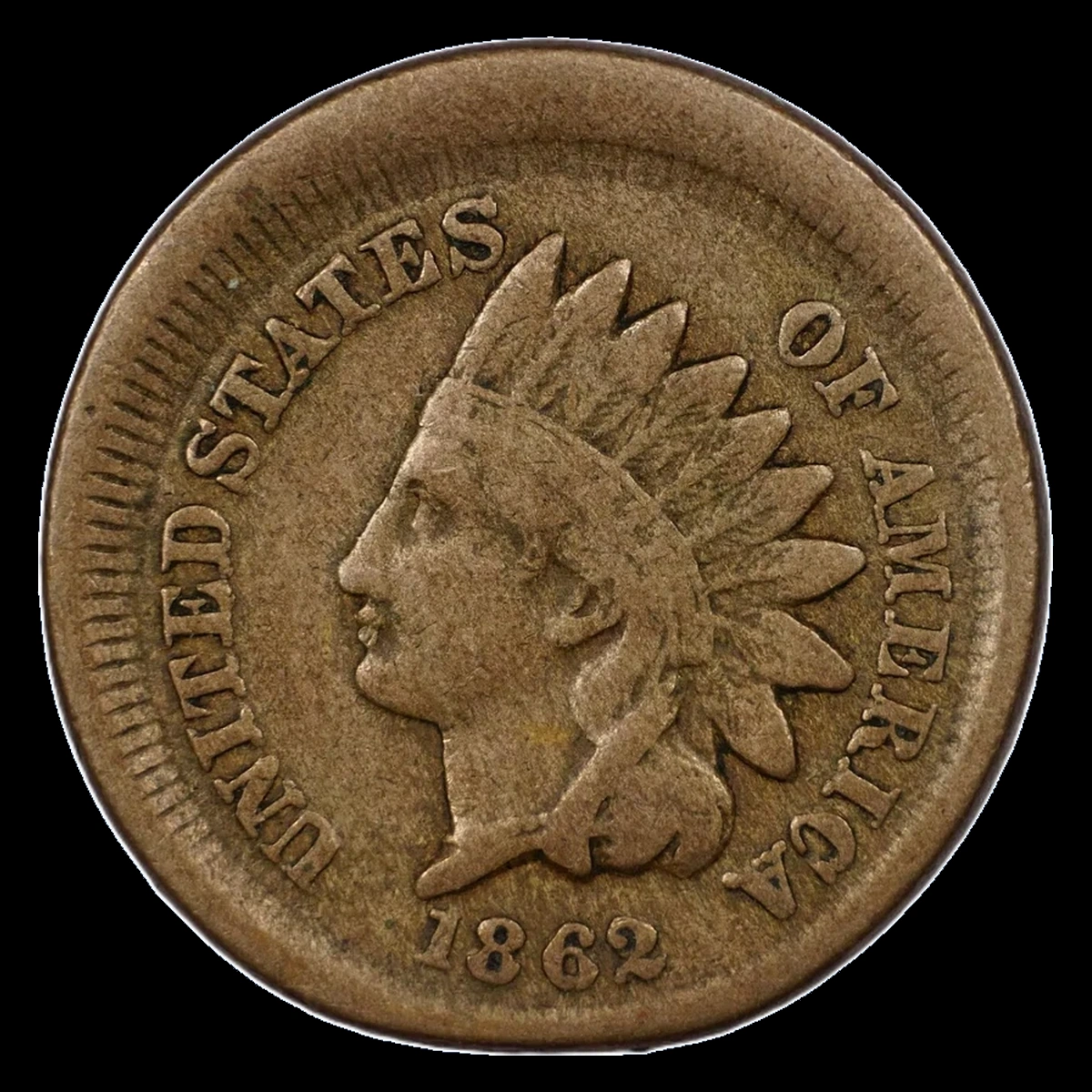
9. 1862 Penny The Design Fits inside a Wider Outline: Broadstrike Error
A broadstrike spreads outward because the collar did not contain the blank normally. The intended design remains on the expanded metal.
How to Identify
Trace outer lettering on both faces before judging the extra width. A wide margin can be uneven and still contain a complete design.
Inspect the metal for later compression that crushed existing detail. Also examine the edge for an abrupt step, which can reveal partial rather than fully absent collar restraint.
What It’s Worth
$100–$1,000 is a working estimate for genuine examples. An NGC XF45 broadstrike sold for $234 in December 2023, providing a circulated same-date comparison.
A separate broadstrike with a back strike-through sold for $192 in 2022. That is one result for a combined error, not two premiums or the price of the XF45 coin.
10. 1862 Penny The Plain Edge Has Two Levels: Partial Collar Error
Part of the blank’s thickness was held inside the ring while the rest spread beyond it. The change between restrained and expanded metal leaves an edge step.
How to Identify
View the circumference from the side, not only in a front portrait photograph. These cents have plain edges, so missing reeding is irrelevant.
One recorded ANACS MS60 coin also has a double strike. The separate cleaned fragment-impression piece has partial collar contact too, but is a different specimen.
Check for filing or a folded lip that could imitate the step. Repeated letters show an extra strike, while the edge levels show the collar relationship.
What It’s Worth
$75–$800 is an estimate for partial collar alone, with additional clear striking errors comparing around $300–$3,000. The double-struck MS60 specimen sold for $690 in November 2001.
That single total includes its repeated design, edge step, and condition. The fragment-impressed coin’s two-coin lot cannot supply an individual partial-collar price.
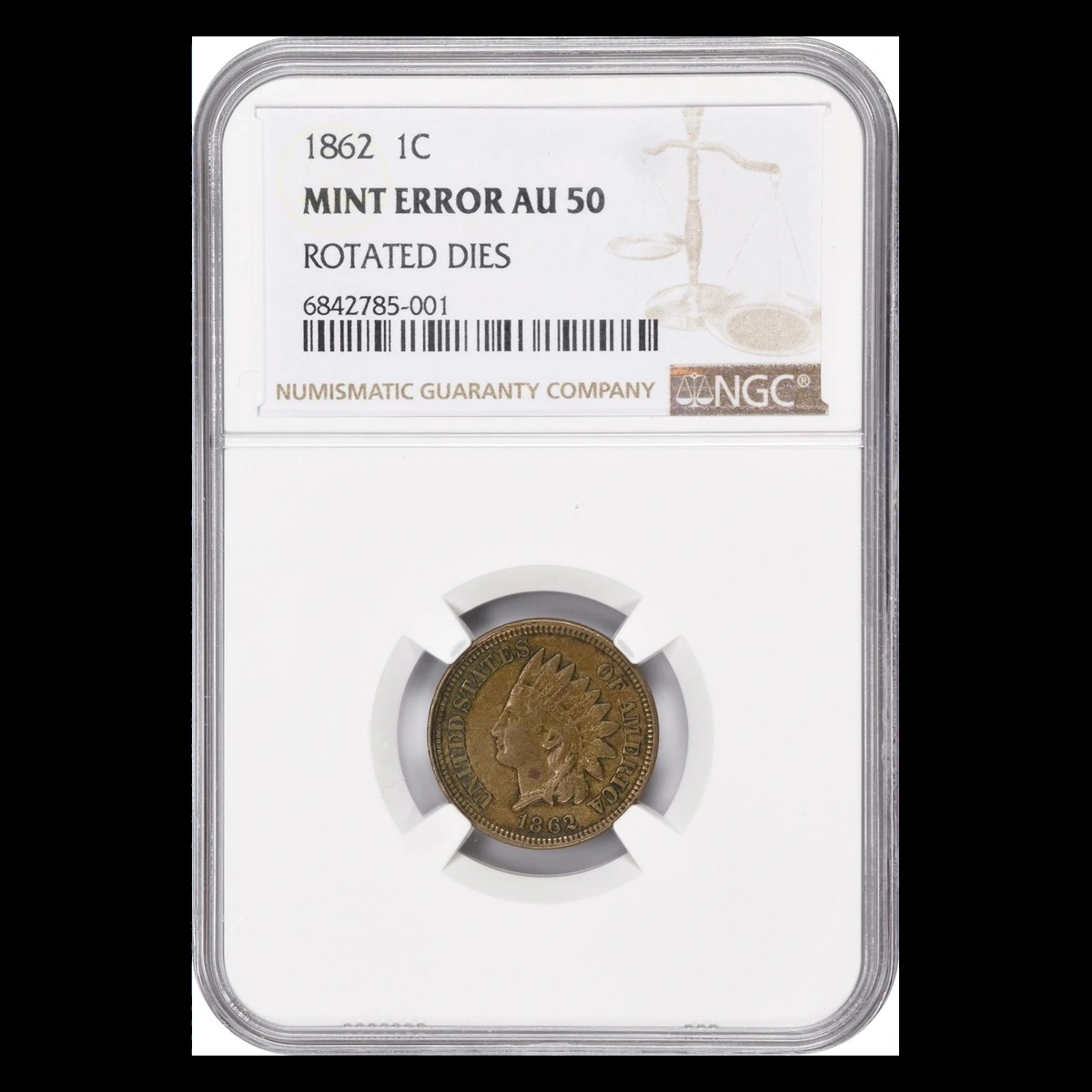
11. 1862 Penny The Back Leans after a Flip: Rotated Dies Error
Separate records describe rotations of 30 degrees clockwise, 55 degrees clockwise, and 171 degrees counterclockwise. Each angle belongs to a different relationship between the front and back dies.
How to Identify
Hold the front upright against a fixed line and flip the coin top to bottom without twisting sideways. Repeat before measuring the back’s angle and direction.
A tilted holder or separately rotated photograph does not demonstrate the error. Use the shield’s center to help establish the back’s orientation when the design is worn.
What It’s Worth
$75–$2,000 is an estimated range for clearly measured rotations. The PCGS MS62 coin with a 55-degree clockwise turn sold for $216 in May 2021.
A separate NGC AU50 rotation brought $168 in March 2024, with no angle supplied here. Do not assign it the measured angle of one of the other examples.
12. 1862 Penny Outer Letters Show Two Positions: Double Strike Error
The ANACS MS60 specimen received an extra blow, leaving repeated design most visible near its edges. It is the same coin that also has a partial-collar step.
How to Identify
Connect recognizable repeated letters or borders with the earlier and later impressions. A single thick outline does not establish two strikes.
Check the back for the same movement and inspect the edge for joins or later pressure damage. The record does not supply a specific rotation or displacement percentage for this coin.
What It’s Worth
$400–$6,000 is an estimate across genuine double strikes of different clarity and condition. The documented MS60 combination sold for $690 in November 2001.
The sale is already one price for the coin with both features. It does not establish a later sale at the top of the range.
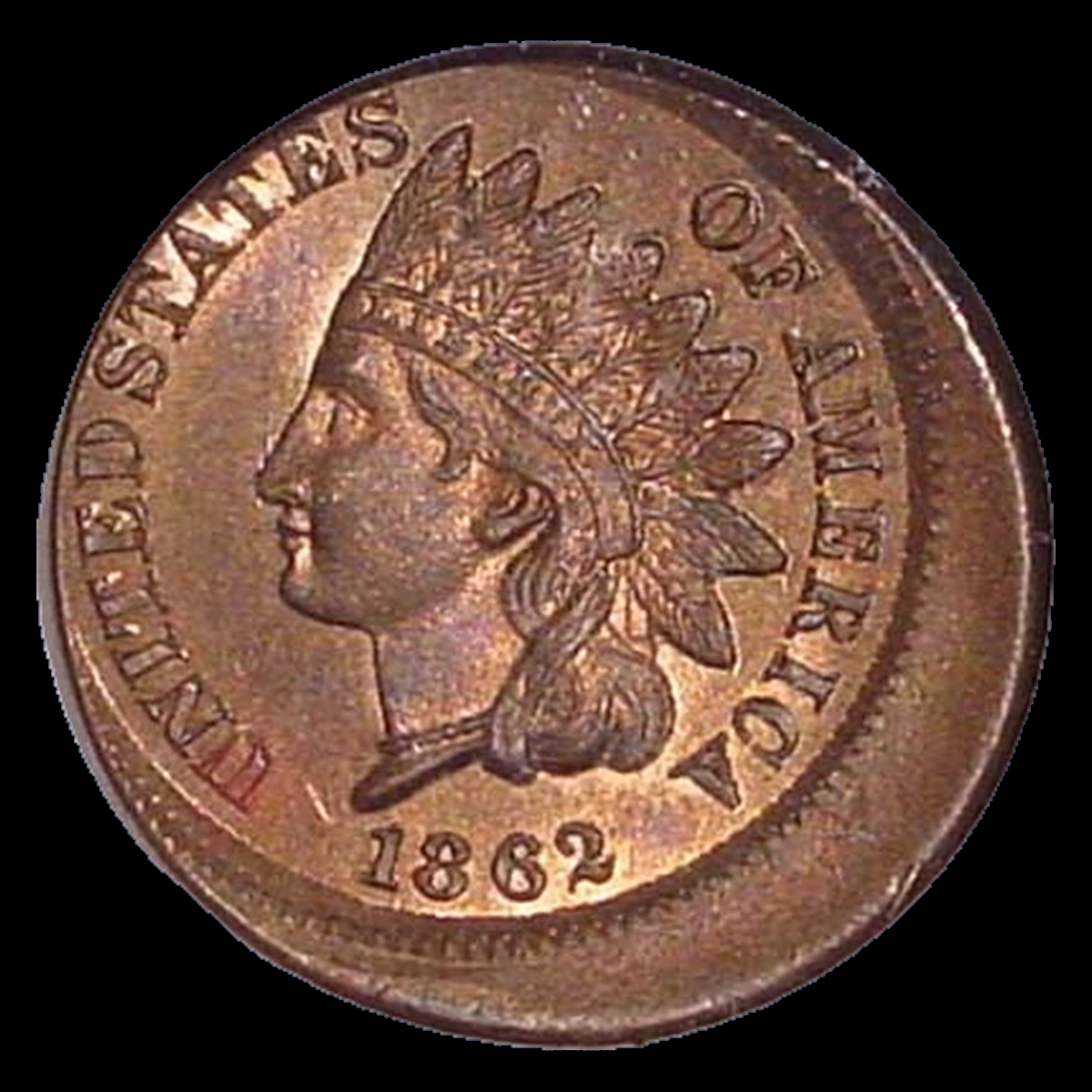
13. 1862 Penny One Picture Runs beyond the Blank: Off-Center Strike Error
The Xan Chamberlain Collection specimen is 15% off center toward eleven o’clock and graded MS66 by NGC. A separate MS64 example is described as 20% off center.
How to Identify
Keep the percentage, direction, and grade with the correct coin. The 20% description does not establish the same eleven-o’clock direction.
Compare both faces with the intact outline and the untouched crescent. A front-only shift is a different alignment problem, and a missing metal section is a different blank defect.
What It’s Worth
$200–$1,500 is an estimate for many circulated examples with readable dates, while attractive unworn coins compare around $1,500–$8,000. The MS66 coin has much stronger preservation than a typical worn find.
No final sale is assigned to its collection photograph here. A larger shift on the separate MS64 piece does not automatically make it more valuable.
14. 1862 Penny A Pale Coin Is Reported on a Silver Dime Blank: Wrong Blank Error
Jim’s Coins described a damaged 1862 cent on a dime blank with an NCS Uncirculated Details label. The report gives a weight of 2.8 grams and suggests the coin may have been bent.
How to Identify
The published listing must be read with that weight discrepancy intact. A silver dime blank of the period is expected around 2.49 grams, below the reported 2.8 grams.
Compare actual weight, composition, and how the cent design fits the smaller blank. Dime blanks begin near 17.9 millimeters across but can spread when struck.
Plating can change color without establishing silver throughout the piece. Professional metal examination is necessary, and an experimental cent is a separate category.
What It’s Worth
$1,000–$15,000 is an estimate for a verified 1862 silver dime-blank strike, allowing for damage and preservation. The old catalog’s $295 figure was a minimum bid, not a completed sale.
The reported specimen cannot receive a strong comparison from pale color alone. Its damage and unresolved measurement evidence remain important to the blank attribution.
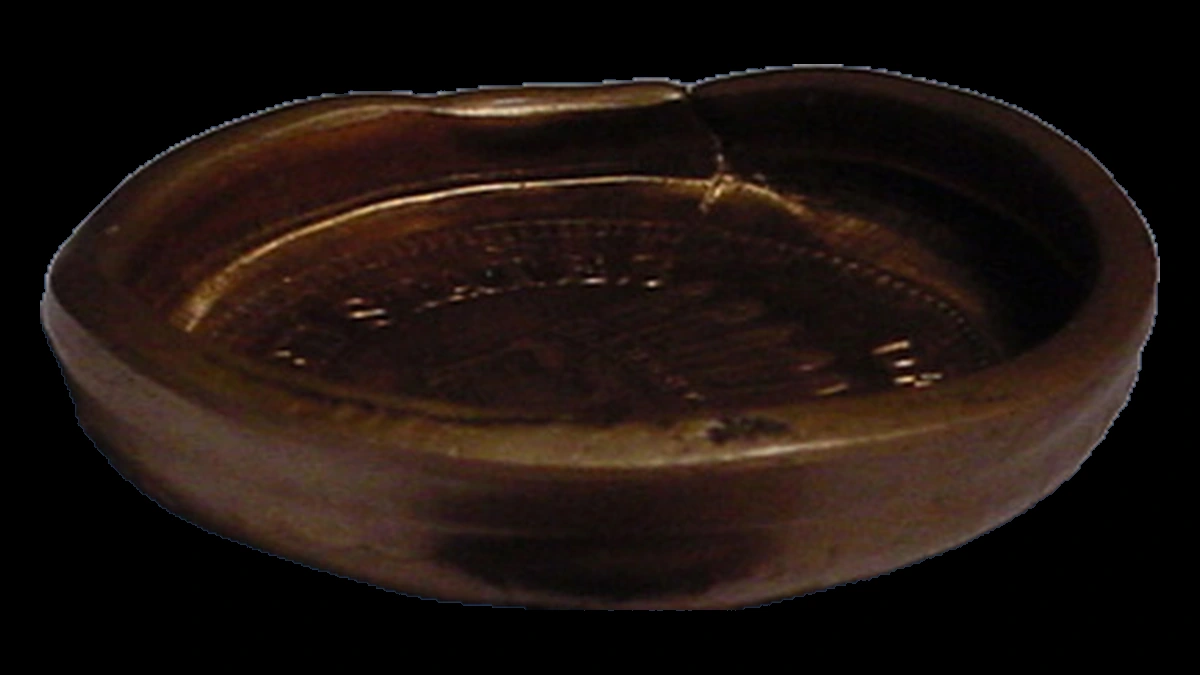
15. 1862 Penny Eight Tabs Spread around the Portrait: Die Cap Error
The extraordinary MS67 coin stuck to a die and received repeated blows. Metal spread around the tool into eight petal-like tabs, with stretched date and outer detail near their ends.
How to Identify
Photograph its depth from the side and compare the sharp central portrait with the stretched outer design. The back has no visible normal design.
A separate MS62 specimen forms a deep cap rather than the same open flower shape. Do not transfer the eight-tab description to that coin or treat either as ordinary post-mint bending.
Leave the shape intact and compare natural tears between tabs with possible artificial saw cuts. A blank-looking back alone does not establish that two blanks entered together.
What It’s Worth
$5,000–$55,000 is a specialist estimate for substantial authenticated caps. Mint Error News reports a $51,750 earlier Heritage result for the exceptional piece in an NGC holder.
The same coin’s PCGS MS67 sale brought $40,800 in September 2020. These results belong to that spectacular preserved cap, not every bent or expanded penny.
Conclusion
Begin with what changed: a small design stroke, a surface layer, the edge, or the whole struck picture. The same partial-collar coin appears in more than one explanation, but still has one value.
Keep specimen measurements and grades separate from denomination standards and comparison coins. A two-coin lot total, old minimum bid, and completed sale describe different kinds of price evidence.