Rare 1838 Capped Bust Quarter Errors (List & Pictures)
A thin line through the olive leaves can tell a different story from a large blank area beside Liberty. Both appear among 1838 Capped Bust quarter errors, with estimated whole-coin values of $50–$15,000.
A cracked example in unworn condition brought $4,400 before fees in July 2025. Start with small marks on the designs, then check for misplaced or overlapping strikes.
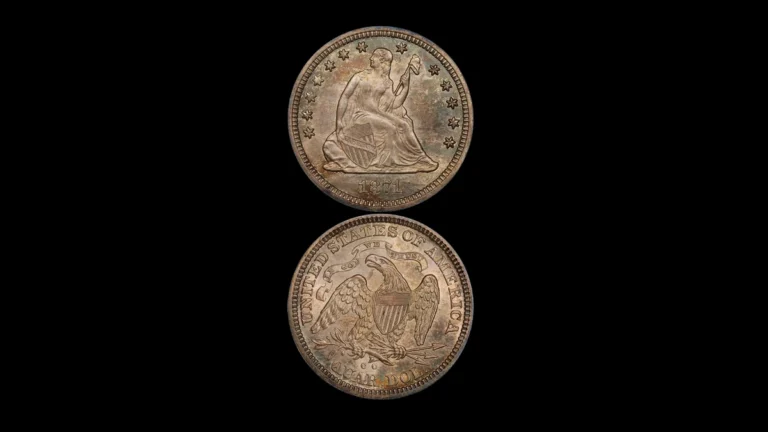
First confirm the portrait: these examples belong to the Capped Bust quarter, not the Seated Liberty design also made in 1838.
1. 1838 Quarter Extra Curves near Liberty’s Neck: Die Clash Error
Something seems out of place beside Liberty’s chin or throat, but the portrait itself sits normally on the coin. Faint parts of the eagle-side design can appear in this area after a die clash.
Dies are the steel tools that stamp the two faces of a coin. If they meet without a blank between them, they can mark each other and pass those marks onto later quarters.
The illustrated 1838 discovery includes traces near the chin, throat, and above the bust. Several tool collisions can produce several traces without the quarter itself being struck twice.
How to Identify
Find the normal edge of Liberty’s neck before looking for anything extra. A fold in the original design can look mysterious when viewed alone through a magnifier.
Use Steve Tompkins’s illustrated example to locate the additional curves. Look for a group of matching traces in the same places, rather than one convenient line.
A scratch usually cuts into the silver and may cross the design at any angle. A clash trace should make sense as a small transferred part of the opposite design.
What It’s Worth
$75–$2,000 is an estimated range for circulated examples with identifiable clash marks. That amount buys the entire old quarter, including its normal collector value.
Clear traces are easier to show to another collector than faint marks hidden by wear. Even so, an attractive lightly worn coin can be worth more than a heavily worn quarter with stronger clashes.
Cleaning and deep scratches affect the price too. Multiple faint traces do not automatically place a coin at the top of the range.
2. 1838 Quarter A Raised Line through the Olive Leaves: Die Crack Error
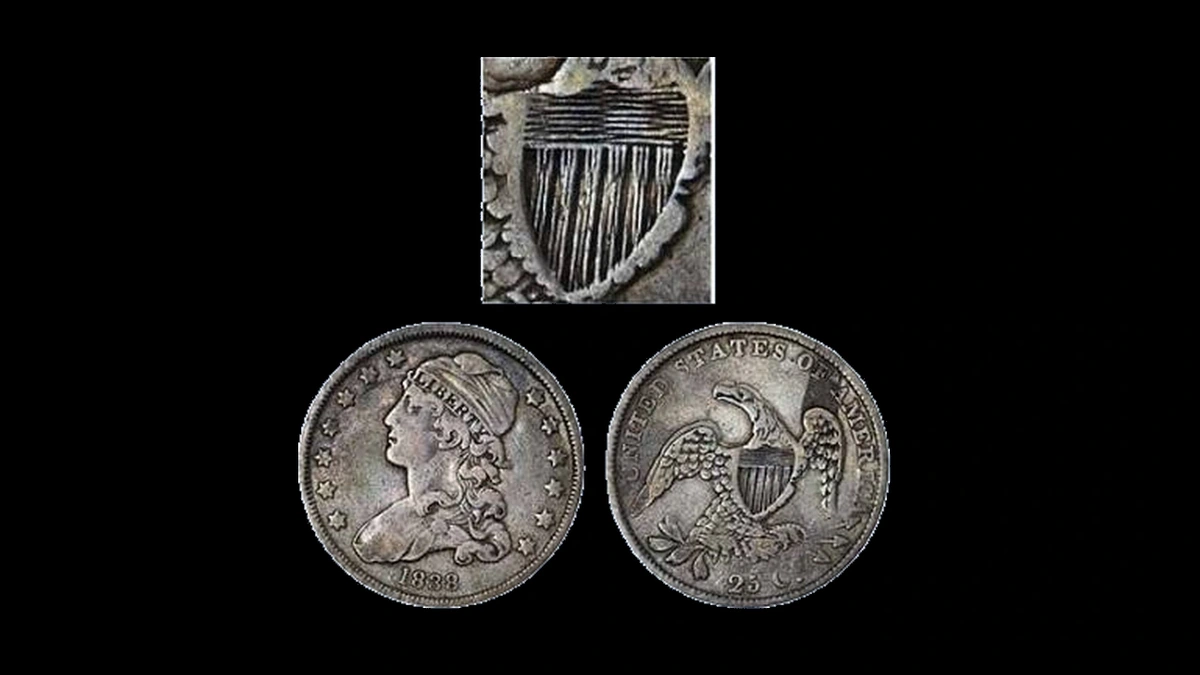
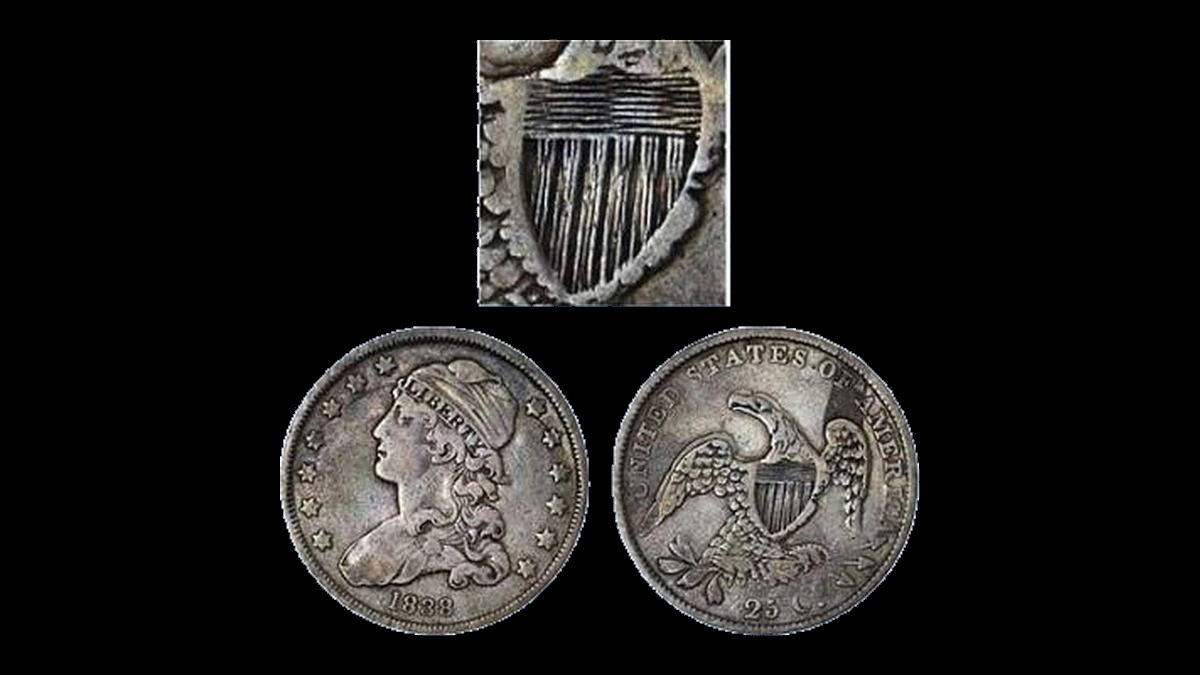
Turn the quarter over and follow the olive branch beside the eagle. One documented example has an extra line joining three outer pairs of leaves.
A crack opened in the reverse die, allowing silver to enter the gap during striking. The resulting line stands above the coin’s surface.
The auctioned PCGS MS64 quarter also had weak lower leaves. That soft detail is separate from the raised crack and should not be counted as another error.
How to Identify
Trace the ordinary stems first so you know which lines belong to the branch. Then follow the additional ridge between the three leaf pairs.
Light the coin from the side and move the light slowly. This helps separate a raised ridge from a dark scratch that sinks into the metal.
Match the complete path, including where it meets the leaves. Weak leaves alone do not prove that the die was cracked.
What It’s Worth
$50–$7,000 covers an estimated spread from worn examples to well-preserved unworn quarters. Most of the price can come from the condition of the coin rather than the crack.
The PCGS MS64 auction example reached $4,400 before fees in July 2025. MS64 means an unworn coin with relatively well-preserved surfaces.
That result gives a useful condition reference, but a worn quarter with the same line is a different purchase. A longer-looking crack does not make up for heavy wear or damaged surfaces.
3. 1838 Quarter A Blank Crescent below the Date: Off-Center Strike Error
On a striking 1838 example, the design has moved upward and left an empty curve below the date. The blank sat too far from the center when the dies came together.
PCGS graded this quarter VF25, meaning it has moderate circulation wear. Its design was struck about 20% off center toward the top of the front.
A nick below the date is also visible in the blank area. That later damage is not what created the empty crescent.
How to Identify
Compare the bottom and top of the front together. The unstruck metal below the date should go with design lost beyond the opposite edge.
Turn the coin over to check that both faces reflect the misplaced blank. If only one design is shifted, a misaligned die may explain it instead.
Examine the blank area’s outer edge for cutting or filing. A genuine off-center strike moves the design without removing a chunk of the original metal.
Keep the date readable in photographs, and separate the later nick from the broader striking pattern. The error should remain clear even when that small mark is ignored.
What It’s Worth
$1,000–$10,000 is an estimated range for circulated examples with a visible date. The amount of missing design, the coin’s surfaces, and its overall appearance all matter.
The 20% off-center VF25 sold for $4,140 on January 15, 2005. This is a recorded sale of that particular worn quarter, including its surface problems.
A clear year lets buyers connect the error to the 1838 issue. An unreadable date or serious damage can make a similar-looking piece less desirable.
4. 1838 Quarter Liberty and the Eagle Overlap: Flipover Double Strike Error
Seeing part of Liberty’s face on the eagle side calls for a closer look. A coin that turned over between strikes could receive the front design over its earlier back design.
A 2012 catalog describes an 1838 quarter with Liberty’s eye almost meeting the eagle’s eye. The overlap helps reveal how the two designs landed on the same face.
The catalog described this coin as VF20 and cleaned, and it was not in a third-party grading holder. Cleaning affects its condition but does not explain the overlapping designs.
How to Identify
Start around the eyes on the cataloged flipover example, then trace more of the extra portrait. One odd curve is not enough to establish a second strike.
Check the other face for details that fit the same turnover. Some earlier features may be flattened by the later blow, but the surviving parts should tell a consistent story.
Faint clash marks usually leave selected outlines rather than a substantial second design. Later pressure from another coin can leave sunken, reversed impressions, which need a different explanation.
What It’s Worth
$1,500–$15,000 is an estimated range for genuine circulated flipover double strikes. A recognizable portrait and eagle on the same face can make the error especially appealing.
The supplied 2012 description provides an example to study, not a recorded sale price. Its cleaning also makes it a different comparison from a coin with original surfaces.
Buyers need enough surviving detail to understand the second strike. Heavy damage can reduce that clarity as well as the coin’s value.
Conclusion
A useful inspection begins with the portrait and olive leaves, then widens to the placement of both designs. Small raised cracks, faint clash traces, and overlapping strikes each leave different evidence.
Keep the Capped Bust and Seated Liberty designs separate when comparing 1838 quarters. Within the estimated $50–$15,000 range, the complete coin’s condition matters alongside the kind of error it carries.