Rare 1841 Dollar Errors (List & Pictures)
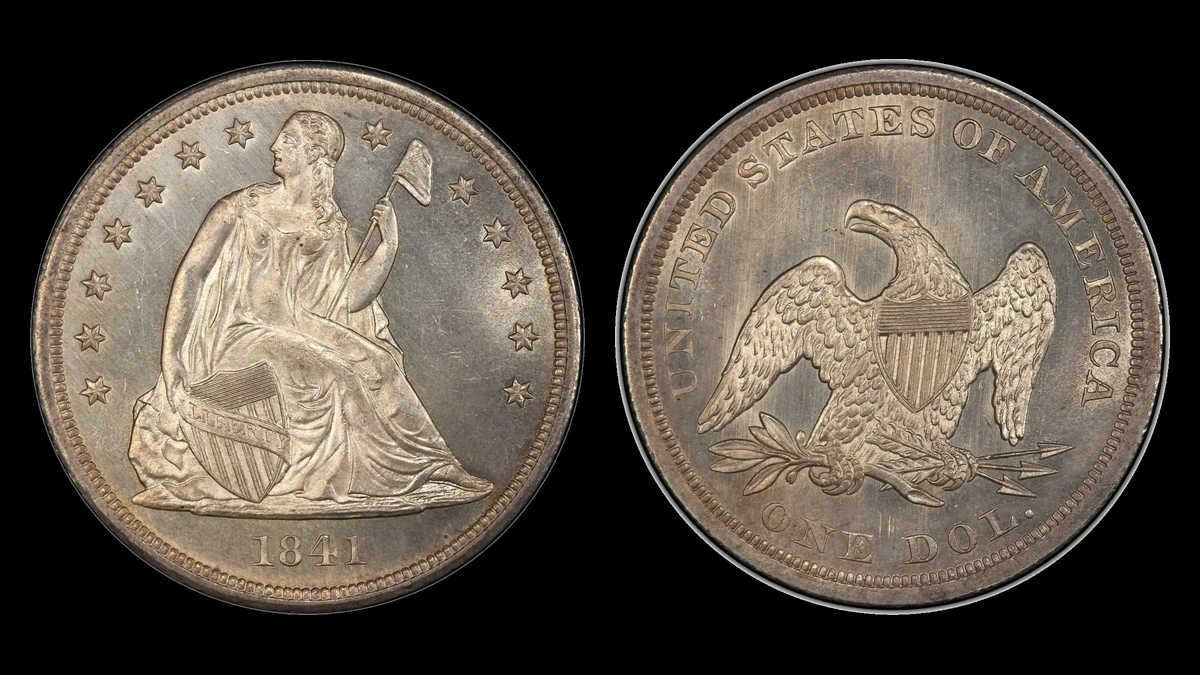
A published guide reports earlier punch traces on all four digits of an 1841 silver dollar. This 1841 dollar errors guide explains what that claim would need to show, with an estimated whole-coin range of $400–$20,000 for an authenticated ordinary-strike example.
A nearby-year 1843 repunched-date dollar sold for $13,200 in August 2025. That is a comparison for another date, not a documented sale of the reported 1841 feature.
1841 Dollar Extra Shapes around the Four Digits: Reported Repunched Date Error
A date punch can leave part of an earlier position in the die when it is applied again. The die then copies the surviving extra strokes onto coins during striking.
The supplied Seated dollar variety guide reports repeated detail on every digit of 1841. It does not identify an exact variety or specify whether the coin is an ordinary strike or a specially prepared proof.
Those limits matter when choosing a comparison. The report does not supply a fixed direction for the extra strokes, and it does not describe a different year beneath 1841.
How to Identify
Photograph the complete date first, then inspect each digit at the same scale. Keeping all four together reduces the risk of mistaking an isolated mark for part of another number.
Follow the straight strokes of the two 1s, the curves of the 8, and the main shape of the 4. An earlier punch trace should follow a numeral shape rather than form an unrelated nick.
Use side lighting to check whether the extra detail belongs to the raised struck design. A later scratch may cross the date without respecting the outlines of its digits.
Make sure the reference is an 1841 full-size dollar, not another denomination with the same date. Similar-looking numeral shapes on a different coin do not establish this reported feature.
A thick date alone is not enough to name the variety. Have all four digits and the coin’s finish examined together before assigning a specific identity.
What It’s Worth
$400–$20,000 is the estimate for an authenticated ordinary-strike example of the reported repeated date. It covers the entire scarce dollar across worn and attractive unworn conditions.
The supplied nearby-year comparison is an 1843 OC-1 repunched-date dollar graded MS64 that sold for $13,200 in August 2025. MS64 describes an unworn coin with relatively few marks.
That result does not establish either a transaction or an exact pattern for 1841. It shows how strongly preservation can influence an early silver dollar’s complete value.
A proof needs a separate valuation. Bright surfaces or one unusual date line cannot establish that specialized collector issue.
Conclusion
The useful question is whether each extra mark follows an earlier numeral shape and belongs to the original strike. Four thick digits or several scratches do not answer it.
Keep the reported 1841 feature separate from the identified 1843 price comparison. Full-date photographs and untouched surfaces give an examiner the evidence needed to move from a general report to a specific identification.