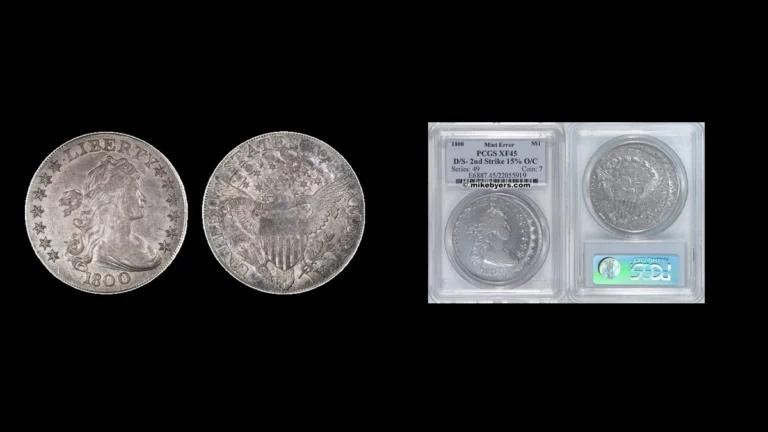
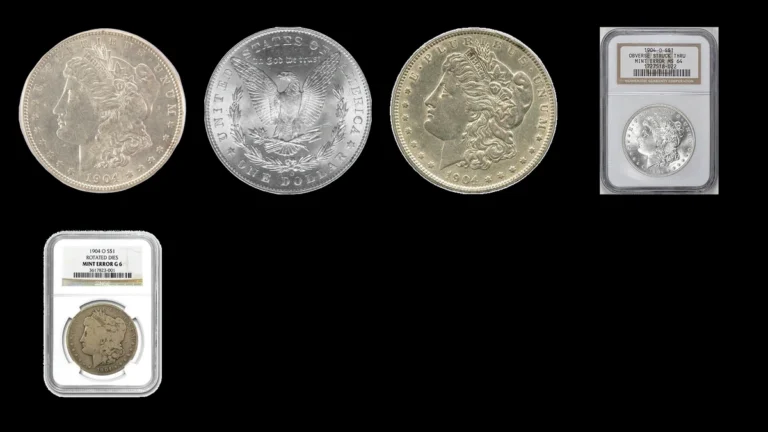
Rare 1796 Dollar Errors (List & Pictures)
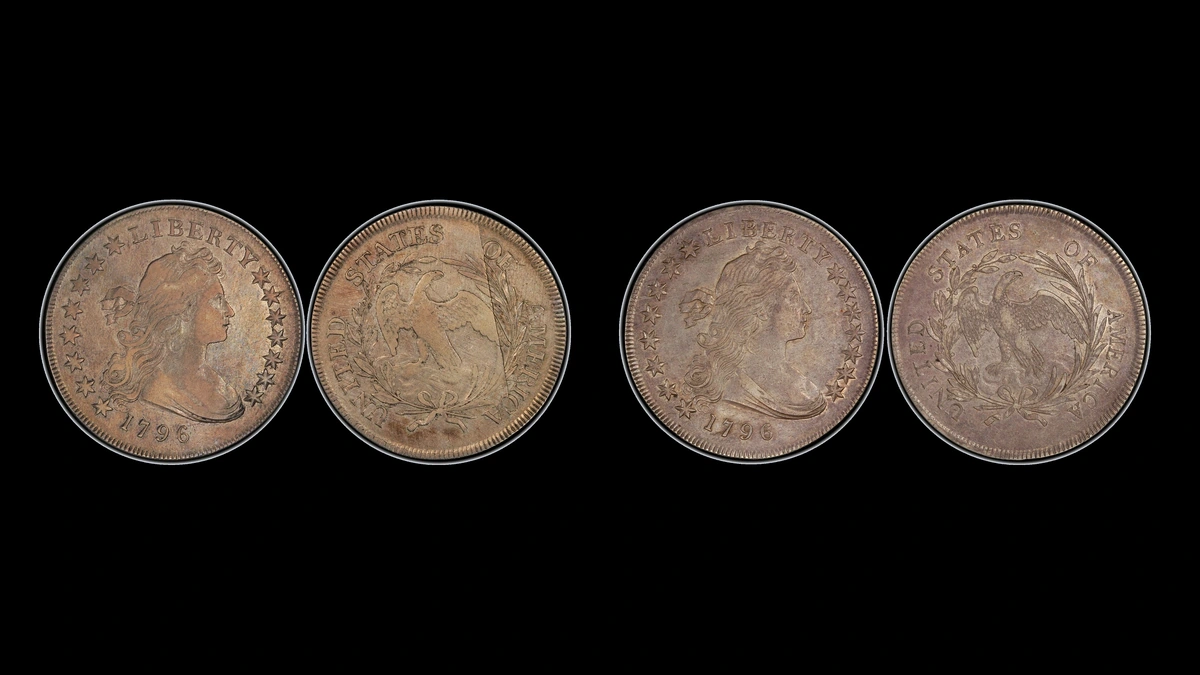
A small surface peel, a major raised crack, and an uneven border point to different production features. This 1796 dollar errors guide covers circulated examples with estimated whole-coin values of $3,500–$35,000.
An exceptional MS65 sold for $1,175,000 in April 2013 as a general condition rarity. That much higher result is not an error price for the three features below.
1. 1796 Dollar A Shallow Peel at the Left Reverse Edge: Lamination Error
A documented BB-65 has a short shallow flaw at nine o’clock on the reverse. A thin layer separated within the original silver, leaving most of the design clear.
Stack’s Bowers offered the NGC EF45 coin in 2014. Large Date and Small Letters identify its variety rather than another error.
How to Identify
Examine the left rim under side lighting for a thin layer boundary and shallow separation. Leave any attached metal alone.
A dent may push metal into a ridge, while corrosion can pit the surface. Match the date and letter sizes as well as the specific nine-o’clock location on the recorded coin.
What It’s Worth
$3,500–$20,000 is the estimate for circulated dollars with modest laminations. The peel does not automatically increase value.
A different BB-65 graded PCGS VG10 sold for $3,840 in December 2022. That heavily worn variety comparison is not the 2014 laminated specimen.
2. 1796 Dollar A Branching Ridge across a Weak Reverse: Major Die Crack Error
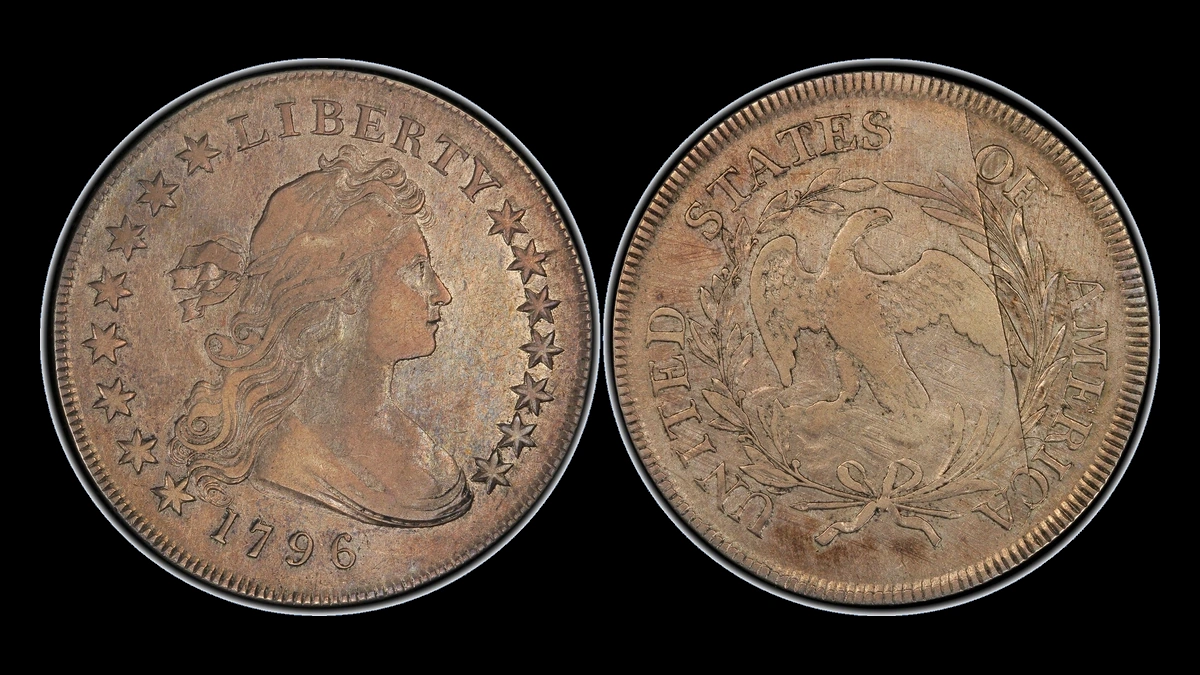
BB-64 dollars can have much weaker detail on one side of a major raised crack. The failed die did not press those areas fully, so the difference need not represent uneven circulation wear.
The main line runs from near one o’clock toward the lower rim, with a smaller branch from the wreath bow. Silver entering the cracks formed the raised paths.
How to Identify
Trace the main line past the left side of O in OF, through wreath and wing tip, across C in AMERICA, and down toward the rim. The bow branch crosses the foot of A and bottom of C.
Compare the weaker left side with sharper detail on the right. Front scratches remain a separate condition problem and do not explain the reverse’s original weakness.
What It’s Worth
$8,000–$30,000 is the working BB-64 range, with scarcity, remaining detail, and surface problems affecting the result. PCGS records a Genuine-labeled example at $13,800 in a Heritage sale on October 5, 2025.
Here, Genuine confirms authenticity without supplying a regular numerical grade. A cleaner coin can attract more interest than a repaired or scratched example with the same dramatic crack.
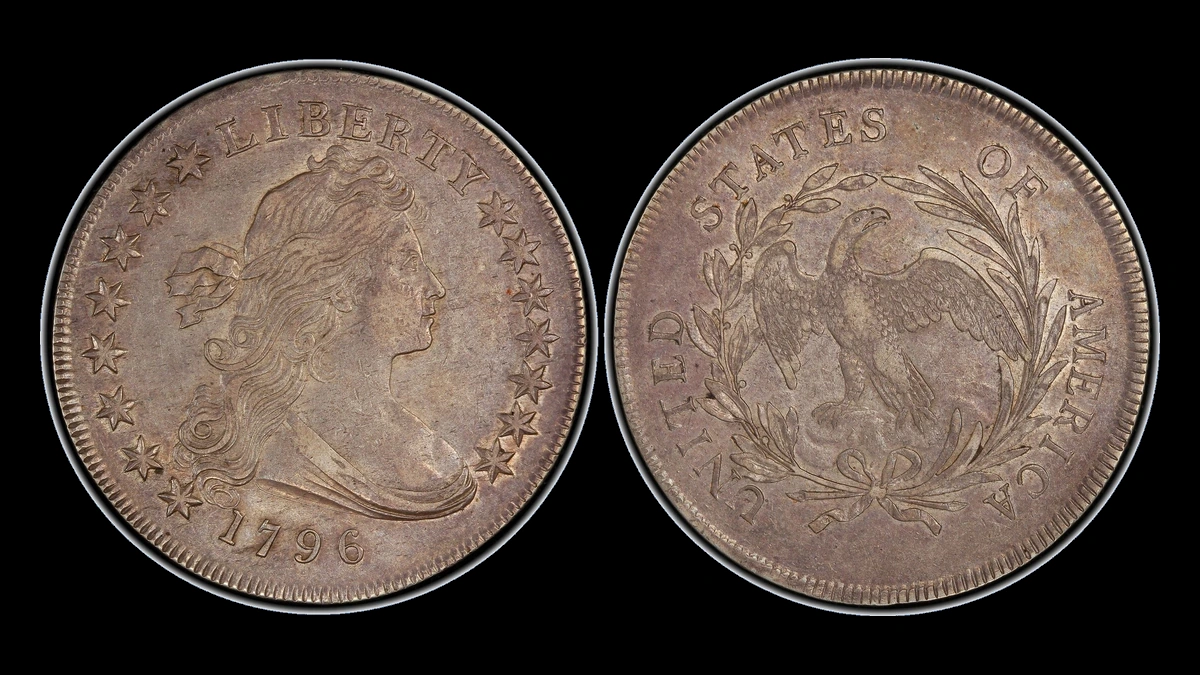
3. 1796 Dollar Unequal Borders on One Face: Misaligned Die Error
BB-63 descriptions include a narrow upper border and wider lower border on one face while the other remains centered. A die sitting slightly out of position can create that relationship.
Historical accounts also call some individual coins slightly off center. Comparing both faces helps separate one shifted tool from a misplaced blank affecting both designs.
How to Identify
Take straight-on photographs with the full edge visible and compare upper and lower border teeth. A tilted camera or cropped edge can imitate unequal centering.
If the opposite face stays centered, a single misaligned die is the more relevant comparison. The BB-63 descriptions cover several coins, so one specimen’s direction should not be assigned to all.
What It’s Worth
$4,000–$35,000 is the estimate for circulated BB-63 dollars with light displacement or uneven centering. A PCGS AU55 variety example brought $22,325 in August 2013 at Stack’s Bowers.
That is a whole-variety condition comparison, not a separately priced alignment error. Original surfaces and a clear eagle can matter more than a slight border shift.
Conclusion
Look for a thin layer at the rim, a connected raised crack network, or unequal borders on one face according to the feature present. A faint eagle alone does not prove heavy wear.
Keep the million-dollar MS65 condition rarity outside these circulated comparisons. The proper die variety, surfaces, and remaining detail provide a more useful basis for valuing the actual dollar.