Rare 1845 Penny Errors (List & Pictures)
Raised rim patches and peeling copper can occur on the same coin, but they have different causes. Among 1845 penny errors, those clues sit alongside missing sections, blocked details, and displaced strikes, with estimated whole-coin values of $25–$5,000.
A clipped 1852 large cent sold for $384 in June 2024, providing a different-year comparison rather than an 1845 record. Begin at the outline, then look for raised or sunken features and any separated copper layer.
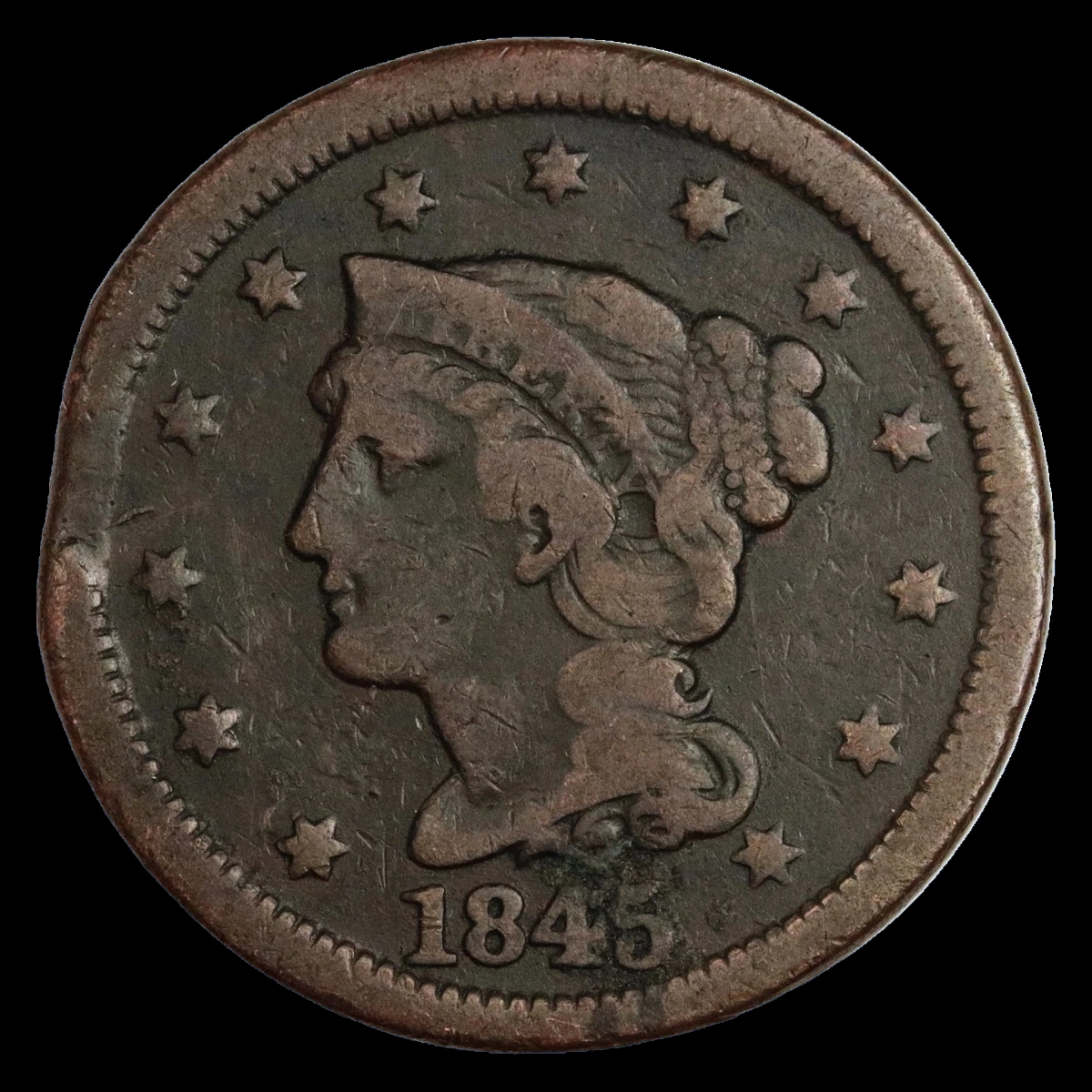
1. 1845 Penny Part of the Copper Disc Is Missing: Clipped Planchet Error
The reported small clip on an 1845 cent has no established percentage or clock position. Its defining claim is that part of the blank was missing before the design was struck.
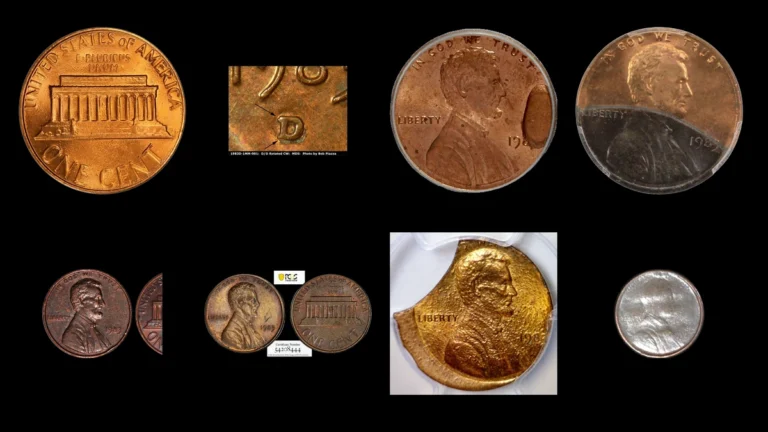
This can happen when the blanking punch overlaps an existing hole or the outer edge of the copper strip. Different positions can produce curved, straight, or irregular gaps, so the outline alone is not enough to authenticate one.
How to Identify
Examine the ends of the opening and the nearest letters under magnification. Filing lines, sharp burrs, or a cut passing through already completed lettering can point to later metal removal.
An ordinary 1845 large cent has a plain edge, weighs about 10.89 grams, and measures roughly 27.5 millimeters. Both a genuine clip and a later cut reduce weight, so use measurements to describe the coin rather than to decide the cause by themselves.
Weakness in the rim opposite the gap can support a clip attribution. It may not be obvious on every genuine example, especially after wear.
What It’s Worth
$40–$200 for worn clips and $200–$500 for cleaner, more clearly defined examples are the supplied estimates. The reported small 1845 clip was offered around $40, which is an asking price rather than a completed sale.
An 1852 clipped large cent graded NGC MS63 Brown sold for $384 in June 2024. That unworn, marked coin provides a nearby-year comparison, with its condition part of the price.
2. 1845 Penny Bare Metal Remains Beside a Displaced Design: Off-Center Strike Error
An off-center strike leaves part of the blank intact but without its intended design. The blank sat away from the dies’ center, causing the opposite part of the portrait and lettering to miss the copper.
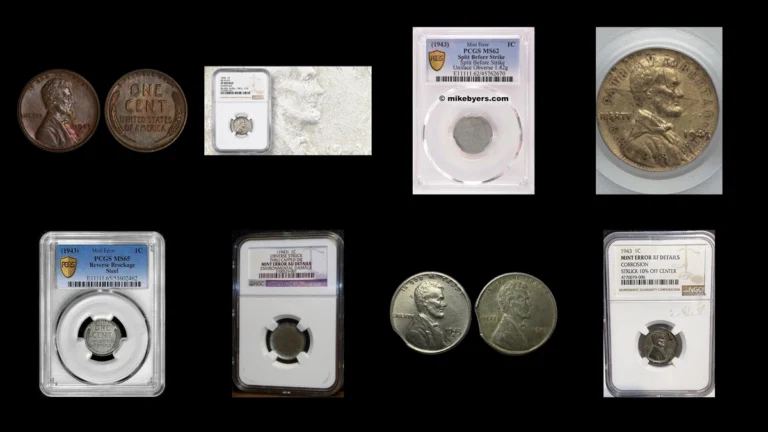
An older Heritage catalog describes an 1845 cent struck 10% off center in Fine 12 condition with corrosion. The displaced strike formed at the Mint; the corrosion is a separate condition problem.
How to Identify
Find the boundary between the struck design and bare copper, then compare the corresponding position on the other face. A similarly misplaced design on both faces supports movement of the blank, while a shift limited to one face may involve a die instead.
Check the bare area for grinding lines or faint flattened details. A misplaced blow does not normally remove a substantial amount of copper, so major weight loss needs another explanation, including corrosion or cutting.
Record how much of the date remains legible. A larger unstruck area may be dramatic, but it can also remove the numerals needed to identify the year.
What It’s Worth
$150–$1,000 for worn examples and $1,000–$5,000 for stronger pieces with good surfaces and a clear date are the supplied estimates. No realized price is supplied for the corroded Fine 12 coin.
Compare the original surfaces as well as the displacement. Corrosion can obscure how the metal met the dies, and later trimming changes the shape collectors are trying to examine.
3. 1845 Penny Long Raised Patches Touch the Rim: Die Cracks and Cuds Error
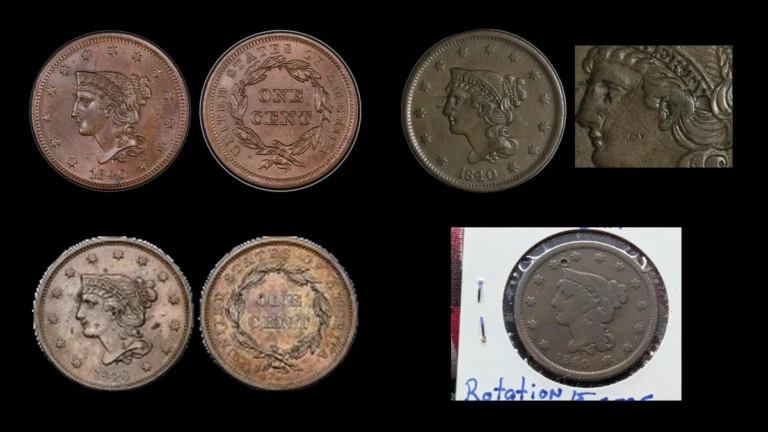
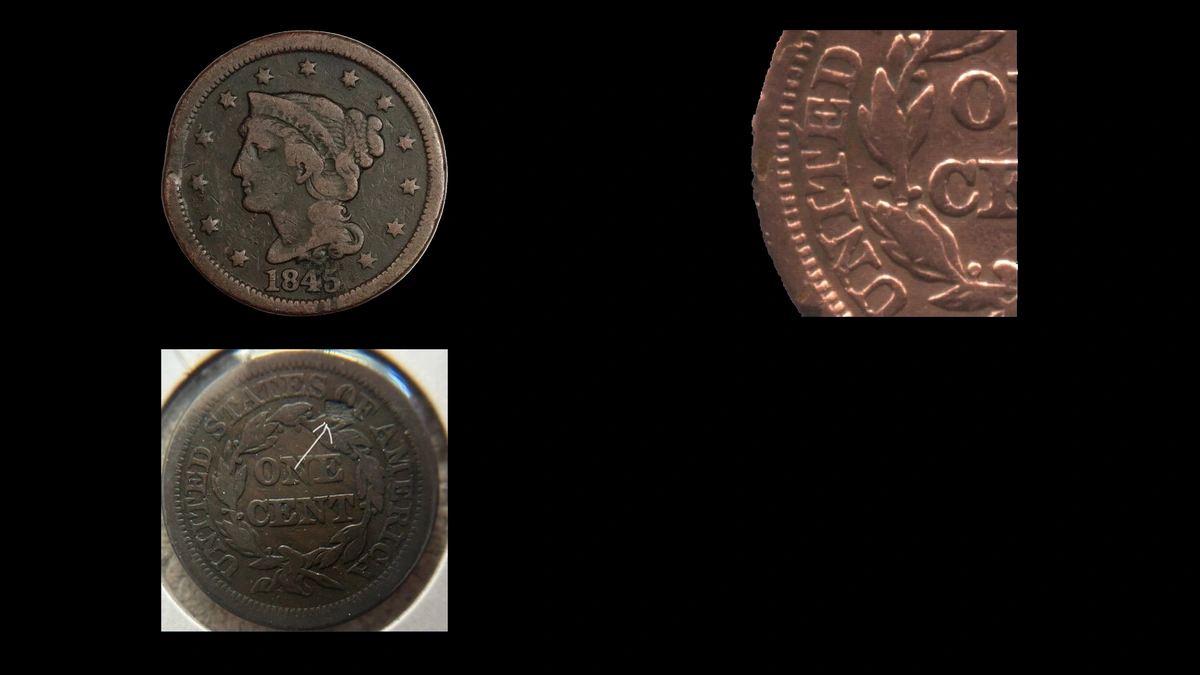
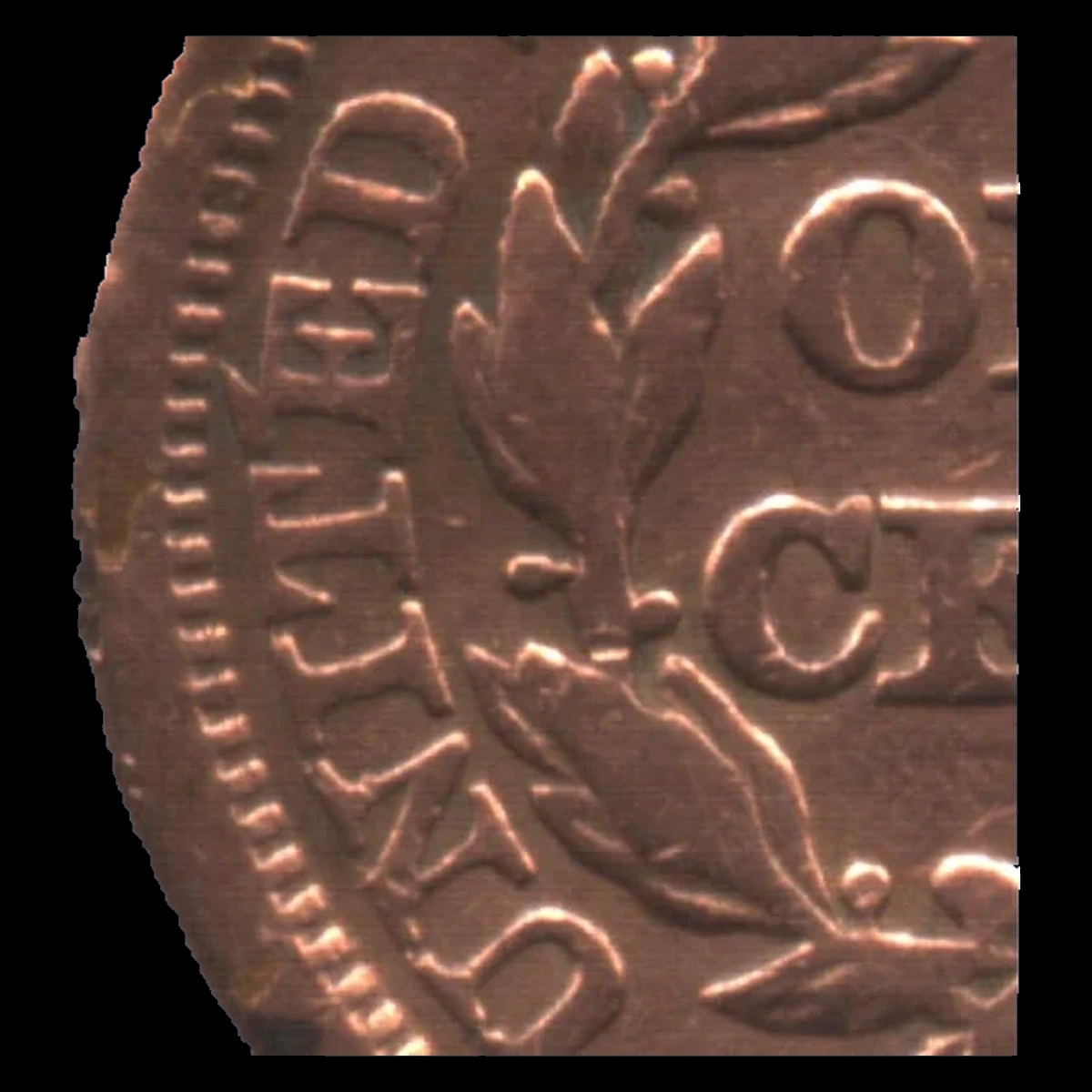
The N-13 variety provides a particularly visible example of damaged dies. One raised patch runs clockwise from right of the twelfth front star toward a point below the third, while another lies between CA in AMERICA and the wreath’s stem tip on the reverse.
A missing piece at a die’s edge allows copper to rise into the opening, creating a rim-connected patch called a cud. Narrower cracks in the die leave raised lines instead.
How to Identify
With Liberty upright, count stars from the lower left and trace the front patch around the lower border. Then locate the separate reverse patch using CA and the stem tip rather than treating any raised rim area as the same feature.
A different variety, N-10, has a slightly raised retained break above E in UNITED. A retained break forms when the damaged die section remains in place, and its location must not be transferred to N-13.
Look along the adjacent plain edge for impact damage that could have pushed copper upward. Side lighting should help separate original raised features from a dent and its displaced metal.
What It’s Worth
$25–$200 for modest cracks and $150–$2,000 for pronounced rim breaks are estimated whole-coin ranges. The N-13 auction description supplied an estimate starting at $400, not a reported selling price.
That same worn coin also has the fine lamination described next. Its combined features belong to one object and should not be priced by adding two complete error ranges.
4. 1845 Penny A Thin Separation Follows the Reverse Lettering: Lamination Error
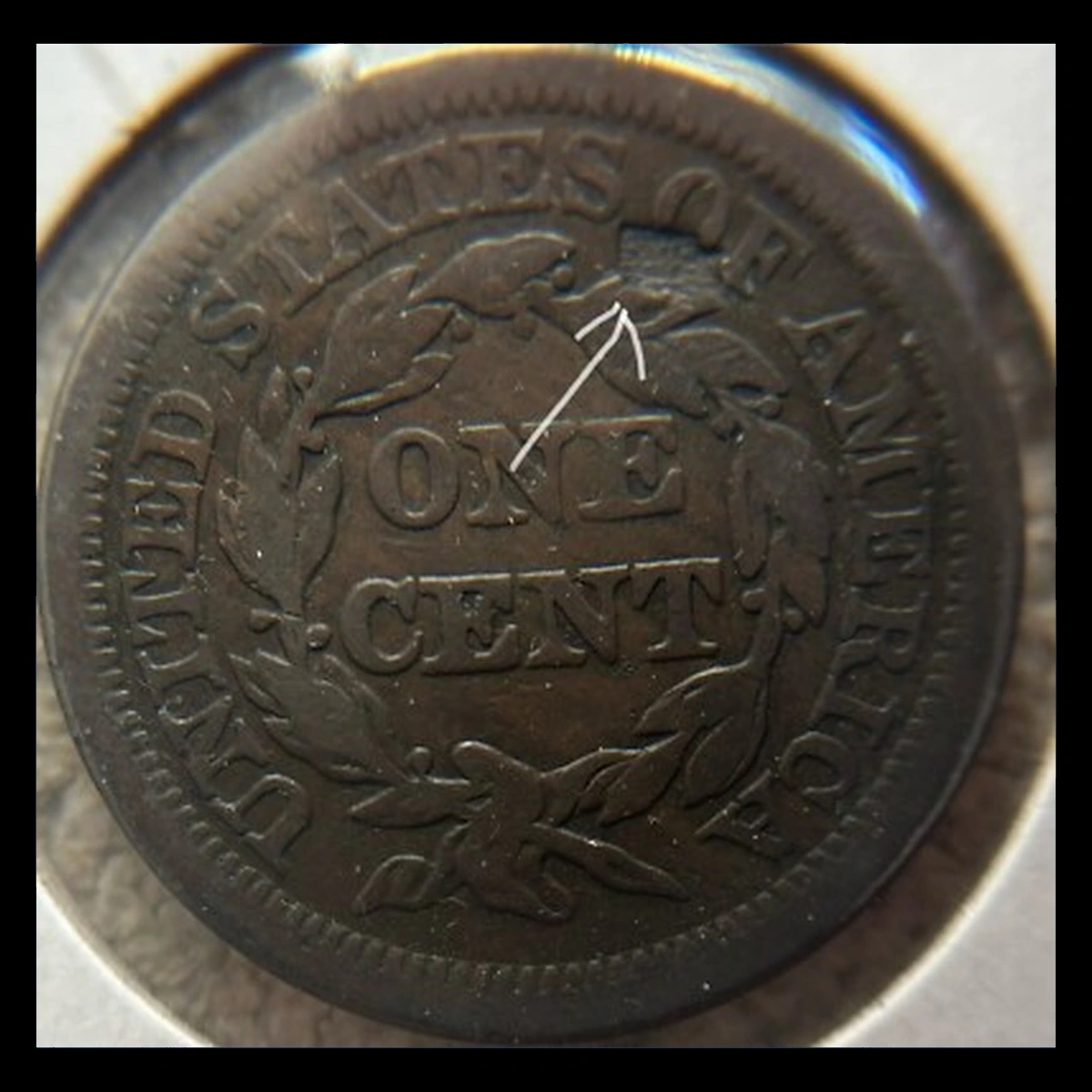
On the recorded N-13, a fine copper separation follows the bottom of S-OF-A on the reverse. The catalog describes it as present when the cent was struck.
This is a flaw in the copper itself: a weak layer separated within the blank. It differs from the coin’s raised rim breaks, which came from missing steel in the dies.
How to Identify
Find OF and the neighboring S and A, then use low-angle light to inspect their lower edges. A thin boundary, lifting sheet, or opening within the copper supports lamination more than an unexplained dark line does.
Do not scrape the line or lift a flap to investigate it. A local separation can be very small and need not produce a measurable loss of weight or indicate that the entire blank split into two discs.
What It’s Worth
$40–$300 for worn cents with a clear local lamination and $300–$1,000 for attractive examples with stronger detail are the supplied estimates. The recorded N-13 was described as VF25, with moderate wear, smooth surfaces, and minor marks.
Its catalog estimate began at $400 for the combination of peeling and rim breaks. That figure does not establish a lamination-only premium or a completed sale.
5. 1845 Penny A Local Hollow Interrupts the Design: Struck Through Error
Material caught between a blank and die can keep part of the design from forming. A firm, thin obstruction may leave a narrow impression, while softer material may produce a less distinct weak area.
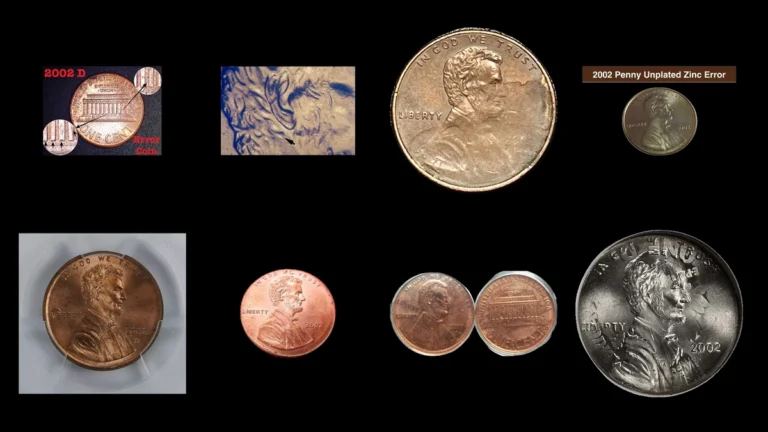
The struck-through category is reported for 1845 cents without identifying a particular object. Wire, cloth, or another material should be named only when the actual impression supports it.
How to Identify
Compare the hollow with nearby hair, stars, or letters that should have experienced similar wear. A localized interruption beside sharp details is more informative than general softness across the whole coin.
Trace the boundary for a cutting path, raised lip, or evidence of squeezing. Those features may indicate later damage rather than an obstruction present during striking.
If material remains attached, leave it where it is and photograph the contact area from the face and side. Removing it could destroy the evidence needed to explain the impression.
What It’s Worth
$50–$250 for an authenticated feature on a worn cent and $250–$750 for a dramatic impression with attractive surrounding detail are estimated whole-coin values. No sale of an identified 1845 struck-through object is supplied.
A clear outline is easier to assess than a vague weak patch. Ordinary wear and scraping do not become mint errors simply because they interrupt the design.
Conclusion
The useful question for an unusual 1845 cent is where the feature began: in the blank, in a damaged die, or during the strike. The N-13 example demonstrates how several answers can apply to one coin.
Describe each feature separately while keeping the coin’s condition and value together. Complete photographs and gentle side lighting can preserve the evidence far better than cleaning, scraping, or moving loose copper.