Rare 2012 Nickel Errors (List & Pictures)
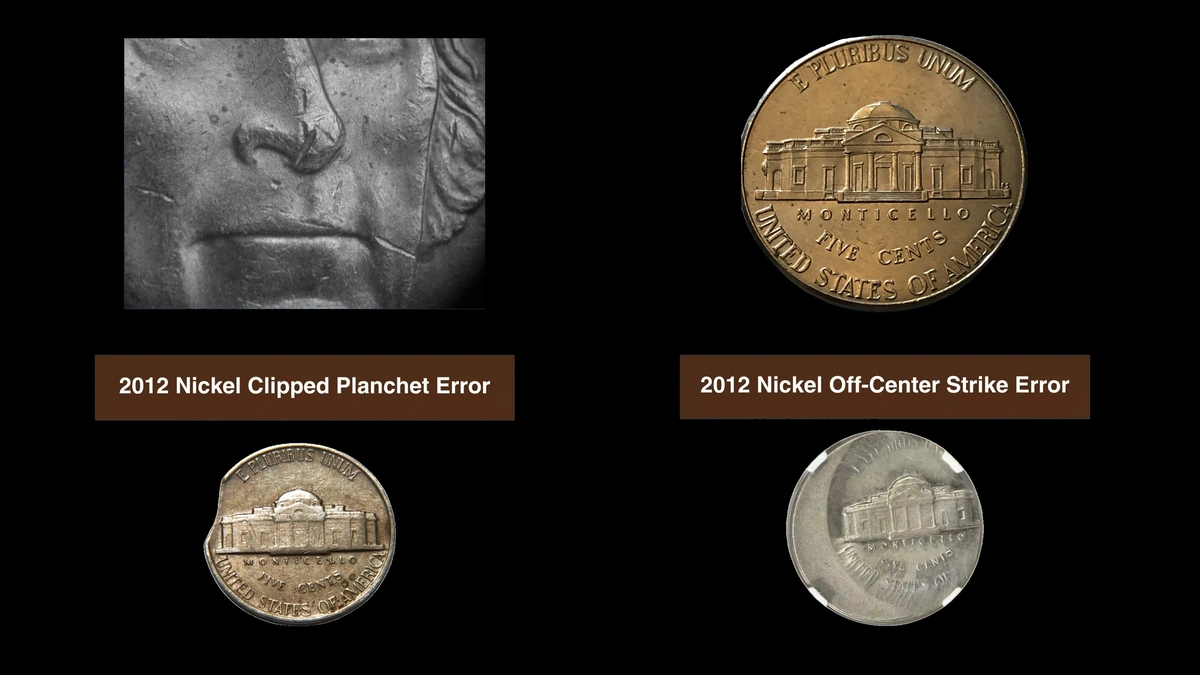
On a 2012 nickel, extra detail near the nose and a bridge between letters need different explanations. This guide to 2012 nickel errors separates die-made additions from blocked detail, unusual color and changes to the coin’s outline.
Estimated values span $3–$400. A different-year comparison, a 1997-P nickel with a 20% curved clip, sold for $124 in March 2025.
Begin with the exact shape and mintmark, then use both faces and the edge to test the proposed error.
| Where to look | Possible error | Estimated range |
|---|---|---|
| Nose or central doorway | Doubled die | $5–$125 |
| Between letters or near the building | Die chip or crack | $3–$60 |
| Open areas around the design | Die clash | $5–$75 |
| A local depression or missing detail | Struck through | $10–$200 |
| Unusual reverse color | Improper annealing | $30–$350 |
| An incomplete edge | Clipped planchet | $15–$150 |
| Expanded outline and full design | Broadstrike | $40–$300 |
| Bare area and partly missing design | Off-center strike | $30–$400 |
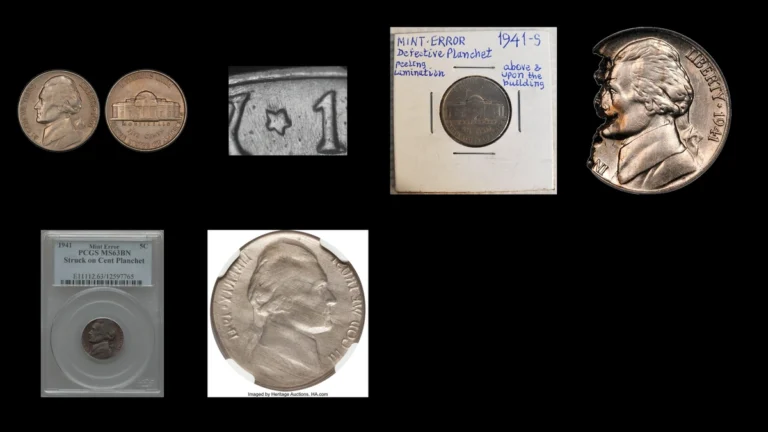
1. 2012 Nickel Extra Nose or Doorway Detail: Doubled Die Error
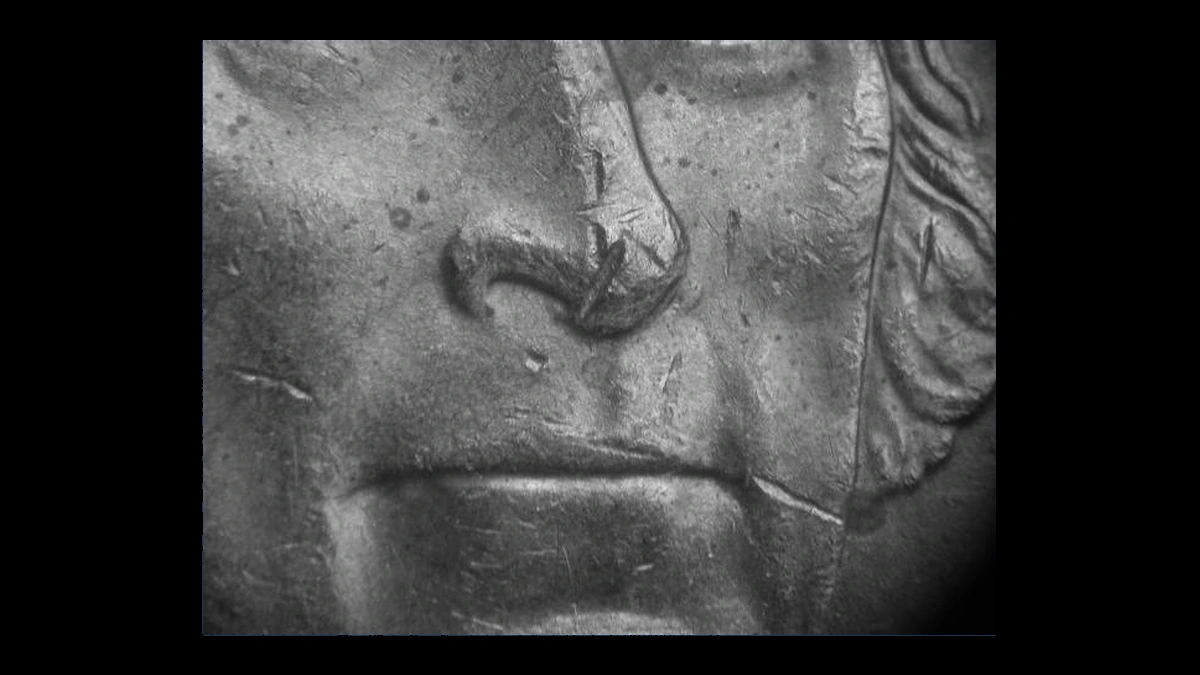
Separate Philadelphia varieties add detail at the lower or right side of Jefferson’s nose, or beneath parts of Monticello’s central doorway and the triangle above it. These additions originated in the dies used to strike the coins.
One listed P combination has doubling on both faces. Denver front-side doubling is also reported, but it cannot be identified using the Philadelphia nose positions alone.
How to Identify
The 2012-P variety listings provide patterns to compare at the actual affected location. Keep a lower-nose addition separate from a right-side addition, and check the mintmark before using either.
At the building, determine whether the extra shape belongs below the upper doorway frame or another listed architectural feature. A random raised dot elsewhere may be a chip rather than doubling.
A doubled die can produce its extra detail in one blow. Flat mechanical shelves, reflections and ordinary nose contours do not establish the same process.
What It’s Worth
$5–$125 is an estimated range for correctly matched doubled designs of this year. Clear added detail on an unworn surface provides a stronger comparison than a faint shape obscured by wear.
The evidence does not assign a completed sale to each listed variety. A coin with both faces affected still receives one whole-coin valuation.
2. 2012 Nickel A Letter Bridge, Bump or Raised Line: Die Chip and Crack Error
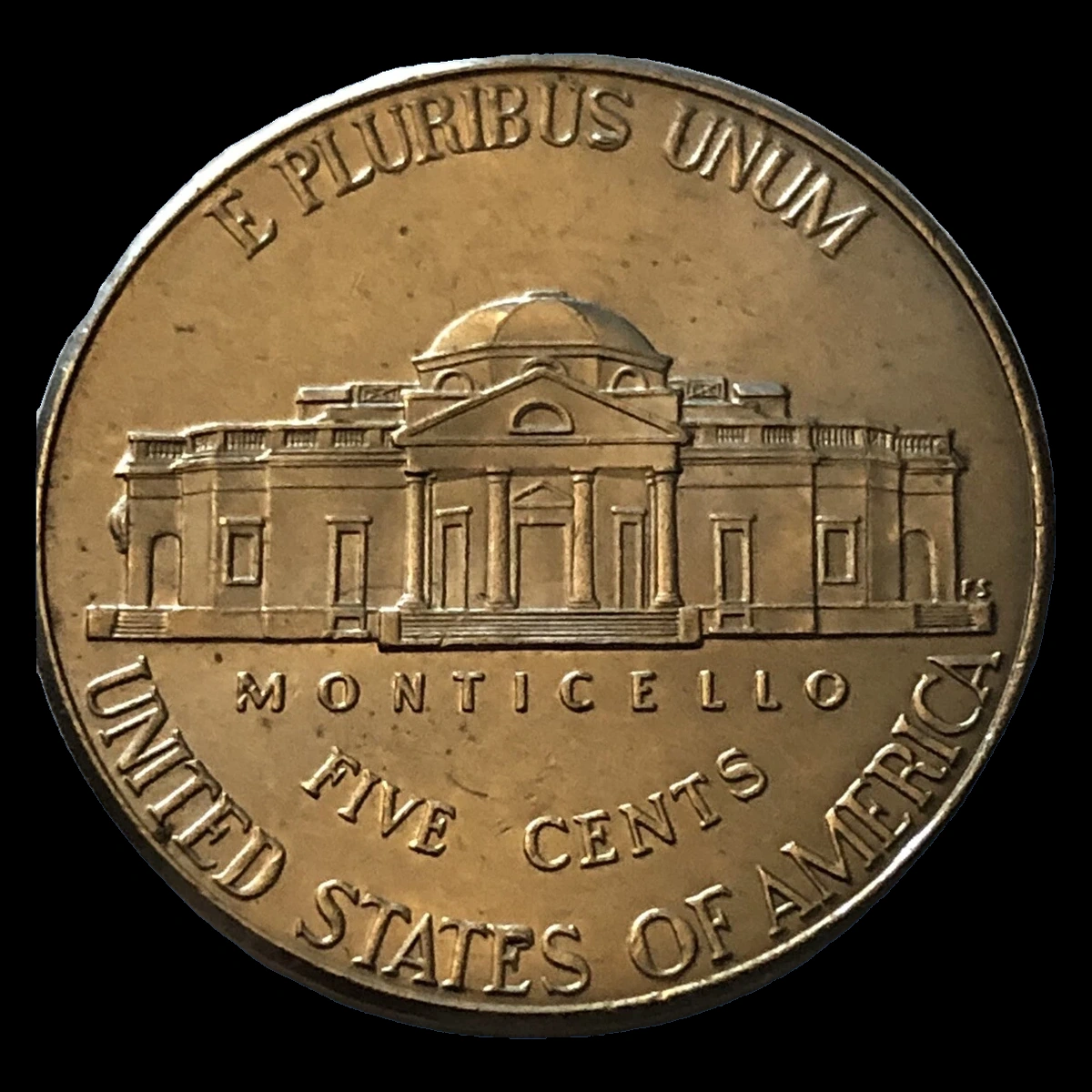
A listed 2012-P has extra metal between the E and R of LIBERTY, with other Philadelphia chip reports near Monticello or PLURIBUS. Small areas missing from the die let coin metal rise into shapes that should not normally be there.
A separate Denver report concerns a larger crack. A crack produces a raised line rather than the broader patch associated with a chip.
How to Identify
For the E-to-R feature, compare the normal gap with the proposed metal bridge and distinguish it from dirt lodged between the letters. Do not scrape the area to perform that comparison.
Trace a suspected crack under side lighting to see whether its center rises above the surface. A scratch cuts inward, sometimes leaving displaced ridges along its sides.
Each position needs its own matching specimen. The Denver crack report does not place the Philadelphia letter bridge on Denver coins.
What It’s Worth
$3–$60 is a working estimate for small genuine chips and cracks. An obvious bridge or raised line usually communicates the error better than a tiny isolated speck.
These figures cover the whole nickel, not a separate charge for every small mark. Clean surrounding detail can matter as much as the number of visible defects.
3. 2012 Nickel Fragments from the Opposite Face: Die Clash Error
Unexpected fragments around Jefferson or Monticello may record contact between the two dies without a blank in the press. That contact transfers portions of each design to the opposing tool, which can then pass them to later coins.
How to Identify
Find a specific part of the opposite design that accounts for the suspected fragment’s shape and placement. A random line near the building is not enough merely because clashes are reported for 2012.
Photograph both faces and inspect the edge for later pressure damage. A dramatic clash from another year can explain the process without establishing the exact marks on this date.
What It’s Worth
$5–$75 is the estimated range for ordinary recognizable 2012 clash marks. The clearer the transferred design, the easier it is to demonstrate why the mark belongs to this category.
No specific 2012 auction result is supplied. Faint traces on a worn surface should not be compared with unrelated spectacular mint errors.
4. 2012 Nickel An Interrupted Area of Design: Struck Through Error
The reported 2012-D struck-through category concerns material caught between a die and the blank. It may leave a depression, texture or weak patch where direct contact was blocked.
The source does not establish the obstructing material. Grease, wire and cloth can create different effects, so none should be named simply from a general illustration.
How to Identify
Compare sharp surrounding design with the interrupted area and follow its boundary. General wear also smooths exposed high points, while a later gouge can leave scraped metal or a displaced lip.
Confirm the date and D mintmark, and leave any retained material untouched. Weak building detail alone does not demonstrate an obstruction during striking.
What It’s Worth
$10–$200 is an estimated range for genuine Denver struck-through errors. A well-defined interruption offers a clearer comparison than slightly soft lettering.
A 2000-D nickel struck beneath a coin stuck to a die sold for $84 in September 2025. Its different obstruction supplies broad context rather than an exact match to the unresolved 2012 material.
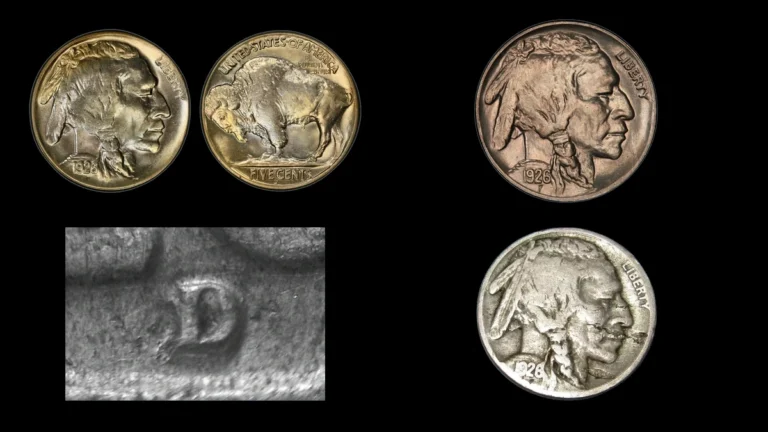
5. 2012 Nickel Abnormal Color on the Building Side: Improper Annealing Error
The Denver annealing report concerns unusual reverse color. Annealing heats a blank to soften it before striking, and abnormal conditions during that stage can alter its surface.
How to Identify
Record the reverse under neutral light, then compare the portrait side and edge to show the extent of the change. Pitting, residue or other surface damage may instead point toward exposure after minting.
A nickel contains copper-nickel alloy throughout, so this is not a missing nickel coating. Neither a rainbow pattern nor a dark patch proves improper annealing without a convincing surface assessment.
What It’s Worth
$30–$350 is a conditional estimate for an authenticated 2012-D annealing error. Later chemical or heat alteration does not qualify simply because its color resembles a mint-made effect.
A 2005-D Bison nickel described as improperly annealed sold for $119 in December 2022. That different-year and different-design example is a comparison, not a price record for 2012.
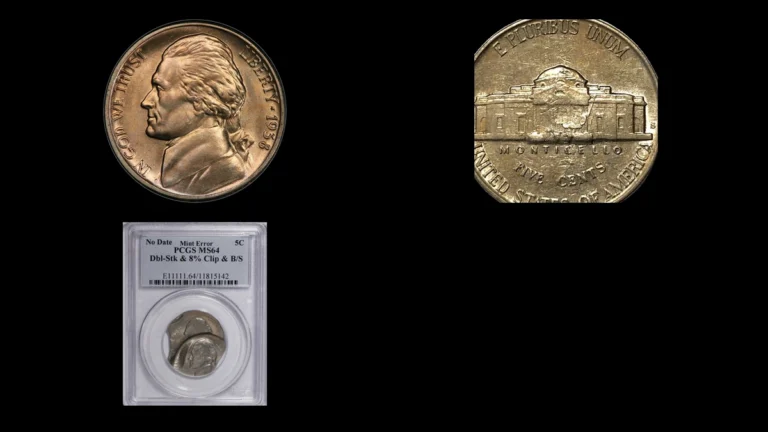
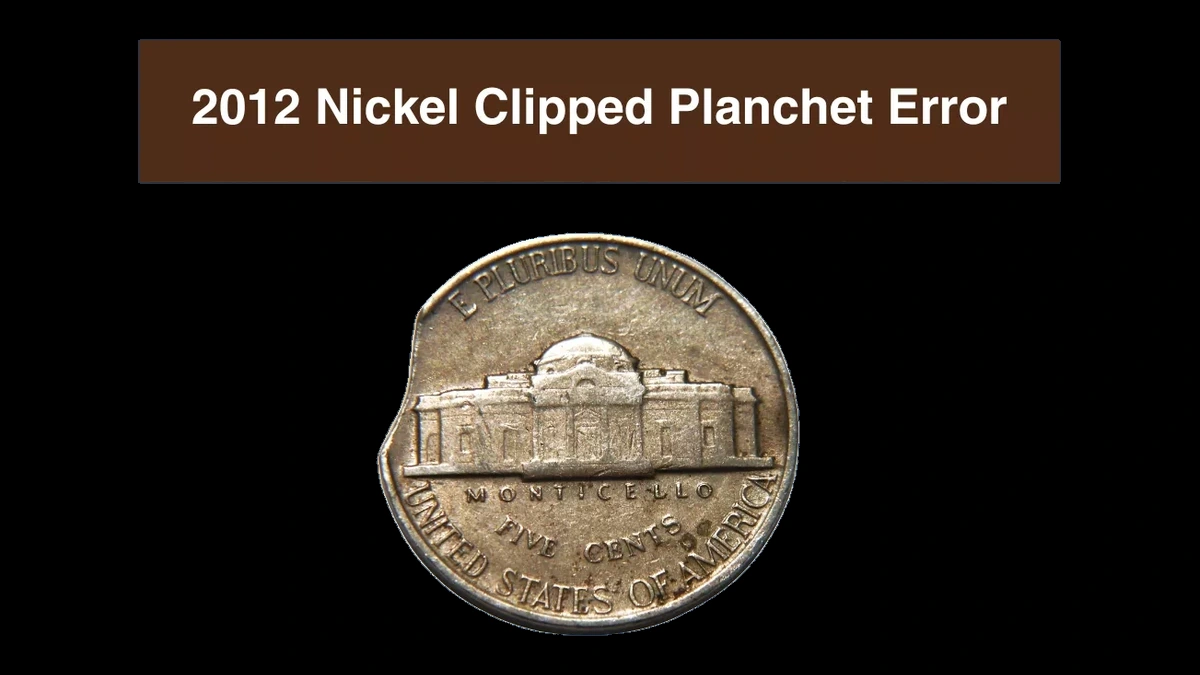
6. 2012 Nickel Part of the Blank Is Missing: Clipped Planchet Error
A clipped blank received its incomplete shape before it was struck into a nickel. A blank-cutting punch can overlap a prior hole or the strip’s edge, leaving a curved, straight or otherwise incomplete boundary.
The 2012 reports do not establish one size or outline for every specimen. Each gap has to be examined in relation to the surrounding struck surface.
How to Identify
Look at both ends of the opening for metal shaped during striking, rather than sharp sawing ridges or repeated file strokes. Weakness opposite the clip can provide support but is not visible on every genuine example.
For loose coins, normal nickel references are 5.00 grams and 21.21 millimeters, with a plain edge. A low weight can support missing blank metal, but later filing also reduces weight and must be ruled out.
What It’s Worth
$15–$150 is an estimate for genuine 2012 clips. The clarity of the gap, readable identifying detail and surface quality influence the comparison.
A 1997-P nickel with a 20% curved clip realized $124 in March 2025. Its large opening should not supply a percentage for an unspecified 2012 example.
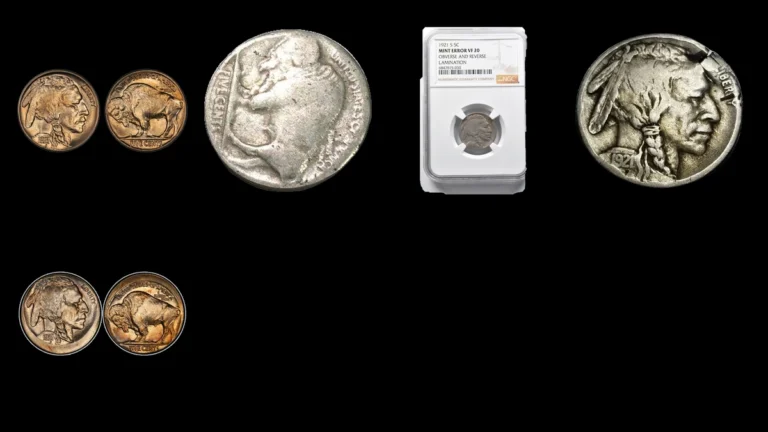
7. 2012 Nickel The Coin Expands but Keeps Its Design: Broadstrike Error
A reported 2012-P broadstrike spread beyond the normal outline because the collar did not contain it properly. The intended design remains complete inside the expanded metal.
How to Identify
Compare the full outline and several diameters with an ordinary nickel. A wide border on one side can result from misalignment without establishing overall expansion.
Check both faces for complete design and examine the expanded area for natural flow. Hammer marks, folds and flattened finished lettering may reveal later widening.
What It’s Worth
$40–$300 is an estimated range for genuine Philadelphia broadstrikes. Strong expansion and attractive surfaces support better comparisons than minor spreading accompanied by damage.
A 1999-P broadstrike graded PCGS MS63 sold for $89 in March 2025. Its unworn grade still allows noticeable marks, and it is not a documented sale of the reported 2012-P.
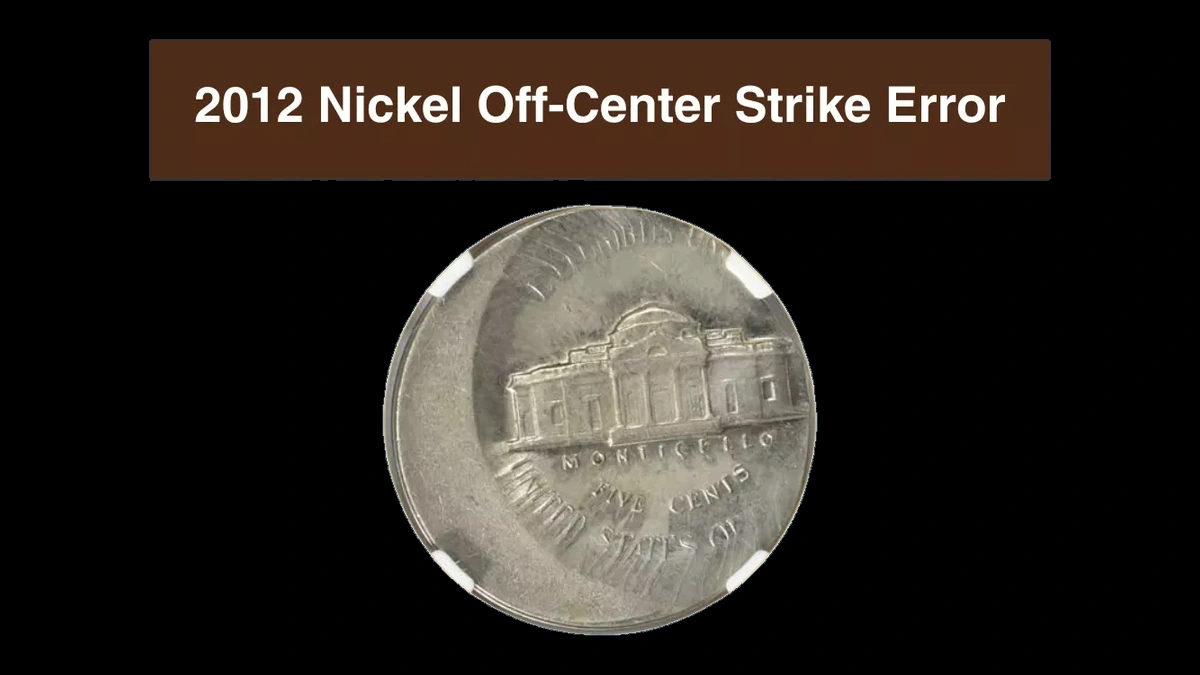
8. 2012 Nickel A Blank Area beside Displaced Design: Off-Center Strike Error
The year guide describes a 2012-D example as 35% off center. Its blank sat partly outside the dies’ striking area, leaving some design beyond the metal and some metal untouched.
How to Identify
Check which date digits and mintmark actually remain, then compare both faces using the same physical edge for orientation. A readable date does not establish Denver if the mintmark was lost.
The bare area should contain original unstruck surface rather than flattened letters. A single shifted face can reflect die misalignment, so the two-face relationship matters.
What It’s Worth
$30–$400 is an estimate for genuine 2012 off-center nickels. A dramatic shift with a clear date can be appealing, while loss of identifying detail or surface damage may weaken the comparison.
A 1999-P example described as 15% off center brought $64 in March 2025. It is a smaller, different-year error and does not establish a transaction price for the reported 35% Denver coin.
Conclusion
Match the actual addition, opening or displaced design before applying an error name. Philadelphia nose doubling, a Denver struck-through report and a missing piece of blank metal cannot be identified with the same close-up.
Keep the date, mintmark and complete outline in the record alongside the feature itself. Clear evidence and preserved surfaces make a stronger comparison than a seller’s percentage, material guess or unusually high asking price.