Rare 1845 Quarter Errors (List & Pictures)
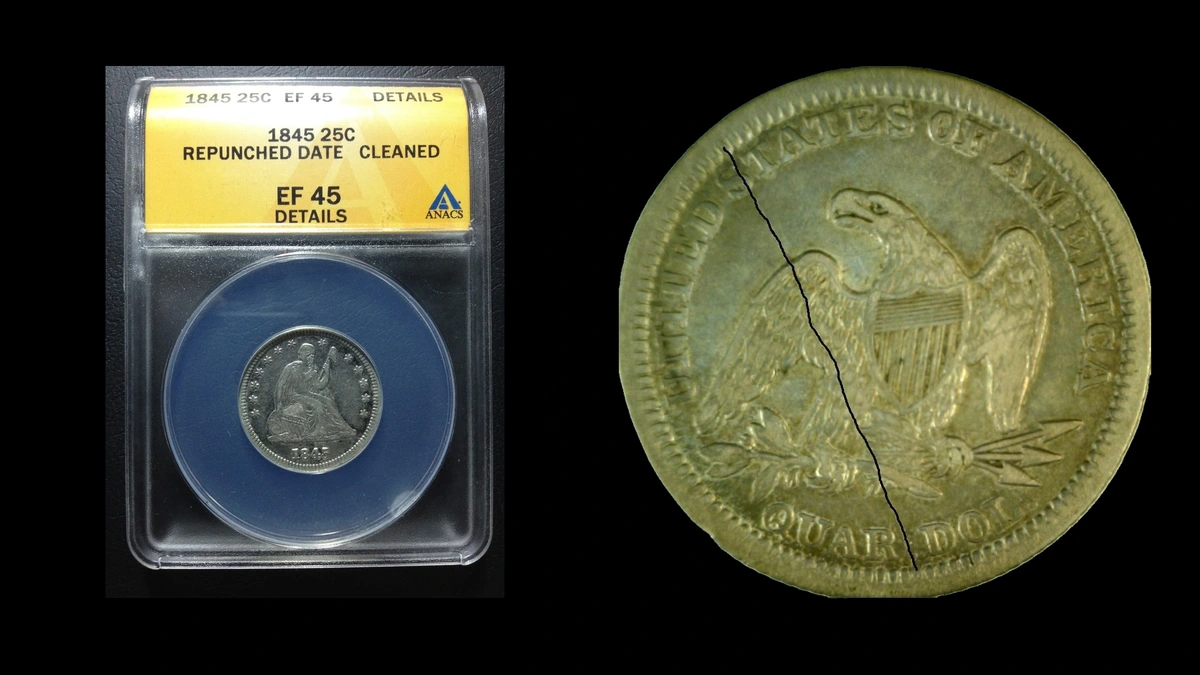
The top of the final 5 and the eagle’s shield provide useful landmarks for 1845 quarter errors. One leads to repeated date strokes, while the other helps identify a reverse die with a conspicuous crossing crack.
Estimated whole-coin values span $50–$5,000. An NGC MS64 repunched-date example realized $3,290 on June 5, 2013; compare the small numeral remnants and the long raised ridge separately before selecting a condition-based price.
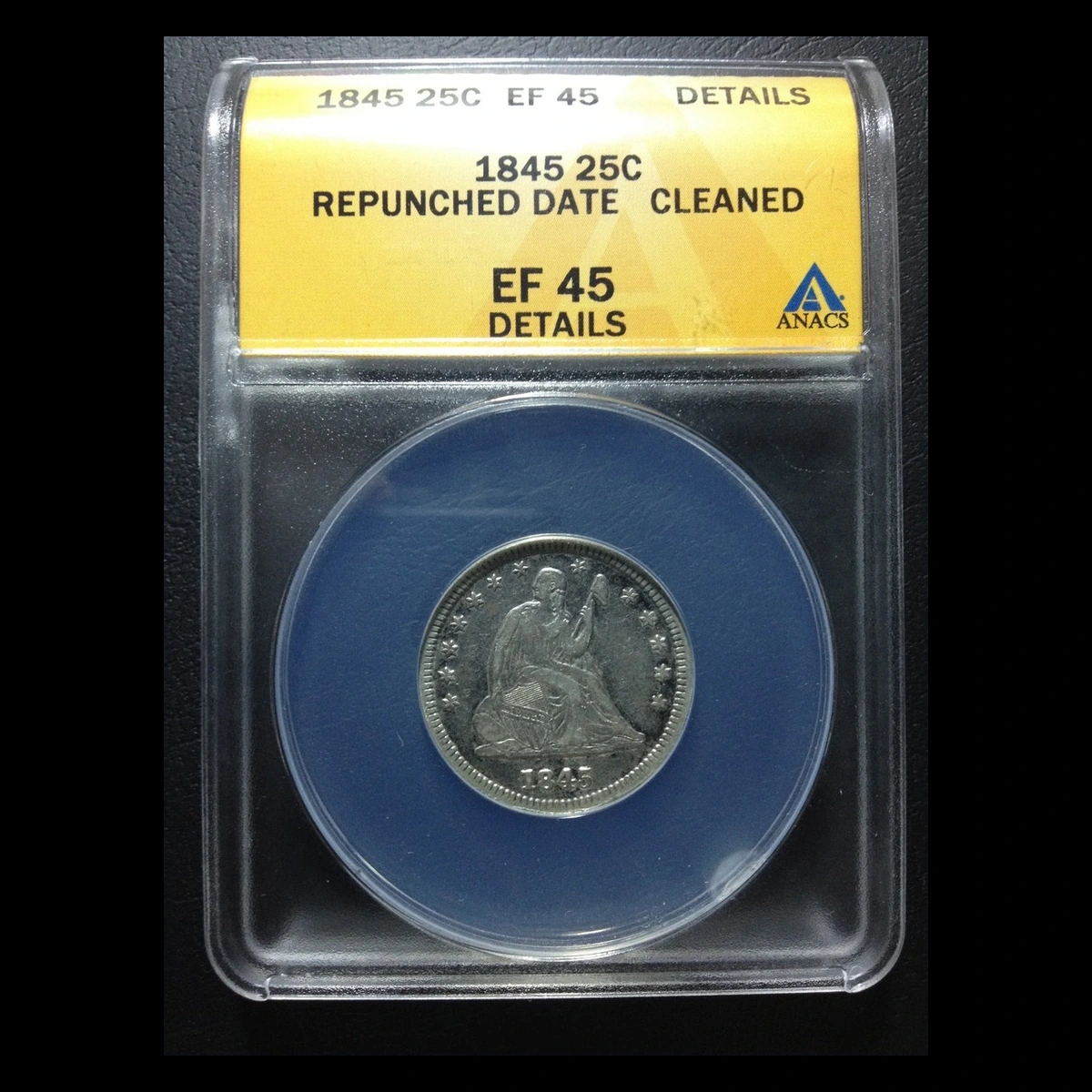
1845 Quarter A Second Outline above the 5: Repunched Date Error
The Philadelphia variety called 1845/845, or FS-301, retains parts of an earlier entry of the date. The additional stroke above the 5’s top bar is a useful starting point under magnification.
The die was punched again with the same year, so the notation does not describe a finished coin overstruck with a different date. Earlier numeral shapes survived in the tool and were transferred during striking.
Older accounts used “large date over small date” and proposed a punch from another denomination. That explanation remains debated; the visible remnants provide the practical basis for identification.
How to Identify
Photograph the complete date before enlarging the area above the short top bar of 5, sometimes called its flag. Follow the extra shape and then examine 4 and 8 for the other surviving traces.
Compare how those remnants sit relative to the final numerals in an attributed FS-301. An isolated bump or unrelated cut near the date does not demonstrate the same punch pattern.
Change the light angle to assess the extra detail’s relief. A flat shelf from movement during striking differs from an earlier raised numeral contour already present in the die.
What It’s Worth
$60–$5,000 is estimated for identifiable worn through comparable high-grade examples. The NGC MS64 sold by Heritage on June 5, 2013 brought $3,290, with the catalog noting a sharp strike.
The unworn grade and surviving detail contribute to that whole-coin result. Cleaning or substantial circulation wear can make another specimen a very different purchase even when its date attribution is correct.
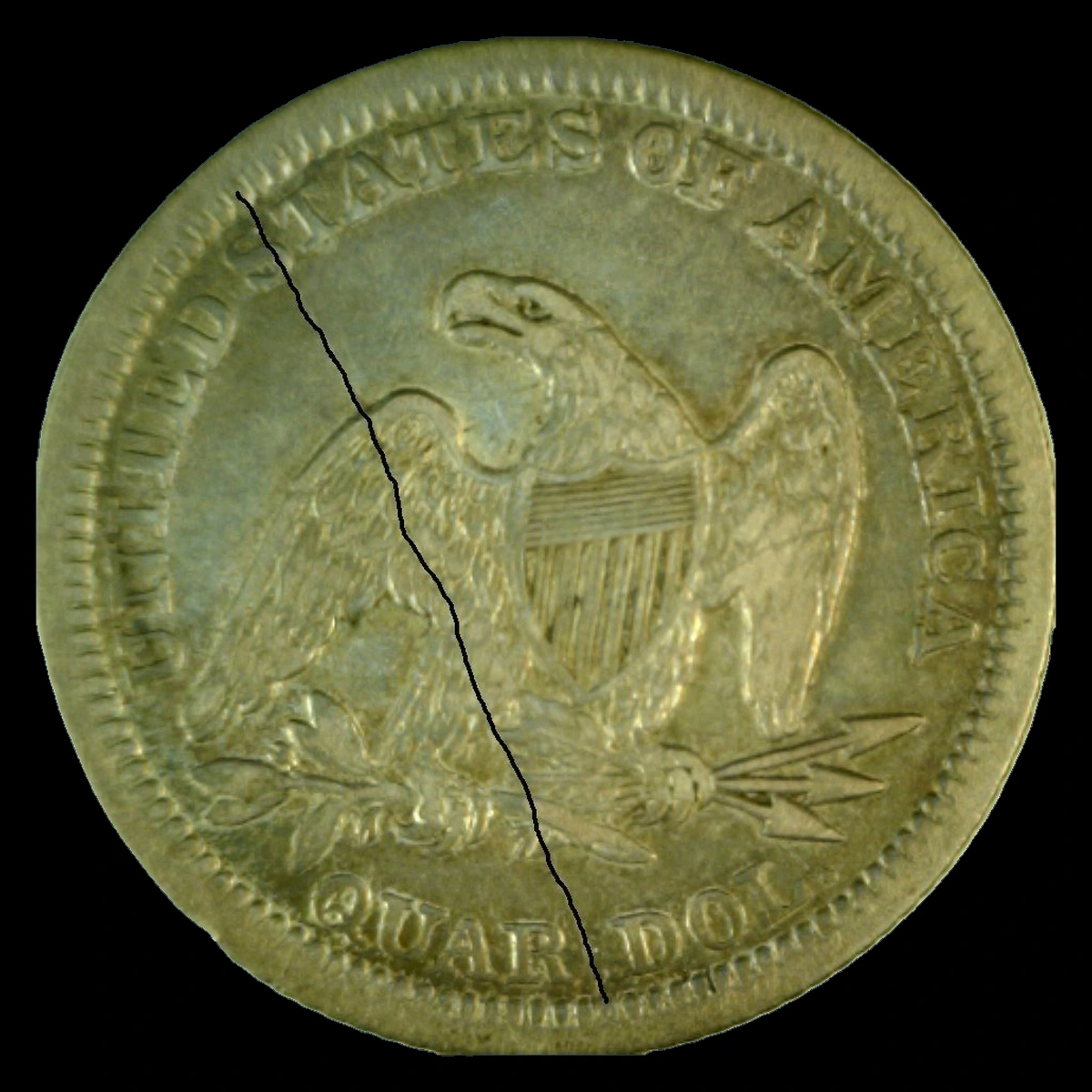
1845 Quarter A Raised Line across the Eagle Side: Cracked Reverse Die Error
Greg Johnson described a moderately worn 1845 quarter whose conspicuous reverse crack drew his attention in 2008. Its shield details closely matched the tool designated reverse B in the Briggs reference.
A split in the steel die admitted metal during striking and left a ridge on the coin. The physical feature is raised silver copied from the tool, rather than a split through the quarter itself.
How to Identify
Begin with the shield details in Johnson’s illustrated study, then trace the added line across the reverse. The broader die comparison prevents one short unexplained mark from carrying the entire attribution.
Inspect the ridge at several points under side lighting and photograph its full route through the design. The supplied account does not define an exact clock-position path, so the illustrated specimen should guide that comparison.
A scratch can push up narrow lips on either side of a groove. Check the center of the line to distinguish those damaged edges from a continuous raised die-crack ridge.
What It’s Worth
$50–$1,500 is estimated for circulated Philadelphia quarters with genuine cracks. Johnson’s Very Fine example supplies diagnostic context, not a published completed-sale amount.
A conspicuous trace with clear shield detail can interest die specialists. Minor peripheral cracks usually call for comparisons closer to ordinary coins of similar condition than to dramatic major breaks.
Conclusion
For the date variety, locate the extra stroke above 5 and compare the other surviving numeral remnants. For the reverse crack, use the shield and complete line route to establish a die match.
Neither a shiny shelf nor a scratch is equivalent to those features. The documented auction values one well-preserved repunched-date coin, while the reverse study supplies an identification example without a sale price.