Rare 2005 Dollar Errors (List & Pictures)
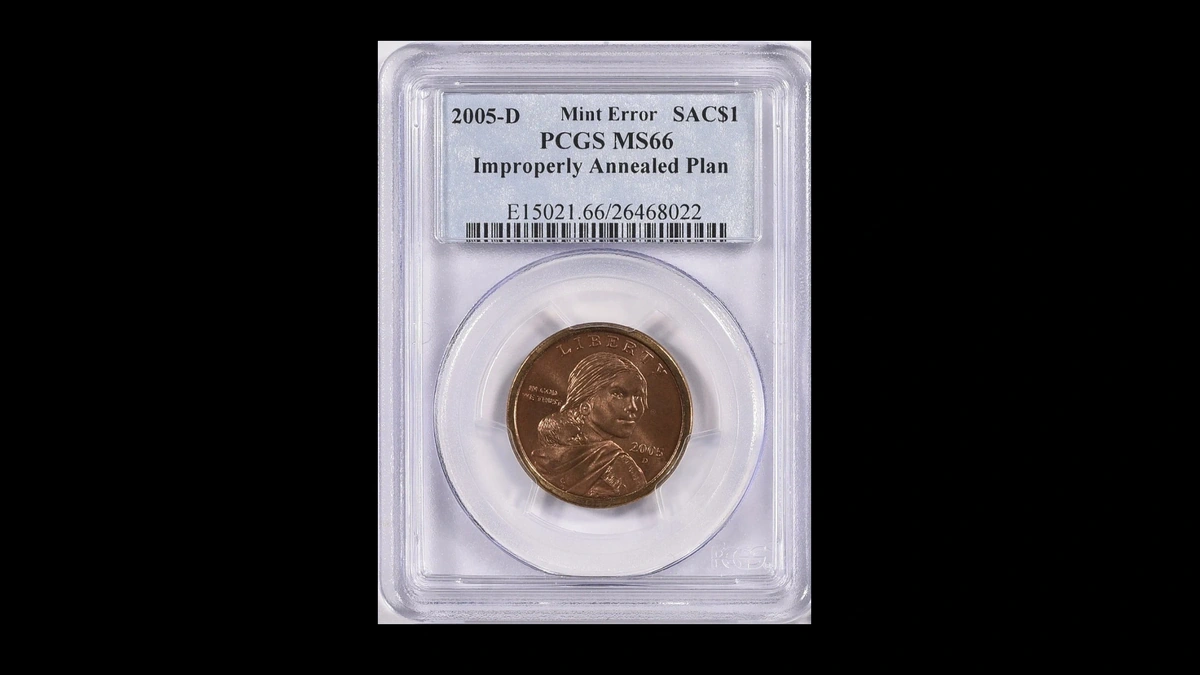
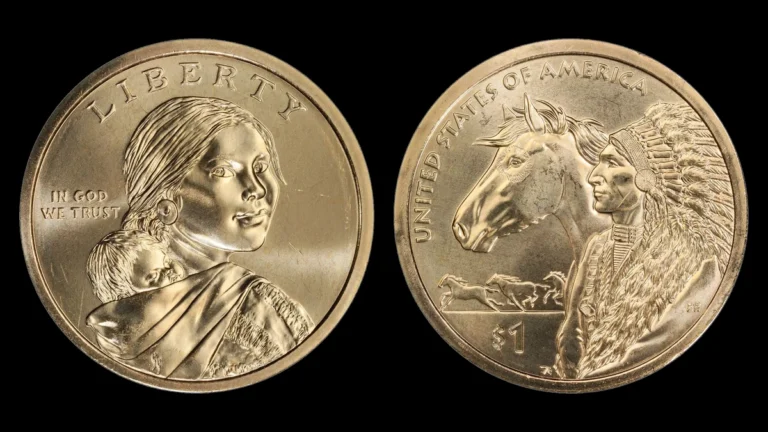
A 2005-P dollar on a nickel blank kept Sacagawea and her child but lost an eagle wingtip. That small, clearly dated coin sold for $24,000 in August 2024.
The broader 2005 Sacagawea dollar errors below have estimated values of $10–$35,000. Most are less dramatic, including a line across the eagle and a heating-related surface change on a satin-finish dollar.
Compare lettering and surfaces before moving to strike position and the blank itself.
1. 2005 Dollar An Extra Ridge across the Eagle’s Breast: Die Crack Error
A reported 2005-D dollar has a raised line crossing the eagle’s breast. Metal entered a split in the die and copied that split onto the coin.
The report does not establish a connection to the rim. It describes a crack rather than a confirmed cud, the larger raised patch caused by a rim-connected die break.
How to Identify
Confirm the D below the date, then compare the breast with a normal eagle design. Identify where the extra line crosses or departs from the expected feather pattern.
Use side lighting to inspect the center of the line. A scratched groove can have raised metal along its edges, so a bright ridge by itself is not enough.
Keep the complete reverse in one photograph. Describe only the visible extent of the line rather than extending it to the rim without evidence.
What It’s Worth
$10–$150 is the estimate for a genuine eagle-breast crack. Strength, visibility, and the condition of the dollar affect its appeal.
A fine line seen only at high magnification belongs below a clear ridge across the feathers. An exceptional grade can also add value to the whole coin independently of the crack.
2. 2005 Dollar Repeated Letter or Date Edges: Doubled Die Error
The 2005 year guide mentions doubled designs around LIBERTY, the date, and the face. It does not identify a particular mint or cataloged pattern.
A doubled die has repeated detail in the stamping tool before it makes coins. Flat doubling from movement during a strike is a separate lookalike.
How to Identify
Choose the clearest suspected letter and inspect all its edges. Compare a normal example under the same lighting rather than judging only the widest stroke.
Rounded separation or a split corner deserves closer attention. A low shelf beside a narrowed letter can instead result from movement during striking.
Check nearby details for a consistent pattern and photograph the date, mintmark, and finish. One scratch or reflection cannot establish a named doubled die.
What It’s Worth
$25–$400 is an estimated range for an identified 2005 doubled die. Bold separation generally has more collecting interest than a subtle contour.
The actual repeated shape matters more than the word “doubled” in a listing. Flat strike doubling should not inherit this variety estimate.
3. 2005 Dollar Unusual Color on a Satin-Finish Dollar: Annealing Error
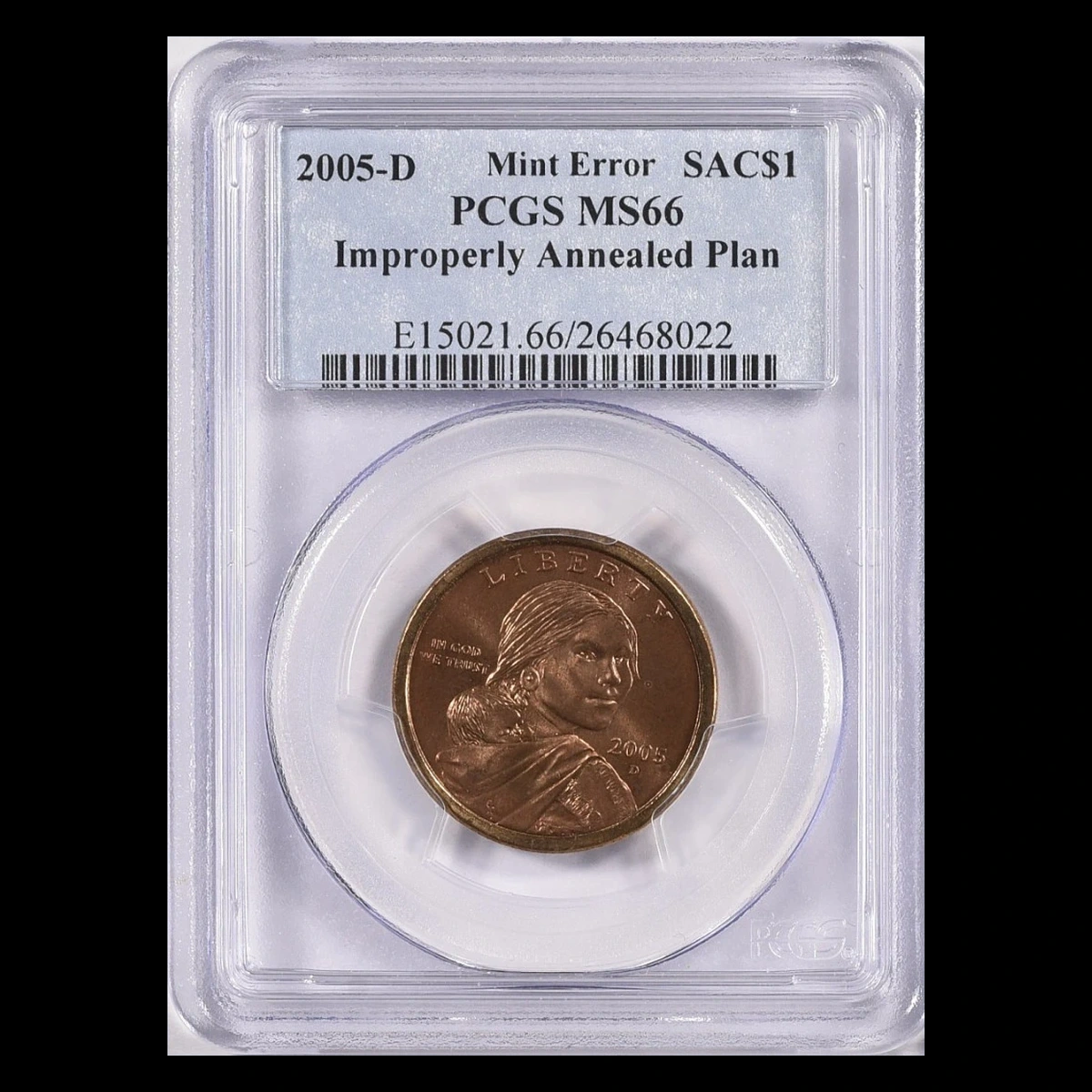
A documented 2005-D satin-finish dollar has an improperly annealed, or sintered, surface. Annealing is the heating treatment used to prepare blanks; sintering refers to material bonding to the surface during heating.
Satin finish is the softly textured finish of the collector-set coin. That normal finish is separate from its attributed surface error.
How to Identify
Compare the coin with a normal satin-finish example, not just an ordinary shiny dollar. Softer reflections are expected on the collector finish.
Inspect colored areas beside letters and across open surfaces under neutral light. Ordinary tarnish, corrosion, and later heating can also change color.
Keep the complete date and D in the comparison with the attributed example. Do not polish a test patch, since surface material may be part of the evidence.
What It’s Worth
$25–$250 is the estimate for genuine examples with differing appearance and preservation. The documented coin brought just $37 in December 2013.
The PCGS auction record currently lists it as SP65, a well-preserved collector-finish grade. That modest result shows that an attributed mint error does not always command hundreds of dollars.
4. 2005 Dollar A Bare Crescent beside an Incomplete Design: Off-Center Strike Error
An off-center blank misses part of the dies. The portrait and eagle shift, leaving some original metal untouched and some intended design beyond the edge.
The 2005 reports do not fix a mint, finish, or measured percentage. General examples described as 30% or 50% off-center are not measurements of a named 2005 coin.
How to Identify
Compare the unstruck crescent with the missing artwork on both faces. A centered eagle opposite a shifted portrait may indicate a misaligned die instead.
If the whole design fits on expanded metal, consider a broadstrike. The decisive difference is whether intended design actually missed the blank.
Look for grinding or flattened letter remnants in the bare area. The surviving date and mintmark are on the front of a 2005 dollar; its plain edge is normal.
What It’s Worth
$200–$3,500 is the estimate for a genuine 2005 off-center dollar. Larger shifts can draw more interest when enough design survives to establish identity.
A 2000-P eagle-back dollar struck 50% off-center brought $3,120 in April 2021. That earlier date supplies context rather than a sale record for the reported 2005 type.
5. 2005 Dollar A Small Silver-Colored Dollar: Struck on a Nickel Blank Error
The documented 2005-P nickel-blank dollar retains Sacagawea and her child, but the eagle’s rear wingtip falls beyond the smaller metal. ANACS graded the coin MS64, an unworn grade with some marks.
It struck against the surrounding ring near four-thirty, leaving a bold date and P. The blank had not received a nickel design, so this is not a dollar struck over a finished Jefferson nickel.
How to Identify
Match the strong 2005 date, P, complete portrait, and missing wingtip with the auction photographs. Those physical relationships explain more than a white-looking surface alone.
A normal nickel blank weighs 5.00 grams, compared with 8.10 grams for dollar stock. The nickel blank begins about 21.21 millimeters across, although striking can change its width.
These are blank standards, not reported measurements of the auction specimen. A candidate needs its own measurements and nondestructive metal testing.
White plating can change a normal dollar’s color without creating the smaller blank or matching design loss. The metal and the way the picture fits should agree.
What It’s Worth
$12,000–$35,000 frames comparable authenticated examples of this scarce 2005 error. Clear identity and attractive remaining design are major parts of its appeal.
Heritage sold the ANACS MS64 coin for $24,000 on August 16, 2024. That result belongs to the actual nickel-blank dollar, not to an ordinary plated coin.
Conclusion
The nickel-blank dollar has a strong auction result, while the satin-finish heating error sold for a much smaller amount. Both need the correct finish, metal, and specimen details kept with their prices.
For a new find, identify the physical feature before choosing a value range. A raised breast line, repeated design, unusual color, and bare crescent each point to a different part of the minting process.