Rare 1880 Morgan Dollar Errors (List & Pictures)
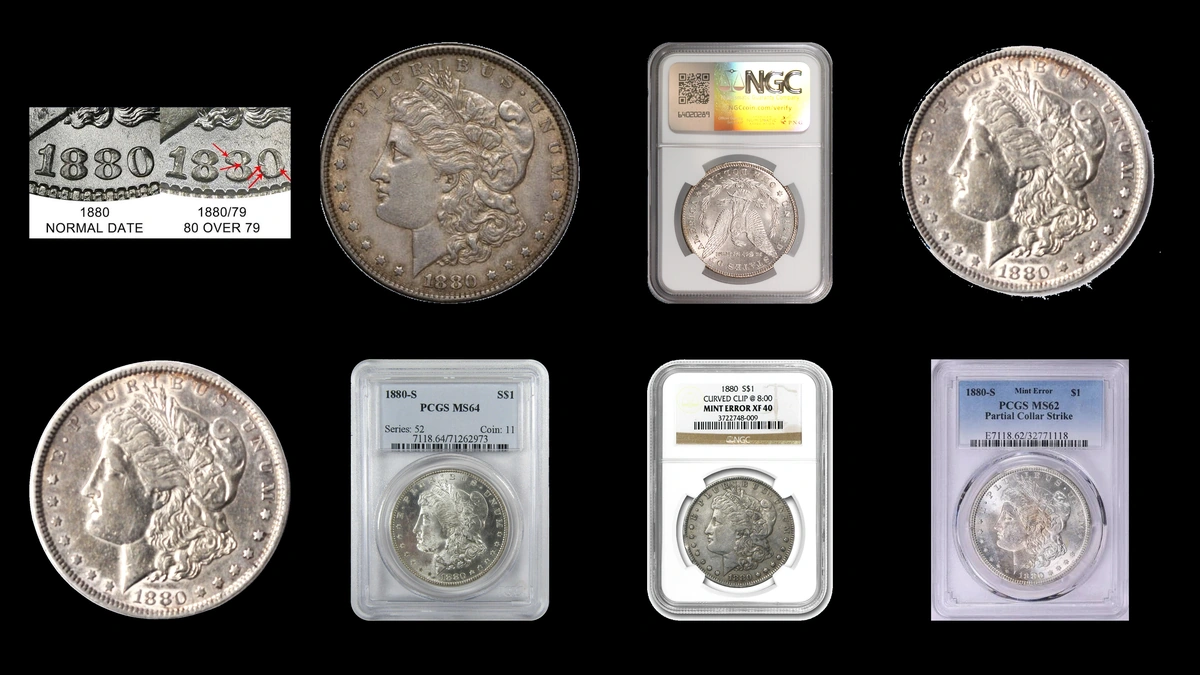
An 1880-CC 8-over-High-7 dollar graded MS67+ sold for $84,000 in September 2019. The 1880 Morgan dollar errors and varieties below span estimated whole-coin values of $75–$90,000.
Start with the date and mintmark, then examine extra design traces, metal flaws, and the edge before comparing major strike errors.
| Clue | Category | Whole-coin range |
|---|---|---|
| Older digit beneath 1880 | Overdate | $75–$90,000 |
| Digit in border or repeated O | Misplaced date or repunched mintmark | $75–$2,500 |
| Ghost design or peeling metal | Clash or lamination | $75–$1,500 |
| Flawed surface or depression | Defective blank or struck-through object | $100–$6,000 |
| Gap, step, or expanded outline | Clip, partial collar, or broadstrike | $150–$8,000 |
| Major design loss beside blank metal | Off-center strike | $5,000–$90,000 |
1. 1880 Dollar A 7 or 9 beneath the date: overdate Error
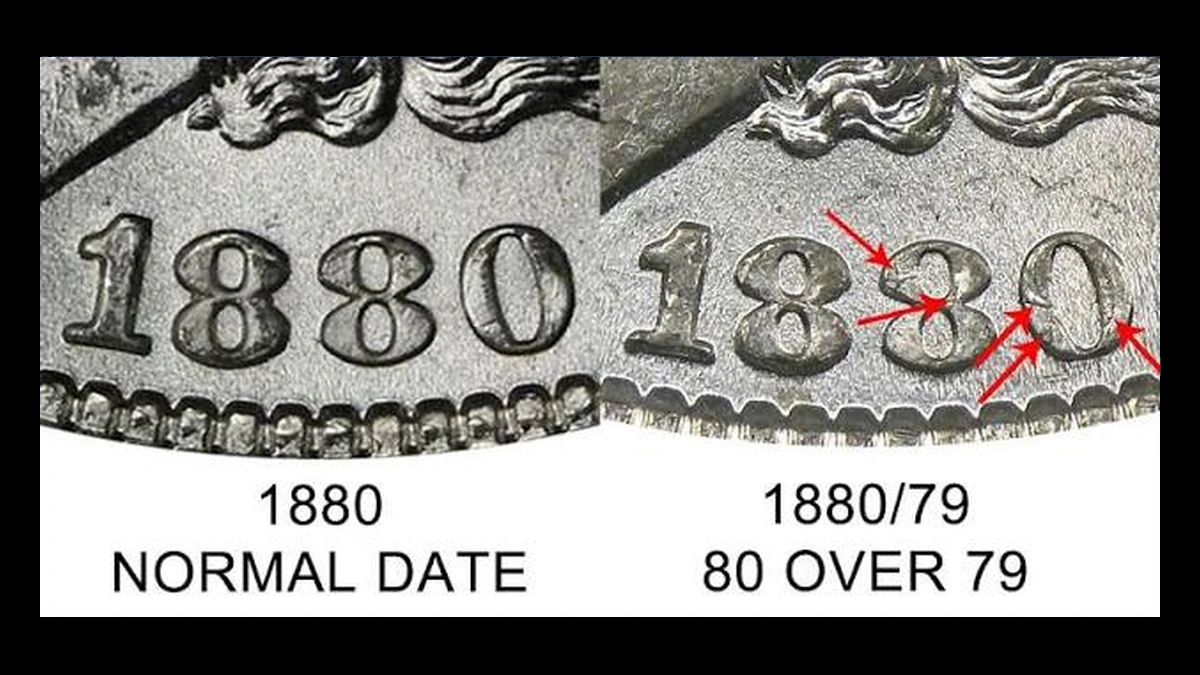
The second 8 or final 0 can preserve parts of an earlier digit. Dies prepared with an earlier date were changed to 1880, leaving recognized 8-over-7 and 0-over-9 patterns.
Overdates occur at Philadelphia, Carson City, New Orleans, and San Francisco. Different varieties preserve different remnants, and not every coin displays both earlier digits clearly.
How to Identify
Read the mintmark and select that mint’s reference before enlarging the date. No letter indicates Philadelphia, while O, S, and CC identify the branch mints.
Find an actual remnant of 7 or 9 at the position shown by the reference. General thickness, a stain, or a scratch beside a digit is insufficient.
Some Carson City varieties also require a reverse-design comparison. Keep those supporting details with the exact old-numeral pattern.
What It’s Worth
Estimated whole-coin values run from $75–$90,000, covering worn overdates through exceptional high-grade examples.
PCGS records the 1880-CC 8-over-High-7 in MS67+ at $84,000 in September 2019. A Philadelphia 8/7 graded MS65 brought $720 in April 2022.
The difference reflects mint, exact variety, and preservation. An overdate label alone does not place an ordinary coin near the headline result.
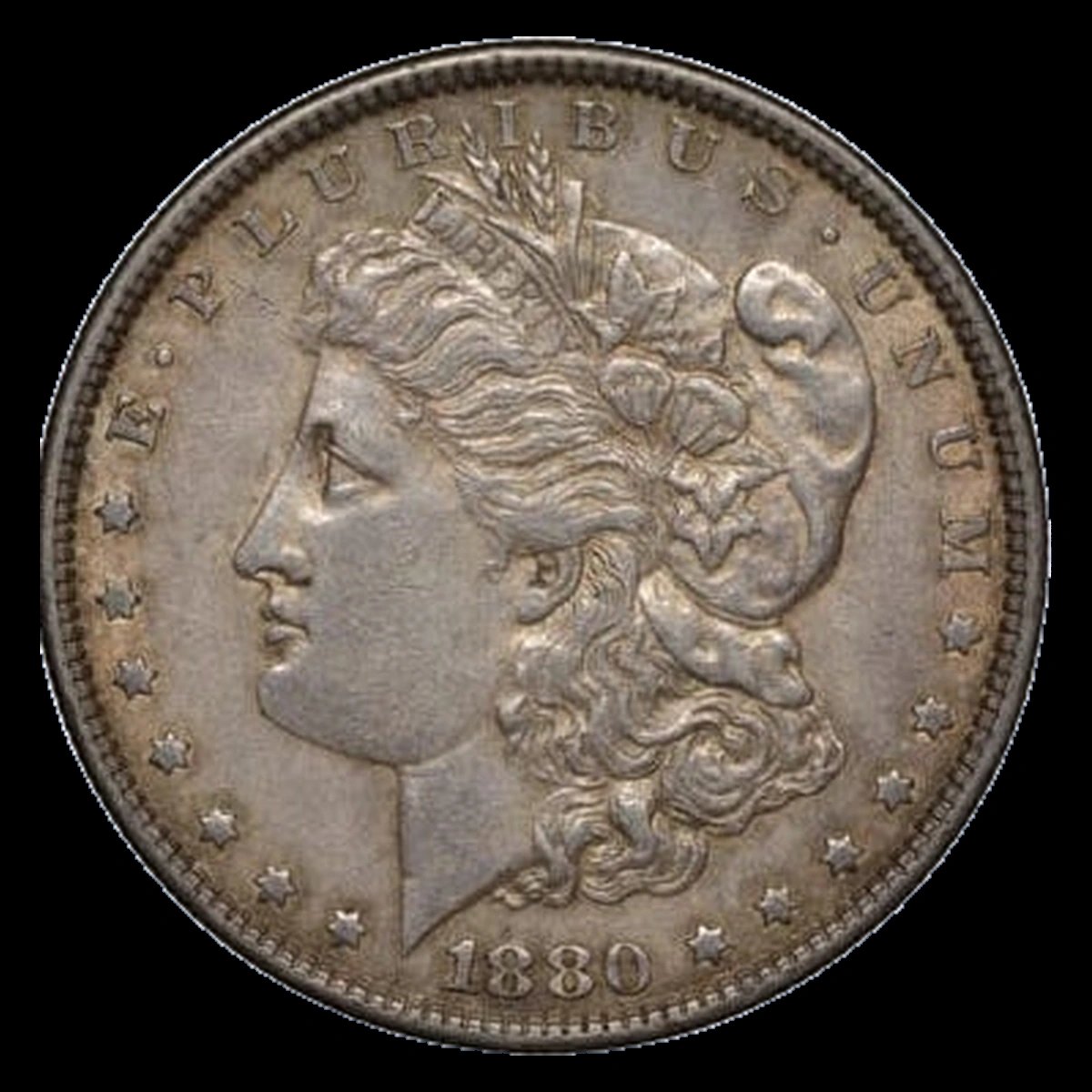
2. 1880 Dollar Part of a zero among the border teeth: misplaced date Error
A reported 1880 variety has a piece of 0 among the small border teeth below the date. A date punch placed too low on the die can leave a numeral outside its intended location.
This differs from an older digit beneath a corrected date. The report does not establish one mint or exact catalog pattern for the misplaced-zero claim.
How to Identify
Follow the regular border teeth until the suspected arc interrupts them. Include the whole date and nearby rim in a photograph to preserve its position.
Confirm the mint and compare with a matching attributed specimen. A rounded tooth or a small chip must not be turned into a numeral merely because it lies below the date.
What It’s Worth
A genuine misplaced-zero variety has an estimated whole-coin range of $75–$2,500.
An 1882-CC VAM-2 misplaced-date dollar graded MS66 has a recorded $1,695 sale in August 2018. Its different year, Carson City mint, and high grade make it a broad comparison rather than an 1880 transaction.
3. 1880 Dollar An earlier curve beside O: repunched mintmark Error
An O/O mintmark preserves two overlapping applications of the same letter punch. The die then transfers the combined shape to dollars struck from it.
How to Identify
Inspect the inner opening and outside curve beneath the wreath’s bow. An earlier impression should follow a recognizable portion of O rather than simply making it look thick.
Compare a confirmed 1880-O/O reference under matching lighting. The supplied description does not establish a direction, so do not infer one from an unclear bright edge.
What It’s Worth
A genuine 1880-O/O has an estimated whole-coin range of $75–$2,000 across ordinary worn through attractive unworn examples.
A different-year 1884-O/O graded NGC MS64 Prooflike sold for $256.20 in June 2026. Its reflective surface designation is separate from the repunched mintmark.
4. 1880 Dollar Faint traces from the opposing design: die clash Error
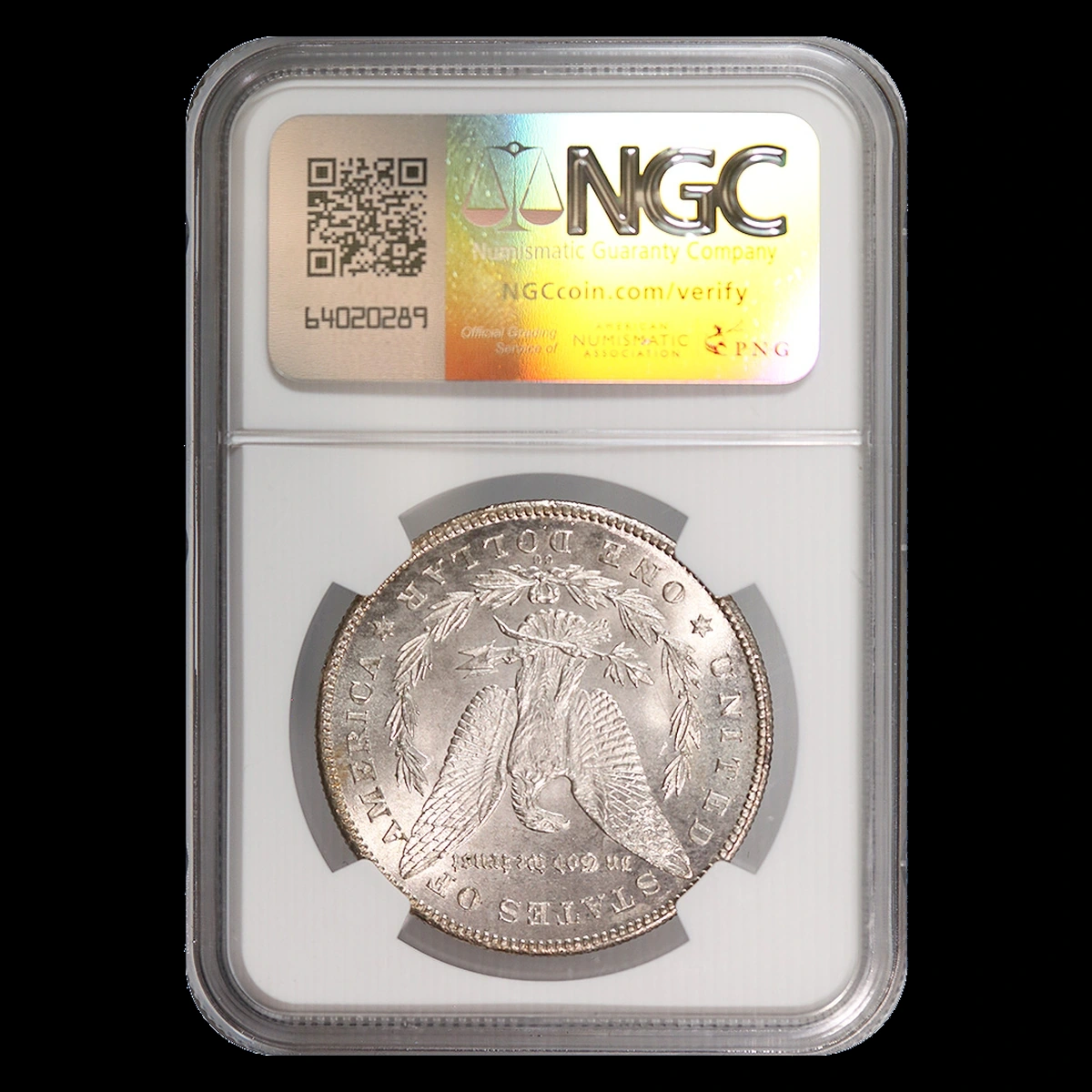
An 1880 clash example is reported in an ANACS MS63 holder. The supplied account does not establish its mint or a fixed route for the marks.
The dies can mark one another when they meet without a blank. Later coins copy those unwanted traces alongside the intended portrait and eagle.
How to Identify
Ask which opposite-face feature could explain the extra shape and compare several points of agreement. A generic stray line cannot identify every clash variety.
Side lighting helps distinguish a struck trace from a cut with disturbed silver beside it. Use an authenticated same-year and same-mint reference when the candidate’s identity is established.
What It’s Worth
Genuine 1880 clashes have an estimated whole-coin range of $75–$1,500 in ordinary collectible grades.
An 1882-CC VAM-2A in MS66 sold for $999 in February 2017. That different-year comparison includes Carson City value and higher preservation than the reported MS63 coin.
5. 1880 Dollar A shallow missing silver layer: detached lamination Error
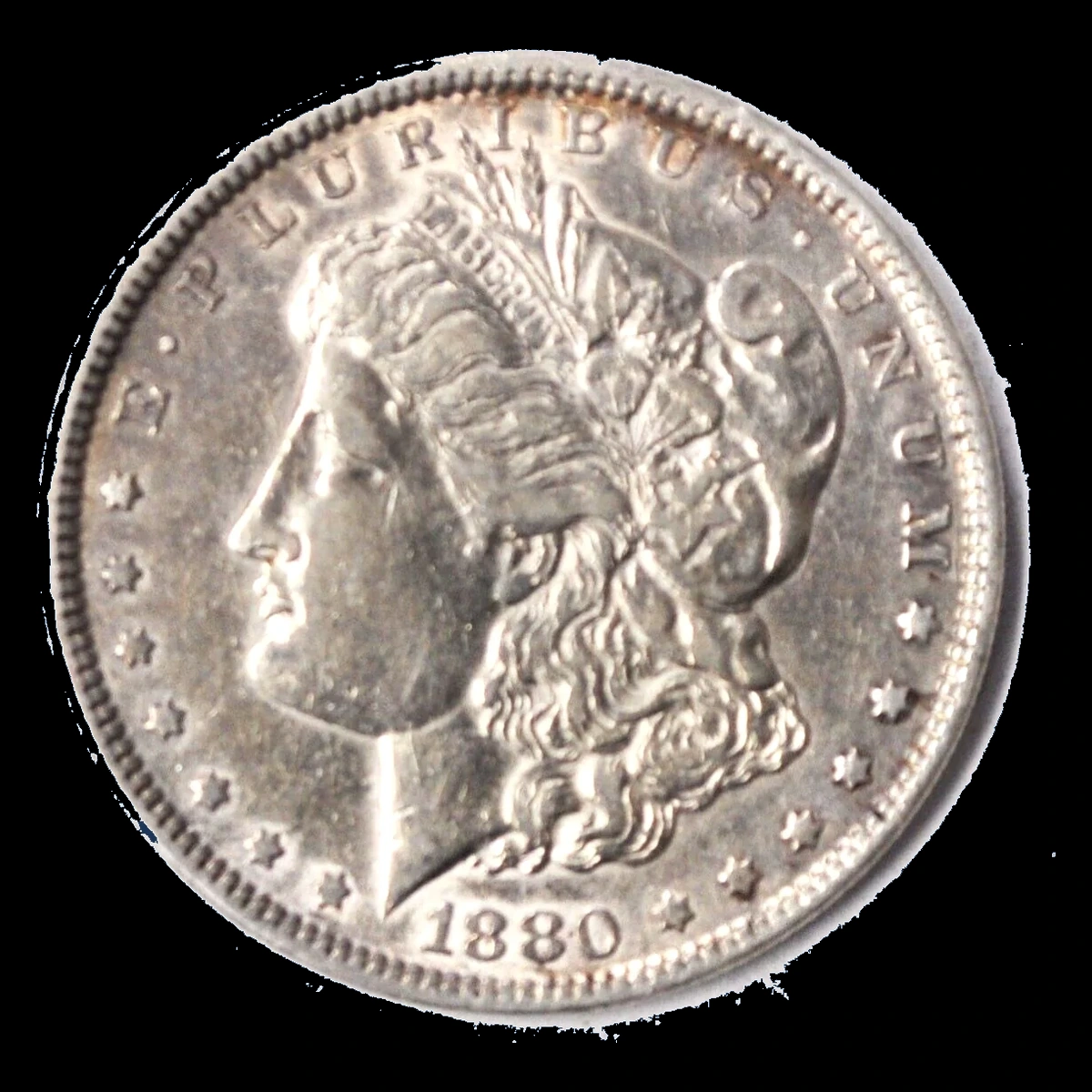
A cataloged 1880-S dollar is described as Detached Lamination, AU58 Details, Cleaned. The metal flaw and the later cleaning are separate aspects of its condition.
A weakness within the blank’s silver alloy can allow a thin local layer to separate. It need not involve an entire face or a fracture through the whole coin.
How to Identify
Trace the shallow boundary into the exposed metal under side lighting. Compare a naturally layered break with scraping cuts or corrosion that attacked the surface later.
Look separately for cleaning lines beyond the patch, and leave any remaining flap untouched. A normal Morgan dollar weighs 26.73 grams and measures 38.1 millimeters across, but weight loss alone cannot identify its cause.
What It’s Worth
Genuine 1880-S laminations have an estimated range of $75–$1,500, including the value of the complete coin.
An 1887 Philadelphia lamination graded NGC MS65+ sold for $162 in July 2020. It is a different-year example with a higher grade, while the recorded 1880-S needs a comparison that retains its cleaning qualification.
6. 1880 Dollar Design over irregular metal: defective blank Error
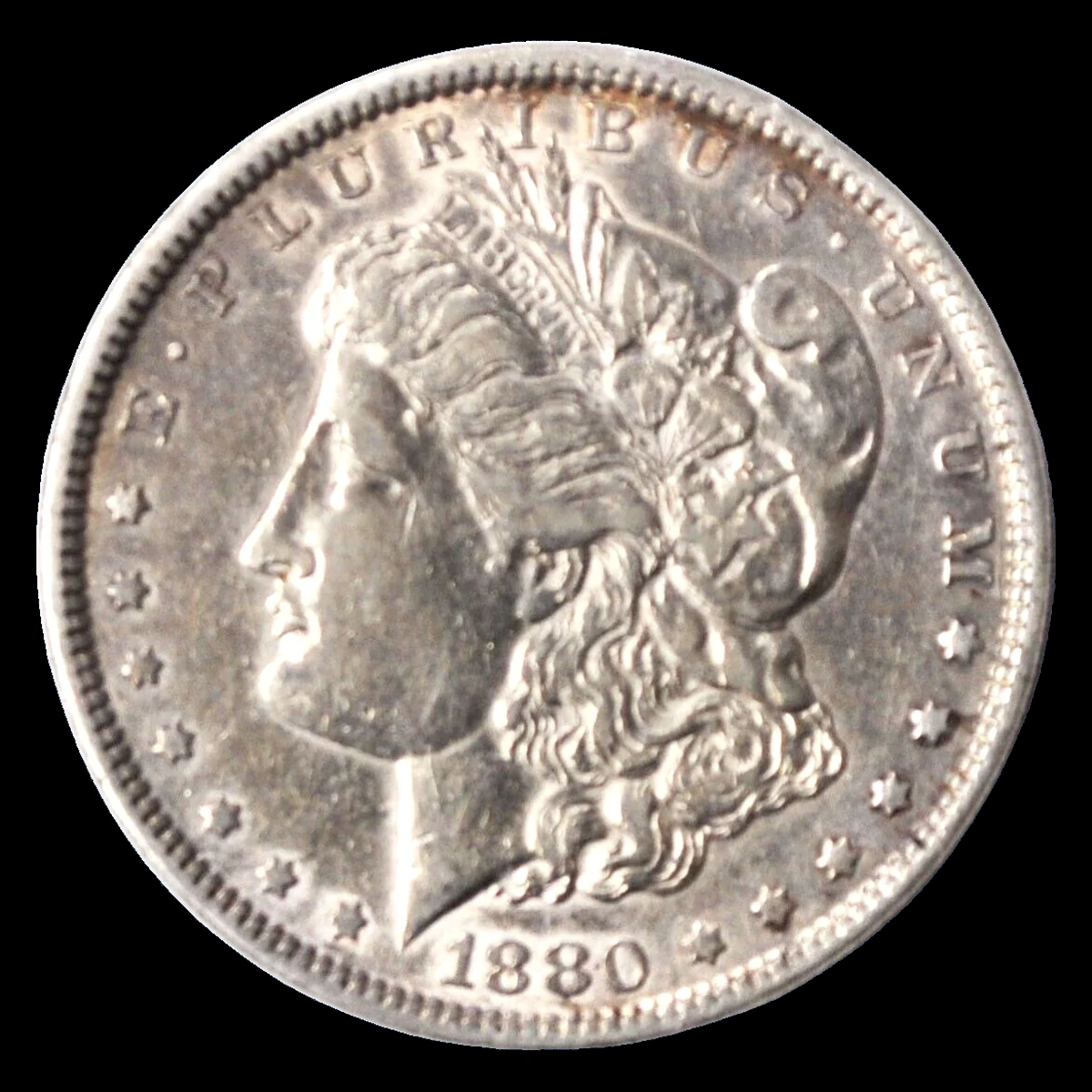
A separate 1880-S AU58 dollar was cataloged as struck on a defective blank. Its general label does not specify a clip, a complete split, or a particular missing layer.
It is not the cleaned detached-lamination specimen described above. Each coin needs its own physical evidence.
How to Identify
Follow a normal design line into the irregular area to see whether the design formed across an existing flaw. Check both faces for related effects.
Later cuts, crushed silver, and corrosion can produce unusual texture too. Use the actual AU58 example’s photographs rather than borrowing the other coin’s lamination outline.
What It’s Worth
A genuine 1880-S dollar struck on visibly flawed metal has an estimated whole-coin range of $100–$3,000.
No specific realized result is supplied. AU58 describes slight wear, not the size or rarity of the defect.
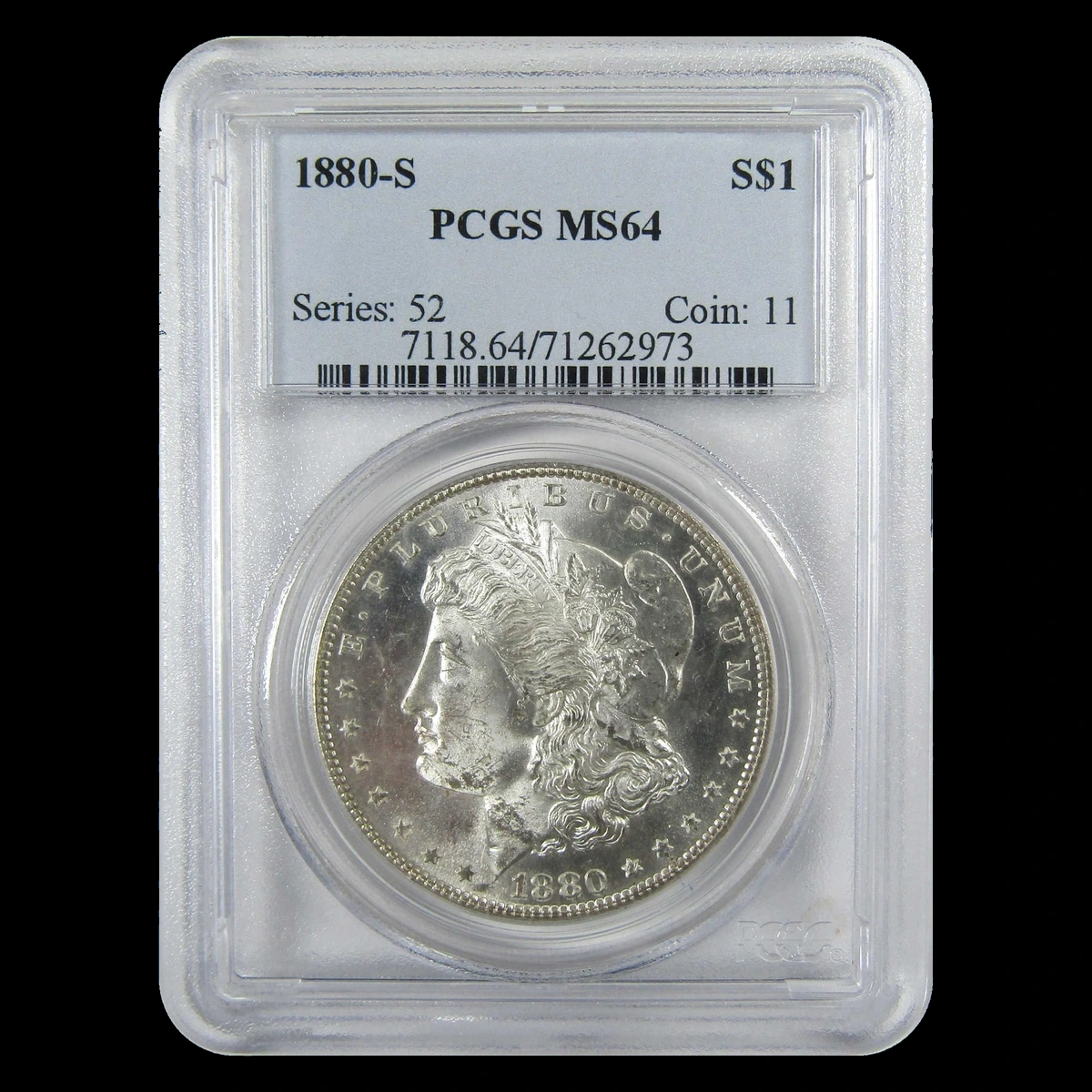
7. 1880 Dollar A depression interrupting the front: struck through an object Error
A recorded 1880-CC NGC MS63 dollar has a front struck-through error. Another documented 1880/79-CC coin carries a minor impression near 6:30.
An object between the die and blank can block the design and leave its own shape. An empty hollow does not necessarily identify that object as wire, wood, cloth, or grease.
How to Identify
Follow the design to the depression and examine whether detail failed to form there or was cut away later. Torn metal or a pushed-up gouge lip may suggest damage after striking.
The 6:30 position belongs only to the separate overdate specimen. Preserve any attached material and use each coin’s own close-up.
What It’s Worth
Genuine 1880-CC struck-through dollars have an estimated whole-coin range of $400–$6,000, including their Carson City value.
An 1899-O Morgan with retained wood sold for $504 in October 2022. That different-year coin preserves identified material, unlike a plain depression with an unknown obstruction.
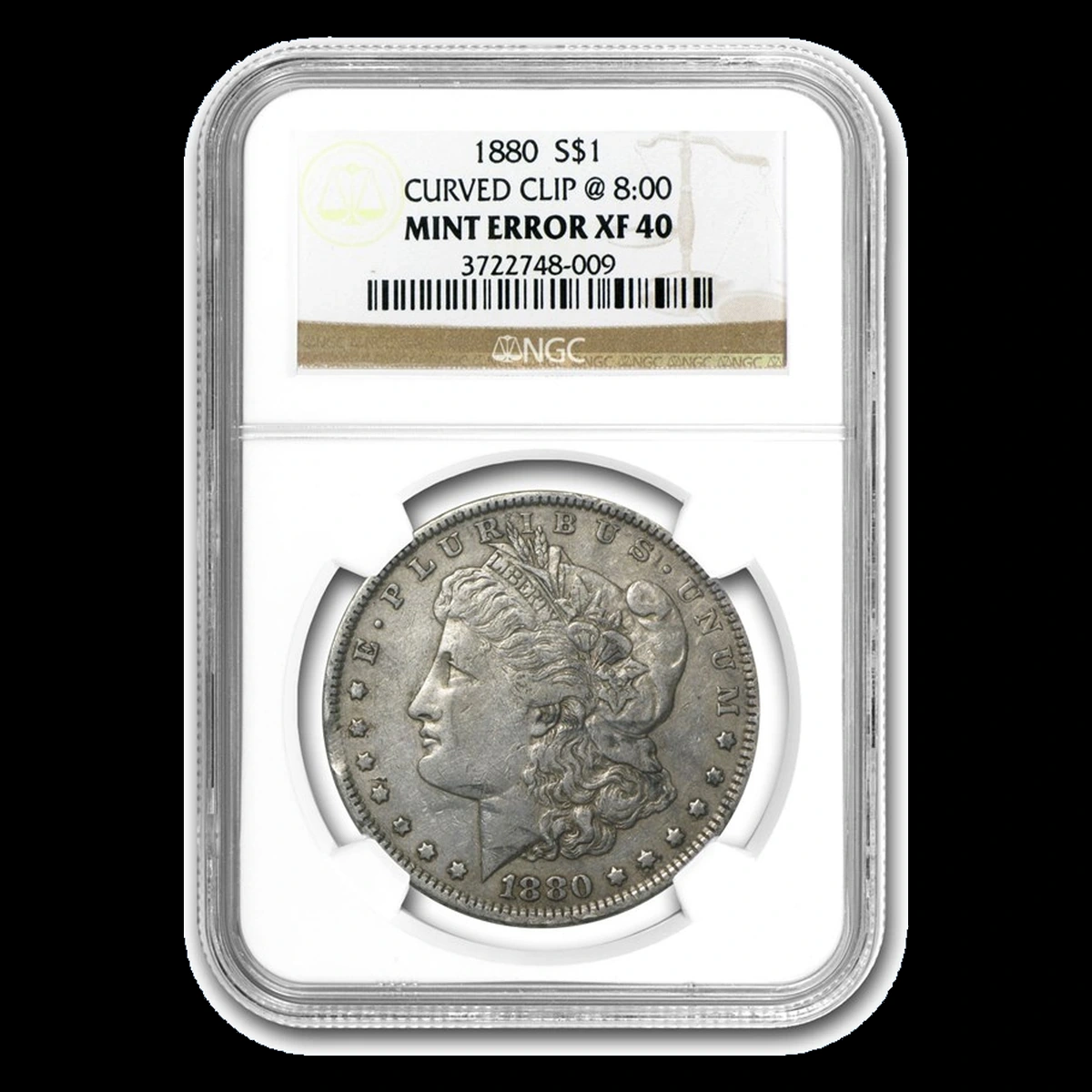
8. 1880 Dollar A curved missing section: clipped blank Error
APMEX lists a Philadelphia 1880 NGC XF40 dollar with a curved clip. The gap began when a blanking punch overlapped an earlier hole in the metal strip.
The incomplete blank then received the design. XF40 indicates wear with substantial detail remaining.
How to Identify
Inspect the gap wall and both transitions into the original rim. Cutting marks, sharp burrs, or filing can show that metal was removed afterward.
A weak area on the opposite rim may support an original clip but does not decide the case alone. Reduced weight must agree with the visible gap and natural struck boundaries.
What It’s Worth
Genuine 1880 curved clips have an estimated range of $150–$2,500.
The listed XF40 coin supplies an appearance reference, not a current completed transaction. Missing area, edge clarity, and condition determine how closely another example compares.
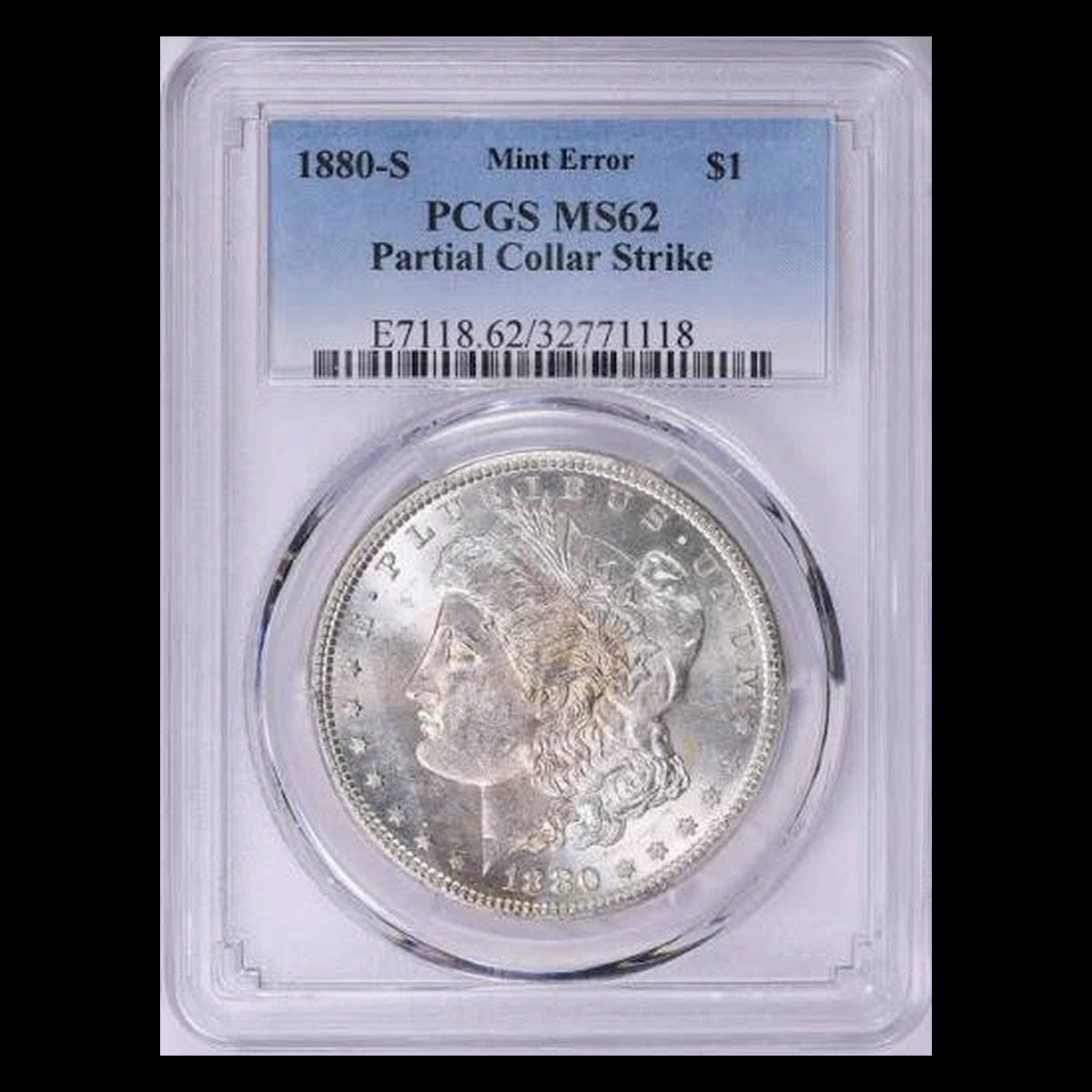
9. 1880 Dollar A step between grooved and smoother bands: partial collar Error
Carson City and San Francisco partial-collar dollars are recorded for 1880. Part of the blank remained inside the collar while another part spread differently.
The cataloged San Francisco example is cleaned. That surface problem is separate from the original incomplete edge restraint.
How to Identify
Use a side view to follow the grooved band and its transition into an expanded or smoother section. A broad-looking rim seen only from above is insufficient.
Inspect the transition for later crushing or file marks. Confirm the mint before choosing a reference, especially when Carson City value affects the whole-coin comparison.
What It’s Worth
Genuine examples have an estimated range of $200–$5,000 across the reported mints and conditions.
A different-year 1887-S PCGS AU50 tilted partial collar sold for $252 in September 2019. That worn San Francisco coin is not a direct substitute for a well-preserved Carson City example.
10. 1880 Dollar The full design inside expanded silver: broadstrike Error
A recorded 1880-S broadstrike is in an ANACS MS60 Details holder with counting-wheel damage. Failure of collar restraint caused the expansion, while the machine-made scrape came from later handling.
How to Identify
Compare width in several directions with the normal diameter and inspect the original edge. The intended design should remain present within naturally expanded metal.
Separate any counting-wheel scrape from the evidence of spreading. A later flattened coin can become wider without recording the same minting event.
What It’s Worth
Genuine 1880-S broadstrikes have an estimated whole-coin range of $500–$8,000.
An 1889-S uncentered broadstrike graded MS63 sold for $4,680 in September 2025. That different-year result has its own edge shape and preservation, while the recorded 1880-S retains its damage qualification.
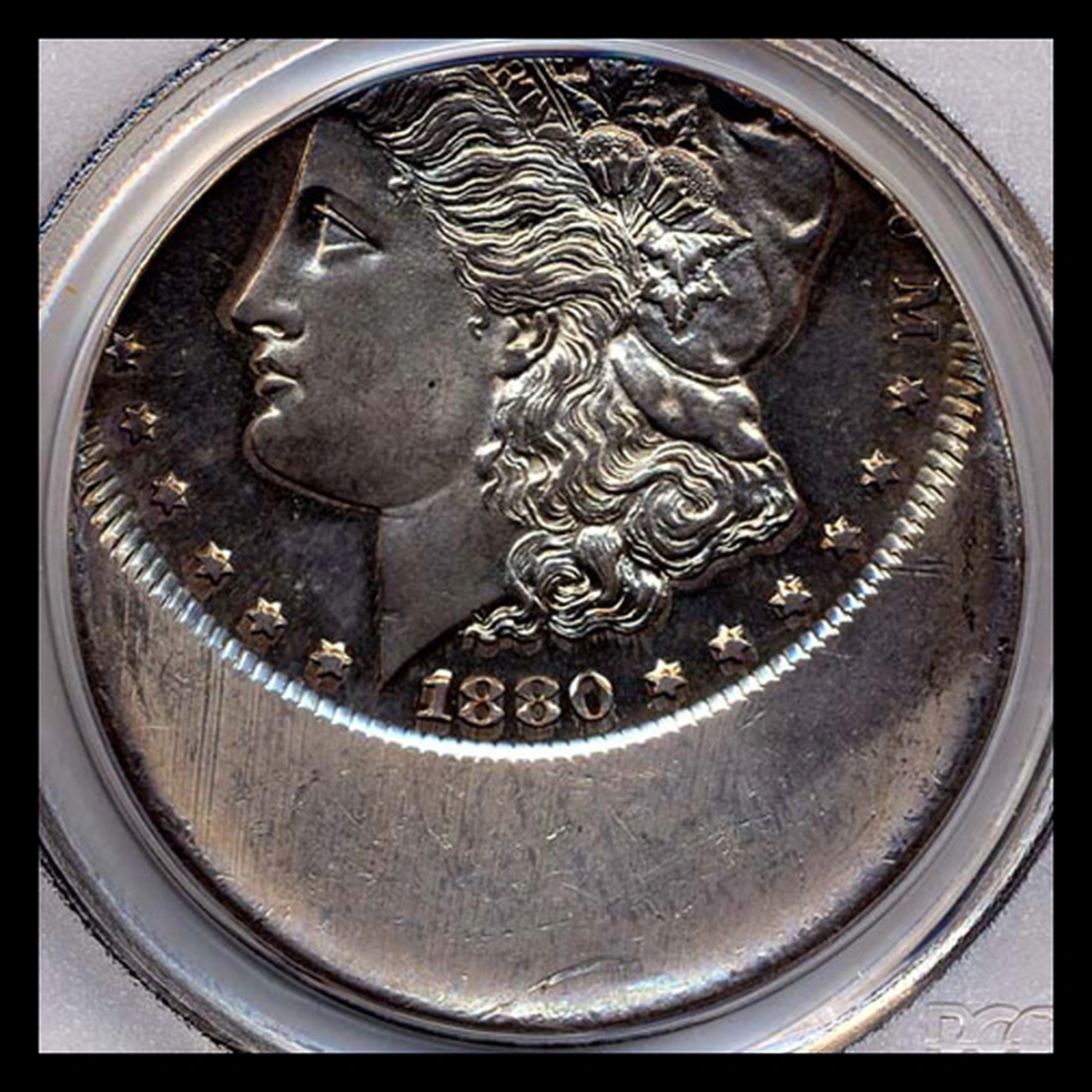
11. 1880 Dollar A broad blank crescent beside a partial design: off-center strike Error
The PCGS MS63 example is 40% off center toward the upper edge. Its complete 1880 date survives, but the mintmark area lies outside the remaining design.
PCGS attributes the coin to San Francisco from its appearance. A separate unworn 1880-S example is recorded at 15% off center.
How to Identify
Compare the surviving date, incomplete upper portrait, eagle, and large unstruck area with the exact auction images. An S cannot be read directly where the mintmark area did not survive.
Inspect the strike boundary and edge for natural silver flow rather than later cutting or a fabricated outline. The 15% example requires its own photographs and condition comparison.
What It’s Worth
Substantial genuine 1880 off-center dollars have an estimated whole-coin range of $5,000–$90,000.
The 40% off-center PCGS MS63 dollar sold for $72,000 on May 5, 2022. Its dramatic displacement and complete date make it an exceptional comparison, not the routine price of a minor shift.
Conclusion
The same date can include subtle repunched details and spectacular incomplete strikes, but each needs a different comparison. Establish the mint and exact feature before considering the price range.
Keep cleaning, counting-wheel damage, and uncertain mint attribution visible in the description. The major auction results belong to exceptional specimens, while ordinary worn coins need examples with similar surfaces and error strength.