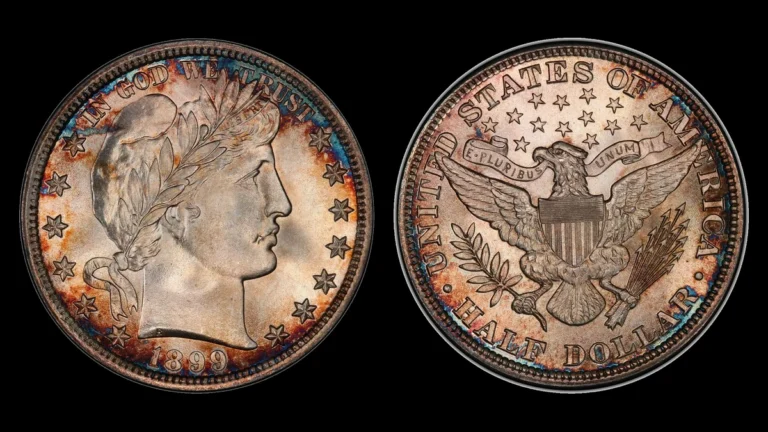
Rare 1803 Half Dollar Errors (List & Pictures)
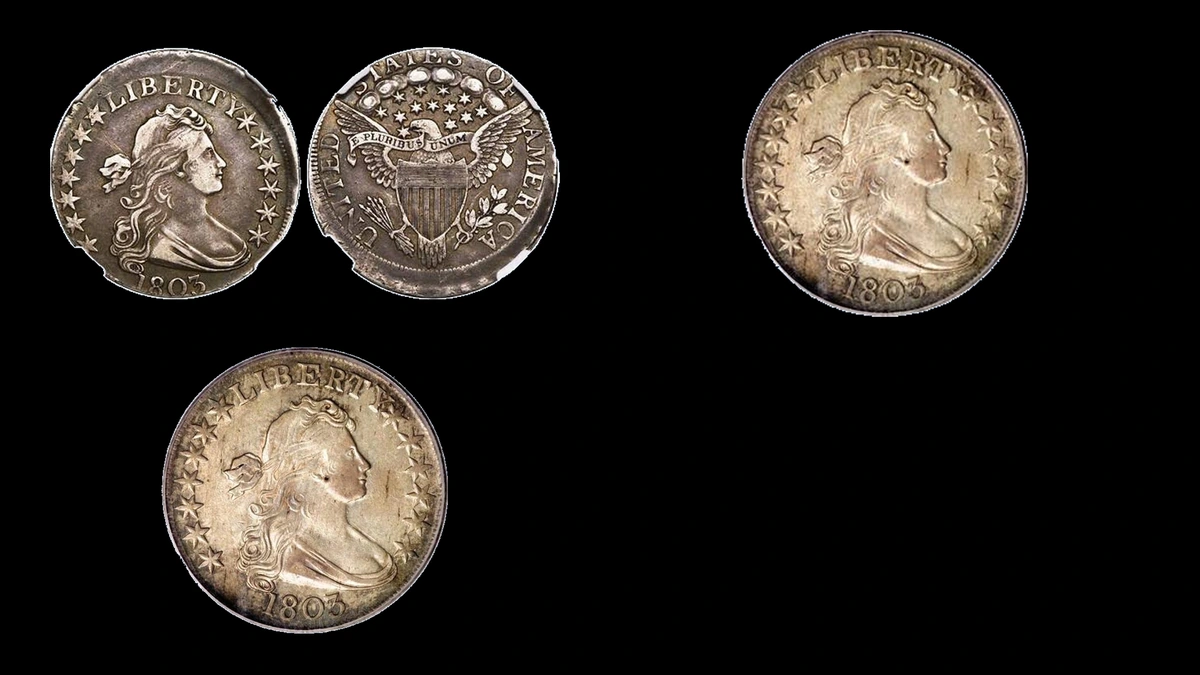
A raised patch, a blank crescent, and unexpected shield lines each tell a different story on an early silver half. These 1803 half dollar errors have estimated comparisons of $500–$6,500 for the worn coins discussed here.
One AU53 with both clash marks and cracks reached a $5,500 winning bid before fees in January 2008. A separate off-center coin sold for $5,405 in September 2016.
Use the shape and location of each feature to choose the right comparison.
| Visible feature | Error type | Estimated range |
|---|---|---|
| Raised area touching the rim near STATES | Cud | $500–$2,500 |
| Blank crescent beside missing design | Off-center strike | $4,000–$6,000 |
| Shield lines beside Liberty | Die clash | $1,000–$6,500 |
| Raised lines through letters | Die crack | $1,000–$6,500 |
This Draped Bust half has a lettered edge, a normal unworn weight of 13.48 grams, and a diameter near 32.5 millimeters. Check the denomination as well as the year; an 1803 dollar or half cent needs different references.
1. 1803 Half Dollar A Raised Break Above STATES: Cud Error
On the variety called O-102a, a small raised break appears above the first T in STATES. Its boundary at the rim helps distinguish it from an ordinary thin crack.
A cud forms when part of a die’s edge breaks away. Metal entering the gap makes a raised area on the coin.
The separate O-104 variety has a fractured section near STATES that remained in place. This retained cud can preserve some lettering because the broken piece still helped form the design.
How to Identify
Find the first T in STATES and inspect the raised area above it. Match the boundary with the O-102a photographs in the JRCS late-die examples.
For O-104, use its own reference rather than borrowing the O-102a outline. Visible lettering within a damaged section can fit a retained cud.
A 10× magnifier helps separate a bounded raised patch from a narrow crack or a hit at the edge. Do not identify the error from size alone.
What It’s Worth
Estimated whole-coin range: $500–$2,500 for broadly comparable worn examples. Remaining detail and surface quality affect the price alongside the broken-die feature.
An O-102a graded PCGS XF45 brought $2,280 in November 2024. A more worn PCGS VF30 sold for $1,380 in January 2025.
Those figures concern O-102a. The O-104 retained cud needs a price comparison that also matches its variety and condition.
2. 1803 Half Dollar A Wide Crescent Opposite the Date: Off-Center Strike Error
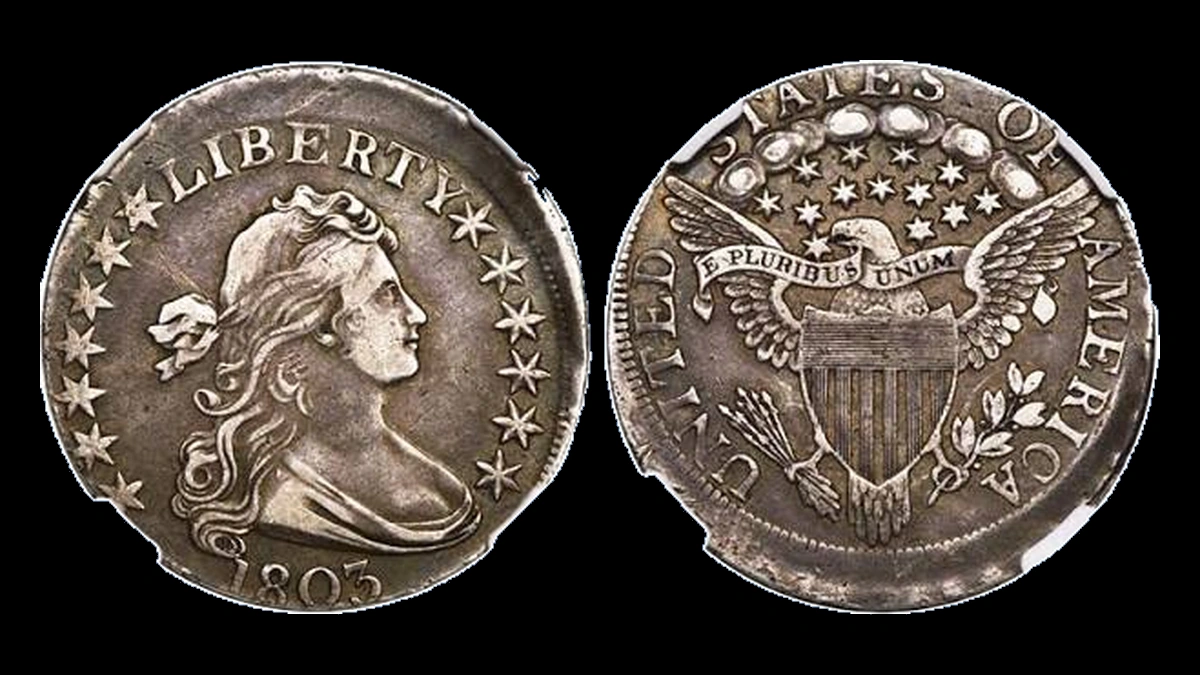
The documented coin’s design shifted toward seven o’clock on the front. A wide unstruck area remains opposite it, near one o’clock.
The lower portions of the date and part of STATES on the back missed the strike. Enough detail survives to identify the coin as an 1803 half dollar.
NGC graded it VF35, a worn coin with useful remaining detail. The auction description puts the displacement at ten percent.
How to Identify
Read the surviving date before judging how far the strike moved. On the reference coin, the lower date and the top of STATES reach the struck area’s boundary.
Inspect the opposite blank crescent for filing or grinding. Original unstruck metal is different from a finished design that has been removed later.
Photograph both faces together. An unusually broad border on one face alone can result from a misaligned die and does not establish this error.
Use the normal weight and size above as supporting checks on a loose coin. The original blank area paired with missing design remains the clearer visual evidence.
What It’s Worth
Estimated range: $4,000–$6,000 for a similarly clear ten-percent off-center half with comparable remaining detail. The readable year and surfaces are important parts of that comparison.
Coin World reports the VF35 sale at $5,405 at Heritage in September 2016. This is a historical sale, not a current offer.
A slightly uneven early half does not automatically fall within the same bracket. It needs a similarly obvious misplaced strike rather than just an irregular-looking rim.
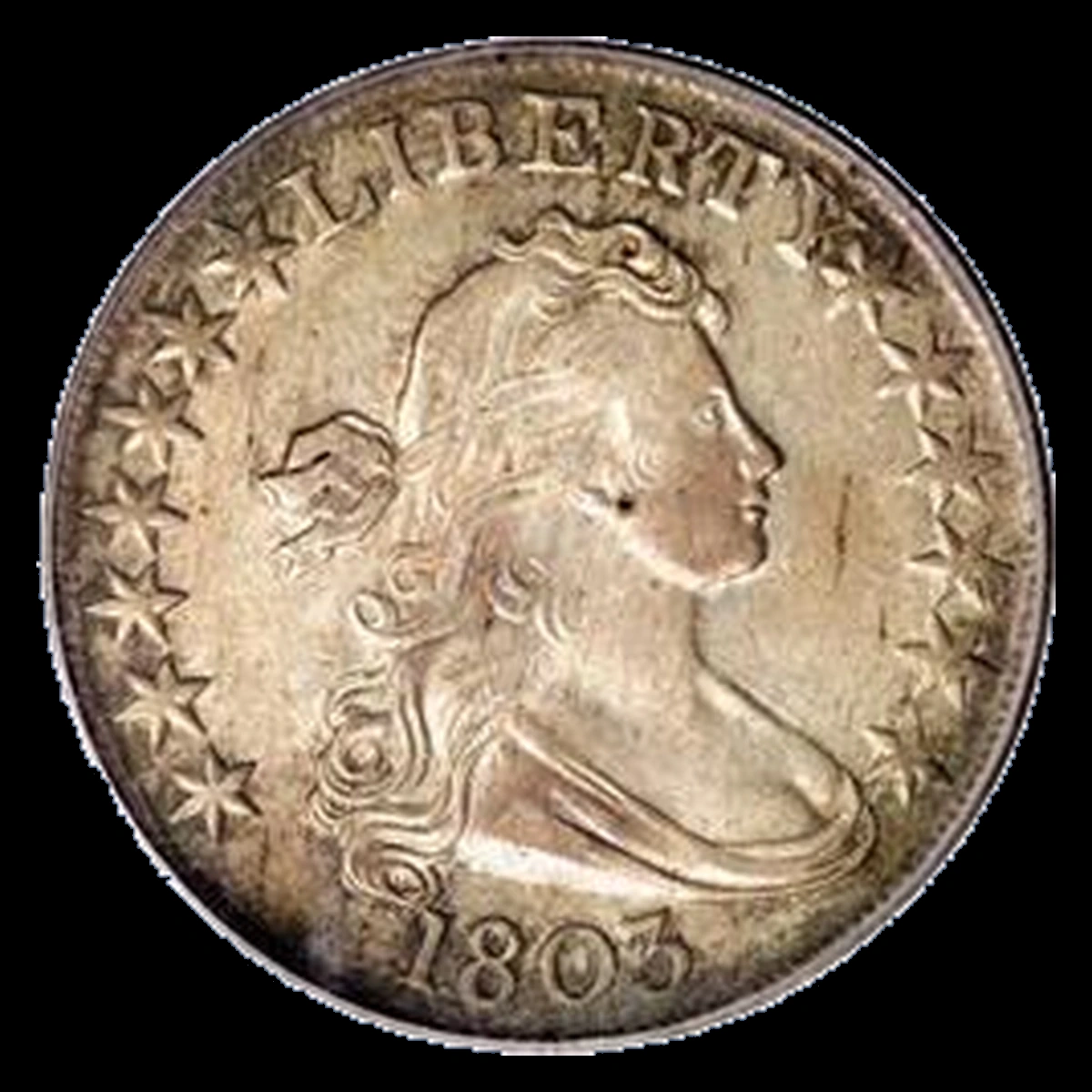
3. 1803 Half Dollar Shield Lines Beside Liberty’s Ear: Die Clash Error
The shield belongs on the reverse, so lines from it beside Liberty’s ear are out of place. Heritage described these transferred marks on an O-103 half.
They formed after the front and back dies struck each other without a coin blank between them. The damaged tools then passed traces of the opposite design to later coins.
A different O-103 example shows faint marks between the bust and date. Each coin needs its own reference image rather than a combined picture of every reported location.
How to Identify
Study the shield on the reverse, then compare its line pattern with the unexpected marks beside the ear. A recognizable relationship to the opposite design is the useful clue.
Use side lighting and magnification to separate those traces from normal hair detail and scratches. A random line beside the portrait is not enough.
If you are examining the bust-to-date marks, use the photograph of that separate example. Damage from another coin pressed against it later does not prove that the dies clashed.
What It’s Worth
Estimated range: $1,000–$6,500 for comparable worn through lightly worn examples. Better remaining detail and cleaner surfaces can explain a large part of the difference.
A PCGS AU53 O-103 with clash marks reached a $5,500 hammer price in January 2008. A hammer price is the winning bid before the buyer’s fee.
That same coin also has cracks, discussed next. Its price cannot be assigned only to the clash or counted twice.
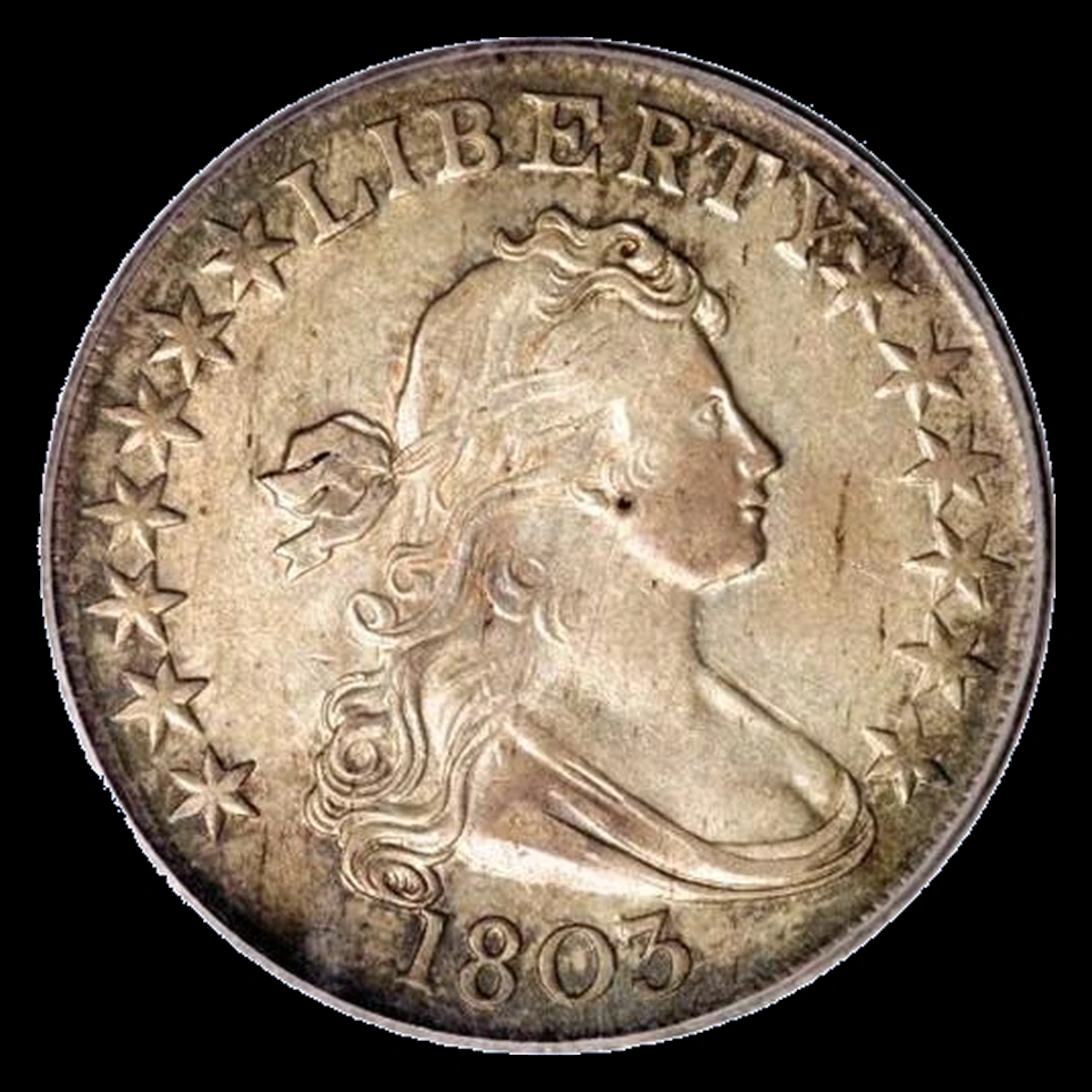
4. 1803 Half Dollar Raised Lines Through LIBERTY: Die Crack Error
The Large 3 auction coin has raised lines through LIBERTY but lacks a crack through the clouds below STATES. A missing expected line is therefore part of its description.
A Small 3 O-104 instead shows an arc near STATES and a stronger line reaching the T in LIBERTY. Large 3 and Small 3 refer to the size of the final date number.
A die crack leaves a ridge when coin metal enters a fracture in the stamping tool. Different dies and stages of wear can leave different routes.
How to Identify
Decide which date form you have before comparing the crack paths. A Large 3 image should not be used as the only guide for a Small 3 coin.
Follow LIBERTY with a magnifier, then inspect the reverse near STATES. Compare both faces with the same reference coin.
Change the light to tell a raised ridge from a groove cut by a scratch. A larger broken area at the rim may belong to the cud category instead.
What It’s Worth
Estimated range: $1,000–$6,500 for comparable worn examples, depending on variety and remaining detail. Heavy wear or damage can matter more to price than the strength of a line.
The Large 3 PCGS AU53 reached $5,500 before fees in January 2008. This is the shared clash-and-crack example, not a second independent transaction.
A Small 3 half still needs a comparison from its own variety and condition. More cracks do not automatically mean a higher price.
Conclusion
Begin with the feature’s shape: a rim-connected patch, a blank crescent, transferred design lines, or a narrow raised route. Then use the correct date form and die variety to refine the match.
The $500–$6,500 comparisons cover worn coins with different features. Remember that the AU53 clash and crack share one $5,500 winning bid, with fees extra.