Rare 1899 Dime Errors (List & Pictures)
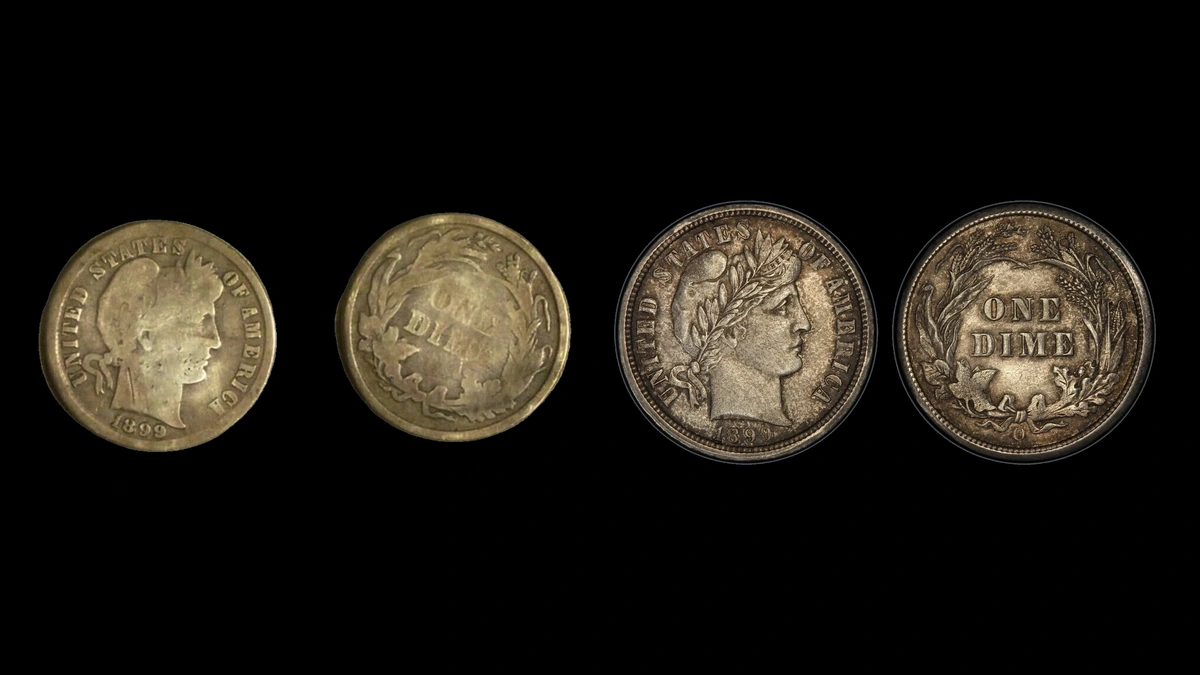
A widened outline and an extra numeral stroke call for different checks among 1899 dime errors. Estimated whole-coin values span $50–$1,500, including a 10% off-center dime that sold for $312 in June 2023.
Compare the complete designs first, then use the mintmark to choose the right small-detail reference.
| Visible clue | Error or variety | Estimated value |
|---|---|---|
| Design missing beside blank metal | Off-center strike | $200–$1,500 |
| Complete design on a wider coin | Broadstrike | $100–$800 |
| Another rounded shape beside O | Repunched mintmark | $50–$600 |
| Earlier strokes beside both 9s | New Orleans repunched date | $75–$1,000 |
| Numeral tops among the border teeth | San Francisco misplaced date | $75–$1,200 |
1. 1899 Dime Blank metal borders an incomplete design: Off-Center Strike Error
A blank positioned too far to one side can receive only part of the dies’ impressions. The coin retains unused metal opposite the area where the design extends beyond its edge.
Two reported Philadelphia examples illustrate different degrees of movement: a 10% off-center NGC VF25 and a 5% off-center PCGS MS62. Their percentages, grades, and sale information should remain separate.
How to Identify
Compare both faces without cropping away the blank area. The relationship between each design and the same outline helps distinguish an off-center strike from a single misaligned die that leaves the opposite face centered.
Keep enough surviving design to establish a Barber dime and a readable 1899 date. A blank crescent alone identifies neither the denomination nor the year.
Inspect the transition between struck and unstruck metal with a 10× magnifier. Filing, added material, or later flattening can alter the outline without reproducing a genuine displaced strike.
An ordinary 90% silver Barber dime started at 2.50 grams and 17.9 millimeters, with a grooved edge. Record measurements on an accessible coin, allowing for wear and any spreading associated with the error.
What It’s Worth
The estimated range is $200–$1,500 for readable-date coins through attractive lower unworn grades. The supplied market summary reports $312 at Heritage in June 2023 for the 10% off-center NGC VF25.
VF25 indicates a worn coin with clear remaining design. The separate MS62 was unworn with noticeable marks, but no sale price is supplied for it.
The MS62 label does not independently establish the estimate’s upper end. Compare the actual displacement, remaining date, and surfaces together.
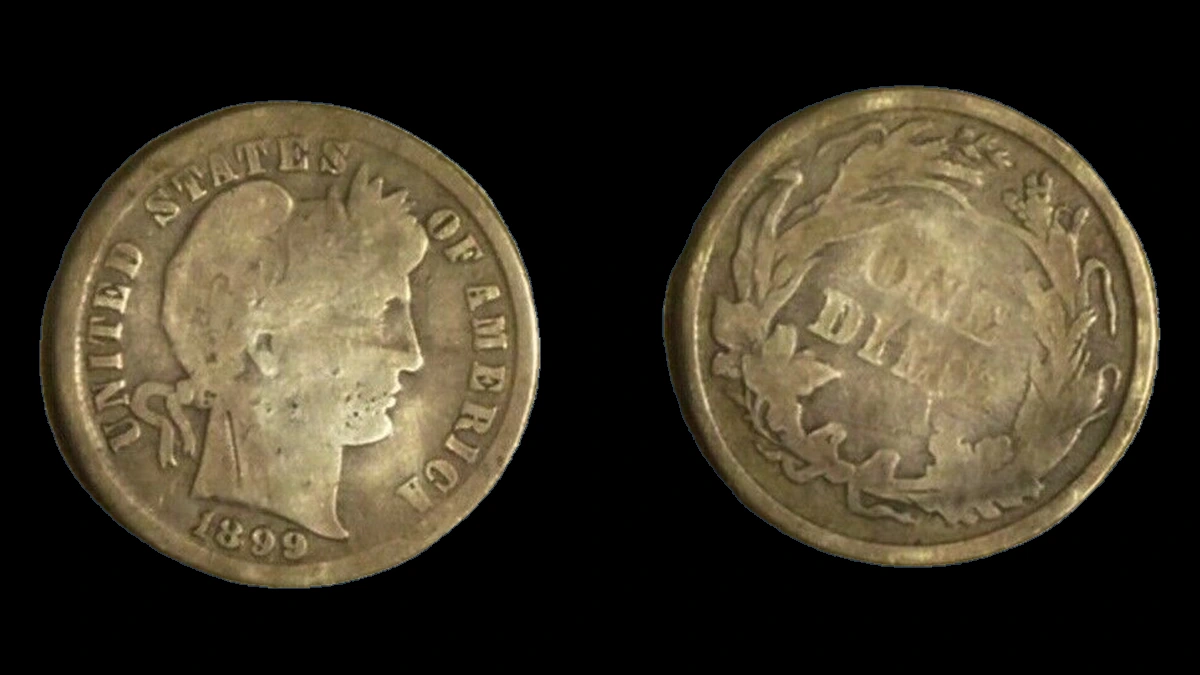
2. 1899 Dime The complete design fits inside a wider outline: Broadstrike Error
A broadstruck dime can spread beyond its normal width while retaining all of its design. The collar, the ring that controls diameter and normally forms the edge grooves, failed to contain the metal as intended.
The reported Philadelphia example was graded ANACS AU Details with a net XF40 assessment. Cleaning and corrosion affected its condition, but those problems are separate from the original spreading during the strike.
How to Identify
Examine the date and every outer design element on both faces. Missing design at one side calls for considering an off-center strike rather than identifying a broadstrike from width alone.
Measure the widest and narrowest portions if possible. The original metal spreads outward, so the weight should remain reasonably close to the normal starting weight after allowing for wear.
Look for abnormal collar contact and incomplete or missing edge grooves. Later hammering can also widen a coin, but commonly crushes design that was already present.
What It’s Worth
Worn through lower-grade unworn examples have an estimated $100–$800 range. The reported Philadelphia broadstrike brought $161 at Heritage in June 2005.
Its cleaning and corrosion limit comparison with an example retaining original surfaces. The amount of visible expansion and clarity of the full design also affect appeal.
A barely widened coin does not necessarily compare closely with a dramatic broadstrike. Describe the physical result and condition before applying the range.
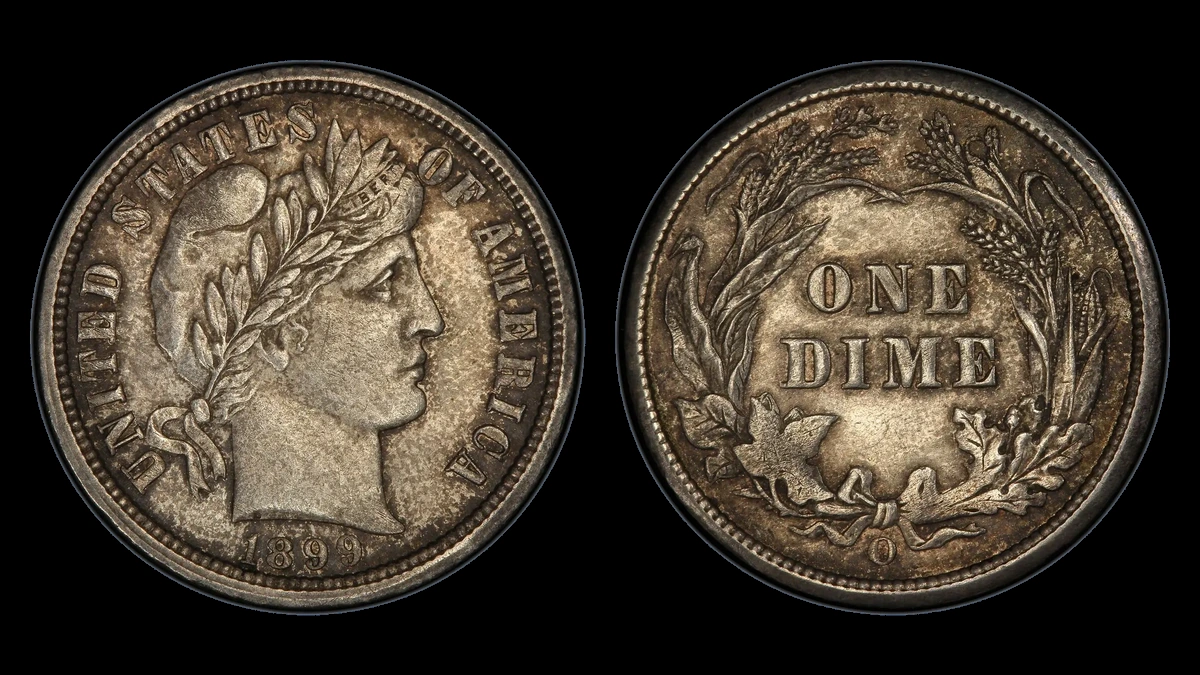
3. 1899 Dime An extra rounded outline borders O: Repunched Mintmark Error
The 1899-O FS-501, also written O/O, carries evidence of an earlier mint-letter position. A second rounded outline survives beside the final O beneath the wreath bow.
Repeated entry of the punch placed that extra shape in the die before coins were struck. The resulting feature can repeat on multiple dimes made from the same tool.
How to Identify
Locate the complete O in a full reverse view before enlarging it. Compare the relationship between its primary and secondary outlines with an attributed FS-501.
Keep the coin stationary while moving the light. A physical remnant stays in the metal while highlights move around it.
Inspect for a gouge, flat shelf, or displaced metal next to an impact. Those can make an ordinary mintmark look thick without reproducing an earlier rounded punch impression.
What It’s Worth
The estimate is $50–$600 for worn through attractive lightly worn whole coins. PCGS records a $115 Heritage sale on May 22, 2023, for an AU Details example.
AU means slight wear, while Details indicates a condition or surface problem. That result should not automatically price a coin with undamaged surfaces.
Exceptional unworn specimens lie outside the worn-coin scope used here. The clarity of the second outline remains relevant at any grade.
4. 1899 Dime Both 9s retain earlier strokes: Repunched Date Error
On the New Orleans FS-301, numeral remnants sit beside both 9s in the normal date. They record an earlier position of the date punch in the obverse die.
These marks differ from numeral tops left far below the date on the San Francisco variety. Their location beside the main figures is part of the identification.
How to Identify
Confirm the O below the reverse bow, then compare both 9s with the PCGS FS-301 photographs. The remnants should match the pictured numeral shapes and positions.
Follow raised pieces rather than a scratch cut into the surface or a broad flat shelf. A legible main date may survive after wear has erased too much of the smaller detail for a secure attribution.
Check the entire date arrangement before accepting a single suggestive mark. Normal weight and diameter do not prove a date variety.
What It’s Worth
The supplied whole-coin estimate is $75–$1,000 for worn examples with readable remnants. Attractive coins with only slight wear can support stronger comparisons.
This is not a documented FS-301 auction range. The $115 O/O sale concerns a different variety and provides only same-year context.
Judge the repeated date’s clarity, wear, and surface problems on their own merits. A mintmark-variety sale does not establish a date-variety premium.
5. 1899 Dime Three numeral tops enter the border teeth: Misplaced Date Error
On the 1899-S variety, parts of an 8 and both 9s appear beneath the normal date among the denticles, the small border teeth. A date punch placed too low in the die left these stray tops behind.
The full date still occupies its usual position above them. The Barber dime variety reference shows the relationship between the normal numerals and the misplaced fragments.
How to Identify
Confirm the S on the reverse and photograph the normal date with the denticles in one view. All three extra tops should fit the spacing and positions of the known pattern.
A rim knock can flatten teeth or push up irregular metal. It does not by itself create a coordinated set of recognizable numeral fragments.
Compare the 8 and both 9s individually under magnification. An isolated bump below the date is weaker evidence than the complete arrangement.
What It’s Worth
The estimated range is $75–$1,200 for worn through lightly worn whole coins. Border wear can obscure the very details needed to establish the variety.
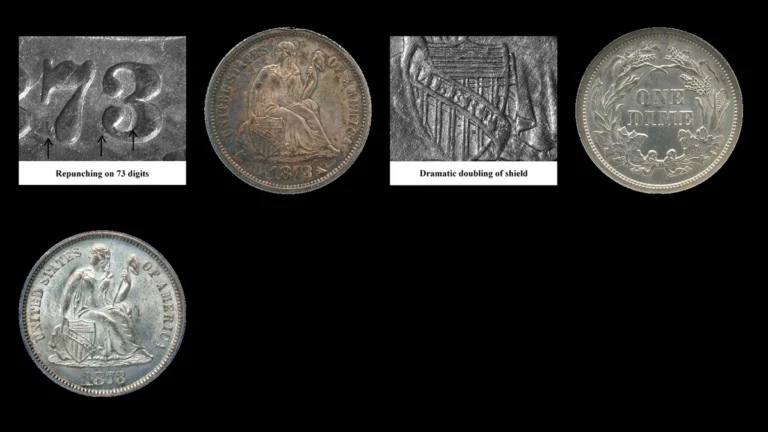
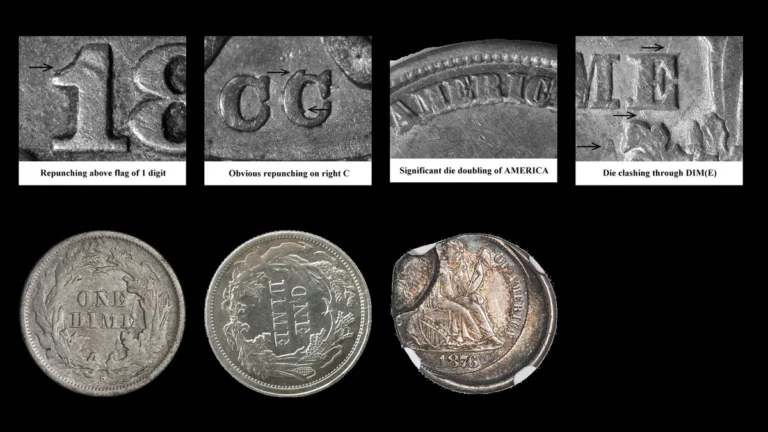
An 1859 Seated dime with a misplaced date sold for $118.12 at GreatCollections in October 2024, graded VF30. It retained clear detail despite wear.
That coin has a different year and design. Its result illustrates a modest price for the same general mistake, not a confirmed 1899-S transaction.
Conclusion
First decide whether the entire design is spread, displaced, or normally positioned. For smaller varieties, the mint and the precise location of extra strokes separate an O/O, repeated 9s, and low numeral tops.
The $50–$1,500 estimates apply within the stated condition ranges. Preserve the distinctions between actual sales, different-feature comparisons, and different-year examples when judging a particular coin.