Rare 1866 Dollar Errors (List & Pictures)
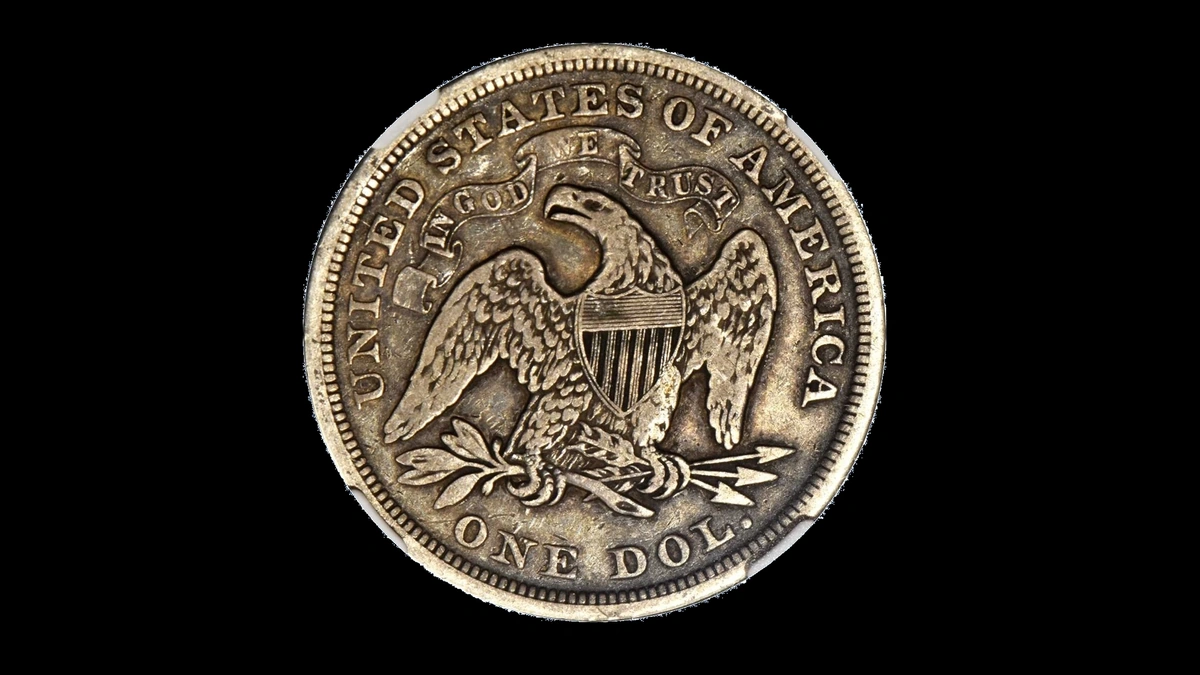
Two different features can belong to the same 1866 dollar: an earlier date-punch trace and doubled words above the eagle. An ordinary MS64 example with both sold for $7,800 in April 2019.
This 1866 dollar errors guide also covers a small blank flaw beside a star, with estimated whole-coin values of $600–$30,000. Check each feature separately, but count the price of a shared coin only once.
1. 1866 Dollar Earlier Strokes beside the Date: Repunched Date Error
Ordinary 1866 dollars cataloged as OC-1 have remnants of an earlier date-punch position. The punch left those shapes in the die before the dollar was struck.
Some proofs also have an extra stroke at the bottom of the 1, while other proof pairings do not. A low or slanting date alone does not establish repunching.
How to Identify
For ordinary OC-1, compare the complete date with a labeled photograph of that variety. Look for raised remnants that follow numeral shapes rather than guessing their direction.
On a proof, inspect the base of the 1 for the documented extra stroke. Establish the specially prepared proof finish before borrowing its date comparison or price.
What It’s Worth
$600–$30,000 spans the ordinary and proof groups. Ordinary repunched-date examples are estimated at $600–$12,000 and matching proofs at $1,500–$30,000.
An ordinary PCGS MS64 OC-1 brought $7,800 at Heritage in April 2019, as recorded in NGC’s auction archive. That same coin also has doubled reverse lettering.
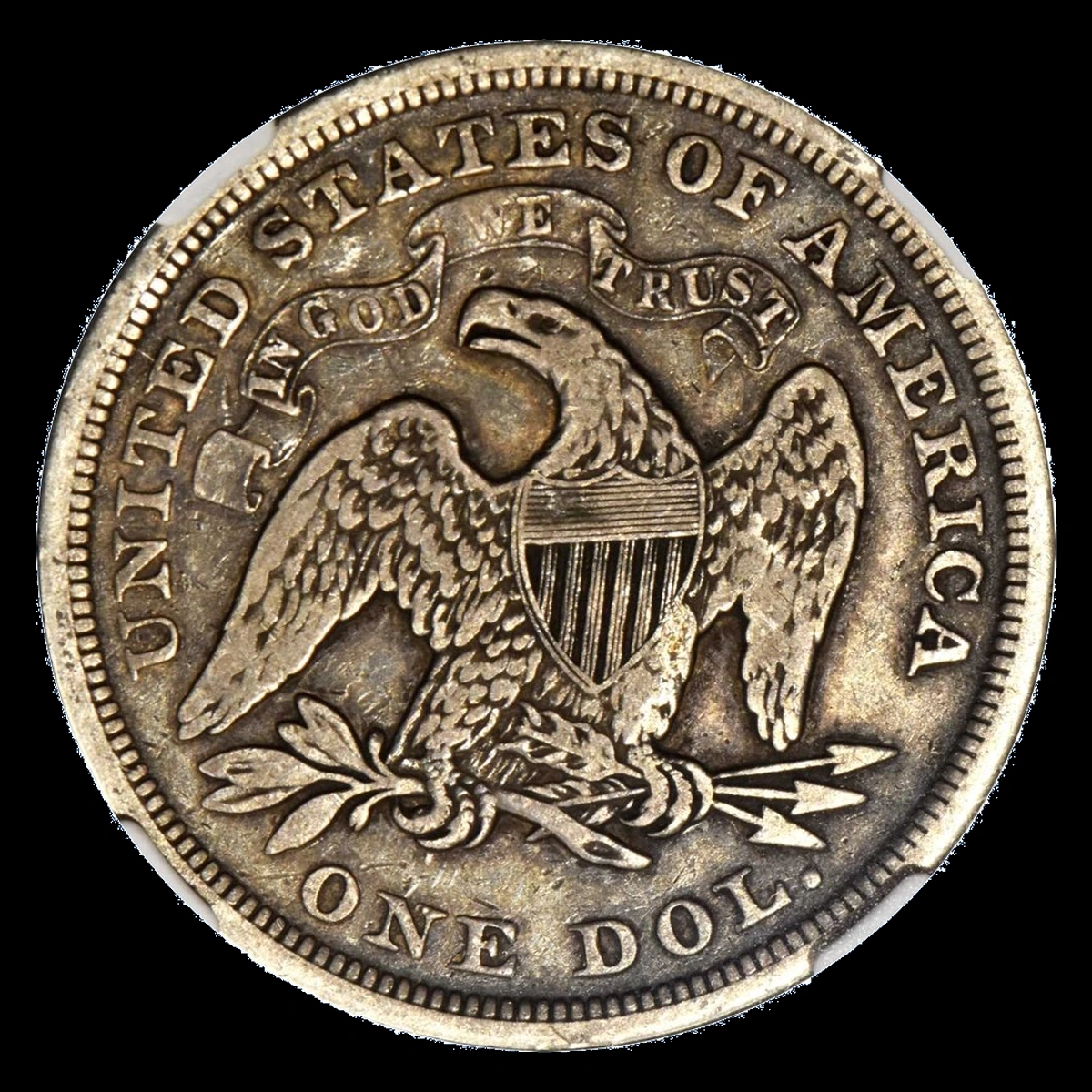
2. 1866 Dollar Extra Edges in GOD WE TRUST: Doubled Reverse Error
OC-1 ordinary dollars can have repeated lettering above the eagle as well as the repunched date. The reverse feature needs its own close-up even though it shares the coin.
Proof references trace their doubling to the hub, the master tool used to make dies. The described proof pattern affects GOD WE TRUST and specifically excludes IN.
How to Identify
Follow several letters in GOD WE TRUST under changing light. On the proof comparison, use IN as the nearby word that is not described as doubled.
Ordinary OC-1 requires its own labeled photograph rather than assuming an identical proof pattern. Flat strike shelves and cleaning scratches differ from matching raised letter contours.
What It’s Worth
$600–$30,000 covers the same broad markets: $600–$12,000 for ordinary examples and $1,500–$30,000 for proofs. Preservation and correct finish identification determine the useful comparison.
A cleaned OC-1 with both features sold for $1,980 in February 2025, according to PCGS’s Stack’s Bowers record. The $7,800 MS64 in the previous section is another whole-coin result, not a date price to add to a reverse price.
3. 1866 Dollar A Small Flaw beside Star Thirteen: Planchet Defect Error
A collector describes a small original blank defect beside two meeting points of the thirteenth front star. The reported dollar graded PCGS AU58, indicating slight circulation wear.
The account calls it a planchet flaw, meaning a fault in the blank metal. It does not establish that a layer peeled away or that an object blocked the strike.
How to Identify
Locate star thirteen and keep the complete star in the enlarged view. Match the specific position rather than choosing any small mark near the border.
Use light from different directions to examine the outline and surrounding surface. Do not probe the spot to see whether metal will lift, since that would alter the evidence.
What It’s Worth
$600–$6,000 is the estimate for an authenticated ordinary dollar with a small original flaw in worn through lightly worn condition. The AU58 report provides no disclosed auction price.
Most of the value comes from the date and preservation. A small star-side flaw should not be compared with a large missing piece or a split coin.
Conclusion
Date remnants and doubled motto letters can identify two features on one OC-1 dollar, while the star-side flaw needs a different surface examination. Proof comparisons must remain tied to proof coins.
Use one whole-coin valuation even when several features occur together. Preserve the small details and avoid turning a general blank-flaw description into a more specific cause without supporting evidence.