Rare 1854 Dollar Errors (List & Pictures)
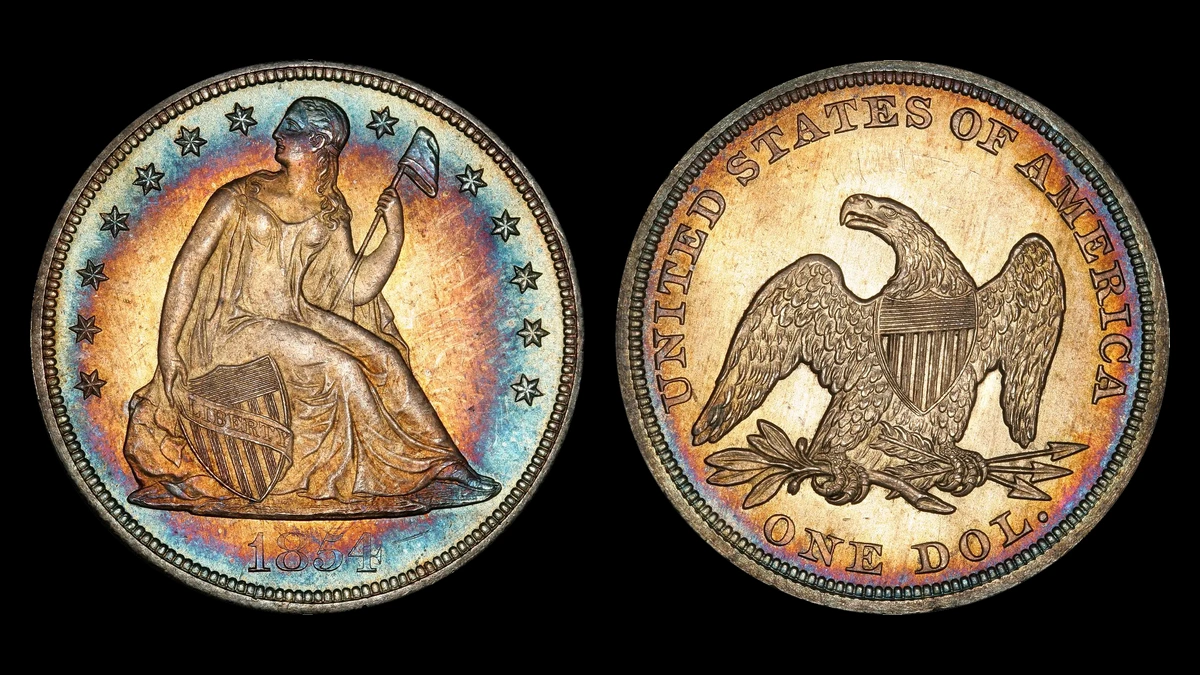
A later-made Proof carrying the 1854 date sold for $14,100 in April 2016. Estimated whole-coin values for 1854 Liberty Seated dollar errors span $1,500–$40,000 across ordinary coins and special collector issues.
Start at the date, distinguishing the repeated foot of 4 from stray digits on the Proof restrike, then inspect the documented reverse wing flaw. A restrike bears an earlier date than its actual manufacture.
1. 1854 Dollar A Second Foot beneath 4: Repunched Date Error
The ordinary-strike OC-1 variety has a small repeated outline at the bottom of the final date digit. An earlier date-punch position remained in the die after another impression was entered.
Coins copied that pre-existing tool detail. The small extra stroke does not mean the finished dollar received another complete strike.
How to Identify
Use an attributed ordinary-strike OC-1 photograph and keep all four digits visible. The lower remnant should follow part of the 4’s shape rather than form an unrelated dent.
Inspect the main digits and surrounding surface for alteration, cuts, or pushed metal. A bright surface does not convert an ordinary dollar into a Proof comparison.
What It’s Worth
$2,000–$25,000 is the estimated whole-coin range from worn through attractive unworn examples. Much of the total values the scarce date.
PCGS records $7,800 in September 2025 for an Uncirculated Details OC-1 repaired around a scrape. It retained unworn detail but received no normal numerical grade, and the repair remains separate later damage.
2. 1854 Dollar Number Fragments above and below 54: Misplaced Date on a Proof Restrike Error
The documented Proof restrike has stray number fragments away from the main date, above and below 54. Its date also sits at an angle, but that tilt alone does not establish the misplaced impressions.
The fragments originated when date punches were applied in incorrect positions on the die. This is a different pattern from the ordinary coin’s repeated foot of 4.
How to Identify
First establish the coin as the appropriate Proof restrike. Proofs were specially prepared collector coins, and later polishing cannot provide that identity.
Examine the rock base above 54 and the border below it against the attributed photograph. Seek recognizable numeral fragments rather than joining natural rock lines and random bumps into a complete imaginary date.
What It’s Worth
$10,000–$40,000 is the estimated range for matching Proof restrikes in differing condition. The PCGS PR63 Cameo example brought $14,100 at Heritage in April 2016.
PR63 describes a Proof with noticeable marks, and Cameo indicates frosted devices against reflective backgrounds. The price values the complete special issue rather than each stray fragment.
3. 1854 Dollar A Horizontal Defect across the Left Wing: Planchet Flaw Error
The eagle’s wing on the viewer’s left is crossed by a horizontal flaw on an ordinary-strike dollar cataloged by Heritage. The description places the defect in the original metal blank, or planchet.
That coin had no circulation wear but had been improperly cleaned. Its local blank flaw and later surface treatment are separate facts, neither implying that an entire layer split away.
How to Identify
With the eagle upright, include surrounding feathers when photographing the horizontal defect. Examine its depth and how the design meets the affected metal.
Parallel grooves, fresh cuts, and pushed-up silver can suggest a scratch made after striking. Compare the deeper flaw separately from cleaning lines and do not use dark color as proof of origin.
What It’s Worth
$1,500–$15,000 is an estimated whole-coin range for comparable ordinary-strike examples. The NCS Uncirculated Details coin sold for $4,600 in April 2007.
That amount included both the scarce dollar and its cleaned condition. A larger original defect does not necessarily add more value when surrounding surfaces are less desirable.
Conclusion
The 1854 dollar comparisons depend on where the feature occurs and how the coin was made. An ordinary OC-1 has the repeated foot of 4, while the Proof restrike carries separate misplaced fragments above and below the final digits.
The wing flaw needs its own surface examination. Within the $1,500–$40,000 estimates, preserve the distinctions between ordinary strikes, restrikes, and later cleaning or repair before applying any auction figure.