Rare 1858 Dollar Errors (List & Pictures)
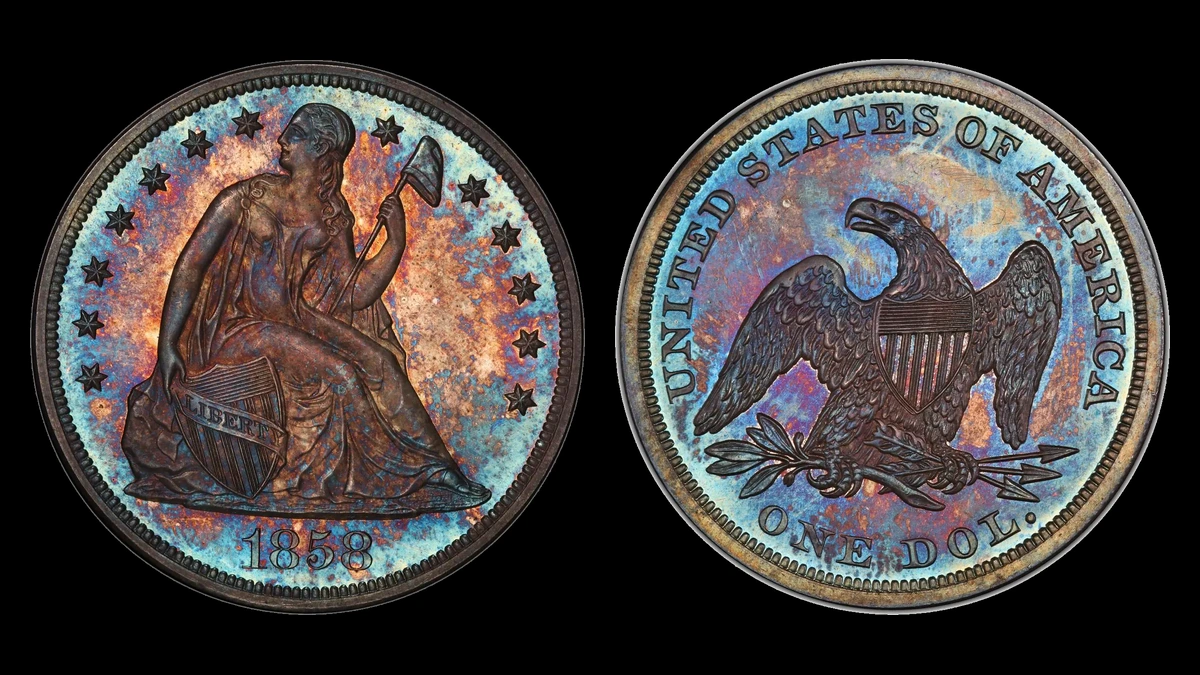
An exceptionally preserved 1858 Proof dollar brought $102,000 in January 2022. This 1858 Liberty Seated dollar errors guide examines a reported repunched date within an estimated whole-coin range of $3,000–$110,000.
Photograph all four digits and compare any extra strokes carefully, since the supplied report does not identify exact numerals or directions.
1858 Dollar Extra strokes beside the date: reported repunching Error
A published Seated dollar list includes 1858 among dates with reported repetition on multiple numerals. It does not specify which digits show the feature or where the earlier strokes lie.
That makes the reference a starting point for comparison. It does not provide a complete pattern that can be assigned from one thick-looking numeral.
Repunched dates originate when a date punch enters the die more than once in slightly different positions. The steel tool retains part of an earlier impression and can transfer it to the coin.
The earlier trace may look like a small curve or short stroke beside the final digit. Other processes can create apparent doubled edges, so shape and surface relief both matter.
All 1858 Liberty Seated dollars were made as Proofs, specially prepared collector coins. There is no ordinary circulation-strike issue to which this report should be extended.
How to Identify
Start with a clear photograph of the entire date rather than selecting one suspicious digit. The relationship among all four numerals helps preserve the context of a possible pattern.
Enlarge each digit separately while keeping the full-date image available. Record where the extra shape lies without naming a repunch direction that the source did not supply.
Use magnification and light from several sides to determine whether the line is raised. A scratch may cut across both a digit and its surrounding field without following the numeral’s contour.
A thin flat shelf can also arise from movement during striking. It should not automatically be interpreted as an earlier date-punch position.
Compare any suspected remnant with an identified 1858 dollar and ask a specialist to evaluate the exact feature. The broad published report cannot say which digit a new candidate must show.
Choose dollar references rather than photographs of other 1858 denominations. Sharing a date does not mean different dies carried the same repeated outlines.
Preserve the reflective surface while examining it. Cleaning to clarify a small mark can introduce scratches and compromise the very evidence under review.
What It’s Worth
Genuine 1858 Proof dollars have an estimated whole-coin range of $3,000–$110,000 from heavily impaired through exceptionally preserved examples.
PCGS records $102,000 in January 2022 for a PR67+ Cameo sold at Heritage. Cameo describes frosted designs contrasting with reflective fields.
The result is a high-grade Proof comparison, not a confirmed sale of the reported repunched-date pattern. No separate measured variety premium was supplied.
A scratched or worn Proof does not enter the same price category merely because a date line looks unusual. The complete coin’s preservation remains central to any useful comparison.
Conclusion
The reported 1858 repunched date needs a full-date photograph and a specific matching pattern. Extra strokes should be examined as physical details, with scratches, reflections, and flat striking shelves considered before attribution.
All examples of this dollar issue are Proofs, and the $102,000 record reflects exceptional preservation. It supplies whole-coin market context without proving the reported variety or assigning value to an unexplained date mark.