Rare 2018 American Innovation Dollar Errors (List & Pictures)
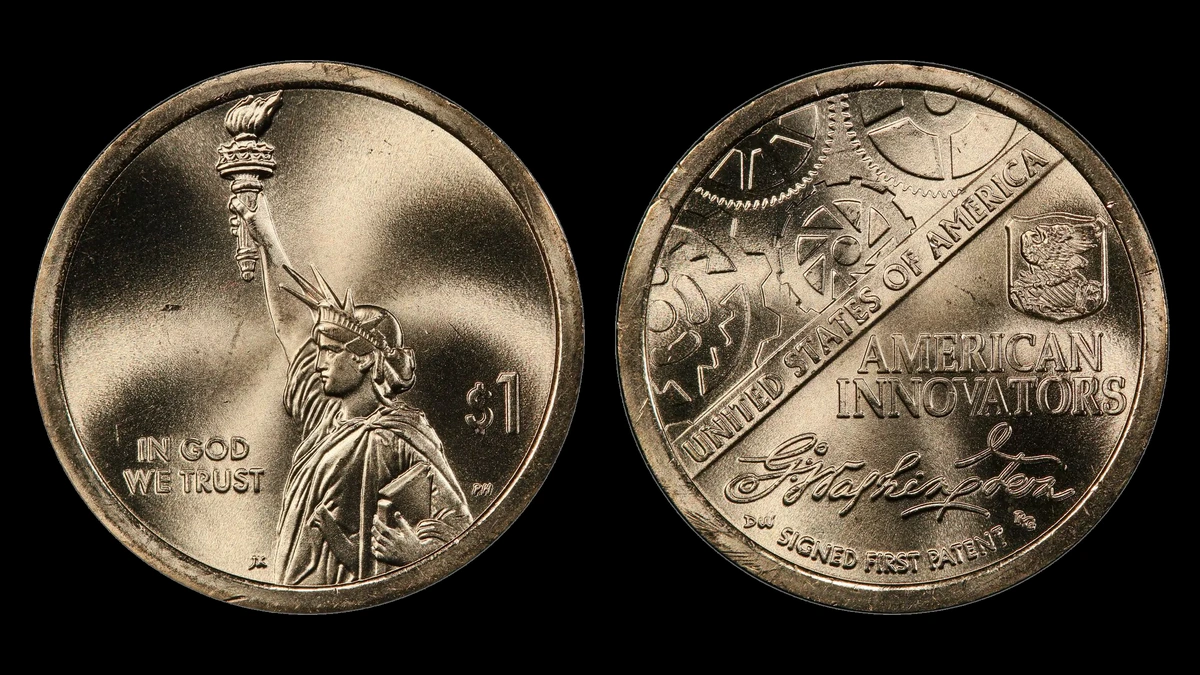
The key question for 2018 American Innovation dollar errors is what survives on the edge: shallow lettering, two inscriptions, or none. Those three possibilities carry supplied estimates of $25–$650 and need different photographs.
The available auction comparison is $288 for a 2007-P Adams dollar with overlapping edge lettering in February 2022, not a 2018 sale. Identify the introductory patent design, then follow the entire edge before choosing a category or price comparison.
1. 2018 Dollar Clear Characters Fade into Shallow Ones: Weak or Partial Edge Lettering Error
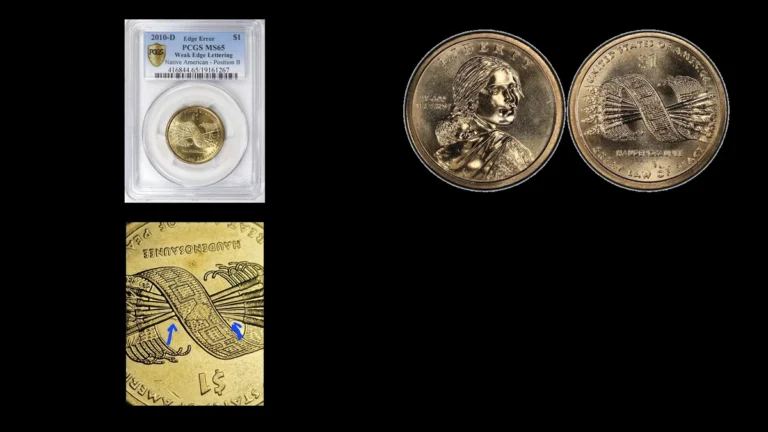
A seller listed a 2018-D Innovation dollar as PCGS MS66 with Weak Edge Lettering, Position A. The relevant feature is reduced or interrupted lettering depth, rather than Position A itself, which is a normal orientation.
Ordinary dollars receive their edge text in a separate operation. Insufficient contact can leave shallow characters, although wear or later smoothing can also make lettering difficult to read.
How to Identify
Locate a readable date digit or D and follow the inscription from that anchor into the faint area. Keep the lighting consistent, then change its direction deliberately to test whether glare merely concealed normal strokes.
Compare the same section with a normal 2018-D at similar magnification. Examine the edge and adjoining rims for scraping, polishing, and rounding from wear.
A surviving original letter rules out completely missing lettering, even if most of the circumference looks blank. The remaining characters are useful evidence and should not be rubbed to make them clearer.
For an encapsulated coin, use the visible edge and additional photographs while leaving the holder intact. A holder description cannot replace a view showing the actual shallow impressions.
What It’s Worth
$25–$300 is the supplied estimate for an authenticated weak-lettering example. The Denver MS66 listing asked $2,750 or Best Offer, which is not evidence that a buyer paid that amount.
MS66 indicates an unworn coin with relatively few marks. Clear weak-to-strong transitions and an undamaged edge provide a more useful comparison than an isolated blurry letter in a photograph.
2. 2018 Dollar Two Words Occupy the Same Edge: Repeated Lettering Error
The introductory-coin guide reports repeated edge inscriptions without identifying a particular certified 2018 specimen. Another pass through the ordinary edge-lettering equipment can place a second string over the first.
The strings can face the same way or opposite ways. A normal single inscription may also face either direction, so orientation alone does not establish a repeated pass.
How to Identify
Choose a complete word and follow its sequence before trying to read the overlapping characters. A second recognizable word, date, or mint letter helps distinguish another inscription from random contact dents.
Check several adjoining sections for continuity. Both sets must occupy the same metal edge, rather than being separate photographs of different coins or one normal inscription shown twice.
If the text runs in opposite directions, rotate the photograph to read each set without losing their shared location. Keep both face photographs with the edge views to establish the introductory Innovation identity.
What It’s Worth
$50–$500 is estimated for an authenticated 2018 repeated-edge example. PCGS records $288 in February 2022 for a 2007-P Adams overlapped-edge dollar in MS66.
That is a different-year Presidential-dollar result. The 2018 range remains an estimate, with the clarity of both strings and the coin’s condition central to any eventual comparison.
3. 2018 Dollar No Original Characters Anywhere: Missing Edge Lettering Error
The year guide includes completely missing edge text as a reported 2018 type, without establishing a mint. On an ordinary coin, bypassing the lettering stage would leave the date and mint letter absent because neither appears on the faces.
The reverse’s Washington signature and gears identify the introductory patent-themed issue. A 2018 Jim Thorpe dollar instead belongs to the separate Native American series.
How to Identify
After confirming the face design, inspect the full circumference with low-angle light. Overlap edge photographs so that no section containing a faint character falls between them.
Look for polishing tracks, rounded rims, or metal removed to smooth the edge. Normal loose-coin references are 8.10 grams and 26.49 millimeters, but appropriate measurements cannot alone prove that the edge is original.
No mint letter means the mint remains unresolved rather than automatically becoming Philadelphia. Any genuine text that survives requires a weak or partial-lettering description instead.
Keep S Proof and Reverse Proof collector versions separate from ordinary dollars when selecting comparisons. Their manufacture should not automatically be explained by an ordinary coin skipping its separate lettering stage.
What It’s Worth
$50–$650 is a provisional estimate for an authenticated 2018 dollar with wholly absent original lettering. The PCGS guide’s roughly $65–$650 range for 2010 Native American missing-edge dollars supplies another-series guide context, not a completed Innovation sale.
The estimate assumes an unaltered edge and an established issue and finish. Removed metal or a polished rim destroys the evidence needed to support that identification.
Conclusion
Photograph surviving letters as carefully as apparently blank sections. One faint original character distinguishes partial lettering from complete absence, while two connected strings establish a different event altogether.
Position A and Position B are normal directions, and a smooth edge does not identify a mint. Keep the reported Denver specimen, the older Adams auction, and the other-series guide range in their proper roles when assessing an actual 2018 dollar.