Rare 1869 Dollar Errors (List & Pictures)
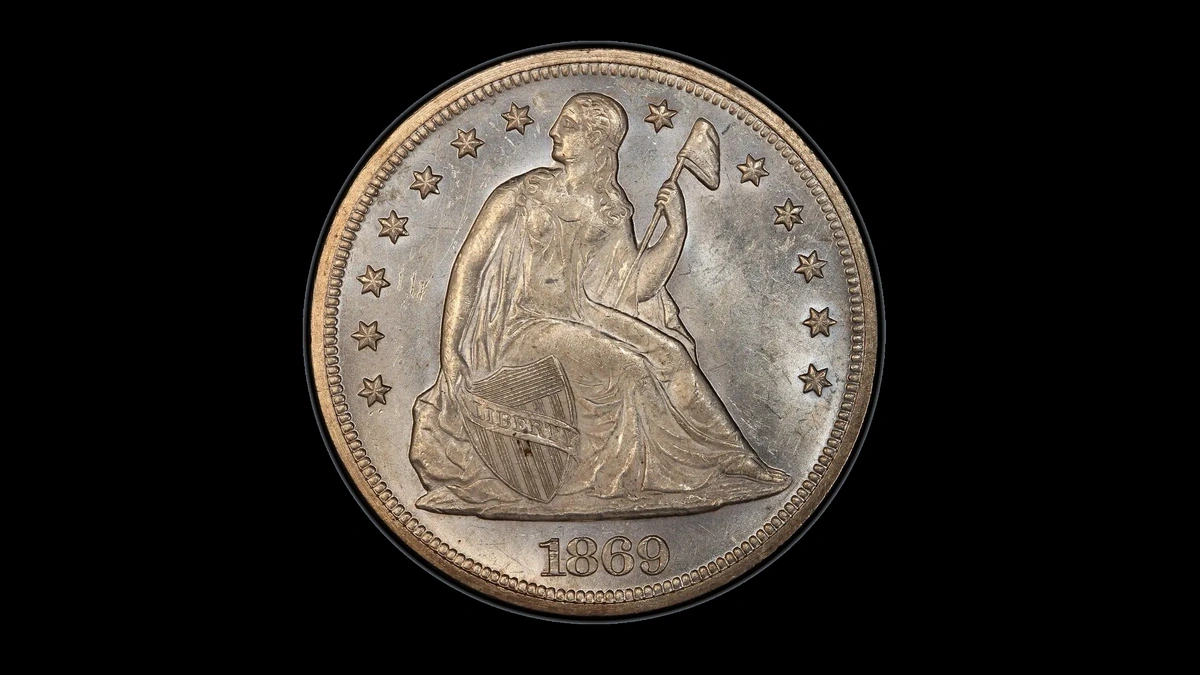
One 1869 dollar can combine doubled designs and an earlier date-punch trace. An unworn example with those features sold for $37,820 in March 2026.
These three groups of 1869 dollar errors have estimated whole-coin values of $400–$50,000. Inspect the shield, reverse motto, and date separately, but keep a shared coin’s price together rather than adding the features as separate purchases.
1. 1869 Dollar Repeated Shield and Motto-Ribbon Detail: Doubled Die Error
An ordinary variety shows extra outlines at the lower front shield and inside the reverse motto ribbon. The repeated detail was in the dies before they struck the coin.
Other ordinary dollars and proofs have separately reported reverse doubling. Their patterns need their own photographs rather than borrowing this shield-and-ribbon combination.
How to Identify
Compare the lower shield first, then keep the full motto ribbon in view while tracing its doubled contours. Several matching details are more useful than one bright edge.
Change the light to rule out reflections and flat strike shelves. Establish proof manufacture separately before using a specially prepared collector coin as the reference.
What It’s Worth
$500–$50,000 is the ordinary-strike estimate, with identified proofs separately estimated at $1,500–$40,000. The NGC MS65 example sold for $37,820 in March 2026.
A reported cleaned worn example brought $528 in June 2025, illustrating the influence of condition. The expensive MS65 also has a repunched 1, already included in its whole-coin price.
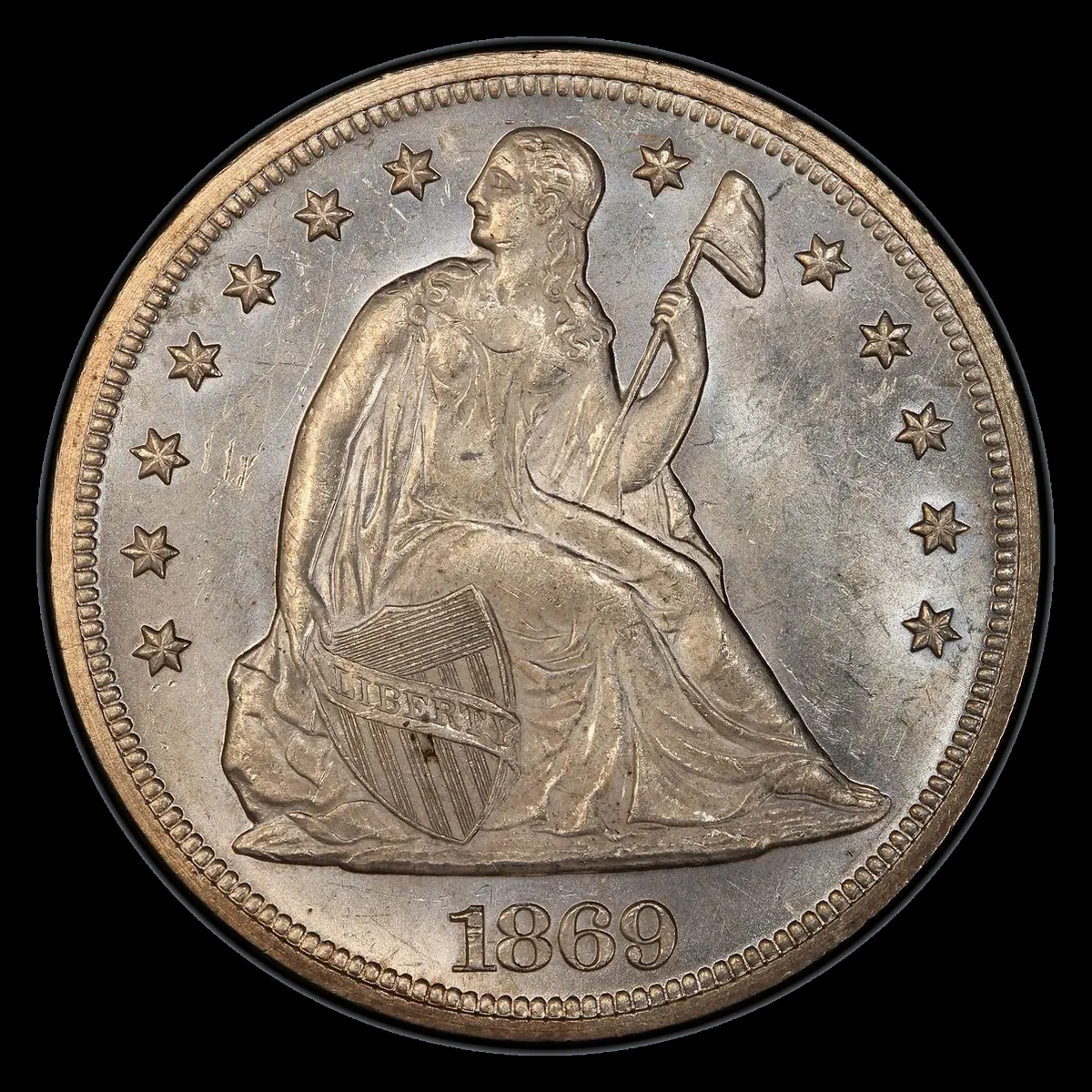
2. 1869 Dollar A Stray Digit or Earlier Stroke: Misplaced and Repunched Date Error
A misplaced digit sits away from the intended date, while repunching leaves remnants beside a normal numeral. Both begin when the date is entered into the die.
Reported patterns include part of 6 in the border teeth, a loose foot of 1 between the normal 1 and 8, and extra strokes at the top or base of 1. Proof date varieties need their own close-up comparisons.
How to Identify
For the misplaced 6, inspect the border below the date and compare the curved remnant with the proper numeral. For the stray 1, examine the space between 1 and 8.
Repunching instead requires a close view of the normal 1 itself. Keep these locations separate and match the correct ordinary or proof variety.
What It’s Worth
$500–$50,000 covers identified ordinary examples; corresponding proofs are estimated at $1,500–$40,000. An AU55 with the stray 1 sold for $1,527.50 in July 2016.
The repunched 1 on the $37,820 doubled-design dollar shares that single sale. It is not another transaction or an added amount.
3. 1869 Dollar A Raised Line between T and E: Die Crack Error
One documented dollar has a thin reverse crack near the top of UNITED, between T and E. The same coin also shows unusual date details.
A separate owner report mentions a reverse crack without specifying its route. That coin should not automatically inherit the T-to-E location.
How to Identify
Keep T and E together in the close-up and trace the line where it meets the lettering. Use changing light to establish that it rises above the background.
A cut with metal pushed to one side can look raised from one angle. Match the complete route, and retain a front photograph if date features are being attributed to the same physical coin.
What It’s Worth
$400–$30,000 is the estimate across circulated and well-preserved unworn dollars with genuine cracks. A small line may add little beside the coin’s date value and condition.
Cleaning or heavy wear can outweigh the feature. If the coin also has misplaced digits, assess the complete combination without adding another full value for its reverse ridge.
Conclusion
Use different close-ups for lower-shield doubling, motto detail, date remnants, and the line across UNITED. Their locations explain why they need separate checks even when some share one coin.
Preservation accounts for much of the wide price spread. Keep ordinary and proof references distinct, and count the well-preserved $37,820 example as one complete dollar with several identifying features.