Rare 1894 Dollar Errors (List & Pictures)
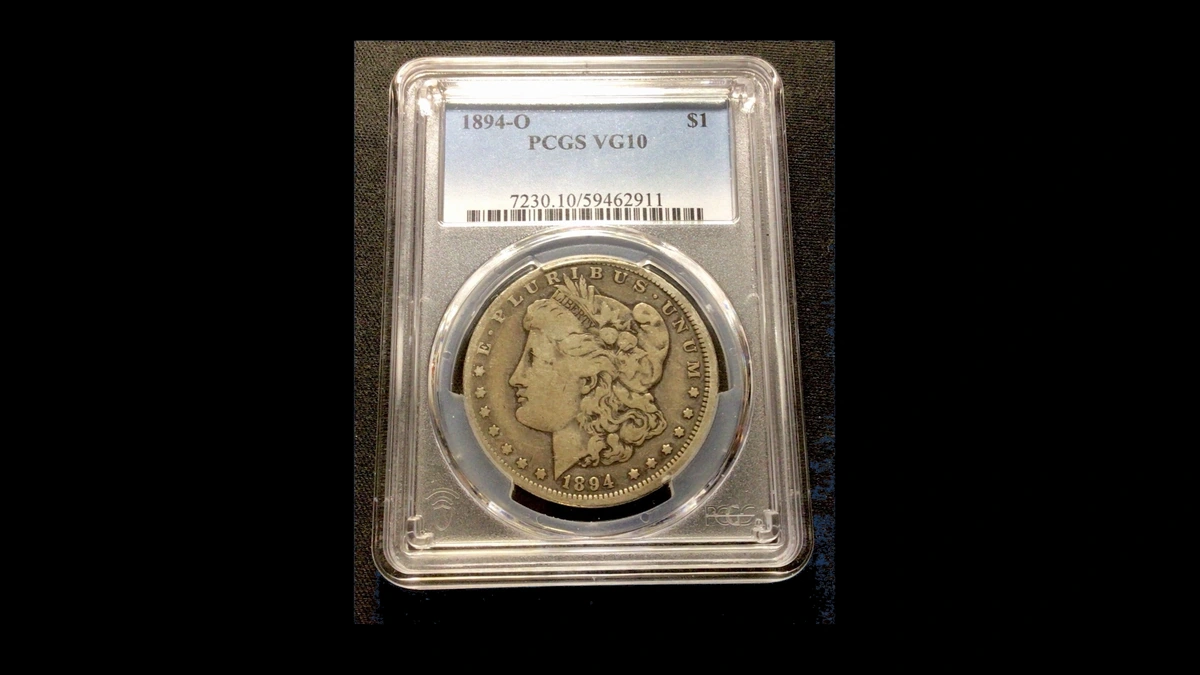
A different-year Morgan broadstrike sold for $1,020 in July 2021. Working values for the 1894 Morgan dollar errors below span $150–$6,000, while a listed 1894-S strike-through’s $5,500 figure is an asking price.
Compare the date, both faces, and the edge before deciding whether a wide border reflects die position, collar contact, or outward spread.
| Where to inspect | Feature | Estimated range |
|---|---|---|
| Serif of 1 on O issue | Repunched date | $150–$2,000 |
| Front lower-left rim versus centered reverse | Misaligned die | $200–$1,500 |
| Changing edge step on S issue | Tilted partial collar | $200–$2,500 |
| Unequal expanded margins on O issue | Uncentered broadstrike | $1,000–$6,000 |
| Local front interruption on S issue | Strike-through | $200–$6,000 |
1. 1894 Dollar A tiny extra stroke touches 1: repunched date Error
An 1894-O described by Heritage has slight repunching on the serif of 1. A serif is the small finishing stroke at the end of the numeral’s main line.
The date punch entered the die more than once, leaving part of an earlier position. The cataloged ANACS MS60 is an unworn example with noticeable marks.
How to Identify
Confirm O below the wreath before inspecting 1 under about 10× magnification. Keep the whole numeral visible while comparing the small remnant with the described specimen.
The earlier stroke should fit part of the digit, not cut randomly across it. A flat shelf, low date, or thick numeral does not by itself prove repunching.
Check the surrounding surface for engraving or added metal. The actual trace matters more than a variety name inferred from date position.
What It’s Worth
Confirmed examples have an estimated whole-coin range of $150–$2,000.
No completed sale was supplied for the ANACS MS60. Much of the value may belong to the dollar’s condition rather than the subtle extra stroke.
2. 1894 Dollar The front rim widens while the back stays centered: misaligned die Error
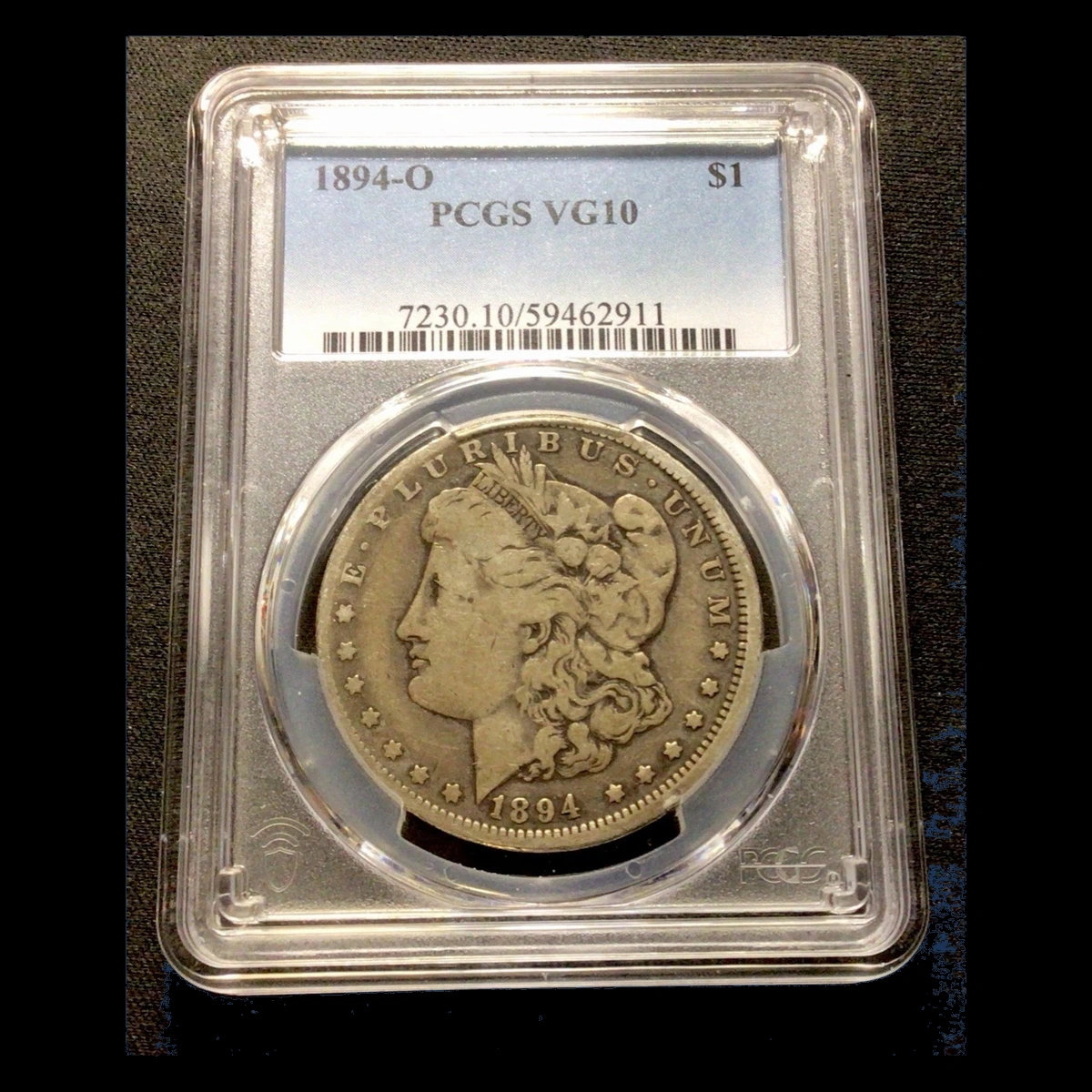
A Coin Galleries catalog described an 1894-O VF35 with a front die out of position. Its lower-left rim and edge are much wider than the upper-right margin.
The reverse remains centered. That contrast indicates one misplaced die rather than necessarily an off-center blank.
How to Identify
Photograph each face squarely, centering the coin’s outline rather than the portrait. Compare the lower-left and upper-right front margins with the reverse border.
Repeat the photographs if camera tilt could distort apparent width. Then inspect the wide edge for metal squeezed or pushed over by a later impact.
A blank displaced beneath both dies needs a different comparison. The centered reverse is essential to the cataloged example’s identification.
What It’s Worth
Comparable worn through lightly worn New Orleans examples are estimated at $200–$1,500.
The VF35 report provides a visible pattern without a supplied transaction amount. Particularly fine unworn coins need a separate assessment of their date-and-mint value.
3. 1894 Dollar A step changes around the edge: tilted partial collar Error
An 1894-S listed in Mint Error News as NGC 40 has a tilted partial collar. Part of the blank was held by the surrounding ring while another part spread beyond its restraint.
The collar normally controls width and forms the edge grooves. Uneven seating can leave a step whose height or width changes around the dollar.
How to Identify
Follow the boundary between grooved and expanded metal around several edge sections. One isolated smooth patch cannot demonstrate the entire tilted pattern.
Inspect for file marks that would remove grooves from an already finished coin. Use existing edge photographs for a holdered dollar rather than opening it.
The brief source supplies no clock direction. Confirm the S and both faces against the same specimen’s edge views without borrowing another coin’s orientation.
What It’s Worth
Authenticated circulated through lightly worn San Francisco examples are estimated at $200–$2,500.
Mint Error News lists $237.50 beside the NGC 40 entry. The brief record does not establish an auction date or fee basis, so the amount is limited price context.
4. 1894 Dollar Stretched details sit within uneven expansion: broadstrike Error
The cataloged 1894-O PCGS AU55 has its design toward seven o’clock and a wide blank band near one o’clock. Outward metal flow stretches the date and stars.
The auction calls it an uncentered broadstrike. The uneven outline should not automatically replace that description with an off-center strike that loses design beyond the blank.
How to Identify
Trace the date, stars, and remaining outer design before interpreting the wide margin. Compare the seven-o’clock design position and one-o’clock band in the same face orientation.
A normal Morgan dollar measures about 38.1 millimeters across. Check several widths on a loose candidate and inspect the edge for crushing or later hammering.
Use both faces to judge the complete flow pattern. Expansion and distorted details together are more useful than the outline alone.
What It’s Worth
A comparable authenticated New Orleans broadstrike is estimated at $1,000–$6,000.
The documented 1894-O auction entry was unsold. It supplies an appearance and grade comparison without a completed price.
A Philadelphia 1921 broadstrike graded MS64+ brought $1,020 in July 2021. That different-year result does not directly price the 1894-O AU55.
5. 1894 Dollar Material interrupts part of the front: strike-through Error
A seller lists an 1894-S in a PCGS MS64 holder as a front strike-through. An obstruction during striking can leave an impression or prevent local design from forming.
The short description does not establish the material or a precise location. It cannot support a claim of cloth, wood, or a retained object.
How to Identify
Locate the actual affected area from the full front photograph before enlarging it. Inspect how neighboring letters or portrait detail meet the interruption.
Scrape grooves, displaced metal, or a peeling edge may indicate later damage or alloy separation. Change the light to compare those possibilities.
Check the holder’s error description and certification record independently of inventory wording. Include the reverse S so the comparison stays with the correct mint.
What It’s Worth
Authenticated San Francisco examples across worn and attractive unworn conditions are estimated at $200–$6,000.
The seller advertised the MS64 at $5,500 or best offer. That is not evidence of a buyer paying the amount, nor an error premium to add to another dollar.
Conclusion
A tiny date remnant, shifted front die, stepped edge, expanded blank, and local impression require different checks. Keep New Orleans and San Francisco examples tied to their own photographs and condition.
The available price evidence has important limits: the 1894-O broadstrike was unsold, the struck-through listing is an asking price, and the $1,020 transaction concerns 1921. None should be presented as an exact 1894 sale.