Rare 1871 Penny Errors (List & Pictures)
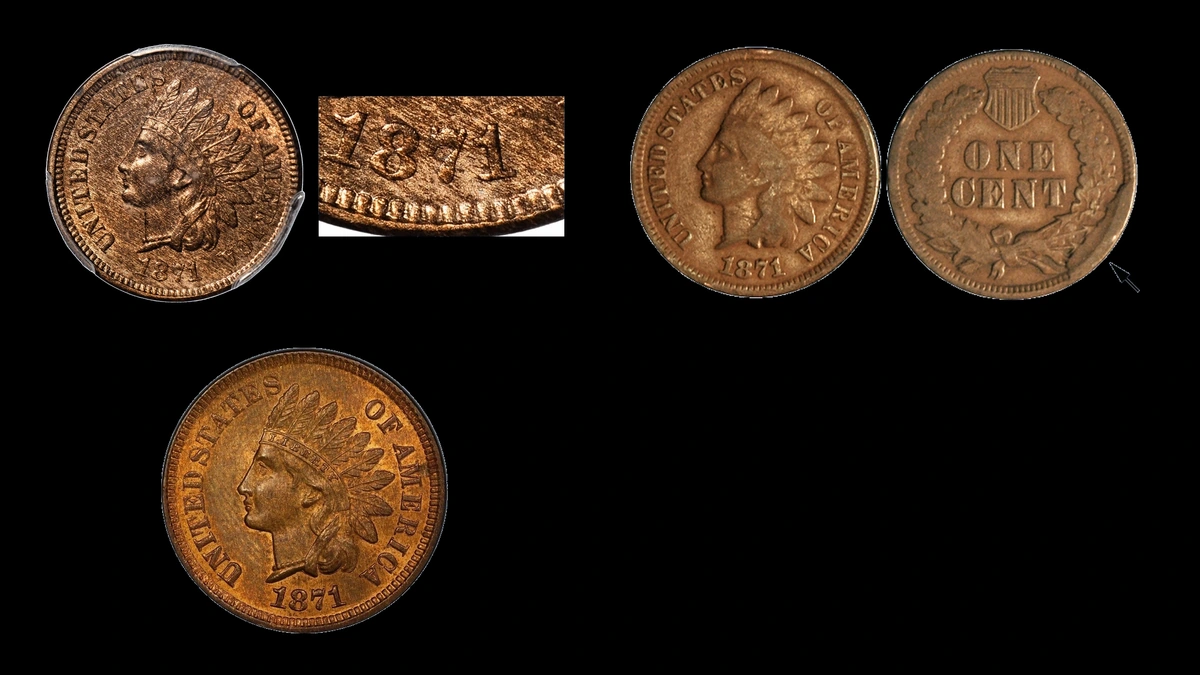
A different-year nickel-rich cent brought $13,200 in February 2025, while a reported 1871 rotated-die auction result was $320. The estimated whole-coin range for 1871 penny errors is $50–$25,000.
Inspect the date, surface, and reverse alignment before investigating unusual metal; the cataloged nickel-based issue has an unsettled history as an experiment or accidental strike.
| Area or clue | Category | Estimated value |
|---|---|---|
| Beside the date | Repunched date | $75–$6,000 |
| Lower border teeth | Misplaced date | $100–$4,000 |
| Above AMERICA | Lamination | $50–$1,500 |
| Raised reverse boundaries | Cracks or retained rim breaks | $50–$2,500 |
| Reverse alignment | Rotated dies | $75–$2,000 |
| Unusual nickel-based metal | J1042A/P1177 issue | $5,000–$25,000 if authenticated |
A normal bronze cent weighs 3.11 g and measures about 19 mm, with a plain edge. Examine loose coins gently, and leave certified pieces sealed.
1. 1871 Penny Faint Earlier Strokes beside the Digits: Repunched Date Error
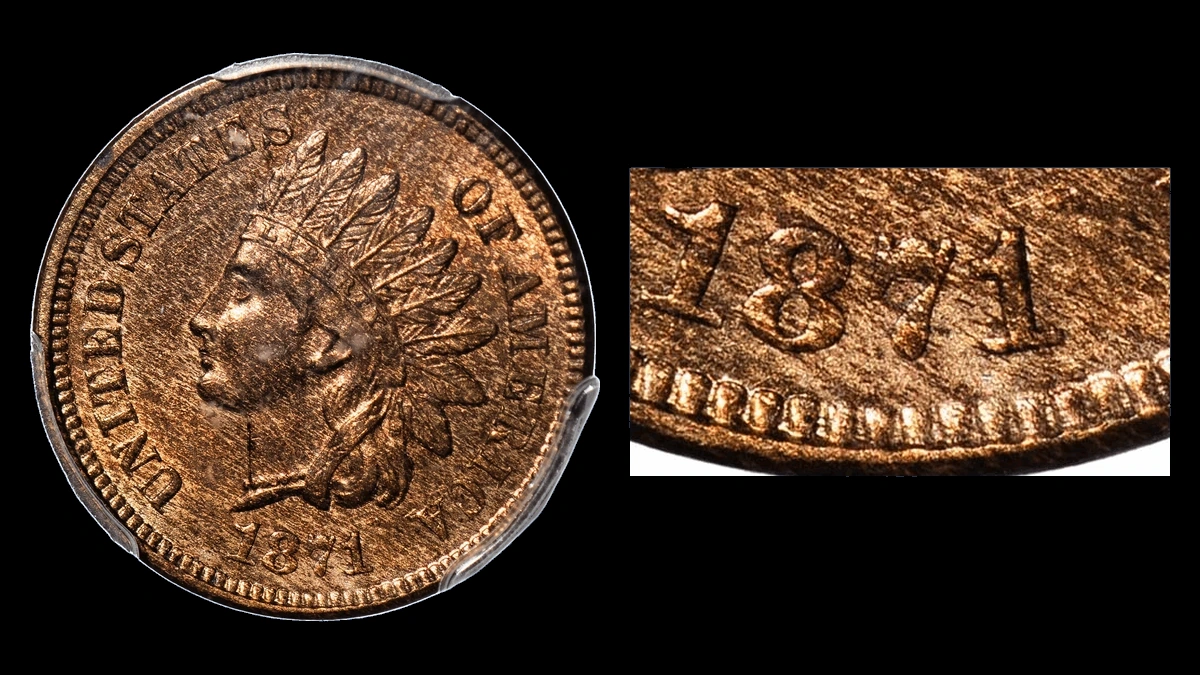
Stack’s 2000 anniversary catalog describes an 1871 cent with slight repunching on all four digits. The lightly worn example also had old cleaning.
Repunching leaves parts of earlier date placements in the die after the punch shifts. Those surviving strokes become raised details on the coins it produces.
How to Identify
Compare the entire date before enlarging individual remnants. The catalog description does not establish one universal direction of doubling for every 1871 variety.
Some date features originate in duplication on the punch itself and need a different attribution. Scratches and flat shelves beside numerals also should not be mistaken for a raised earlier punch impression.
What It’s Worth
Estimated whole-coin values span $75–$6,000, with identifiable worn examples often around $75–$500. Attractive unworn pieces account for the upper range.
An 1875 repunched-date cent graded PCGS MS66 Red brought $5,040 in August 2020. That exceptionally preserved coin is a different-year comparison, while cleaning affects the appeal of the cataloged 1871 piece.
2. 1871 Penny Numeral Fragments among the Border Teeth: Misplaced Date Error
Small stray date marks can survive below the proper numerals. They began when a date punch touched an unintended area of the die.
The recorded Snow-5 pairing uses a Shallow N reverse. That name describes the shape of N in ONE, an ordinary design characteristic rather than an error by itself.
How to Identify
Use the recorded pairing to compare both faces. The correct reverse does not remove the need to match numeral remnants on the front.
Include the complete date and lower border in a photograph. A scratched or weak border tooth alone cannot establish which numeral, if any, lies there.
What It’s Worth
Estimated values are $100–$4,000, including approximately $100–$750 for circulated coins. The underlying variety and surface quality are already included.
An 1878 misplaced-date cent sold for $1,920 in October 2019. That different-year result does not establish a transaction for the 1871 pairing.
3. 1871 Penny A Peeling Area above AM: Lamination Error
A weak layer in bronze can open into a thin flap or shallow missing patch. Stack’s described an original lamination above AM in AMERICA on an 1871 cent in its 2000 anniversary auction.
How to Identify
Locate AM before following the layer boundary under side lighting. The cataloged coin was described as Choice Very Fine, with recognizable detail despite circulation wear.
A continuous thin layer is stronger evidence than general surface roughness. Leave attached copper undisturbed, and distinguish scattered corrosion pits or scraped grooves from the separation.
What It’s Worth
A genuine 1871 lamination has an estimated whole-coin range of $50–$1,500, with worn examples often around $50–$300. Better preservation and a clearer flaw can support a higher comparison.
An 1890 Indian cent with lamination sold for $104 in April 2010. It is a different-year transaction, and a larger missing layer does not automatically improve value if it removes attractive design.
4. 1871 Penny Raised Boundaries on the Back: Cracks and Retained Rim Breaks Error
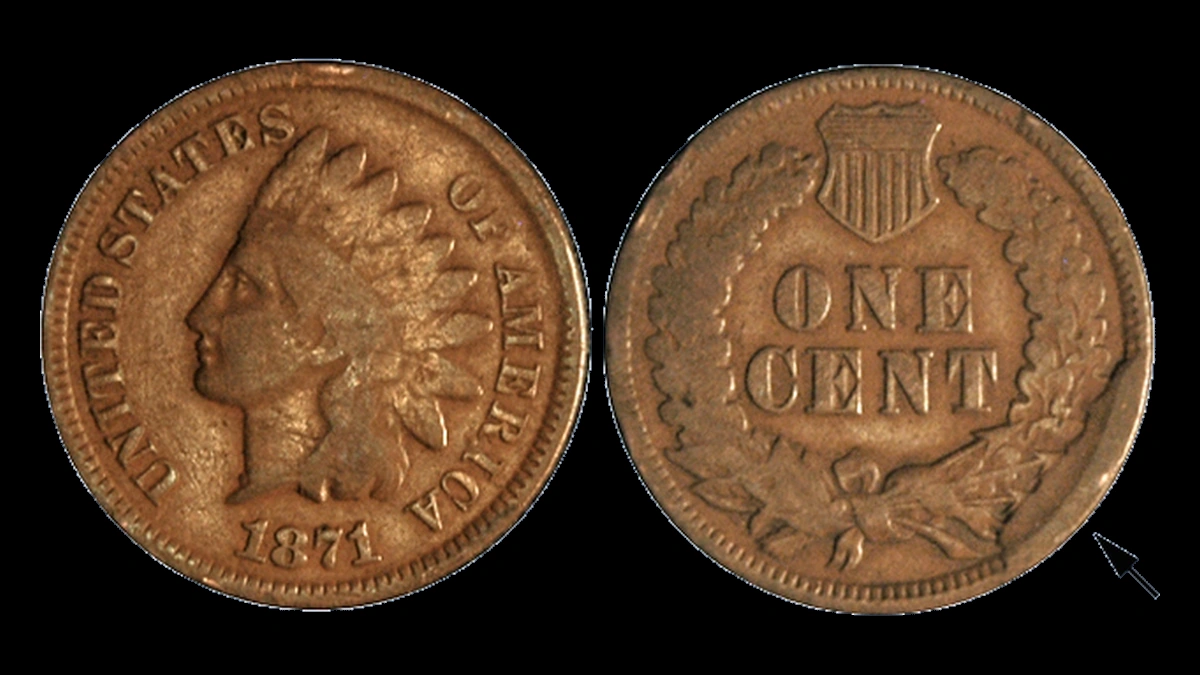
Some 1871 reverses show a rim section with a raised boundary but surviving wreath detail inside. The broken die piece remained in place, producing what collectors call a retained rim break or retained cud.
How to Identify
One recorded right-side pattern spans roughly 3:15–5:00, while another spans about 2:30–4:00. Other die stages show cracks on the right or starting near 8:45.
Match the location and surface level of one pattern at a time. The PCGS discussion distinguishes a retained broken section from a crack whose surrounding surface stays level.
What It’s Worth
Estimated values are $50–$300 for readable cracks and $100–$2,500 for more distinct retained breaks. Each range values the complete coin.
An unworn 1866 Indian cent with a reverse cud sold for $504 in March 2021. A missing-piece cud on that date is not an exact comparison for a retained 1871 section.
5. 1871 Penny The Wreath Appears Turned after Flipping: Rotated Dies Error
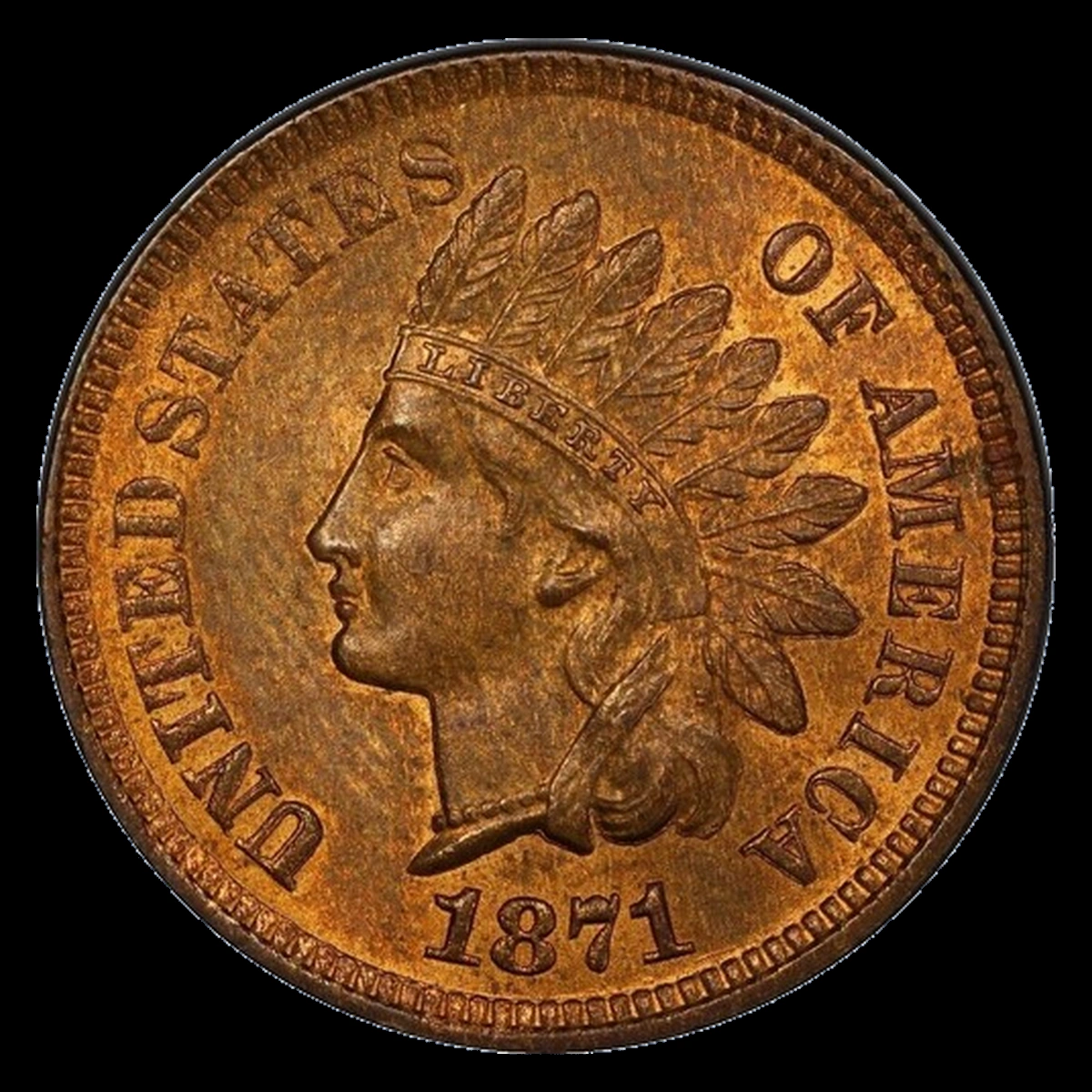
An 1871 auction coin was described as Extra Fine with a “190-degree rotation.” That wording does not explain the reference line used for the angle.
How to Identify
Hold the portrait upright, then turn the coin top to bottom without twisting sideways. Under normal United States coin alignment, the reverse will appear upright.
Measure the resulting departure from upright and record its direction. The seller’s unexplained 190-degree description should not automatically become a 190-degree departure from normal alignment.
Use a fixed holder or continuous video rather than two independently turned photographs. Check the edge for a join that could connect unrelated faces.
What It’s Worth
Estimated values range from $75–$2,000 for authenticated 1871 rotations. The measured angle and condition determine which comparison is useful.
The Lampasas catalog reports $320 for lot 187 in August 2026. That is the Extra Fine coin described with the unexplained 190-degree convention.
A different seller asked C$199.99 for a coin described as rotated about 65 degrees. It is a Canadian-dollar asking price, not another confirmed US-dollar sale.
6. 1871 Penny A Heavier Nickel-Based Cent: J1042A/P1177 Error
A cataloged 1871 cent in nickel or copper-nickel carries the numbers J1042A and P1177. Its reported weight is 68.25 grains, approximately 4.42 g.
References differ over whether it was an experimental piece or an accidental wrong-blank strike. The weight does not by itself identify a five-cent blank or its exact alloy.
How to Identify
The historical listing provides a weight but no measured alloy percentage for this issue. A specialist should compare the metal, dimensions, original strike, and catalog history together.
Plating, pale toning, or a shiny surface cannot establish the attribution. Inspect the edge for seams or reshaping without scratching the metal to test it.
What It’s Worth
An authenticated piece matching this rare issue has an estimated value of $5,000–$25,000. Its final identification as an experiment or accident may affect the relevant collecting market.
An 1879 cent on an unusual nickel-rich blank sold for $13,200 in February 2025 at PCGS AU58. That different-year result supplies context without settling the history or alloy of the 1871 issue.
Conclusion
A useful identification links the visible feature to the right process: a date punch, weak bronze, broken die, or altered die alignment. Keep each reference’s location and condition with its own coin.
The unusual-metal issue needs more than a heavy scale reading or pale surface. Likewise, the auction’s rotation wording needs a defined measurement before its angle can serve as a comparison for another 1871 cent.