Rare 1951 Penny Errors (List & Pictures)
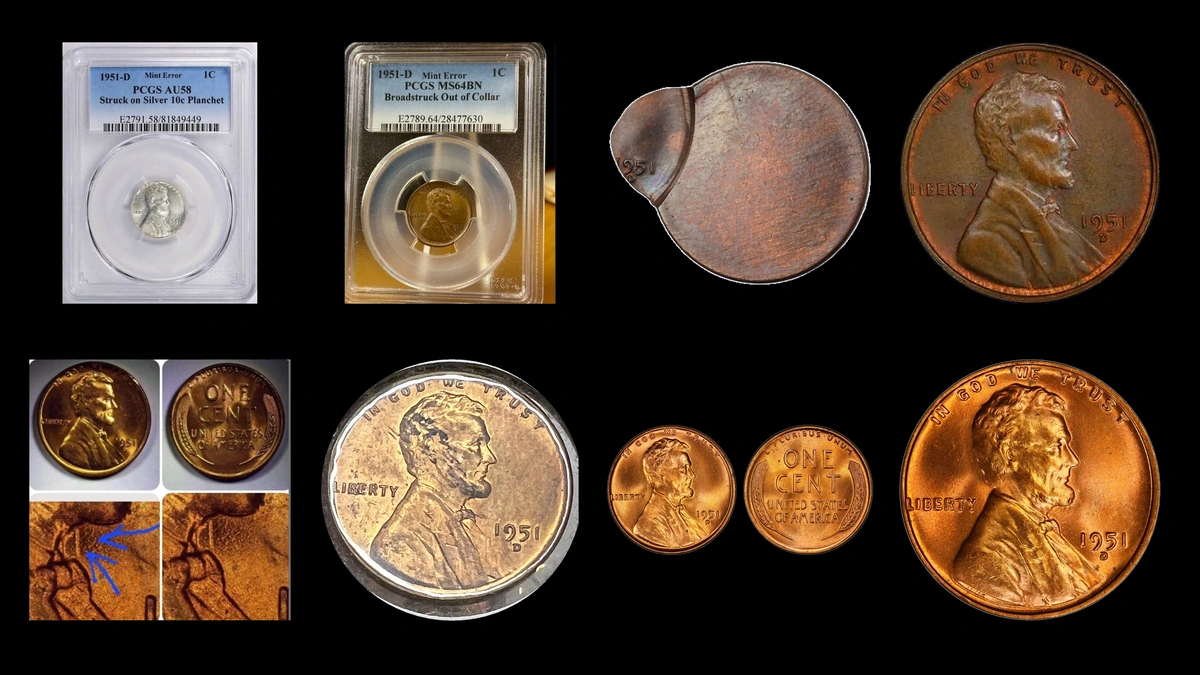
A small patch of unusual metal can matter more than a penny’s overall shine. Among the supplied comparisons for 1951 penny errors, a silver-disc cent from 1955 brought $2,340 in July 2022; the scratched 1951 example brought $414 in 2004.
Estimated values span $2–$3,000, from tiny letter-space chips to full mirror impressions. Begin with metal and outline, then inspect the larger design disruptions before magnifying the lettering.
| Inspection clue | Error or variety | Estimated range |
|---|---|---|
| Silver-gray metal on a smaller disc | Silver dime planchet | $400–$2,500 |
| Thin metal with two surface textures | Split before striking | $50–$200 |
| Complete design in a wider outline | Broadstrike | $25–$175 |
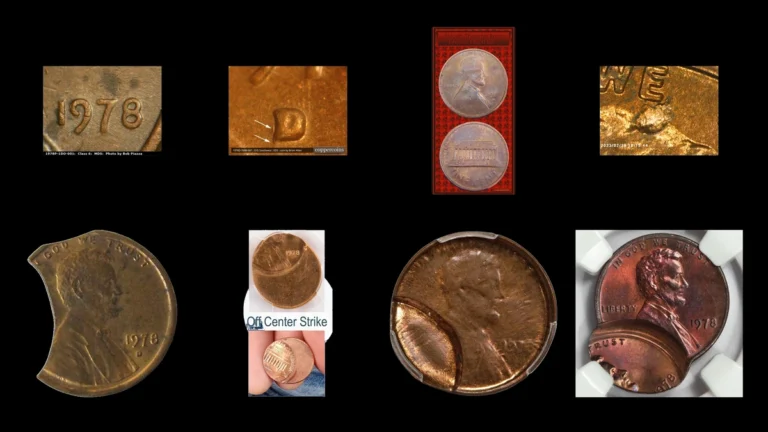
| Blank crescent beside incomplete design | Off-center strike | $30–$400 |
| Curved hollow and stepped edge | Indent with partial collar | $75–$500 |
| Complete sunken backward design | Full mirror brockage | $500–$3,000 |
| Faint wheat shapes beside Lincoln | Die clash | $5–$100 |
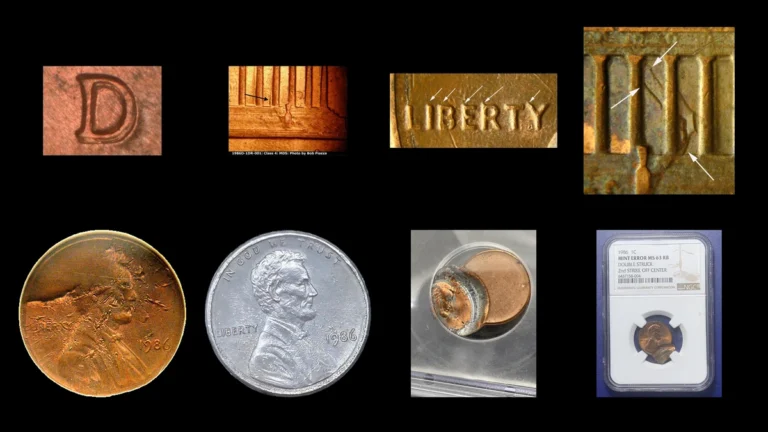
| Small upright between B and E | BIE die chip | $2–$50 |
| Extra strokes around D or S | Repunched or overlapping mintmark | $3–$300 |
| Repeated raised letter edges | Doubled die | $5–$1,500 |
The ordinary copper-alloy Wheat cent weighs 3.11 g and is 19.05 mm across, with a plain edge. Record both faces and the edge, using a scale and calipers where the coin is accessible and a 10× magnifier for small details.
1. 1951 Penny Pale Metal with Crowded Lettering: The 1951 Silver Dime-Disc Error
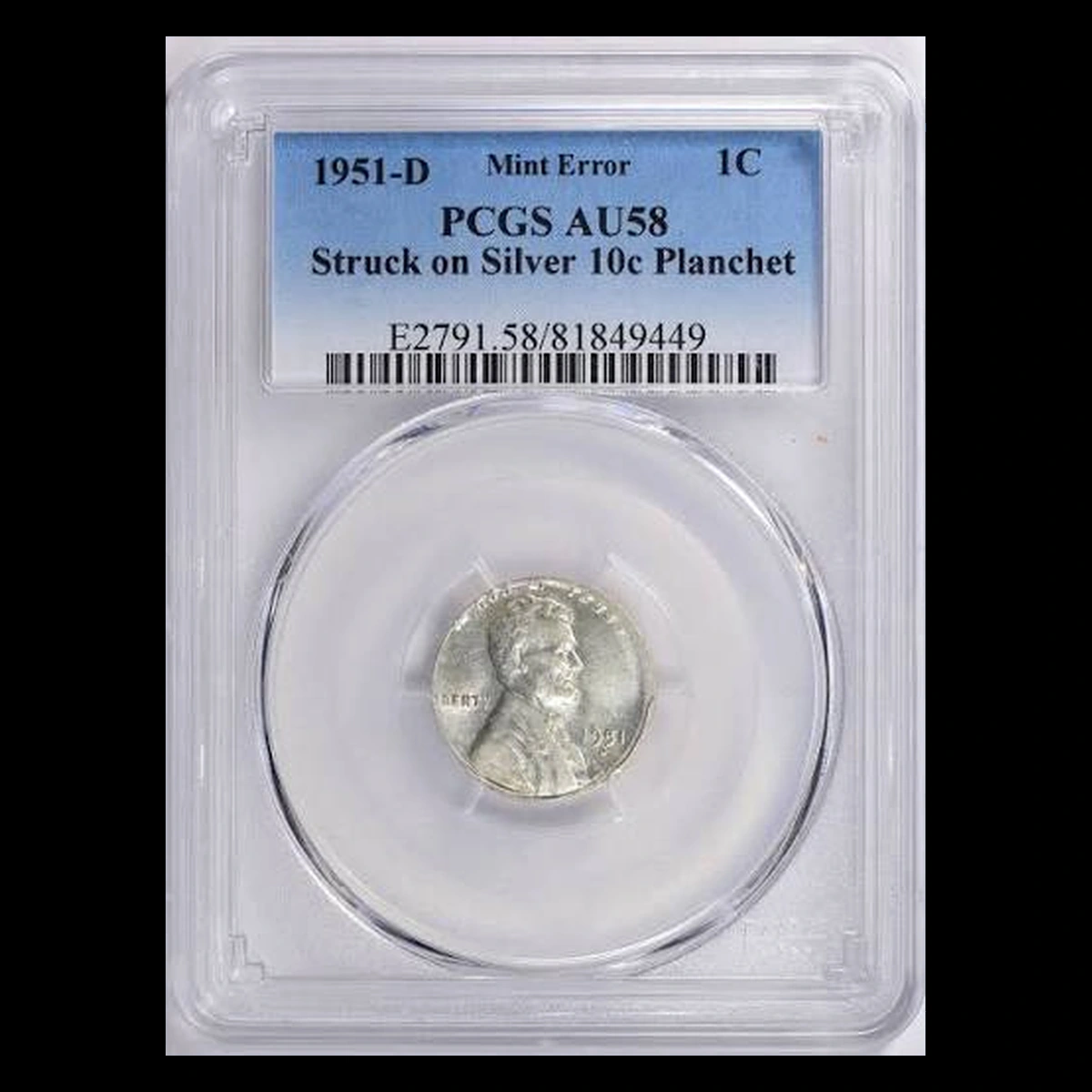
The cent design has less room on a disc prepared for a silver dime. A recorded Philadelphia example shows incomplete filling of the design as well as scratches on its back.
Those scratches reduce preservation without explaining the underlying wrong-metal strike. A coating applied to an ordinary copper cent creates a different problem, even if its color looks similar.
How to Identify
A silver dime planchet starts near 2.50 g and 17.91 mm, though striking can enlarge its outline. These are reference specifications, not measurements recorded for the scratched 1951 coin.
Check how letters meet the edge and obtain professional confirmation of composition. Do not scratch through a pale surface to test the metal.
What It’s Worth
Authenticated examples have an estimated $400–$2,500 range. The damaged 1951 coin sold for $414 in January 2004 with an ANACS XF Details, Net VF20 assessment.
A 1955 silver-disc cent in PCGS AU58 brought $2,340 in July 2022. Its different date and better preservation explain why it is a comparison rather than a direct price for the scratched piece.
2. 1951 Penny Rough Front, Smoother Back: The 1951-D Split Disc Error
On the recorded Denver example, Lincoln’s design was impressed into metal that had been inside the disc. The back was struck on its smoother original outside.
This arrangement indicates that the blank separated through its thickness before reaching the dies. A layer lost after striking would not receive a fresh design on its newly exposed surface.
How to Identify
Study the rough surface for design formed over the natural split texture. Low weight alone also fits filing, grinding, and other later removal.
Inspect the thin edge for tool marks and avoid manipulating any loose metal. The supplied record gives no measured weight for this 1951-D piece.
What It’s Worth
A genuine split-before-strike cent has an estimated $50–$200 range. A readable date and an intelligible relationship between the two surfaces make the error easier to evaluate.
A 1971-D example weighing 1.6 g brought $59 in June 2023. Its measurement belongs to that comparison coin, not the Denver piece described here.
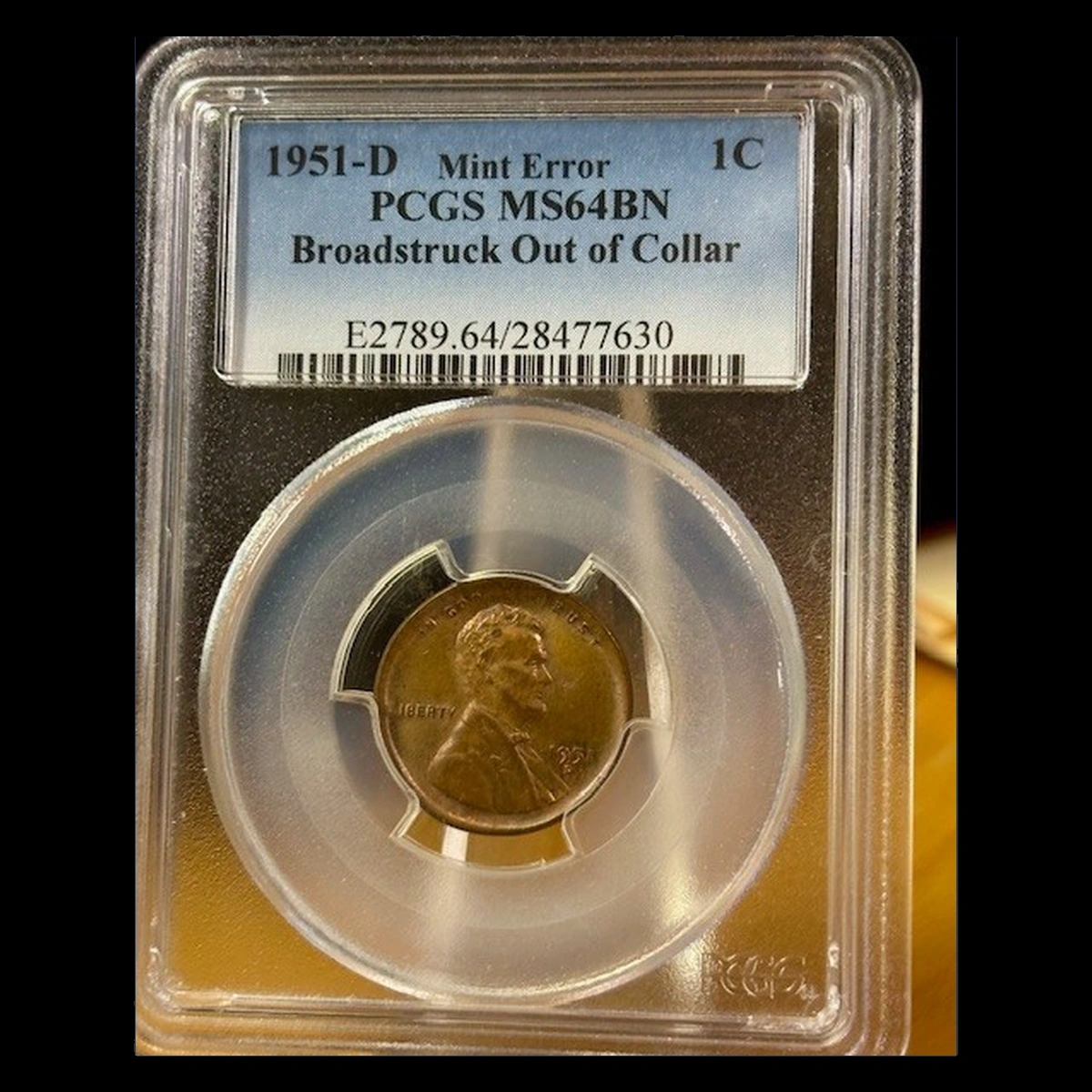
3. 1951 Penny All the Design Fits inside a Wider Rim: 1951 Broadstrike Error
An expanded cent can still retain every outer letter. Without normal restraint from the collar, the ring around the blank, metal spreads outward under the dies.
A 1951-D example is reported among this year’s broadstrikes. An uneven border is possible because unrestricted spreading need not be perfectly centered.
How to Identify
Follow the complete outer design on both faces before judging the width. Design cut off beyond the blank instead suggests an off-center strike.
Compare several diameters and look for later compression on the portrait and edge. A vise can widen a coin while leaving flattening that the mint error does not require.
What It’s Worth
The estimated range is $25–$175 for a genuine broadstrike. Visible natural expansion and original detail give the comparison more substance than a small unexplained increase in diameter.
A 1999 PCGS MS65 Red example brought $67 in March 2023. That copper-plated zinc cent illustrates the error class but differs in construction from a 1951 Wheat cent.
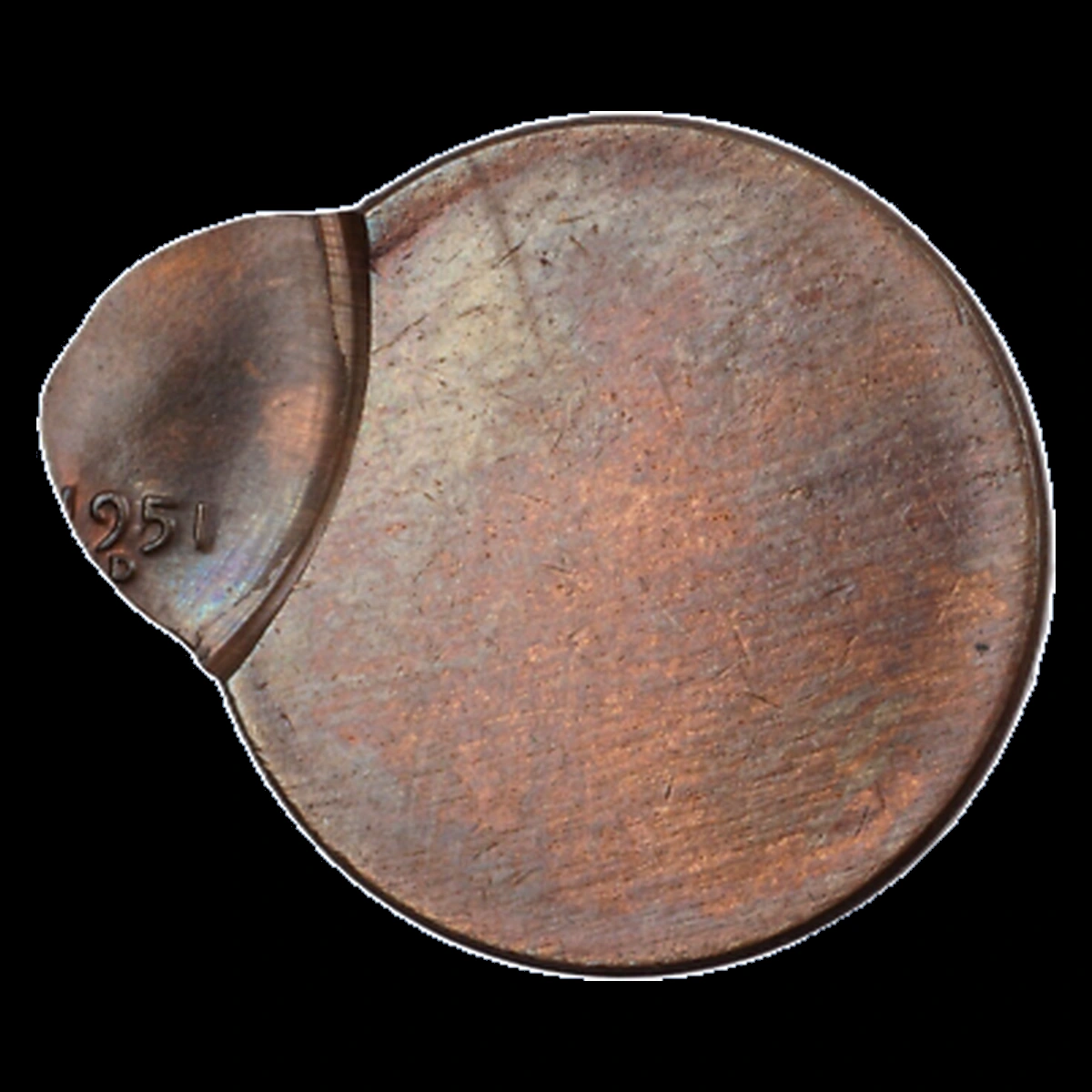
4. 1951 Penny Bare Metal Beside a Partial Portrait: 1951 Off-Center Strikes Error
The Philadelphia example in the record is about sixty-five percent off center toward nine o’clock. Part of the die missed the blank, leaving an unstruck area opposite the displaced impression.
Denver examples also occur in the reports. Their direction and degree of displacement must be read individually.
How to Identify
Locate the surviving date and any mintmark, then turn the coin over to examine the matching design loss. Unstruck metal remains present; it has not been clipped or cut away.
Check the transition from design to blank surface for grinding. The recorded percentage describes positioning during the strike, not a percentage of missing metal.
What It’s Worth
Readable-date coins have an estimated $30–$400 range. Attractive remaining detail and condition can outweigh a small difference in the amount of offset.
A 1968-D sixty-percent off-center example in NGC MS62 Red and Brown brought $47 in July 2021. It provides later-year context rather than a transaction for the Philadelphia specimen.
5. 1951 Penny A Curved Hollow Meets a Stepped Edge: 1951 Indent and Partial Collar Error
Two visible faults occur together on the recorded Philadelphia coin. An overlapping disc left an indent of about ten percent at the upper right of the front, while incomplete collar engagement left an edge step.
The indent records interference on the face. The partial collar records uneven restraint around the edge.
How to Identify
View the edge at an angle to find the transition between differently confined metal. Then inspect the curved hollow between roughly twelve and three o’clock on the documented example.
A late dent can imitate the hollow without the original edge structure. Examine both features together and look for crushing or squeezing on the opposite surface.
What It’s Worth
A comparable combination has an estimated $75–$500 range. The supplied specimen was graded PCGS MS63 Red, but no verified transaction amount is attached to it here.
The estimate assumes clear evidence of both faults. A damaged rim or a lone dent does not support the same identification.
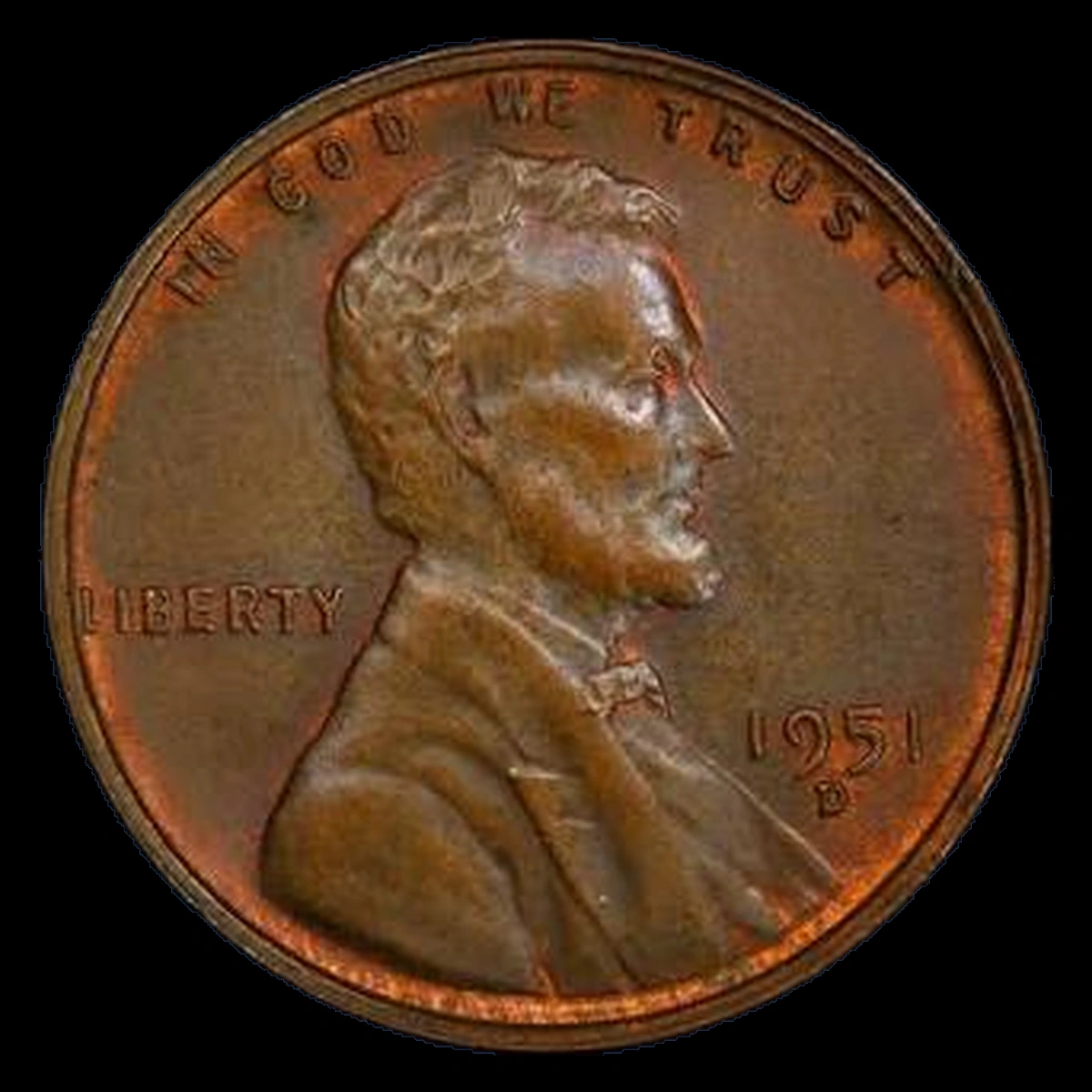
6. 1951 Penny Backward Lettering Sinks into the Face: 1951-D Full Mirror Brockage Error
An entire reversed design is a much larger feature than a faint stray line. A struck coin trapped in the press can act as a stamp, pressing its raised design into the next blank.
The receiving coin carries a sunken mirror image called a brockage. The recorded Denver example has a full impression and a PCGS MS62 Brown grade.
How to Identify
Read the transferred lettering backward and confirm that it lies below the surface. Extra raised, normally oriented outlines require a different explanation.
Check the edge and normal face for pressure damage from coins squeezed together later. Authentication must address the whole object, not just one convincing reversed word.
What It’s Worth
Full mirror brockages of this type have an estimated $500–$3,000 range. Completeness, clarity, and original surfaces matter substantially.
GreatCollections records the 1951-D MS62 Brown example, without a visible sale figure used here. Its listing supports the example’s description rather than an invented realized price.
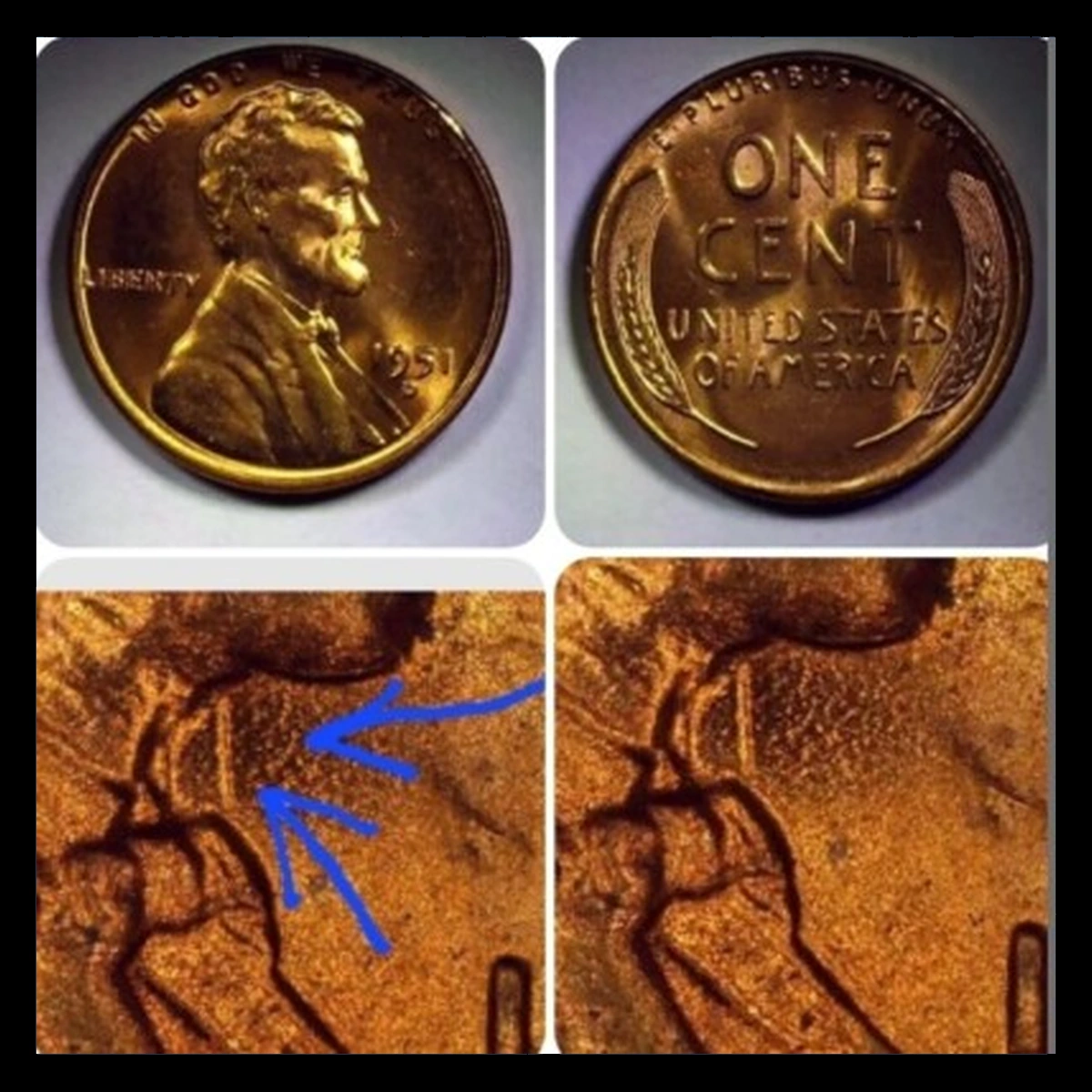
7. 1951 Penny Wheat Shapes Appear beside Lincoln: 1951 Die Clash Error
A few faint wheat-related traces can occur on the portrait side after the dies collide without a blank between them. The collision transfers parts of one tool’s design to the other.
Later cents reproduce those limited transferred shapes. This does not require the full sunken mirror image seen on a brockage.
How to Identify
Compare the suspect line with the opposite wheat design and its expected position. A curve near Lincoln is insufficient if it cannot be related to the other face.
Move the light across the area to separate shallow design traces from scratches and unrelated cracks. Check both sides for supporting evidence without expecting a complete second picture.
What It’s Worth
Recognizable clashes have an estimated $5–$100 range. Clear transferred design generally attracts more interest than ambiguous lines on a heavily worn coin.
This is a comparison-based estimate for a minor Wheat cent clash. No particular 1951 mint or die receives a documented sale amount from the supplied report.
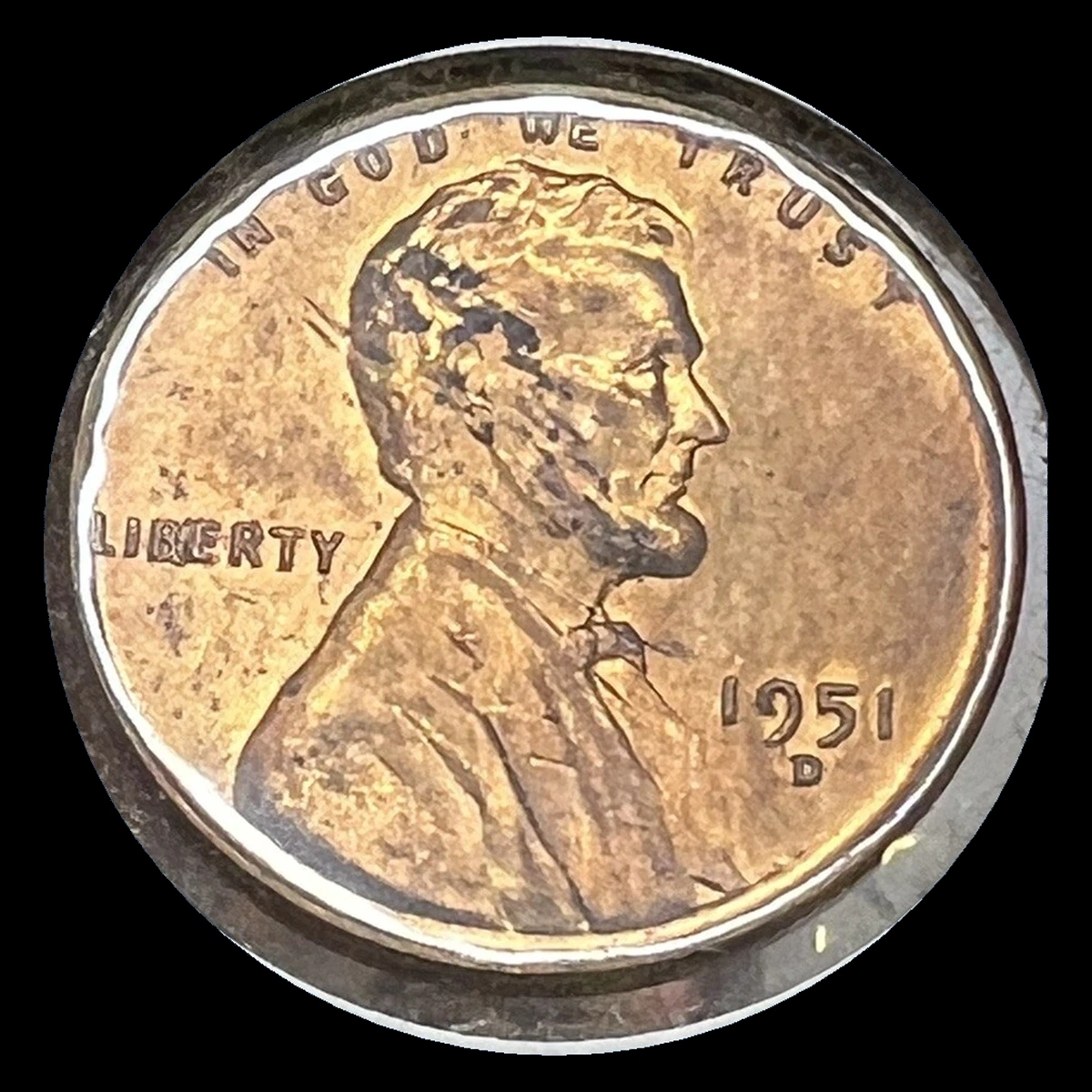
8. 1951 Penny LIBERTY Seems to Gain an I: The 1951 BIE Chip Error
Look in the narrow gap between B and E. A small missing piece of die can allow raised coin metal to form an upright bar there.
Collectors call the resulting appearance BIE. The bar is a die-break shape rather than an intentionally added letter.
How to Identify
Use side lighting to follow the raised feature into the surrounding metal. Dirt, a scratch ridge, or another displaced lump can make a similar silhouette.
Compare the actual mint and bar shape with a confirmed example. Scraping between the letters can destroy the evidence being examined.
What It’s Worth
Small genuine chips have an estimated $2–$50 range. A distinct upright on an attractive coin compares more strongly than a vague bump amid wear.
No exact-year auction result is supplied for this report. The estimate concerns minor original die chips, not ordinary cents with dirt in the letter gap.
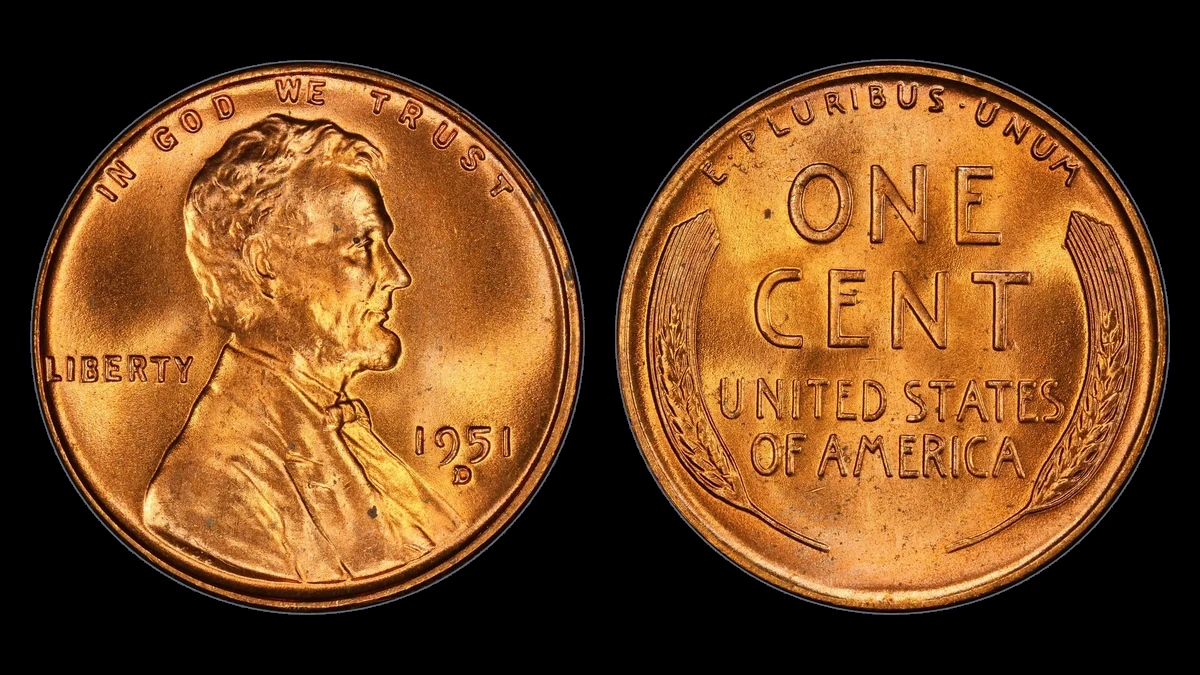
9. 1951 Penny A Second Letter Hides around the Mintmark: 1951 Repunched and Overlapping Marks Error
Hand punching could leave more than one mintmark impression in a die. D/D and S/S repeat the same letter, while the reported D-over-S varieties retain parts of a different earlier letter.
The mixed-letter form is called an overmintmark. An S curve beneath a D needs different evidence from a second D outline.
How to Identify
Identify the main letter before tracing the surviving extra strokes. For D/S, match the proposed S remnant to the correct variety rather than borrowing a hook’s direction from another entry.
Flat shelves, dirt, and chips can confuse that reading. The useful evidence is a recognizable part of the appropriate letter in its documented position.
What It’s Worth
Minor same-letter varieties have estimated values of $3–$100. Confirmed D-over-S examples fall around $25–$300, depending on attribution and preservation.
These are estimates for recognized mintmark varieties rather than separate sales for each catalog number. A weak D with an unexplained lump should not automatically receive the mixed-letter range.
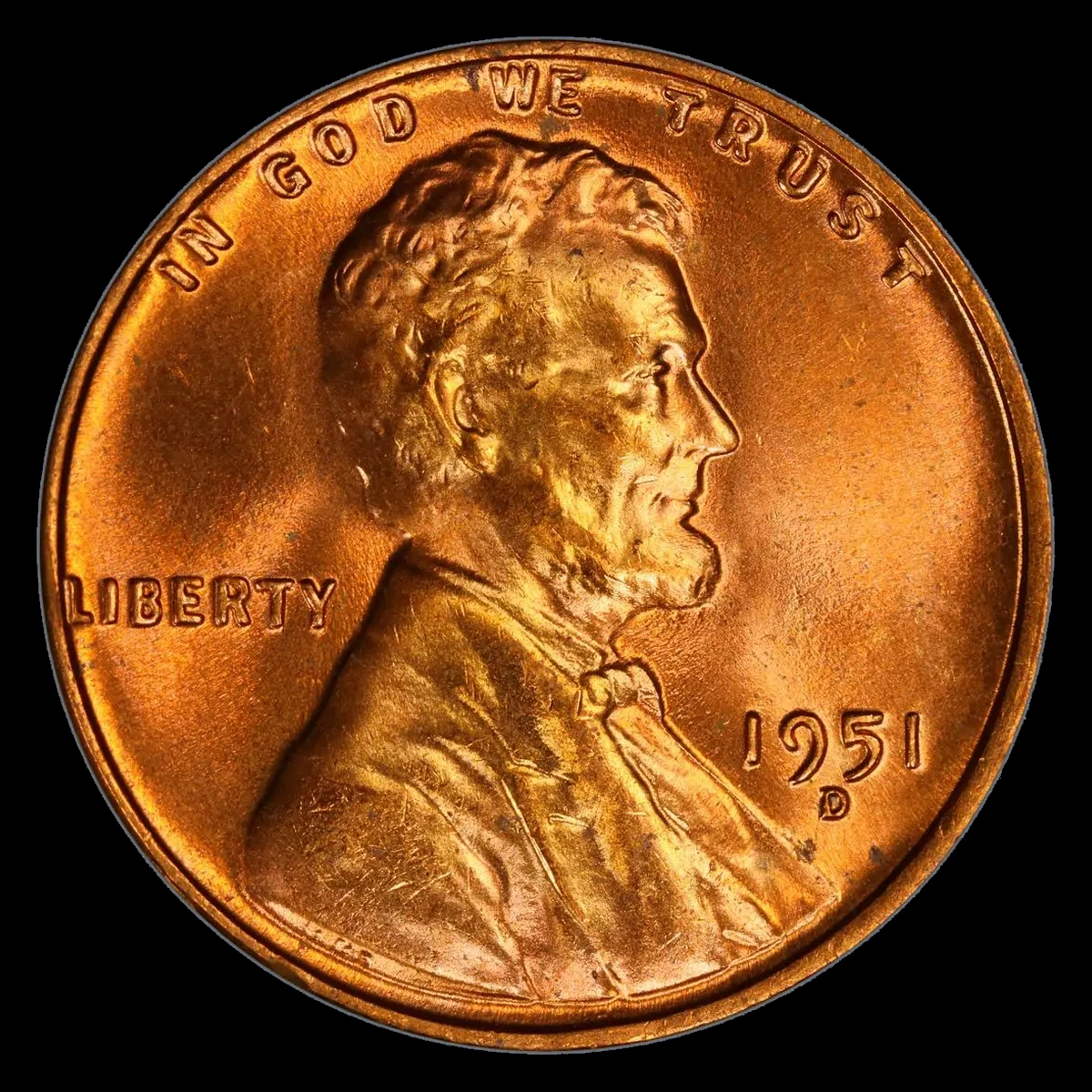
10. 1951 Penny Motto Letters Have Extra Raised Edges: 1951 Doubled Dies Error
The Denver report describes repeated rounded edges in IN GOD WE TRUST. The doubled detail was already in the die and could reach the coin in a single strike.
Ordinary Philadelphia and San Francisco issues have separate reports. Philadelphia collector Proofs include FS-101, which must remain distinct from ordinary-issue varieties.
How to Identify
Establish mint and finish before matching the detail. A polished or shiny ordinary cent does not become a Proof.
Inspect separated raised contours and forked corners where the appropriate reference shows them. Flat ledges beside reduced letters more often indicate movement during striking, and Denver motto diagnostics cannot authenticate every other variety.
What It’s Worth
Minor ordinary-issue doubled dies have an estimated $5–$400 range; the separate Proof FS-101 estimate is $100–$1,500. The Proof range uses comparable earlier collector issues rather than a verified 1951 Proof sale.
PCGS lists a $358 April 2012 result for a Denver doubled die graded MS65. That ordinary-issue record should not be assigned to the Philadelphia Proof.
Conclusion
A 1951 penny can carry a genuine mint error and later damage at the same time, as the scratched silver-disc example demonstrates. Identification explains what happened; preservation helps determine what a comparable coin might bring.
Across the estimated $2–$3,000 range, keep the evidence specific: original split texture, a complete mirror impression, or the correct extra letter stroke. Record the mint and finish before choosing a value comparison.