Rare 1878 Dime Errors (List & Pictures)
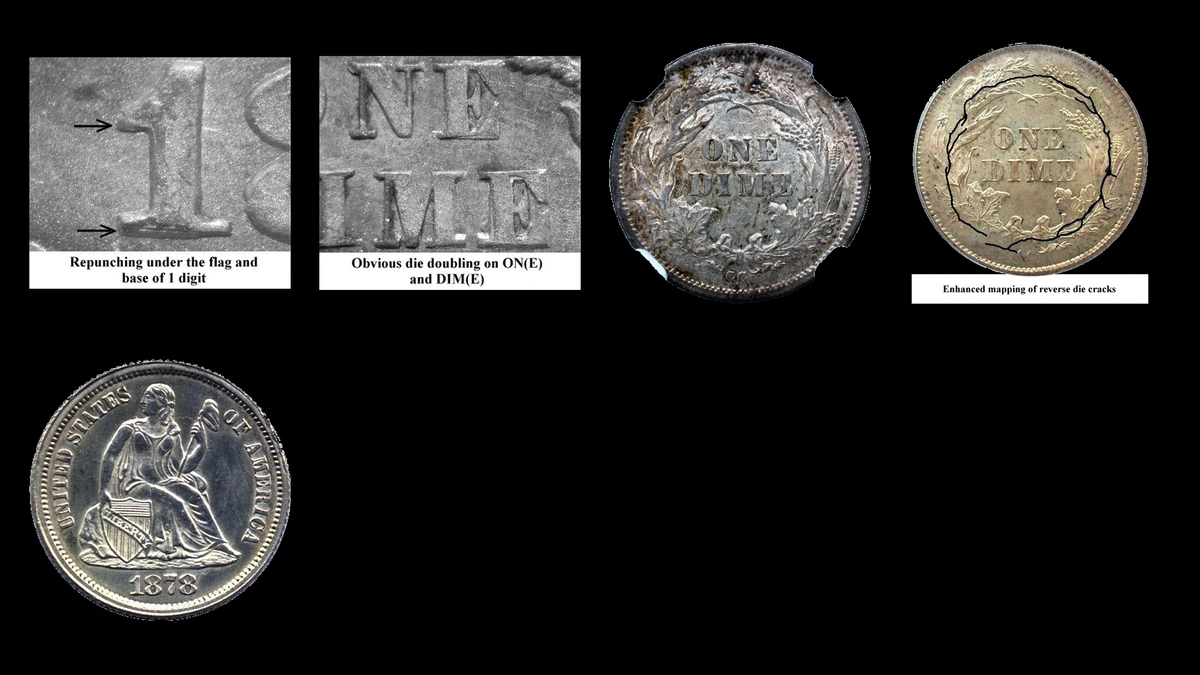
Choose the mint and reverse design before comparing tiny marks on an 1878 dime. The 1878 Liberty Seated Dime errors below span estimated whole-coin values of $30–$8,500, from faint Philadelphia features to a strong Carson City doubled reverse.
An auction-price index reports $7,930 for the Carson City NGC MS65 doubled-back coin at Heritage in 2026. Follow the date and reverse clues separately so that result stays with the correct variety and condition.
| Feature | Key distinction | Estimated range |
|---|---|---|
| Earlier pieces of 1 | Ordinary issue versus Proof | $50–$2,000 |
| Extra reverse outlines | Mint and Type I or II reverse | $75–$8,500 |
| Missing left-wreath detail | Carson City F-104 | $300–$3,000 |
| Raised crack routes | Philadelphia versus Carson City | $30–$2,500 |
| Opposite-design fragments | Philadelphia Type II clash | $30–$400 |
Type I and Type II are reference names for different reverse design versions. Normal 1878 dimes contain 90% silver, weigh 2.50 grams, and measure about 17.9 mm.
1. 1878 Dime Earlier Strokes Sit beneath the Date’s 1: Repunched Date Error
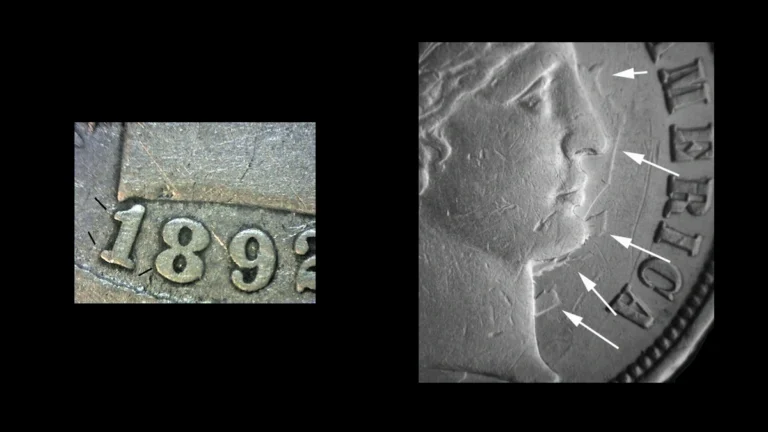
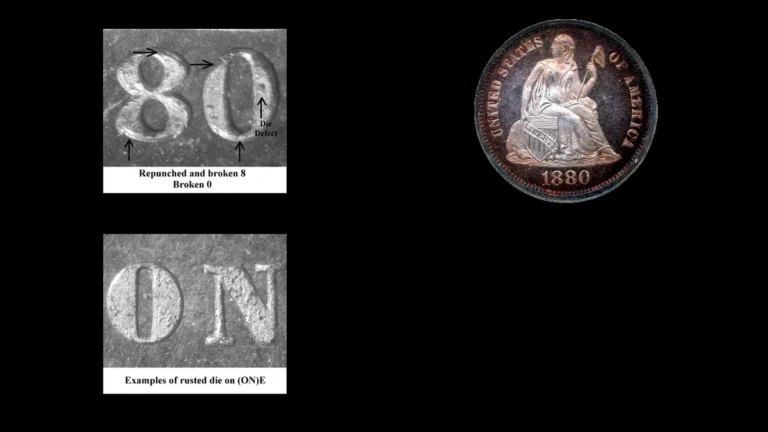
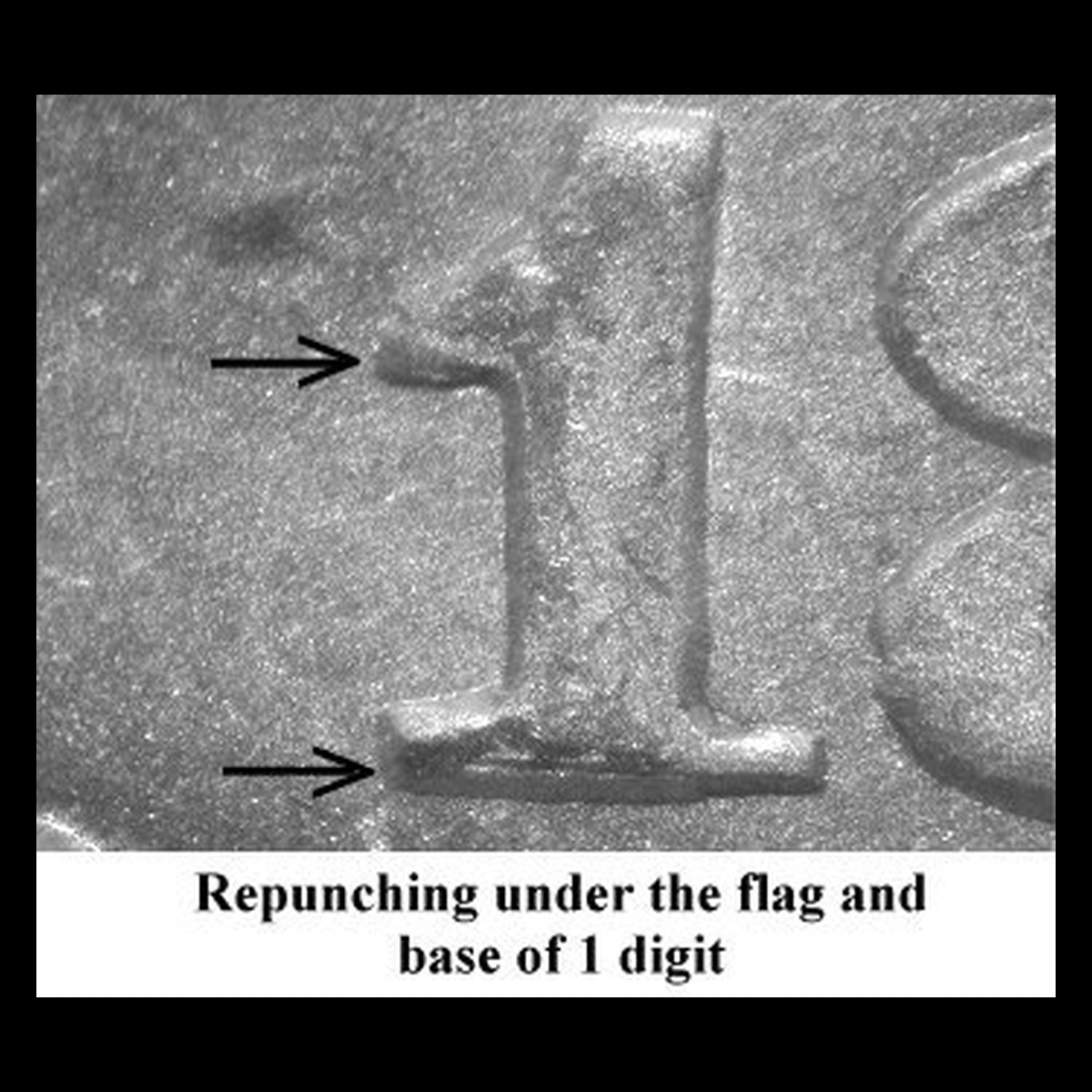
The recorded ordinary Type II variety has remnants below the top flag and bottom base of 1. The date punch entered the die in slightly different positions, leaving parts of the earlier numeral.
A separate collector Proof also has a repunched 1. Its own outline needs comparison rather than borrowing the regular coin’s picture or grade.
How to Identify
Inspect both the upper and lower remnants with the full date still visible. Compare their raised shapes with the ordinary Type II F-102 reference.
A small lower-right wreath crack can support that match. It cannot establish Proof manufacture, and an ordinary coin made shiny by polishing is still not a Proof.
What It’s Worth
$50–$800 is an estimated range for ordinary strikes from circulated through attractive unworn condition. Collectible Proofs have a separate working range of $600–$2,000.
The reference’s PCGS MS64 regular coin supplies an example but no sale price here. Finish, preservation, and a complete date-pattern match should guide the comparison.
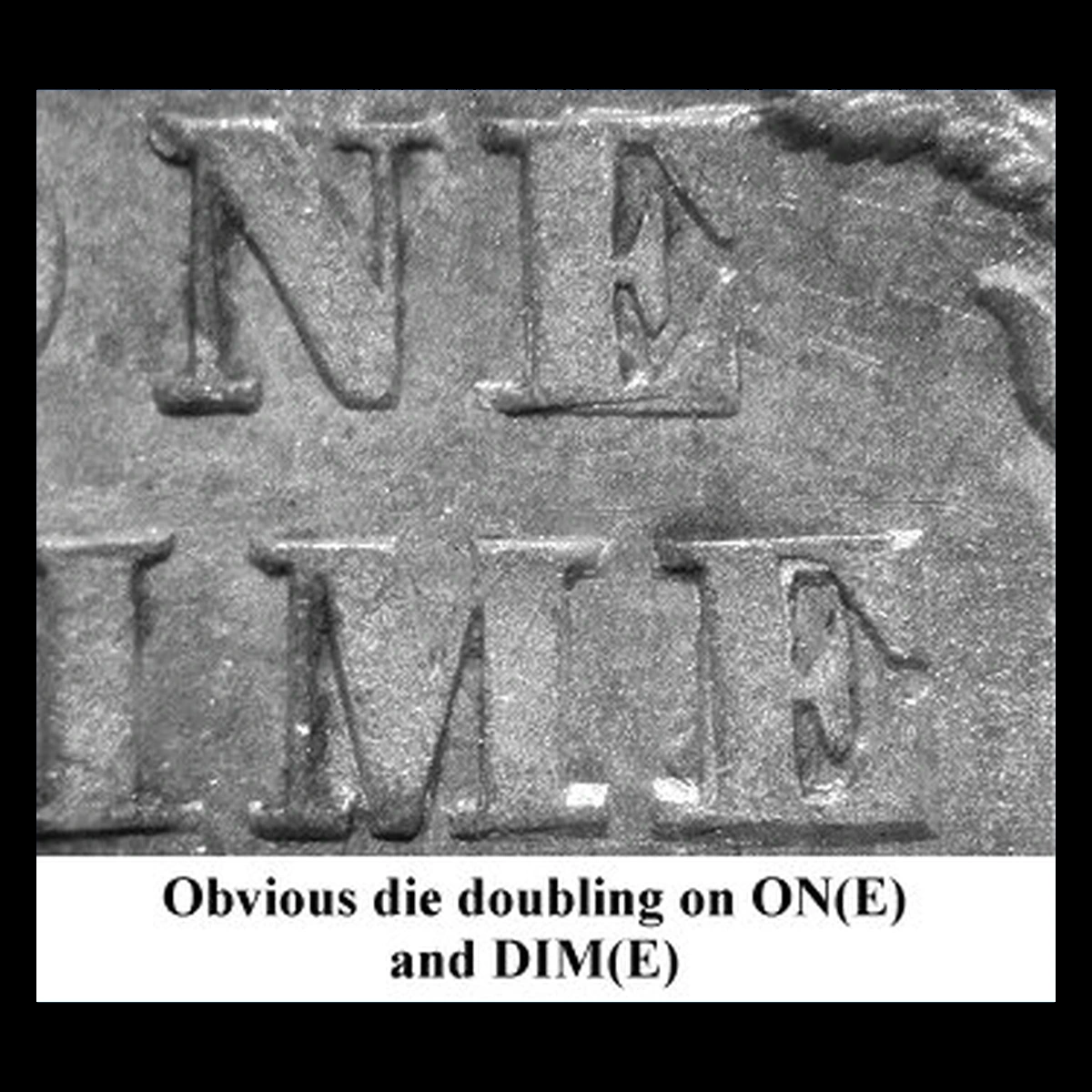
2. 1878 Dime Reverse Letters or Leaves Have Extra Outlines: Doubled Die Error
Philadelphia Type I patterns include doubling near I in DIME and the lower-right wreath. A Type II example instead shows lower-left wreath doubling, while Carson City Type I involves ONE DIME.
These extra contours were on the working dies before the coins were struck. The locations belong to different varieties and should not be assembled into one supposed pattern.
How to Identify
Read the mintmark and identify the reverse version before enlarging letters or leaves. Compare rounded repeated detail in the specific area shown by that variety’s reference.
One Philadelphia variety has a weak left foot on E as an additional marker. Weakness is not itself doubling, so actual repeated outlines elsewhere are still needed.
What It’s Worth
$75–$1,200 is an estimated range for the separate Philadelphia varieties. Carson City examples span about $300–$8,500 across circulated through excellent unworn condition.
Greysheet’s auction index reports $7,930 for a Carson City Type I doubled reverse in NGC MS65 at Heritage in 2026. That is not a universal premium for every doubled-looking 1878 letter.
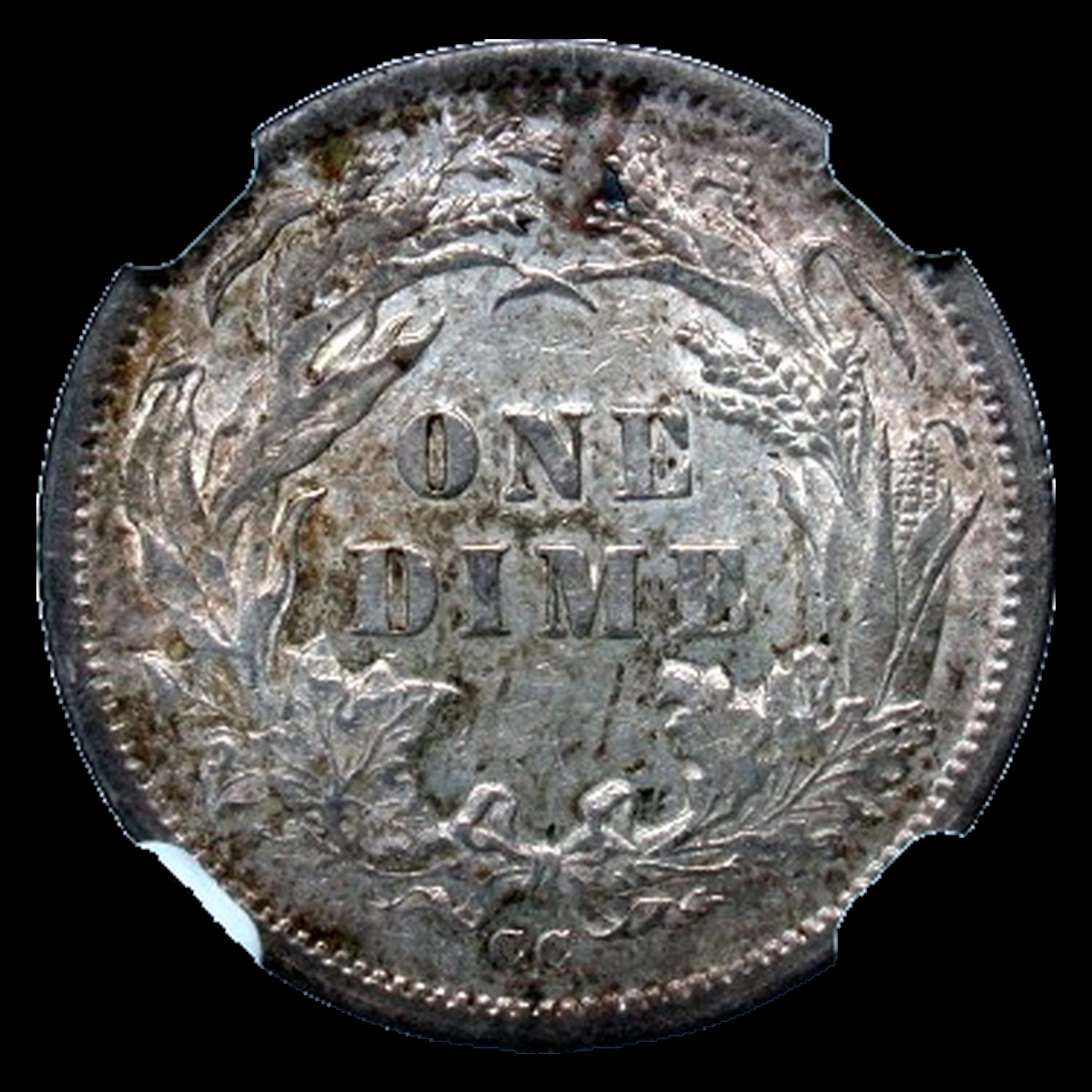
3. 1878 Dime Left-Wreath Leaves Lose Shallow Detail: Overpolished Reverse Error
The Carson City F-104 Type II reverse has selectively reduced leaf detail after heavy polishing of the die. That tool had already served in 1877 before making these 1878 coins.
Polishing could remove shallow design recesses while deeper cracks remained. Missing leaves and raised lines can therefore coexist without the finished dime itself having been polished.
How to Identify
Compare the left wreath with a normal Type II example at equal scale. Look for the recorded pattern of missing shallow details alongside surviving neighboring design and cracks.
Confirm both 1878 and CC, then check for fine abrasive marks from later cleaning. A similarly worn or polished 1877 coin is not the same variety simply because the reverse tool was reused.
What It’s Worth
$300–$3,000 is an estimated range for circulated through lightly worn F-104 examples. An auction-price index reports a PCGS AU53 at $1,440 through Stack’s Bowers in November 2024.
The price concerns the complete Carson City variety. Each missing leaf and surviving crack does not add a separate whole-coin amount.
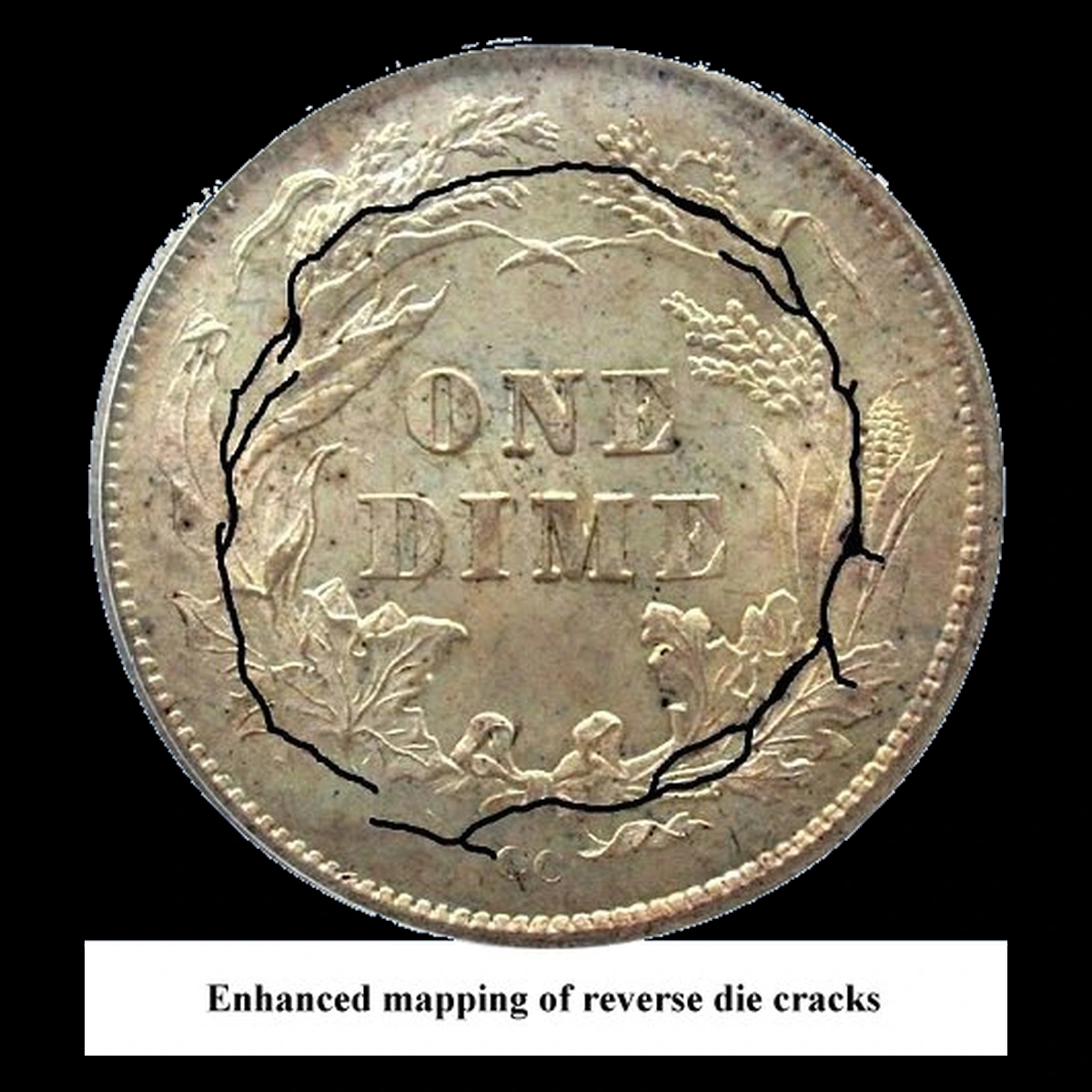
4. 1878 Dime Connected Ridges Cross the Wreath or Rock: Die Cracks Error
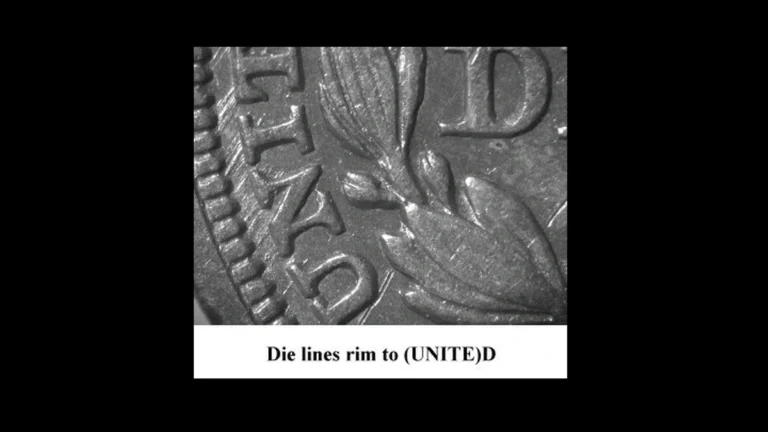
Philadelphia reports include several lower-wreath and outward-spreading reverse routes. A Carson City example has a front line from the rock toward the area right of UNI in UNITED, with reverse cracks as well.
The ridges formed as silver entered splits in the dies. They differ from scratches in the finished coin or a separation within its metal.
How to Identify
Select the correct mint and reference route, then follow the raised line continuously under low light. A Philadelphia wreath crack cannot be identified from the Carson City front path.
Compare the corresponding other face and inspect the grooved edge for alteration. Normal measurements support the full-coin examination but do not prove a crack pattern.
What It’s Worth
$30–$500 is an estimated range for circulated through lightly worn Philadelphia examples. Comparable Carson City pieces are estimated at $250–$2,500.
A PCGS XF40 Carson City F-104 with extensive reverse cracks appeared at auction in 2025 without a public result used here. Its cracks and reduced wreath detail still describe one coin with one underlying condition value.
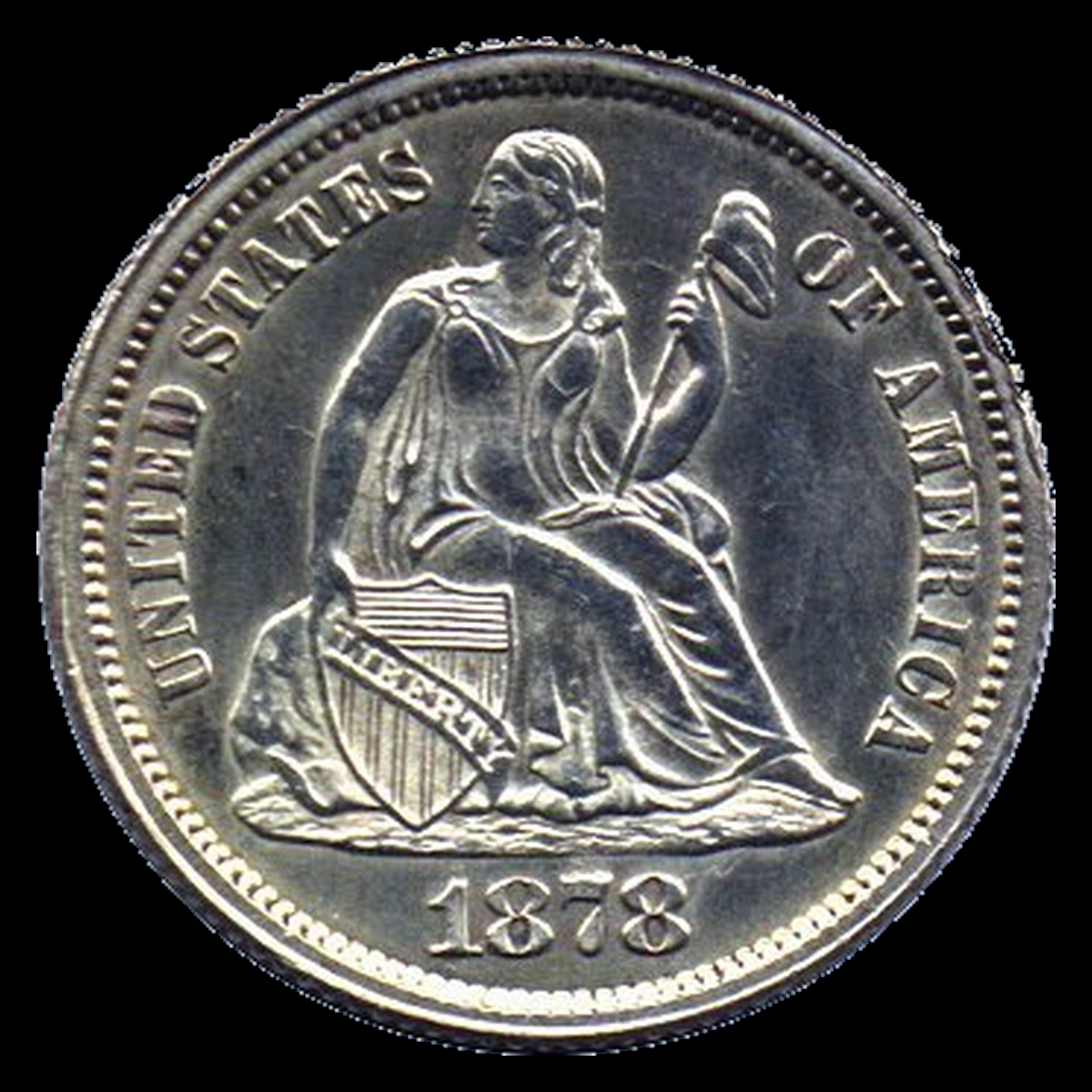
5. 1878 Dime Faint Pieces of the Other Face Appear: Die Clash Error
Reported Philadelphia Type II examples show extra shapes on the front or reverse. They are separate coins rather than one universal collection of marks.
The two dies met without a blank and picked up traces of each other’s design. Later strikes could transfer those traces onto coins.
How to Identify
Compare equal-sized full face photographs and look for an extra shape that echoes the opposite design in a sensible position. A straight polishing line or random scratch does not establish that relationship.
Keep each specimen’s marks together. A front clash on one example does not prove that another has a reverse clash, even if both use the Type II design.
What It’s Worth
$30–$400 is an estimated whole-coin range for circulated through lightly worn Philadelphia examples. Clear surfaces make these often-faint marks easier to study.
No completed sale is supplied for a particular illustrated clash. The high Carson City doubled-reverse result concerns a different mint, grade, and mechanism.
Conclusion
Mint, reverse version, and finish narrow the reference before the smallest details come into play. Then separate extra numeral strokes, genuine repeated design, selective leaf loss, cracks, and transferred shapes.
Several of those features may share one coin, especially Carson City F-104. Use them together for identification while keeping the complete coin’s condition and documented price context intact.