Rare 1887 Penny Errors (List & Pictures)
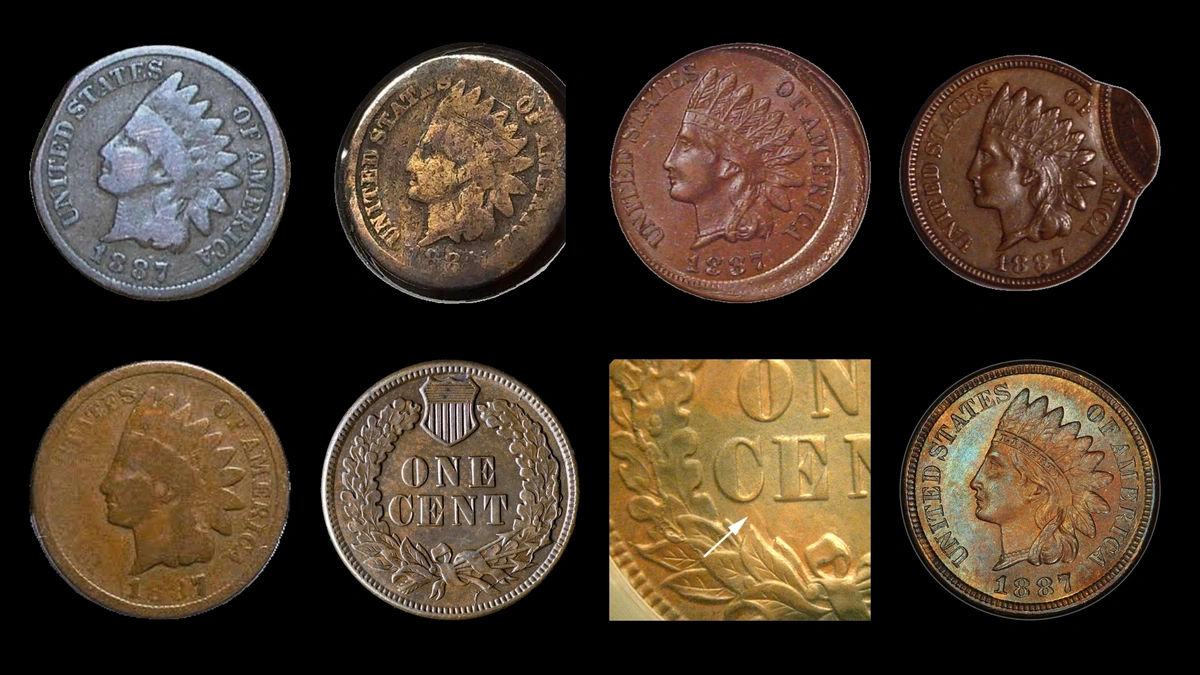
Feather edges helped identify the doubled-front coin that brought $1,380 in June 2025. Across 1887 penny errors, estimated whole-coin values span $5–$6,000, with minor die features and dramatic strike errors requiring different comparisons.
Start at the edge, determine how many design impressions are present, then inspect weak or repeated detail. The usual bronze cent is 3.11 grams and 19.05 mm, with a plain edge; measure safely accessible loose examples without opening certified holders.
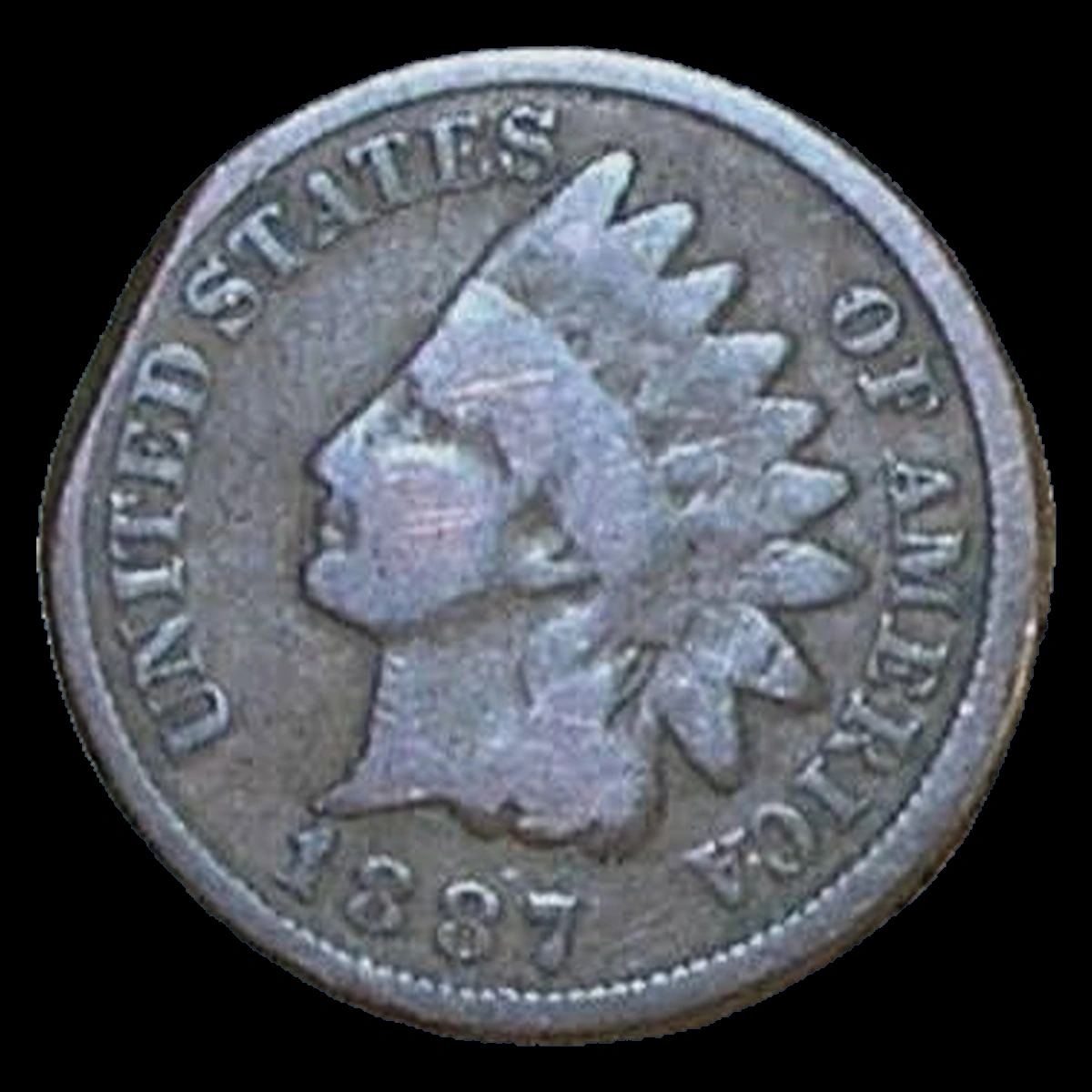
1. 1887 Penny The Edge Has a Straight Missing Section: Straight Clip Error
A dealer’s 1984 catalog described a large straight clip on an unworn 1887 cent. Such a blank can result when the cutting punch overlaps the end of the metal strip.
The listing used Brilliant Uncirculated without a numerical certified grade. It supplied no clock position for the missing section.
How to Identify
Inspect the straight boundary and both points where the struck rim meets it. Original rim formation beside an incomplete blank differs from a finished border sliced away afterward.
Saw grooves, filing, or a fresh cut through design can expose a later alteration. Reduced weight supports missing metal but cannot establish when it disappeared.
What It’s Worth
The estimated range is $40–$3,000 for genuine examples. Wear, surviving date, and original edge formation guide comparisons.
The 1984 catalog asked $85 for its unworn coin. That historical asking price is neither a completed sale nor a current quote.
2. 1887 Penny The Outline Expands around All the Design: Broadstrike Error
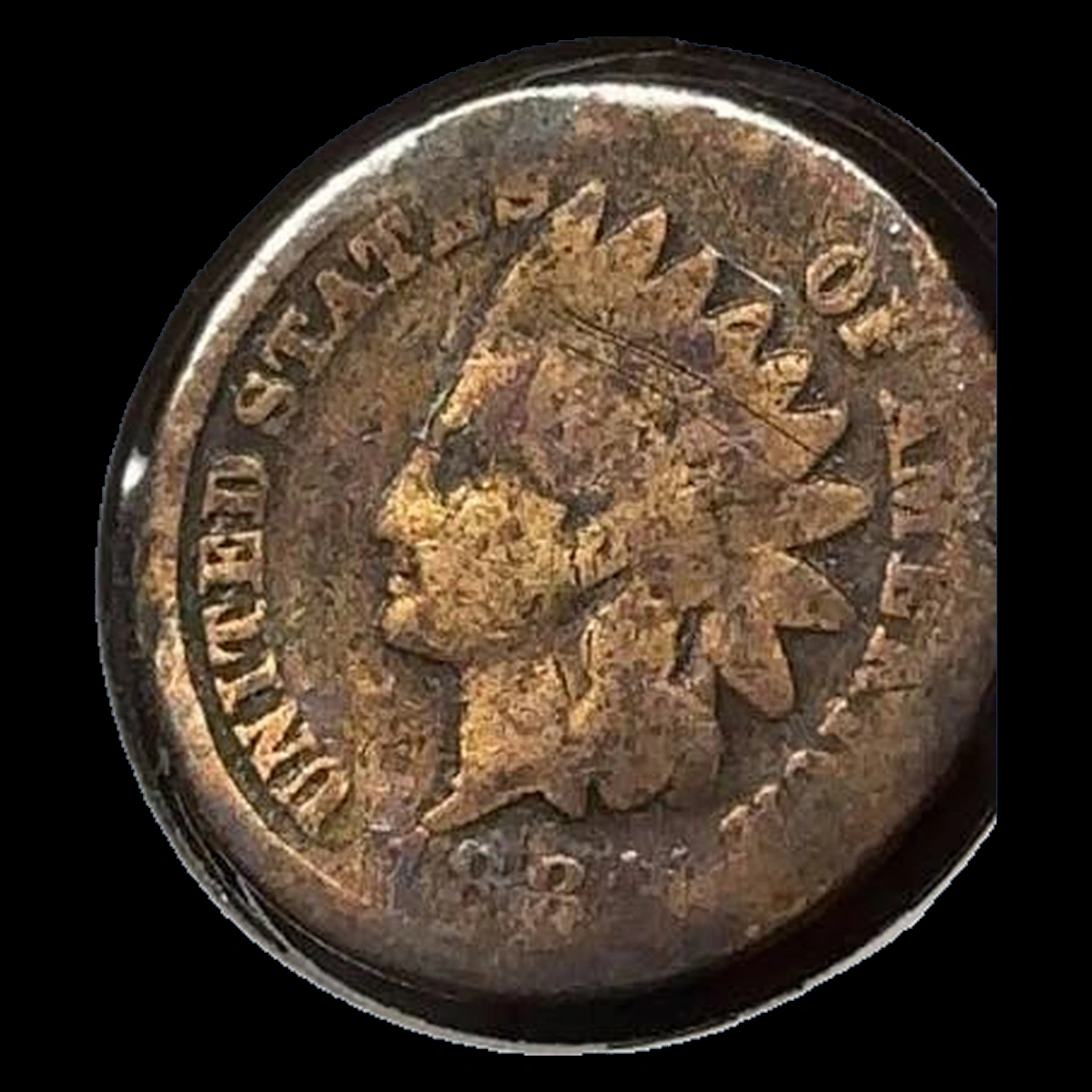
The collar normally limits a blank’s outward flow during striking. When that ring fails to contain it, a broadstrike can form with an expanded border and a complete design.
A PCGS archive records an eBay listing described as an 1887 broadstrike graded NGC VF30 Brown. Its text does not establish a precise diameter or direction of expansion.
How to Identify
Measure several spans and follow the outer lettering on both faces. A broadstrike should keep the intended design on the metal even if border width varies.
Check for crushed central details or edge-tool marks from later squeezing. An archived title or wide rim alone cannot prove that another coin spread during its original strike.
What It’s Worth
Genuine broadstrikes have an estimated range of $25–$3,000. The recorded eBay transaction brought $26.01 in October 2019 for the listing described as VF30, a moderately worn coin.
A very lightly worn 1893 broadstrike sold for $414.80 in March 2026. Its different date and preservation remain part of that comparison.
3. 1887 Penny One Design Shifts toward the Left: Off-Center Strike Error
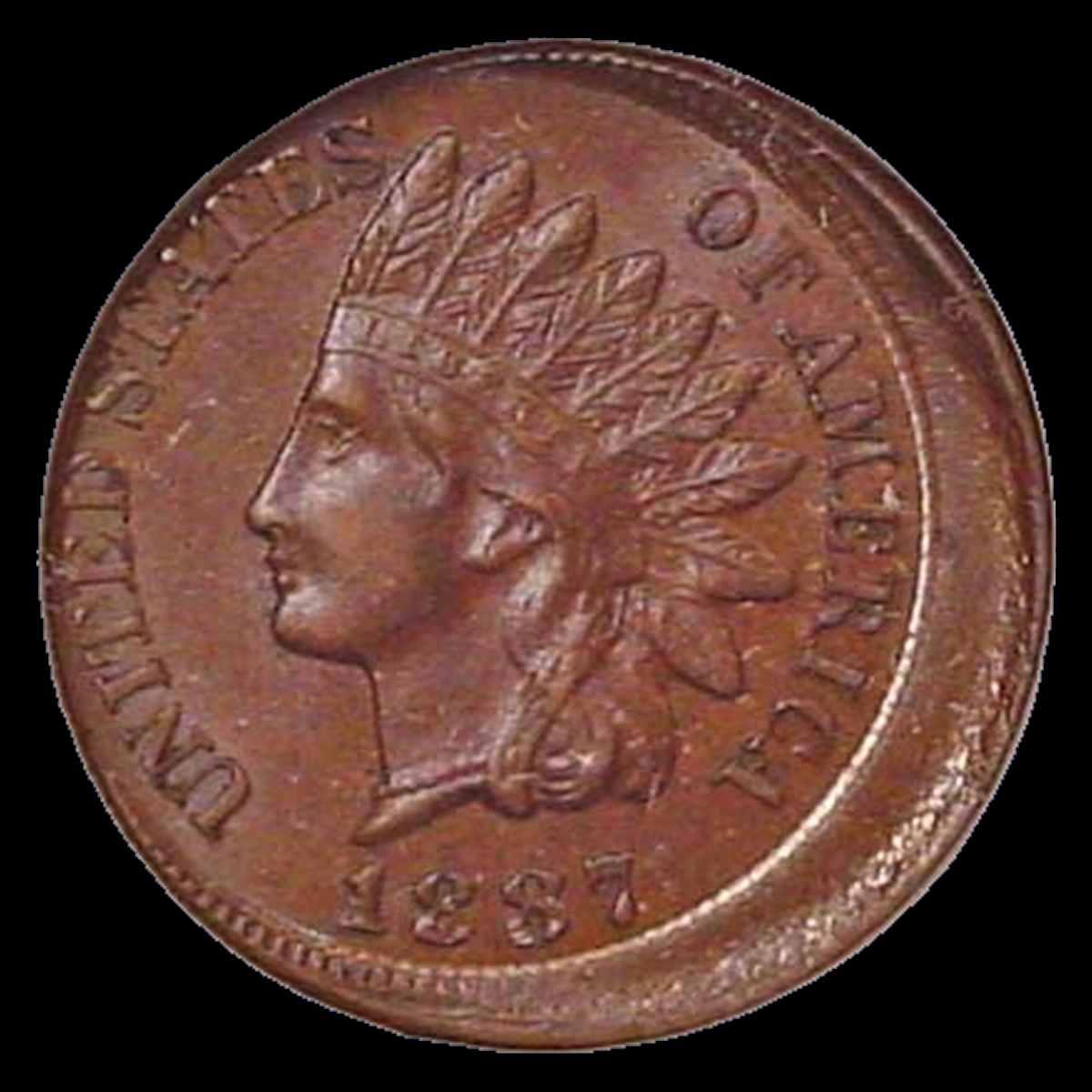
The published collection specimen is 10% off center toward 9 o’clock and graded NGC MS62 Brown. A single misplaced blow left unused metal opposite the side where design missed the blank.
Its unworn condition is separate from its displacement. Another 1887 collection coin received a right-side second strike and belongs in the next category.
How to Identify
With the date upright, compare the lost left-side detail and original bare crescent with the reverse boundary. Both faces should fit the same blank position.
Inspect the crescent for grinding or removal of finished design. A shift on only one face may concern die alignment rather than an off-center blank.
What It’s Worth
The estimated range is $100–$4,000 for genuine dated examples. No supplied auction result belongs to the collection’s MS62 coin.
An 1895 cent struck 10% off center sold for $231.80 in March 2026 at AU58. That nearby-year coin had very slight wear and offers context for a similar amount of displacement.
4. 1887 Penny A Small Second Impression Catches the Right Edge: Double Strike Error
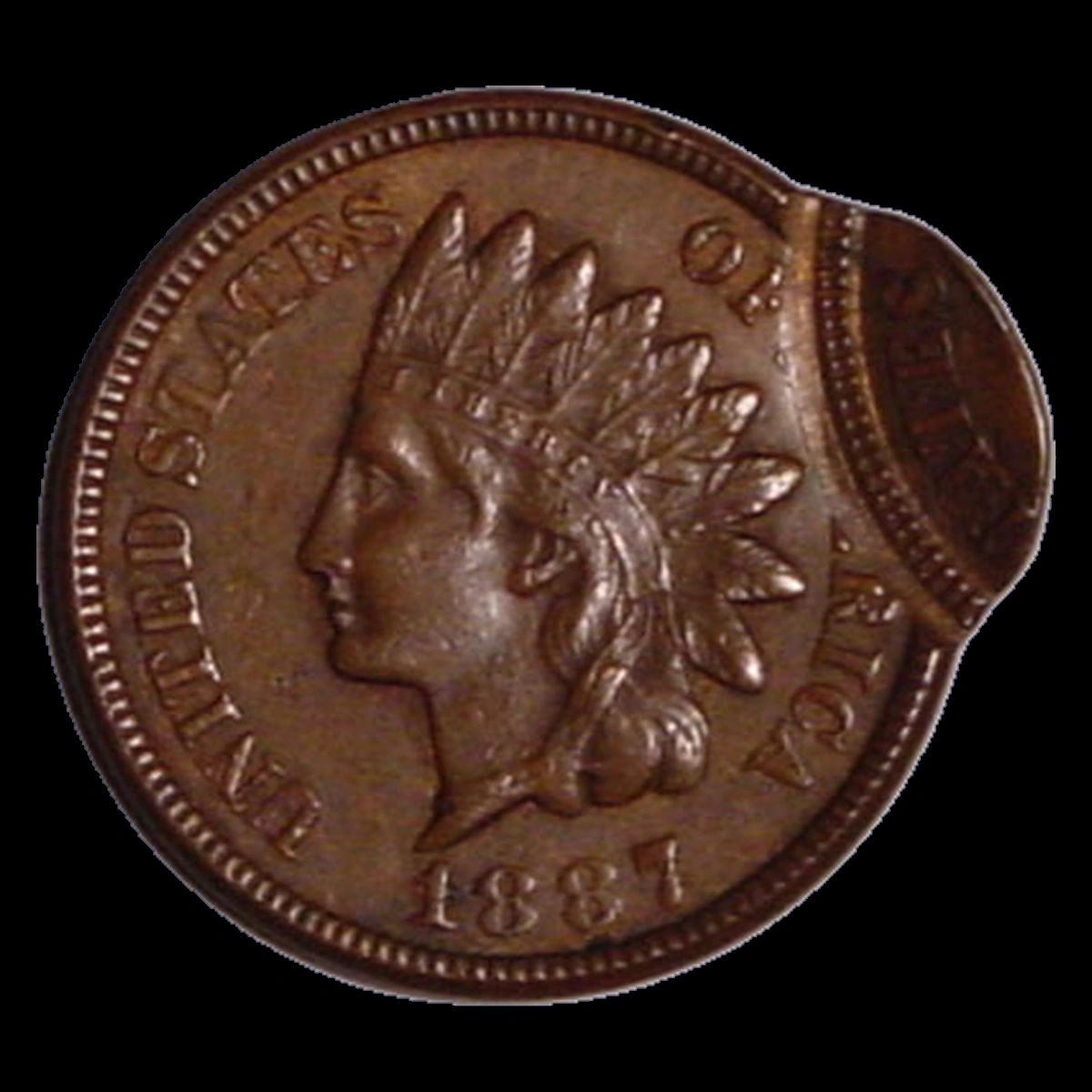
The other NGC MS62 Brown collection coin began with a centered strike and received a second blow 85% off center toward 3 o’clock. Only a small right-side portion caught the later impression.
The percentage describes the strike’s position, not metal broken away. Two distinct design positions record the coin’s movement between blows.
How to Identify
Trace the centered design, then find recognizable letters, border, or portrait detail in the small right-side impression. At the overlap, look for later striking that flattened earlier detail.
Use both full faces and inspect the edge for joins or later crushing. The collection account keeps this sequence separate from the single 10% leftward strike.
What It’s Worth
Identifiable double strikes have an estimated range of $300–$6,000. The collection photograph itself does not establish a sale.
An 1899 cent with an 85% off-center second strike brought $632.50 in July 2007. Its lightly worn condition and one-sided later impression should not be transferred to the 1887 specimen.
5. 1887 Penny Lettering and the Second 8 Are Weak: Filled Die Error
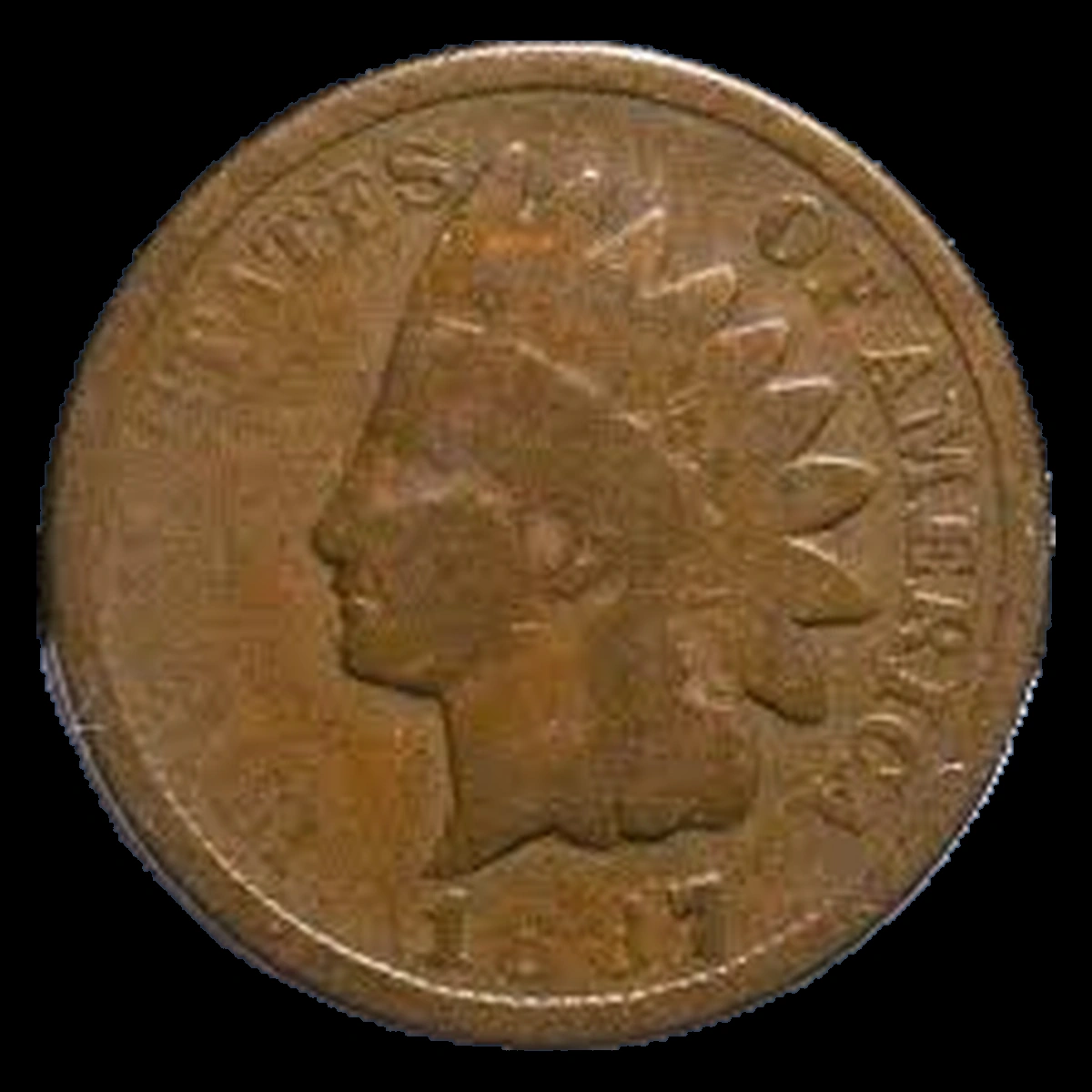
A 1989 Stack’s catalog described an 1887 date as 18-7, with weak front lettering as well as a poorly formed second 8. The coin was described as Extremely Fine to About Uncirculated, indicating light to moderate wear.
The catalog attributed the missing detail to filled dies, where grease or other packed material blocked recessed parts of the stamping tool. A missing-looking digit does not turn the coin into a different year.
How to Identify
Compare the weak digit with nearby letters and portrait details at similar heights. General wear should affect other exposed areas, while grinding can leave lines, flattened patches, or pushed metal.
Photograph the lettering and date together so the explanation accounts for the full reported pattern. One isolated missing numeral cannot establish the catalog’s filled-die attribution.
What It’s Worth
Recognizable circulated examples have an estimated range of $5–$250. The 1989 coin appeared in a six-coin lot, so no separate price is assigned to it here.
A group total cannot be treated as this penny’s individual value. Deliberate smoothing or scraping also falls outside the mint-error comparison.
6. 1887 Penny A Narrow Recessed Line Suggests a Thread: Reported Strike-Through Error
Collector Charmy Harker presented an 1887 cent that others interpreted as possibly struck through a thread from a cleaning cloth. Material between the blank and die could leave its shape impressed in the metal.
The proposed cloth thread is an explanation, not a laboratory identification. The supplied report gives no exact clock position.
How to Identify
Follow the recessed line and determine whether it interrupted design formation or cut through completed detail. A later scratch may raise displaced metal along its groove.
Compare with the collector’s example while preserving the uncertainty about material. A loose flap or open layer boundary instead points toward metal separation and should not be lifted.
What It’s Worth
An authenticated thread-shaped strike-through has an estimated range of $40–$600. The estimate requires a mint-made impression rather than a curved scratch.
A 1920 cent struck through a metal fragment sold for $134 in March 2025. Its different obstruction offers only broad context and is not a sale of the collector’s 1887 piece.
7. 1887 Penny Raised Lines and Patches Interrupt the Reverse: Cracks, Chips, and Rim Breaks Error
One reverse cud extends approximately from 2:30 to 4:30. A separate retained lower-left break spans about 7 to 8:30, with broken steel remaining in place and preserving some design.
Other cracks and chips affect the date, letters, wreath, or arrows on different dies. Coin metal entering damaged steel produces raised features, unlike a scratch cut into a finished surface.
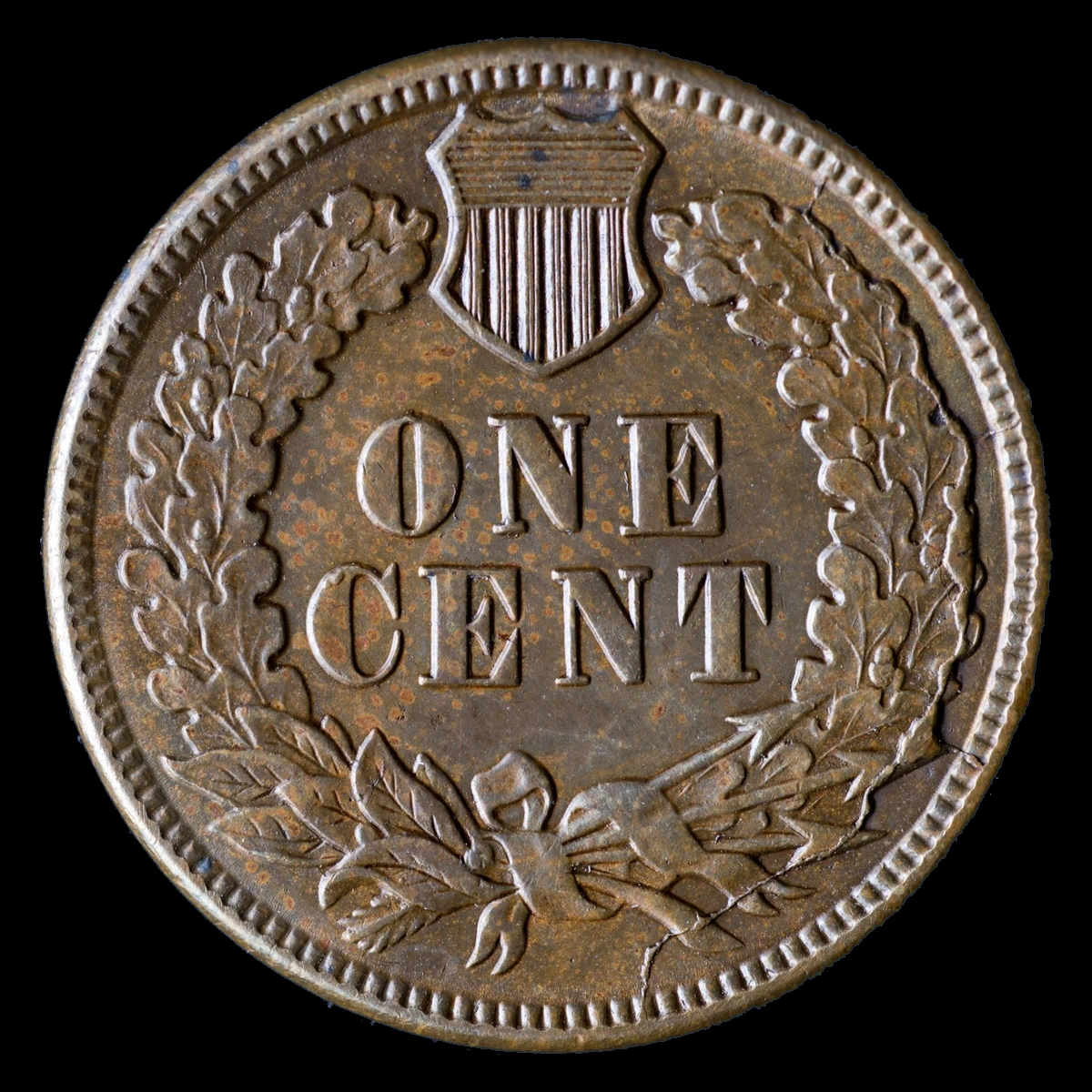
How to Identify
Check a broad patch’s rim connection for folded metal, attached material, or a seam. Compare the right-side cud separately from the lower-left retained break.
Design inside a retained area is expected and need not disappear completely. For a thin line, inspect its raised center and follow its documented route into nearby details.
What It’s Worth
Small cracks are estimated at $5–$150, while clear chips, cuds, and retained breaks may fit $30–$1,500. The extent of die failure and preservation determine the whole-coin comparison.
An unworn 1866 cent with a reverse cud brought $504 in March 2021. That substantial different-date break does not price every 1887 ridge equally.
8. 1887 Penny Unexpected Outlines Occupy Feather Gaps: Clashed Dies Error
The documented clash pattern shows strong transferred outlines between feathers seven, eight, and nine. Contact between the dies without a blank marked their surfaces, and later coins copied the traces.
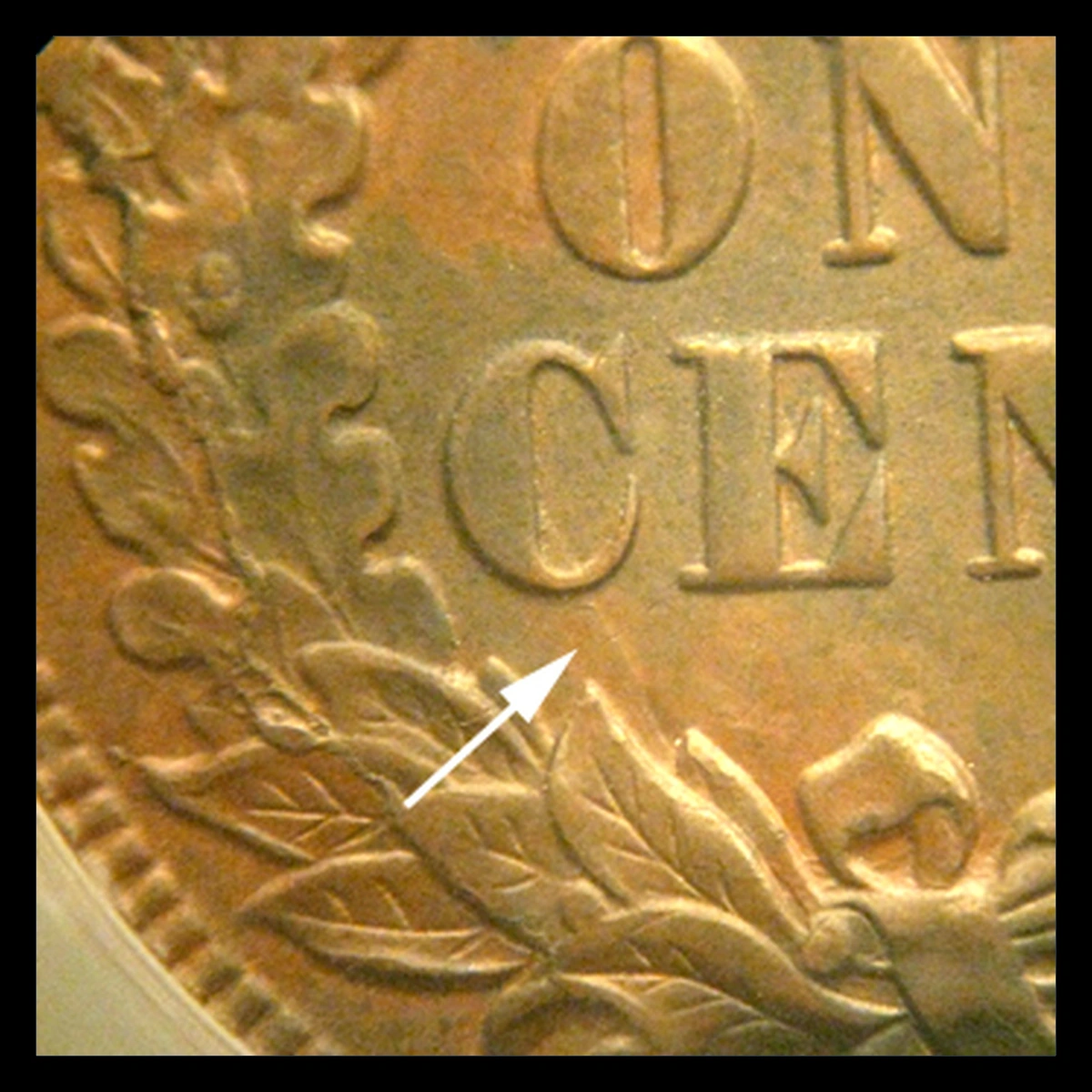
How to Identify
Compare front and back images at equal scale and match the feather-gap outlines to recognizable opposite-face design. Unrelated curves can appear similar if enlarged differently.
Change the light to distinguish scratches from transferred shapes. A recessed mirror portrait would instead suggest contact with another coin during striking, not this die-clash mechanism.
What It’s Worth
Readable examples have an estimated whole-coin range of $5–$300. The supplied catalog identifies the pattern without a sale result used here.
Faint traces on a heavily worn cent may add little. Corrosion, cleaning, and scratches remain relevant even when the clash is identifiable.
9. 1887 Penny Feathers and Letters Share Extra Edges: Doubled Die Obverse Error
Snow-1 repeats details in feathers three through nine, parts of OF AMERICA, the small designer’s initial, and some headband lettering. Those repeated outlines were already in the die before the coin received its strike.
Several matching areas provide stronger evidence than a single thick feather. A second blow on the coin would be a different production event.
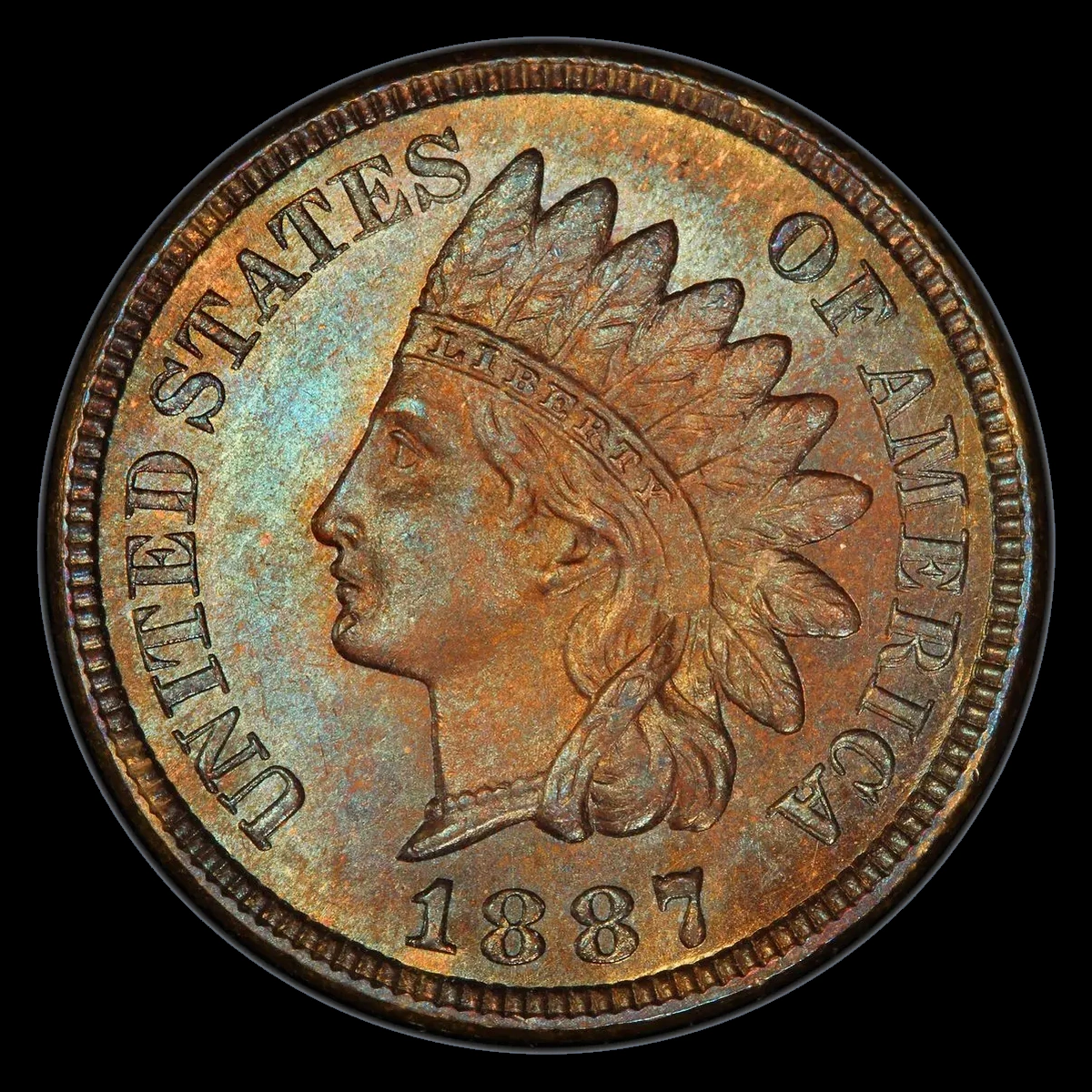
How to Identify
Choose a clear feather and follow its extra outline under changing light. Then compare OF AMERICA, the initial, and the headband with the identified variety.
A highlight moves with the light, while a flat shelf from striking movement may narrow the original detail. The physical repetition should agree across the documented pattern.
What It’s Worth
The estimated range is $25–$5,000 for identified doubled fronts. A PCGS MS63 Brown example sold for $1,380 in June 2025.
That unworn coin’s recognized pattern belongs with its result. Any later die crack on the same variety is included in the complete coin rather than priced as another full purchase.
10. 1887 Penny Numeral Tops Appear beneath the Date: Misplaced Date Error
One recorded arrangement has the tops of an extra 1 and both 8s among the border teeth. A separate die has a misplaced 7.
The date punch touched below its intended location during die preparation. Surviving fragments were then repeated on coins from that tool.
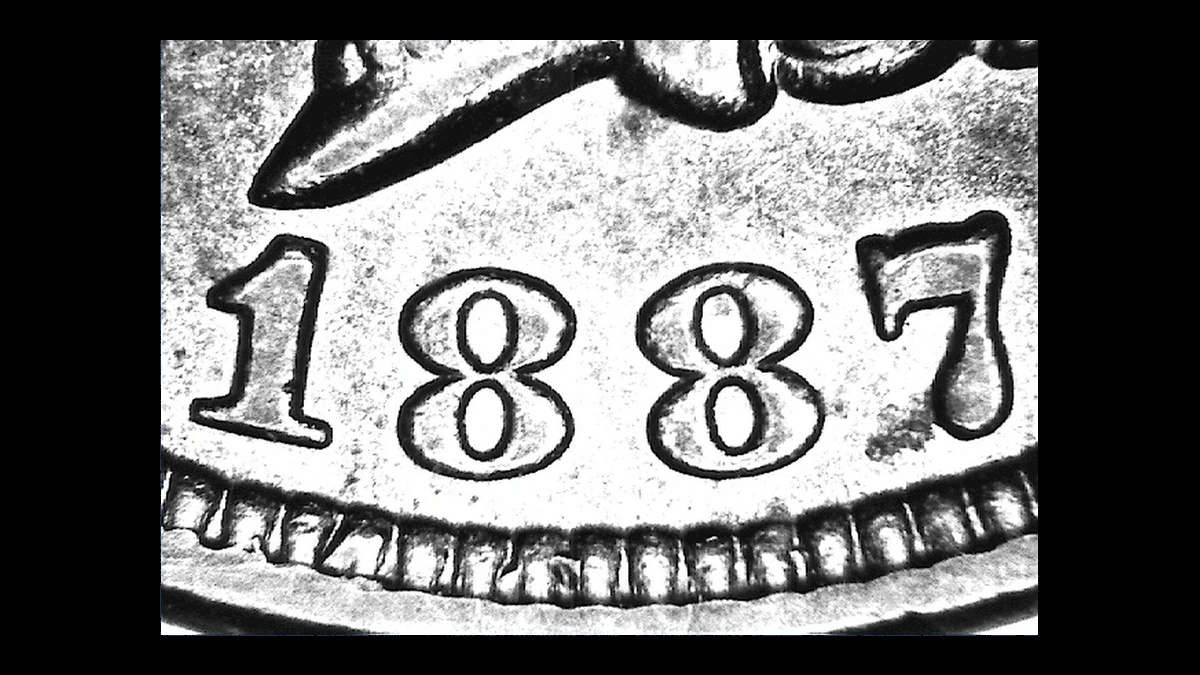
How to Identify
Select the extra 188 or the separate 7 in the 1887 variety references, keeping normal teeth and the main date visible for position. Trace only the raised portions actually present.
A damaged tooth, chip, or folded edge can create a misleading corner. Correct general location is insufficient unless the shape matches the identified numeral fragment.
What It’s Worth
Matched examples have an estimated range of $20–$2,500. An 1878 Snow-2 with misplaced 78 fragments brought $1,920 in October 2019 at MS65 Red.
That sale includes another date’s unworn preservation and original red color. The extra 188 and separate 7 on 1887 cents need their own pattern comparisons.
11. 1887 Penny Earlier Strokes Remain near 1, 8, or 7: Repunched Date Error
One pattern leaves an earlier stroke beneath the first 1 and within the upper loop of the first 8. Other varieties repeat 7 downward or leave a curve inside the second 8.
Repeated date-punch applications explain these remnants. The year remains 1887; the famous 1888/7 is dated 1888 and is a different coin.
How to Identify
Keep both 8s visible while comparing the complete date. Confusing the first and second 8 leads to the wrong variety match.
Follow recognizable earlier numeral strokes and their directions, while checking for cuts and flat striking shelves. A downward 7 remnant cannot substitute for a different pattern’s inner-8 curve.
What It’s Worth
The estimated whole-coin range is $15–$2,000. An 1895 Snow-1 repunched date graded unworn MS64 Brown sold for $264 in November 2022.
That same-series result provides context without assigning a price to a different 1887 pattern. Thick ordinary numerals and scratches do not qualify simply by resembling extra strokes.
Conclusion
An 1887 cent can lose detail through blocked dies, gain repeated outlines from die preparation, or receive another strike after moving. The shape and placement of the evidence distinguish those processes better than the size of a mark.
Keep the two collection strike errors apart and retain the limits of old listings, group lots, and proposed materials. Price the complete identified coin with its wear and surfaces, using the appropriate variety rather than the largest available comparison.