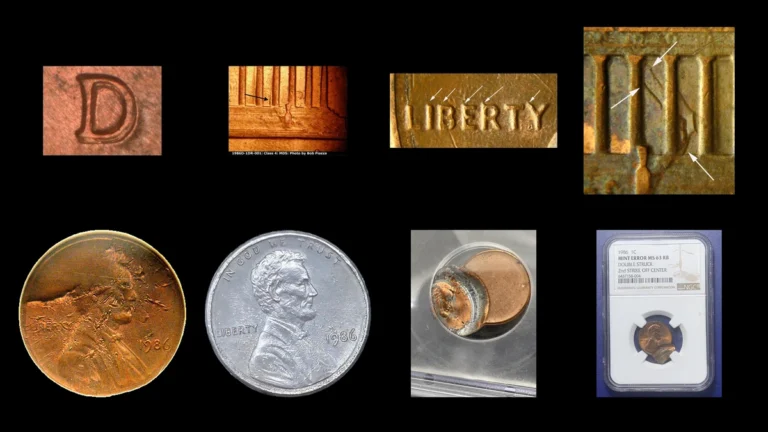
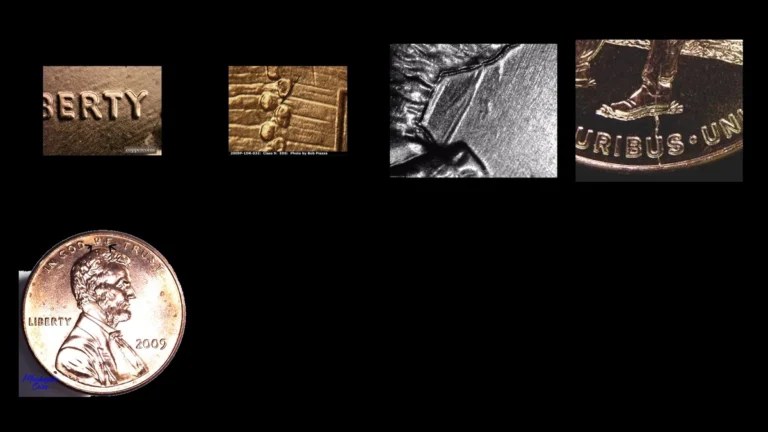
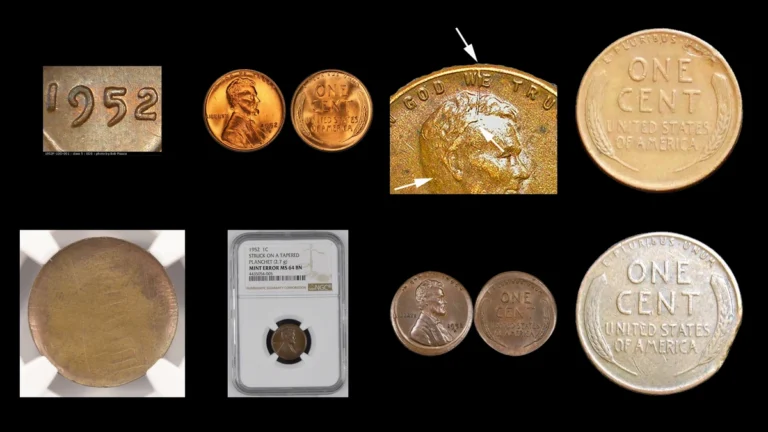
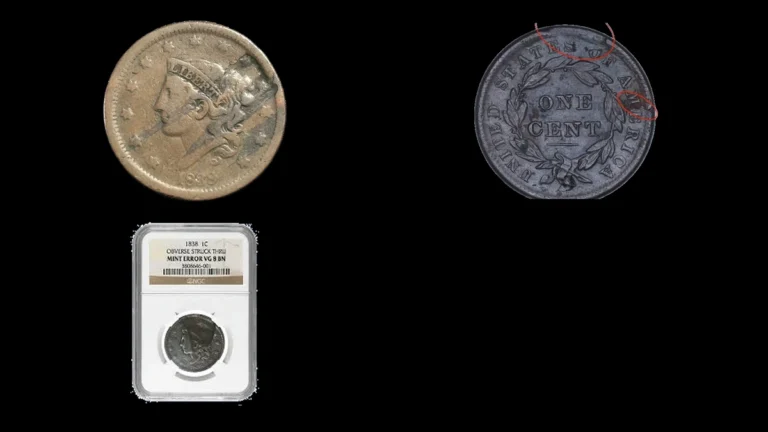
Rare 1824 Penny Errors (List & Pictures)
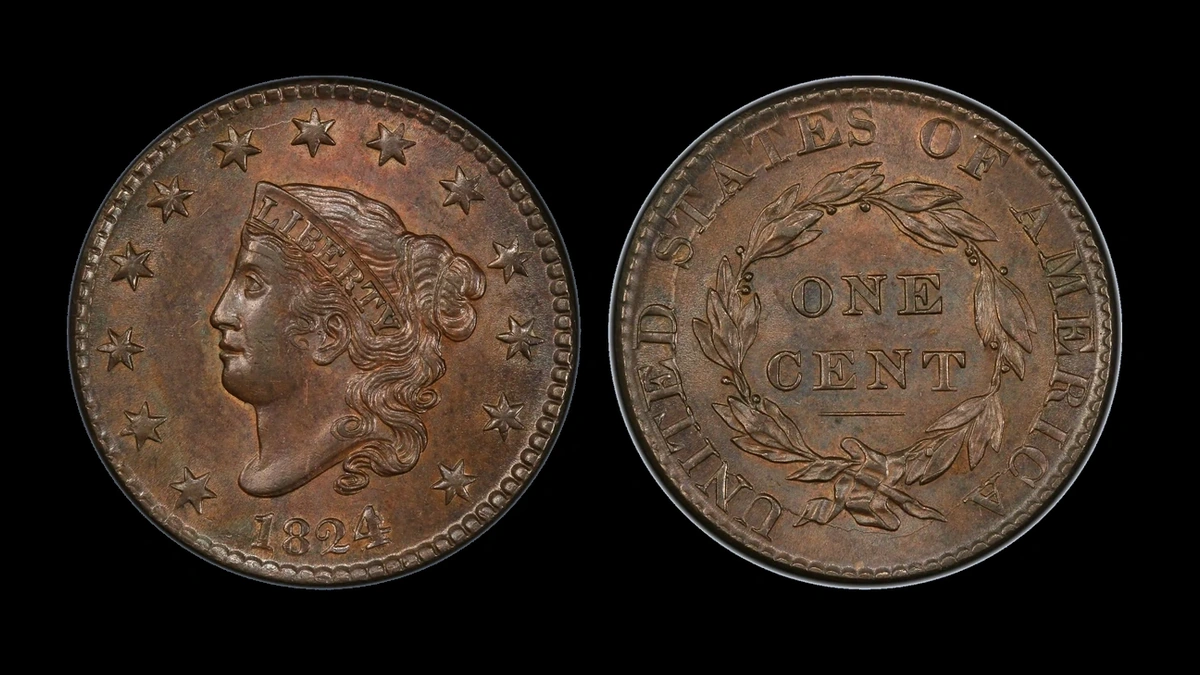
Before pricing an unusual 1824 cent, establish whether its final 4 covers remnants of an earlier 2. An unworn 1824/2 sold for $36,425 in June 2015, far beyond many modest blank or die defects.
The estimated span for 1824 penny errors is $35–$40,000. Check the date first, then use the raised-line, layer, edge, and strike-boundary evidence below to identify the other reported features.
| Evidence to find | Category | Estimated whole-coin range |
|---|---|---|
| Earlier 2 beneath final 4 | 1824/2 overdate | $75–$40,000 |
| Raised star-nine line or rim patch | Die crack or cud | $35–$6,000 on normal-date coins |
| Thin separating copper | Lamination | $35–$3,500 on normal-date coins |
| Missing blank section | Clip | $75–$4,000 on normal-date coins |
| Displaced design and bare crescent | Off-center strike | $100–$8,000 on normal-date coins |
1. 1824 Penny The Last 4 Covers Part of a 2: 1824/2 Overdate Error
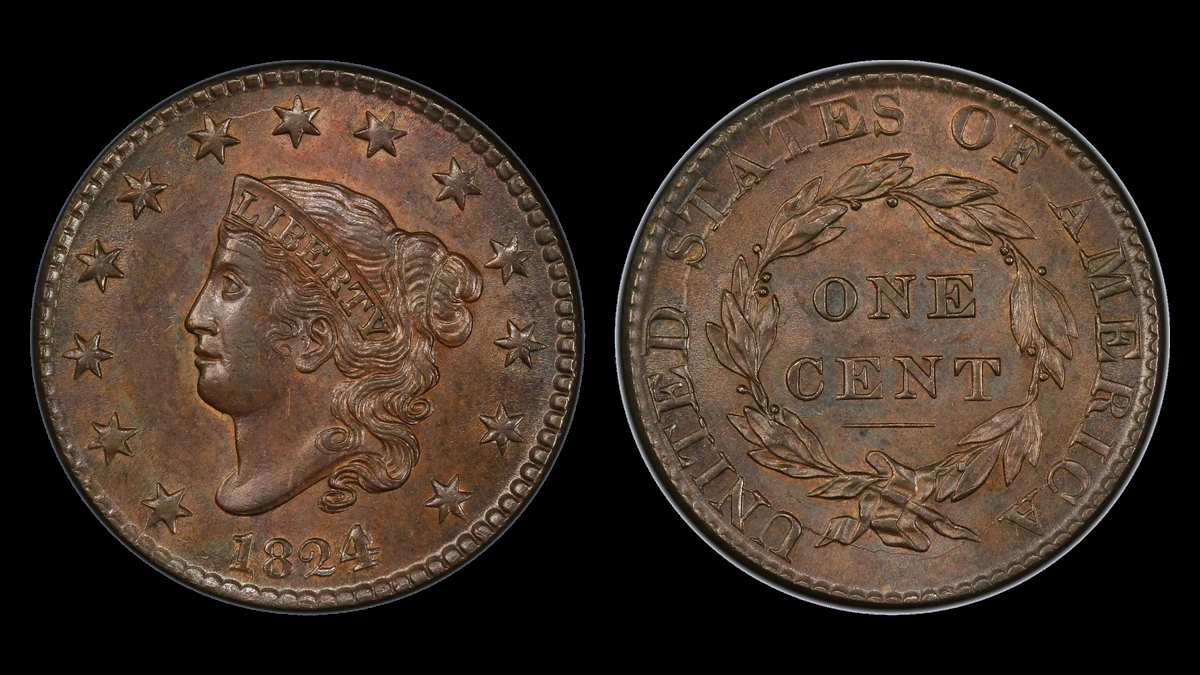
A previous 1822 date was altered on the die, leaving a trace of the last 2 beneath the new 4. The resulting overdate could be transferred during one ordinary strike.
How to Identify
Compare the entire date with normal 1824 and authenticated 1824/2 photographs at the same scale. Follow the surviving 2 beneath the final numeral rather than accepting any thickness or isolated mark near the 4.
Changing light can distinguish a raised remnant from a reflection or a narrow engraved cut. This is a changed die date, not evidence that a completed 1822 coin later received a second full design.
What It’s Worth
$75–$40,000 is the estimated range across heavily worn but identifiable overdates and exceptional unworn examples. Condition and the particular die variety can create substantial differences.
PCGS records $36,425 in June 2015 for an MS63 example. That unworn coin’s price does not apply to an ordinary thick 4, an altered digit, or a heavily corroded candidate.
2. 1824 Penny A Ridge Passes Through Star Nine: Die Cracks and Cuds Error
A normal-date 1824 cent is reported with a raised line from the rim through the top of star nine. Copper entered an opening in the die and formed a ridge as the coin was struck.
A broader missing section at the die’s edge can instead leave a rim-connected cud. The star-nine position describes the crack, not a universal location for every reported cud.
How to Identify
Follow the star-nine line under side lighting to establish that it rises above the surface. A scratch can have raised lips but still contains a central cut, unlike the ridge copied from a die crack.
For a larger patch, inspect its actual connection to the rim and check for folding or added metal. Neither a crack nor a cud establishes the separate overdate attribution.
What It’s Worth
$35–$6,000 is the estimated whole-coin range for normal-date 1824 cracks and cuds. A faint line on a worn cent may add little, while stronger breaks on well-preserved copper need different comparisons.
An 1836 large cent with a front cud and reverse crack, graded PCGS MS65 Brown, sold for $2,040 in August 2020. Its high unworn preservation is part of that different-year compound-feature result.
3. 1824 Penny A Thin Sheet Lifts Along a Seam: Lamination Error
A weak layer inside the blank can open before or after striking, leaving attached copper or an exposed shallow patch. The general 1824 report does not establish a fixed location for the defect.
How to Identify
Look for physical separation within the copper rather than scattered corrosion pits or a scrape across completed detail. Preserve an attached flap and inspect only the opening already present.
For safely handled loose cents, compare with normal references of 10.89 g and approximately 28 mm, measuring intact areas. A retained layer may leave nearly normal weight, while a detached flake or corrosion can lower it; leave certified specimens sealed.
What It’s Worth
$35–$3,500 is the estimate for genuine laminations on normal-date 1824 cents. An overdate with a layer flaw requires its variety and condition to be assessed together.
An 1839 large cent with two front laminations brought $600 before fees in January 2026, with an auctioneer’s AU50 assessment. That lightly worn different-year coin is a specific comparison rather than a price for an unspecified 1824 patch.
4. 1824 Penny The Edge Ends at a Missing Section: Clipped Blank Error
A curved clip can result when the blank-cutting punch overlaps a hole already in the copper strip. A straight missing section can instead originate at the strip’s end, before the remaining blank receives its design.
How to Identify
The supplied 1824 report gives no particular gap size or clock position. Examine how the original rim meets both ends of the actual gap on both faces.
Natural changes in metal flow can support an incomplete blank, while saw or file marks suggest later cutting. Reduced weight alone cannot distinguish the two because either process removes copper.
What It’s Worth
$75–$4,000 is the estimated range for authenticated clips on normal-date 1824 cents. Wear, original edge formation, and remaining design matter alongside clip size.
An 1852 clipped large cent graded NGC MS63 Brown sold for $384 in June 2024. That unworn later-date specimen is not a completed sale for an 1824 clip and does not account for any overdate attribution.
5. 1824 Penny The Design Moves Toward 11 O’Clock: Off-Center Strike Error
The documented normal-date example was struck 20% off-center toward 11 o’clock. Its ANACS description reads Very Good Details, Net Good 4, with corrosion.
Those terms separate surviving design from surface problems. The displaced strike created the relationship between bare copper and missing design; corrosion affected the coin through a different process.
How to Identify
Set the date upright and trace the original strike boundary on both faces. Do not confuse the rough corroded surface with the area that never received design.
Check the unused crescent and edge for grinding or trimming. Both designs should fit the same misplaced blank, and a shifted blow need not remove any of its original metal.
What It’s Worth
$100–$8,000 is the estimate for dated normal-date 1824 off-center strikes, from damaged worn pieces through better-preserved examples. The corroded ANACS coin requires a comparison that reflects its surface problems.
An 1855 large cent struck 70% off-center and graded PCGS Fine 15 brought $1,092.50 in January 2009. That larger-displacement different-year result is context, not a supplied completed sale of the 20% 1824 specimen.
Conclusion
Date attribution establishes an important part of an 1824 cent’s identity before its other defects are considered. The earlier 2 belongs to the die, while peeling copper, a missing blank section, and an off-center strike describe different physical events.
The $35–$40,000 estimates span normal-date worn coins through exceptional overdates. Preserve surface-condition details and specimen-specific measurements, and compare a coin’s actual combination of features without adding separate maximum prices.