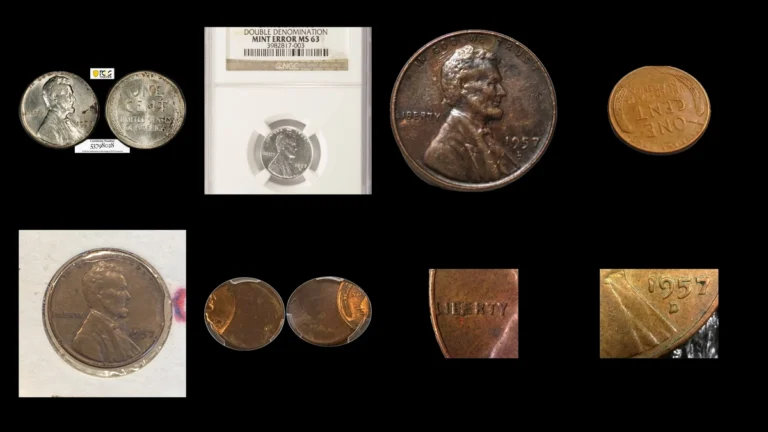
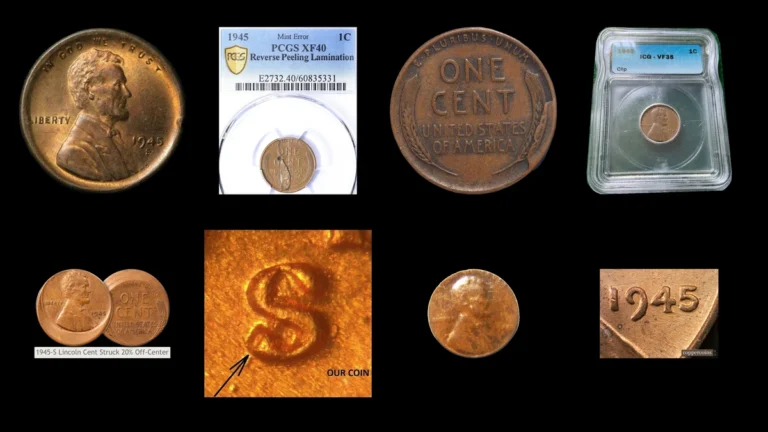
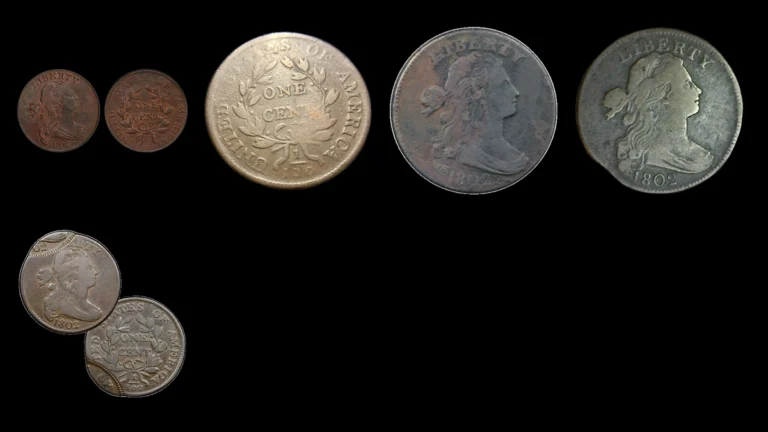
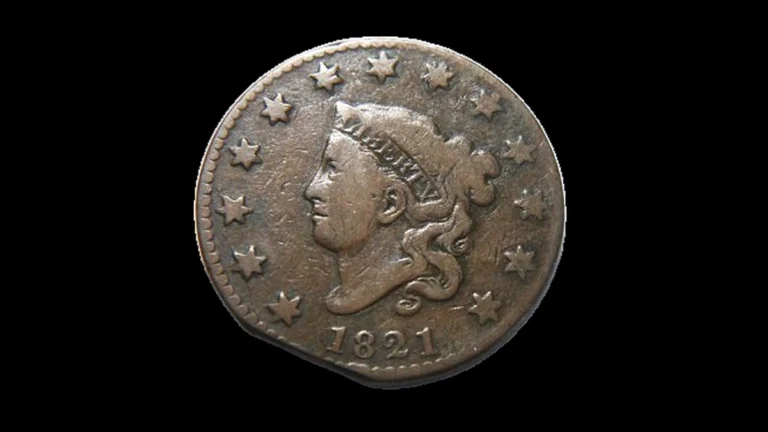
Rare 1964 Penny Errors (List & Pictures)
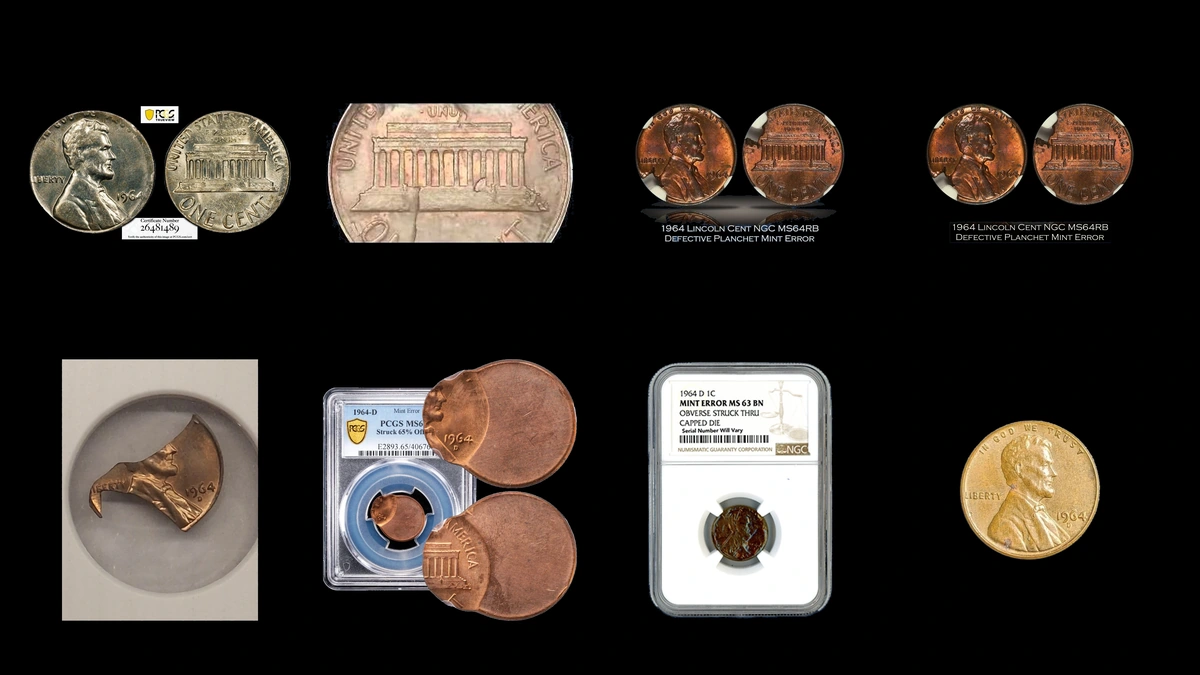
The edge of a pale cent may explain more than its color. A clad-dime-blank example leads the documented sales for these 1964 penny errors at $5,280 in May 2022.
Estimated values extend from $2–$20,000, including an unusual overstrike on a canceled Indian coin. Begin by identifying the metal and any older design, then follow missing sections, striking disruptions, and small die details.
| Visible evidence | Error category | Estimated range |
|---|---|---|
| Small pale disc, silver throughout | Silver dime blank | $500–$3,000 |
| Small pale disc, copper core | Clad dime blank | $3,000–$8,000 |
| Roosevelt or torch beneath cent | Finished-dime overstrike | $2,000–$7,500 |
| Two different cent dates | Earlier-cent overstrike | $3,000–$12,000 |
| Indian lettering and canceled surface | Quarter-rupee overstrike | $8,000–$20,000 |
| Struck rough or incomplete metal | Defective blank | $20–$500 |
| Thin separated layer | Split blank | $40–$800 |
| Missing edge sections | Clips and combinations | $10–$1,500 |
| Partial design beside untouched metal | Off-center strike | $20–$600 |
| Wide outline plus smooth hollow | Broadstrike with indent | $40–$1,000 |
| Separate overlapping impressions | Double strike | $100–$1,500 |
| Three strike areas and raised middle | Triple saddle strike | $700–$2,500 |
| Softened design on one face | Late cap strike | $50–$750 |
| Flake impression or embedded wire | Strike-through | $25–$1,000 |
| Small original raised lump | Die chip | $2–$50 |
| Another D stroke | Repunched mintmark | $5–$200 |
| Separated lettering contours | Doubled die | $5–$400 |
A normal 1964 cent is copper alloy throughout, weighs 3.11 g, and measures 19.05 mm with a plain edge. Record both faces and the edge before using a scale, calipers, and a 10× magnifier on an accessible coin.
Leave fragile metal and embedded objects undisturbed. Certified measurements and photographs can be used without opening a holder.
1. 1964 Penny Pale Metal without a Copper Core: 1964 Silver Dime Blank Error
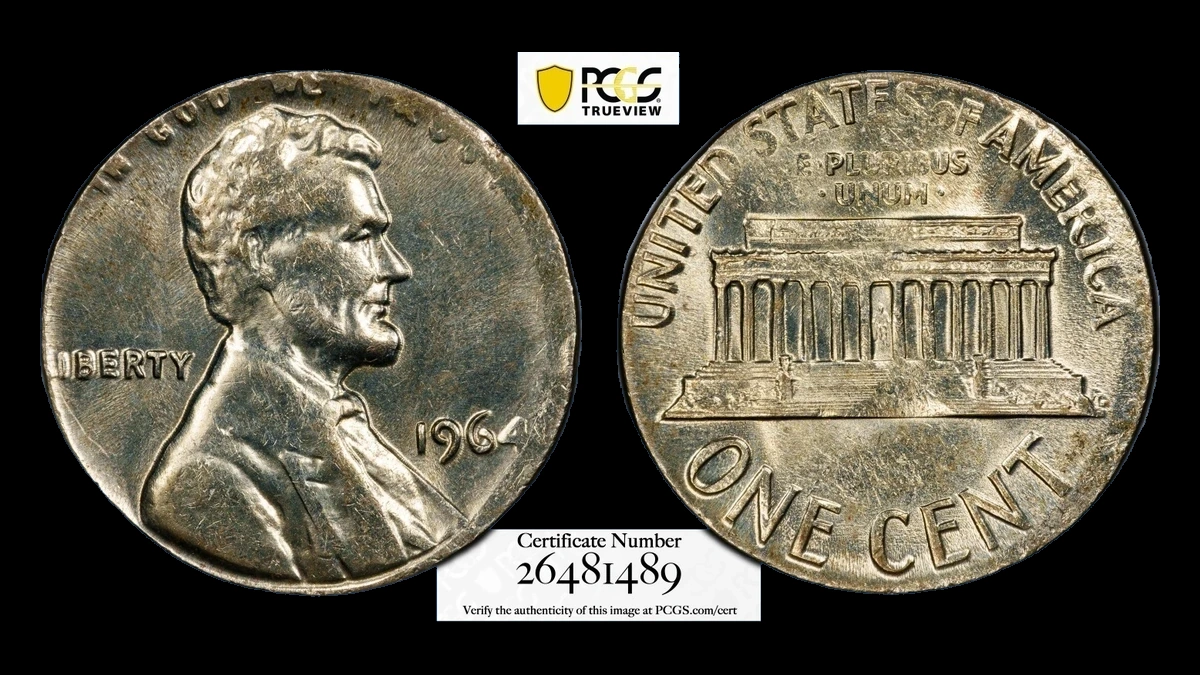
Outer cent lettering can run out of room on a smaller blank made for a silver dime. Both Philadelphia and Denver examples are documented.
The starting dime blank normally weighed 2.50 g. Because it was unused, it need not carry any earlier Roosevelt design.
How to Identify
Compare weight, dimensions, and the way both designs meet the edge. A centered impression can still lose outer detail on metal too small for the dies.
Look for plating, filing, or a contrasting core before seeking professional metal testing. Silver color alone does not establish silver throughout the blank.
What It’s Worth
Authenticated silver-dime-blank cents have an estimated $500–$3,000 range. Original surfaces and a readable date help place a specimen within it.
A Philadelphia PCGS MS64 coin brought $1,260 in May 2022. Separate Philadelphia MS62 and Denver AU58 pieces do not inherit that price; AU58 denotes slight wear.
2. 1964 Penny A Copper Stripe Runs through the Pale Edge: 1964 Clad Dime Blank Error
Pale outer layers surrounding copper identify a different dime-metal structure. The recorded PCGS MS65 cent was struck on an unused clad dime blank.
United States clad dimes carry dates starting in 1965, making the 1964 cent impression noteworthy. The date on a die does not always identify the calendar year when that die was used.
How to Identify
A clad dime blank starts near 2.268 g and 17.91 mm, before any spreading from the cent strike. Inspect the layered edge without demanding the reeding of a finished dime.
Search separately for older dime design to exclude an overstrike on a completed coin. Neither pale color nor a single low-weight reading establishes this unusual dated combination.
What It’s Worth
Comparable confirmed examples have an estimated $3,000–$8,000 range. The identity of the clad blank matters as much as the apparent condition.
The PCGS MS65 specimen brought $5,280 in May 2022. That result does not apply automatically to a silver blank or a plated ordinary penny.
3. 1964 Penny Roosevelt or a Torch Appears beneath Lincoln: 1964 Dime Overstrike Error
A surviving dime feature shows that the metal had already been struck before entering the cent press. The later cent design flattened some older detail while leaving other parts visible.
The documented Philadelphia example was graded PCGS MS66. Its underlying dime’s date is not established by the supplied brief description.
How to Identify
Follow recognizable portrait or torch fragments on both faces and check that they belong to a coherent earlier design. Do not copy 1964 onto an unreadable host date.
Inspect the edge for a seam from joined coin faces. The host’s metal also needs its own identification rather than an assumption based on the cent date.
What It’s Worth
Comparable authenticated overstrikes have an estimated $2,000–$7,500 range. Clarity of the older design adds an important comparison beyond metal alone.
The PCGS MS66 example sold for $5,040 in May 2022. It is a separate coin from the unused silver and clad blanks appearing in neighboring auction lots.
4. 1964 Penny Two Cent Dates Remain: 1964-D over an Earlier Penny Error
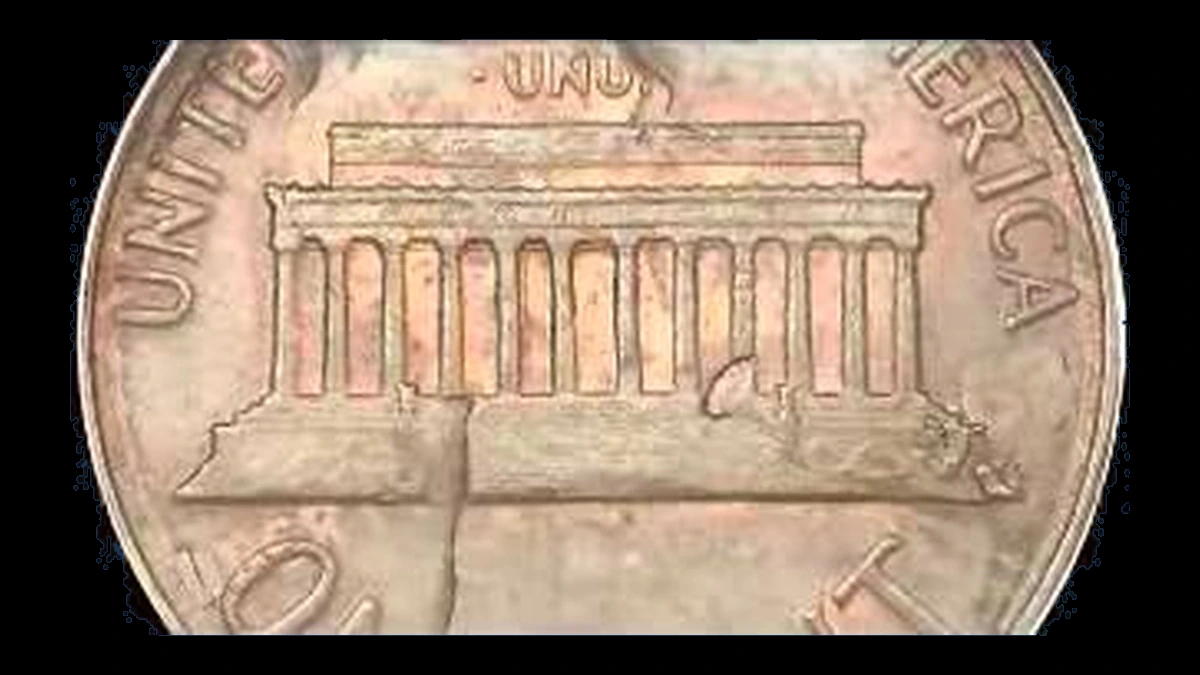
The documented older host is a 1951-D Wheat cent carrying a later 1964-D impression. Traces of both years and both reverse designs explain the unusual return of a finished coin to the press.
A separate report identifies a 1963 cent beneath a 1964-D strike. It needs its own older-date evidence rather than borrowing the Wheat-cent example’s identification.
How to Identify
Locate each date independently, then relate the earlier design fragments to that host. Wheat traces beside a Memorial support a different sequence from two same-year impressions.
Check the overlap and edge for later pressure or assembly. An ambiguous curve cannot establish a specific earlier digit merely because a listing supplies the year.
What It’s Worth
An authenticated cross-year cent overstrike has an estimated $3,000–$12,000 range. Clear dates and convincing original overlapping designs are central to the comparison.
The 1951-D host appeared with a $9,500 minimum bid in an older catalog. That was an entry threshold, not a confirmed sale, and it does not price the separately reported 1963 host.
5. 1964 Penny INDIA and Cancellation Marks Cross the Portrait: 1964 Quarter-Rupee Overstrike Error
The foreign host is a 1942 Indian quarter rupee made of fifty-percent silver. Before the cent impression arrived, diamond-shaped cancellation marks had been applied to both faces.
Older lettering and those canceled surfaces survive within the later design. This is an overstrike on a finished foreign coin, not a strike on an unused foreign blank.
How to Identify
Find the quarter-rupee wording and 1942 date crossing Lincoln, then inspect the cancellation pattern on both sides. NGC’s photographs document those surviving features.
The canceled surface must precede the American design rather than consist of fresh cuts over it. The visible sequence does not establish whether anyone arranged the unusual strike deliberately.
What It’s Worth
The estimated range for the authenticated Indian-host piece is $8,000–$20,000. No realized sale is supplied for this NGC AU58 example.
A 1968-S cent over a 1967 Costa Rican ten-centimos coin brought $4,560 in March 2023. That different host provides a related foreign-overstrike comparison, not a transaction for the canceled silver quarter rupee.
6. 1964 Penny Rough Original Metal Shapes the Boundary: 1964 Defective Blank Error
A Philadelphia defective-blank cent is recorded at 2.7 g. The general defect description does not establish that a layer peeled away.
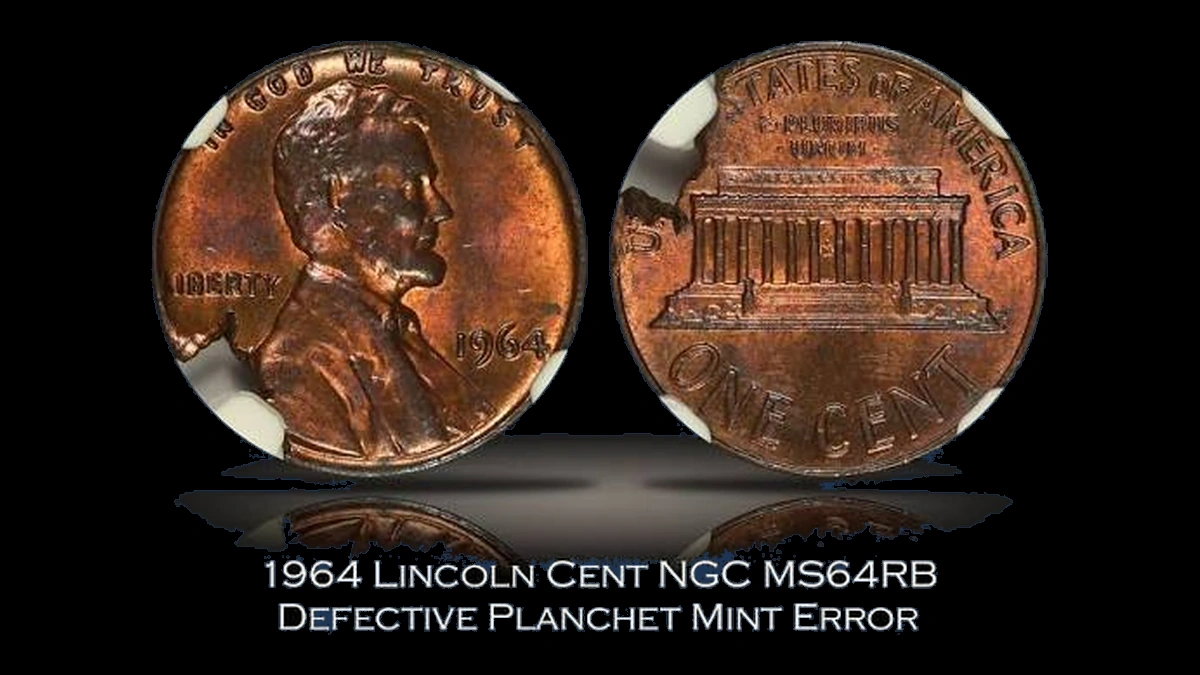
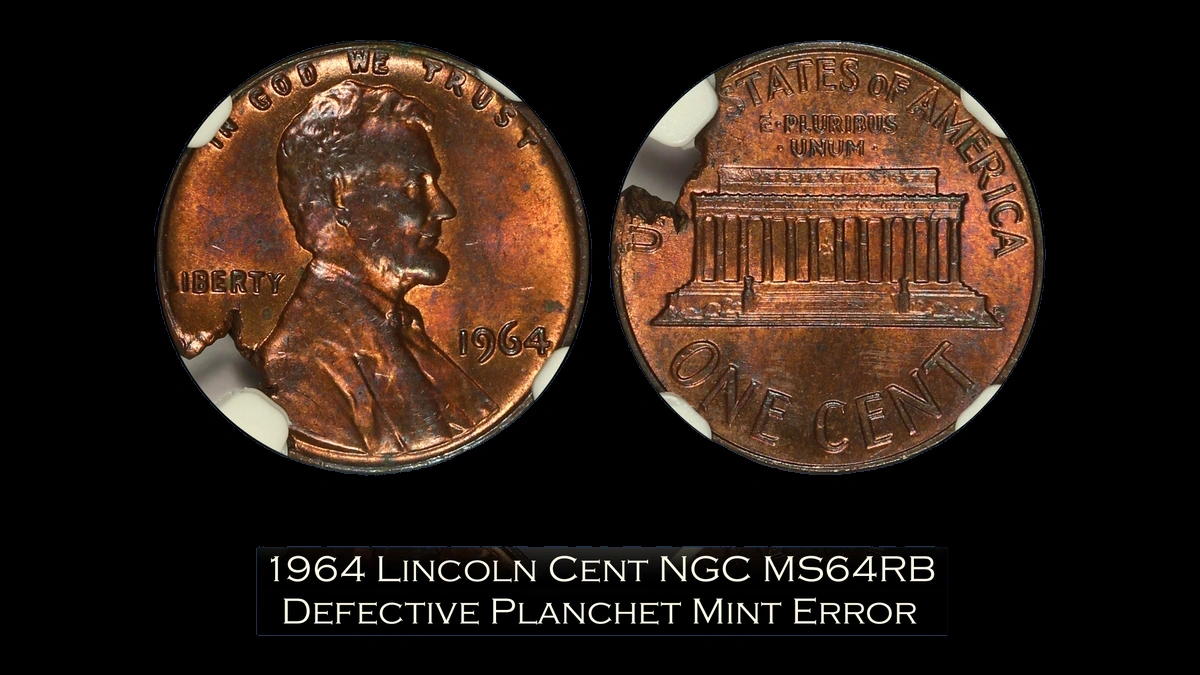
A different example combines a rough upper-left boundary with broad spread toward the lower right. A suggested origin at an irregular corner of metal strip remains a possibility rather than a requirement for recognizing its defect.
How to Identify
Inspect how the design forms beside the rough boundary before calling it later corrosion or cutting. For the expanded example, confirm the complete design within metal allowed to spread beyond normal collar restraint.
Keep the 2.7 g specimen separate from the rough-edge broadstrike. A broad defective-blank label alone does not identify lamination or explain every uneven surface.
What It’s Worth
Original defective blanks have an estimated $20–$250 range, rising to about $50–$500 for clear defect-and-broadstrike combinations. Each estimate concerns the complete coin.
A copper-alloy 1980-D broadstrike brought $57 in March 2021. It offers expansion context without proving how the separate 1964 rough boundary formed.
7. 1964 Penny A Thin Layer Still Carries the Designs: 1964 Split Blank Error
A 1.54 g example records a blank that separated before striking. Its exposed internal surface could receive a shallow design on the remaining thin metal.
Another piece weighs 1.35 g and is also about five percent off center. The low weight and shifted strike belong together on that second coin.
How to Identify
Look for struck detail across the original separation texture and inspect the thin edge for filing. A layer lost after striking presents a different timing relationship.
On the combined example, identify the unstruck crescent independently. These copper-alloy pieces are not thin copper coatings removed from later zinc-centered cents.
What It’s Worth
Identified split blanks have an estimated $40–$500 range; split blanks with an off-center strike are around $100–$800. Low weight alone does not establish either premium.
A 1964 split blank graded PCGS 60 Brown brought $53 in May 2021. That result is not assigned to the separate 1.35 g shifted specimen.
8. 1964 Penny Gaps Leave a Bowtie or Crescent: 1964 Clipped Blanks Error
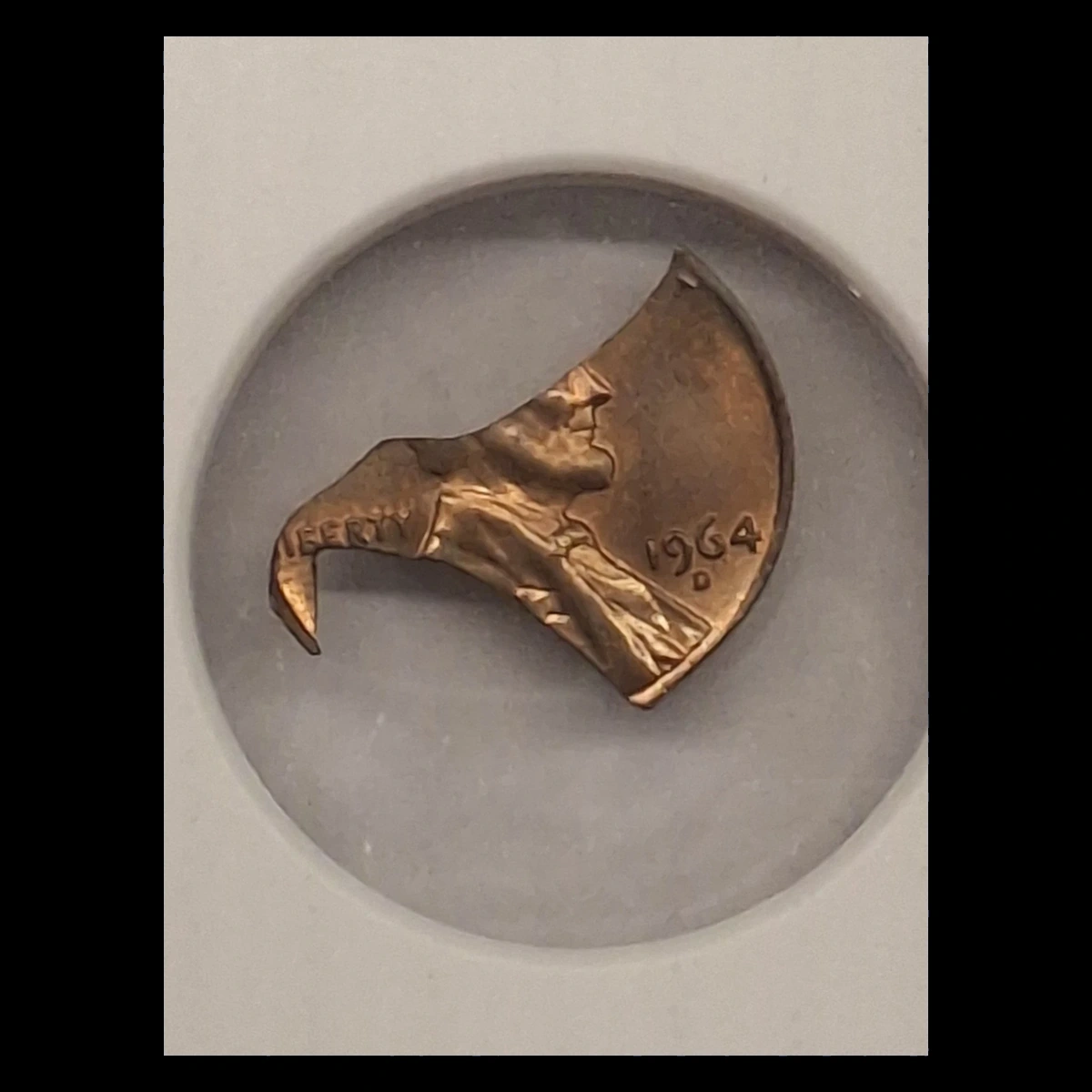
The Denver bowtie preserves its date and D despite weighing only 0.53 g. Other reported incomplete blanks have curved, straight, ragged, crescent, or overlapping missing sections.
Some also received off-center strikes. Their missing metal must be distinguished from attached metal that remained unstruck.
How to Identify
Trace how original design meets each gap and look for later cutting. Recorded weights include 1 g for a crescent and 1.5 g for an overlapping double clip.
Denver double-curved and straight-clipped examples each weigh 2 g despite different shapes. One straight-clipped combination is attributed to 1964-D without a fully readable date, so that attribution must not become a claim of visible digits.
What It’s Worth
Ordinary clips have an estimated $10–$200 range; dramatic shapes and combinations are approximately $100–$1,500. Corrosion or later damage can reduce a particular specimen’s appeal.
The 0.53 g bowtie brought $660 in April 2020. Its tiny dated outline is one complete error coin, not a set of independently priced gaps.
9. 1964 Penny The Design Misses Part of the Disc: 1964 Off-Center Strike Error
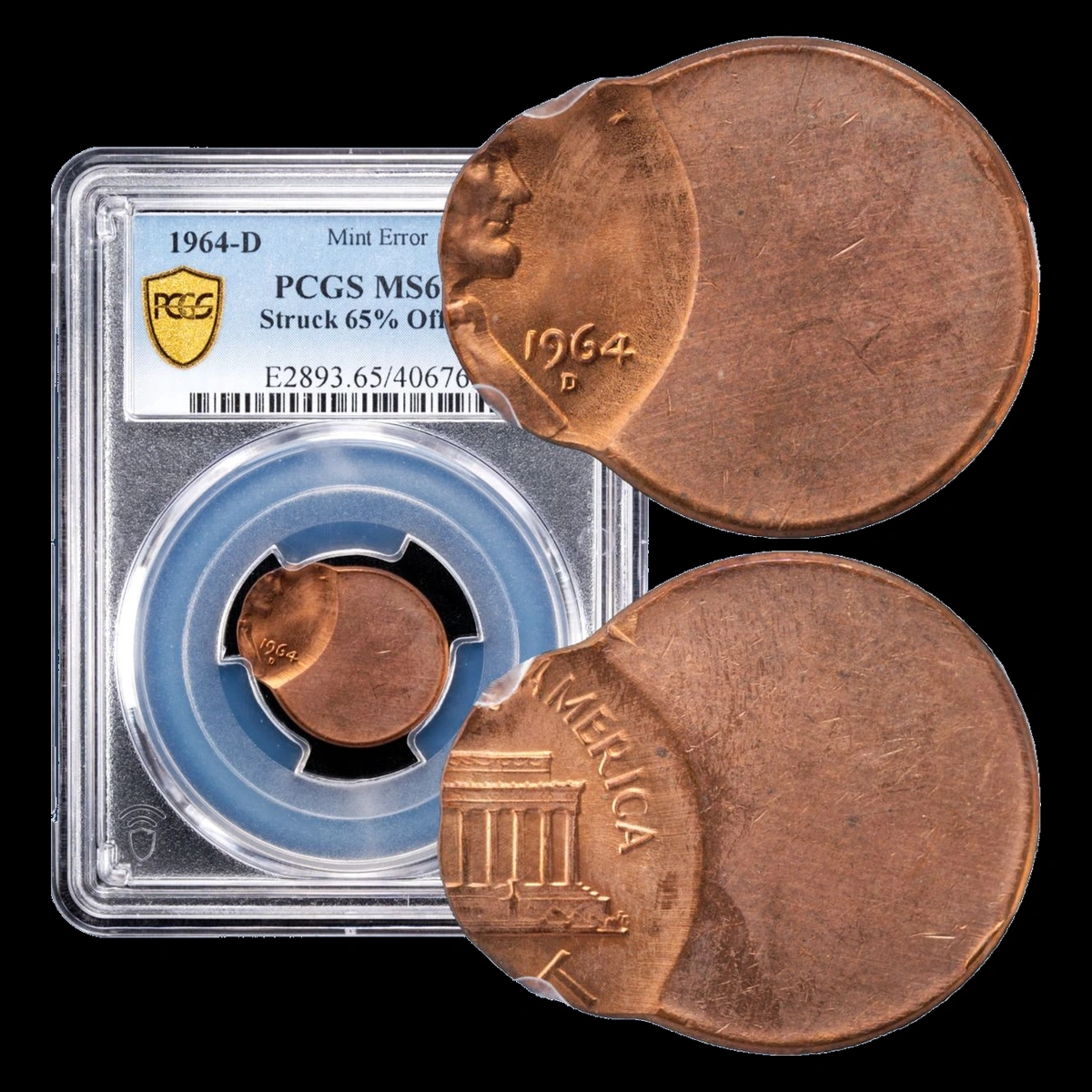
A blank crescent alongside displaced Lincoln and Memorial designs shows that the disc missed its normal position. Philadelphia and Denver examples are reported.
One Philadelphia specimen is about forty percent off center and also has later front damage. The damage affects condition without causing the original displacement.
How to Identify
Compare both faces for design loss consistent with the same misplaced blank. Poor centering on only one face can instead involve a shifted die.
Find the date and inspect the untouched area for grinding. Other specimens need their own percentage and direction rather than the forty-percent example’s description.
What It’s Worth
Dated examples have an estimated $20–$600 range. Natural surfaces and useful remaining detail influence the comparison alongside offset size.
A sixty-percent off-center 1972-D cent brought $44 in September 2025. That copper-alloy comparison illustrates why displacement alone cannot guarantee a high price.
10. 1964 Penny A Wide Cent Contains a Smooth Hollow: 1964 Broadstrike with Indent Error
Unrestrained metal can spread beyond normal diameter while another blank overlaps the face. The combination leaves an enlarged outline and a separate smooth indentation.
Reported seven-percent and eighteen-percent indents belong to different coins. A blank leaves no earlier struck design in its overlap area.
How to Identify
Verify the expanded outline and the design meeting the hollow as separate features. Broadstruck outer lettering remains within the available metal.
Search the indentation for backward, sunken design before calling it plain blank contact. Such a mirror image would indicate a brockage from an already struck coin instead.
What It’s Worth
Clear broadstrike-and-indent combinations have an estimated $40–$1,000 range. Overlap size, natural spread, and preservation help explain the breadth.
The seven-percent example graded PCGS 63 Brown brought $54 in March 2025. The eighteen-percent coin needs its own comparison rather than a price calculated from that percentage.
11. 1964 Penny A Second Impression Crosses the First: 1964 Double Strikes Error
One cent spread during its first blow and then received a second strike ninety-nine percent off center. Only a tiny part of the later impression reached the metal.
Separate examples include two off-center impressions and a flipover that mixes opposite designs on the same face. Those are different striking sequences.
How to Identify
Identify a connected feature from each impression before reconstructing the movement. Memorial details sharing a face with Lincoln can support a flipover.
A narrow shelf beside a letter does not explain two complete design positions. Inspect the edge for later crushing that could produce misleading pressure marks.
What It’s Worth
Identified double-strike combinations have an estimated $100–$1,500 range. Clear readable overlaps can offer more visual information than a tiny extra edge strike.
The broadstruck PCGS MS61 Red coin with the ninety-nine-percent second strike brought $219.60 in March 2026. That whole-coin result is not added to a separate broadstrike value or transferred to the flipover.
12. 1964 Penny Three Strike Areas Surround Raised Metal: 1964 Triple Saddle Strike Error
A raised middle between strike areas gives this error its saddle-like form. Three impressions belong to a single unusually shaped cent.
The documented Philadelphia example was graded PCGS MS65 Red and Brown. Its shape should be preserved rather than pressed flat for inspection.
How to Identify
Use face and side photographs to relate the three impressions to the intervening metal. The shape alone does not establish the exact order of the blows.
Look for plier marks, repairs, or abrupt forced bends along the edge. A bent ordinary coin lacks the connected original strike areas needed for this identification.
What It’s Worth
Comparable authenticated triple saddle strikes have an estimated $700–$2,500 range. Design visibility and preservation of projecting metal matter in addition to grade.
The MS65 Red and Brown coin brought $960 in July 2021. Another 1964 example graded MS64 brought $1,440 in January 2020, showing that a higher grade alone does not dictate the higher sale.
13. 1964 Penny One Design Looks Soft beneath a Covering: 1964-D Late Cap Strike Error
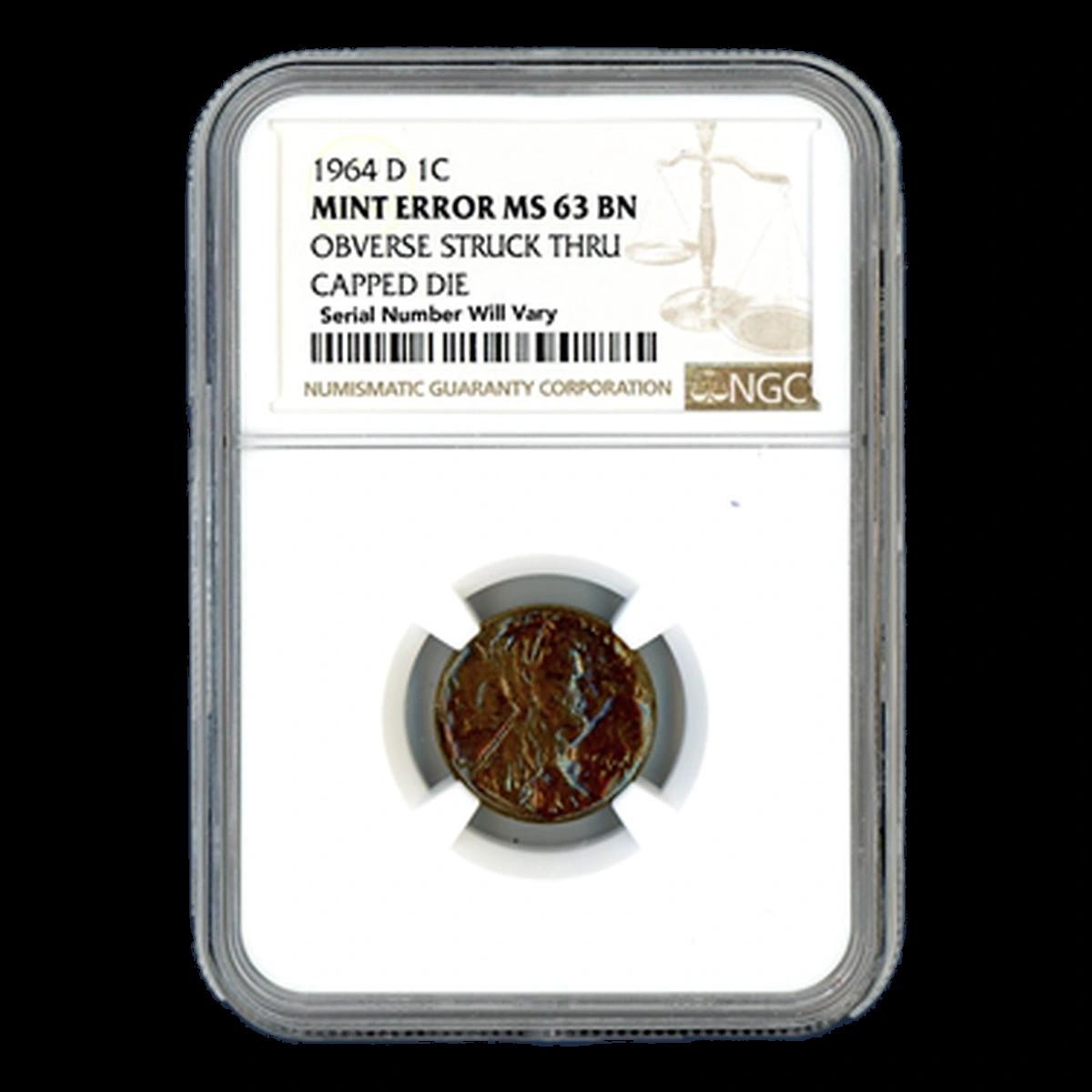
A coin stuck to a die can form a covering called a die cap. Later blanks receive softened design through that metal, especially as repeated use thins the covering.
The recorded ANACS MS63 Brown Denver piece is a receiving coin struck through a late cap. It is not the cap itself.
How to Identify
Compare the softened face with the more clearly formed opposite design. The affected side must be identified from the actual coin rather than inferred from the category name.
Look for connected distortion through the design instead of wear on high points or polishing scratches. A deep cup is not required on the receiving cent.
What It’s Worth
Identified late-cap strikes have an estimated $50–$750 range. Clarity of the covered effect helps select an appropriate comparison.
A 1995 late-cap receiving coin brought $180 in March 2025, despite its different zinc-centered construction. The 1964-D appeared in a mixed lot, whose total cannot be divided to invent an individual price.
14. 1964 Penny An Object Interrupts the Surface: 1964 Flake and Wire Strike-Throughs Error
A detached metal flake can block die contact and leave its shape in the coin. The description does not mean that the flake remains attached afterward.
A separate collector report concerns a retained wire in a 1964 cent. An empty impression and a surviving obstruction require different photographs and checks.
How to Identify
Follow the design where it meets the impression or embedded object. Original metal formed around the obstruction is more informative than the presence of a foreign item alone.
Check for glue, solder, and forced insertion without removing anything. A wire’s exact location must come from the specimen, not the general report.
What It’s Worth
Clear loose-flake impressions have an estimated $25–$300 range. An authenticated retained wire can be compared around $100–$1,000.
No realized auction price is established for the reported wire. Its estimate assumes material caught during the original strike rather than an object attached later.
15. 1964 Penny A Small Lump Rises from the Design: 1964 Die Chip Error
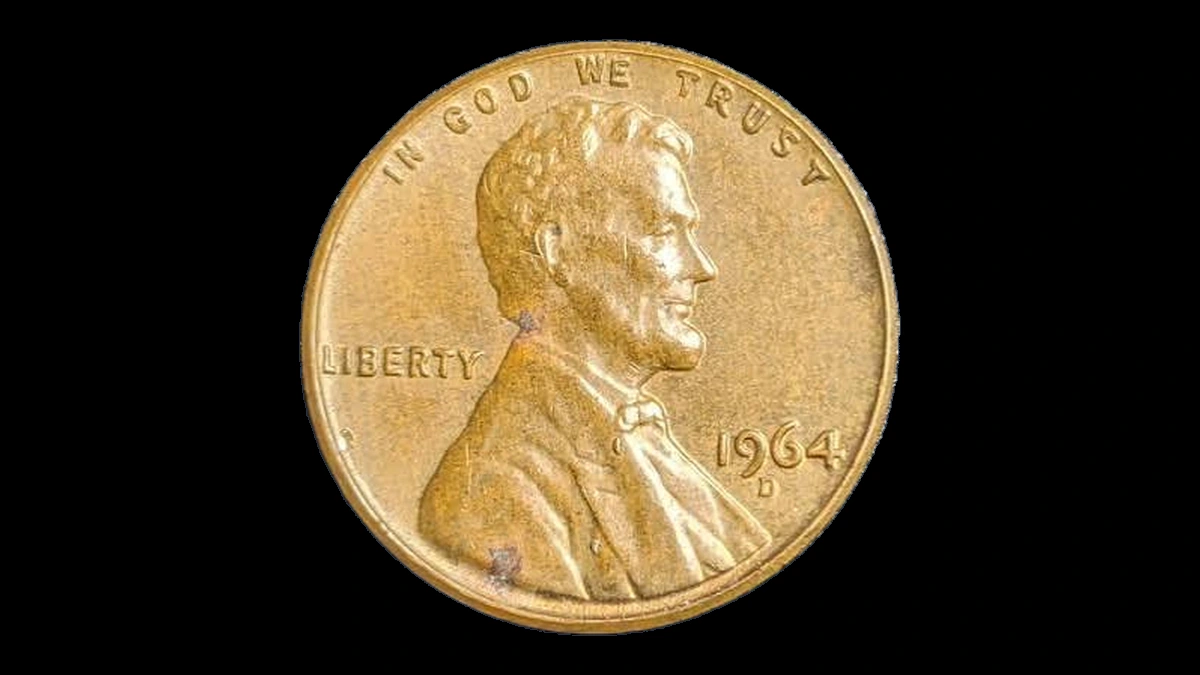
A small broken area in the die gives coin metal space to rise during striking. The resulting patch is a die chip rather than a hole in the coin.
The year report assigns no universal mint or position. Because these cents are copper alloy throughout, the bump is not a blister in modern copper plating.
How to Identify
Tilt the coin to determine whether the feature is raised and follow its connection to original detail. Corrosion, attached material, and pushed metal may disturb the nearby surface differently.
Judge the particular patch without requiring every example to occupy the same letter or portrait feature. A large rim-connected die break is a different comparison.
What It’s Worth
Small original chips have an estimated $2–$50 range. A distinct shape connected to recognizable detail can be more interesting than a pin-sized isolated bump.
This is a minor-chip estimate, not a documented sale for a particular 1964 die. Dramatic large-break prices should not be borrowed for a tiny feature.
16. 1964 Penny Part of Another D Remains: 1964-D Repunched Mintmark Error
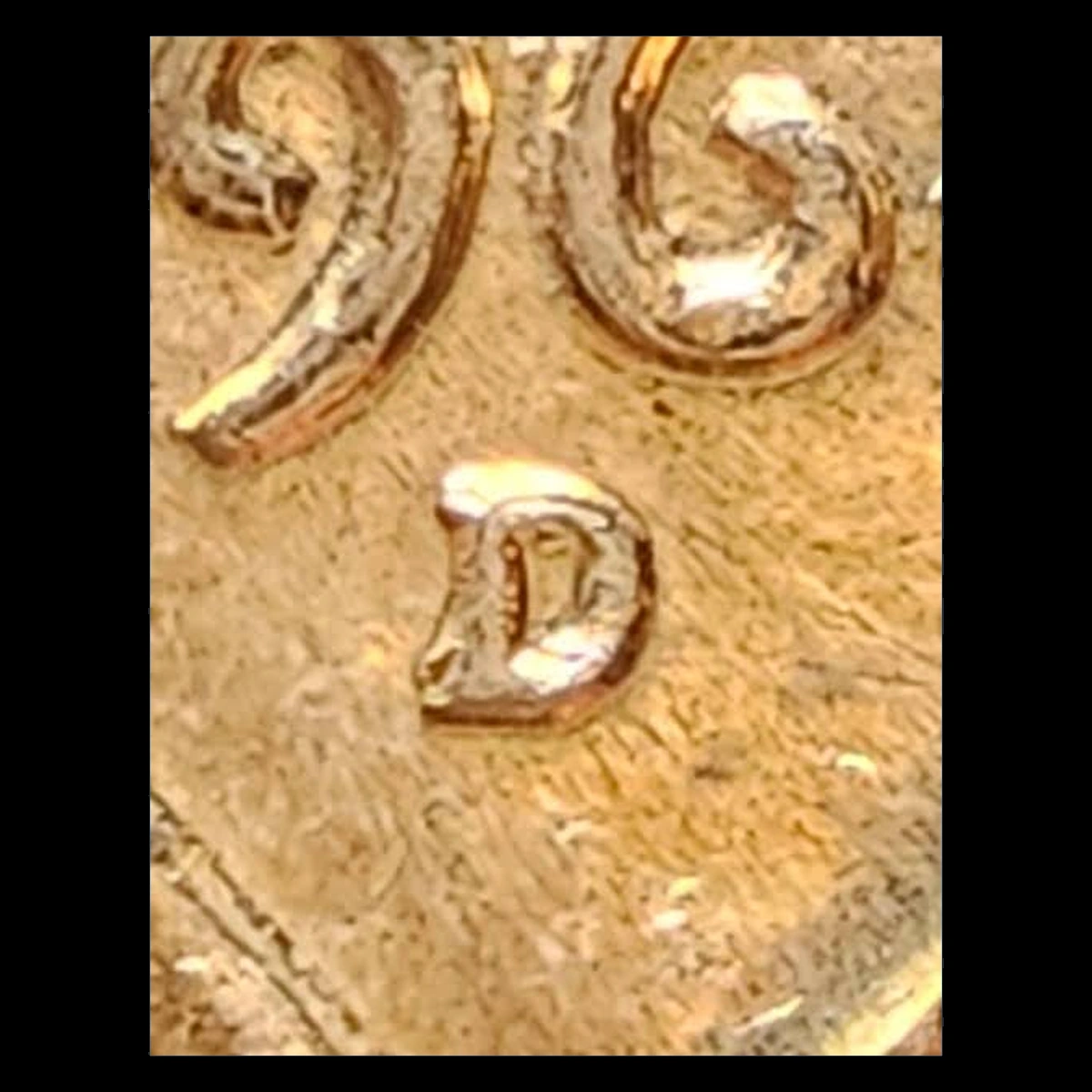
Extra curves or straight strokes around D can record a shifted placement of the hand punch. The repeated mintmark existed in the die before it reached any cent.
A coin therefore needed only one strike to receive those outlines. A tilted or thick D without another recognizable stroke is insufficient.
How to Identify
Trace the extra top, lower curve, or opening into a plausible second letter and compare the particular variety. Different overlaps require different reference images.
Separate rounded letter remnants from flat strike-movement shelves and irregular corrosion. A small chip can enlarge the D without producing a second placement.
What It’s Worth
Confirmed repunches have an estimated $5–$200 range. Clear separation on naturally preserved surfaces supports the stronger end.
No individual auction result is supplied for every reported pattern. Correctly identifying the extra stroke matters more than a seller’s description of an unusually large mintmark.
17. 1964 Penny Letter Edges Repeat on Either Face: 1964 Doubled Dies Error
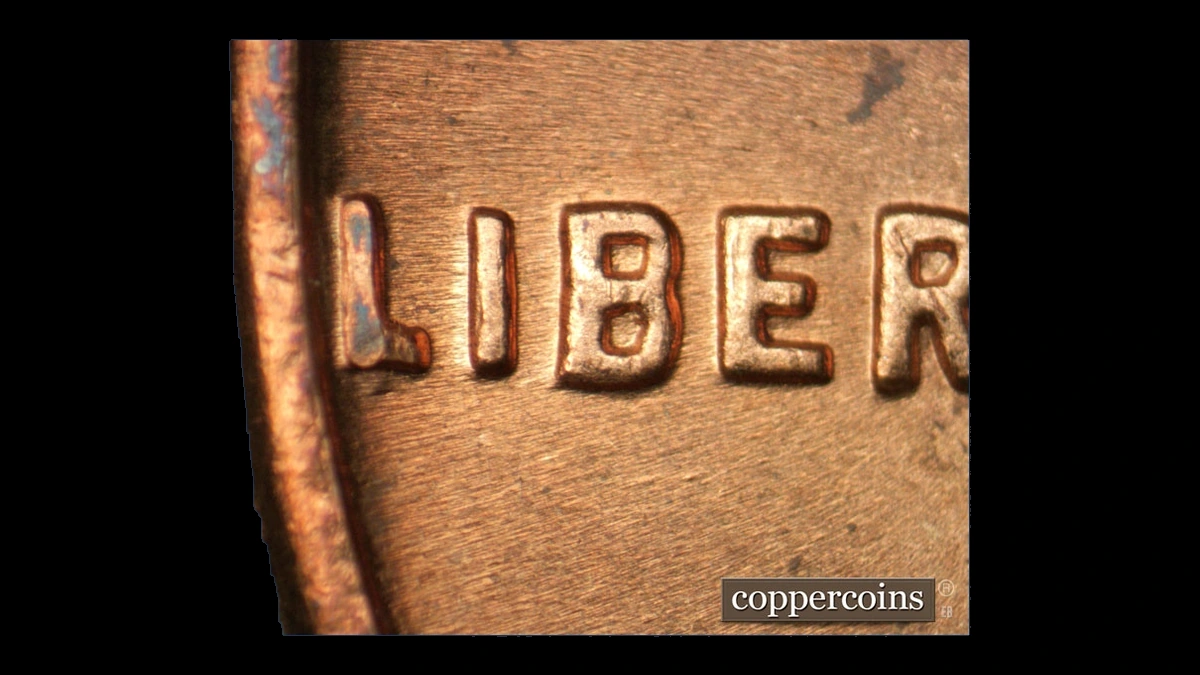
Philadelphia and Denver front varieties involve different details in the motto, LIBERTY, or date. Philadelphia reverse varieties include repeated lettering and features near FG, designer Frank Gasparro’s initials.
The reverse designation FS-802 is documented for Philadelphia. These repeated designs were present in their respective dies, rather than caused by a second strike of the coin.
How to Identify
Choose the mint and face before comparing the lettering. Reverse checks may include ONE CENT, STATES OF, and FG as appropriate to the specific variety.
Look for matching raised separation under changing light, not a moving shadow or flat shelf. A similar Denver detail cannot automatically receive the Philadelphia FS-802 name.
What It’s Worth
Identified front and back doubled dies have an estimated $5–$400 range. Exact pattern, strength, and preservation guide the comparison.
A Philadelphia doubled-reverse example graded MS66 Red brought $165 in October 2013. That reverse result does not establish a price for every front variety.
Conclusion
The estimated $2–$20,000 range covers very different objects, from tiny die chips to an older silver coin beneath Lincoln. Start by deciding whether the evidence concerns metal identity, missing metal, or an additional design.
Keep each specimen’s measurements and sale history together. A minimum bid is not a realized price, a mixed-lot total is not an individual value, and two visible faults belong to one coin that must be assessed as a whole.