Rare 1934 Dollar Errors (List & Pictures)
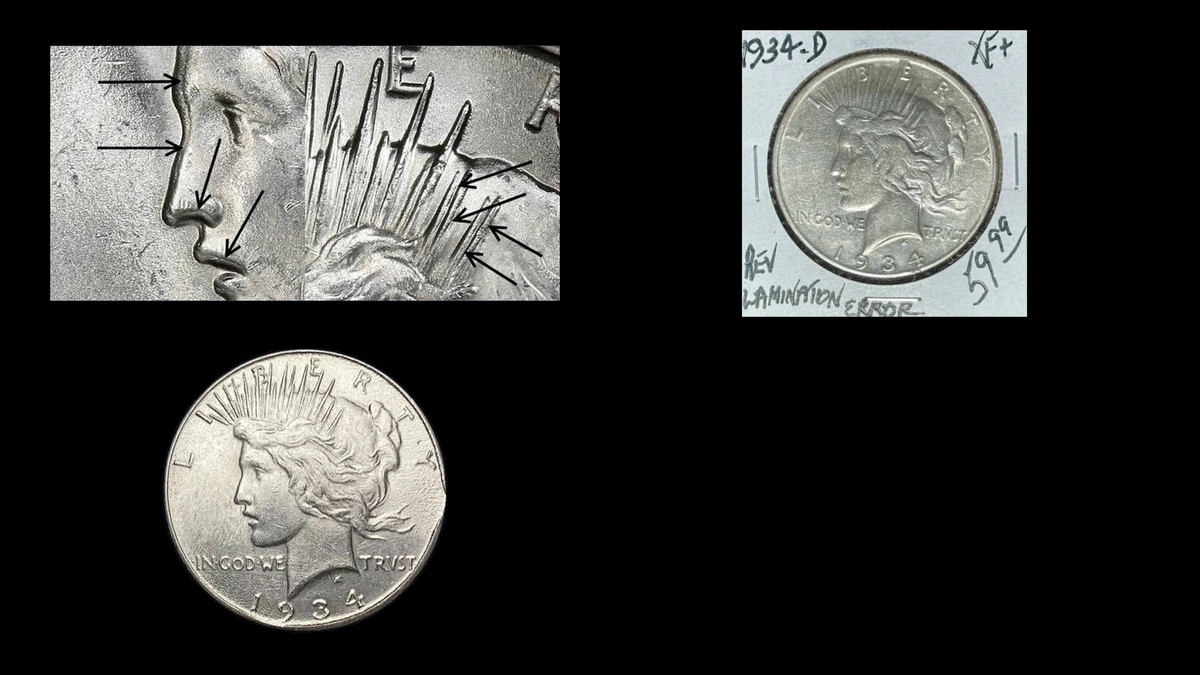
An exceptional Denver doubled-die dollar sold for $12,350 in August 2013. Estimated whole-coin values for the 1934 Peace dollar errors below range from $100–$15,000.
Start with extra outlines in the motto, then inspect peeling reverse metal and any missing edge section without confusing normal TRVST lettering with an error.
| Visible clue | Category | Estimated range |
|---|---|---|
| Repeated motto and crown-ray outlines | Doubled front die | $100–$15,000 |
| Peeling or missing reverse surface | Lamination | $100–$600 |
| Gap at the edge | Clipped blank | $150–$1,000 for authenticated worn examples |
1. 1934 Dollar Extra outlines around the motto and rays: doubled die Error
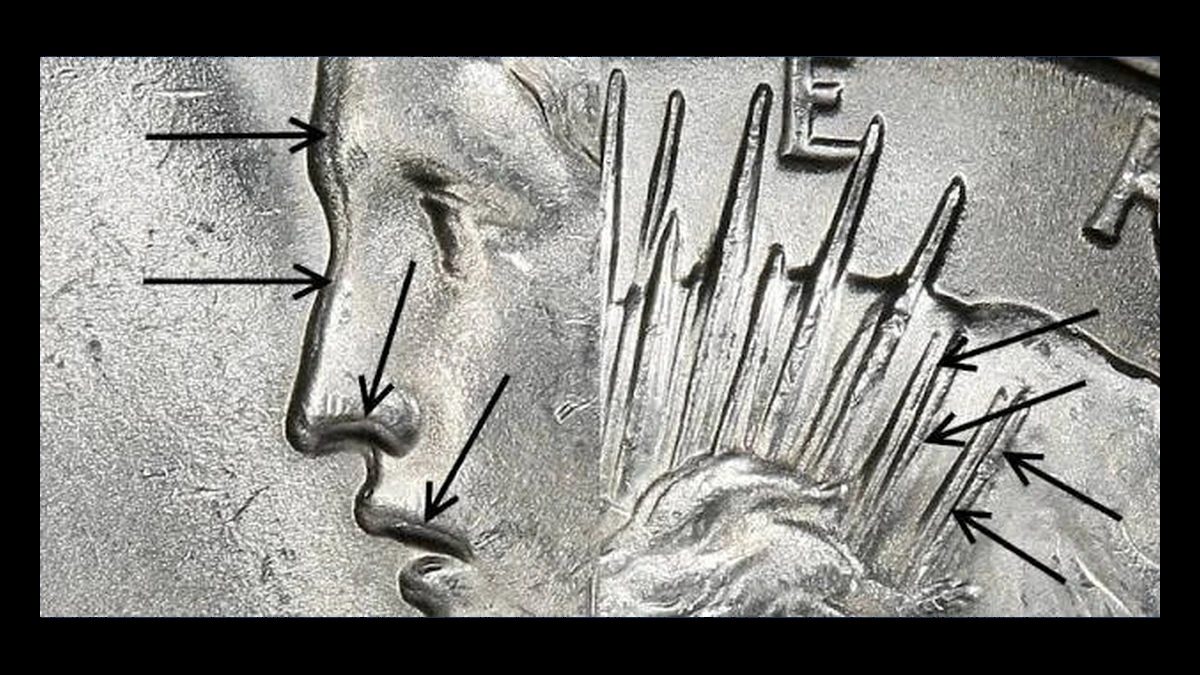
The V in IN GOD WE TRVST is intentional on Peace dollars. The useful error clue is a second raised outline in parts of the Denver dollar’s front design.
Look particularly at D, W, and E in the motto and the crown rays beneath ER in LIBERTY. The die carried the doubled image before it stamped the coin.
This front can appear with different reverse D sizes. A normal small, medium, or larger mint letter does not become an error solely because its size differs.
How to Identify
Compare the motto with an ordinary front under about 10× magnification. Keep the viewing angle similar so reflected light does not create a false extra edge.
Trace repeated detail into the portrait and rays below ER. A matching pattern across several features is more persuasive than one flattened shelf beside a letter.
After identifying the front, inspect the D near the eagle’s tail. Match its size and shape to the correct reverse pairing before choosing a price comparison.
What It’s Worth
Identified doubled-die examples have an estimated whole-coin range of $100–$15,000.
PCGS records a medium-D MS66+ example at $12,350 in August 2013. That exceptionally preserved unworn coin is a different condition comparison from a worn variety.
A separate small-D MS64 example is recorded at $5,000 on eBay in April 2019. Both the reverse pairing and preservation should remain attached to their respective results.
2. 1934 Dollar A thin patch lifts from the reverse: lamination Error
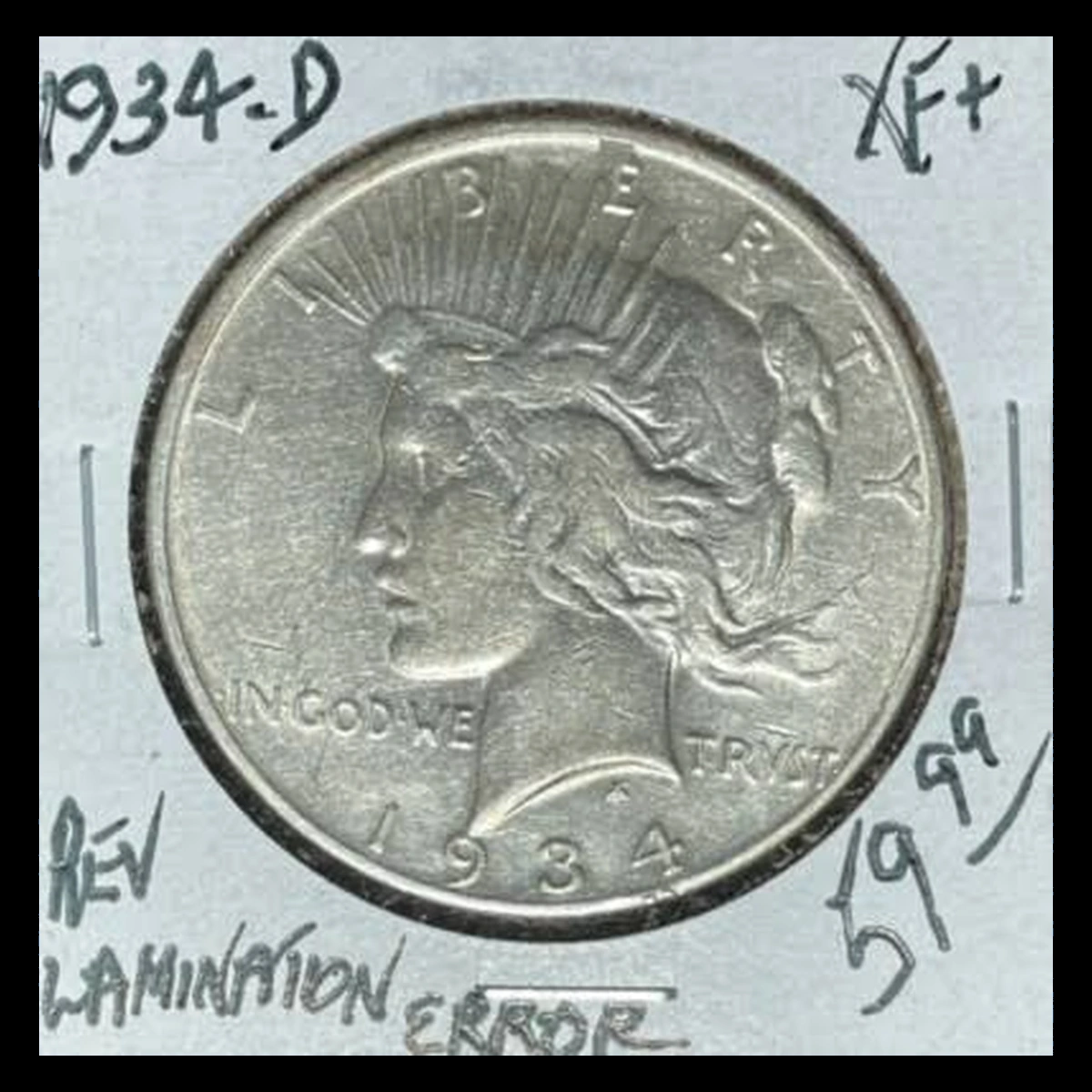
A documented 1934-D dollar has a reverse surface separation described as lamination. A weakness within the metal allowed a thin portion to lift or come away.
Peace dollars contain ninety percent silver and ten percent copper. They do not have the manufactured outer layers used on later copper-nickel dollars, so a peel should not automatically be called a missing clad layer.
How to Identify
Inspect where the uneven area meets normal reverse detail. Angled light can reveal the depth and boundary that a straight-on view of a dark patch may hide.
Look for remaining design on an attached flap or beside missing metal. Leave the flap untouched because its connection helps explain the separation.
A later gouge may leave tool grooves and metal pushed beside the cut. Include the entire reverse and the D near the tail in photographs before adding a close view.
What It’s Worth
Comparable worn to moderately marked unworn laminations are estimated at $100–$600.
Stack’s Bowers recorded $247 in March 2014 for a 1934-D reverse lamination graded NGC MS63. That grade describes an unworn dollar with visible marks.
The amount includes the underlying coin. Extensive damage or cleaning can reduce appeal even when a real separation remains visible.
3. 1934 Dollar A small gap interrupts the rim: reported clipped blank Error
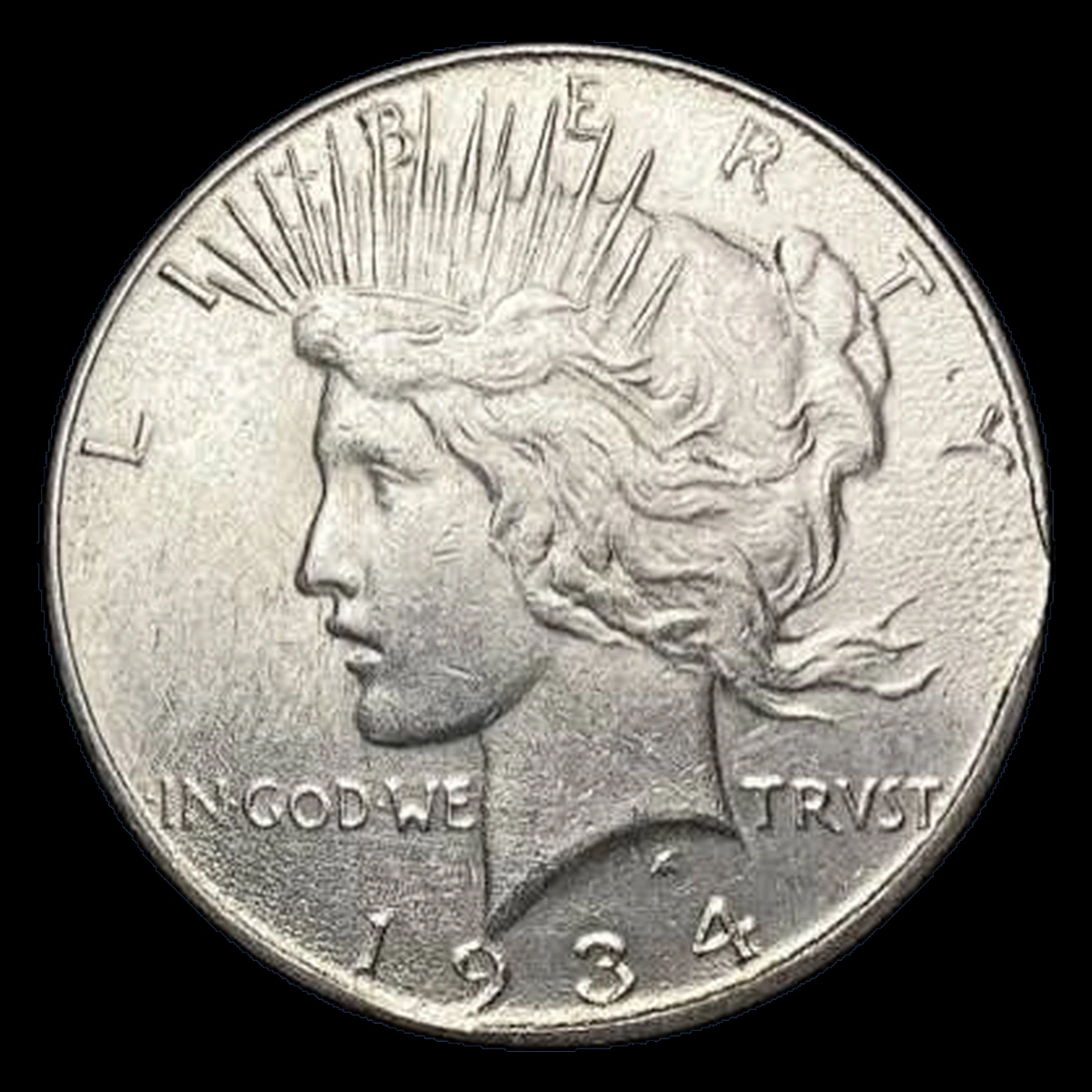
A seller offered an uncertified 1934-S dollar with a claimed clip near three o’clock. Another collector mentioned a 1934 clip without identifying its mint.
An original clip begins before striking, often when the blank cutter overlaps an existing hole. Later cutting and ordinary rim damage can imitate a small missing segment.
How to Identify
Read the mint letter near the eagle’s tail and assess wear before judging the gap. The collector’s unspecified example cannot be called Philadelphia merely because no mint was mentioned.
Follow the raised rim into both ends of the opening. Check for original weakness rather than file strokes, saw marks, or crushed edge grooves.
Weakness opposite a clip may support the diagnosis but is not a complete test. A weight below the normal 26.73 grams also shows lost metal without proving when it disappeared.
Have the actual boundary examined before accepting the seller’s description. Its condition wording is likewise not a professionally verified grade.
What It’s Worth
Authenticated worn examples are estimated at $150–$1,000.
The reported San Francisco coin’s $199.99 price was an asking amount, not a completed auction. An unworn 1934-S can require a much higher ordinary-coin comparison independent of a clip.
Conclusion
Read TRVST as the normal design and look for genuine repeated outlines around it. Match the doubled front before using D size to select the proper reverse comparison.
For missing metal, distinguish a thin reverse peel from a gap in the original blank. Preserve attached material, verify the mint and condition, and keep the uncertified clip’s asking price separate from the documented auction results.