Rare 1903 Dollar Errors (List & Pictures)
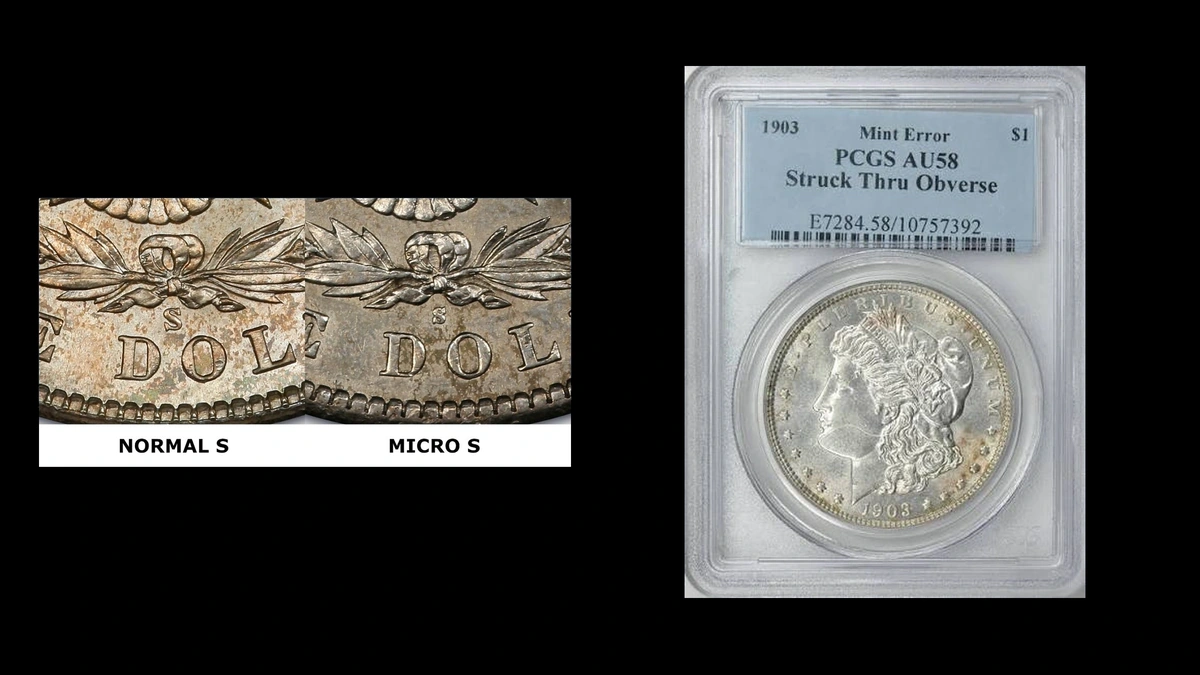
Mintmark size, extra letter strokes, and a stepped edge answer different questions when examining 1903 Morgan Dollar errors. The small S variety alone can span a remarkable range of preservation.
Whole-coin estimates below run from $75–$200,000. A PCGS MS65+ Micro S realized $194,062.50 including fees in September 2025; begin beneath the wreath, then inspect the faces and edge without transferring that exceptional coin’s price to unrelated marks.
1. 1903 Dollar The Entire S Looks Undersized: Micro S Variety Error
VAM-2 identifies the Micro S, whose complete mintmark is much smaller than the usual 1903-S letter. VAM numbers describe particular Morgan-dollar die combinations, helping collectors compare coins from the same tools.
The tiny S resembles a quarter-dollar punch in size. Selection of an inappropriate punch is the likely explanation, with that small letter then reproduced on dollars from the die.
How to Identify
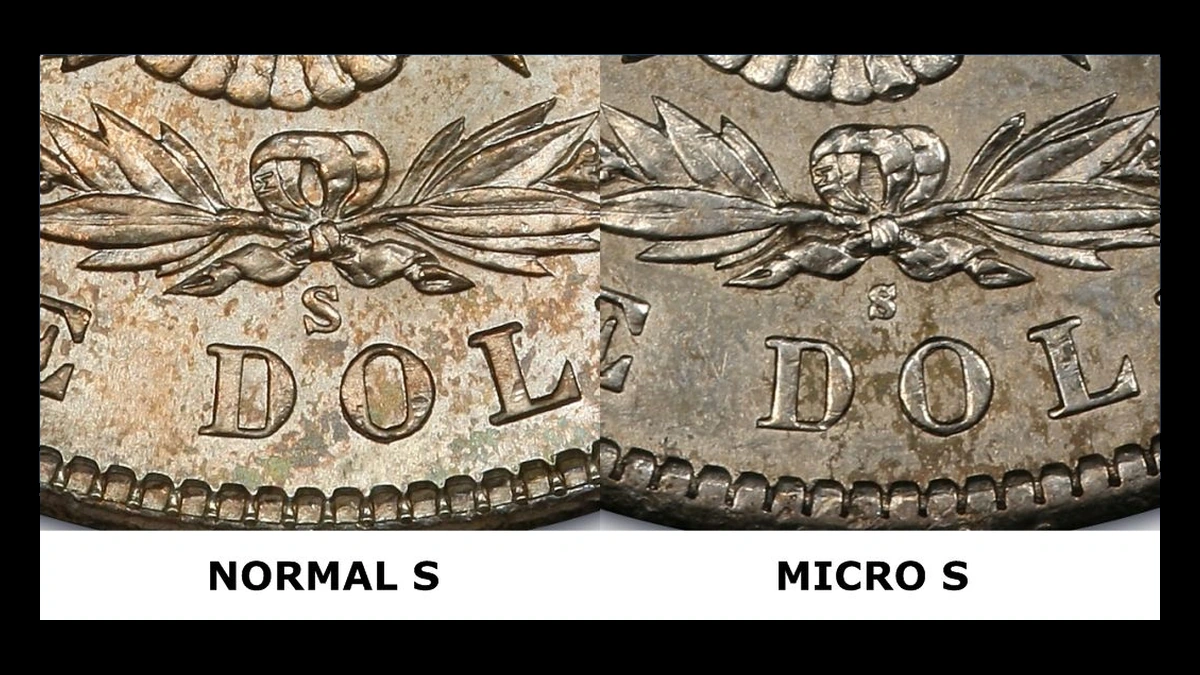
Match the scale of normal-S and candidate photographs using the wreath bow and surrounding design. Only then compare the full letter’s height, width, shape, and position.
A weak end on a worn normal S does not make the entire letter a Micro S. Examine its full contour and check the base for disturbed silver or other evidence of an added mintmark.
What It’s Worth
$250–$200,000 is estimated across heavily worn through exceptional Micro S dollars. The PCGS MS65+ example sold for $194,062.50 including fees in September 2025.
Its unusually strong unworn preservation is central to that result. This is a whole-coin variety range, not a surcharge to add to every small-looking 1903-S.
2. 1903 Dollar Another S Outline beside the Main Letter: Repunched Mintmark Error
The repunched-S report concerns remnants of an earlier letter position rather than a smaller punch size. A worker entered the mintmark into the die more than once, leaving extra strokes that later coins could reproduce.
No specific direction is established for the reported 1903-S pattern. A tiny S with only one outline therefore does not automatically qualify.
How to Identify
Inspect the S below the wreath bow, comparing both its internal curves and outside edges with an attributed repunched example. Additional strokes should make sense as part of another S.
Separate flat mechanical ledges from raised earlier punch contours. Also check for a seam, unusual texture, or disturbed silver around a potentially added mintmark.
What It’s Worth
$200–$5,000 is estimated for a confirmed repunched S across worn through lightly worn examples. The scarce San Francisco issue accounts for much of the whole-coin value, while exceptionally preserved pieces need separate grade-based assessment.
3. 1903 Dollar Opposite-Design Traces near Liberty: Die Clash Error
Extra lines near the neck, beneath the nose, or behind the cap can reproduce portions of the reverse design. The dies contacted one another without a blank, leaving traces that subsequent coins copied.
A separate reported 1903-O form involves material trapped between the tools and matching raised areas on both faces. A lone neck line is insufficient to identify that more specific appearance.
How to Identify
Compare a normal 1903-O with the candidate, then match the extra contours to the opposite design at the same scale. Allow for the orientation in which the two tools faced one another.
Scratches with torn or displaced metal require another explanation. For the reported raised-area form, both faces must match a confirmed example rather than merely showing ordinary thin clash lines.
What It’s Worth
$100–$600 is estimated for genuine 1903-O clashes in worn through modest unworn condition. Recognizable transferred detail supports the comparison, while faint lines may add little to the underlying dollar.
4. 1903 Dollar Raised Lines near Reverse Lettering: Scratched Die Error
Philadelphia reports place raised die-scratch lines around DOLLAR. New Orleans VAM-22 has its own reported reverse-tool scratch and requires a separate pattern comparison.
A scratch cut into the die becomes a raised line as silver fills it during striking. This differs from scratching into a completed dollar.
How to Identify
Confirm the coin’s complete design and authenticity before relying on a small raised mark. Counterfeits can also reproduce or acquire raised lines.
Inspect relief under side lighting, then match the location to the correct mint. No mintmark fits the Philadelphia report, while O beneath the wreath directs attention to the separate VAM-22 comparison.
What It’s Worth
$75–$1,000 is estimated across ordinary worn and unworn examples. Mint and grade contribute substantially, and a clear identified pattern is more useful than an unexplained ridge.
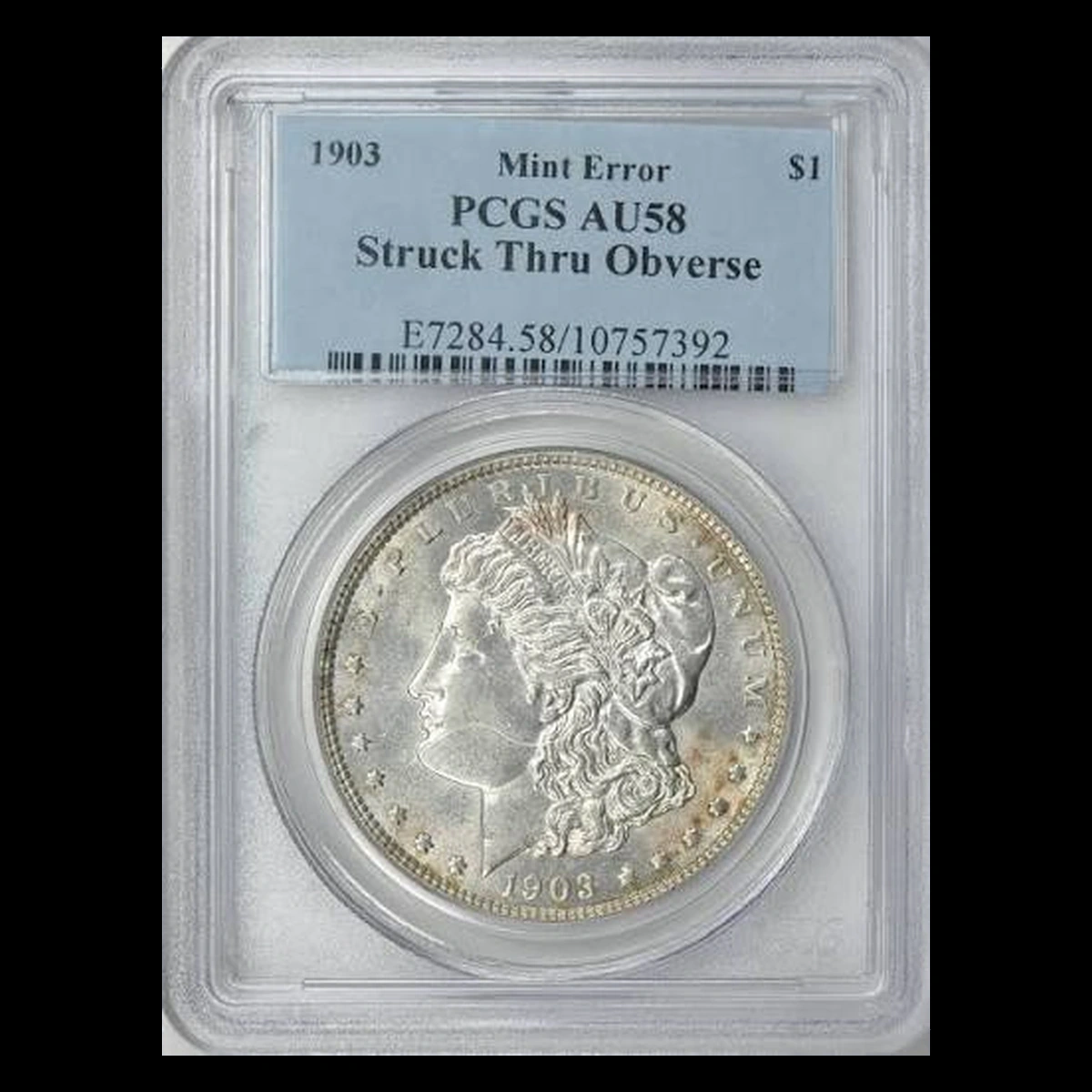
5. 1903 Dollar A Hollow Interrupts the Eagle’s Detail: Strike-Through Error
The recorded Philadelphia ANACS MS62 has a deep reverse impression running from the tail feathers toward AM in AMERICA. An object between the die and blank blocked normal design formation there.
Its shape does not identify the object. A separately reported front-side strike-through is another specimen and should not inherit this path or obstruction.
How to Identify
Trace the boundary where normal tail or lettering detail meets the hollow. Look for an original struck relationship rather than fresh lips and disturbed metal around a later gouge.
Photograph from two light directions to avoid exaggerating depth with one shadow. Preserve any attached material and use the actual front-side specimen’s photographs for that separate report.
What It’s Worth
$200–$3,000 is estimated for genuine 1903 strike-throughs of different sizes and clarity. A 1922 Peace dollar struck through on both faces realized $552 in November 2024, a different design and year offered as context.
6. 1903 Dollar A Small Gap near the Left Edge: Clipped Planchet Error
A PCGS XF40 1903-S has a small clip near 9:30 when the front is upright. The blank lacked that metal before the dollar was struck.
A blanking punch can cross an earlier hole or a strip boundary to create an incomplete disk. The resulting original gap is different from a later bite or filed notch.
How to Identify
Inspect the gap’s two endpoints and their transition into the original rim. File strokes, a fresh cut surface, or bent metal would undermine the mint-clip explanation.
Normal dollar references are 26.73 grams and 38.1 millimeters. A loose coin’s weight can document missing metal, but circulation wear and later cutting can also lower it.
Opposite-rim weakness may support an original clip without being clear on every example. Begin with the gap’s own surface and relationship to struck detail.
What It’s Worth
$500–$6,000 is estimated for authentic 1903-S clips across worn through lightly worn grades. Scarcity of the date and mint contributes to that whole-coin range.
The same-year AU55 partial-collar sale of $3,231.25 is a different error, discussed next. It illustrates the importance of the underlying S-mint coin rather than providing a transaction for this clip.
7. 1903 Dollar Smooth and Grooved Bands Share the Edge: Partial Collar Error
The documented 1903-S PCGS AU55 has grooves nearer the reverse with a smooth band beside them. The collar restrained only part of the blank’s thickness, allowing silver to spread into a stepped edge often called a railroad rim.
A thin high rim is strongest on the left front and right reverse. That distribution belongs to this specimen rather than uniform damage around the entire dollar.
How to Identify
Follow the natural step between the bands around the circumference and compare the high-rim areas on both faces. Face-on photographs alone may conceal the most useful evidence.
Check rough sections for filing that interrupts original edge texture. Keep a certified coin sealed and use angled views of the visible edge to assess the adjoining bands.
What It’s Worth
$1,500–$6,500 is estimated for broadly comparable 1903-S partial-collar dollars. The documented PCGS AU55 realized $3,231.25 on October 19, 2012.
The result includes a scarce San Francisco dollar with light wear and its unusual edge. Filing or heavy wear can diminish both the base coin and the error’s visibility.
8. 1903 Dollar Overlapping Pictures within a Round Outline: Double Strike Error
A Philadelphia PCGS XF45 dollar received a second strike while still inside the retaining collar. The ring kept the coin round, so a large unstruck crescent was not necessary.
The extra image resulted from striking this coin again. That is separate from a doubled die copying pre-existing duplicate detail in a single blow.
How to Identify
Follow a second portrait contour into nearby letters and examine whether several repeated elements share a consistent displacement. One extra letter edge does not establish the same event.
Compare both faces for points where the later blow flattened or crossed earlier detail. No fixed rotation angle is supplied, and a near-normal diameter does not rule out this in-collar error.
What It’s Worth
$2,000–$10,000 is the working estimate for a genuine overlapping double strike. The pictured XF45 received a $2,000 winning bid in April 2008 before buyer’s fees.
That bid is not an all-in total. Separation, readable impressions, wear, and surface damage determine how another specimen compares.
9. 1903 Dollar Design Missing beside an Untouched Crescent: Off-Center Strike Error
The reported New Orleans off-center dollar retains O but has its date outside the struck area. Its mint is therefore visible while its proposed 1903 year requires separate support.
A misplaced blank receives incomplete designs on both faces. An O alone cannot supply the date because New Orleans struck Morgan dollars in many years.
How to Identify
Assess the strike by comparing missing design with the original unstruck crescent on both sides. A shift on only one face needs another explanation.
Leave an unreadable year unresolved unless a specialist reliably matches surviving die details with a dated coin. Weight can help evaluate later metal removal but cannot reconstruct missing date digits.
What It’s Worth
$3,000–$25,000 is conditional on an authenticated, correctly dated 1903 off-center Morgan dollar. The undated O-mint piece does not automatically meet that condition.
A 1922-S Peace dollar struck 15% off center sold for $32,200 in 2003. This different-series transaction is neither a sale nor a date attribution for the reported New Orleans coin.
10. 1903 Dollar Silver Rises into a Cup: Die Cap Error
PCGS described a 1903 die cap in AU50, indicating some wear. A coin retained on a die can expand outward and upward as continued striking works its metal around the tool.
The actual 1903 wall height, reverse pattern, and number of blows must be assessed independently. They cannot be copied from the more widely illustrated 1886 Morgan cap.
How to Identify
Compare side and overhead views while preserving the holder. Follow stretched original design toward the wall and examine how the opposite face changed during continued contact.
A sharp fold across a normal dollar or scratches from bending suggest a different origin. Match the certified 1903 specimen rather than requiring another year’s cap depth or reverse impression.
What It’s Worth
$40,000–$125,000 is a comparison-based estimate for the rare 1903 cap. The separate 1886 PCGS MS64 cap realized $129,515.62 including fees at GreatCollections in January 2026.
That better-preserved coin demonstrates interest in major Morgan caps without establishing a sale of the AU50 1903. Each requires assessment of its own shape, surfaces, and confirmed identity.
Conclusion
A small whole mintmark, a second letter outline, and an impression from another strike are distinct features. Use matching scale for the S varieties and complete face-and-edge views for the larger errors.
Preservation and scarce mint issues explain much of the price spread. Keep an unreadable year unresolved, distinguish winning bids from fee-inclusive totals, and apply another coin’s auction only as a clearly identified comparison.