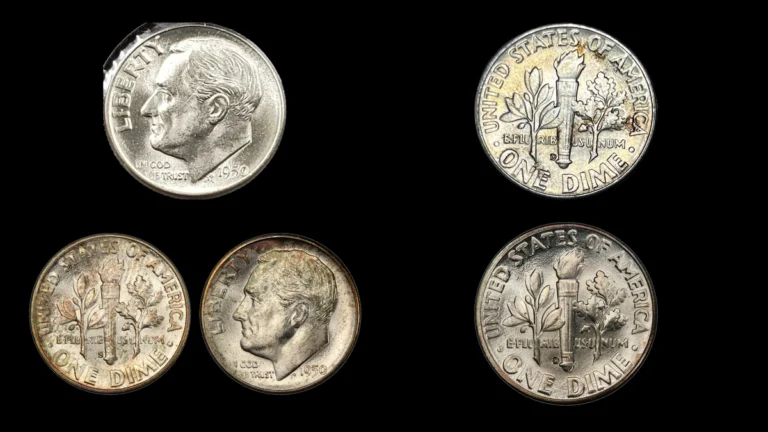
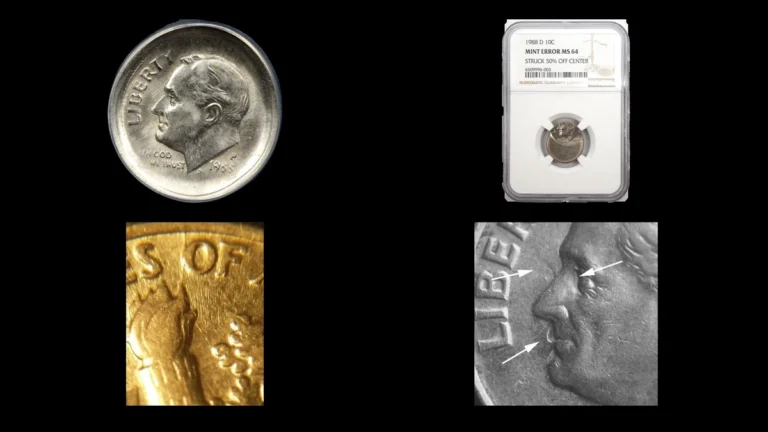
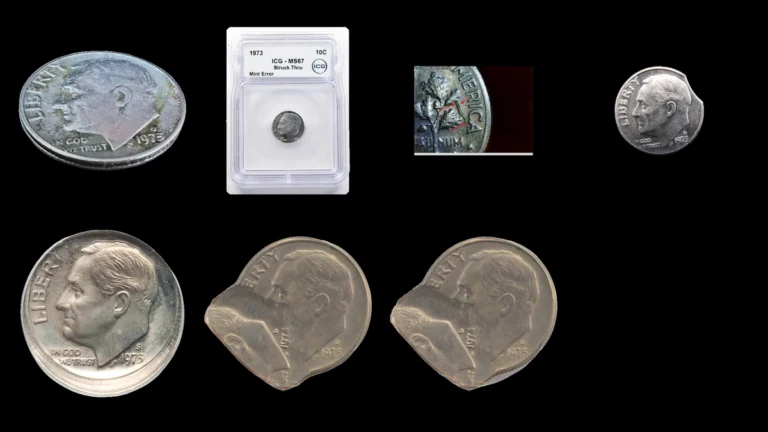
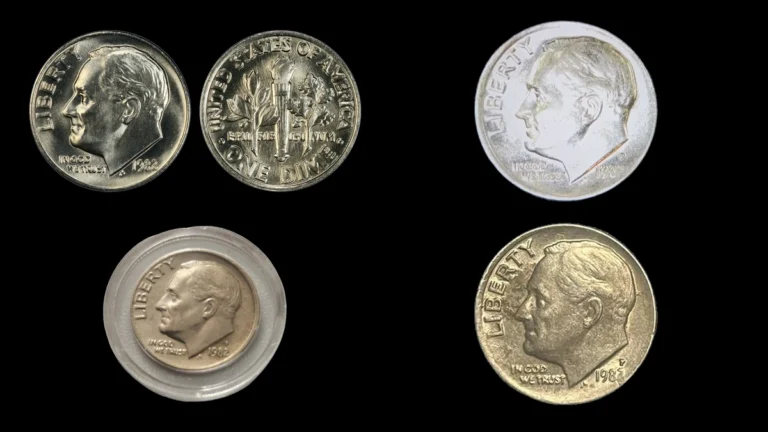
Rare 1969 Dime Errors (List & Pictures)
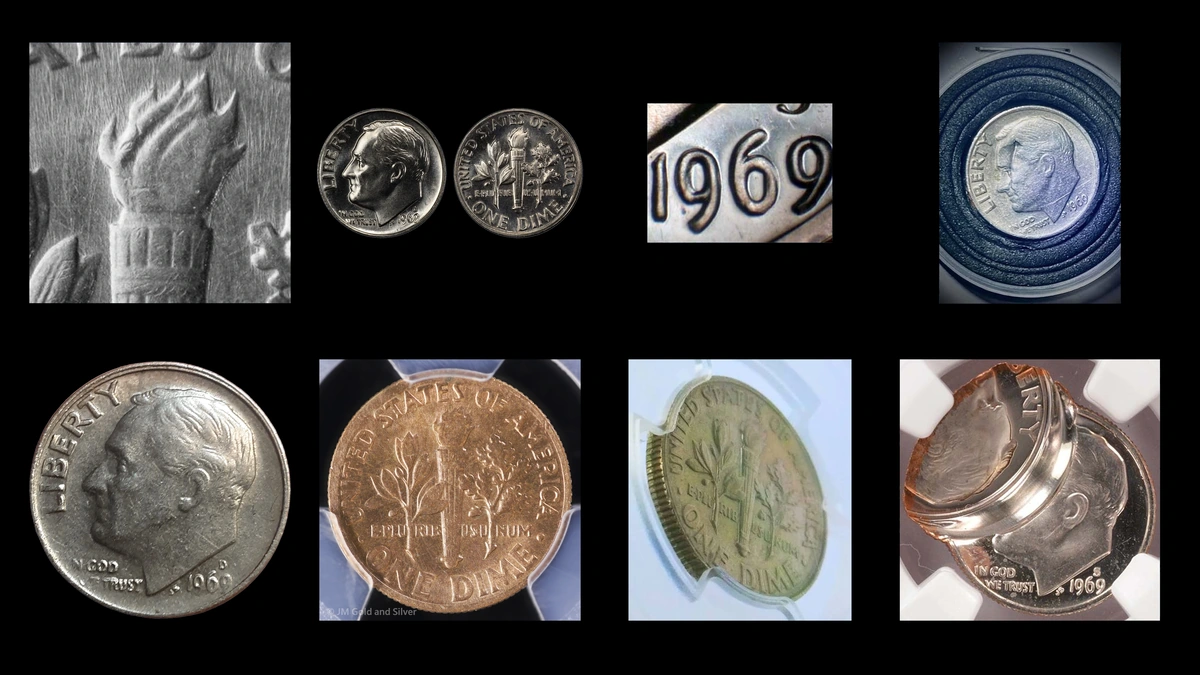
A thin metal layer is not the same object as the dime from which it separated. Estimated values for genuine 1969 dime errors span $10–$10,000, with the upper end covering two matching Proof coins.
A related 1994 cent over a different, 1993 host dime sold for $3,120. Start by identifying the issue and surviving pieces before comparing their metal, shape, and designs.
| Object or feature | Key distinction | Estimated value |
|---|---|---|
| No mint letter | Normal Philadelphia coin versus unconfirmed No S Proof claim | $0.10–$5 for ordinary common examples |
| Thin detached layer | Layer alone versus remaining dime body | $250–$1,000 for comparable off-center layers |
| Heavy dime-sized coin | Thick stock versus full larger blank | $100–$750 |
| Two matching S Proof errors | Separate interacting coins | $2,500–$10,000 for the pair |
The normal 1969 dime is clad, weighs 2.268 grams, and measures 17.91 millimeters with a grooved edge. These specifications also apply to the normal S Proof, a specially made collector coin.
1. 1969 Dime No Mint Letter on the Front: Unconfirmed No S Proof Claim Error
An ordinary Philadelphia 1969 dime has no mintmark. The absence becomes a different claim only if the coin is shown to be a Proof that should have carried S.
The supplied records do not establish an authenticated 1969 No S Proof. PCGS lists other Roosevelt No S Proof years without including 1969.
How to Identify
Begin with evidence of Proof manufacture, including original set history and a specific grading attribution. A shiny surface or a generic 1969 label does not establish it.
Inspect the expected mintmark area above the date for disturbed metal and the reflective areas for polishing scratches. Normal weight and diameter cannot distinguish this claim from an ordinary coin.
What It’s Worth
A common unverified no-mintmark coin belongs in an ordinary $0.10–$5 range, not an established No S Proof range.
Exceptional condition can raise a normal coin’s price without making its absent mintmark an error. Missing-S prices from other Proof years do not apply automatically to 1969.
2. 1969 Dime A Different Torch Flame: Reverse of 1968 Error
Some no-mintmark circulation dimes use the more detailed flame associated with the earlier Proof-style reverse. The variety is called Reverse of 1968 or FS-901.
The name describes a design combination, not an underlying 1968 date. The supplied evidence does not establish an accidental reuse of a leftover Proof die.
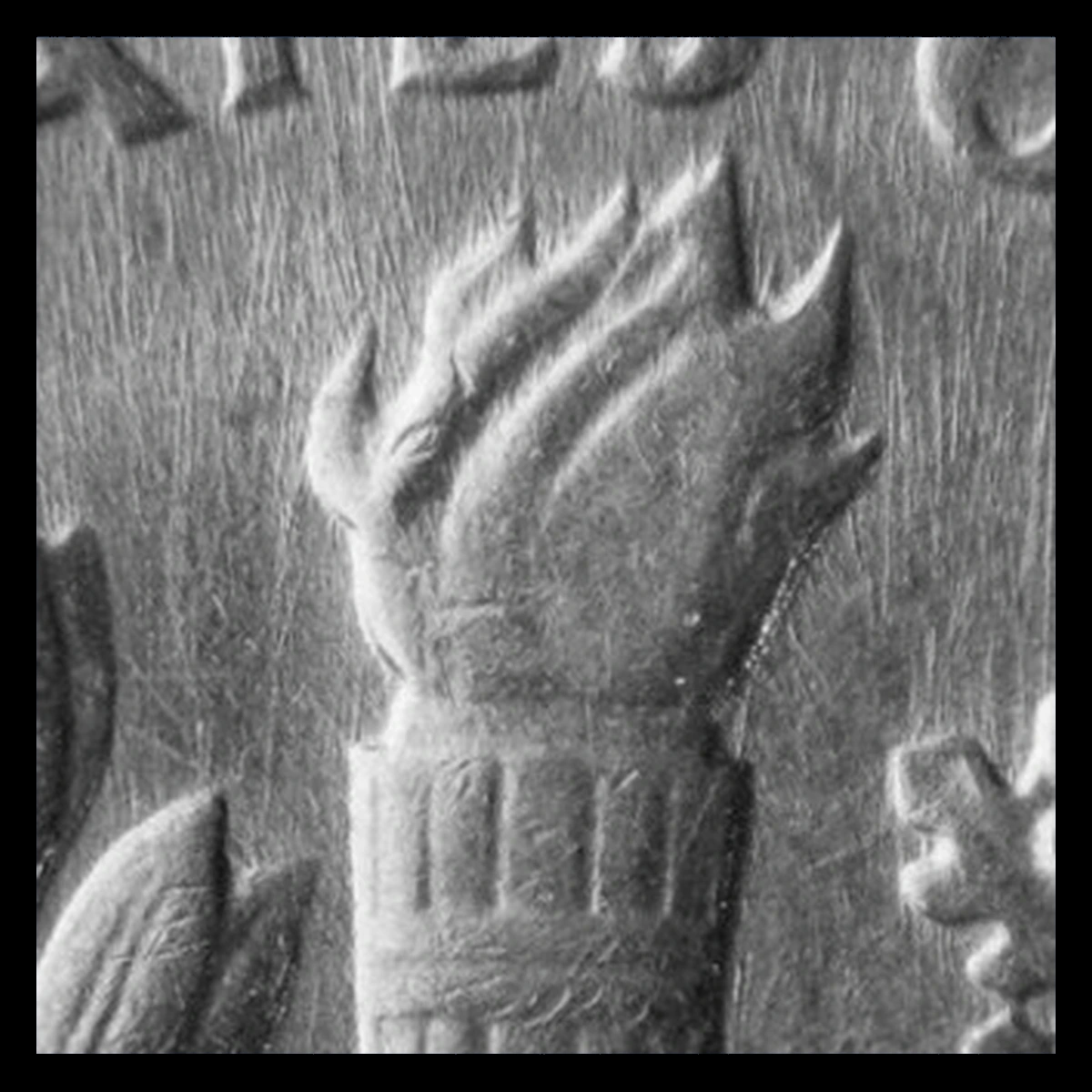
How to Identify
Compare fine flame grooves and the overall flame outline with examples of both reverse designs. General sharpness is only a reason to look closer.
Confirm the 1969 date and absence of a mint letter on the circulation coin. Full Bands concerns the horizontal torch bands and does not replace the specific flame match.
What It’s Worth
Matched examples suggest an estimated $20–$500 across worn and strong unworn coins.
Clear diagnostic grooves and overall preservation both matter. A sharp flame on heavily marked surfaces should not automatically receive the upper estimate.
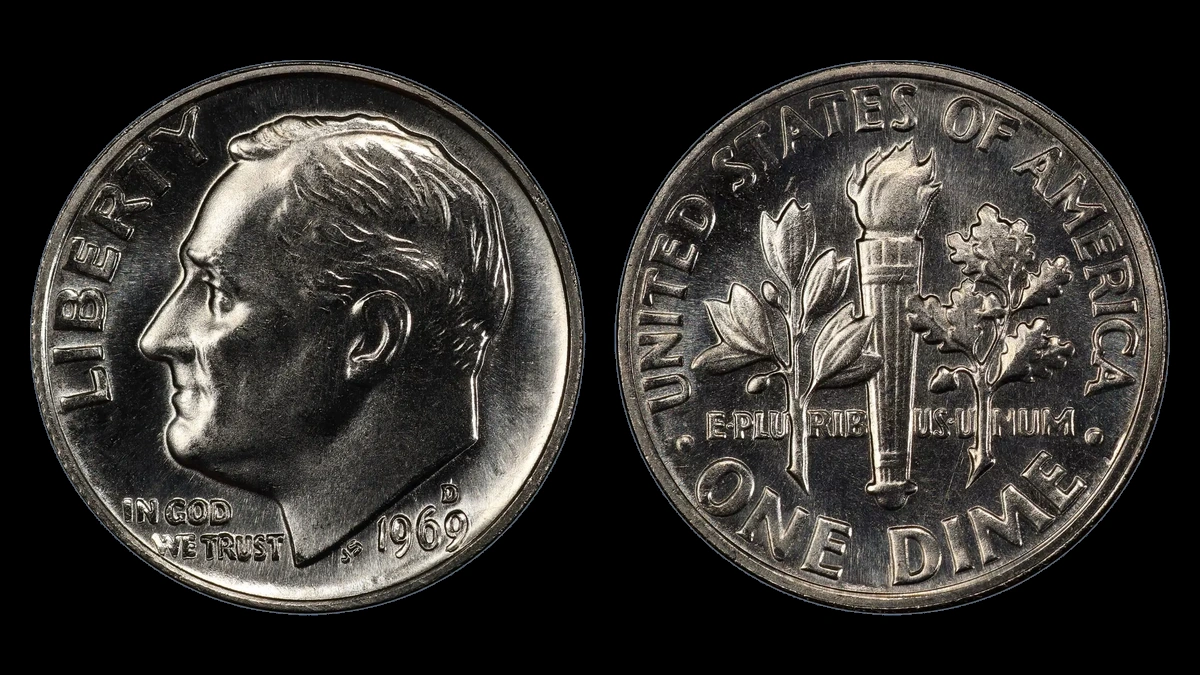
3. 1969 Dime A Doubled Letter Shape: Repunched Mintmark Error
Denver’s reported earlier D appears toward the upper right of the final D. FS-501 and CONECA RPM-001 identify that same pattern.
The S Proof has a separate leftward S/S pattern. Both resulted from shifted repeat entries of a mintmark punch into a die, but they require different comparisons.
How to Identify
Inspect the mint letter on the front above the date. Trace enough of the earlier curve to match either the upper-right D or leftward S pattern.
A flat ledge from striking movement is not an earlier punched letter. Two catalog names for the Denver coin also do not mean two distinct errors.
What It’s Worth
Clearly matched repunched mintmarks suggest $20–$300, depending on issue, grade, and visibility.
A historical dealer listing asked $40 for a Denver MS64 example. That request was not a documented auction realization and does not price the separate S Proof.
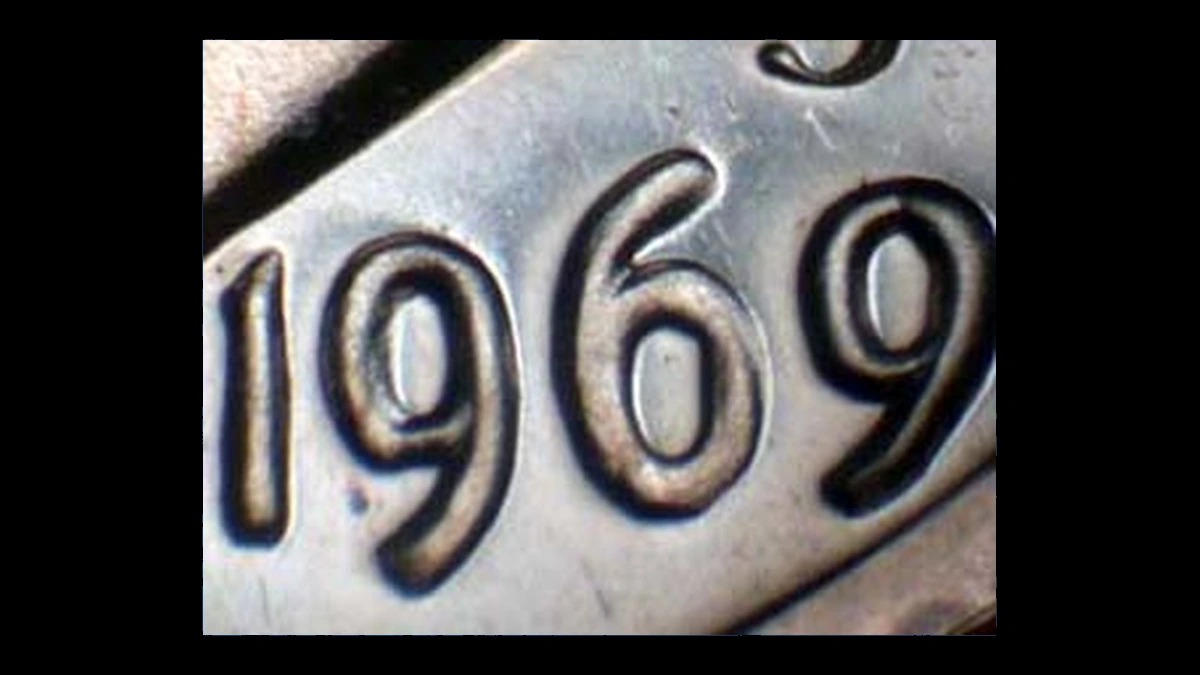
4. 1969 Dime Related Thickness in Several Letters: Doubled Die Error
The cataloged S Proof pattern thickens the date, JS initials, motto, and LIBERTY. Its doubled design was already present in the die before striking.
Ordinary 1969 coins also have front-doubling reports, but their exact patterns are not established by this Proof listing. They need independent identification.
How to Identify
Compare a candidate S Proof with an ordinary S Proof under similar light. Check that the date and JS agree with related thickening in the other listed areas.
This particular effect need not show wide separation between outlines. Conversely, a flat shelf beside one letter does not become the Proof variety simply because the letter looks broad.
What It’s Worth
Minor genuine doubled dies suggest an estimated $15–$200. Strong matching detail on a well-preserved coin is more persuasive than vague thickness.
The estimate does not assign the S Proof’s identity to circulation coins. Their own pattern must be demonstrated before any doubled-die premium is used.
5. 1969 Dime Unexpected Traces of the Other Design: Die Clash Error
A collision between the dies without a blank can mark each tool with parts of the opposite design. Later coins then inherit those stray outlines.
Clashing is reported for no-mintmark 1969 dimes without a fixed diagnostic location in the supplied description. A random line should not be named as a particular leaf or portrait feature by assumption.
How to Identify
Compare a suspected trace with the opposite dime design. Several connected details with the right relationship are stronger evidence than one suggestive curve.
Photograph the trace with its surrounding design and vary the light to follow it. Scratches and worn-die texture do not necessarily reproduce any opposite-side shape.
What It’s Worth
Genuine ordinary-strike clashes suggest $15–$150, with faint traces generally lower than recognizable shapes on clean coins.
No individual sale is supplied for this report. Counting additional lines does not create separate collectible premiums.
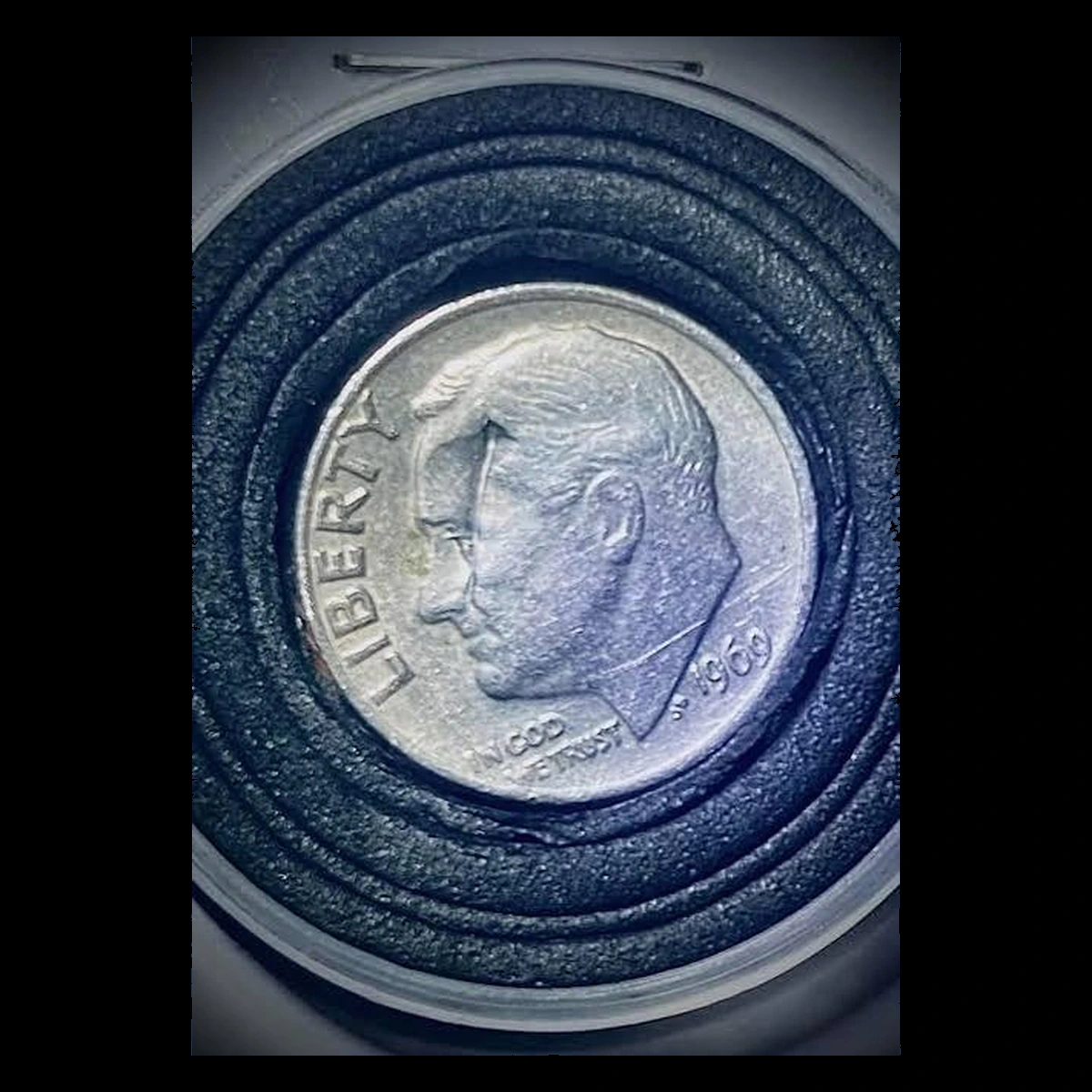
6. 1969 Dime A Major Raised Ridge Across the Face: Split Die Error
Denver examples graded ANACS AU58 and AU50 are reported with a split die. Metal entering the broken tool leaves a raised ridge, sometimes with shifted or differently leveled design beside it.
This concerns a split in the tool rather than a separation through the coin itself. The two grades describe different amounts of circulation wear.
How to Identify
Inspect whether the line rises above the surface and how the design aligns on either side. An open gap through the actual metal requires a different explanation.
Match the full crack path with the exact specimen used as a reference. A seller’s similar catalog label does not establish that differently shaped ridges came from one die.
What It’s Worth
Genuine split-die examples have an estimated range of $40–$500. A substantial ridge with visible design displacement offers more than a fine ordinary crack.
Compare the worn AU specimens with similarly preserved coins. Scratches across the ridge can obscure the feature that supports the attribution.
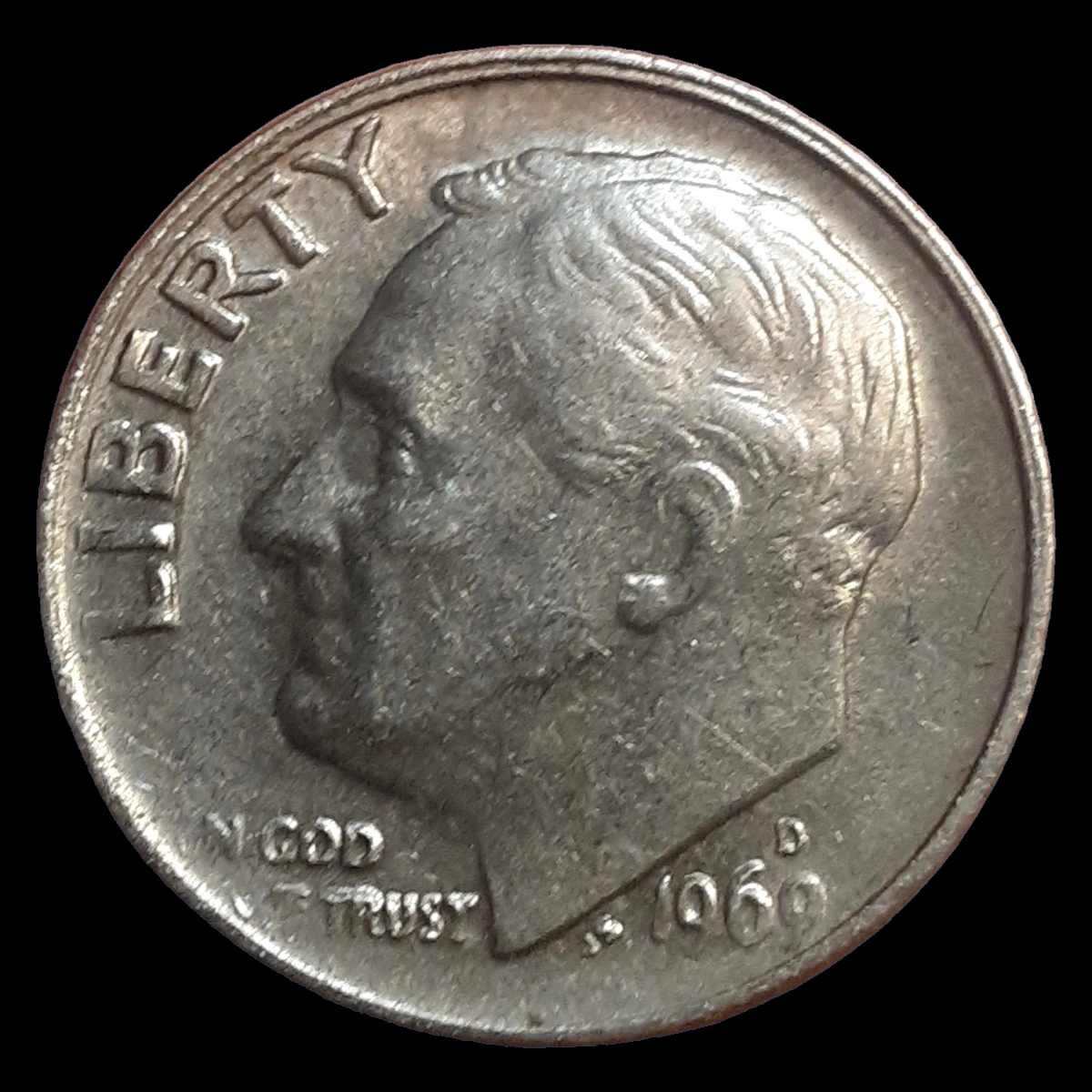
7. 1969 Dime One Face Sits Off to the Side: Misaligned Die Error
A collector-discussed 1969-D coin was proposed as a misaligned-die example. The explanation requires one design to shift while the other remains comparatively centered.
Unlike an off-center blank, this involves the position of one stamping tool. The discussion alone does not supply a certified identification.
How to Identify
Compare straight-on photographs of both faces against the metal outline. If both designs move together, investigate a displaced blank instead.
Inspect the narrow border and edge for dents or crushing. A damaged rim can create apparent unevenness without a misaligned die.
What It’s Worth
A genuine visible misalignment on an ordinary coin suggests $10–$100. Tiny differences often add little.
No sale price is established for the discussed Denver candidate. The estimate applies only when the relationship between the faces supports the diagnosis.
8. 1969 Dime Missing Blank Metal Makes a Gap or Oval: Clipped Planchet Error
A blank punch overlapping an earlier hole can leave metal absent before striking. Ordinary curved clips are reported alongside a Denver example described as roughly 25% elliptical.
The elliptical report concerns an oval outline rather than one simple curved gap. Those appearances belong to the incomplete-blank family but should remain distinct.
How to Identify
Inspect the missing boundary for original metal flow and the opposite rim for possible weakness. Saw marks, burrs, or grinding suggest later removal.
Document the whole oval and both faces for an elliptical candidate. Its outline must be explained by the incomplete blank rather than damage that reshaped a finished coin.
What It’s Worth
Genuine clipped and elliptical examples suggest an estimated $15–$200. Clear unusual shapes and better preservation can strengthen demand.
The oval appears in a guide report of a 2023 auction without a verified individual result supplied here. No exact sale price is assigned to it.
9. 1969 Dime Blank Metal Remains Beside the Design: Off-Center Strike Error
Two recorded Denver examples show substantial displacement: a PCGS MS62 at 45% and a separate ANACS MS63 at 50% toward 10:30.
Both are whole coin blanks with part of the strike missing them. They differ from the detached outer layer of another off-center dime described below.
How to Identify
View the edge first to confirm a complete clad body, then compare both faces for the same displaced strike. Read the date and D before selecting the relevant example.
The 10:30 direction belongs to the 50% coin. No direction is supplied for the 45% specimen.
What It’s Worth
Whole off-center dimes suggest $30–$400. Readability and the condition of the unstruck metal matter alongside displacement.
The recorded ANACS MS63 example sold for $62. That modest result does not price a detached layer or make every heavily displaced coin expensive.
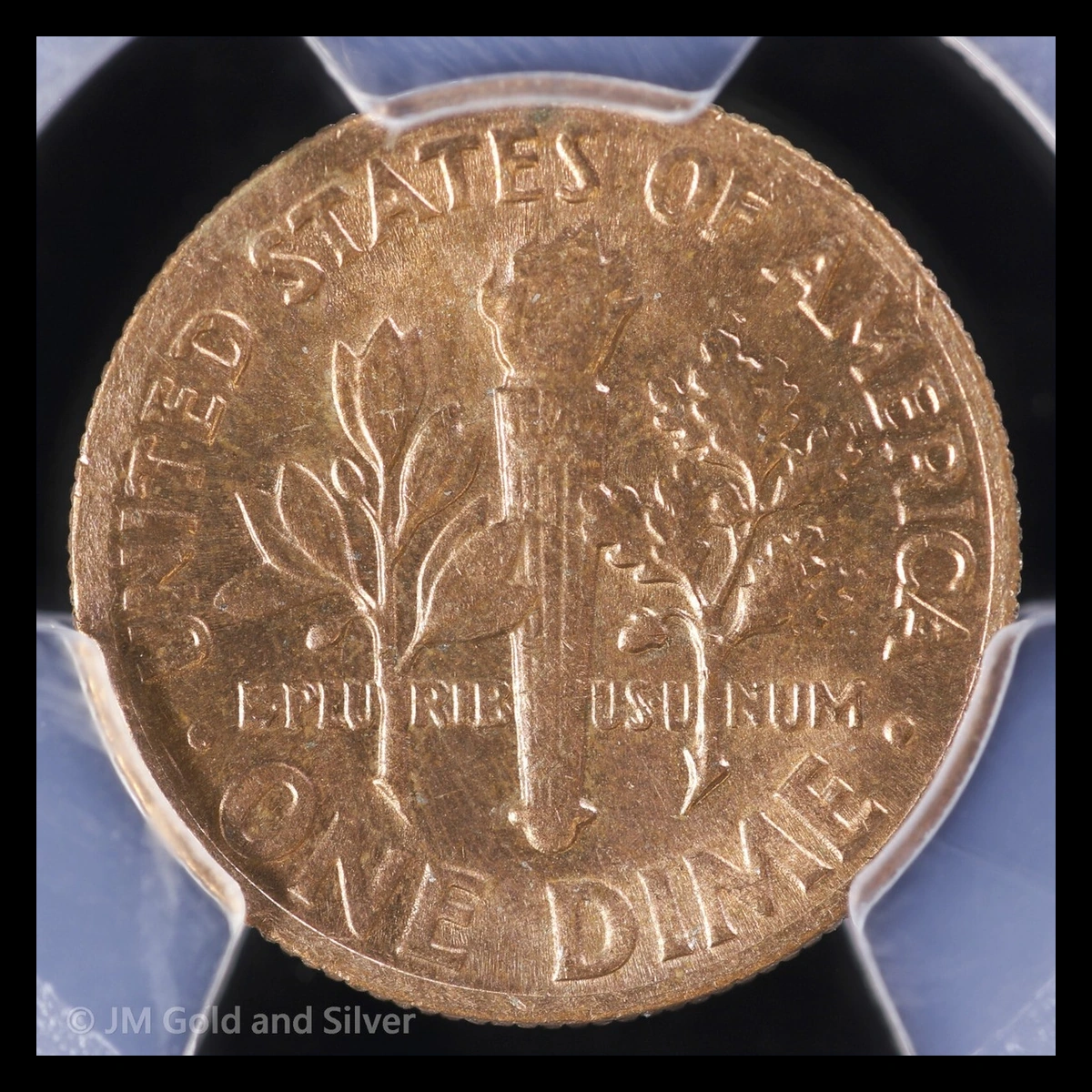
10. 1969 Dime A Copper Face with One Outer Layer Gone: Missing Cladding Error
A Denver NGC MS64 reverse-layer-loss example weighs 1.9 grams. A separate reverse-loss coin is reported at 1.85 grams, while other Denver specimens lack the front layer.
A no-mintmark example is also reported without a specified affected face or weight. These are individual coins, not one universal measurement or location.
How to Identify
Examine the copper face, intact pale opposite face, and edge layers together. Lower weight supports missing metal but does not establish when it was lost.
Check for original struck detail instead of scraping or chemical roughening. Brown discoloration on intact normal-weight metal needs another explanation.
What It’s Worth
Confirmed single-layer losses suggest approximately $50–$400 across different grades and surface conditions.
The 1.9-gram Denver reverse-loss coin sold for $144 in November 2020. A separate Denver MS64 front-loss example brought $132 in December 2020.
11. 1969 Dime A Detached Layer Still Has Its Matching Body: Separated Pair Error
This Denver pair consists of the front outer layer and the remainder of its original dime. NGC graded both pieces MS62, with recorded weights of 0.4 gram and 1.9 grams respectively.
It preserves two parts of one coin rather than two complete blanks. Their corresponding surfaces explain more than an isolated copper-faced dime.
How to Identify
Compare outlines and facing surface details in separate photographs without pressing the thin layer back into place. Two unrelated dime fragments do not make a genuine pair.
The rounded recorded weights need not sum exactly to the normal standard. A physical match between these specific parts matters more than a combined reading alone.
What It’s Worth
Comparable matching pieces suggest $200–$800 for the complete pair.
Both pieces together sold for $282 in February 2017. Adding a separate missing-layer value would count the same surviving coin material twice.
12. 1969 Dime Only the Off-Center Front Layer Survives: Detached Clad Layer Error
A thin Denver front layer separated after an off-center strike partly wrapped its coin around a die. The visible strike lies toward about 8:30.
The outer surface carries the front design, while the inner surface shows an inward, reversed version of that design. A PCGS MS65 example records the combination.
How to Identify
Confirm that the object lacks a complete copper core and second outer layer. It should not be described as a whole dime with one copper-colored face.
Compare the outside raised design with the inside reversed impression and protect the thin metal from bending. No actual weight is supplied for this specific piece.
What It’s Worth
Comparable genuine detached off-center layers suggest $250–$1,000.
An example sold for $431.25 in May 2005, and a later MS65 listing brought $312 in September 2024. The records should not be assumed to trace the same physical layer.
13. 1969 Dime A Proof Was Struck on Outer-Layer Metal: Thin-Layer Strike Error
The reported S example remains in its original Mint set holder and has weak reverse torch and lettering detail. It is described as a Proof struck on a thin outer layer instead of a complete clad blank.
This is a different production sequence from the Denver layer that detached after an off-center strike. No measured weight is established for the packaged Proof.
How to Identify
Document the full holder and dime compartment before enlarging the visible design. Keep the original set intact rather than removing the fragile object to obtain a weight.
Distinguish actual weak struck detail from glare through the holder. Specialist examination must support the thin-layer identity without borrowing the Denver object’s shape or measurements.
What It’s Worth
A genuine thin-layer Proof with its set history preserved has an estimated range of $1,000–$5,000.
No sale of the illustrated set is supplied. The ordinary Denver layer’s $431.25 historical result is a different-finish and different-process comparison.
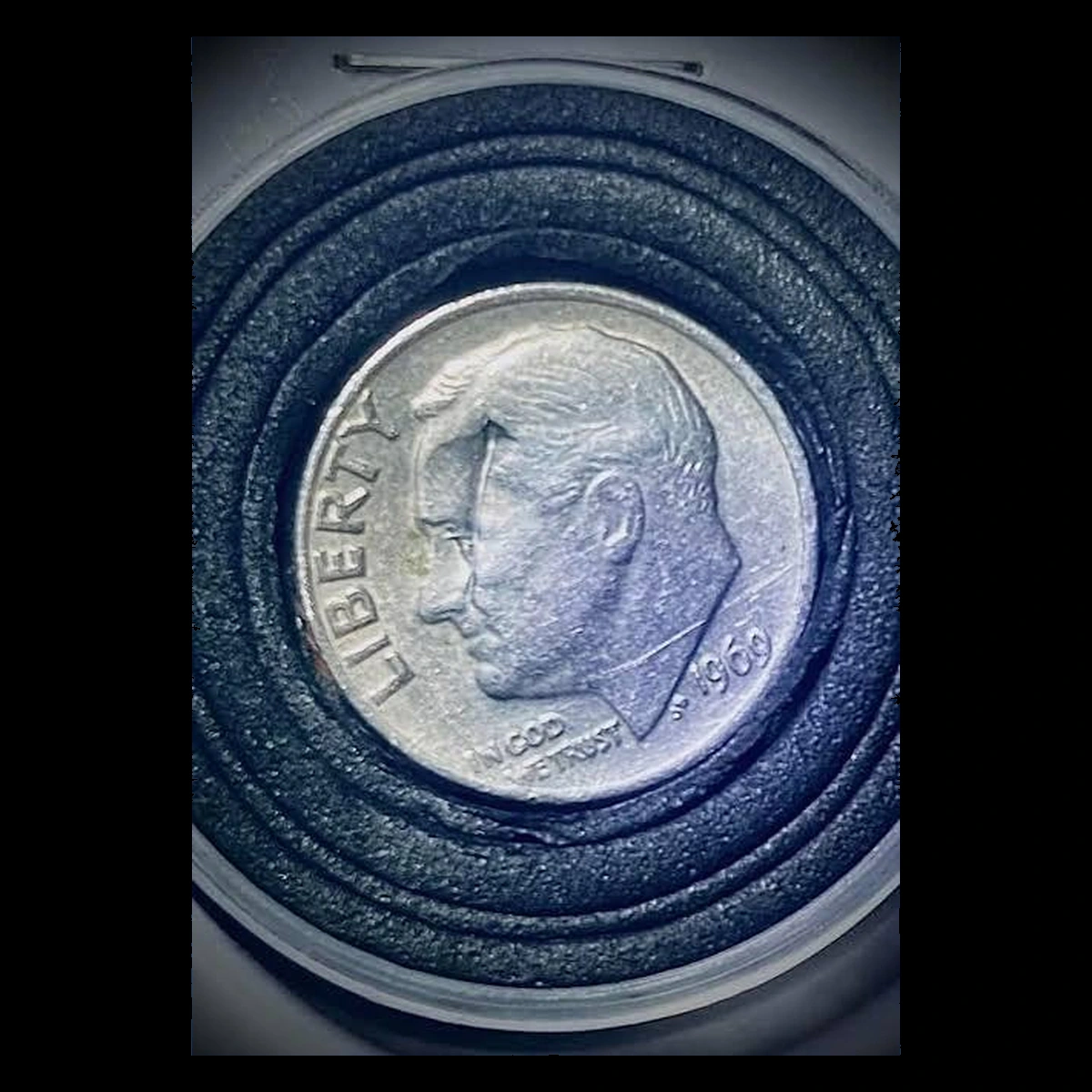
14. 1969 Dime A Loose Layer Blocks the Front: Struck Through Clad Metal Error
The NGC AU58 receiving coin has an approximately 40% struck-through area across the upper-right portrait, from about twelve to 4:30. A loose outer layer lay between the blank and die.
The receiving dime is not simply missing its own layer. The obstruction also is not shown to remain attached.
How to Identify
Inspect the receiving coin’s own edge layers before tracing the curved affected region. A coin that received another layer’s impression may retain its original metal.
Look for a struck transition from blocked to normal design rather than scraping. Describe the visible impression without adding an unseen retained fragment.
What It’s Worth
A convincing example of this scale suggests approximately $100–$600. Slight wear in the AU58 comparison should be considered alongside its large affected area.
The estimate covers the receiving coin alone. It includes no separate fragment unless one actually survives and is identified.
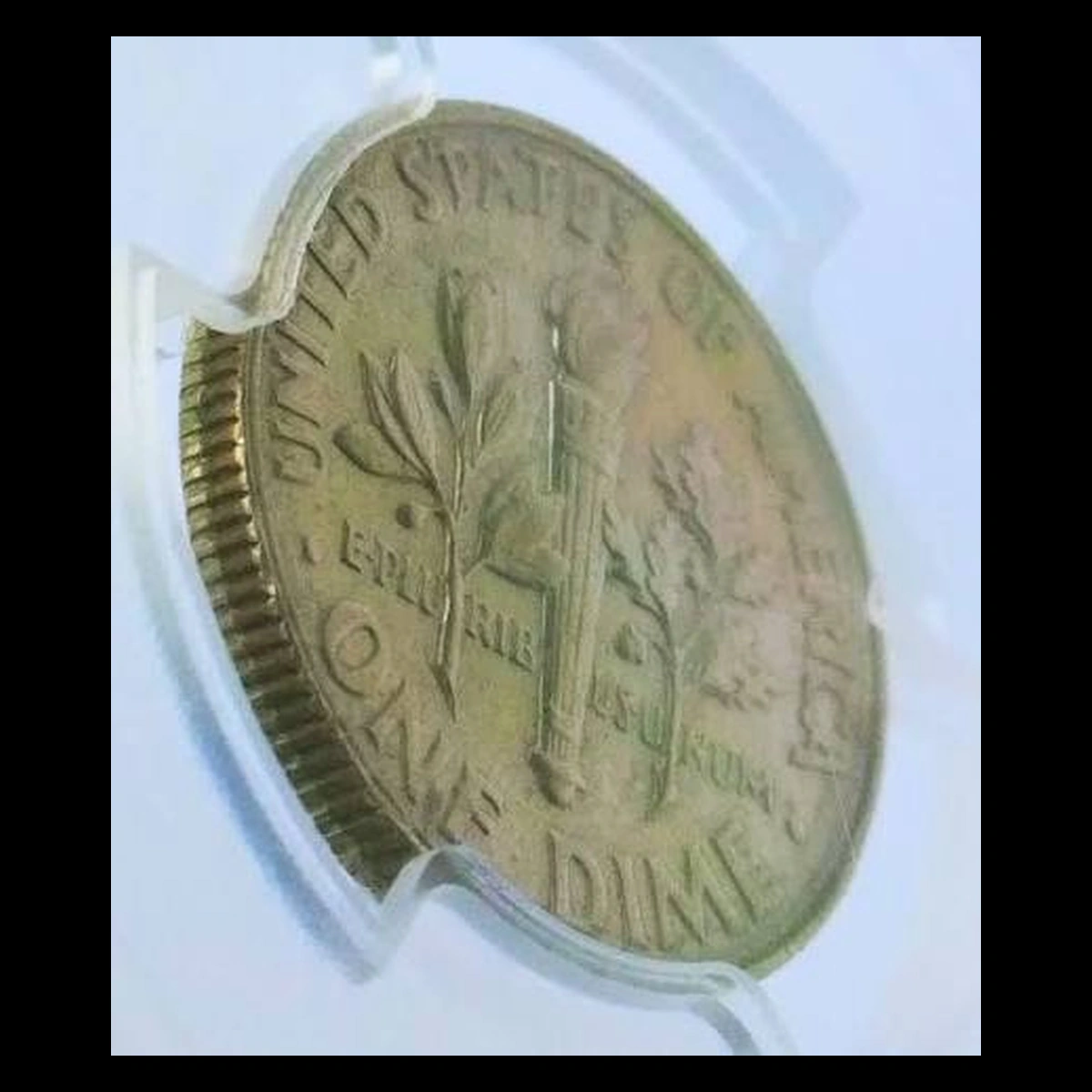
15. 1969 Dime Extra Mass at Dime Width: Thick Stock Error
One Denver example is identified as struck on quarter stock. Another uses cent-thickness stock and weighs 41 grains, about 2.66 grams, without being a complete cent blank.
Separate thick-blank reports give 2.9 grams and 46 grains, about 2.98 grams. Their original strip is unspecified.
How to Identify
Check the units and compare actual weight, diameter, and thickness. Grains are a smaller unit than grams, so the reported pieces do not weigh dozens of grams.
A dime-sized disk cut from thick stock differs from a full larger-denomination blank. Inspect layers and surfaces for added material before assigning a more specific stock origin from excess weight.
What It’s Worth
Authenticated thick blanks suggest an estimated $100–$750, depending on identity and condition.
The quarter-stock example sold for $253 in January 2006. The separate cent-thickness-stock specimen brought $144 in October 2021; neither result identifies the unexplained 2.9-gram coin’s source.
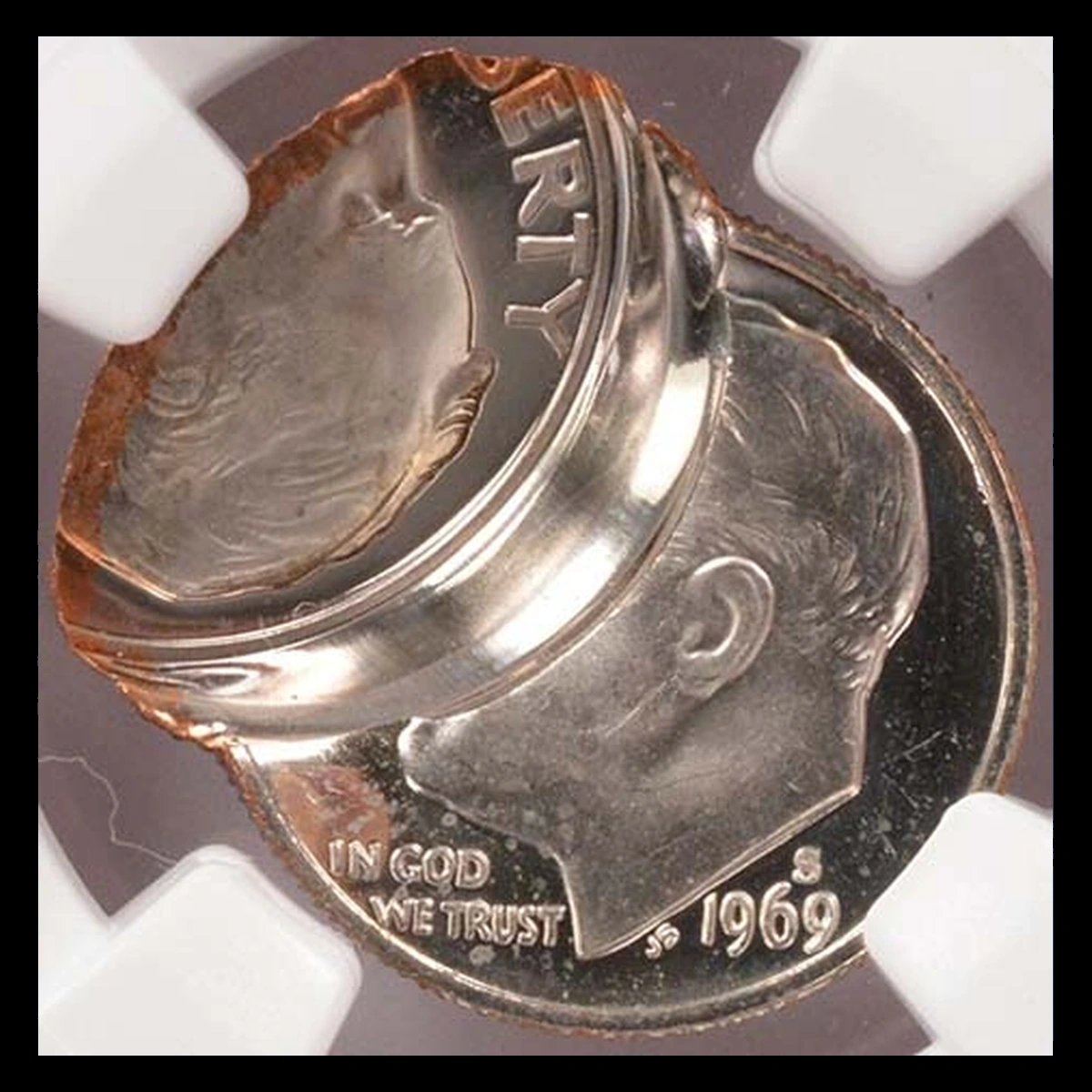
16. 1969 Dime Two Strikes with Expansion or a Clip: Double Strike Error
A 1969-S Proof graded NGC PR66 combines distinct repeated impressions with a broadstrike. Its outline spread without normal containment by the collar ring.
A separate ordinary Denver report combines a straight clip with a second strike 90% off center. The Proof’s displacement direction is not supplied.
How to Identify
On the Proof, trace two distinct displaced impressions and the expanded border. Normal aligned repeat blows used in Proof production are not this error.
On the Denver coin, separate the straight missing section from metal left unstruck by the later blow. A clip removes metal; an untouched region remains present.
What It’s Worth
Comparable Proof combinations suggest $400–$1,500, while the reported Denver clipped double strike suggests $100–$700 once identified.
The double-struck, broadstruck S Proof sold for $528 in October 2022. That result does not price the Denver coin or create an extra clip value to add to it.
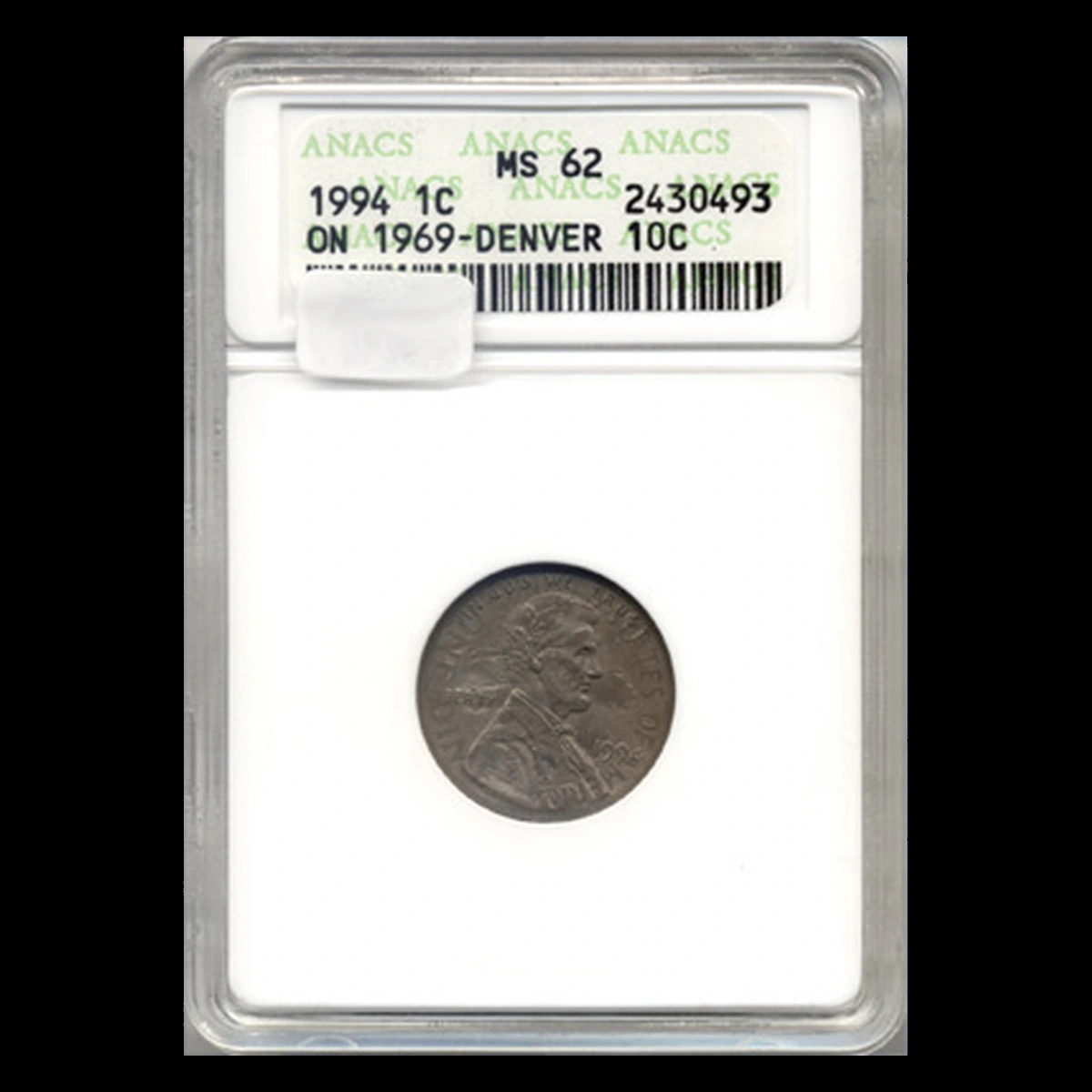
17. 1969 Dime Lincoln Images Over an Older Dime: 1994 Cent Overstrike Error
A 1969-D dime later received Lincoln cent designs in a 1994 cent press. The published ANACS MS62 example therefore preserves evidence of two denominations on one object.
The host dime’s date is 1969, but the later overstrike happened in 1994. This differs from a cent struck on an unused dime blank.
How to Identify
Find actual Roosevelt design remnants beneath the cent and inspect surviving evidence of the older date and D. Their exact positions must come from this specimen.
The host’s normal weight provides a starting comparison, while the later strike can spread its outline. Silver-colored metal alone cannot prove that the underlying blank had already been struck as a dime.
What It’s Worth
An authenticated 1994 cent over a 1969-D dime suggests $700–$4,000. Clear surviving identification of both issues strengthens the comparison.
A different 1994 cent over a 1993 dime sold for $3,120 in June 2024. That result concerns the same general process but not the 1969 host coin.
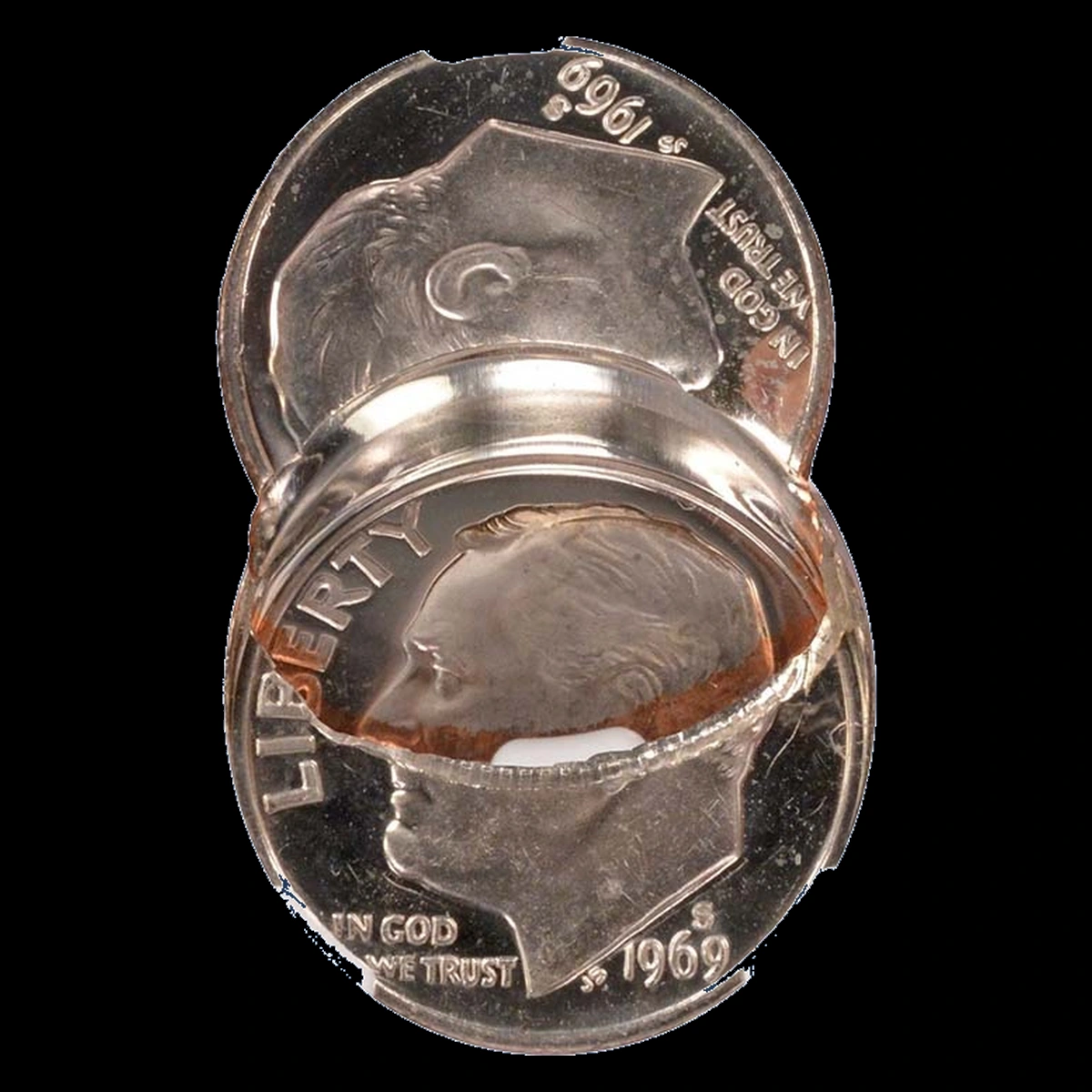
18. 1969 Dime Two Proofs Preserve Matching Contact: Mated Error Pair Error
The reported S pair combines displaced repeated strikes with recessed reversed impressions called brockages. Contact between the coins transferred raised designs into the receiving surfaces.
The two coins have NGC PF63 Cameo and PF66 Cameo grades. Cameo describes frosted designs against reflective backgrounds, not a third minting error.
How to Identify
Keep the pieces and grading records separate while comparing their corresponding contact areas. Raised design on one should meaningfully relate to the reversed impression and boundary on the other.
Do not press the coins together or assign every reported strike to a particular member without evidence. Combined weight and two unusual appearances do not independently establish a pair.
What It’s Worth
An authenticated matching Proof pair of this complexity suggests $2,500–$10,000 for both coins together.
No realized sale is supplied for this pair. Its value depends on the demonstrated physical relationship and preserved surfaces, rather than two unrelated Proof-error prices.
Conclusion
For 1969 dimes, deciding what survives is essential: a complete coin, one thin layer, two parts of a split coin, or two interacting Proofs. Similar copper color or weak detail can accompany very different histories.
Preserve thin metal and original packaging while documenting both faces and the edge. Keep ordinary no-mintmark coins separate from the unconfirmed No S Proof claim, and attach each price only to its supported specimen or clearly stated estimate.