Rare 1847 Penny Errors (List & Pictures)
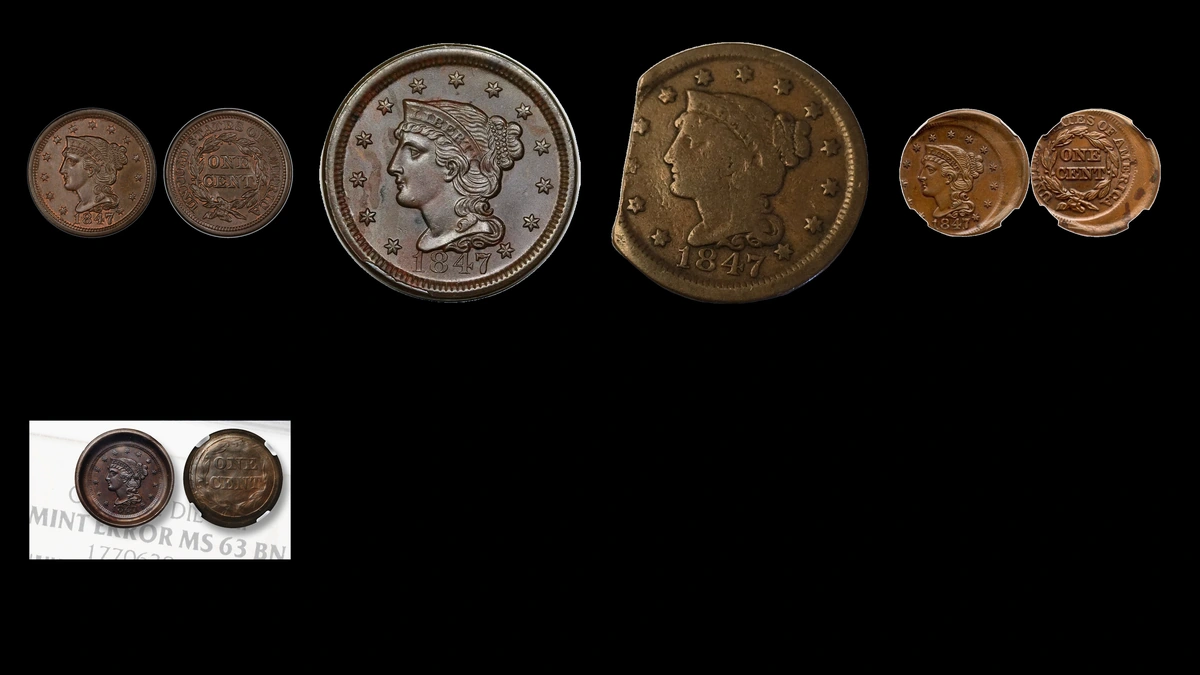
Later carving and corrosion can coexist with a genuine mint error on an 1847 large cent. Keep those condition problems separate from the original feature when comparing 1847 penny errors, estimated at $10–$45,000.
The exceptional NGC MS63 Brown die cap sold for $28,800 on August 19, 2021. The checks below move from the date and raised die marks to surface flaws, missing metal, displacement, and the cap’s distinctive shape.
| Observation | Feature to investigate | Estimated range |
|---|---|---|
| Earlier strokes above date digits | Repunched date | $30–$7,500 |
| Raised line or rim patch | Crack or cud | $15–$3,000 |
| Layered roughness or local impression | Lamination or struck-through flake | $10–$1,500 |
| Missing edge or unused crescent | Clip or off-center strike | $20–$5,000 |
| Deep walls around a clear portrait | Die cap | $15,000–$45,000 |
1. 1847 Penny Shallow Numerals Remain Above the Date: Repunched Date Error
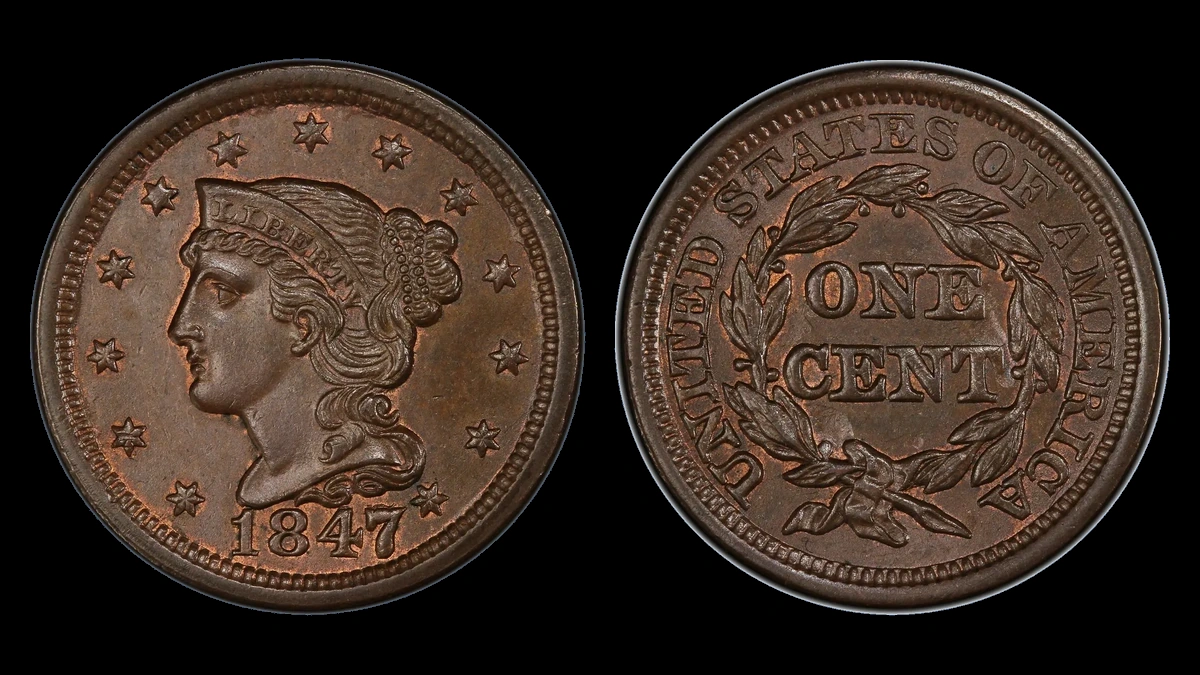
The apparent size difference in a “Large 7 over Small or Medium 7” can be explained by punch depth and position. All four digits were lightly entered too high, then the same date was punched more deeply in a lower position.
How to Identify
Trace surviving upper strokes across the date rather than choosing a variety from the apparent size of the 7 alone. The earlier shallow impression should fit the higher position relative to the final digits.
A separate recorded pattern emphasizes the 1 with weaker repunching on the 8. Use its own reference, and distinguish original raised remnants from grooves added to strengthen or alter a worn date.
What It’s Worth
$30–$7,500 is the estimated range across minor repunchings and desirable well-preserved 1847 varieties. The broad range requires an exact pattern and condition match.
An 1851/81 large cent graded PCGS MS62 Brown sold for $823 in February 2018, but its earlier digits were inverted rather than punched high and low. The cataloged 1847 N-18 MS64+ Brown documents the date pattern without a realized price supplied here.
2. 1847 Penny Raised Metal Follows MER or Meets the Rim: Cracks and Cuds Error
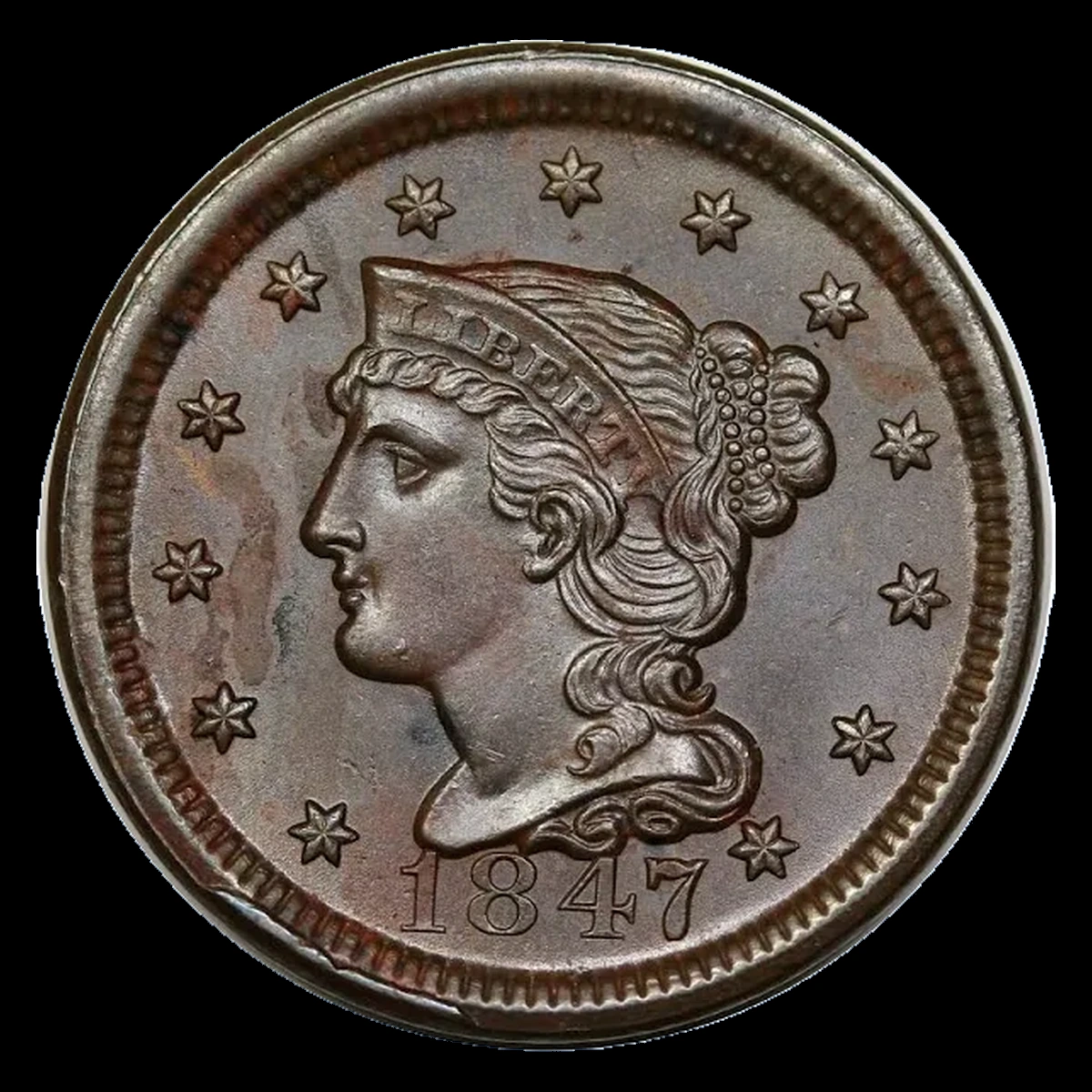
A raised reverse line through MER in AMERICA records a cracked die. A separate cud above R in AMERICA is a broader patch formed where part of the die’s edge was missing.
How to Identify
Other examples have front breaks near the first star or between stars nine and ten. Choose the correct face and location instead of combining those separate specimens into one pattern.
Under side lighting, a crack rises above the surface rather than forming a scratched channel. At a cud, inspect the rim connection for a fold or added material that could imitate the raised patch.
What It’s Worth
$15–$750 is the estimate for recognizable cracks, with stronger rim breaks around $75–$3,000. A fine line on a worn coin may add little beyond its ordinary collectible value.
An 1855 large cent with a cud above E in STATES and a thin lamination sold for $460 before the buyer’s fee in January 2011. That is a different-year combined-feature result, not a standard price for each 1847 raised mark.
3. 1847 Penny Copper Layers Separate Within a Rough Surface: Lamination Error
The reported 1847 example has severe lamination on both faces and a VG8 Details description for environmental damage. Substantial wear, copper separation, and later corrosion are distinct parts of its condition.
How to Identify
Find a physical layer boundary or lifted edge within the rough surface. General pitting from corrosion does not establish lamination merely because the coin looks flaky.
Follow the actual separation on each face without assigning an unsupported location beside a particular letter. Do not pick away flakes or expand a local layer flaw into a claim that the whole coin split.
What It’s Worth
$10–$750 is the estimate for worn 1847 laminations. Environmental damage can lower the comparison, and more extensive peeling does not automatically increase value.
The cataloged MS62 1855 cent that brought $460 before fees in January 2011 was much better preserved and also had a separate rim break. Its whole-coin result should not be assigned to a VG8 Details 1847 example.
4. 1847 Penny An Impression Interrupts the Last-Star Area: Struck-Through Flake Error
The dealer-described ANACS VF35 1847 cent has a metal-flake impression near the final star beside the date’s 7. An outside fragment interrupted contact during striking, rather than the coin’s own layer peeling afterward.
How to Identify
Compare that area with the ANACS VF35 example, following how normal detail approaches the impression. A later dent can flatten completed design and push copper outward instead.
The source does not say the flake remains attached. Establish that from the actual surface, and leave any retained material undisturbed rather than removing it.
What It’s Worth
$40–$1,500 is the estimated range for genuine 1847 struck-through errors. Size, recognizable interrupted detail, and overall preservation determine the comparison.
The dealer’s out-of-stock page displayed $60 for this VF35 coin. That archived asking price does not establish the final amount paid or price an unrelated large obstruction elsewhere on the design.
5. 1847 Penny A Missing Edge Coexists With a Carved W: Clipped Planchet Error
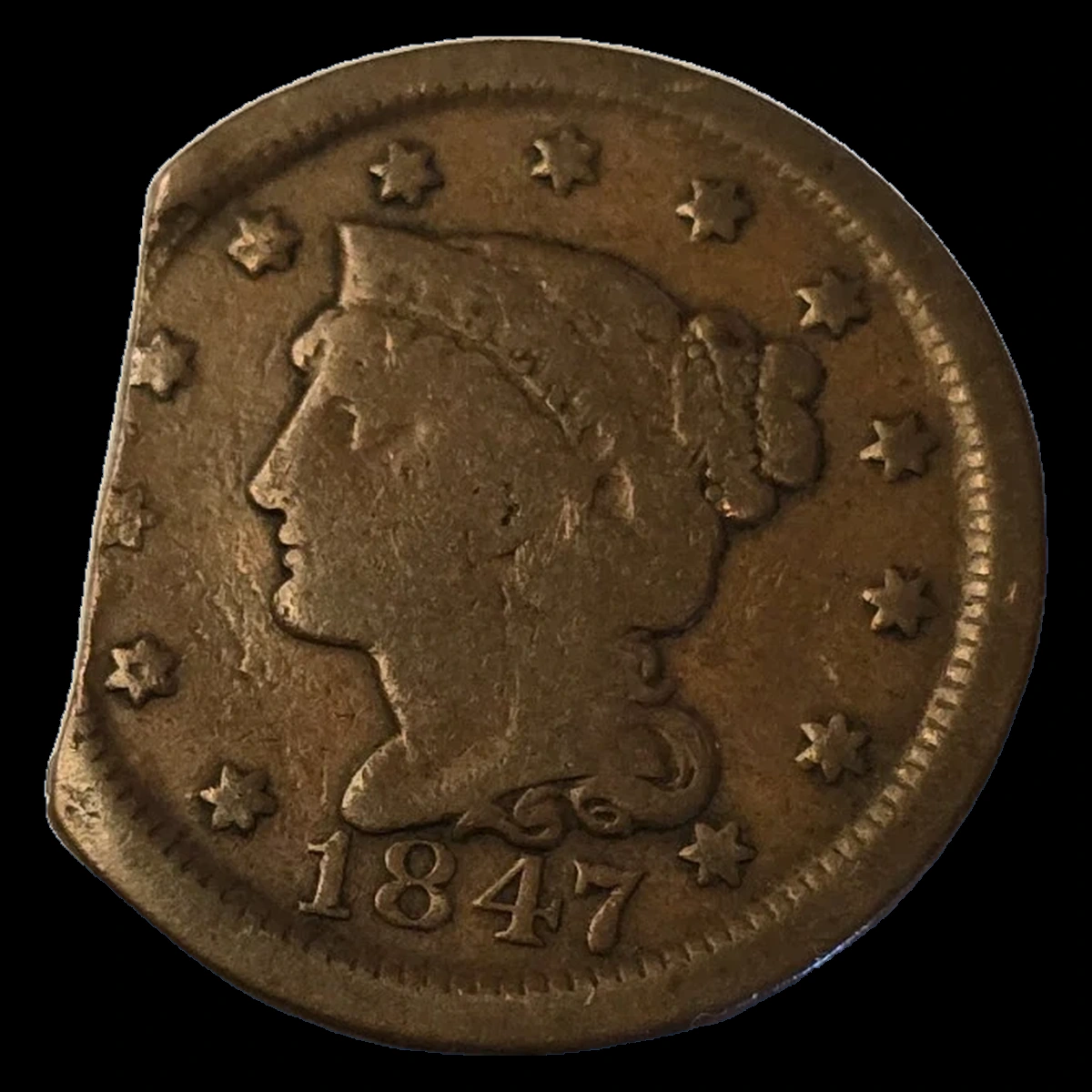
A 2023 Stenzel catalog describes an 1847 clipped-planchet cent with a W carved into its face. The claimed clip and the later carving require separate explanations.
How to Identify
Inspect the rim transitions at the gap independently of the carved letter. A clip predates striking, whereas saw marks or filing through finished edge detail suggest later removal.
A normal loose copper large cent provides reference measurements of 10.89 g and 27.5 mm, with wear, corrosion, or missing copper affecting the result. Measure intact spans, protect loose layers, and leave certified coins in their holders.
What It’s Worth
$20–$1,000 is the estimated range for genuine 1847 clips across damaged circulated and better-preserved examples. The carved W reduces the usefulness of an undamaged comparison rather than adding a mint-error premium.
An 1852 Braided Hair clip graded NGC MS63 Brown sold for $384 in June 2024. No realized price is supplied for the damaged Stenzel coin, whose clip shape and position also remain unspecified.
6. 1847 Penny Bare Copper Borders a Displaced Design: Off-Center Strike Error
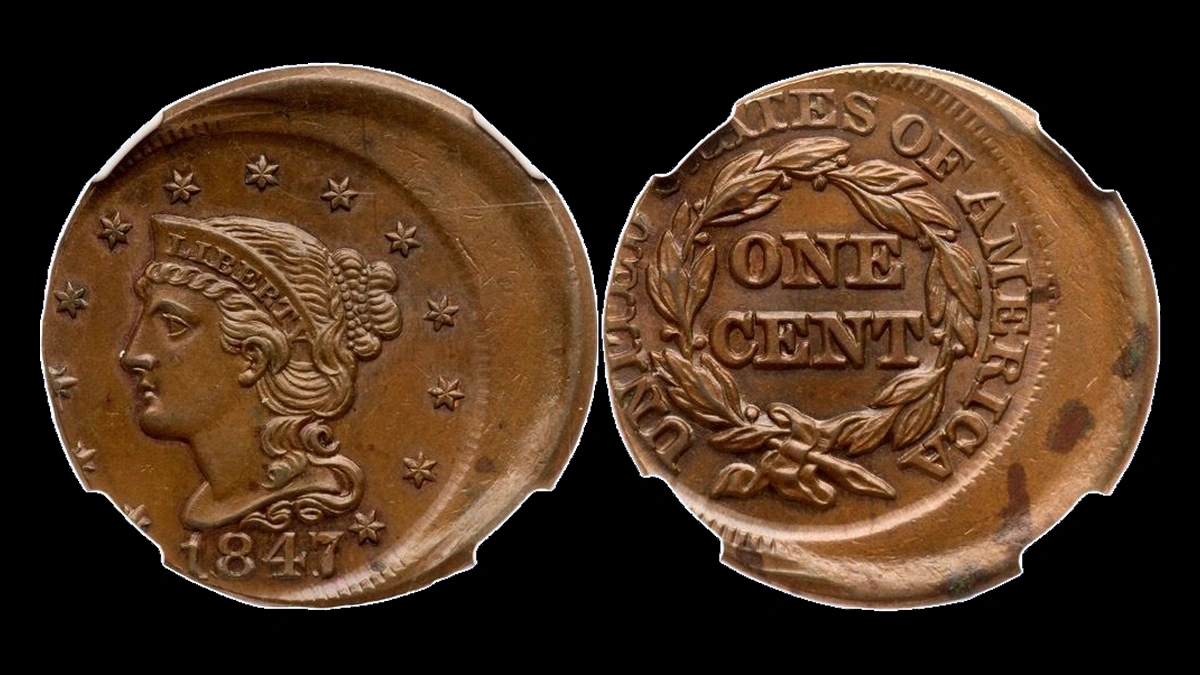
A seller lists a PCGS VF25 1847 cent as 5% off-center, while a collector separately reported a 30% example. Neither supplied description establishes a direction that should be applied to every coin.
How to Identify
A small claimed shift needs more than a wide rim: look for design that actually missed the blank and an original unused crescent opposite it. Both faces should support the same displacement.
Keep the date visible and inspect the edge for grinding or cutting. Use the separate 30% coin’s own photographs to determine its direction rather than borrowing the smaller specimen’s appearance.
What It’s Worth
$100–$5,000 is the estimate for genuine readable-date examples, depending on displacement, preservation, and surface problems. No completed price is supplied for either reported 1847 specimen.
An 1855 cent struck 70% off-center, graded PCGS Fine 15, brought $1,092.50 in January 2009. That much more dramatic different-year coin provides a same-series reference rather than a direct price for a modest 1847 shift.
7. 1847 Penny A Deep Cup Preserves a Clear Inner Portrait: Die Cap Error
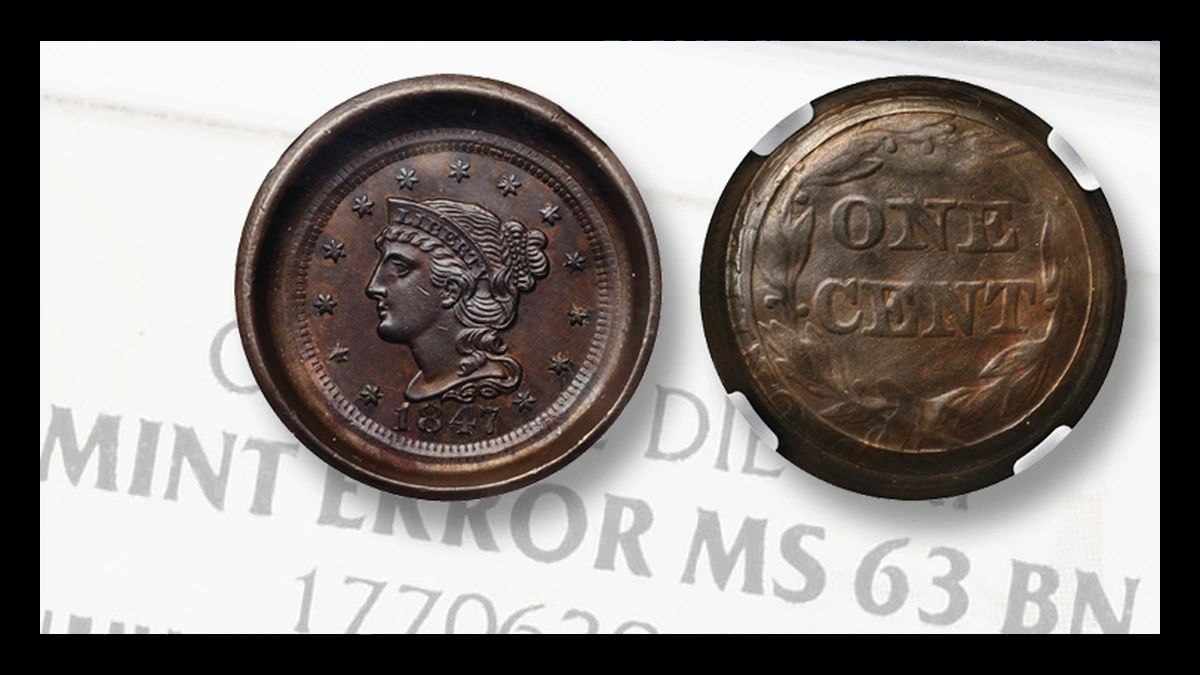
The NGC MS63 Brown 1847 cap has high walls, a clear portrait inside, and a spread reverse retaining parts of ONE CENT and the wreath. It stayed attached to the front die and changed shape during repeated blows against incoming blanks.
How to Identify
Compare the flattened reverse with the sharply formed inner portrait before judging the dramatic walls. Their different strike histories help explain how the coin remained on one die while contacting fresh blanks on the other side.
A later bend alone cannot establish those design changes. Keep the cap sealed if certified, inspect accessible edges for cuts or joins, and record actual width and height without trying to flatten or flex the walls.
What It’s Worth
$15,000–$45,000 is the estimated range for a genuine 1847 cap of comparable importance. Depth and preserved inner detail are central to that whole-coin assessment.
The documented NGC MS63 Brown cap sold for $28,800 at Stack’s Bowers on August 19, 2021, as reported by Coin World. That result does not apply to an ordinary cent bent into a bowl.
Conclusion
An original mint error does not erase later damage on an 1847 cent. Keep a carved W, environmental corrosion, or altered edge visible in the description while identifying the separate blank, die, or strike feature.
The $10–$45,000 estimates cover ordinary damaged pieces through an exceptional deep cap. Match the actual specimen and condition, and distinguish an archived seller price from a completed auction result before using either as a comparison.