Rare 1878 Penny Errors (List & Pictures)
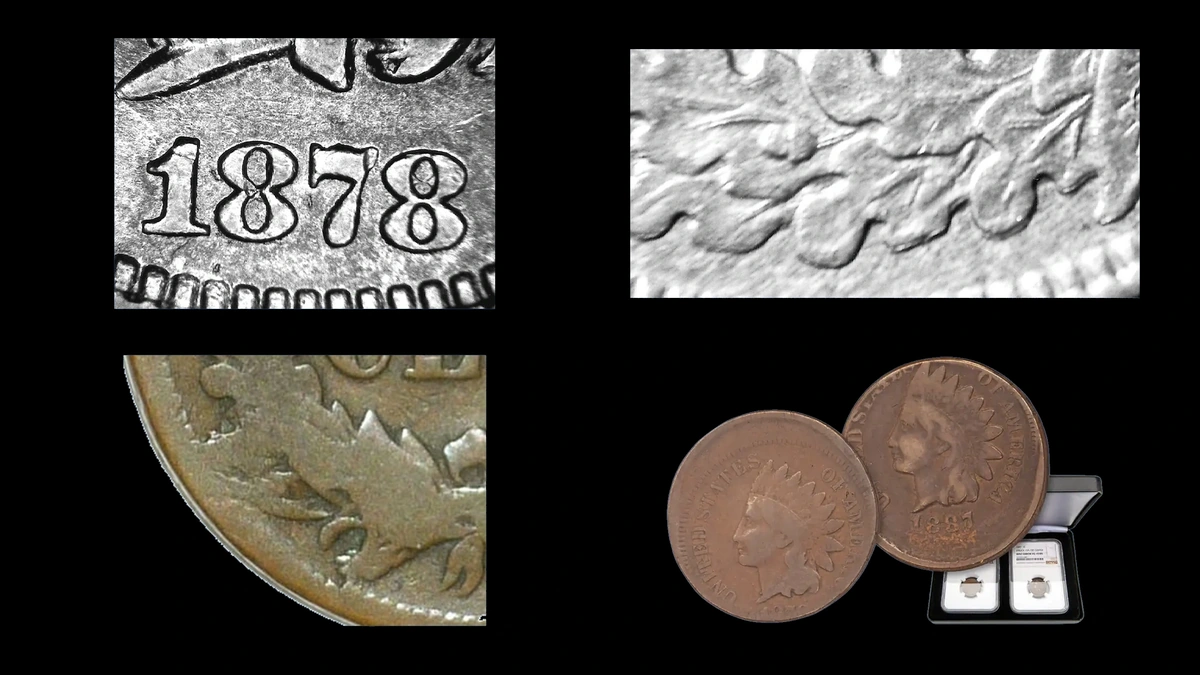
Two different date-punch mistakes are recorded for 1878: extra strokes within the regular date and misplaced fragments down in the border. A red, unworn example of the latter brought $1,920 at Heritage in October 2019.
The estimated range for 1878 penny errors is $25–$3,500. Begin with the location of the unusual detail, then compare the wreath, surface, and whole strike using the distinctions below.
| Where to look | Identification | Estimated range |
|---|---|---|
| Below the normal date | Misplaced 78, Snow-2 | $75–$3,500 |
| 1 and first 8 | Repunched date, Snow-1 | $40–$1,250 |
| Left wreath | Doubled reverse, Snow-3 | $75–$1,500 |
| Reverse rim | Cud or retained break | $50–$1,500 |
| Cheek | Small lamination | $25–$2,500, depending heavily on condition |
| Whole design and bare crescent | Off-center strike | $150–$3,000 |
1. 1878 Penny Extra 78 Fragments Below the Date: Misplaced Date Error
The lower border teeth provide landmarks for the Snow-2 or FS-301 misplaced date. Fragments of a 7 and 8 survive below the normal date after an earlier date-punch impression landed too low in the die.
How to Identify
Include all of 1878 and the border beneath it in a close photograph. Trace the raised fragments between and around the regular teeth, comparing their shape and spacing with the recognized variety.
Changing the light helps distinguish a real numeral curve from a shadow. A rough border or an isolated raised tooth does not establish the misplaced 78.
What It’s Worth
$75–$3,500 is the estimate for identified examples across circulated and high-grade condition. The fragments must remain clear enough to match even on a worn coin.
PCGS records $1,920 at Heritage in October 2019 for an MS65 Red Snow-2. Its unworn surfaces and strong copper color are important parts of that result.
2. 1878 Penny Raised Remnants at the 1 and First 8: Repunched Date Error
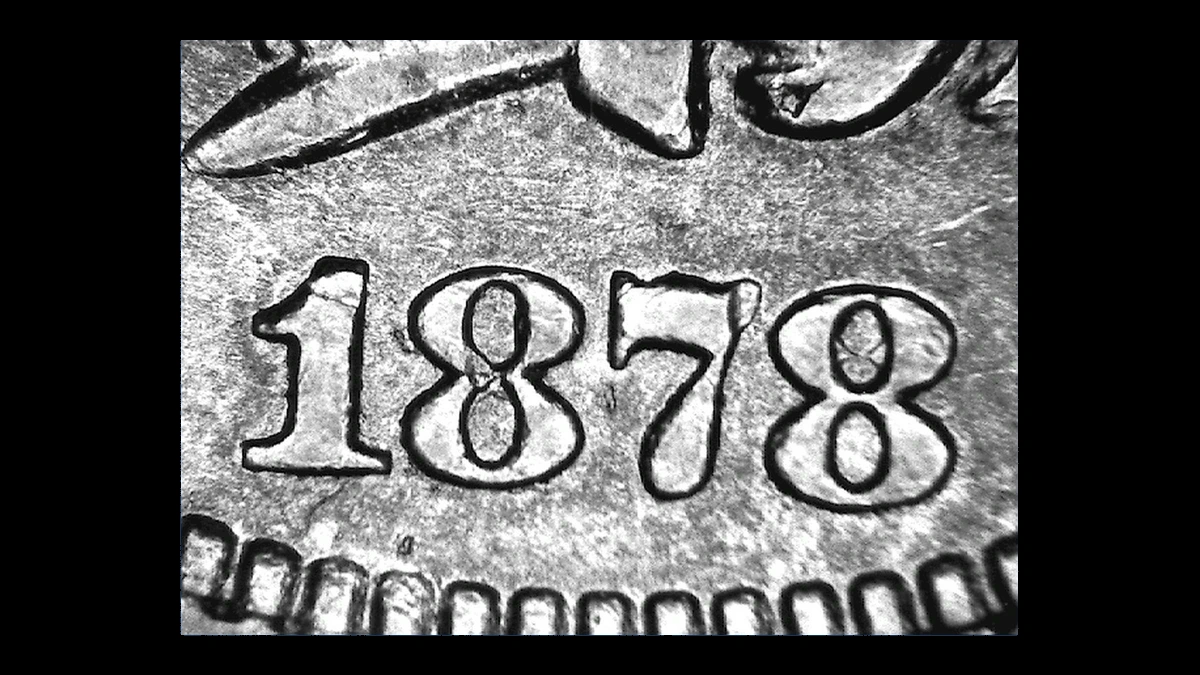
Snow-1 records an earlier upward position of the date punch. A small part of the 1 remains above the right side of its base, while the first 8 shows a trace in the middle of its upper loop.
How to Identify
Compare both locations with the 1878 Snow-1 description. A mark below the described positions needs another explanation rather than a forced attribution.
The remnants repeat parts of the same date; they are not evidence of 1878 punched over a different year. A flat ledge beside a digit can result from movement during striking and differs from a recognizable earlier numeral stroke.
What It’s Worth
$40–$1,250 is the estimated range for identified 1878 Snow-1 coins. Both visible remnants and overall preservation influence the comparison.
An 1882 Snow-1 graded ANACS AU55 sold for $84 at Heritage in July 2025. The repeated catalog number does not make that lightly worn different-year variety identical to the 1878 pattern.
3. 1878 Penny Neighboring Left-Wreath Leaves Repeat: Doubled Die Reverse Error
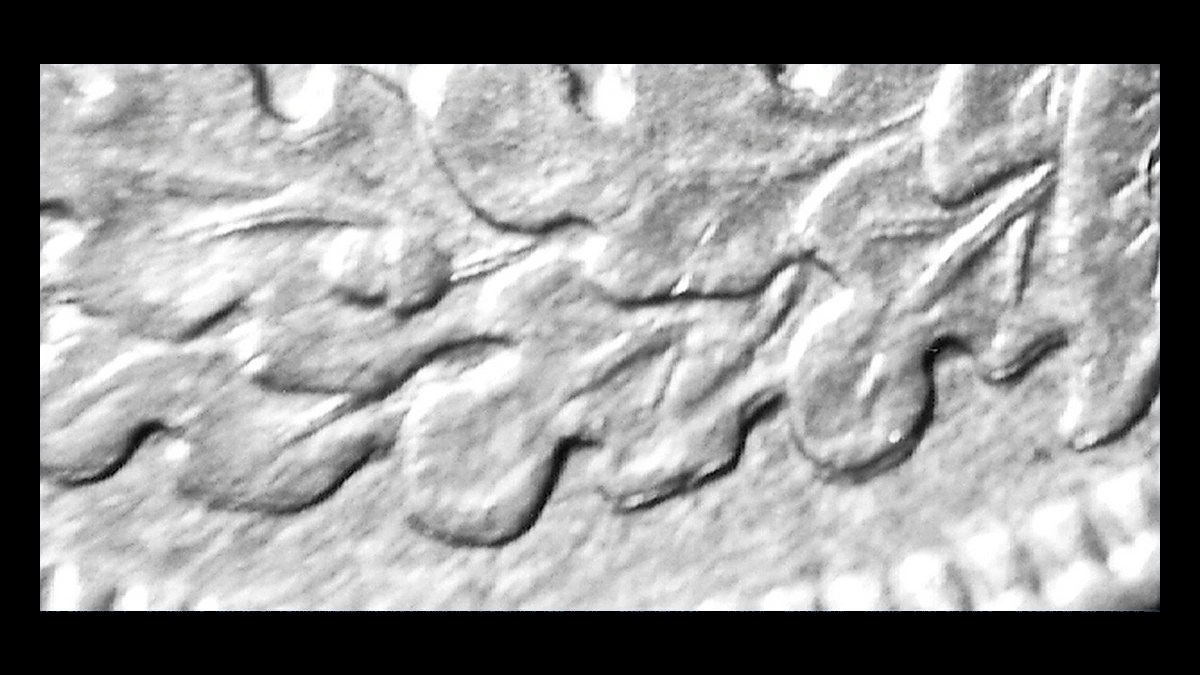
The left wreath carries the important evidence for Snow-3, also cataloged as DDR-001. Small repeated details were built into the reverse die and copied onto coins during striking.
How to Identify
Follow repeated edges across neighboring leaves under light from more than one direction. A low shelf or single bright edge can mislead, so compare the whole local pattern with Snow-3.
This die uses the Bold N reverse design, named for the strongly formed N in ONE. That ordinary design style helps describe the reverse but is not itself the doubling error.
What It’s Worth
$75–$1,500 is the estimated range for correctly identified examples. Wear can merge the small leaf offsets and reduce their visibility.
No completed Snow-3 auction result is supplied here. A thick-looking N alone cannot justify a doubled-die attribution or its estimated value.
4. 1878 Penny A Raised Section Joins the Reverse Rim: Cuds and Retained Breaks Error
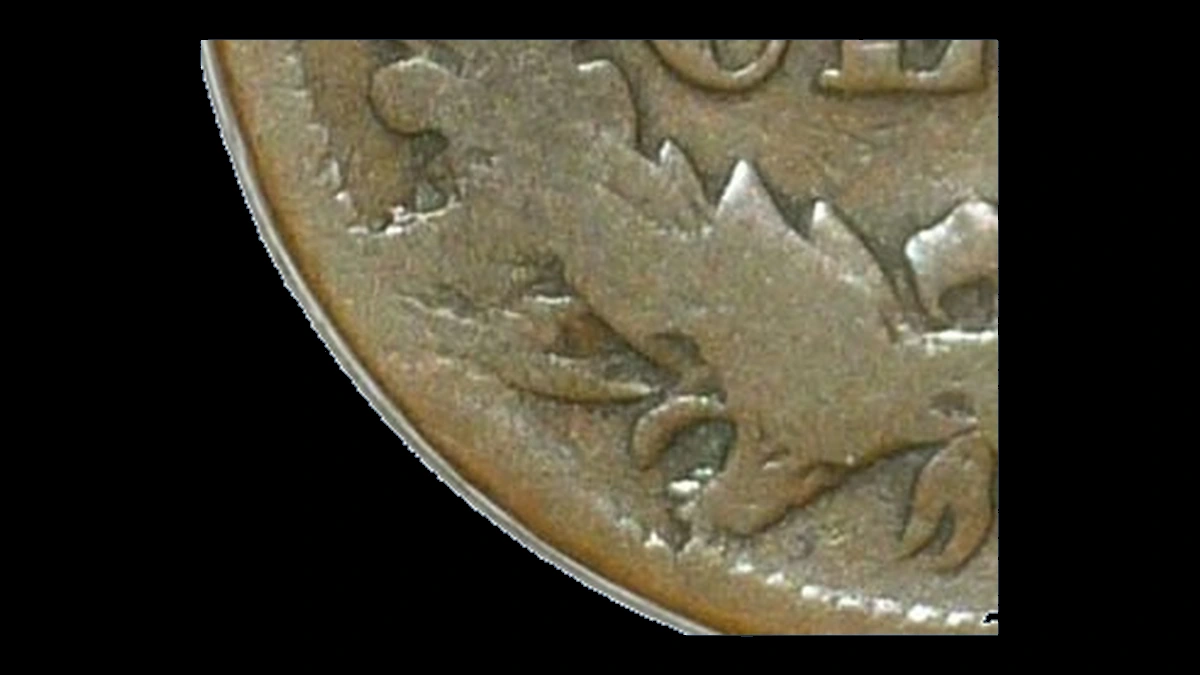
A missing piece at the die’s edge allows metal to rise into a rim-connected cud. When the cracked piece remains in position temporarily, a retained break can preserve some design within its shifted boundary.
How to Identify
The 1878 catalog records a retained example around 8:30–9:30 and separate breaks at 7–8, 2:15–3:30, and 7:30–8:30. These are alternative locations on different coins.
Follow the boundary to the rim and compare surviving wreath detail inside it. Later edge damage can fold metal over the design and leave dents or scrapes, which differs from the documented die-break pattern.
What It’s Worth
$50–$1,500 is the estimated whole-coin range for identifiable 1878 reverse cuds and retained breaks. Large clear patterns can attract more interest than faint boundaries or heavily worn small breaks.
The supplied evidence does not provide an individual completed sale for each location. Size, retained detail, and condition should be considered together.
5. 1878 Penny A Tiny Hollow Interrupts the Cheek: Lamination Error
A 1992 auction description called a small cheek defect on an 1878 MS64 Red cent a tiny lamination pit. A lamination begins as a separating layer within the alloy and can leave an opening when a small piece detaches.
How to Identify
Inspect the cheek under side lighting for a thin-layer boundary rather than assuming every hollow is mint-made. Handling dents commonly affect this exposed portrait area.
The 1992 catalog description establishes the small feature on its red example, not a broad peel across the face. A tiny loss may produce no useful weight difference, so the surface evidence matters more.
What It’s Worth
$25–$200 is the estimate for worn 1878 cents with small genuine laminations. A red unworn example like the cataloged MS64 coin has a separate whole-coin estimate of $750–$2,500.
No realized price is assigned to that specific 1992 specimen. Its high preservation explains the larger estimate, while the tiny pit may reduce appeal rather than add a large error premium.
6. 1878 Penny An Unstruck Crescent Remains Beside the Design: Off-Center Strike Error
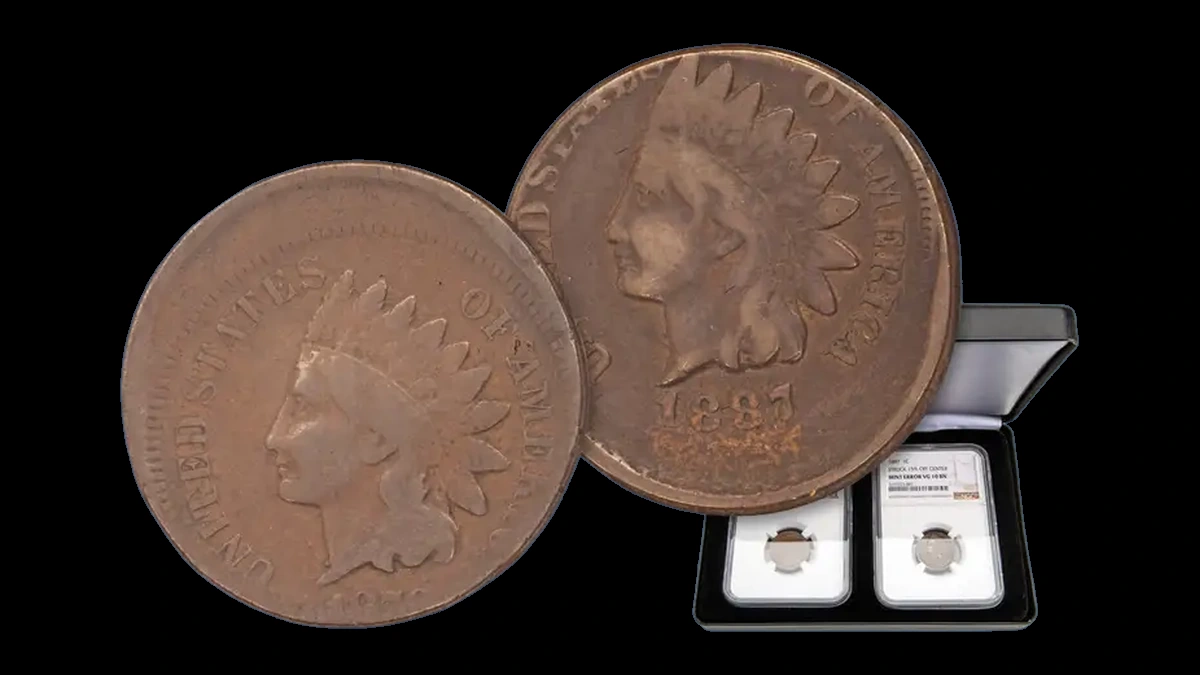
A seller listing pairs 1878 and 1887 cents described as 15% off-center. The displaced blanks received incomplete designs, leaving unused metal beside the struck areas.
How to Identify
Read the date on the actual coin before relying on its position in the listing. The set title gives NGC grades from VG10 to F12 but does not assign either individual grade to the 1878 specimen.
Both faces should fit the same displacement; a later cut removes metal instead of leaving an unstruck crescent. For loose coins, 3.11 g and 19.05 mm are normal bronze-cent references, with actual outline, wear, and any missing metal recorded separately; certified coins should remain sealed.
What It’s Worth
$150–$750 is the estimate for a circulated 1878 cent with a clear 15% off-center strike. Better-preserved examples can fit roughly $500–$3,000.
The seller’s two-coin listing is not an individual completed sale. Any set price also includes the separate 1887 coin and cannot be assigned solely to the 1878 example.
Conclusion
The date, left wreath, and reverse rim provide distinct starting points for an 1878 identification. Match the location and shape before allowing a Snow number, Bold N design, or general error label to determine the comparison.
The $25–$3,500 estimates include both worn discoveries and well-preserved red coins. A tiny cheek pit, a two-coin seller listing, and an individual auction result each need different interpretation when assessing the complete penny.