Rare 1908 Penny Errors (List & Pictures)
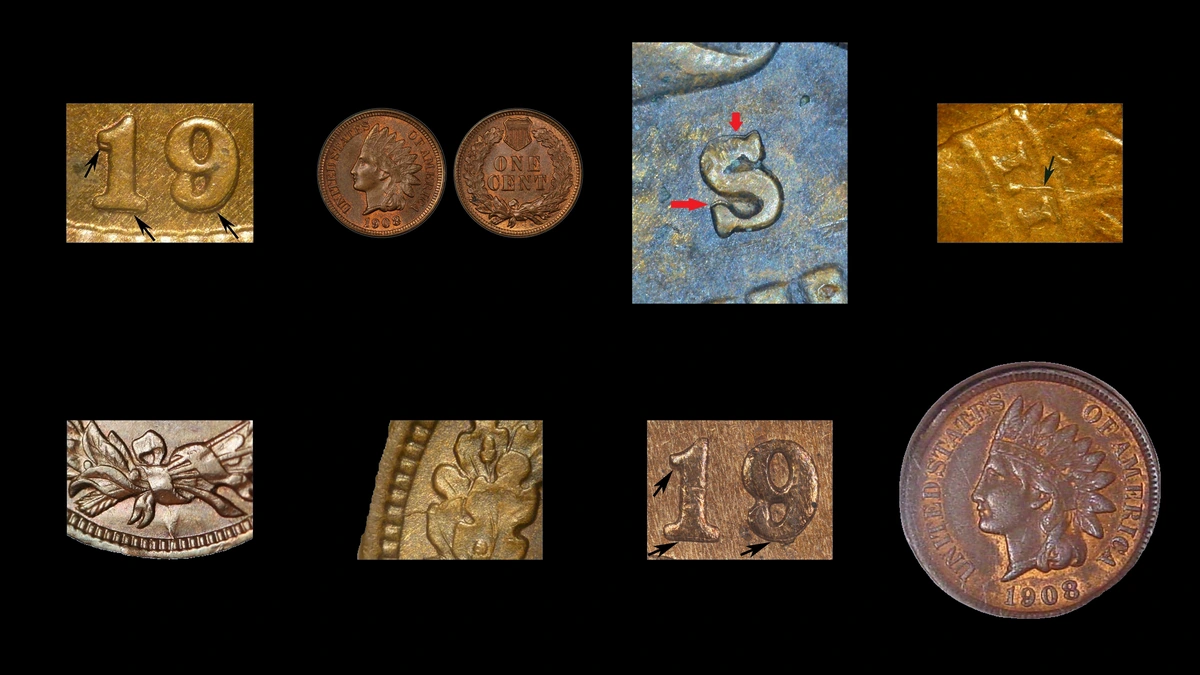
A 1908 cent with its second strike 55% off center sold for $4,080 in June 2024. Many 1908 penny errors are subtler, appearing as an extra date stroke or a small repeated mark near the portrait.
Estimated whole-coin values span $5–$5,000. Check the date and reverse mintmark first, then decide whether an unusual surface feature came from the die, the blank, or a separate striking event.
| Area or symptom | Possible error | Estimated value |
|---|---|---|
| Extra strokes beside or below date | Repunched or misplaced date | $20–$3,000 |
| Extra curve at reverse S | Repunched mintmark | $150–$2,000 |
| Bumps, fine marks, or uneven surface | Die rust, transferred marks, or sinking | $10–$300 |
| Raised crack or retained rim break | Die breakage | $5–$300 |
| Peeling or local depressions | Lamination or struck-through | $10–$500 |
| Gap or expanded outline | Clip or broadstrike | $50–$1,500 |
| Displaced or repeated designs | Off-center or double strike | $100–$5,000 |
A normal bronze cent weighs about 3.11 grams and measures 19.05 millimeters across, with a plain edge. Record measurements when safe, but leave sealed coins and loose metal undisturbed.
1. 1908 Penny Extra Strokes Touch the Main Digits: Repunched Date Error
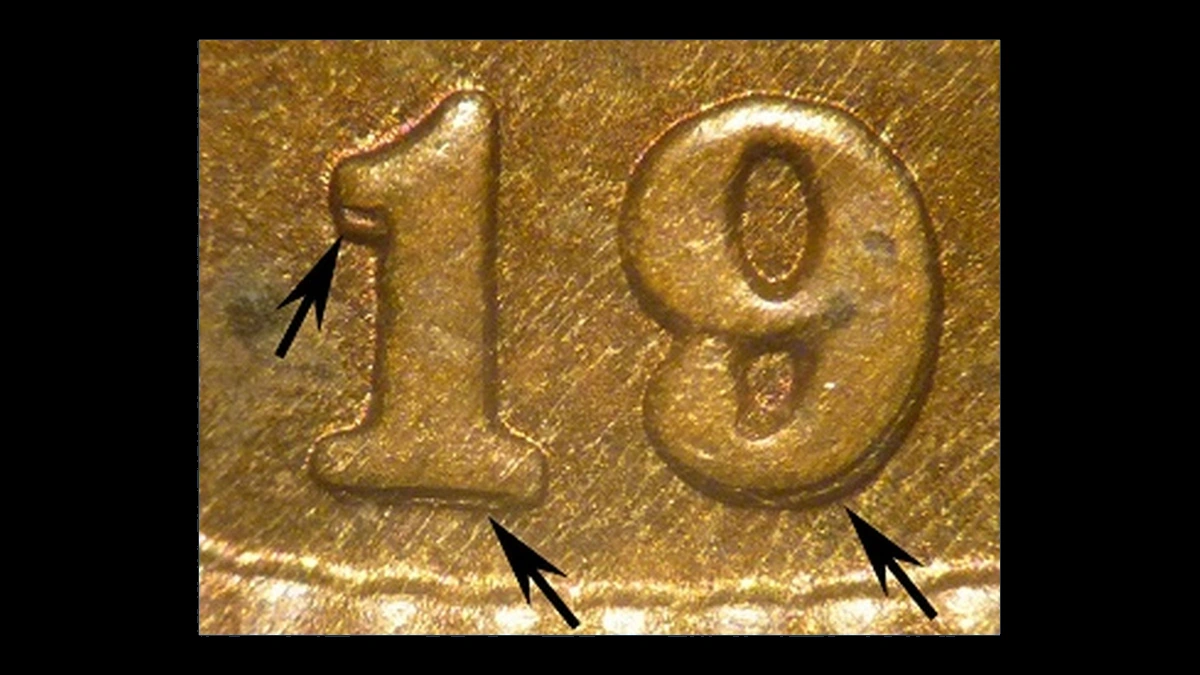
A foot, loop, or curve beside a digit can preserve an earlier date-punch position in the die. Different 1908 tools carry different combinations of these small extra strokes.
How to Identify
On Snow 1, examine the 9 around its upper loop and near its base. Trace rounded extra detail rather than assuming the entire date must have two complete outlines.
Select the correct mint and finish before comparing photographs. San Francisco varieties and a Philadelphia Proof report need separate matches; Proof describes a specially made collector coin, not the date error.
What It’s Worth
The estimated whole-coin range is $20–$3,000, from modest worn examples through stronger Proof or scarce high-grade pieces. Much of the upper value can come from the underlying coin.
The related but different FS-301 misplaced-date variety has a recorded $1,187 high-grade eBay result. That marketplace comparison does not establish a sale price for a repunched-date specimen.
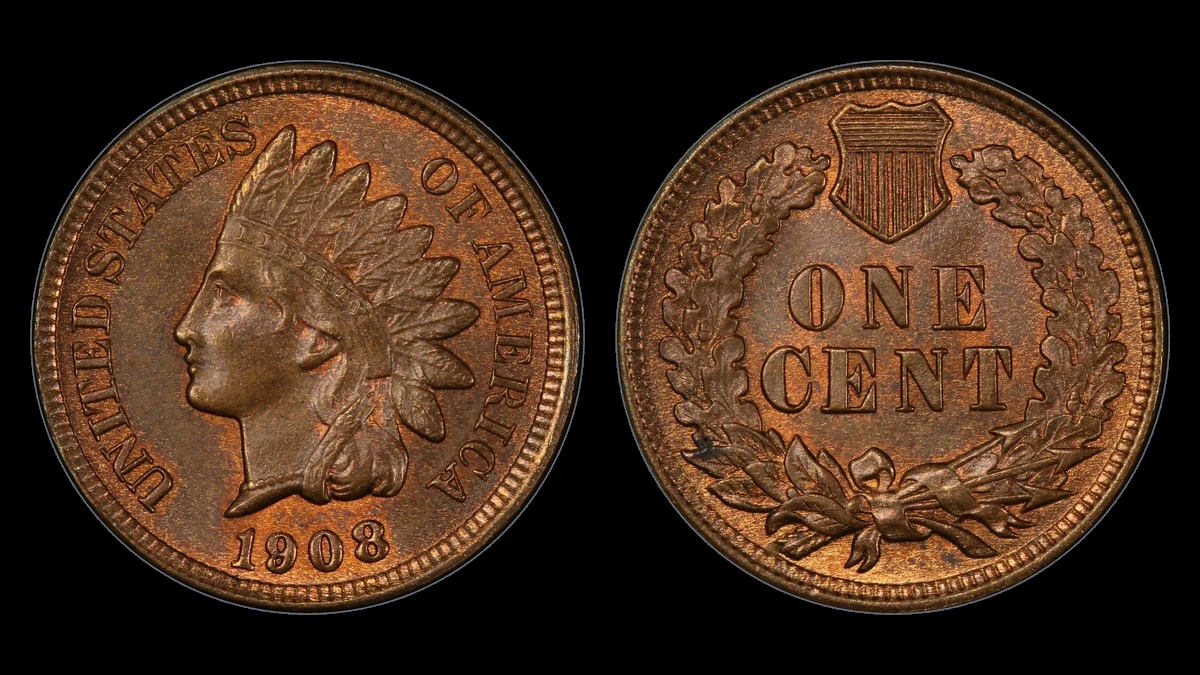
2. 1908 Penny Digit Fragments Appear among the Border Teeth: Misplaced Date Error
The date punch sometimes touched the die too low before the normal date was completed. Parts of the misplaced digits can remain among the small teeth below 1908.
How to Identify
Scan below the date for curves that fit recognizable number fragments. Match their positions relative to both the normal digits and neighboring border teeth.
The Snow 4 photographs illustrate FS-301, one of several patterns. A random bump or another variety’s extra stroke does not identify that particular die.
What It’s Worth
Identified misplaced dates are estimated at $25–$1,500 across different grades and varieties. Readable extra digits make a stronger example than faint traces on worn copper.
PCGS records a $1,187 eBay result from December 2021 for an FS-301 graded MS65 Red and Brown. This is a high-grade marketplace result, not a value for every 1908 misplaced date.
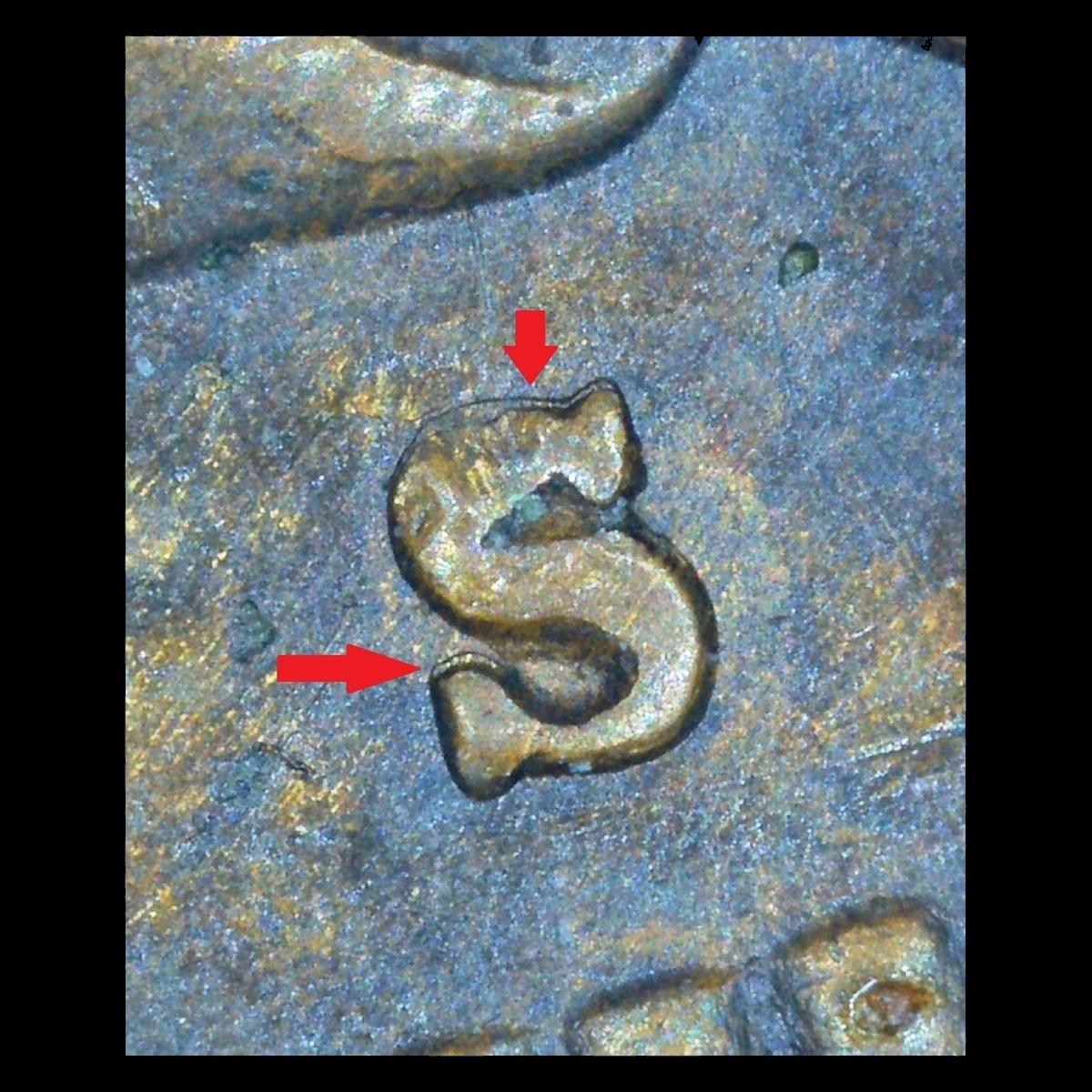
3. 1908 Penny An Extra S Curve below the Bow: Repunched Mintmark Error
The 1908-S Indian Head cent carries its mintmark on the reverse below the wreath’s bow. An earlier hand-punched S can remain partly visible beside the final letter.
How to Identify
Compare the extra rounded stroke with the attributed S-over-S variety. Check the surrounding copper for cuts or a join from an altered mintmark.
A thick S or flat shelf is insufficient evidence. Philadelphia coins have no mintmark, while 1908 was San Francisco’s first year striking Indian Head cents.
What It’s Worth
Estimated value is $150–$2,000 for identified 1908-S repunches. This includes the collector value of the underlying San Francisco issue.
A 1908-S/S graded MS62 Brown sold for $750 at Goldberg in June 2021, as recorded by PCGS Auction Prices. Its unworn grade and clear attribution are relevant to that comparison.
4. 1908 Penny Tiny Raised Bumps above the Ribbon: Die Rust Error
Pits in a rusted die can produce raised spots on the coins it strikes. The reported patch above the ribbon accompanies the date variety known as Poliquin 39 or Snow 35.
How to Identify
Use side lighting to distinguish raised bumps from corrosion pits eaten into the coin. Deposits or widespread roughness can obscure the original surface.
Compare the variety’s repunched 1 below its base as supporting evidence. Normal weight and size cannot distinguish die rust from later surface corrosion.
What It’s Worth
Whole-coin estimates run $10–$200 for recognizable examples. The date variety and preservation contribute to that figure alongside the rusted-die patch.
No sale of this particular patch is supplied. Roughness alone does not justify the price of a major striking error.
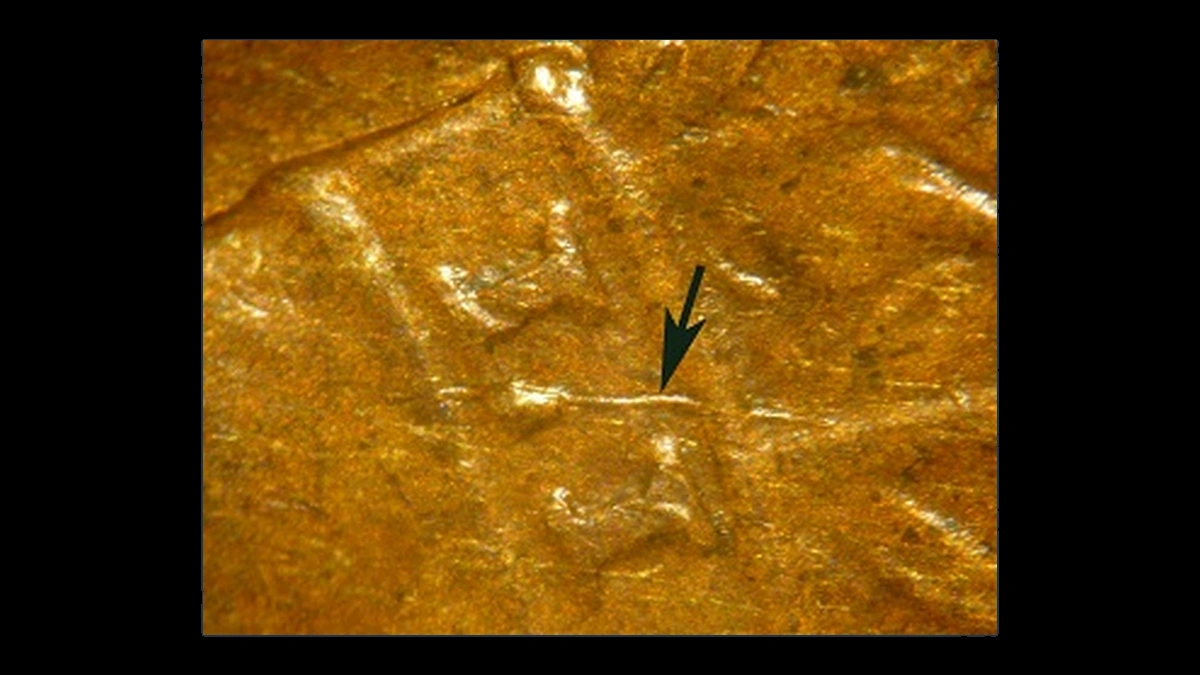
5. 1908 Penny Fine Marks Repeat at Fixed Locations: Debris during Die Making Error
A mark can enter the die while the tool is being made and then repeat on the coins it produces. This differs from an object obstructing the strike of one individual penny.
How to Identify
One example runs from the second feather through the lower-right L in LIBERTY and below the headband. Separate reports concern a mark near the mouth and marks along the lower reverse border and left wreath.
Choose the matching tool photograph and compare the full path. The mouth mark’s material is unidentified, and a scratch crossing finished detail is not proof of this die-making process.
What It’s Worth
Recognizable transferred marks are estimated at $20–$300 for the whole coin. Any associated date variety and the clarity of the small feature contribute to the price.
These figures are estimates, not separate recorded sales for the feather, mouth, and wreath examples.
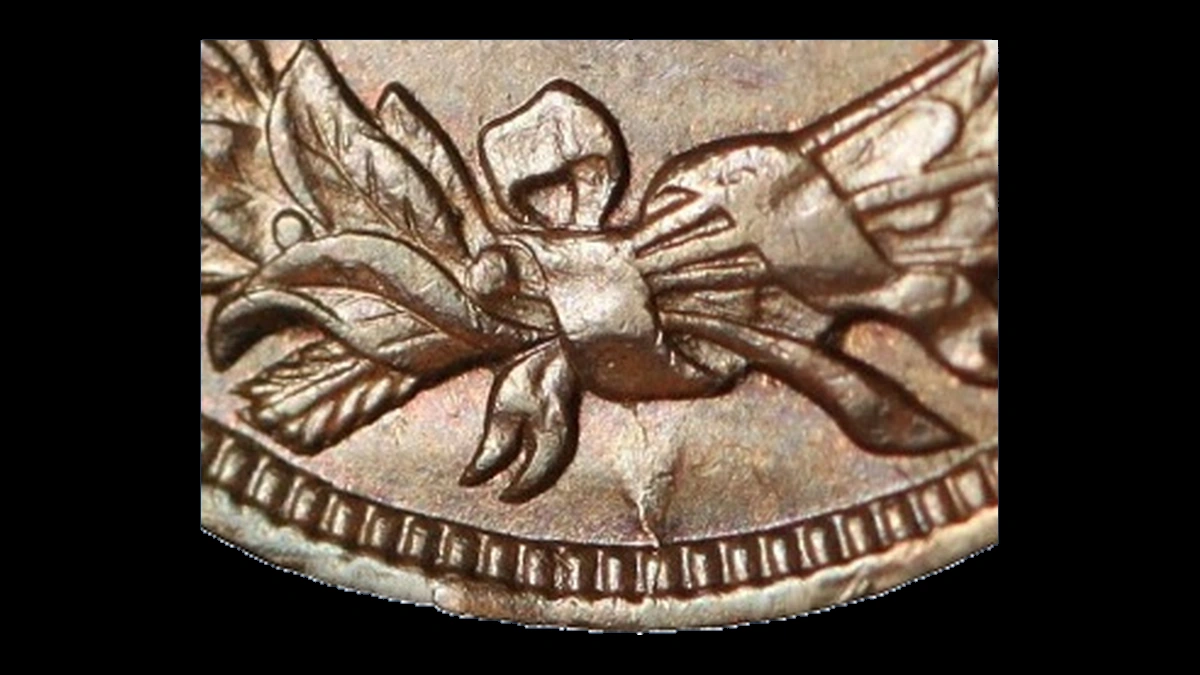
6. 1908 Penny A Local Surface Swell Develops: Die Sinking Error
A die can deform locally after repeated use, changing the surface copied onto later coins. The resulting uneven area may resemble a shallow swelling rather than a distinct extra line.
How to Identify
Compare early and later stages of the same variety under moving light. One reported change develops near the top of the front; another affected area lies between the reverse arrow tails and wreath stems.
Inspect the opposite face and edge for an impact that could have created a bulge. An early coin lacking the later front feature can still belong to the same date variety.
What It’s Worth
Estimated whole-coin value is $10–$300. The underlying variety, condition, and visibility of the changed surface all enter the assessment.
The range is not a measured premium for sinking alone. Heat or impact damage does not qualify.
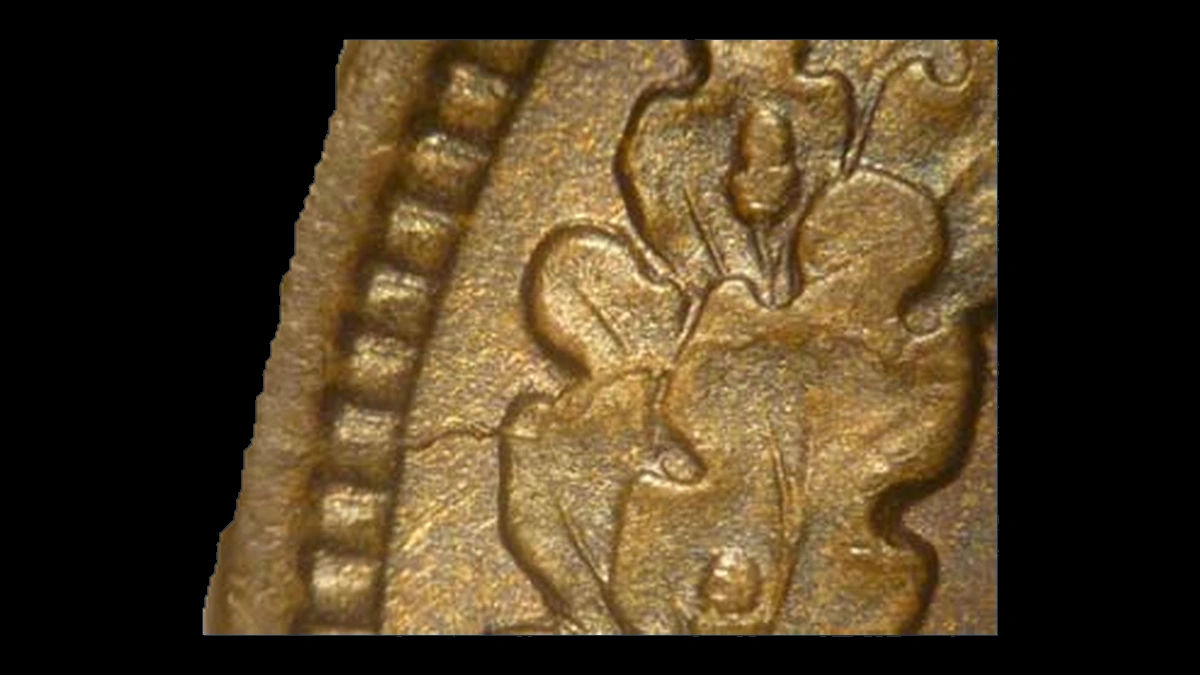
7. 1908 Penny A Raised Line or Shifted Rim Section: Die Cracks and Retained Breaks Error
A die crack leaves a raised line where coin metal enters it. If a larger broken section stays in place, it can still stamp some design while leaving a displaced rim area.
How to Identify
The reported retained reverse break occupies roughly 7:15 to eight o’clock. Look for surviving detail across that section and the companion crack entering near 3:30 toward T.
Other 1908 cracks have their own paths. Examine the edge for a later blow that pushed metal onto the face before treating a raised lump as die failure.
What It’s Worth
Estimate $5–$300 overall: small cracks around $5–$40 and a clear retained rim break around $40–$300. These are whole-coin estimates rather than documented sales for each stage.
A faint raised line may add little to a worn cent, while the more developed break is easier to appreciate.
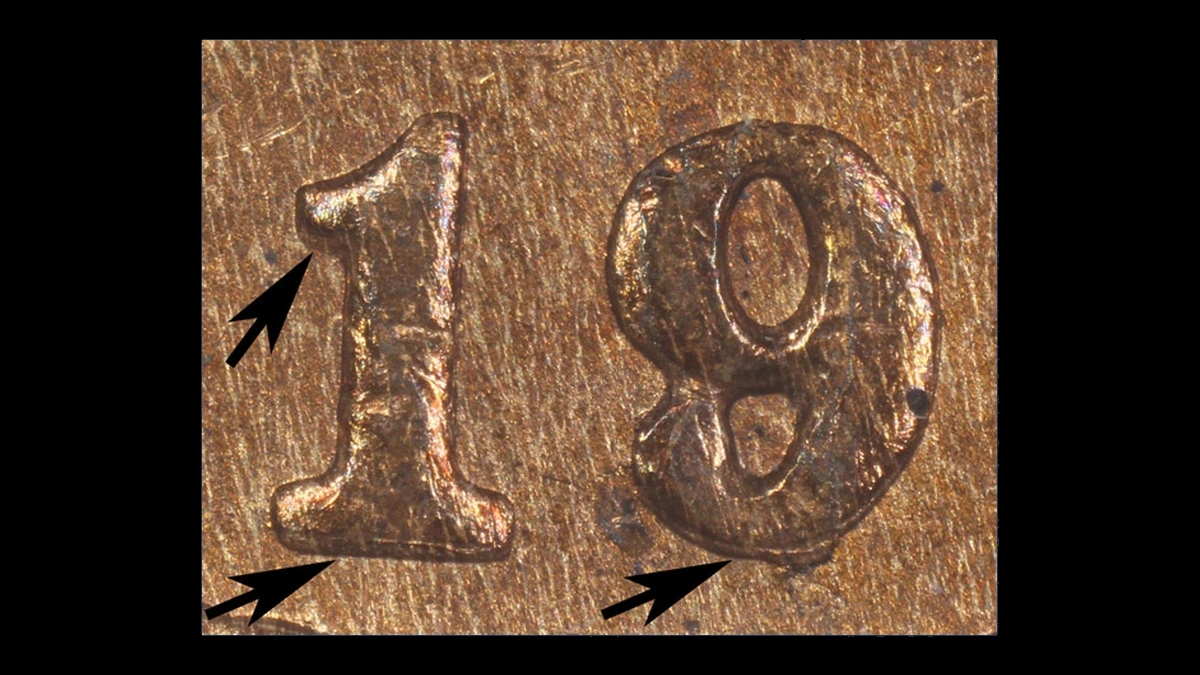
8. 1908 Penny The Coin’s Own Metal Separates: Lamination Error
A weak layer inside the alloy can lift or break away independently of the die. On one Philadelphia example, a split near the bottom of the 9 moved part of an extra date stroke.
How to Identify
Follow the thin layer boundary without touching a flap. A gouge with pushed-up metal differs from a natural seam into the alloy.
The Philadelphia displaced stroke is an individual metal defect, so other coins from that die need not share it. A separate 1908-S reverse lamination has its own location.
What It’s Worth
Laminated examples are estimated at $10–$500, including the underlying coin’s mint and condition. The scarcer S issue may be worth more even before its error is considered.
A 1908-S lamination graded ANACS VF35 Details sold for $86.25 in December 2007. It is a different specimen from the reported PCGS F15 reverse-lamination coin.
9. 1908 Penny Small Depressions Interrupt Reverse Detail: Struck Through Debris Error
The documented coin has minor reverse impressions from material caught during striking. It also has a 35% off-center strike, a separate feature of its overall shape.
How to Identify
Set aside the large unstruck crescent while inspecting the small marks. Follow nearby detail into each depression and look for cut edges or sharp mounds that could indicate later impact.
The supplied description does not identify the obstruction. Thread, grease, and a metal fragment should not be assigned from a vague depression.
What It’s Worth
Minor genuine debris impressions considered on their own are estimated at $20–$500 for the complete coin. Their size and clarity matter.
No separate price is supplied for the reverse marks on the 35% off-center example. Its more dramatic displaced strike must remain part of any whole-coin comparison.
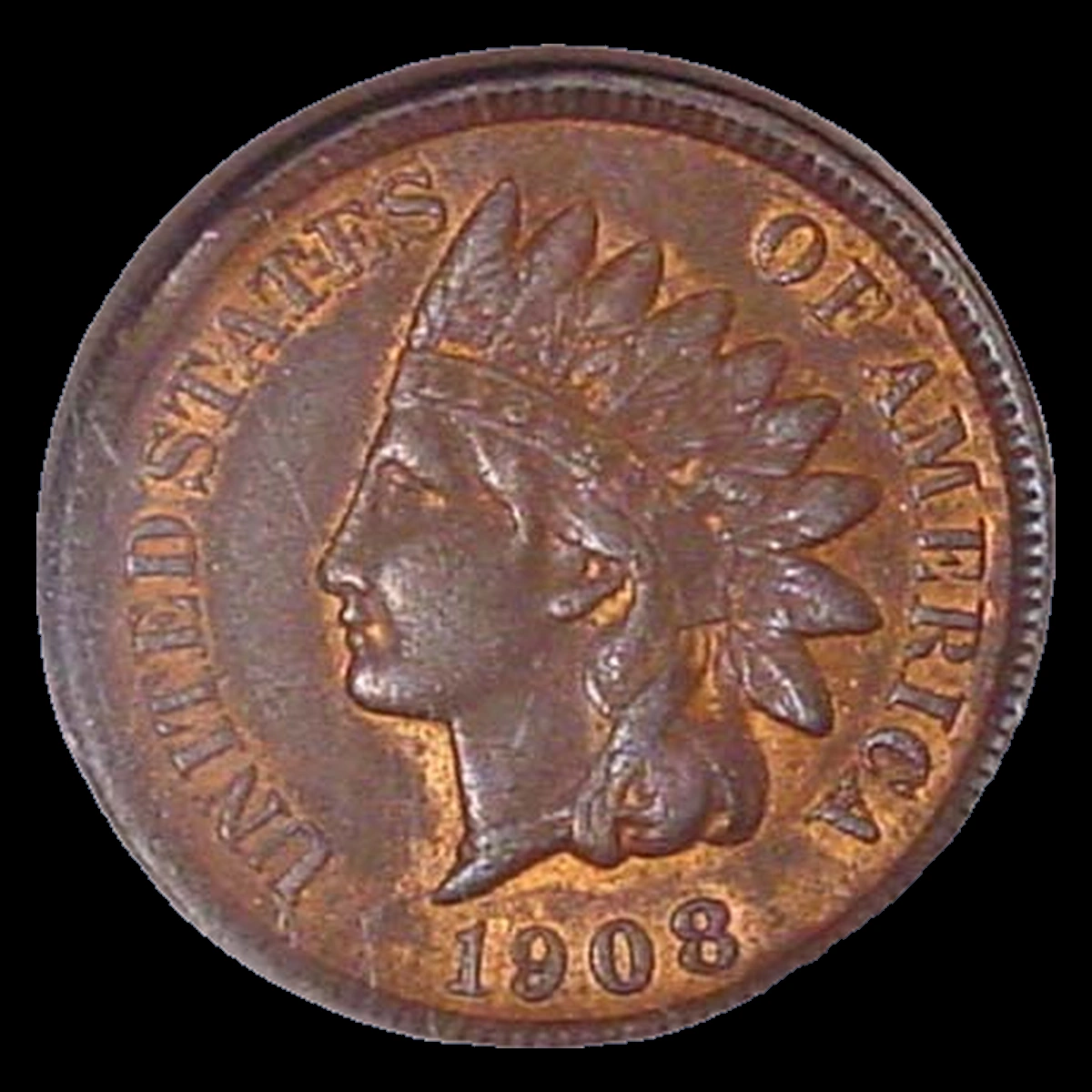
10. 1908 Penny A Curved Section Is Missing: Clipped Planchet Error
A punch overlapping an earlier hole in the metal strip can produce an incomplete blank. The documented 1908-S has a curved clip near ten o’clock and is graded AU58 Brown.
How to Identify
Confirm the S below the reverse bow, then inspect both ends of the missing arc. The rim should reflect striking around an existing gap rather than sawing through a completed coin.
Possible weakness opposite the clip can support the diagnosis, but its absence alone is not decisive. Record the actual reduced weight without assuming a missing-metal percentage.
What It’s Worth
A genuine 1908-S curved clip is estimated at $250–$1,500. The San Francisco issue’s underlying scarcity and the coin’s preservation influence the total.
No sale amount is assigned to the Chamberlain AU58 example. A 1939 Lincoln cent clip graded MS64 Brown brought $180 in January 2023, a mechanism comparison with a different design and rarity.
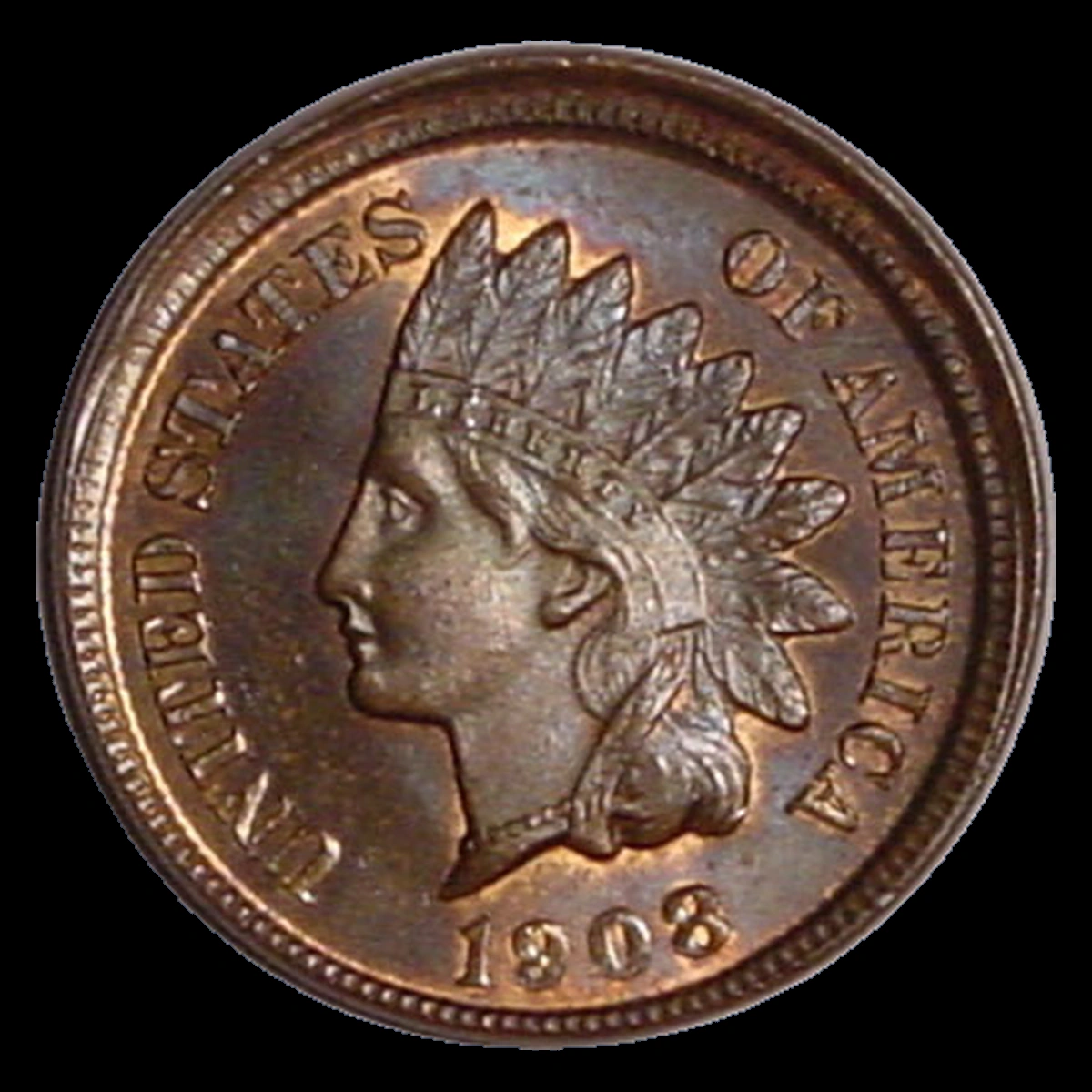
11. 1908 Penny The Design Stays Complete on a Wider Disc: Broadstrike Error
Without normal collar support, metal can spread outward during striking. The complete intended design remains inside the wider outline.
How to Identify
Read all outer lettering and check the edge for hammering or squeezing. Uneven placement can still be a broadstrike when the whole design fits.
The Chamberlain collection includes a centered MS65 Brown example. A separate Fine Details auction piece has front-side damage, which is a condition problem rather than an additional mint error.
What It’s Worth
Estimated values span $50–$1,500 for genuine 1908 broadstrikes. Natural spread and strong original surfaces support the more attractive examples.
A 1939 Lincoln broadstrike graded MS62 Red and Brown sold for $46 in 2004. Its older sale and different design do not establish a current price for the MS65 Indian Head cent.
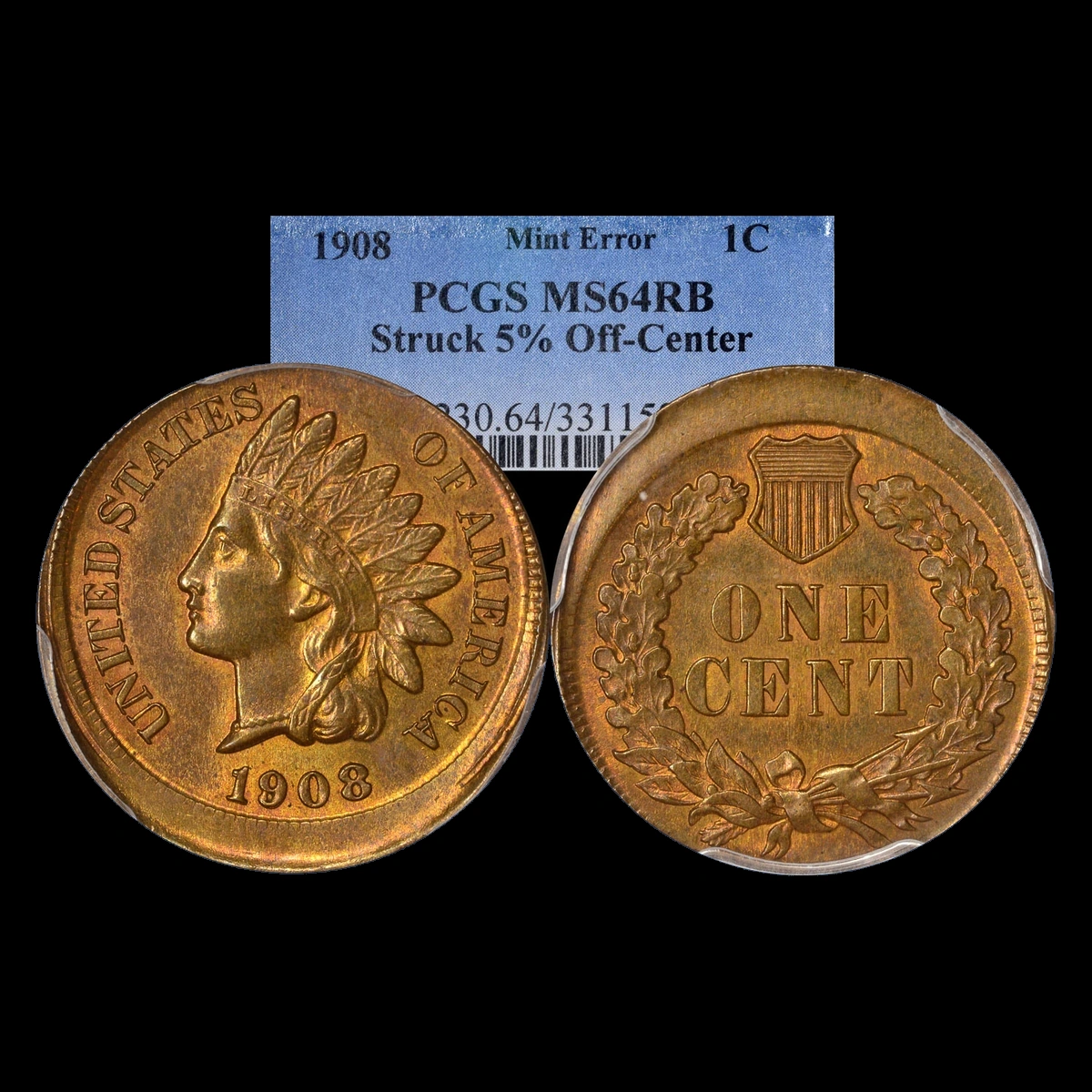
12. 1908 Penny An Incomplete Design Borders Blank Metal: Off-Center Strike Error
A misplaced disc receives only the part of the design covered by the dies. Documented 1908 examples range from about 5% to 35% off center in different directions.
How to Identify
Compare both faces and check that the unused metal fits the same blank position. A displaced design on only one face may instead involve one misaligned die.
Read the final date digit carefully to establish 1908, and inspect the blank area for grinding. The reverse debris marks on the 35% example should not be expected on other specimens.
What It’s Worth
The estimated whole-coin range is $100–$3,000. Readable dates, original surfaces, and an appealing amount of displacement help the comparison.
A 25% off-center AU53 example appeared at auction in 2026, but no sale amount is supplied here. Its appearance documents another specimen without providing a realized price.
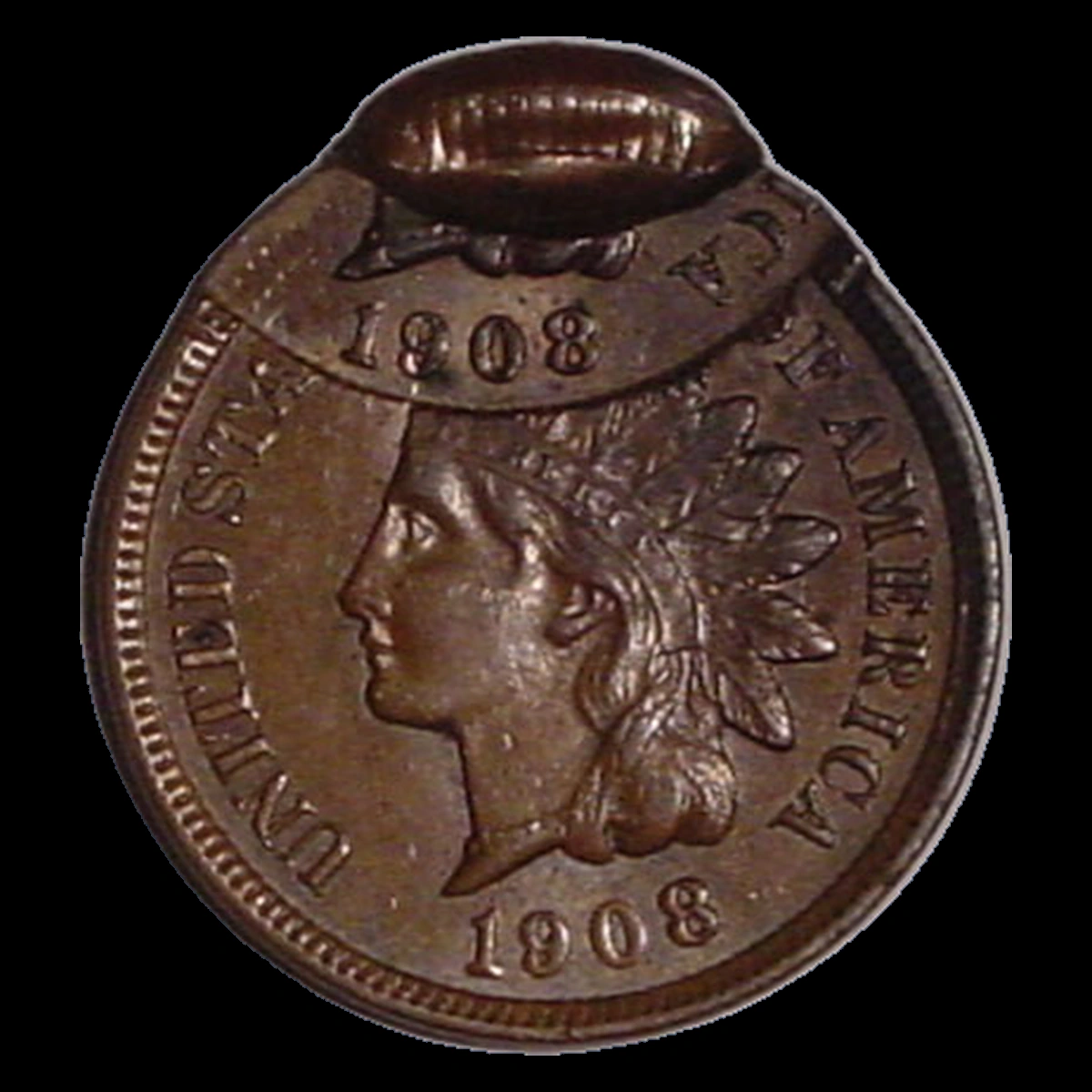
13. 1908 Penny Two Design Centers and Sometimes a Depression: Double Strike Error
When a struck coin moves but remains in the press area, another blow can leave a second displaced design. Some examples also carry an indent where another disc blocked part of that blow.
How to Identify
Locate two coherent design centers and trace where the later impression flattens the earlier detail. This is a whole-design event, unlike a small repunched date stroke.
The documented 55% second-strike coin differs from examples with 70% or 80% second strikes toward the top. The 70% example has a separate 5% indent within the second struck area; the 80% coin needs its own comparison.
What It’s Worth
Estimated values run $400–$5,000, with overlap, preservation, and any indent assessed together. Greater displacement alone does not guarantee the higher price.
The NGC MS62 Brown 55% double strike brought $4,080 at Heritage on June 17, 2024. Its specific visible sequence provides the relevant comparison.
Conclusion
A useful description of a 1908 cent keeps the die feature separate from a defect in that individual coin. A repeated date stroke can identify a tool, while a peeled layer or second strike records something different.
Within the $5–$5,000 estimates, compare the actual mint, finish, grade, and combination. Preserve loose metal and use both faces whenever the outline or striking sequence is part of the identification.