Rare 1910 Penny Errors (List & Pictures)
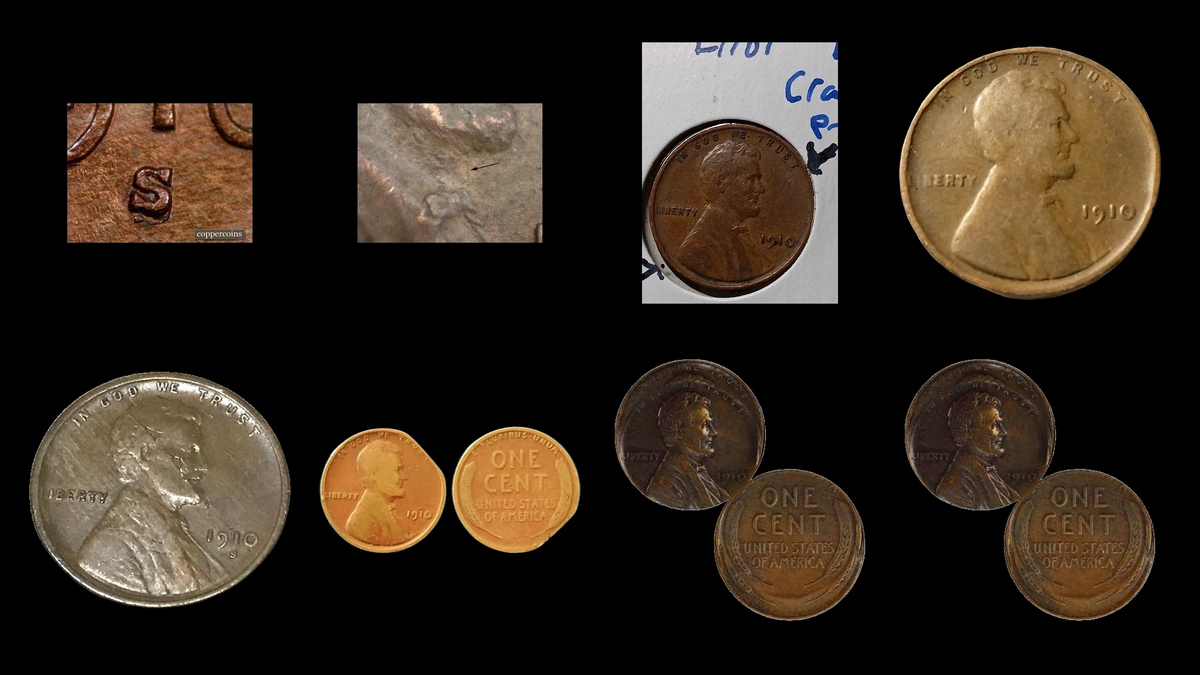
Mintmarks and surface details provide a practical starting point for 1910 penny errors, whose estimated whole-coin values span $3–$8,000. Some require a magnifier; others change the relationship between the faces or leave an entire side without its design.
The unusual one-sided PCGS AU58 piece sold for $4,312.50 in April 2006, although its origin has competing explanations. Use the mint-specific checks first, then move through missing detail, altered outlines, and repeated strikes.
| Visible clue | Possible explanation | Estimated range |
|---|---|---|
| Earlier S curve | Repunched mintmark | $25–$1,500 |
| Repeated lettering or extra outlines | Doubled die or clash | $5–$1,000 |
| Raised line or rim patch | Die crack, chip, or break | $3–$750 |
| Missing detail or peeling layer | Struck-through error or lamination | $3–$400 |
| Missing edge, shifted image, or two designs | Clip, off-center strike, or double strike | $25–$2,000 |
| Sideways reverse or blank back | Rotation or one-sided piece | $25–$8,000 |
1. 1910 Penny An Earlier S Extends Above or Below: Repunched Mintmark Error
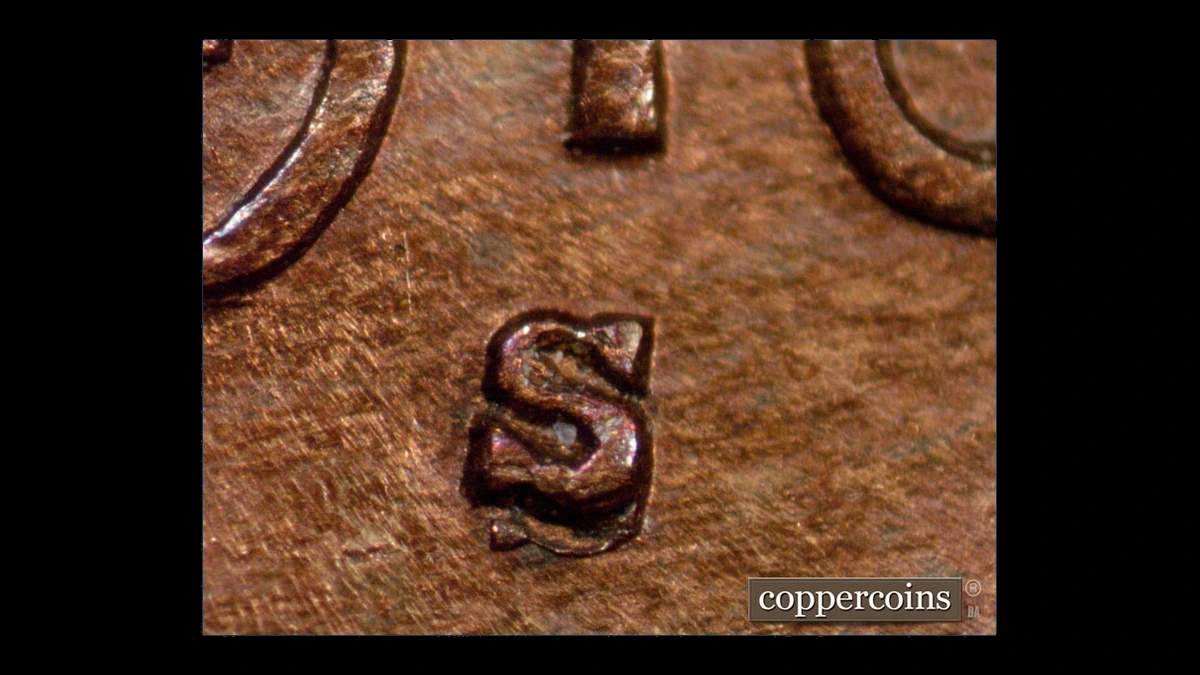
Place the 1910 date upright before comparing an extra S curve. The San Francisco mintmark was punched into the die by hand, and repeated placements could preserve parts of an earlier impression.
How to Identify
On FS-501 the earlier S lies lower, while FS-502 has an earlier impression higher. Other varieties show tilted or sideways overlaps that need their own photographs.
One cataloged pattern involves two upside-down S impressions, with the later one shifted right. Match the letter shapes first, then use nearby die marks from the appropriate stage; later cracks may be absent on early coins.
What It’s Worth
$25–$1,500 is the estimated range for clearly identified 1910-S repunched mintmarks. The ordinary value of the San Francisco coin and its preservation remain part of that whole-coin figure.
A 1946-S cent with an earlier D beneath the S sold for $350 in January 2023. That different-year, different-letter overlap provides broad punch-error context rather than a direct price for a 1910-S variety.
2. 1910 Penny Thickened Reverse Letters and Wheat: Doubled Die Error
One Philadelphia reverse variety thickens E PLURIBUS UNUM and the wheat details. Another combines elements of two reverse-design generations, affecting portions of UNITED STATES OF AMERICA.
The repeated detail was present in the die before striking. The mixed-design reverse is not a date punched over 1909 and does not create VDB initials, which are normally absent from 1910 cents.
How to Identify
Compare the motto and wheat or the larger lettering with the appropriate 1910 doubled-die photographs. Similar catalog labels do not make the two patterns identical.
Use the paired clash or crack only if it agrees with the selected reference. An older claim of front doubling requires actual front-design evidence; a known reverse variety or missing VDB cannot establish it.
What It’s Worth
$15–$1,000 is the estimate for identified Philadelphia doubled reverses. A confirmed minor front variety can be considered around $10–$500, without assigning a price to an unsupported label.
A minor 1936 doubled-die cent sold for $70 in June 2024. That different-year comparison does not price either specific 1910 reverse, and paired die marks should not be added as a second full valuation.
3. 1910 Penny Unfamiliar Shapes Near Lincoln’s Throat: Die Clash Error
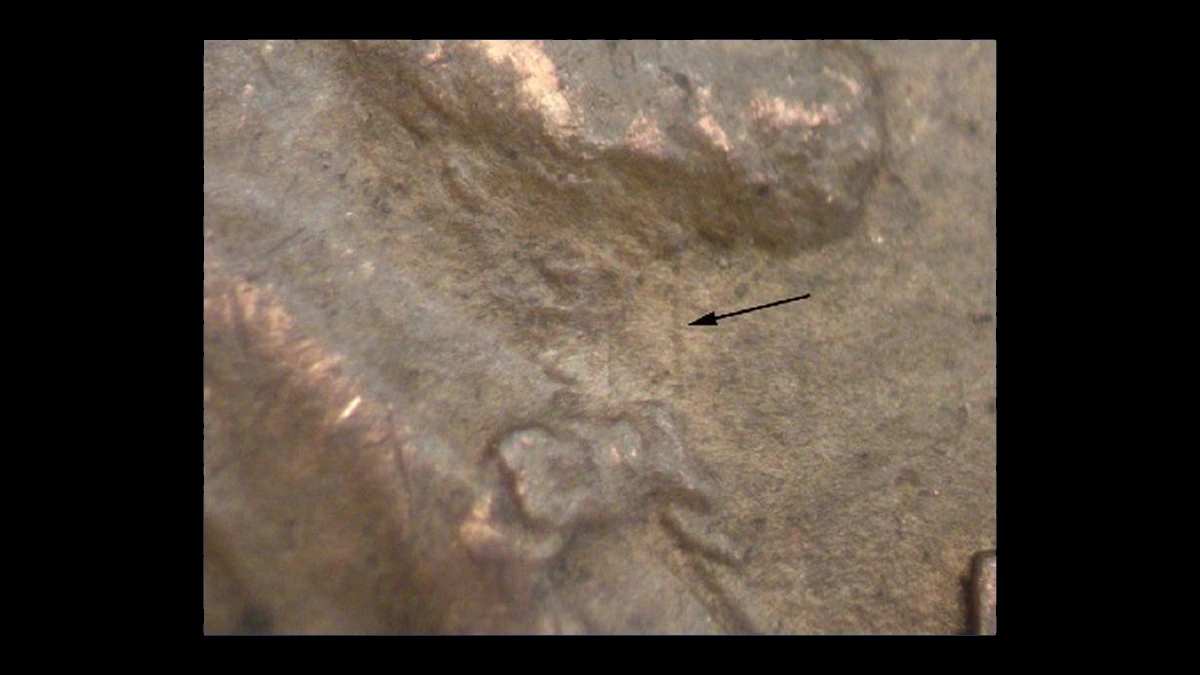
Look for portions of the opposite design when an unexplained outline appears near the portrait. Die contact without a blank between the tools can transfer those shapes, which then appear on later coins.
How to Identify
A Philadelphia doubled-reverse pairing has clash traces near the throat. A separate San Francisco repunched-S variety has early-stage traces around the throat and lower back of the head.
Keep those mint-specific patterns separate and follow enough of the line to recognize transferred design. A short straight mark alone might be a scratch or crack rather than a clash.
What It’s Worth
$5–$500 is the estimated range for identifiable 1910 clashes. Clear shapes, mint, and preservation influence the comparison.
No completed sale is supplied for each listed stage. The Philadelphia doubled reverse or San Francisco repeated S shares the coin with its clash, so value the combination once.
4. 1910 Penny Extra Metal Fills a Letter Gap or Reaches the Rim: Die Damage Error
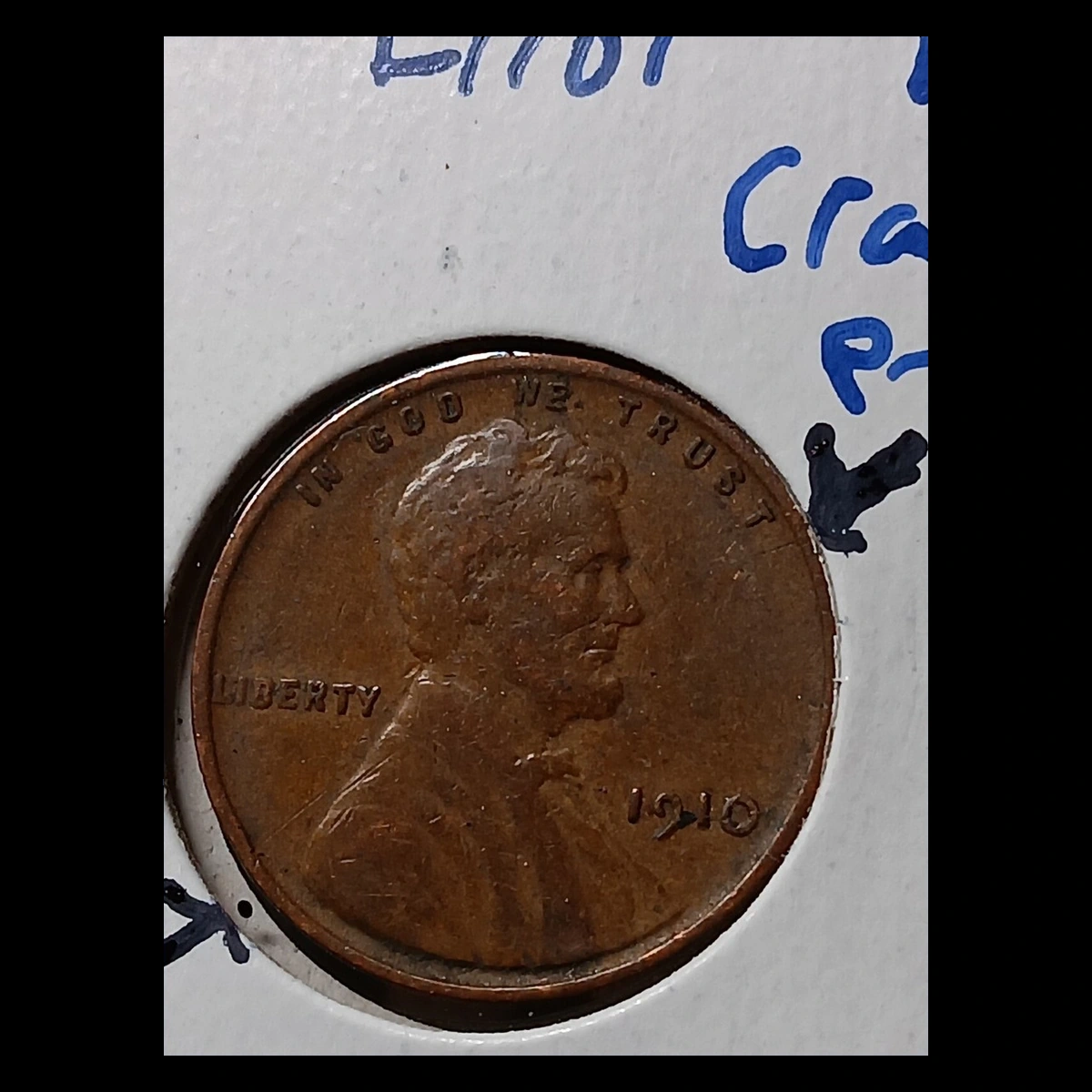
Small die chips can fill gaps in LIBERTY, while cracks leave longer raised ridges. A missing die-edge piece can create a cud, and a broken piece that remains temporarily can leave a retained break with design still inside it.
How to Identify
One Philadelphia reverse crack runs from the lower-left wheat toward 8 o’clock on a doubled-reverse pairing. Separate Philadelphia front, reverse, and head-crack patterns should not be combined with the small San Francisco reverse break near 4:30 on a particular repeated-S variety.
Inspect a large patch’s edge for folding, solder, or a join before treating it as struck metal. For thin lines, distinguish a raised ridge from the incuse center of a scratch.
What It’s Worth
$3–$75 is the estimate for small chips and cracks, with substantial matched rim breaks roughly $40–$750. Mint and condition remain important even when the die defect is obvious.
A worn 1934 major-break cent sold for $41 in August 2021. That later comparison demonstrates why a named die failure does not automatically establish a large premium.
5. 1910 Penny LIBERTY Loses Its L or a Patch Has Texture: Struck-Through Material Error
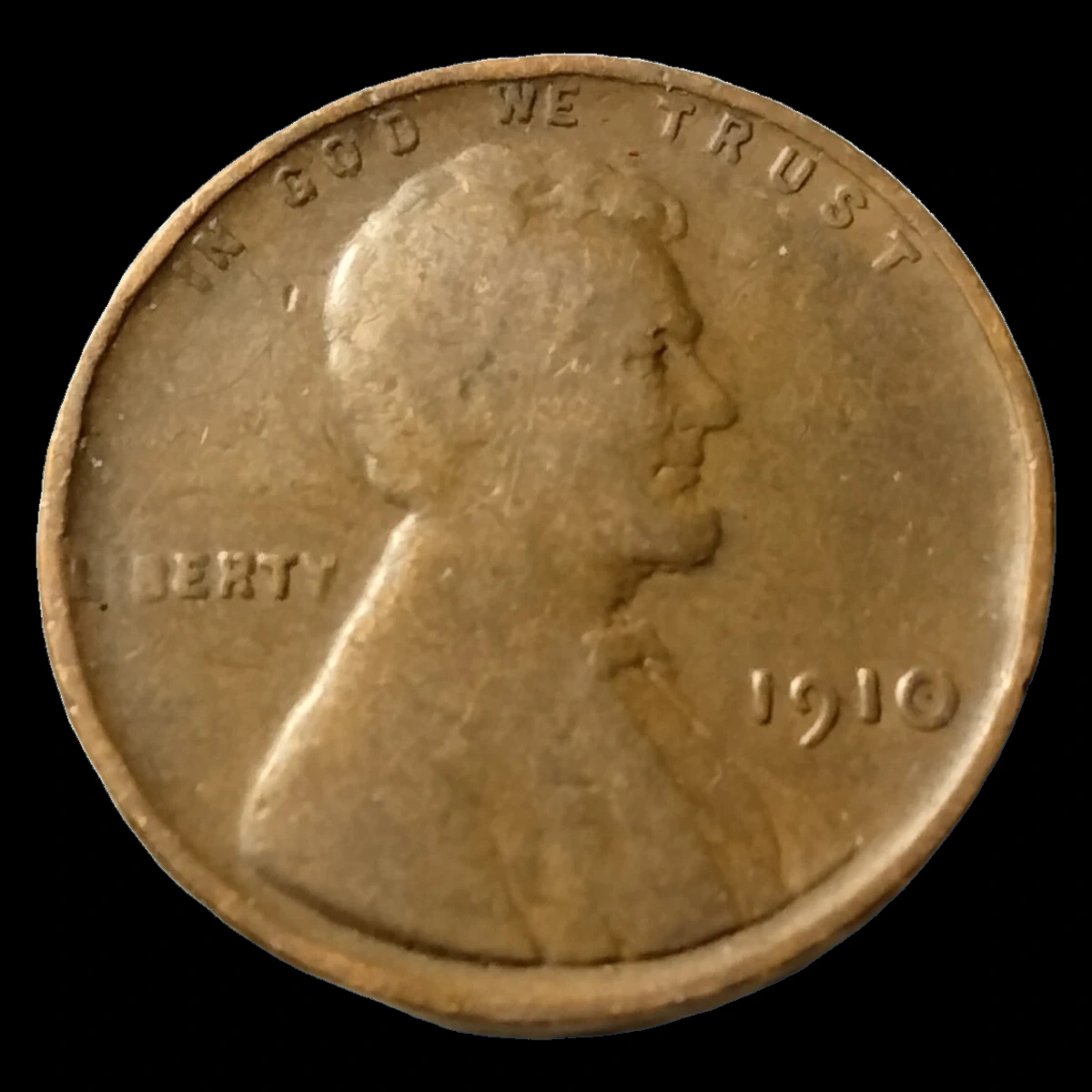
A local obstruction can prevent a letter from forming even while nearby detail remains clear. The 1910 reports include a missing L and other shallow impressions, while a separate seller describes a cloth impression on a San Francisco coin.
How to Identify
Compare the weak L with nearby letters and exposed portrait details to test whether general wear explains it. Scraping and polishing can also remove finished design.
A cloth attribution needs a repeated woven pattern with crossing threads, not just parallel scratches or a soft patch. If material remains attached, preserve it in place rather than removing the evidence.
What It’s Worth
$3–$75 is the estimate for modest blocked-letter effects, and clearer original struck-through impressions may fall around $20–$300. The seller’s cloth description remains conditional on visible weave evidence.
A 1933-D struck-through cent sold for $30 in October 2022. That later example is context for interrupted design, not proof that a missing L on a 1910 coin came from a particular material.
6. 1910 Penny A Thin Surface Layer Separates: Lamination Error
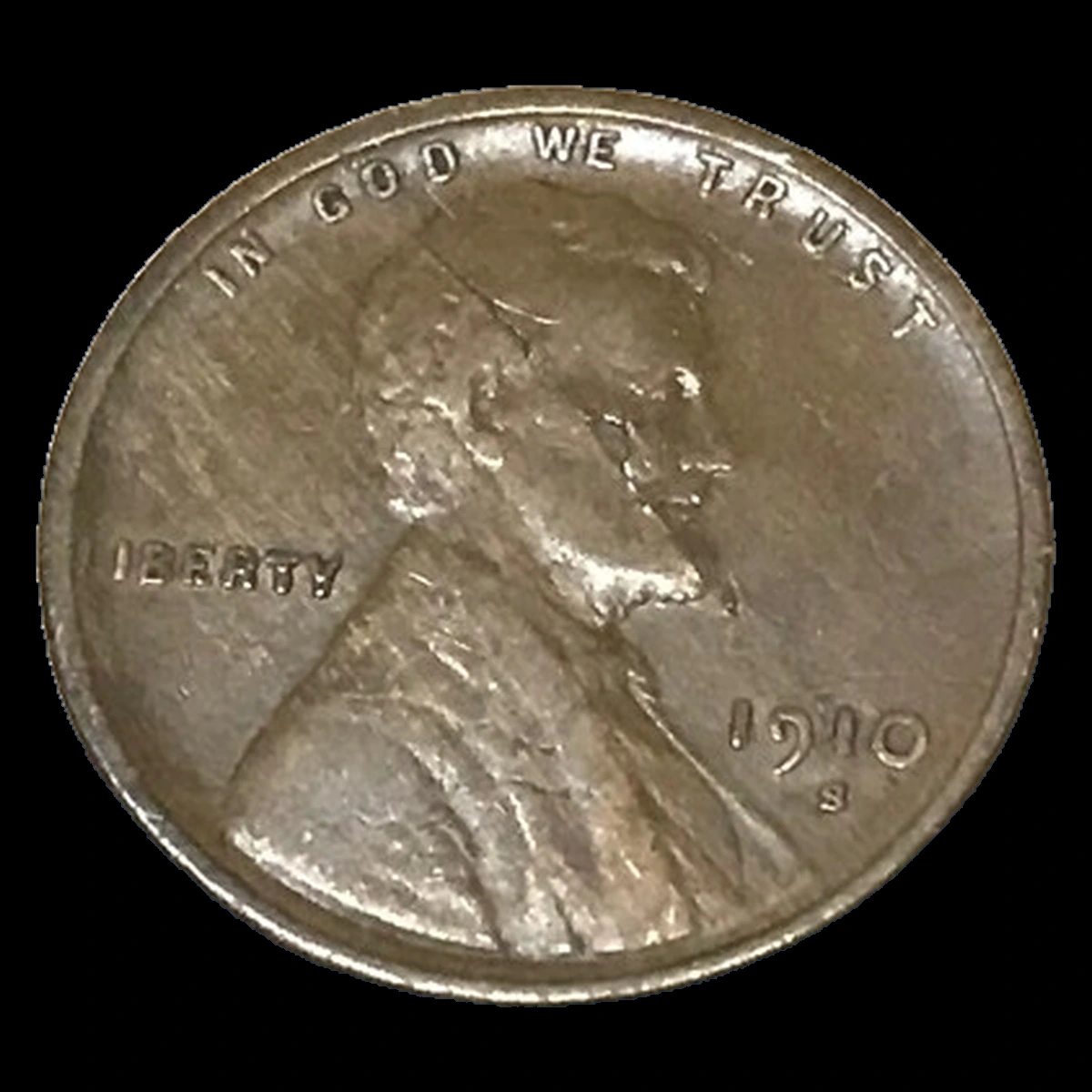
Inspect a lifted edge or rough exposed patch for a continuous layer boundary. Lamination begins with weakness inside the original copper alloy, and 1910 reports include a San Francisco example with its own surface flaw.
How to Identify
Light an existing opening from the side without lifting the flap or pressing it down. The cent is solid copper alloy, not a modern zinc-core cent losing its copper coating.
A shallow local layer also differs from an entire planchet splitting into pieces. A gouge cuts through completed design, while a stain alone has no separating metal beneath it.
What It’s Worth
$10–$400 is the estimated range for ordinary 1910 laminations. Extent, mint, preservation, and the stability of a loose layer affect the whole-coin comparison.
A worn 1914 cent with a clamshell lamination sold for $45 in September 2024. It is a different-year example and not a completed price for the reported 1910-S piece.
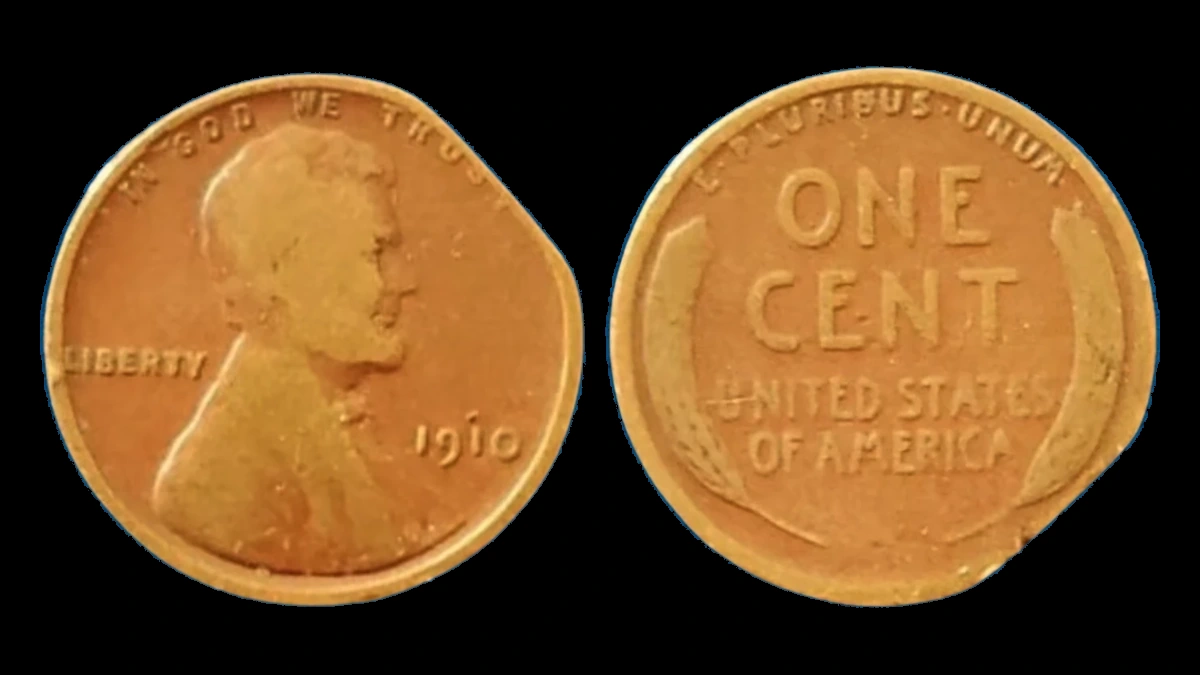
7. 1910 Penny A Gap Interrupts the Rim: Clipped Planchet Error
The documented 1910-S clipped cent has a missing section near 1 o’clock. That position identifies where the gap is, but its actual boundary must establish whether the clip is curved or straight.
How to Identify
Inspect the gap from both faces and the edge, following how the struck rim approaches each end. A genuine clip predates striking; file marks through finished detail suggest later removal, while a dent may simply push metal inward.
For safely handled loose cents, compare weight with 3.11 g and an intact span with 19.05 mm, allowing for wear or lost metal. These references also help with other outline errors, but keep tools away from fragile layers and leave encapsulated coins sealed.
What It’s Worth
$25–$500 is the estimated range for genuine identifiable clips in suitable circulated through unworn condition. The size of the clip, mint, and surfaces all influence that whole-coin value.
The NGC MS63 Red and Brown 1910-S example sold for $134 on March 31, 2025. Its unworn grade with noticeable marks, remaining red color, and 1-o’clock gap belong to that particular transaction.
8. 1910 Penny WE TRUST Runs Beyond the Edge: Off-Center Strike Error
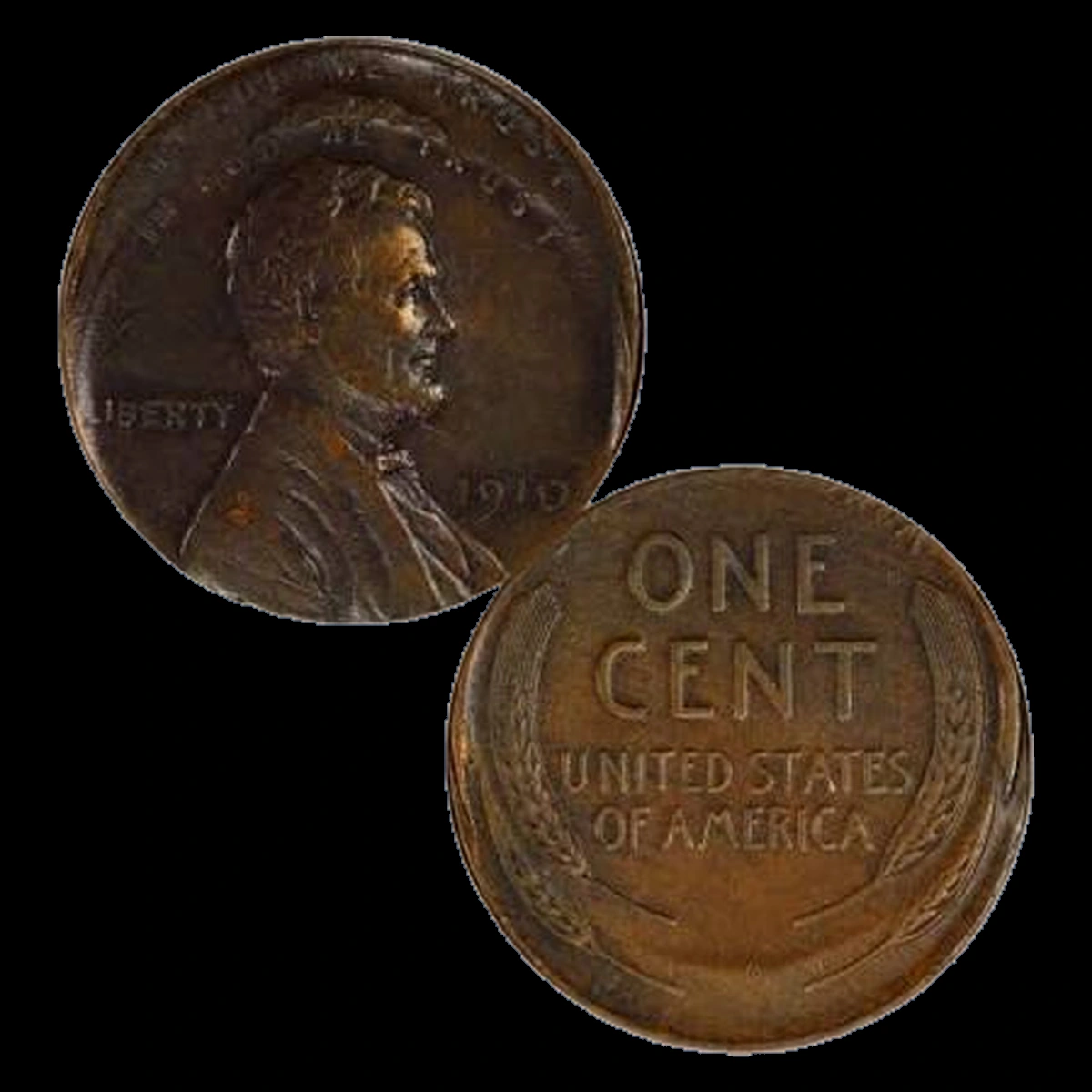
The recorded Philadelphia cent was struck 15% off-center toward 1:30. Much of WE TRUST and part of the right wheat missed the metal, while a crescent remained unstruck elsewhere.
How to Identify
Read the date and mint before comparing the strike boundaries on both faces. The missing front motto and reverse wheat should fit one displaced blank rather than a shift confined to one die.
Check the unstruck area for grinding or filing used to erase design. Another genuine example can have a different direction, so the described 15% pattern is not universal.
What It’s Worth
$50–$1,500 is the estimated range for genuine readable-date 1910 off-center cents. The documented Philadelphia example is PCGS AU58, showing only very slight wear, but no completed price is supplied for it.
A 1918-D cent shifted 45% sold for $336 in September 2019. That larger displacement belongs to a different year and mint, and a dramatic crescent does not overcome a missing date or damaged surfaces.
9. 1910 Penny An Earlier Date Remains Under a Second Design: Double Strike Error
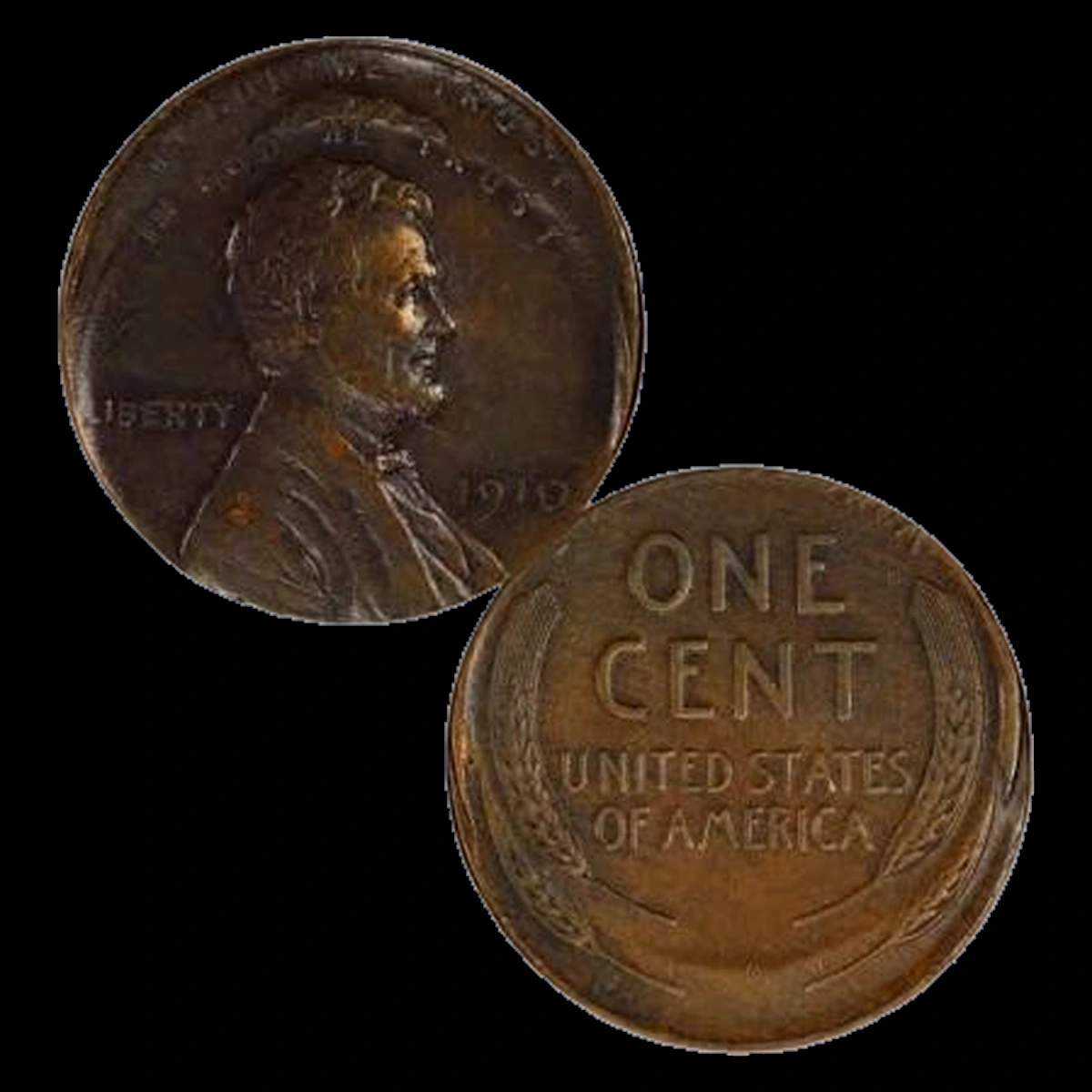
A 1910 Philadelphia PCGS AU58 example preserves a faint but complete first date beneath a second strike displaced 15% toward 7:30. The coin stayed in the press and moved before receiving the later blow.
How to Identify
Locate both dates and follow corresponding portrait and lettering fragments into their respective impressions. A flat shelf beside one digit cannot account for two complete strike positions.
A separate XF40 coin also has a 15% second strike, while a VF35 example has a 25% second strike. Use their own photographs and do not assign the AU58 coin’s direction to either one without evidence.
What It’s Worth
$300–$2,000 is the estimated range for identifiable 1910 double strikes. The clarity of the earlier image and the arrangement of the overlap matter alongside the grade.
The AU58 15% example sold for $805 in May 2007, and the separate XF40 coin brought $720 in March 2024. The VF35 25% example sold for $990 in March 2021, showing that grade alone does not determine the price.
10. 1910 Penny The Back Turns Sideways During a Flip: Rotated Dies Error
A normally aligned U.S. cent shows an upright reverse after an upright front is flipped from top to bottom. A die that turns out of position can alter that relationship.
How to Identify
The Lincoln Cent Resource listing records a roughly 90-degree 1910 rotation. A separate ANACS G4 Philadelphia auction listing identifies a rotated coin without supplying that same angle.
Hold the coin in a fixed orientation and record a continuous top-to-bottom flip before measuring the actual angle and direction. Independently rotated photographs cannot demonstrate rotation, and an edge seam can indicate altered coin halves.
What It’s Worth
$25–$600 is the estimate for substantial confirmed rotations on ordinary 1910 cents. Slight deviations generally attract less attention than a clearly sideways reverse.
No completed sale is supplied for either listed record. The heavily worn G4 coin needs a condition-appropriate comparison and cannot automatically inherit the other report’s 90-degree angle.
11. 1910 Penny Lincoln Has No Wheat Reverse: One-Sided Strike or Die Trial Error
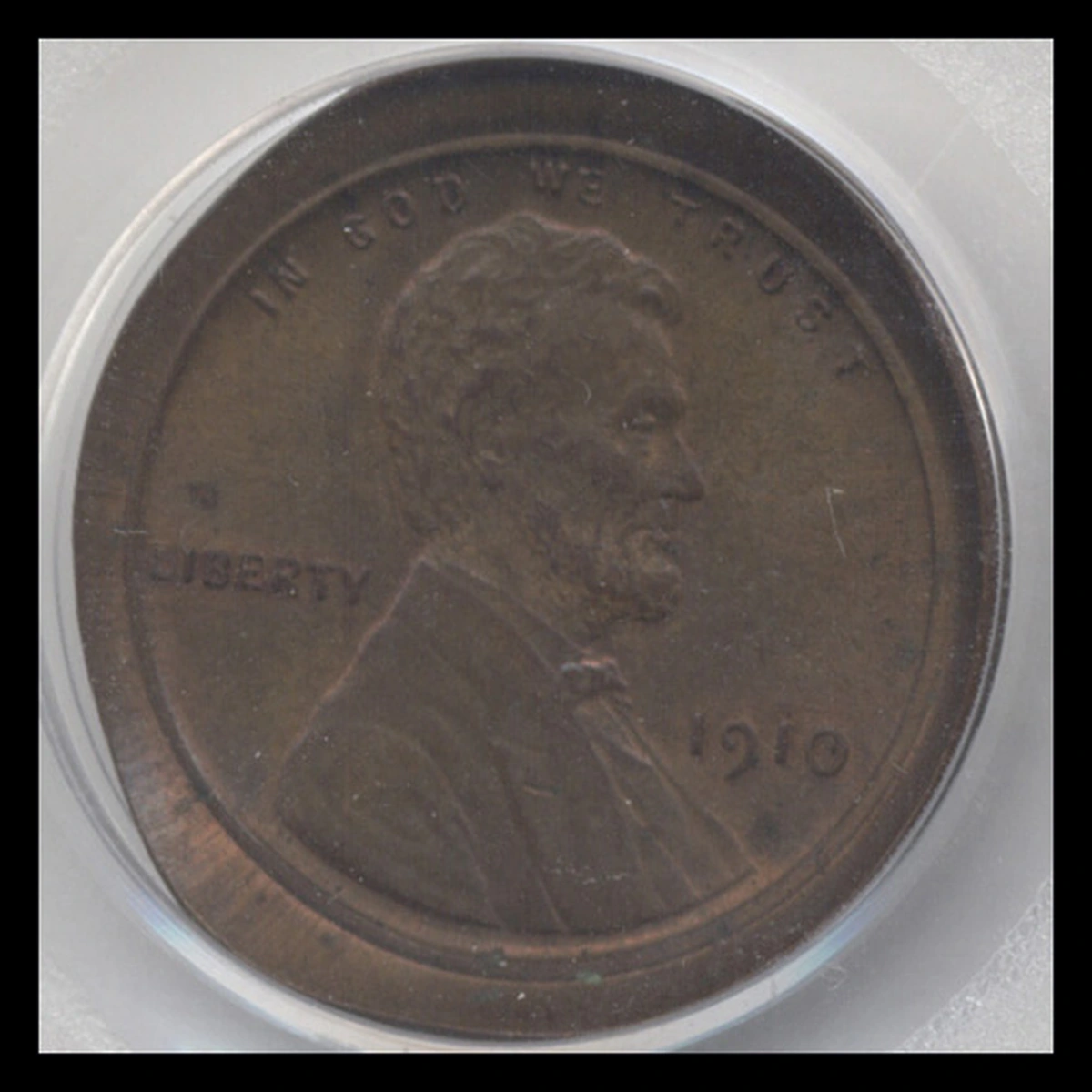
The unusual PCGS AU58 piece shows Lincoln on one face, a blank back, and an irregular expanded copper border. Heritage described a one-sided test strike, while USPatterns classifies it as a die trial.
Mike Diamond proposed an alternative involving two blanks stacked during a strike outside the collar, with the upper blank receiving only the front design. These are competing explanations for the same object.
How to Identify
Compare the blank back and outward border flow with the documented specimen, checking for grinding marks, an edge join, or other later alteration. An ordinary cent ground smooth on one side does not establish either proposed minting process.
The description of heavier metal gives no specific measured weight. Use the specimen’s actual documented measurements rather than presenting normal-cent specifications as measurements of this unusual piece.
What It’s Worth
$3,000–$8,000 is the estimated range for a comparable professionally identified example, depending on condition and accepted classification. The recorded PCGS AU58 piece brought $4,312.50 at Heritage in April 2006.
USPatterns identifies it as JA1910-1/P3528. Its documented identity is much more specific than a generic claim that a penny has a blank back.
Conclusion
Keep the mint and individual specimen attached to every description of a 1910 error. A San Francisco clip, Philadelphia double strike, and one-sided die trial cannot share diagnostics simply because their dates match.
The $3–$8,000 estimates also cover very different levels of preservation and certainty. Match visible evidence first, preserve fragile material, and treat combined clashes, cracks, and varieties as features of one whole coin.