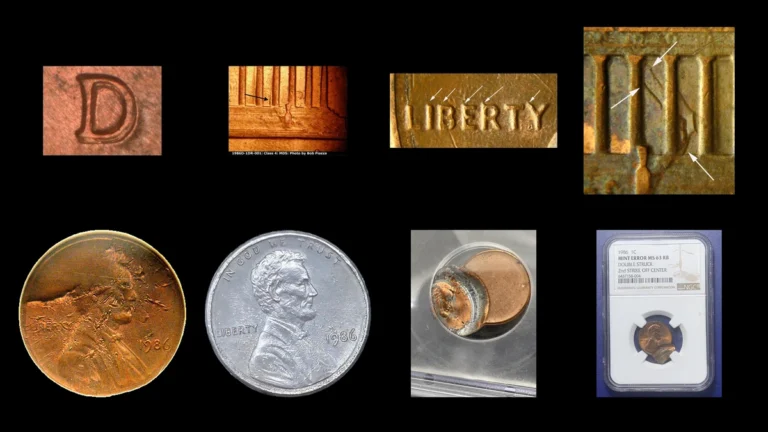
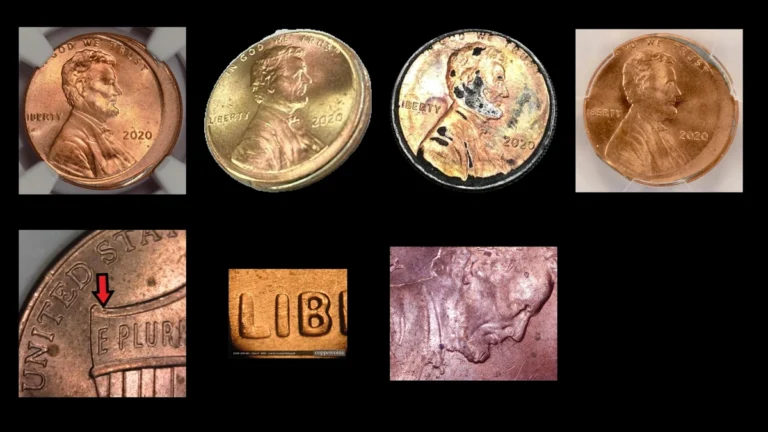
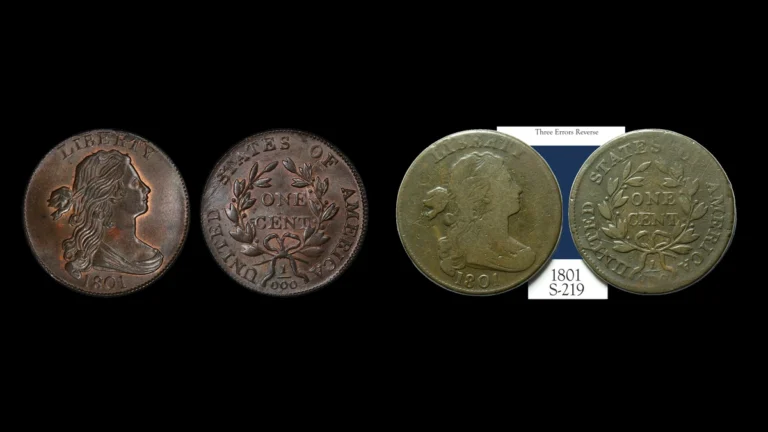
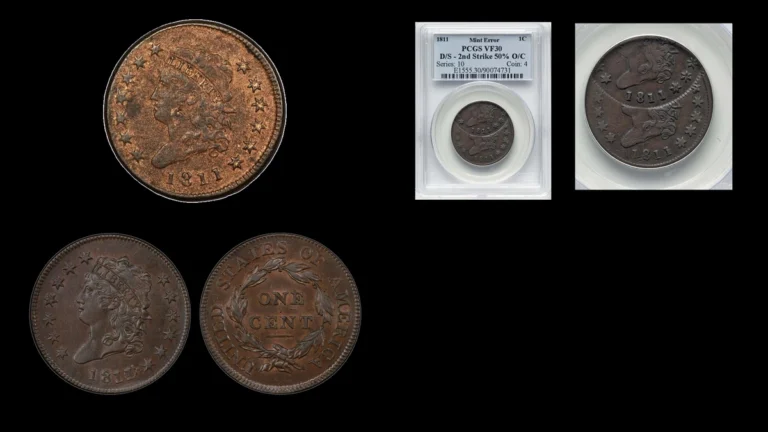
Rare 1954 Penny Errors (List & Pictures)
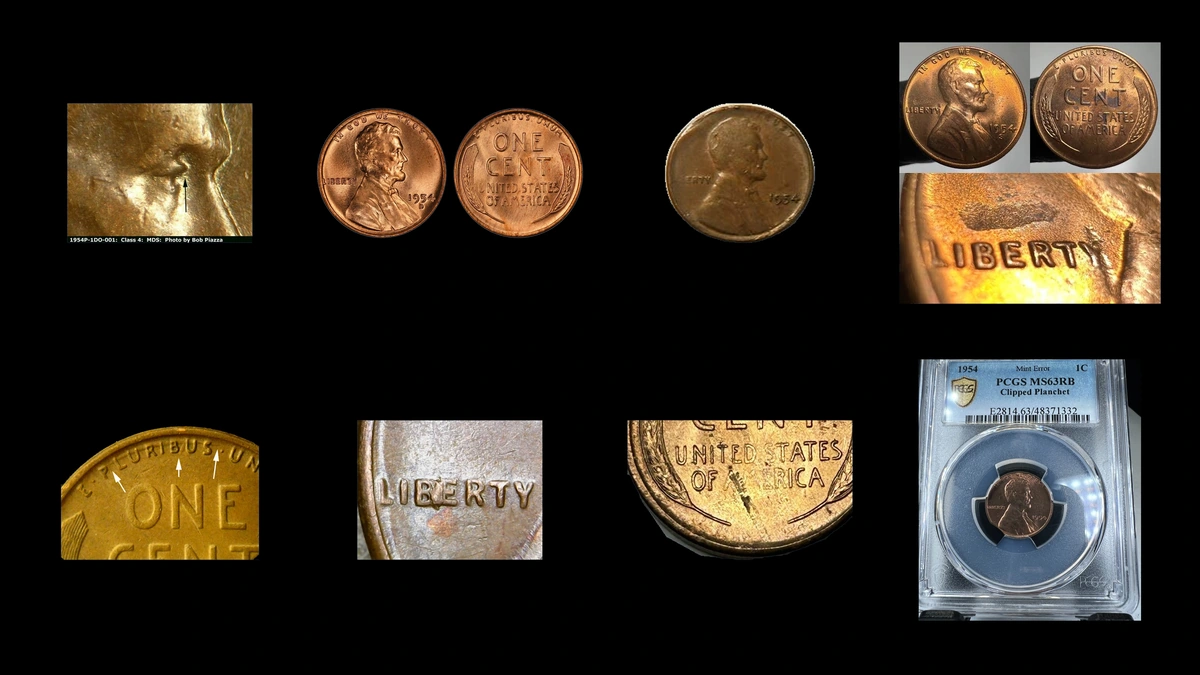
The supplied auction high for 1954 penny errors is $7,200, paid in December 2024 for a Denver cent struck on a silver dime blank. Estimated ranges across the list extend from $2 for minor weak detail or chips to $12,000 for authenticated wrong-planchet examples.
Compare small design changes first, then follow weak areas, surface defects, and unusual outlines to the relevant identification checks.
| Visible clue | Category | Estimated range |
|---|---|---|
| Extra eyelid, letter, or mintmark stroke | Doubled die or repunched mintmark | $5–$1,000 |
| Soft or missing design | Weak strike or possible filled die | $2–$100 |
| Raised bar, crack, or surface separation | Clash, die break, or Proof lamination | $2–$750 |
| Missing edge or expanded outline | Clip or broadstrike | $15–$400 |
| Displaced, indented, or repeated design | Off-center, indent combination, or double strike | $25–$2,500 |
| Small silver-colored cent | Silver dime-planchet error | $2,000–$12,000 |
The normal copper-alloy cent weighs 3.11 grams, measures 19.05 millimeters across, and has a plain edge. Use a checked scale and gentle measurements for blank or outline questions, while magnified photographs help establish small die features.
Keep certified Proofs in their holders and preserve their reflective surfaces. A missing mintmark does not distinguish a Philadelphia circulation coin from a Philadelphia Proof.
1. 1954 Penny An extra eyelid or repeated Wheat detail: Doubled Die Error
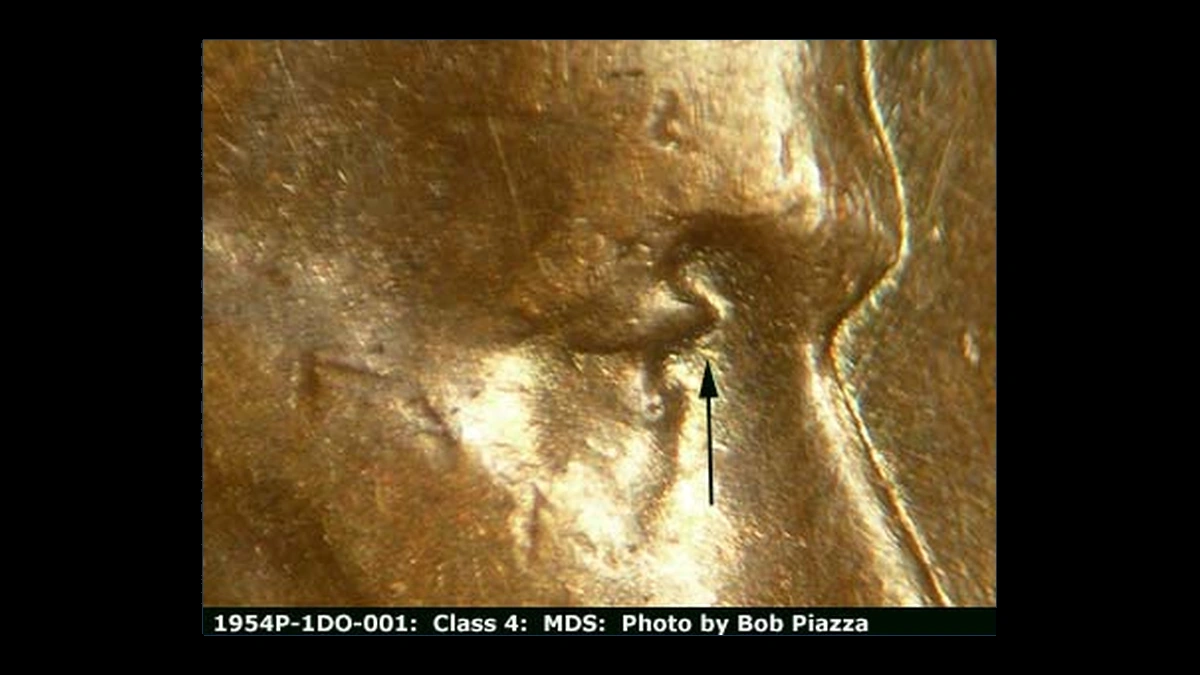
Several Philadelphia and Denver obverse varieties show extra lines below Lincoln’s eyelid. Other 1954 patterns affect the 4 or motto, while San Francisco has its own front-side varieties.
The repeated design was already present on the die before striking. Denver reverse reports involve E PLURIBUS, and separate Proof reverses affect Wheat stems and lettering, with the strongest reported Proof pattern emphasizing the right ear.
How to Identify
Establish mint and finish before choosing a comparison. An ordinary Philadelphia obverse reference cannot authenticate a Proof reverse.
For an eyelid candidate, compare the exact extra line with a documented variety such as the Philadelphia extra-eyelid example. Match other relevant shapes rather than relying on overall thickness.
A Proof reverse requires its own stem and lettering diagnostics. Flat shelves produced during striking differ from the repeated raised outlines on a doubled die.
What It’s Worth
Minor identified varieties are estimated at $5–$200; stronger doubled Proof reverses or particularly well-preserved examples at $75–$750. These ranges do not price every extra eyelid alike.
A 1949-S FS-101 graded MS65 Red brought $188 in August 2017. That separate-year variety is a comparison, not a sale of a 1954 Proof or another 1954 pattern.
2. 1954 Penny Earlier D or S curves survive: Repunched Mintmark Error
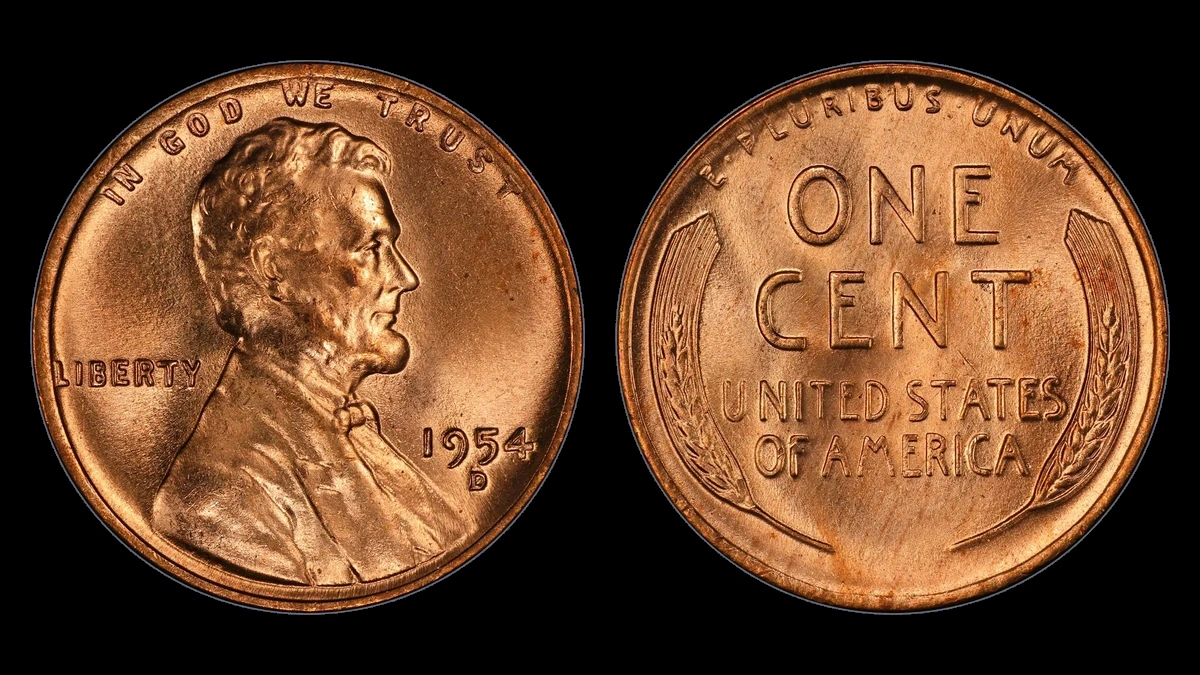
A mintmark punch applied more than once could preserve extra letter outlines in the die. Coins struck with it then repeated the same overlap.
The familiar 1954-D FS-501 has traces above and below the main D, with the lower trace sometimes weakening as the die wears. Other Denver and San Francisco patterns have different split tips, curves, or multiple placements.
How to Identify
Compare the whole letter and follow each extra curve or end stroke. For FS-501, use the upper and lower impressions together rather than demanding equal strength in every die state.
A chip can create a lump without reproducing another D or S. Inspect the base for added metal and match a recognizable earlier letter shape.
An extra S and a doubled 4 can occur on the same die, but each needs its own diagnostic. One feature does not automatically prove the other.
What It’s Worth
Modest repunches are estimated at $5–$200, with especially clear named examples in excellent condition potentially reaching $1,000. Preservation and strength of the actual overlap guide the comparison.
For context, 1953-D FS-501 examples graded MS66 Red sold for $149 and $420 in 2023. Their shared short catalog number does not make them the same variety or value as 1954-D FS-501.
3. 1954 Penny Detail is softly formed across the design: Weak Strike Error
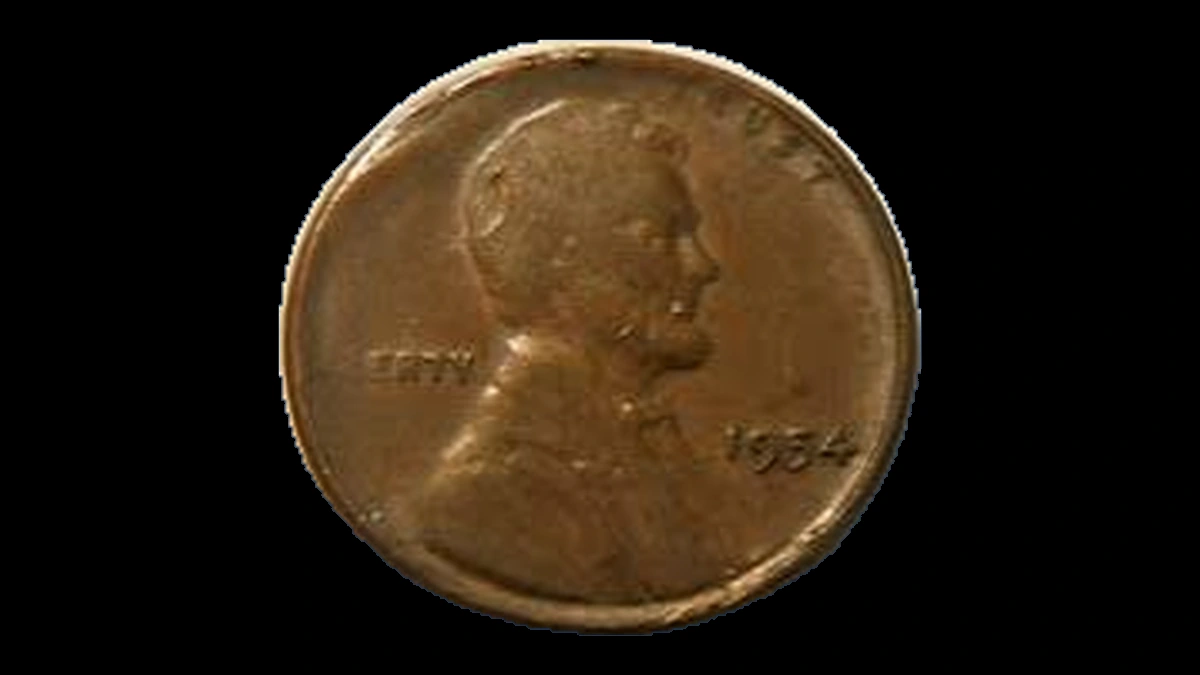
A coin can leave the press without filling all the deeper design recesses strongly. Weakly struck Philadelphia 1954 cents are reported, but their softness does not establish a special test strike or one particular pressure setting.
Worn dies, blocked areas, and circulation can create similar appearances. The surface and pattern of weakness help separate those explanations.
How to Identify
Compare Lincoln’s cheek and the upper Wheat details with a normally struck coin of similar wear. Original texture in a weakly formed area differs from smooth rubbing across exposed high points.
A localized missing letter beside sharper neighbors may indicate a blockage instead. Thin metal or an altered surface also needs a separate assessment.
What It’s Worth
A clearly identified weak-strike feature on an otherwise ordinary cent is estimated at $2–$50. Slight softness often adds little beyond the underlying coin’s condition value.
This is not a completed sale for a low-pressure test piece. An unworn cent’s ordinary grade value should remain distinct from any modest interest in its weak detail.
4. 1954 Penny A local design patch fades: Possible Grease-Filled Die Error
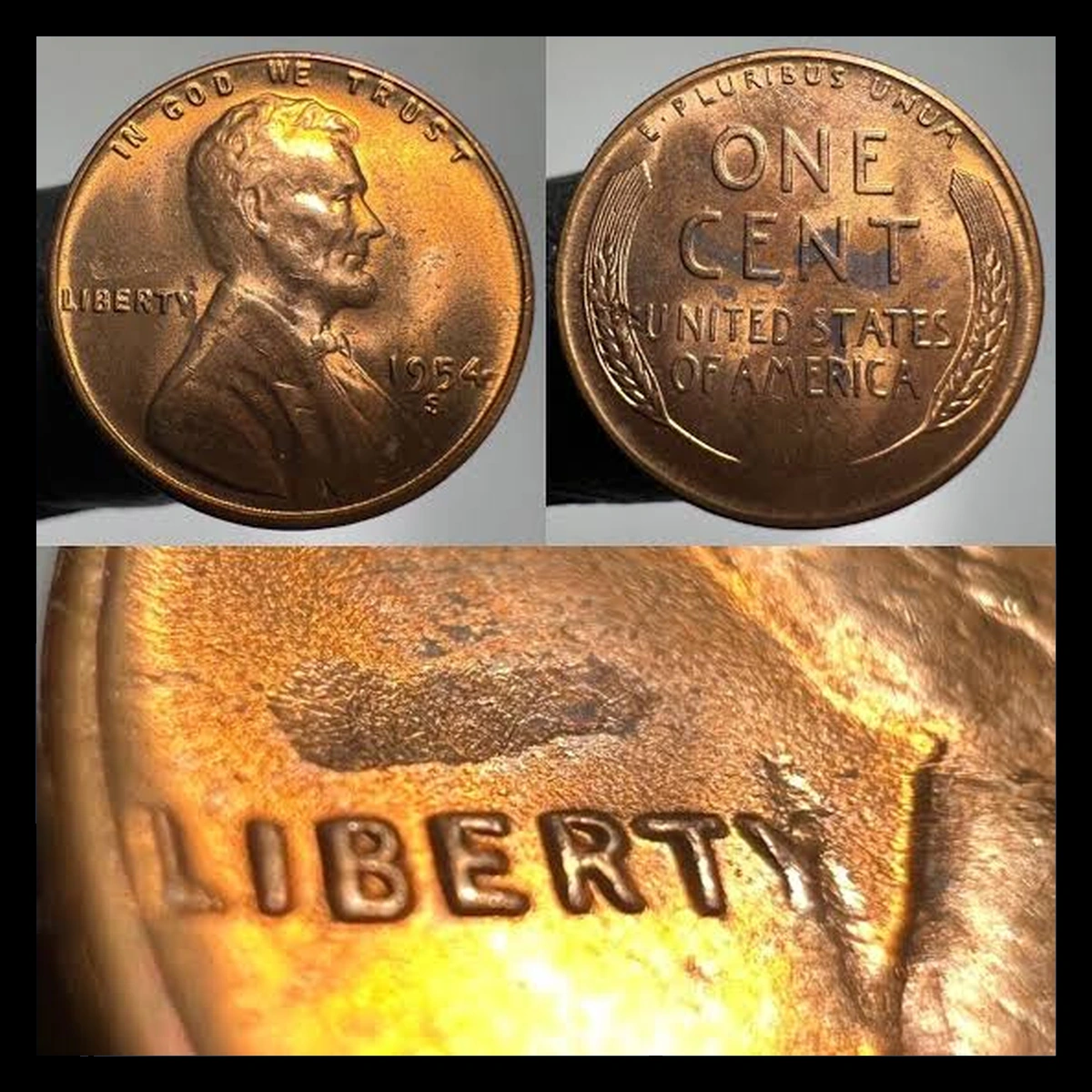
Grease or debris in a die recess can prevent the blank from receiving full detail in that area. A specialist description suggests such an effect on some 1954-S coins from a particular repunched-mintmark die.
The explanation remains a proposal for the weak area. Matching the extra S does not prove what caused the missing design on every coin from that die.
How to Identify
Keep the full obverse and mintmark visible, then inspect the boundary of the weak patch under changing light. Compare the affected detail with its better-formed neighbors.
Scraped shine, cuts through completed letters, or polishing lines can indicate later removal. The surface must support an original blockage independently of the repunch attribution.
What It’s Worth
If confirmed as an original blockage effect, the feature has an estimated range of $3–$100. A small faded area is generally a modest addition.
The range does not convert the source’s suggested cause into an authenticated sale. A coin combining the weak area and repunched mintmark still receives one overall valuation.
5. 1954 Penny A short bar crosses between B and U: Die Clash Error
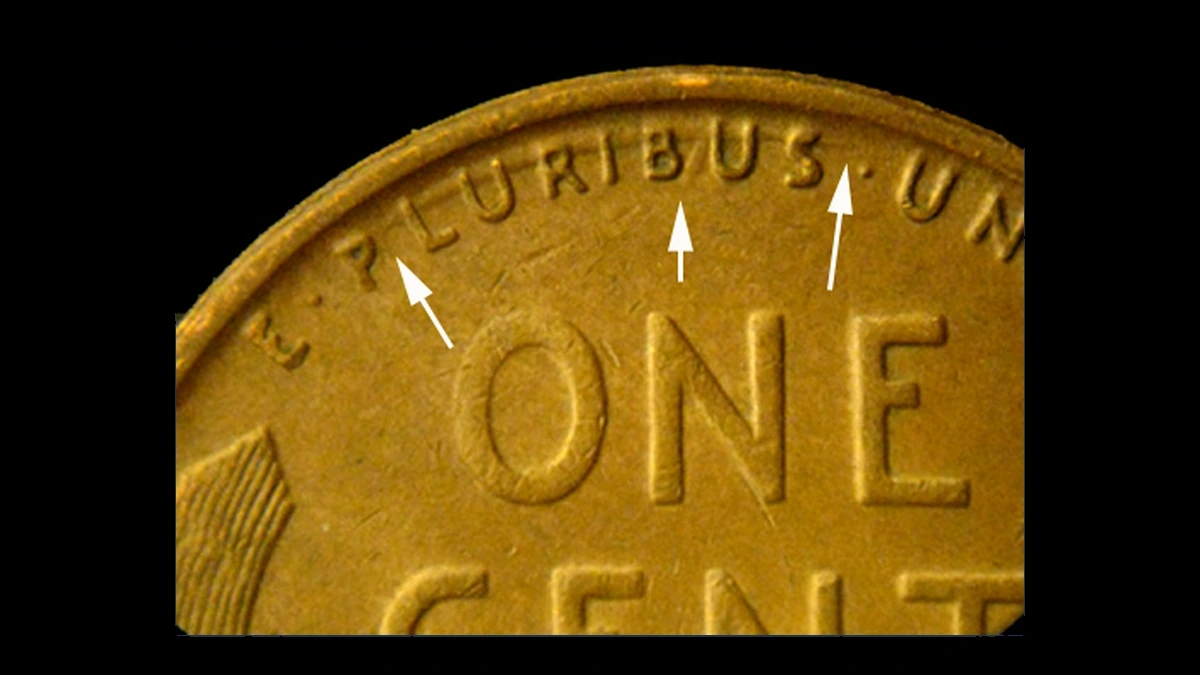
The reported 1954-S reverse has an unusual raised bar between B and U in PLURIBUS. The specialist account identifies it as a clash trace rather than simply a wide die crack.
A clash begins when the dies meet without a blank and leave marks that can transfer to later coins. No obvious corresponding obverse clash was described on this example.
How to Identify
Locate the correct letter gap and compare the bar’s ends and angle with the identified example. Changing the light helps distinguish a raised trace from a cut.
A random line elsewhere on the reverse does not establish this clash. Do not invent a matching front mark or a complete die-replacement history to explain its absence.
What It’s Worth
An identified example is estimated at $10–$150. Clarity of the specific trace and overall preservation affect the comparison.
The range is based on small Wheat-cent clash features, without a supplied auction result for this particular 1954-S die.
6. 1954 Penny Raised chips, cracks, or stepped design: Die Breaks Error
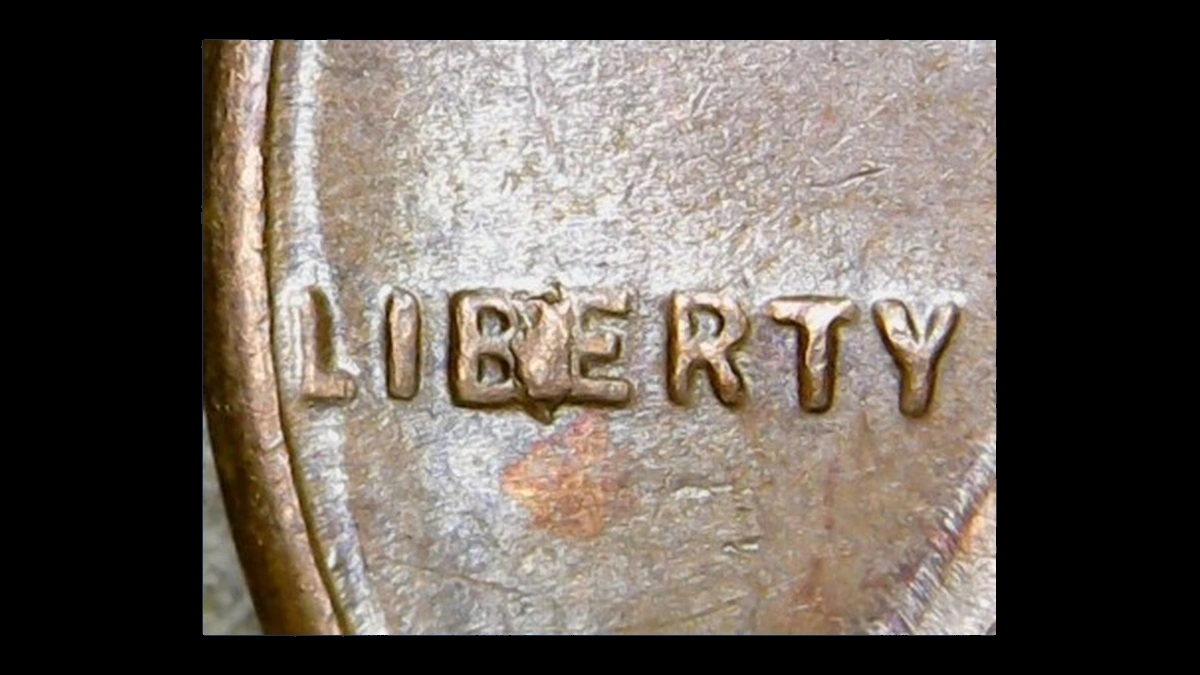
Small missing die pieces leave raised chips, including BIE between B and E in LIBERTY. Chips between other letters should be described by their actual locations.
A retained broken die section can continue striking design at a changed height. A missing piece at the edge can instead create a cud that joins the rim, sometimes as a small feature rather than a huge mound.
How to Identify
Trace whether the feature rises above the surface and whether it encloses shifted but surviving design. That remaining detail can help distinguish a retained section from a completely absent die piece.
Read the adjacent letters before applying the BIE name, and verify rim contact before calling a mound a cud. Squeezing or added solder can produce misleading raised metal.
What It’s Worth
Modest chips and thin cracks are estimated at $2–$50, with more visible retained breaks and cuds around $30–$750. Size and preservation influence the appropriate comparison.
A 1946-S major break sold for $288 in March 2021. It is a larger-break comparison from another year, not a price for each small 1954 chip or each cataloged crack on one coin.
7. 1954 Penny A short separation crosses a Proof’s Wheat stem: Lamination Error
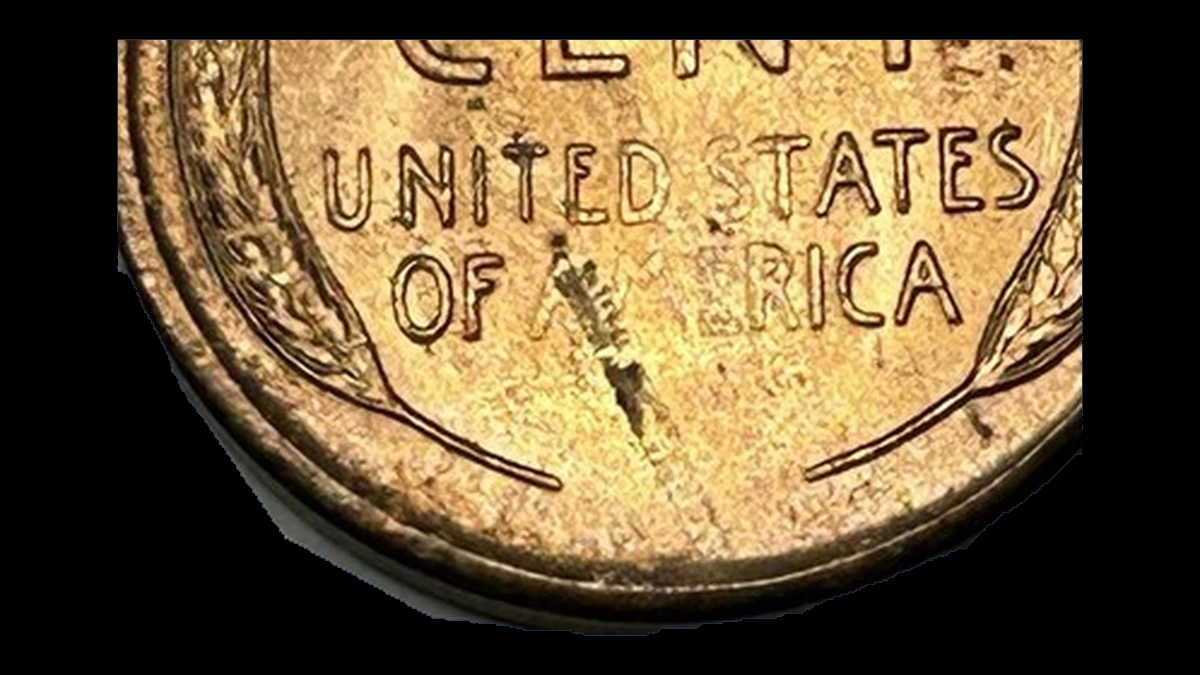
The recorded 1954 Proof has a small mint-made lamination across the right Wheat-ear stem. Even a specially prepared collector coin can contain weakness within its alloy.
PCGS graded the coin PR66 Cameo. That designation combines strong preservation with contrast between the design and its reflective background.
How to Identify
Locate the right stem and inspect the separation under side lighting. A natural layer boundary should be distinguished from a scratch cutting through completed design.
Check the Proof finish as well as the flaw. Do not wipe haze, probe the line, or remove a certified coin from its holder to improve the view.
What It’s Worth
A comparable preserved Proof with a small original lamination is estimated at $100–$500. The PCGS PR66 Cameo specimen sold for $149.50 in July 2003.
That result bought the whole Proof, including its preservation and cameo contrast. It does not demonstrate that the lamination alone added $149.50.
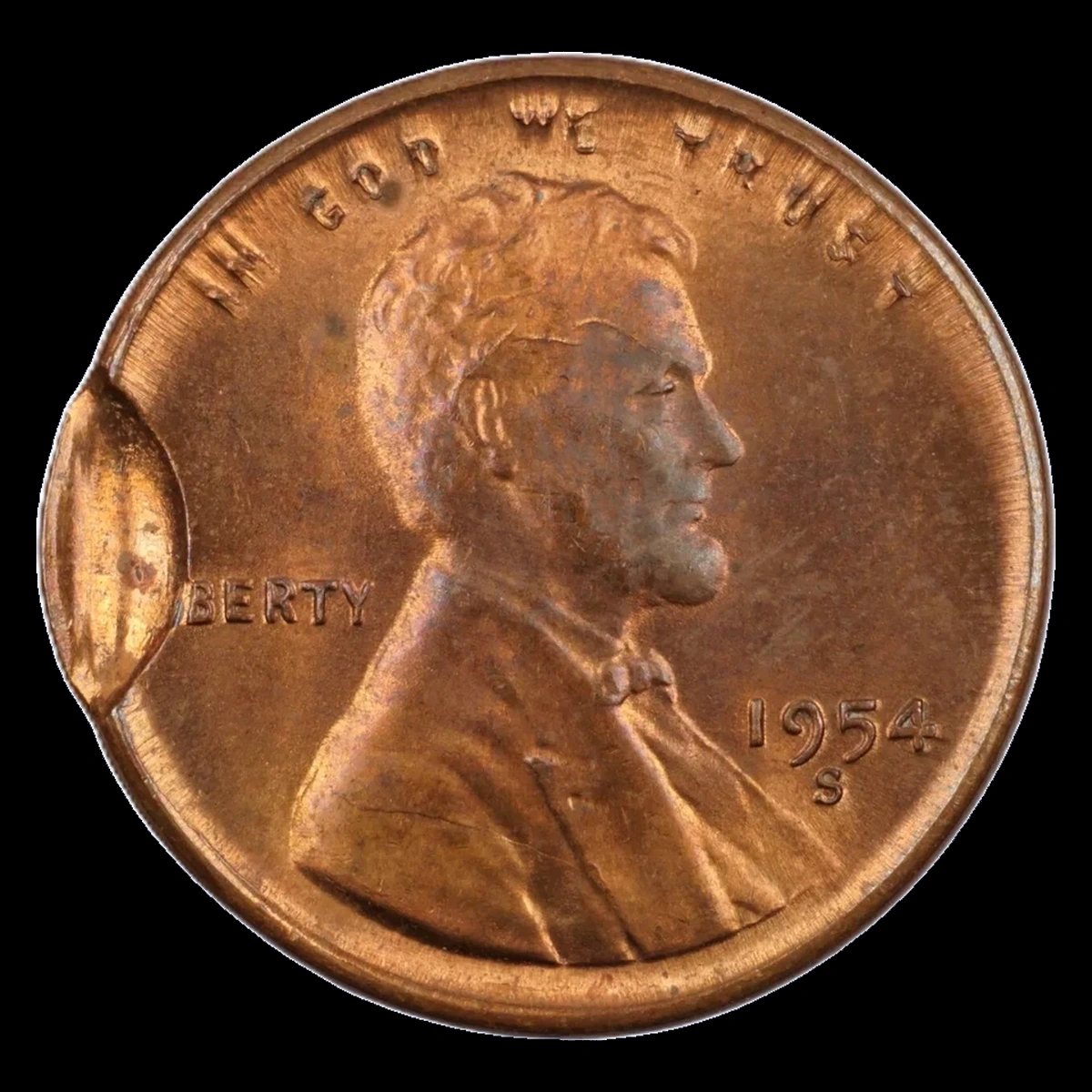
8. 1954 Penny A curved or ragged section is absent: Clipped Blank Error
A curved clip can result when blanking overlaps an earlier hole in the strip. A rough strip end can instead leave an irregular boundary.
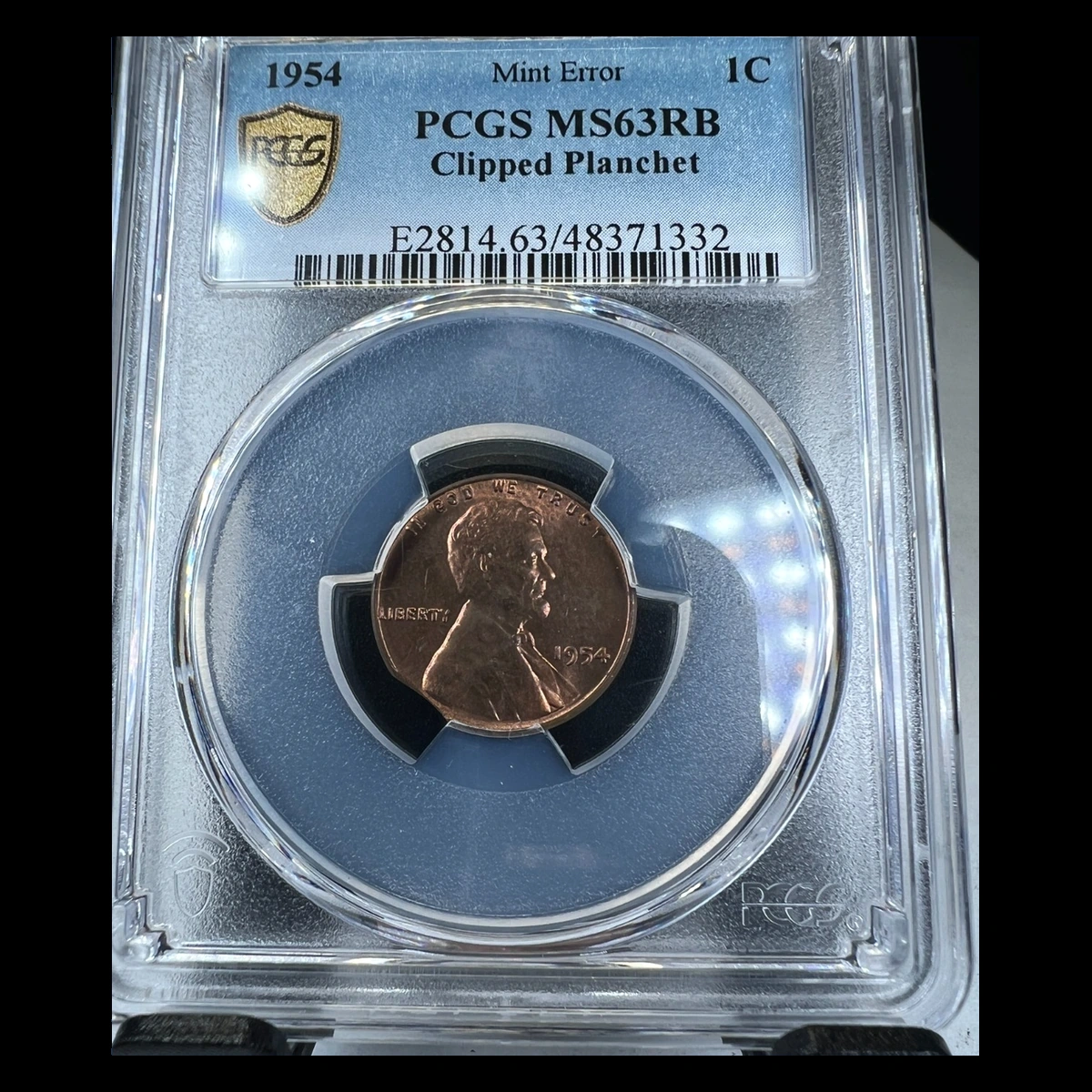
The recorded 1954-D example has a 5% curved clip near ten o’clock. A separate circulated Philadelphia example, described as Very Fine, has a ragged gap in the same general direction.
How to Identify
Orient the date upright and compare the actual shape at the gap. A smooth curved Denver boundary should not be treated as the same specimen as the Philadelphia ragged edge.
Study the rim and lettering where they meet the missing section. Cuts through completed detail, fresh filing, or corrosion may account for later loss instead.
Opposite-rim weakness can support a clip identification but is not enough by itself. Do not calculate a specific coin’s weight from the listed clip percentage.
What It’s Worth
Small curved clips are estimated at $15–$200, while clear ragged clips are estimated at $25–$350. Preservation and original boundary evidence matter for both.
A 1953-D curved clip brought $51 in March 2022. A different 1962 ragged clip with an off-center strike sold for $138 in July 2021, so that second comparison includes another error.
9. 1954 Penny Complete lettering sits inside an expanded border: Broadstrike Error
A broadstrike spreads the blank beyond its intended outline when the collar fails to contain the edge. The whole intended design can remain on the enlarged coin.
Separate 1954-S records include a PCGS MS64 Brown coin and an NGC MS64 Red coin. The similar numeric grades do not make their color or specimen histories interchangeable.
How to Identify
Trace outer lettering on both faces to establish that the full design fits. An uneven border alone does not distinguish a broadstrike from a displaced strike.
Compare the expanded edge with the design’s natural flow. Hammering can enlarge a finished cent while crushing its details, and an added ring can create a false oversized outline.
What It’s Worth
Identified 1954-S broadstrikes are estimated at $30–$400. Clear expansion and original surfaces strengthen the comparison.
A 1946-S broadstruck cent sold for $89 in December 2024. It is not a realized sale of either 1954-S coin, and a mixed-lot total would not establish their individual prices either.
10. 1954 Penny The image misses part of the blank: Off-Center Strike Error
A blank positioned partly outside the dies can retain a plain crescent opposite missing design. One Denver 1954 record describes a 60% shift toward eight o’clock.
A separate San Francisco coin has a 10% off-center strike and a PCGS Genuine description with unworn detail but damage. Its later damage is distinct from the original displacement.
How to Identify
Locate the date and mintmark before estimating the shift. Compare both faces to check that their incomplete designs fit one displaced blank.
Look for original unstruck texture rather than grinding that erased a completed image. The crescent still contains metal, unlike the absent section of a clip.
The eight-o’clock direction belongs to the Denver 60% example. Record the San Francisco piece’s damage without treating unworn detail as a clean numeric grade.
What It’s Worth
Identified off-center cents are estimated at $25–$1,000. Large shifts can attract interest when the date survives, but surface problems can lower demand.
A high-grade 1949 cent struck 90% off center brought $630 in July 2021. That is a different-year comparison rather than a sale of the Denver or damaged San Francisco 1954 specimens.
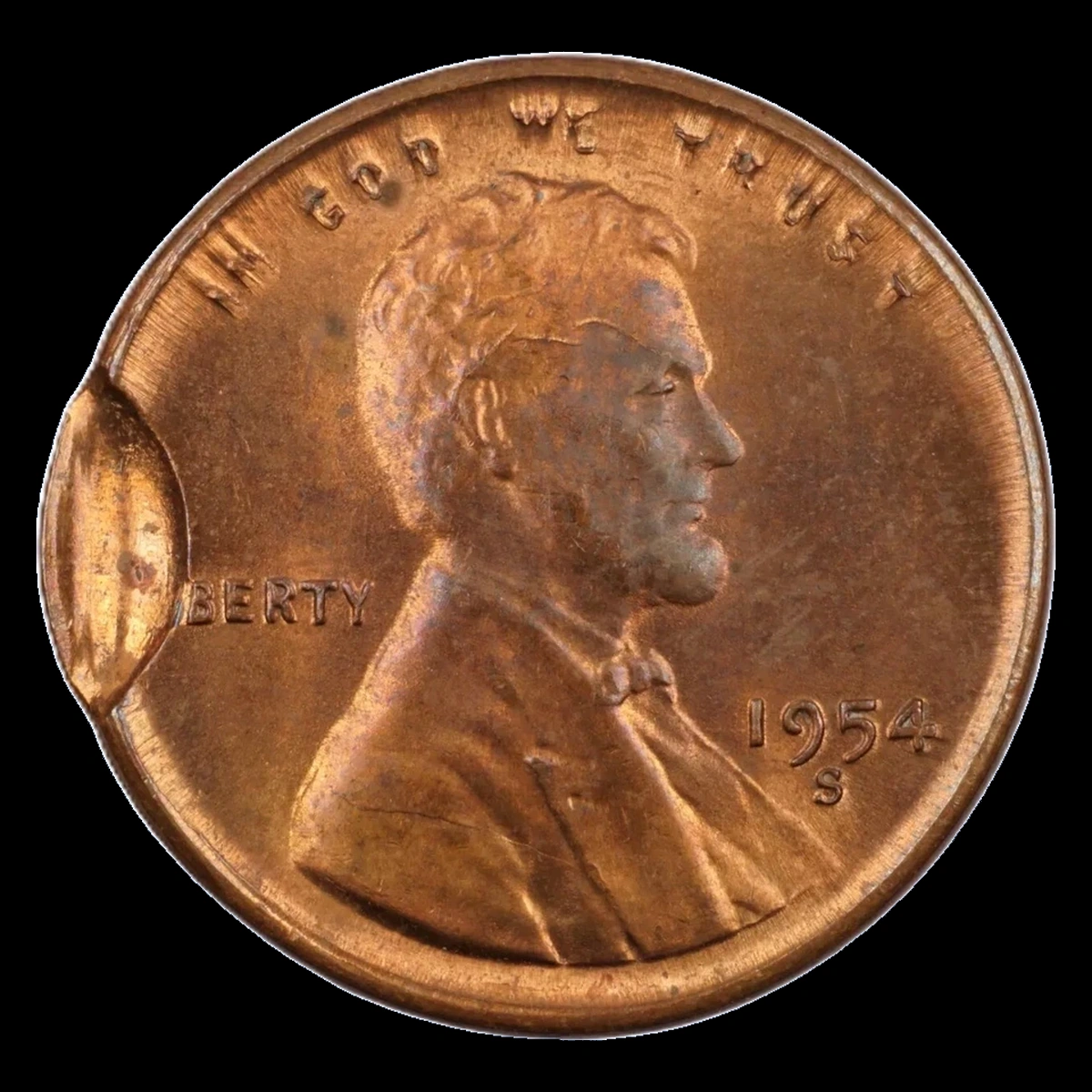
11. 1954 Penny A recessed overlap accompanies a wide or stepped edge: Indent Combination Error
Another blank overlapping a cent can block part of the strike and press an indent into it. The reported Denver combination is a broadstrike with an indent, graded ANACS AU58 for slight wear.
A different 1954-S coin combines an obverse indent with a partial-collar strike. In that event, only part of the blank sat inside the edge-controlling ring, allowing a step to form.
How to Identify
For the Denver coin, separately identify the expanded outline and recessed overlap. Its indent position must come from that specimen’s images.
For the San Francisco piece, inspect the side view for the change in edge level and the obverse for the indent. Grooves on a normally plain cent edge alone do not establish a partial collar.
Examine where the struck design meets the depression. Later dents can crush finished details or push up metal in ways that need a different explanation.
What It’s Worth
Identified combinations are estimated at $75–$1,500. The overlap, edge effect, and condition need to be judged together.
A 1964 broadstruck cent with a 7% indent sold for $54 in March 2025. That related but different-year result does not price either 1954 example or justify adding separate maximum values for its two effects.
12. 1954 Penny Two date groups appear in shifted positions: Double Strike Error
The recorded Denver PCGS VF35 coin received a normal first strike and a second about 25% off center toward ten o’clock. Its first date and D remain clear, with more than half the second set surviving.
Another Denver coin graded PCGS MS65 Red has a second strike 95% off center. Its much smaller contact area creates a different arrangement despite the higher grade.
How to Identify
Trace the first and second groups of date and mintmark through the surrounding design. Their positions should form a coherent account of movement between strikes.
A 95% off-center second strike may show only a narrow fragment, rather than another full portrait. Do not assign the VF35 example’s ten-o’clock direction to the other coin.
Flat shelves beside single letters cannot explain two displaced date groups. Inspect the edge and overlap for signs of later pressing or manipulation.
What It’s Worth
Genuine 1954 double strikes are estimated at $100–$2,500. Amount of visible overlap and preservation both matter, sometimes pulling the comparison in different directions.
The MS65 Red example with a 95% off-center second strike sold for $139 in March 2023. The more extensive second impression on the circulated VF35 coin must be assessed alongside its wear rather than assigned that other sale.
13. 1954 Penny Lincoln appears on a smaller silver blank: Dime Planchet Error
The documented 1954-D cent received its design on a blank prepared for a dime. That changed the material and reduced the available space for the cent design.
A normal dime of the period contained 90% silver and 10% copper. The recorded error graded NGC MS65, indicating a well-preserved unworn coin.
How to Identify
A silver dime’s standards were 2.50 grams and 17.91 millimeters, compared with the cent’s 3.11 grams and 19.05 millimeters. These are reference values, not supplied measurements of the auction specimen.
Evaluate actual weight, size, and composition together, allowing for expansion during the cent strike. Plating can imitate silver color, while grinding can reduce a copper cent’s size without changing its alloy.
Inspect the design and edge without scratching or applying acid. Professional identification should confirm both the metal and the original cent strike.
What It’s Worth
Comparable authenticated 1954-D dime-planchet cents are estimated at $2,000–$12,000. Preservation and secure blank identification are central to that range.
The NGC MS65 example sold for $7,200 on December 23, 2024. This completed result should remain separate from any later offer-to-owner amount.
Conclusion
A 1954 cent can require a close lettering comparison, an edge profile, or a metal test depending on what makes it unusual. Describe the evidence first so that a weak letter does not become an assumed grease error, or a broad outline an assumed off-center strike.
Keep Proof value, later damage, and multiple features on one coin within the same overall assessment. Original surfaces and clearly labeled comparisons make that assessment more useful.