Rare 1924 Penny Errors (List & Pictures)
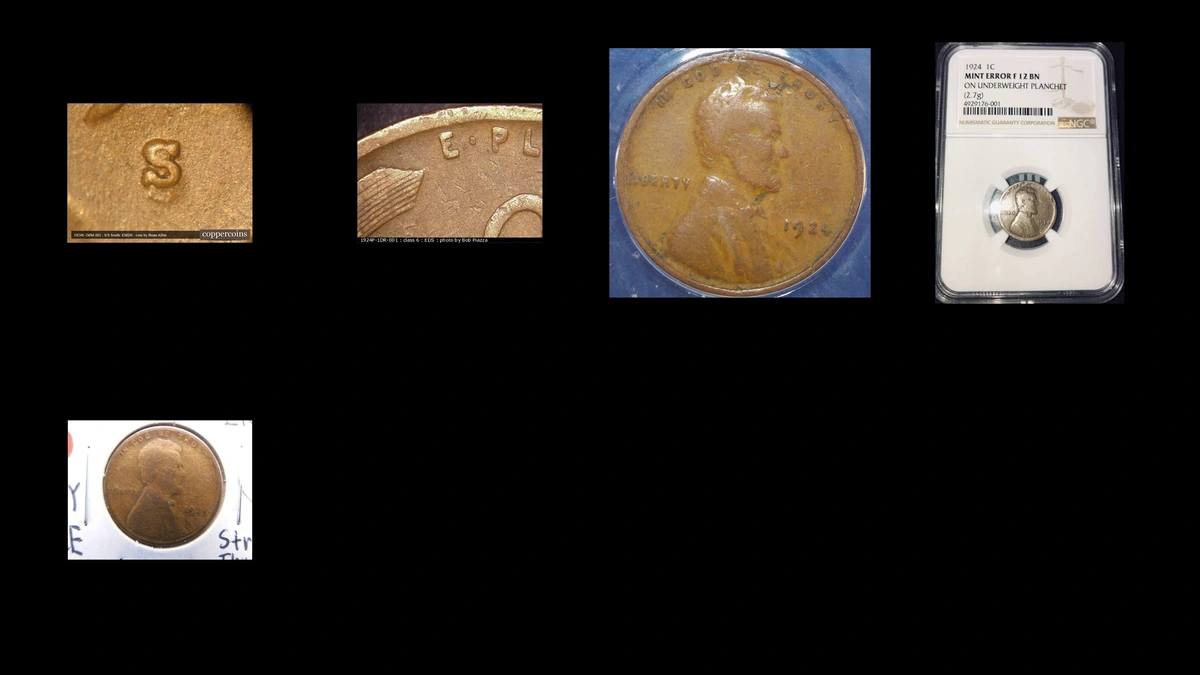
A 1924 off-center cent sold for $76 in 2022, while a cleaned 1956-D flipover double strike provides the higher comparison at $456 in 2024. These are different coins and different dates.
Estimated whole-coin values for 1924 penny errors span $5–$3,000. Look first for extra design detail, then distinguish raised lumps from peeling layers and open cracks before checking the entire outline.
| Visible feature | Possible explanation | Estimated value |
|---|---|---|
| Extra mint letter or thickened design | Repunched mintmark or doubled die | $5–$600 |
| Raised rim patch | Cud | $25–$800 |
| Peeling, opening, or depression | Lamination, cracked blank, or struck-through | $5–$500 |
| Missing edge section | Clip | $20–$500 |
| Incomplete shifted image | Off-center strike | $40–$1,000 |
| Front and back designs together | Flipover double strike | $400–$3,000 |
The normal 1924 cent is copper-rich alloy throughout, with a plain edge, a weight near 3.11 grams, and a diameter of 19.05 millimeters. Measure sound areas only and leave any fragile flap or crack undisturbed.
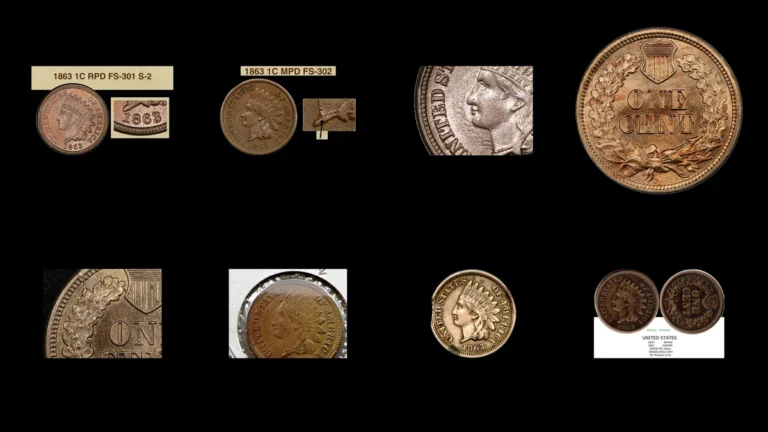
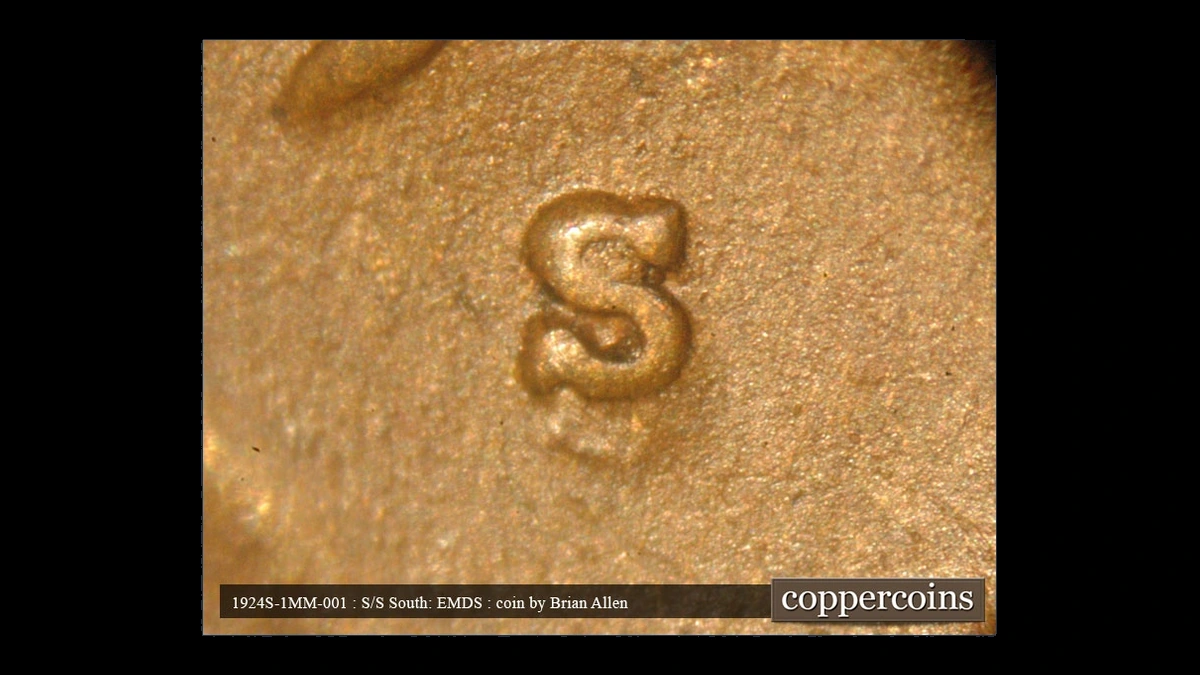
1. 1924 Penny A Second S or D Outline: Repunched Mintmark Error
An extra curve below the main S can identify the reported downward San Francisco repunch. Workers added the mintmark to the die by hand, and an earlier punch could remain partly visible after another placement.
How to Identify
With the date upright, compare the lower S outline against an attributed 1924-S photograph. Follow the curve and its ends rather than judging only the letter’s apparent width.
Denver repunches are reported too, but their D shapes need separate comparisons. A mintmark’s location beneath the date does not by itself prove repunching.
What It’s Worth
Identified 1924 repunches have an estimated range of $5–$300. Clear separation and better-preserved surfaces support stronger values within that range.
No specific 1924 auction result is supplied for these varieties. The estimate follows comparable Wheat cent mintmarks rather than treating every thick letter as a rarity.
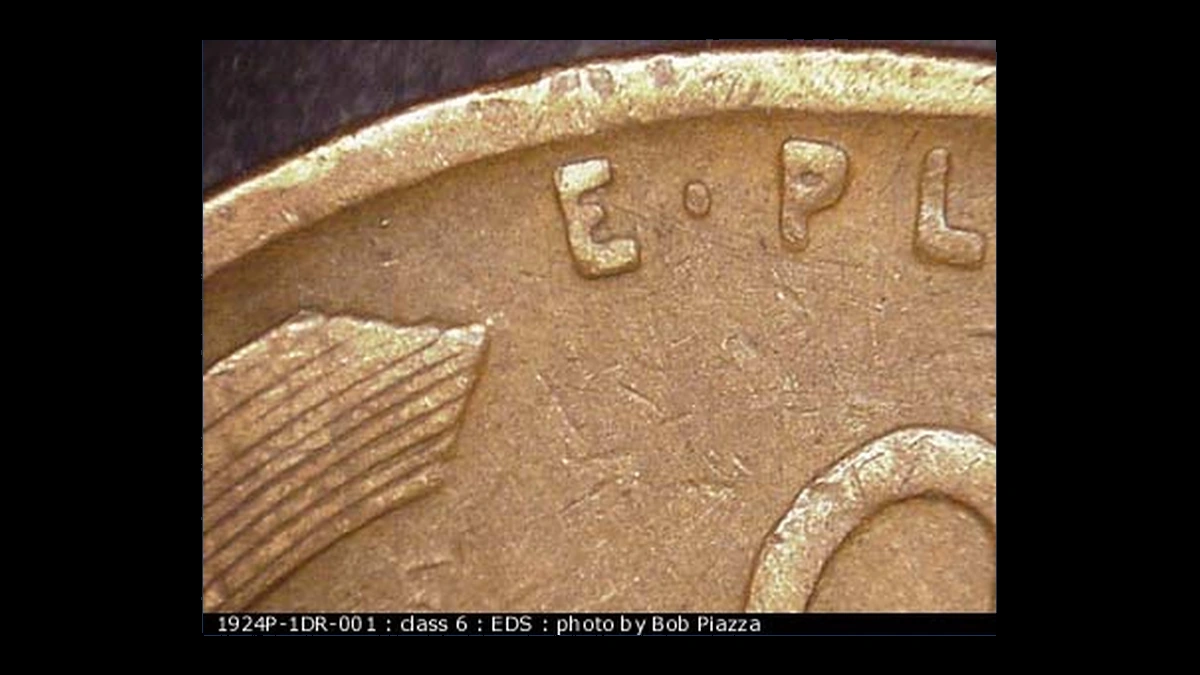
2. 1924 Penny Thickened Letters and Oval Dots: Doubled Die Error
Doubling does not always produce two neatly separated letters. The reported Philadelphia reverse variety thickens the motto and wheat detail, with separating dots that can look oval.
How to Identify
Match the whole pattern at the correct mint and face. Wear or an out-of-focus picture can imitate thick lettering without reproducing the attributed shapes.
San Francisco reverse reports involve wheat detail, ONE, and OF AMERICA. Philadelphia and San Francisco front varieties also exist in the supplied reports, but require their own front-side diagnostics.
What It’s Worth
Minor matched doubled dies are estimated at $10–$600. The clarity of the particular variety and the coin’s preservation control the useful comparison.
A 1936 doubled-front cent graded ANACS MS63 Brown sold for $70 in June 2024. That later-year front variety does not establish the value of the 1924 thickened reverse.
3. 1924 Penny A Raised Patch Joins the Rim: Cud Error
A piece missing from the edge of a die leaves space for coin metal to rise during striking. The resulting rim-connected patch replaces normal design and is called a cud.
How to Identify
Trace the patch from the rim inward and inspect the adjacent edge for added material or a join. An isolated chip inside the design is a different form of die damage.
Cataloged 1924 Philadelphia and Denver examples need their own location matches. If shifted design survives inside a broken area, the die fragment may have remained in place rather than falling out completely.
What It’s Worth
The estimated range is $25–$800, with smaller genuine cuds around $25–$150 and larger examples around $150–$800. Condition and how much design is replaced matter.
A 1946-S major break brought $288 in March 2021. It offers a later Wheat-cent comparison, not a price for a specific 1924 catalog entry.
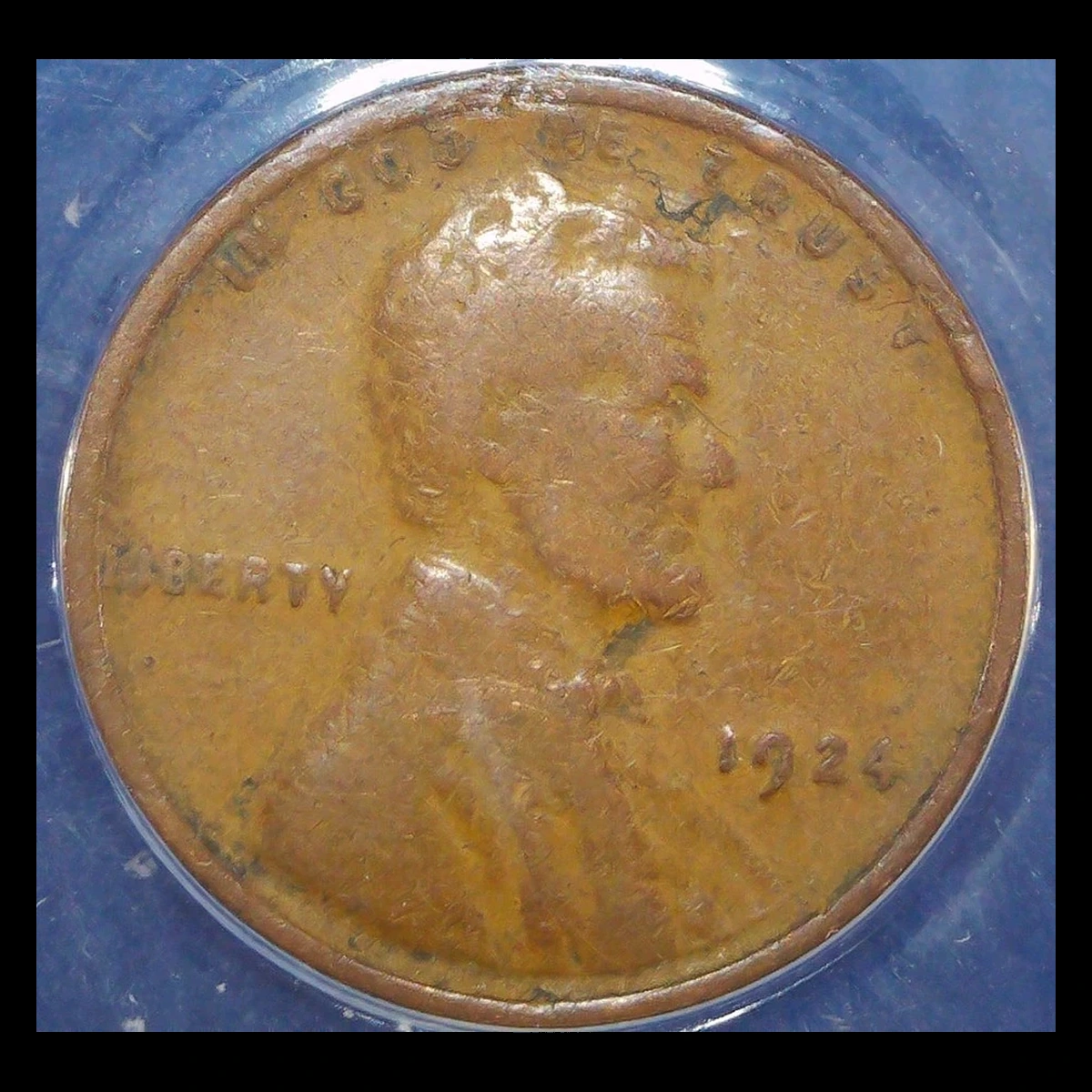
4. 1924 Penny A Thin Sheet Lifts from the Surface: Lamination Error
A weakened layer in the alloy can separate while remaining attached along one boundary. If it falls away, it can leave a shallow rough area.
How to Identify
Photograph the existing seam at a low angle without opening it further. The connection between the layer and sound metal is more useful than roughness alone.
The 1924 reports do not set one fixed mint or location. Corrosion and scraping can produce rough areas without a true layered separation.
What It’s Worth
Whole-coin estimates run $5–$250: small separations around $5–$75 and larger clear examples around $75–$250. An untouched flap can preserve useful evidence.
A 1952-D front lamination sold for $35 in July 2013. That different-year transaction is a modest same-series comparison.
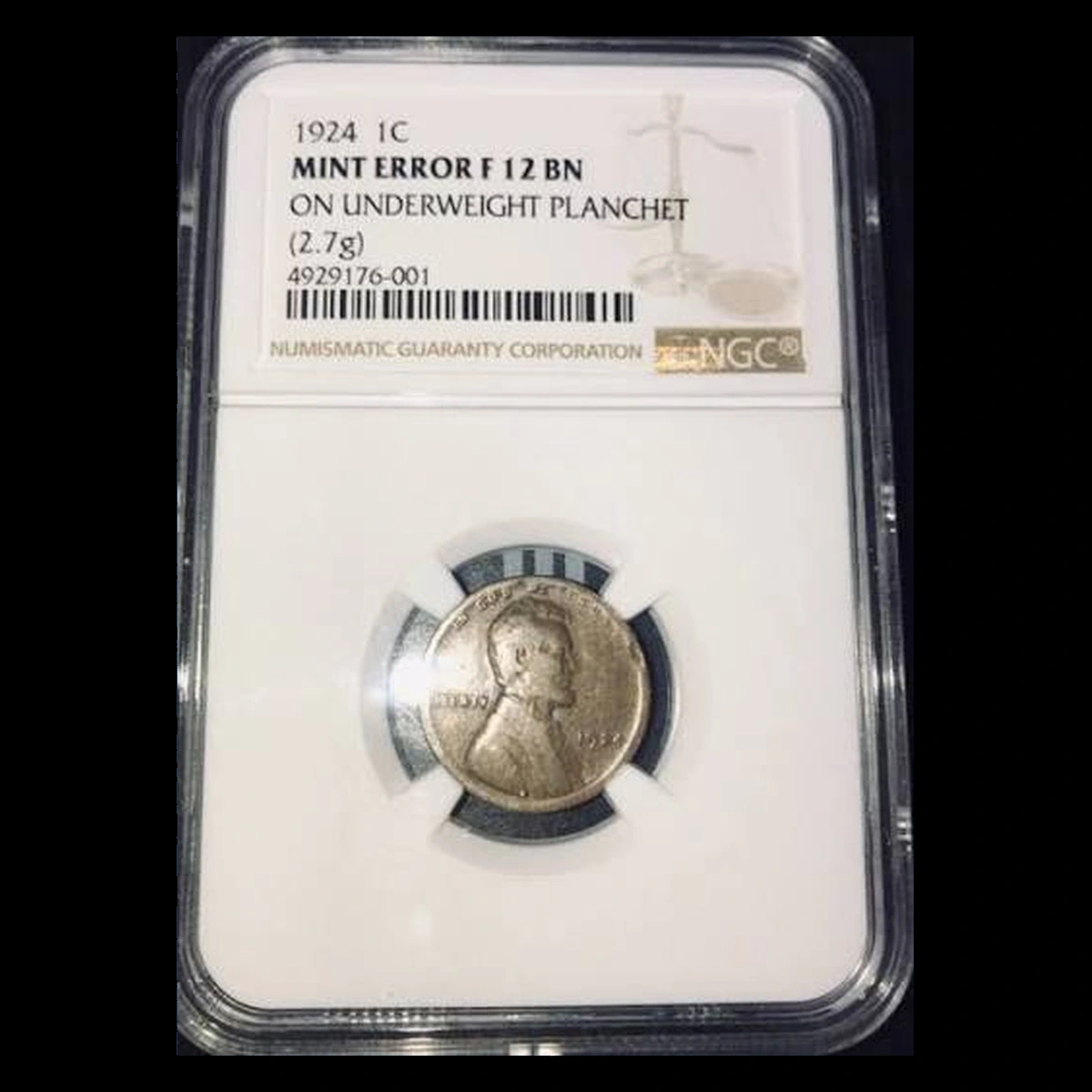
5. 1924 Penny The Coin’s Metal Opens: Cracked Planchet Error
An actual gap into the disc indicates a different failure from a raised die crack. A planchet is the prepared blank, and its own metal can crack before or during production.
How to Identify
Look into the opening with side lighting and follow any continuation toward the edge or other face. Do not bend the penny or insert anything into the gap.
A sharp cut through completed detail may be later damage, while a lifting thin sheet suggests lamination. The supplied cracked-planchet report assigns no universal mint or direction.
What It’s Worth
Estimate $25–$500 for a genuine original cracked blank. A clear, undisturbed opening supports a better assessment than an ambiguous dark line.
This is a comparison range, with no supplied 1924 realized price. The description does not justify an additional foreign-metal or thin-blank premium.
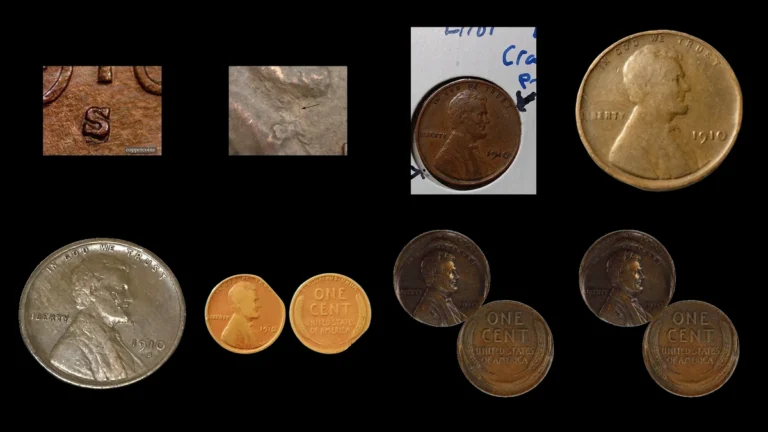
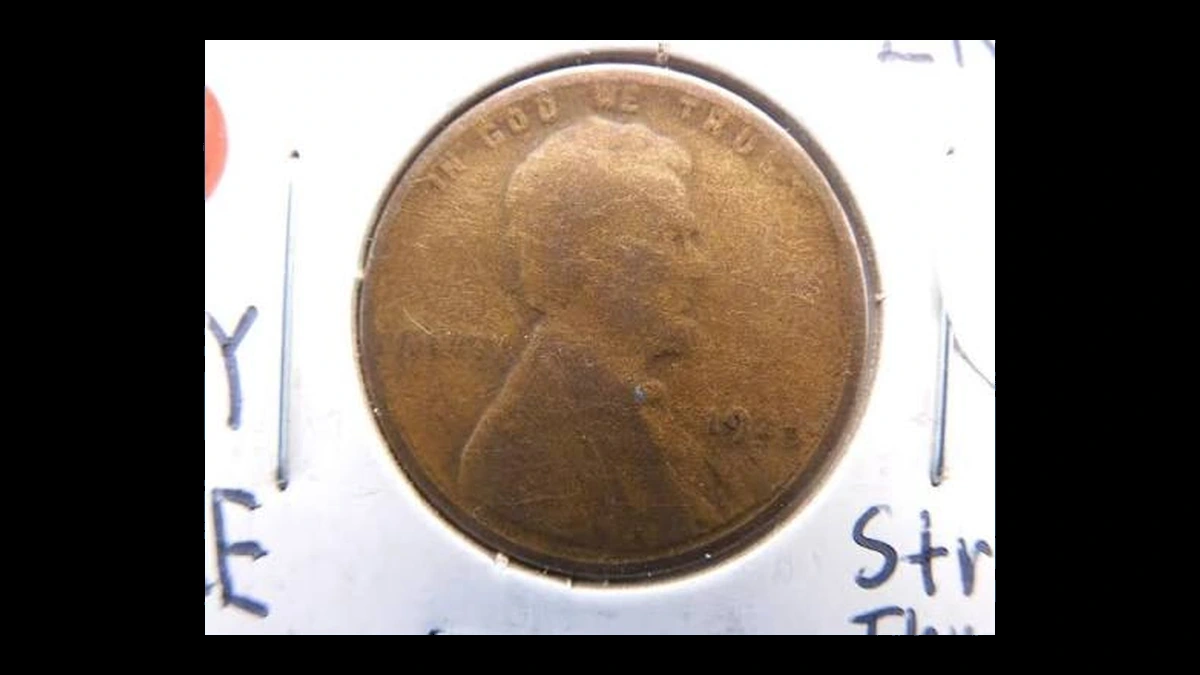
6. 1924 Penny A Depression Interrupts the Image: Struck Through Material Error
An obstruction between die and blank can prevent a local part of the design from forming. The resulting mark records the blocked strike rather than a layer peeling from the coin itself.
How to Identify
Study the boundary where intact detail meets the affected area. A later gouge can cut finished features and push up metal at its sides.
A certified Philadelphia example has a front-side impression, while an older report describes a separate small reverse error. Neither supplied description establishes the material or a precise path.
What It’s Worth
Genuine 1924 struck-through cents are estimated at $10–$350. Small worn marks fall below larger, convincing original impressions.
The certified front example belonged to a five-coin lot that sold for $54 in December 2020. That total is not the price of this penny alone or of the separate reverse example.
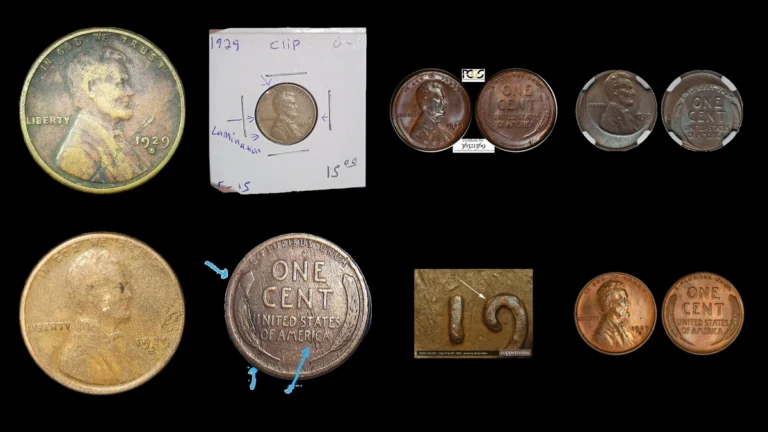
7. 1924 Penny An Incomplete Edge: Clipped Planchet Error
A blank cut where the metal strip ends can emerge incomplete. A collector-reported 1924-D is described as an end-of-strip example, alongside broader reports of clipped 1924 planchets.
How to Identify
Start with the whole outline so the proposed end-of-strip boundary remains visible. A familiar curved-clip photograph cannot establish that different shape.
Inspect where the gap meets the struck rim for natural transitions rather than file marks or burrs. Missing metal reduces weight whether removed at the Mint or later, so the scale cannot settle the timing alone.
What It’s Worth
Confirmed 1924 clips have an estimated whole-coin range of $20–$500. Mint, remaining date, gap size, and condition all affect the result.
A 1967 cent with a 13% straight clip sold for $39 in July 2021. That sale offers general context without authenticating or pricing the reported Denver end-of-strip piece.
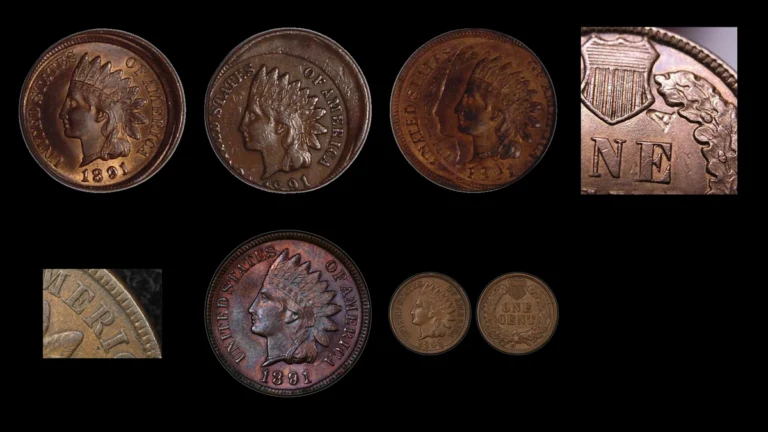
8. 1924 Penny Some Design Falls beyond the Disc: Off-Center Strike Error
The blank can enter the press out of position, leaving unused metal beside an incomplete image. Its placement should explain the missing design on both faces.
How to Identify
Compare both sides before estimating displacement. One shifted image opposite a centered one suggests a misaligned die instead.
The documented Philadelphia example is 10% off center toward eleven o’clock. A separate San Francisco report has no matching percentage or direction established here.
What It’s Worth
Estimated values span $40–$1,000 for genuine dated examples with different shifts and preservation. The upper end requires more than a small displacement on a heavily worn coin.
The Philadelphia ANACS VG8 example sold for $76 in January 2022. Its worn condition and modest 10% shift belong together in the comparison.
9. 1924 Penny Wheat and Lincoln Designs Share a Face: Flipover Double Strike Error
A penny that turns over before another blow receives the opposite design across its earlier impression. Surviving front and reverse features together can establish this flipover sequence.
How to Identify
Separate identifiable Lincoln-side and wheat-side remnants on photographs of both faces. Two nearby letters alone do not show that the entire coin flipped.
The recorded 1924-D is graded ANACS VG8, so wear may obscure parts of the overlap. Examine for later pressing or joins, and do not invent a turning direction from one small surviving fragment.
What It’s Worth
A genuine 1924-D flipover double strike has an estimated range of $400–$3,000. Recognizable opposite-face remnants are especially important on a worn coin.
The ANACS VG8 listing documents the example but supplies no usable sale amount here. A cleaned 1956-D flipover sold for $456 in June 2024, providing a different-date and condition-qualified comparison.
Conclusion
On a 1924 cent, decide whether the feature is extra design, raised metal, a separating layer, or an actual opening. That simple description keeps several similar-looking defects from being confused.
The $5–$3,000 estimates cover a wide variety of objects. Keep the $76 same-year off-center sale distinct from group totals and later-year comparisons, and let the surviving physical evidence determine which category fits.