Rare 1917 Quarter Errors (List & Pictures)
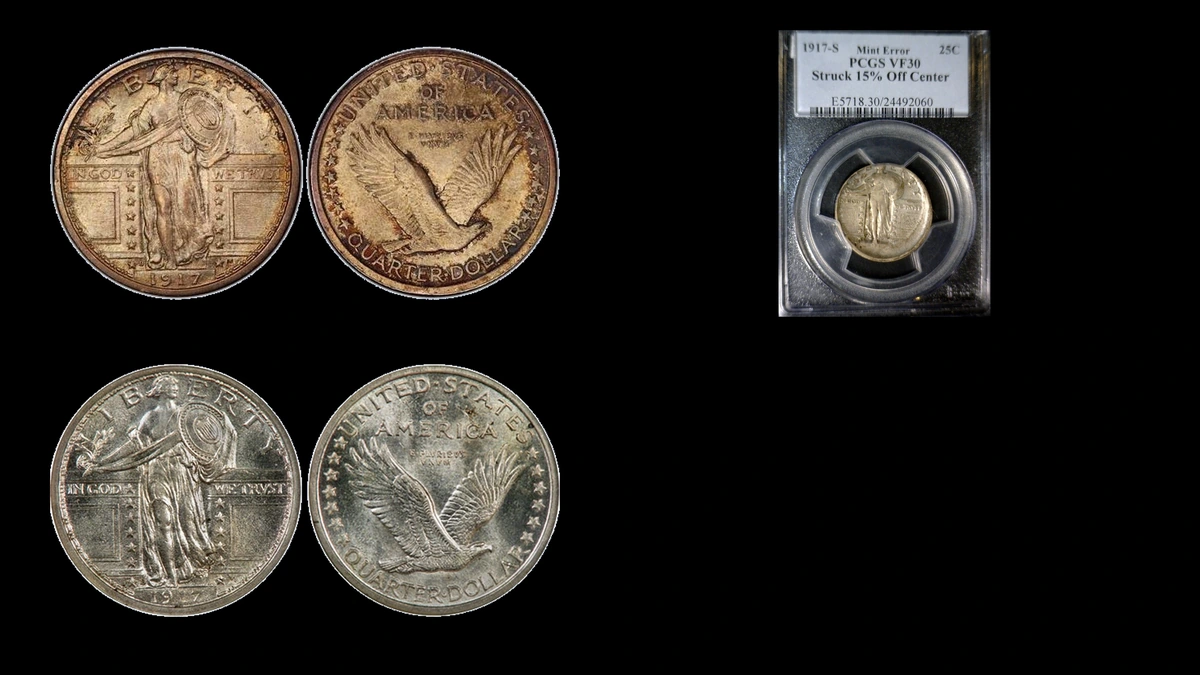
Both pieces of a broken 1917-S quarter sold together for $4,600 in August 2008. The 1917 Standing Liberty quarter errors below have estimated values of $75–$10,000.
Identify the design version first, then compare repeated details, a displaced strike, and two very different ways defective metal can leave an incomplete coin.
| What to inspect | Error | Estimated value |
|---|---|---|
| Eagle feathers and back motto | Doubled reverse | $75–$2,500 |
| Blank crescent beside missing design | Off-center strike | $200–$5,000 |
| Opening beside Liberty’s foot | Defective blank with natural hole | $2,000–$8,000 |
| Matching fragments and fracture | Broken defective blank | $3,000–$10,000 per pair |
1. 1917 Quarter Repeated feather and letter edges: doubled reverse Error
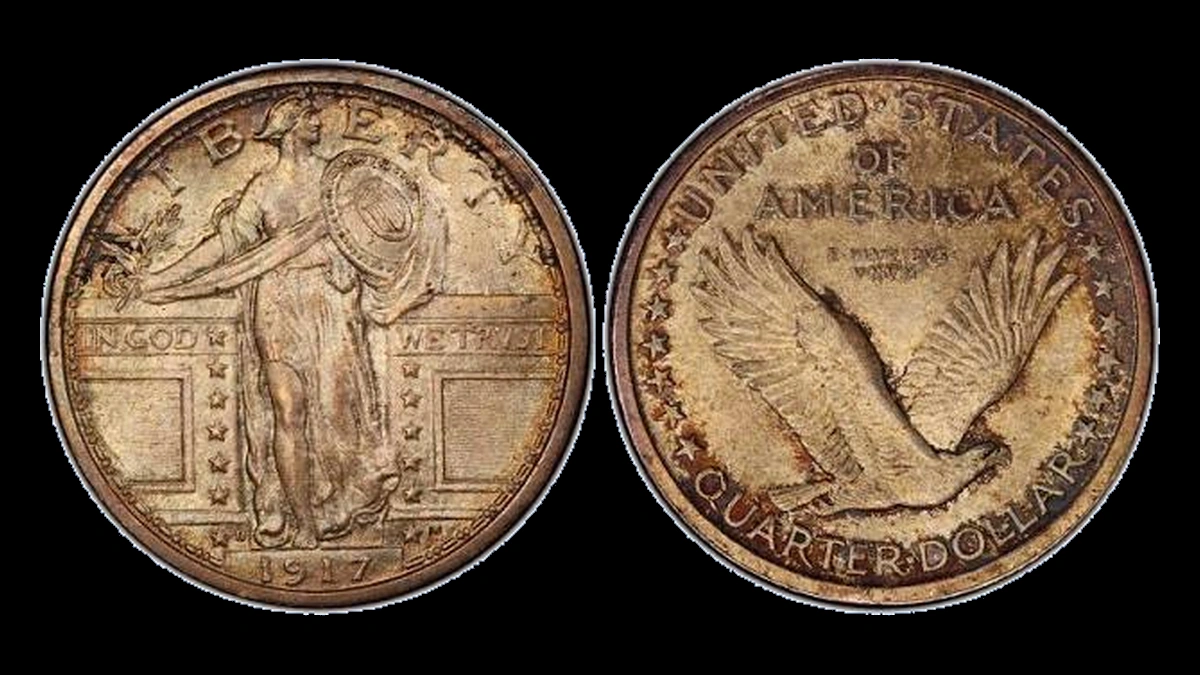
The reported 1917-D Type I variety shows repeated details on the eagle’s feathers and E PLURIBUS UNUM. These are parts of the reverse design, not an extra mint mark.
A doubled reverse die contains more than one impression of the design. It can transfer both impressions during a single strike.
How to Identify
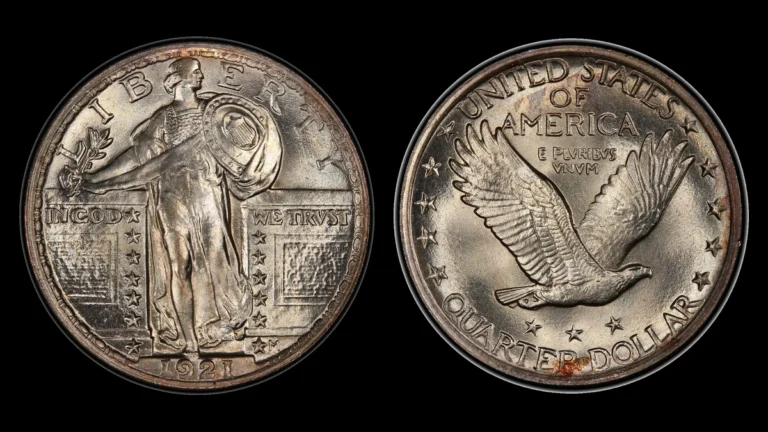
Look beneath the eagle before examining the feathers. Type I has no stars in that space; Type II has three and uses a different reverse design.
Confirm the D near the lower left of the front, then compare several feather edges and motto letters with a verified Type I example. Normal differences between the two design types do not establish doubling.
Change the lighting to see whether the apparent extra edge persists. A flat shelf from movement during striking differs from a repeatable doubled-die pattern.
What It’s Worth
A confirmed matching doubled reverse has an estimated whole-coin value of $75–$2,500.
No completed sale was supplied for this variety. Condition contributes to the value of any 1917-D quarter, so the full price should not be attributed entirely to repeated feathers.
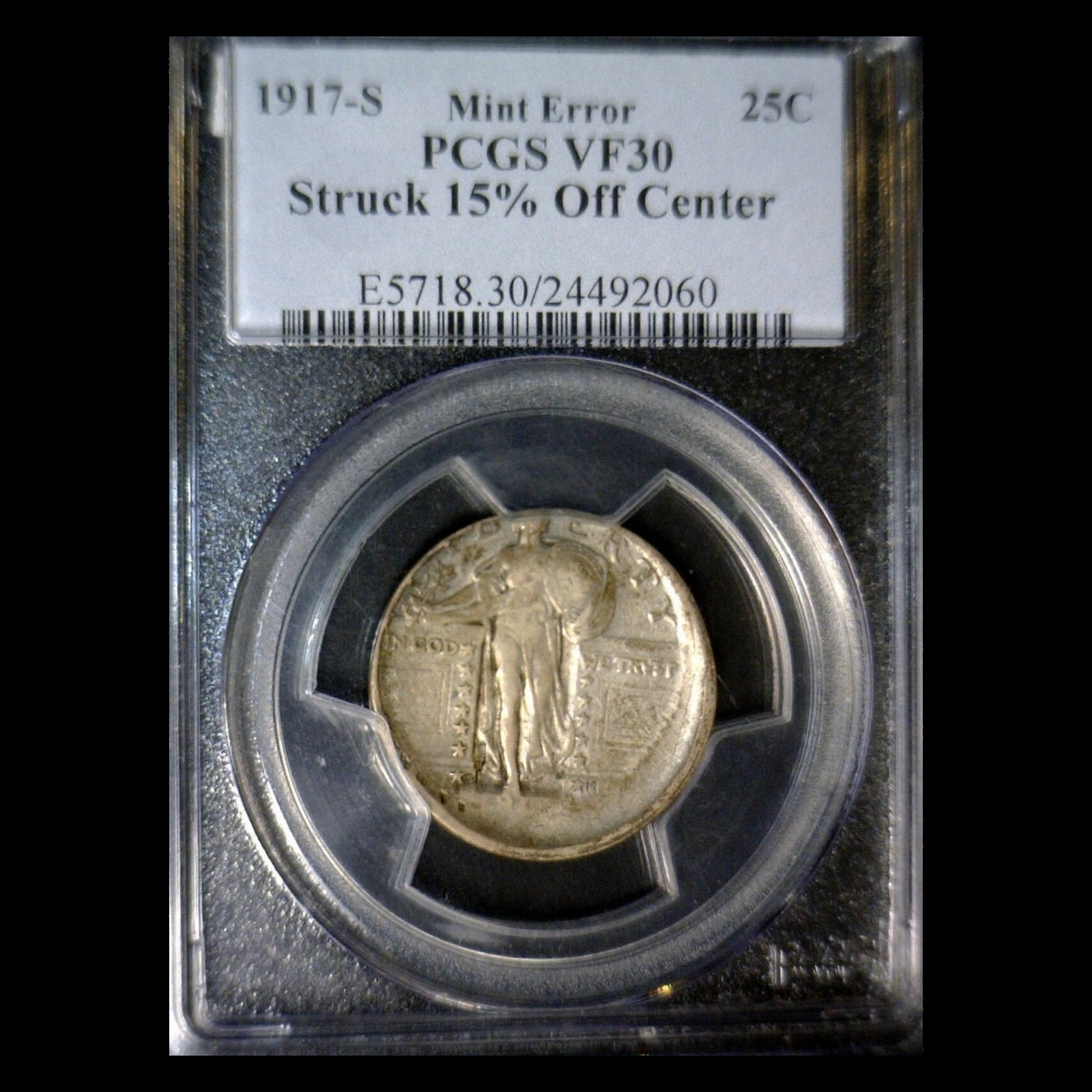
2. 1917 Quarter The picture runs beyond the metal: off-center strike Error
An off-center strike leaves an unstruck crescent while losing design on the opposite side. The blank was displaced between the dies when they closed.
The 1917 report does not establish one mint or design type for every example. Each coin’s surviving identity must be read separately.
How to Identify
Photograph the whole outline on both faces and follow the same unstruck section through the pair of views. Both designs should fit the position of the misplaced blank.
Compare a complete design within a wide border as a possible broadstrike. A shift confined to one face instead suggests a misaligned die.
Read the date and inspect the lower-left mint mark area before naming the mint. If that area never received the design, an absent letter cannot establish Philadelphia.
The stars beneath the eagle may establish the design type if they survive. Scraped or flattened areas need to be separated from original unstruck silver.
What It’s Worth
Genuine dated 1917 off-center quarters have an estimated range of $200–$5,000.
A visible date, substantial displacement, and attractive surfaces support a stronger comparison. No specific mint, percentage, or transaction was supplied for this broad report.
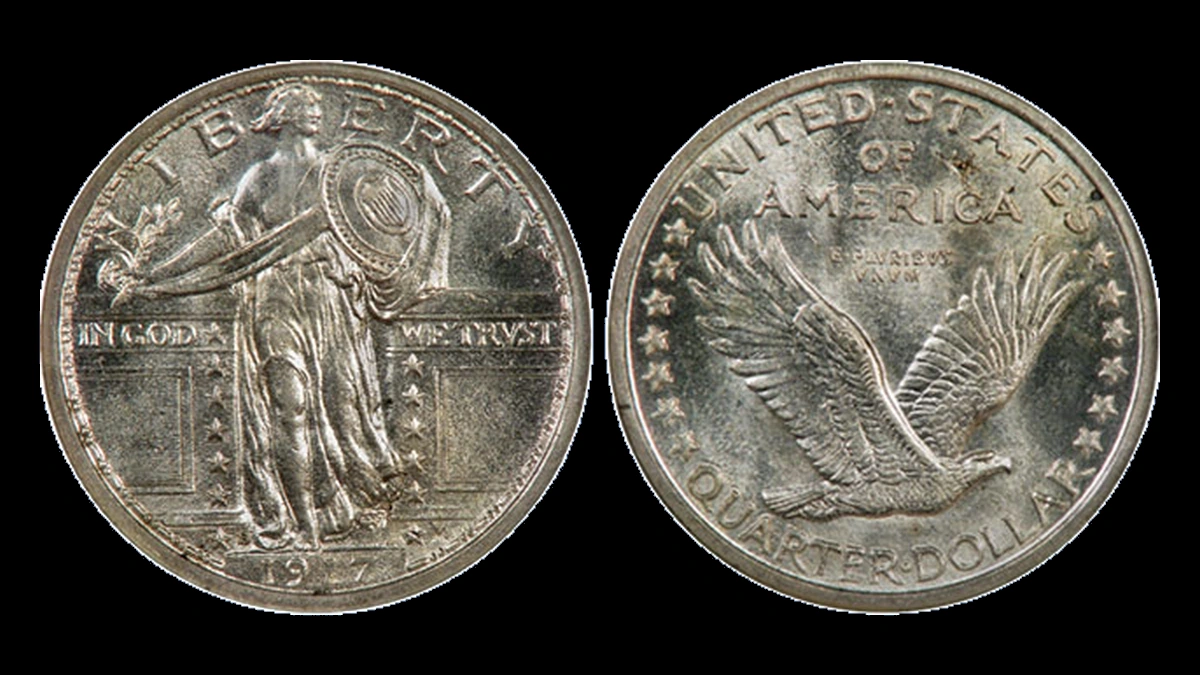
3. 1917 Quarter Light passes beside Liberty’s foot: natural planchet hole Error
The documented 1917-S Type I example has an irregular opening beside Liberty’s foot. Viewed from the back, that opening lies above the C in AMERICA.
NGC labeled the coin Defective Planchet and graded it MS63 Full Head. A planchet is the prepared blank, while Full Head describes sharp detail on Liberty’s head.
Specialist Cline attributed the opening to a fault in the original metal, possibly involving trapped impurities. The precise material involved was not established.
How to Identify
Use light behind the coin to locate the opening on each face. On the documented piece, the positions beside the foot and above AMERICA’s C must line up.
Inspect the wall of the hole and the struck detail around it without inserting anything. A regular drilled channel or displaced metal would require a different explanation.
An uneven boundary alone does not prove a Mint fault because corrosion can also perforate metal. The original surface and the entire opening need specialist examination.
What It’s Worth
A verified natural hole comparable to the documented specimen is estimated at $2,000–$8,000.
Cline’s account of the coin reports no serious buyer at its 2014 auction appearance. That history does not provide a selling price.
4. 1917 Quarter Two fragments preserve one design: broken defective planchet Error
The known 1917-S Type I pair divides the quarter into pieces covering roughly seventy and thirty percent of its area. With the front upright, the fracture extends from about two-thirty to six-thirty.
Heritage described faulty alloy mixing and a break after brief circulation. This separation crosses the coin’s face rather than peeling off a thin surface layer.
How to Identify
Arrange photographs of the fragments to compare the continuous date, portrait, and reverse. Keep the actual broken edges protected instead of pressing them together.
Inspect the fracture texture for a natural break and the surrounding silver for bending or forced damage. Sawing produces a different boundary from a fracture through defective metal.
Matching pieces establish that they belonged together. They do not, without further evidence, establish why the quarter broke.
What It’s Worth
A comparable authenticated matched pair has an estimated value of $3,000–$10,000.
The ANACS AU50 pair brought $4,600 on August 1, 2008. That amount purchased both fragments of one quarter.
A lone fragment is not automatically worth half the pair’s price. Keeping the matching designs and original fracture together preserves evidence that a separated piece cannot show alone.
Conclusion
Start a 1917 comparison below the eagle: no lower stars means Type I, while three indicate Type II. That distinction helps prevent normal design changes from being mistaken for errors.
A natural opening, an original fracture, and a displaced strike leave different evidence in the silver. The recorded $4,600 sale belongs to the complete broken pair, while the holed coin’s auction appearance supplied no confirmed selling price.